

Norway Dive
Google 5/5 (1,221 reviews)
9.4 km away as the crow flies
Mallorca · Spain · Mediterranean
Max. depth · 18 mNavigate through an L-shaped tunnel and discover an underwater system of arches and caverns reaching depths of 18 metres.
For subtitles in English: start the video firstthen click the gearat the top right of the video, select “Subtitles/CC”, then “Auto-translate” and choose “English”.
Calo D'en Monjo is defined by its distinct U-shaped bay topography, situated between two prominent cliffs. Unlike the standard reef slopes found elsewhere in the region, this site is characterized by a complex series of rock formations and geological transitions. The approach typically involves swimming from one side of the cliffs to the other, moving through the water column to enter the primary tunnel system. The seafloor is composed of solid rock, providing a stable but intricate environment for navigation.
The dive profile begins in the shallower zones, where you enter a significant L-shaped tunnel at approximately 5 to 6 metres. This passage stretches for about 25 to 30 metres, offering a change in light and perspective as you move between the cliff faces. As you progress deeper, the topography shifts from simple passages to more complex structures. The descent leads you toward the deeper sections of the bay, where the rocky bottom drops to a maximum depth of around 18 metres.
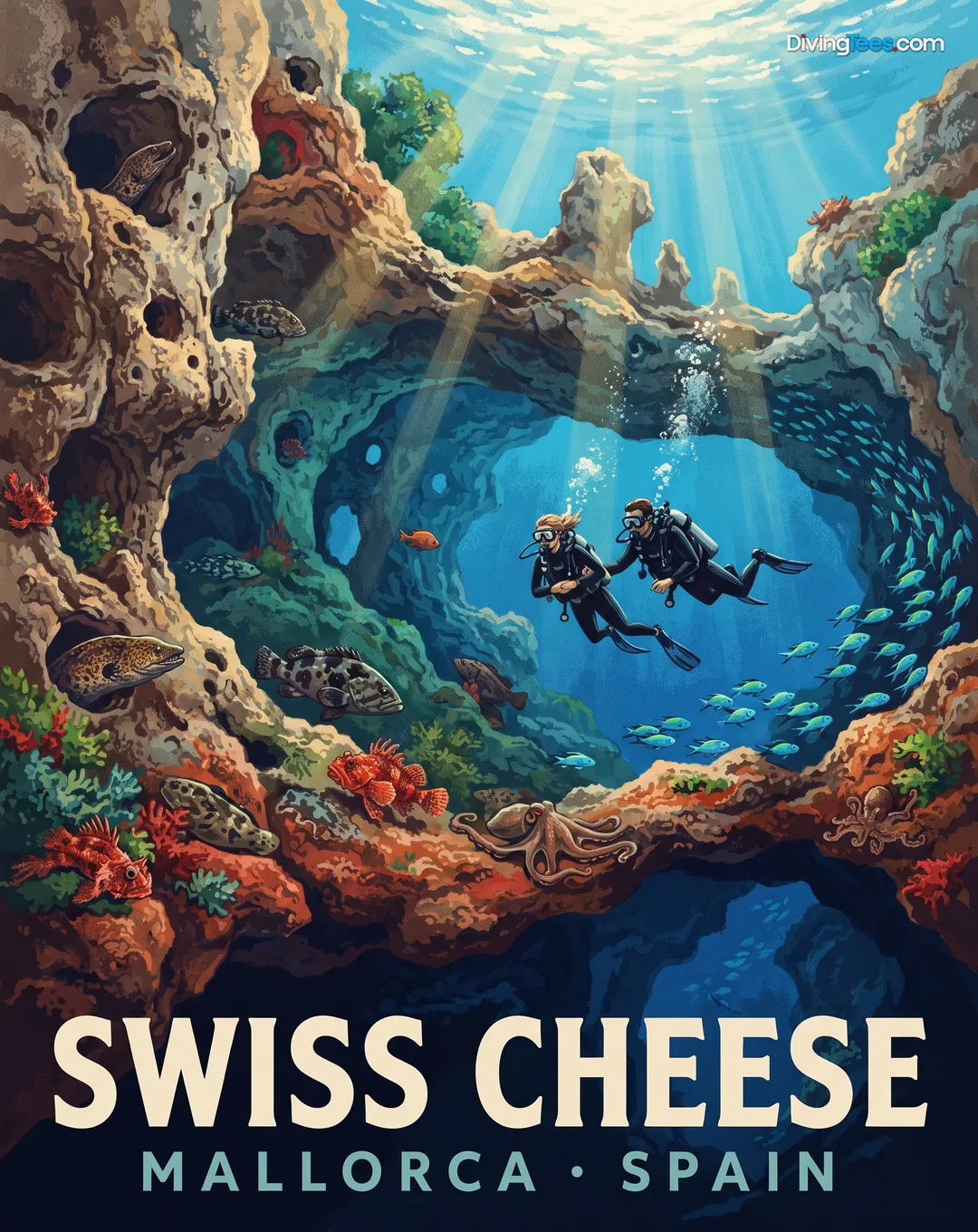
As you move toward the deeper end of the site, the geology becomes more varied and rewarding for exploration. You will encounter a natural arch and a cavern that contains a small air pocket, providing a classic cave-like experience in a relatively shallow setting. Another tunnel provides further passage through the rock, allowing for a non-linear dive plan. These features require careful buoyancy control to navigate the tighter spaces and to avoid contact with the limestone walls.
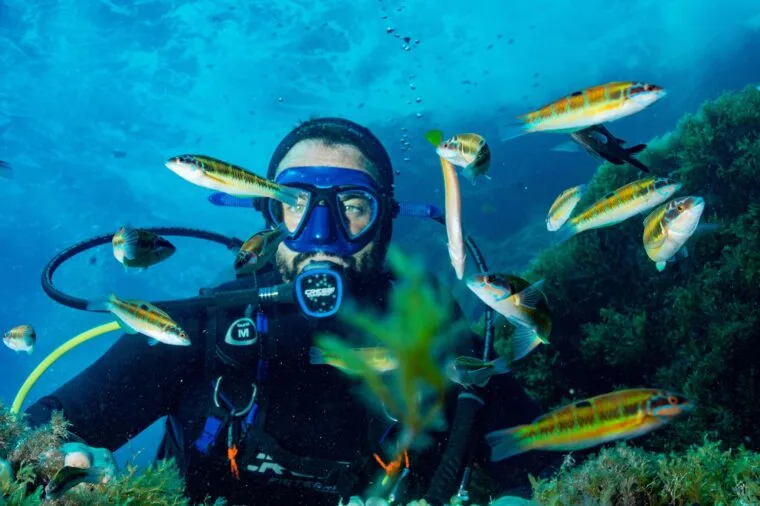
The resident fauna is closely tied to these rocky crevices and sheltered openings. You can frequently find moray eels tucked into the rocky cracks and octopus utilizing the various overhangs for cover. Larger groupers often patrol the deeper areas near the 18-metre mark, while sea bream and damselfish move in schools around the shallower sections of the cliffs. The site offers excellent opportunities for macro observation among the smaller organisms living in the cracks.
For those watching the seabed, the rock surfaces are home to a variety of invertebrates. You can find nudibranchs, shrimp, and crabs scattered across the stone, often requiring a closer look to spot. Starfish and various mollusks inhabit the crevices, adding to the biological diversity of the rocky substrate. These smaller creatures are most easily observed when you are hovering steadily near the cave entrances or within the sheltered sections of the tunnels.
The site's primary appeal lies in its structural diversity rather than high-speed pelagic action. The sequence of tunnels, arches, and caverns provides a sense of progression that is rare for such a shallow site. Instead of a simple descent down a wall, you are navigating a three-dimensional landscape of shadows and light. This makes the site particularly interesting for divers who enjoy technical navigation and exploring the architectural details of the seabed.
The site has a depth range of 5 to 18 metres. It is accessible from the Open Water Diver level, but the smaller cave sections and tighter passages are reserved for experienced divers with high proficiency in buoyancy and navigation.
Calo D'en Monjo is accessible from the Open Water Diver level. The smaller cave sections and tighter passages are intended for experienced divers with high proficiency in buoyancy and navigation. Careful control helps you avoid contact with the limestone walls while moving through the tunnels, arch, cavern, and sheltered openings.
Calo D'en Monjo ranges from 5 to 18 metres. The dive begins in shallower water, with the main L-shaped tunnel at approximately 5 to 6 metres, before continuing toward deeper sections of the bay. The rocky bottom reaches around 18 metres, where larger groupers may patrol.
At Calo D'en Monjo, you can explore an L-shaped tunnel, a natural arch, a cavern with a small air pocket, and additional underwater tunnels among rock formations. Crevices may hold moray eels, octopus, nudibranchs, shrimp, crabs, starfish, and mollusks, while sea bream and damselfish move through shallower areas.
Calo D'en Monjo lies in a U-shaped bay between two cliffs, with a solid-rock seafloor and a sequence of passages, arches, caverns, and geological transitions. You typically swim from one side of the cliffs to the other, entering the primary tunnel system and following a three-dimensional route through changing light and perspective.