
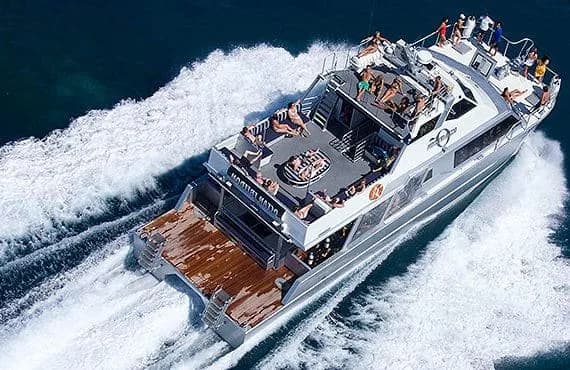
Ocean Free & Ocean Freedom - Cairns Premier Great Barrier Reef & Island Tours
★ 4.9/5 (1,520 reviews)
101 km away as the crow flies
Australia · Pacific
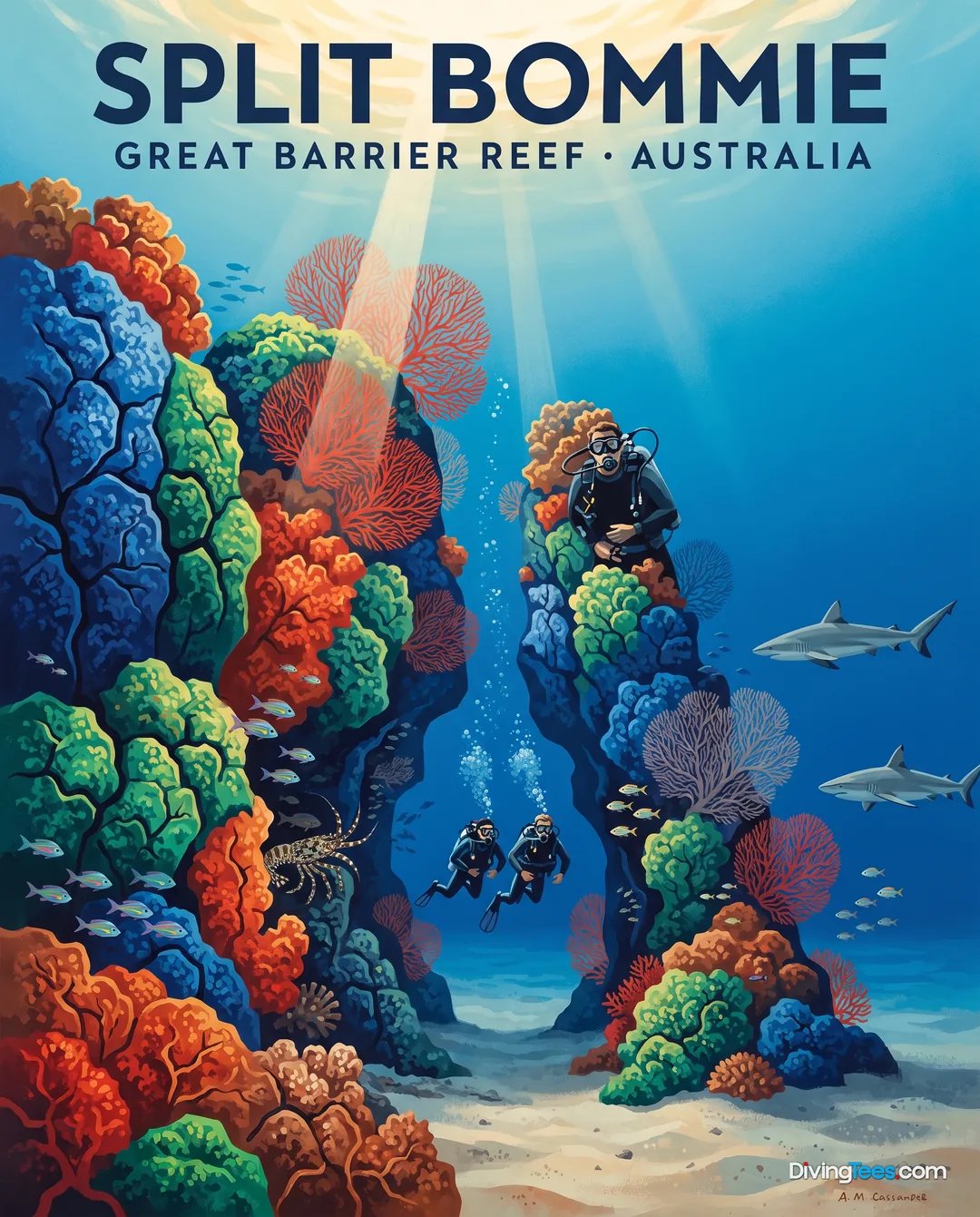
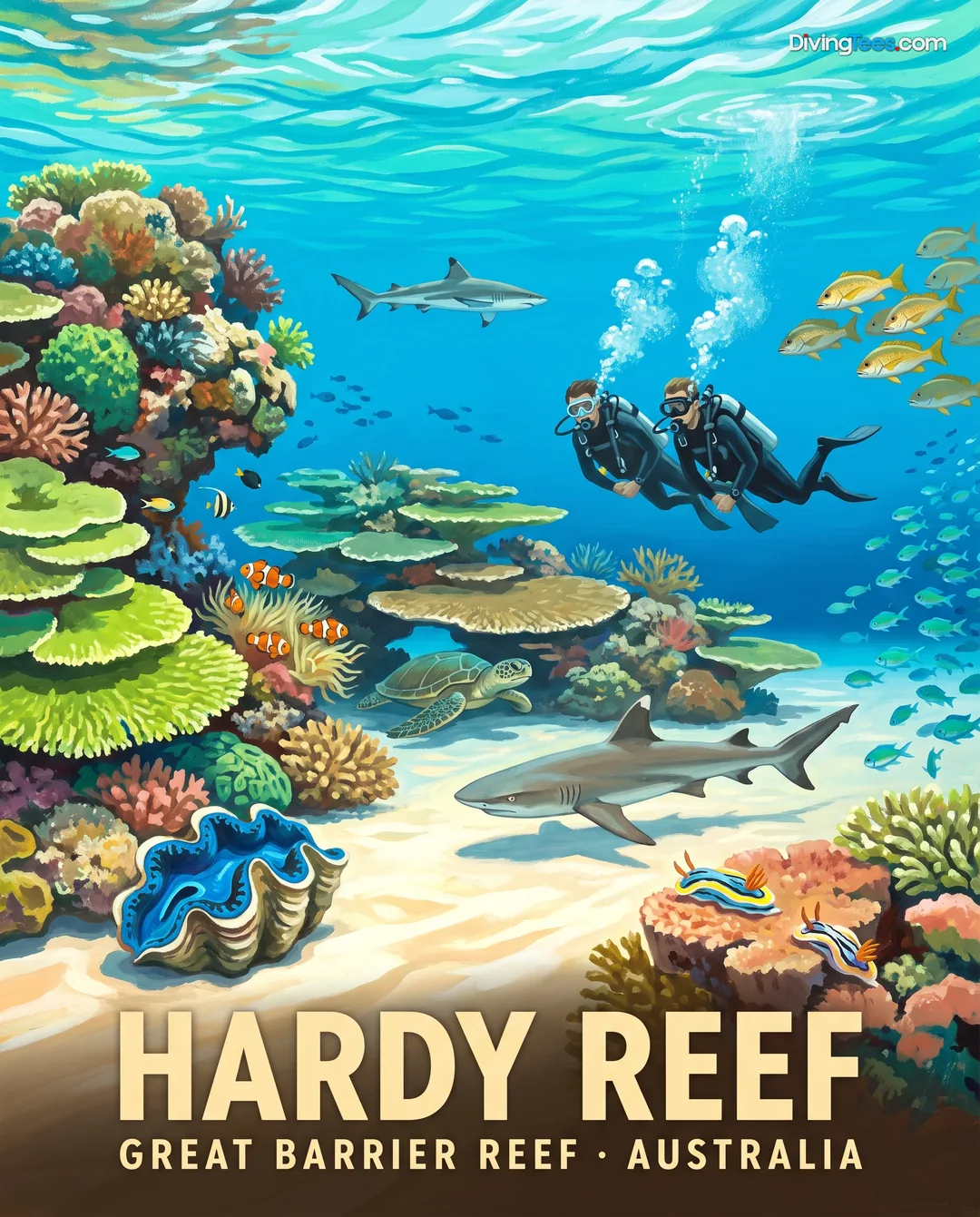
Steve’s Bommie rises from 30 metres towards the surface, while Hardy Reef offers coral gardens, reef sharks and sheltered lagoon-like water.
For subtitles in English: start the video firstthen click the gearat the top right of the video, select “Subtitles/CC”, then “Auto-translate” and choose “English”.
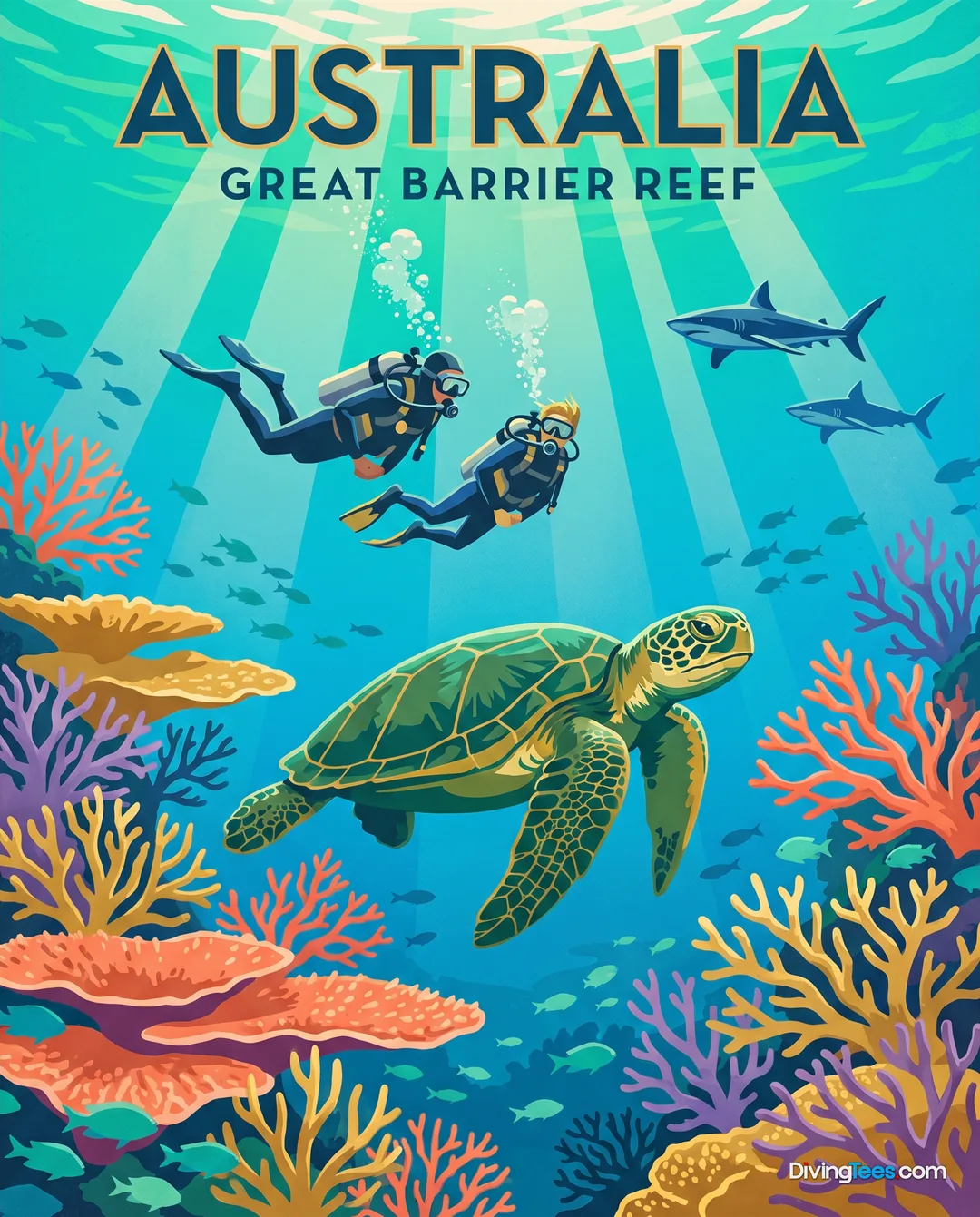
Steve’s Bommie gives a useful sense of the Great Barrier Reef: a solitary coral pinnacle, rising from 30 metres to within 5 metres of the surface, with fish packed around its walls. Elsewhere, Hardy Reef spreads into shallow gardens and lagoon-like areas, while Agincourt Reef brings a more exposed, oceanic feel. This is not a single compact dive centre around one island. It is a long reef system reached from Queensland’s coast, by day boat or liveaboard, with the Great Barrier Reef Marine Park governing how visitors use it.
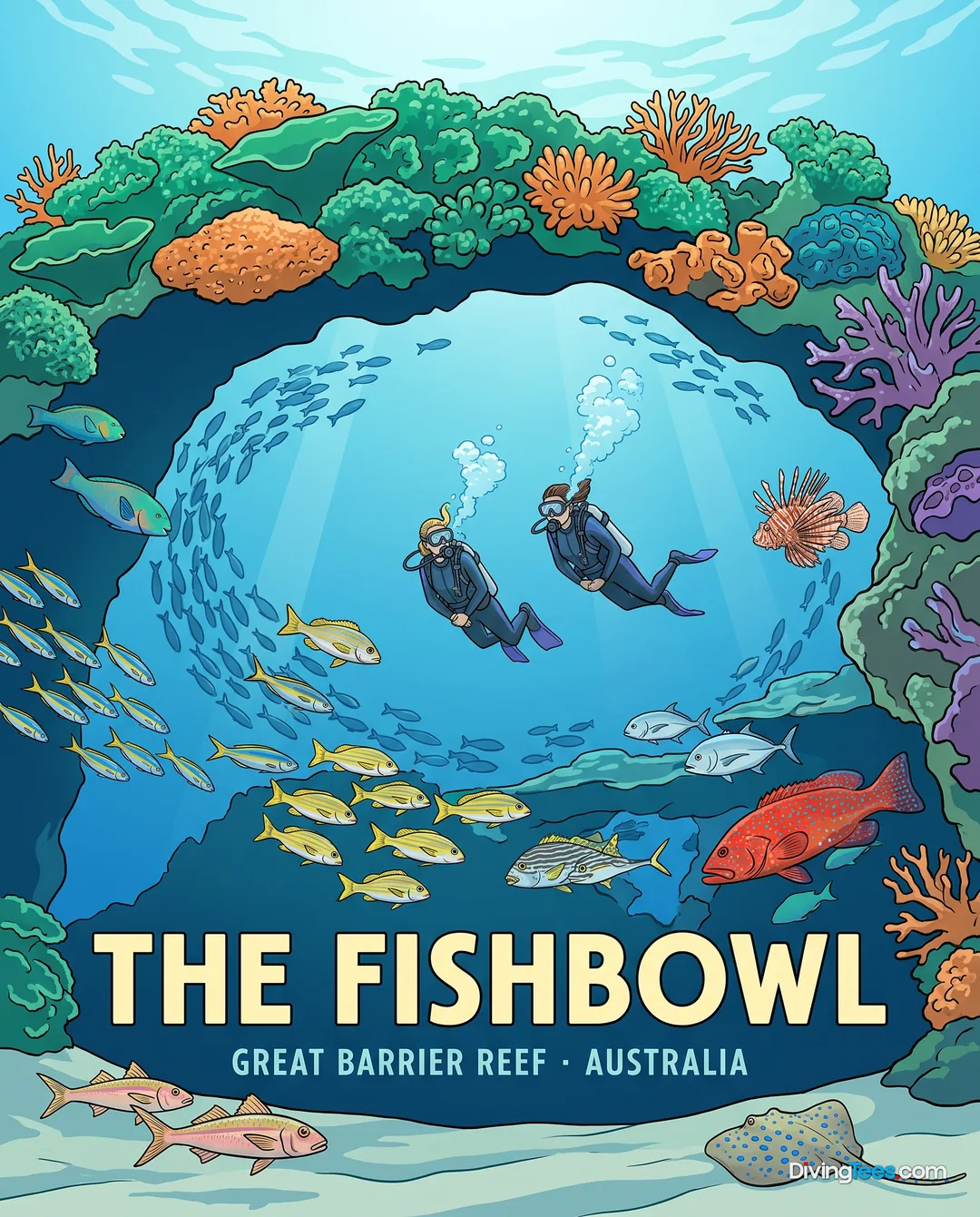
Most diving is from a boat, over coral bommies, gardens, gutters, caves and outer-reef drop-offs rather than a continuous shore reef. Steve’s Bommie is the more committed profile, running from 5 to 30 metres; Pixie Pinnacle can be spiralled from its sandy base at 30 metres almost to the surface. Hardy Reef stays shallower, from 2 to 20 metres, and its lagoon-like areas are generally calmer. Agincourt Reef reaches 25 metres, while The Fishbowl descends to 28 metres inside a bowl-shaped formation. Currents are variable and tide-led, with slack water often preferred at the pinnacles and exposed reefs. Visibility ranges from about 7 to 30 metres, depending on the site. Expect repeated boat dives, open-water movement and occasional moderate flow rather than a uniform, sheltered experience.
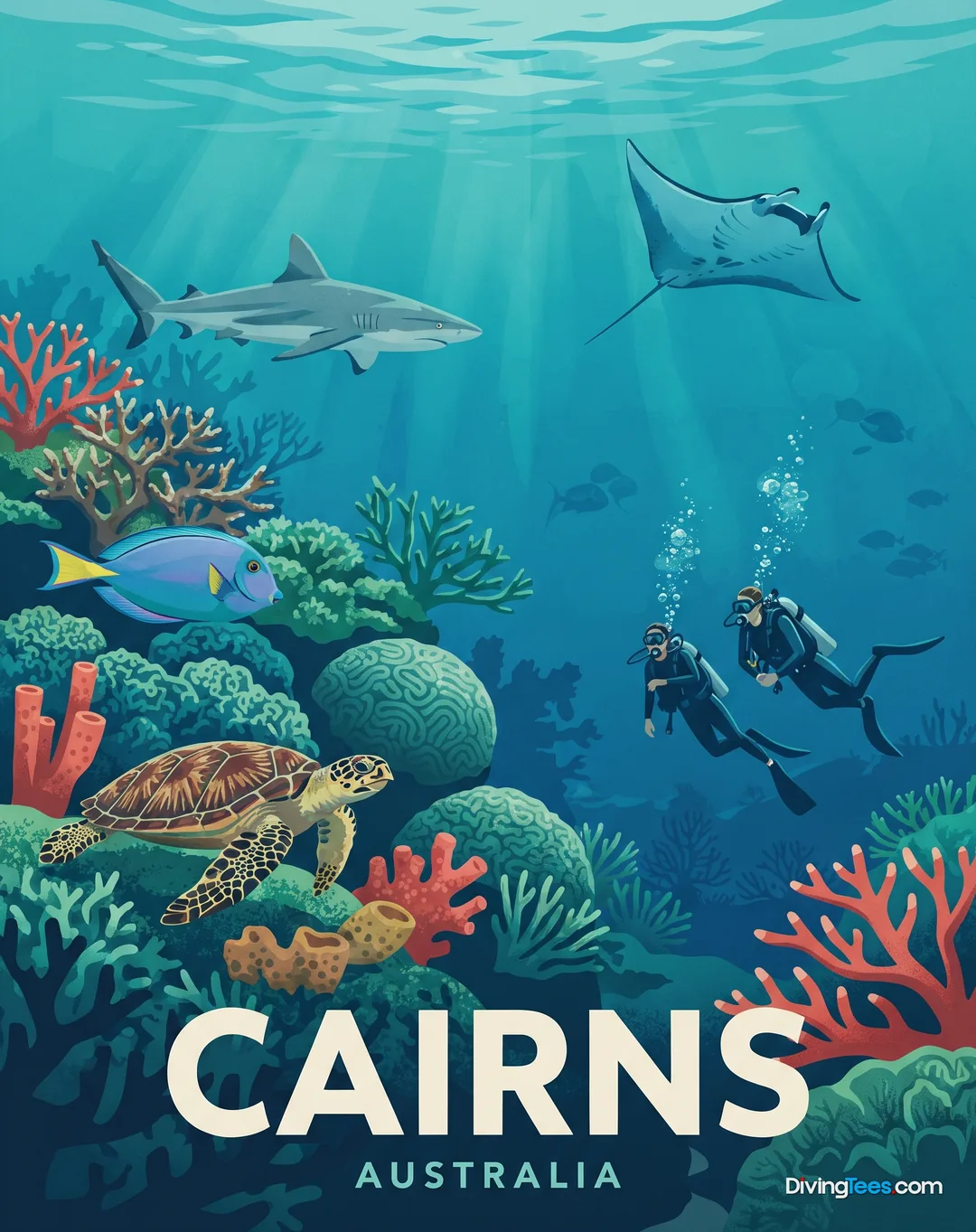
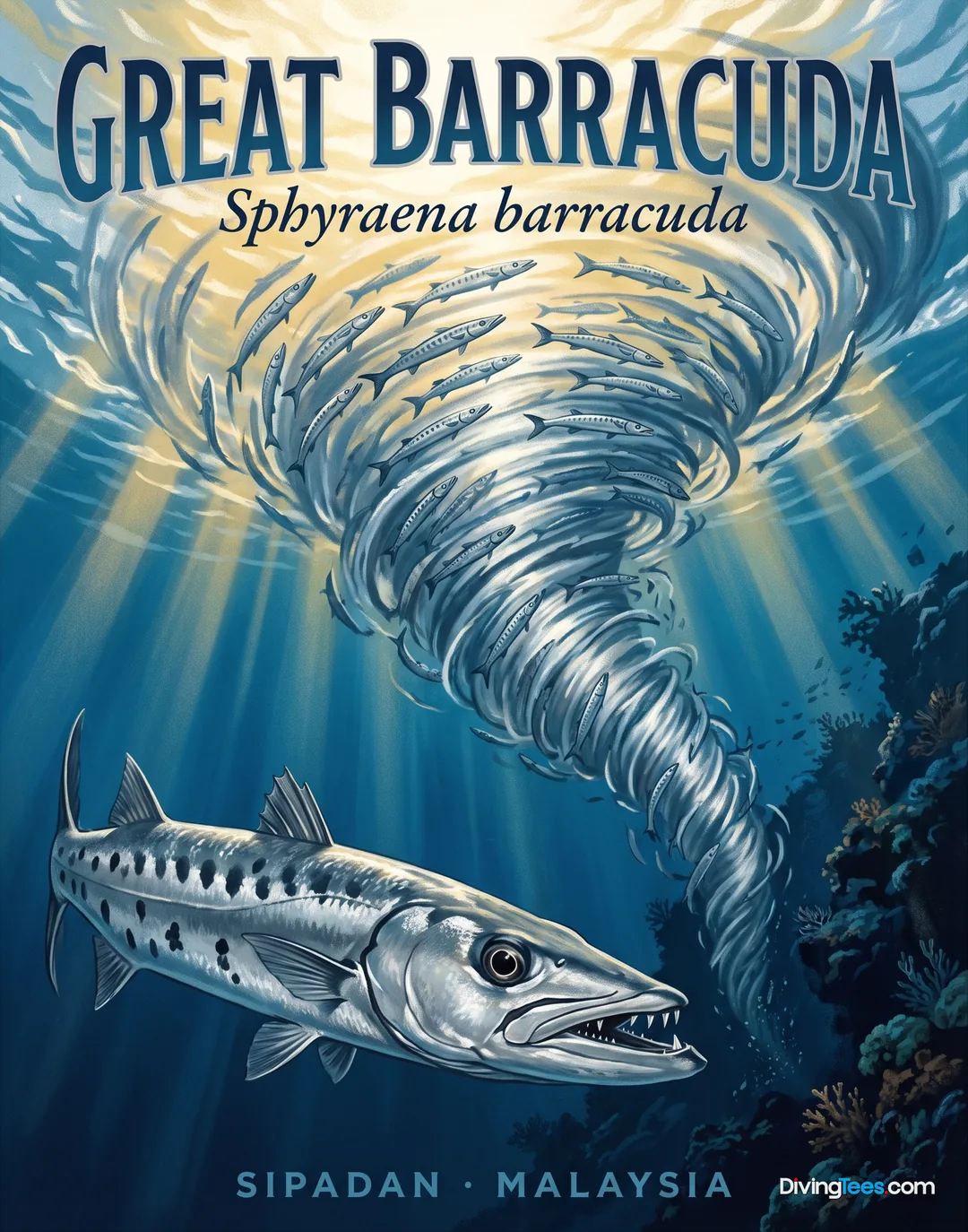
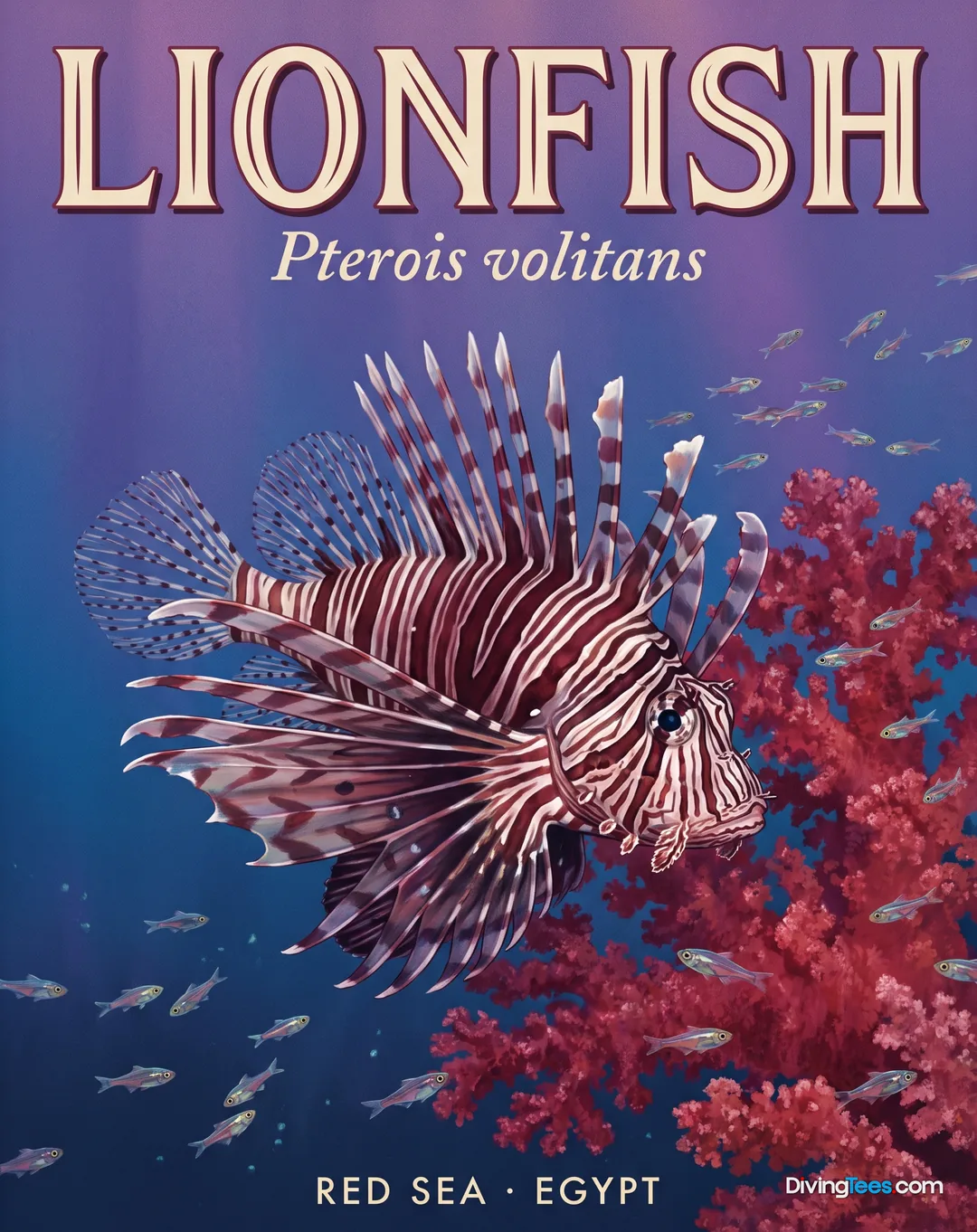
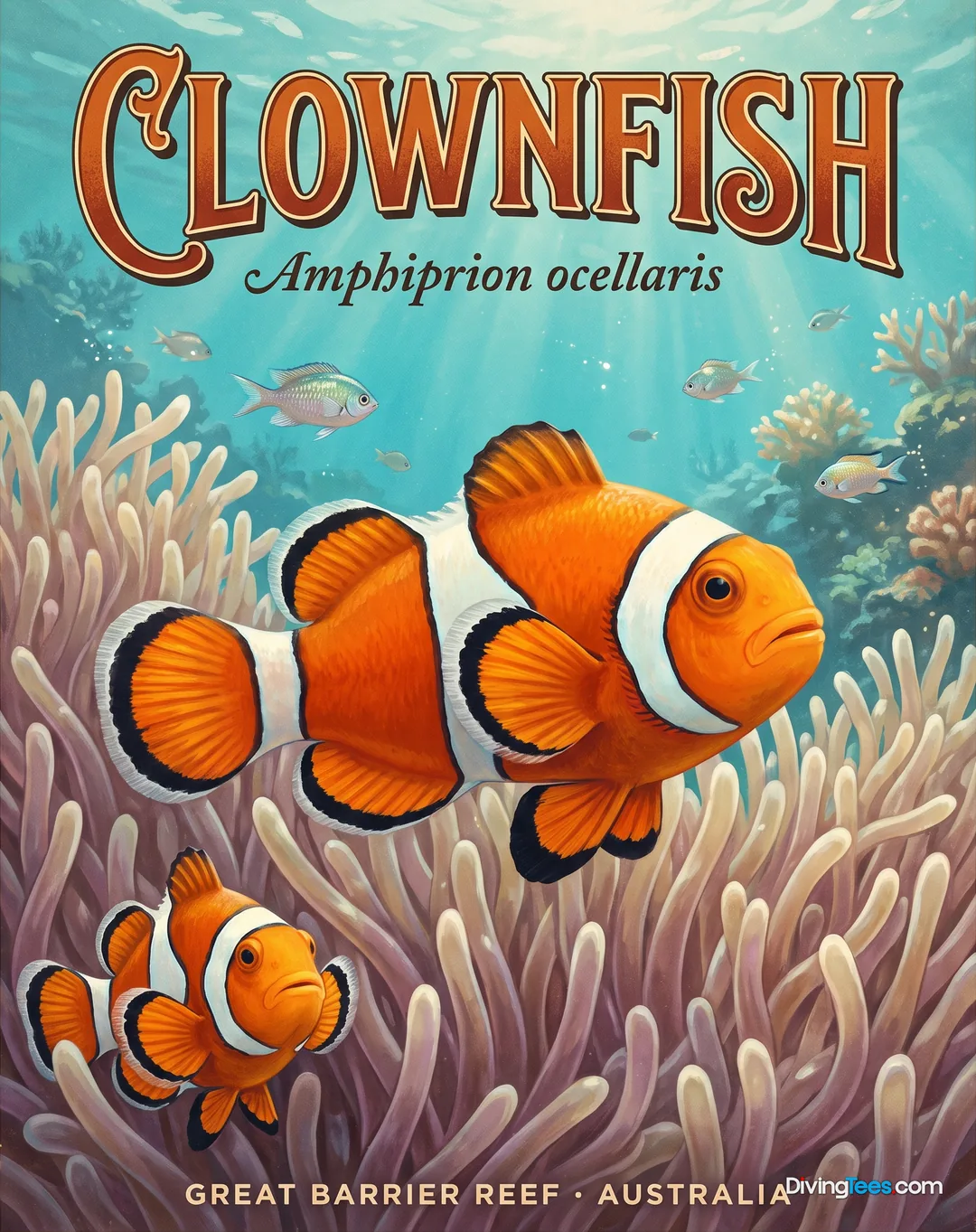
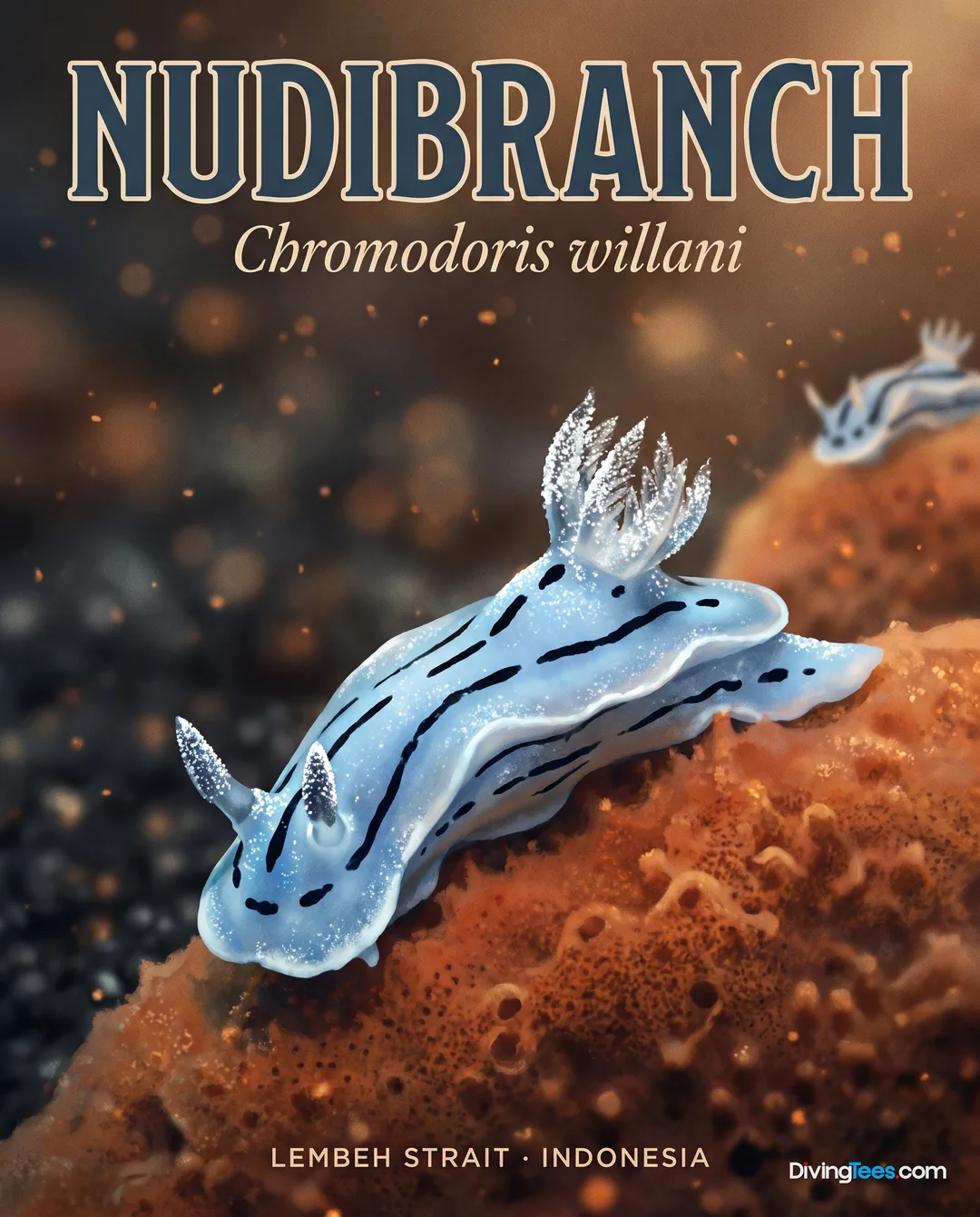
The reef’s appeal is written in the detail around each formation. Fusilier, Anthias, yellow snappers and goatfish move across the coral, with Parrotfish, Surgeonfish, Batfish and coral trout adding larger, familiar reef shapes. Look closely for pipefish, Nudibranch and Peacock mantis shrimp, particularly around coral growth, sponges and protected structure. Clownfish, Lionfish and smaller reef residents suit a slower circuit around a bommie, while Bigeye trevally, Great barracuda and grey reef sharks bring movement into the open water. Whitetip reef shark and blacktip reef sharks are part of the reef’s larger encounters. These sightings are tied to the character of the site and the day’s conditions rather than a reliable calendar of seasonal appearances, so the best approach is to vary the depth and scale of each dive.
There is no single reef-wide season that suits every departure point. The Great Barrier Reef stretches across a very large area, and the practical choice is shaped by the section being visited, the exposure of its sites, the tides and the day’s weather. Sheltered areas such as Hardy Reef can offer a calmer plan, whereas pinnacles and outer edges are more sensitive to current and sea conditions. Visibility also varies between roughly 7 and 30 metres rather than following one dependable pattern. A seven- to ten-day trip leaves room to absorb a poor boat day, repeat the most comfortable conditions and use either a coastal base or a liveaboard without reducing the holiday to one crossing.
The destination suits all levels, but “Open Water” should not be confused with effortless. Hardy Reef, Agincourt Reef and The Fishbowl can work for newer divers who are comfortable in open water, while Pixie Pinnacle and Steve’s Bommie are better choices for divers with more experience of depth, current and mid-water positioning. Advanced Open Water is useful for the deeper profiles, and Nitrox makes sense when several boat dives are planned. BSAC, PADI and SSI divers should arrive comfortable with buoyancy, repetitive diving and a sensible pace in open water.
From the UK, the journey begins with an international flight from London Heathrow, London Gatwick or Manchester to Queensland, followed by an internal connection to the coastal town serving the chosen reef section. Qantas is one airline option named for this route. The key practical point is that there is no single arrival port for the whole Great Barrier Reef: the access town depends on the sector, and remote reefs may require a long boat transfer or a liveaboard. Once in town, accommodation is normally linked to the departure port on foot, by shuttle or by taxi. Internal connections need planning, because the domestic leg and the boat departure are separate parts of the journey.
Keep the accommodation close to the port rather than choosing a dispersed base: on this reef, the transfer to the boat is often the part that complicates the day. For a short stay, several consecutive boat dives make Nitrox and a well-organised kit worthwhile, but leave enough margin for the physical effort of open-water crossings. Do not assume that a site will feel the same at every tide. Pinnacles such as Steve’s Bommie and Pixie Pinnacle are commonly planned around slack water; a changing flow can turn a relaxed circuit into a more demanding dive. A liveaboard can also make practical sense for distant sectors and can reduce time sharing the reef with day boats. On every site, stay off the coral, avoid fin strikes and never touch or collect marine life. Use moorings where provided and check the local sanctuary rules before entering the water: here, those details are part of the dive plan, not paperwork to ignore.
A seven- to ten-day stay works best as a coastal diving holiday with several boat days, or as a liveaboard focused on a more distant sector. The coastal option is easier for a mixed group: non-divers can use beaches, islands, the coast and reef-viewing boat trips while divers are offshore. A liveaboard concentrates the diving and reduces repeated transfers, but makes the schedule more dependent on sea conditions and life at sea. Either way, keeping a non-diving day available makes the itinerary less brittle.
Hello, I'm Marina, DivingDeal.com's AI assistant. I guide you through destinations, areas and countries.

Thinking about the whole trip and the flights? Talk it over with Edith →
Marina is an AI. Some links are affiliate links: DivingDeal may earn a commission, at no extra cost to you. Bookings are made with the partner.
★ 4.9/5 (1,520 reviews)
101 km away as the crow flies
★ 5/5 (207 reviews)
103 km away as the crow flies

★ 4.8/5 (298 reviews)
101 km away as the crow flies
★ 4.8/5 (100 reviews)
101 km away as the crow flies
★★★★
★ 9.1/10 (1,006 reviews)
101 km away as the crow flies
★★★★★
★ 8.4/10 (3,673 reviews)
101 km away as the crow flies
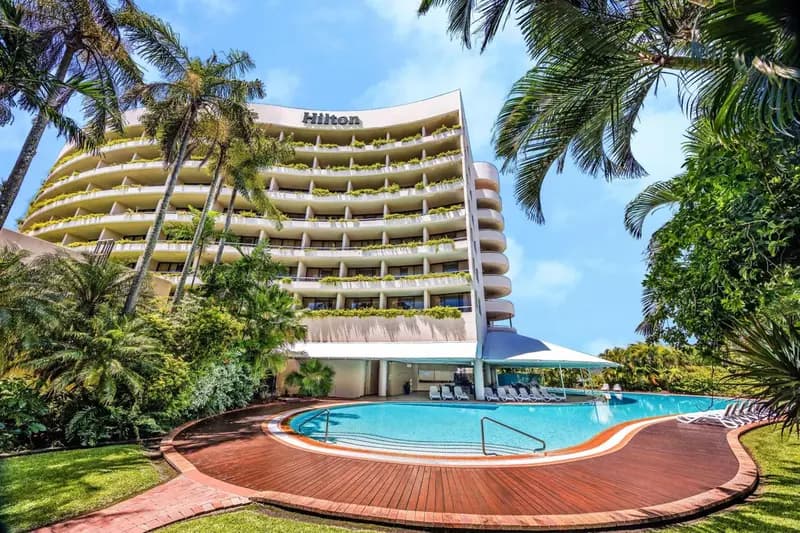
★★★★★
★ 8.4/10 (2,444 reviews)
101 km away as the crow flies
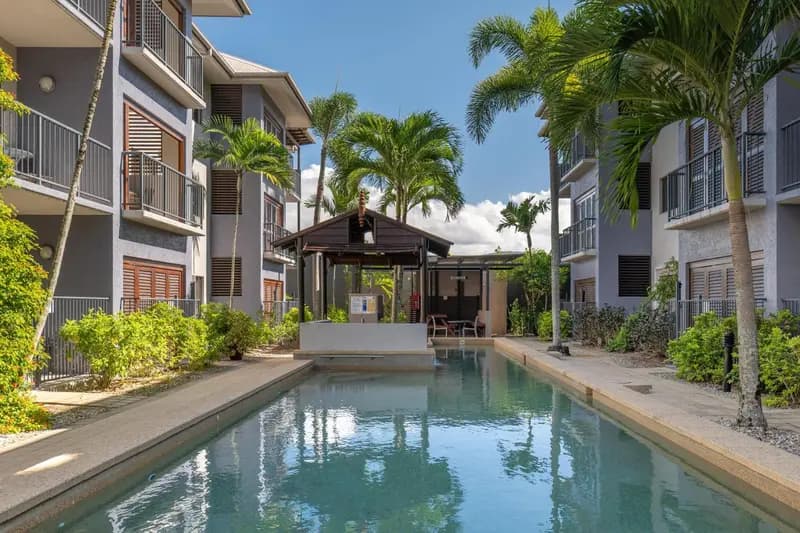
★★★★
★ 8.4/10 (1,685 reviews)
101 km away as the crow flies