Liveaboards · Egypt
Blue Melody — a seasoned Red Sea workhorse built around serious diving
What makes this boat unique
- Blue Melody carries up to 26 divers and offers shaded dive-deck space, a platform and two diver tenders.
- The route reaches Brothers, Daedalus and Elphinstone, with additional northern wreck-and-reef itineraries.
- Classic Twin cabins are air-conditioned with private bathrooms; Premium Double cabins are on the upper deck.
- Nitrox is available, produced through a membrane system served by two Bauer compressors.
- Crew and food are the boat's strongest points, scoring 9.2 and 9.7 respectively in passenger ratings.
For subtitles in English: start the video firstthen click the gearat the top right of the video, select “Subtitles/CC”, then “Auto-translate” and choose “English”.
The invitation
Blue Melody is for divers who want the Red Sea's long-running names on one itinerary rather than a resort stay with occasional boat trips. The draw is the range: remote oceanic reefs at Brothers and Daedalus, steep walls at Elphinstone, and northern routes built around wrecks and reefs. It is a large wooden liveaboard, not an intimate yacht, but that gives the dive operation room to handle a full complement of divers without making the boat's social spaces feel like an afterthought. The crew is the reason to look twice. Passenger ratings put it ahead of the vessel itself, with particularly strong marks for the guides, service and food. That matters on a seven-night trip: when the boat has some age to it, a crew that keeps the diving, meals and daily logistics sharp is what turns the hull into a good week at sea.
Boarding
Blue Melody makes the impression of a proper Red Sea liveaboard: a broad wooden hull, working dive spaces and enough room for a full group to move without treating every passage as a queue. The vessel was built in 2007 and renovated in 2016, so the character is practical rather than showroom-new. Boarding leads into an air-conditioned interior salon and dining area, while the upper deck opens onto shaded seating and a bistro. The layout separates the places used between dives from the dive deck itself, which keeps wet kit and quiet time from competing for the same patch of floor. Two Cat engines do the work underway. The boat is large enough that passengers will not know every voice immediately, but the capacity is still limited to one dive group of 26 rather than a floating resort crowd.
The atmosphere on board
The atmosphere is shaped less by luxury than by the people running the week. The crew scores 9.2, above the boat's 8.6, and passenger feedback consistently points to helpful service and guides who are both competent and easy to work with. That is the useful distinction here: the crew carries the human side of a vessel that has already lived a working life. English is spoken on board, so briefings, requests and the small decisions around current, entry and recovery stay clear. The strongest shared space is likely to be the table, where the food score of 9.7 gives the group a reason to remain together after a dive. The boat suits divers who value a capable routine and a crew that notices what needs doing, rather than those looking for a brand-new interior as the main event.
The sites you’ll dive
The eight-day, seven-night departures return from Hurghada to Hurghada. Brothers, Daedalus and Elphinstone is the strongest pelagic-focused route: Elphinstone drops down dramatic walls to -60m, while Brothers reaches -85m across isolated oceanic reefs; Big Brother adds steep walls, current and two wrecks at -40m. Daedalus is another remote pinnacle with dramatic walls and a maximum of -40m. Northern Red Sea & Brothers combines the offshore reefs with northern sites, while Northern Red Sea Wrecks & Reefs centres the trip on the region's wreck-and-reef character, including the Abu Nuhas wreck cemetery and the SS Thistlegorm in the advertised Ultimate Red Sea programme. Closer reefs give the itinerary more varied profiles. Shaab Ruhr Umm Gamar reaches -40m, moving from a fish-filled oval reef to pinnacles and at least three wreck remnants. El Fanadir reaches -40m and has a wall, cavities and a cleaning station. Shaab Sabina is a labyrinthine coral garden at -14m. El Fanous West and East stay shallow at -15m and -18m, with lagoons, coral gardens and dolphins. Marsa Egla reaches -30m, Marsa Mubarak -25m, House Reef -40m and Shaab Alam -30m, adding seagrass, caves, a submerged wreck and coral gardens. Shaab El Erg completes the route with a classic Red Sea reef and possible dolphins.
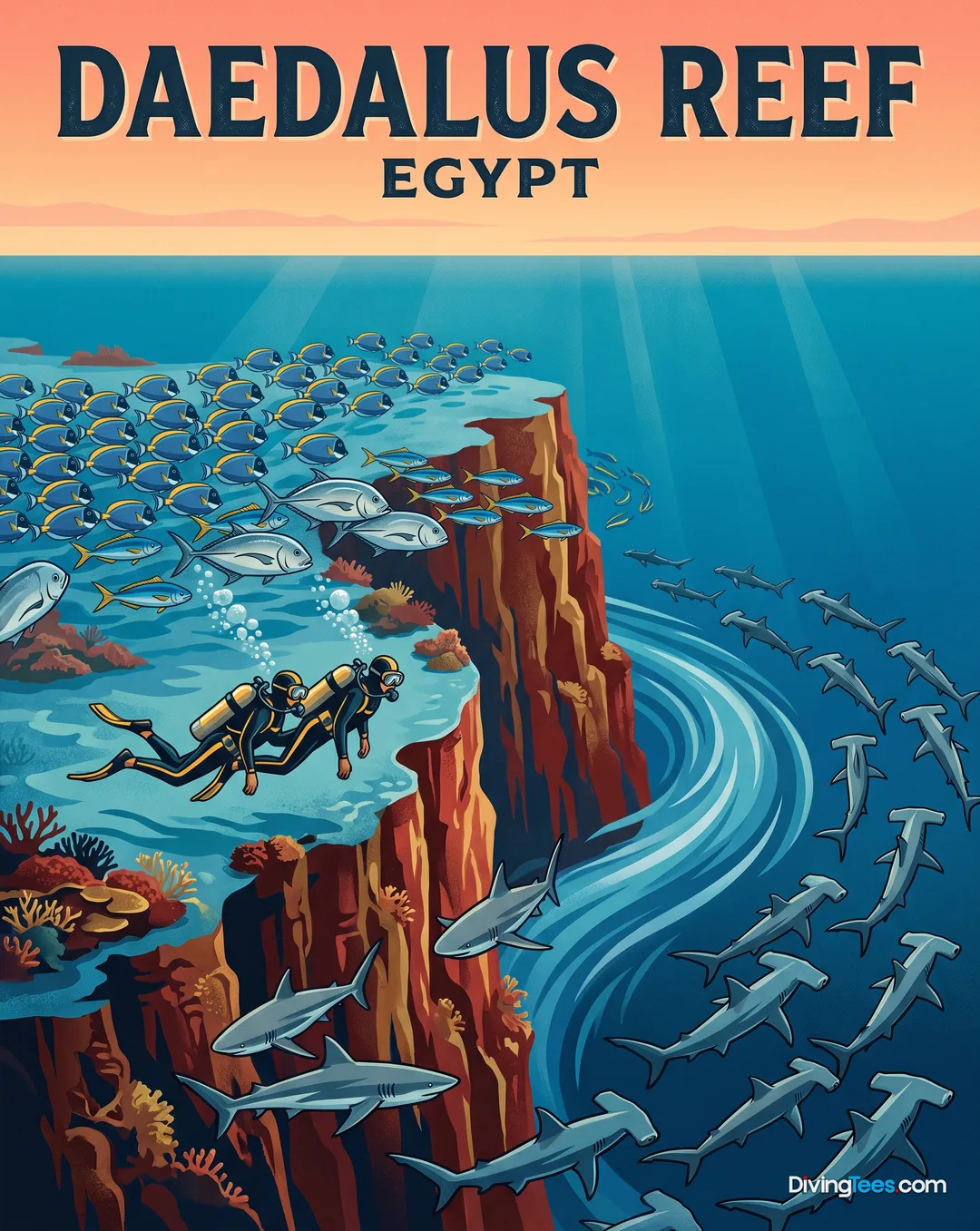
Daedalus →
Max. depth · 40 m
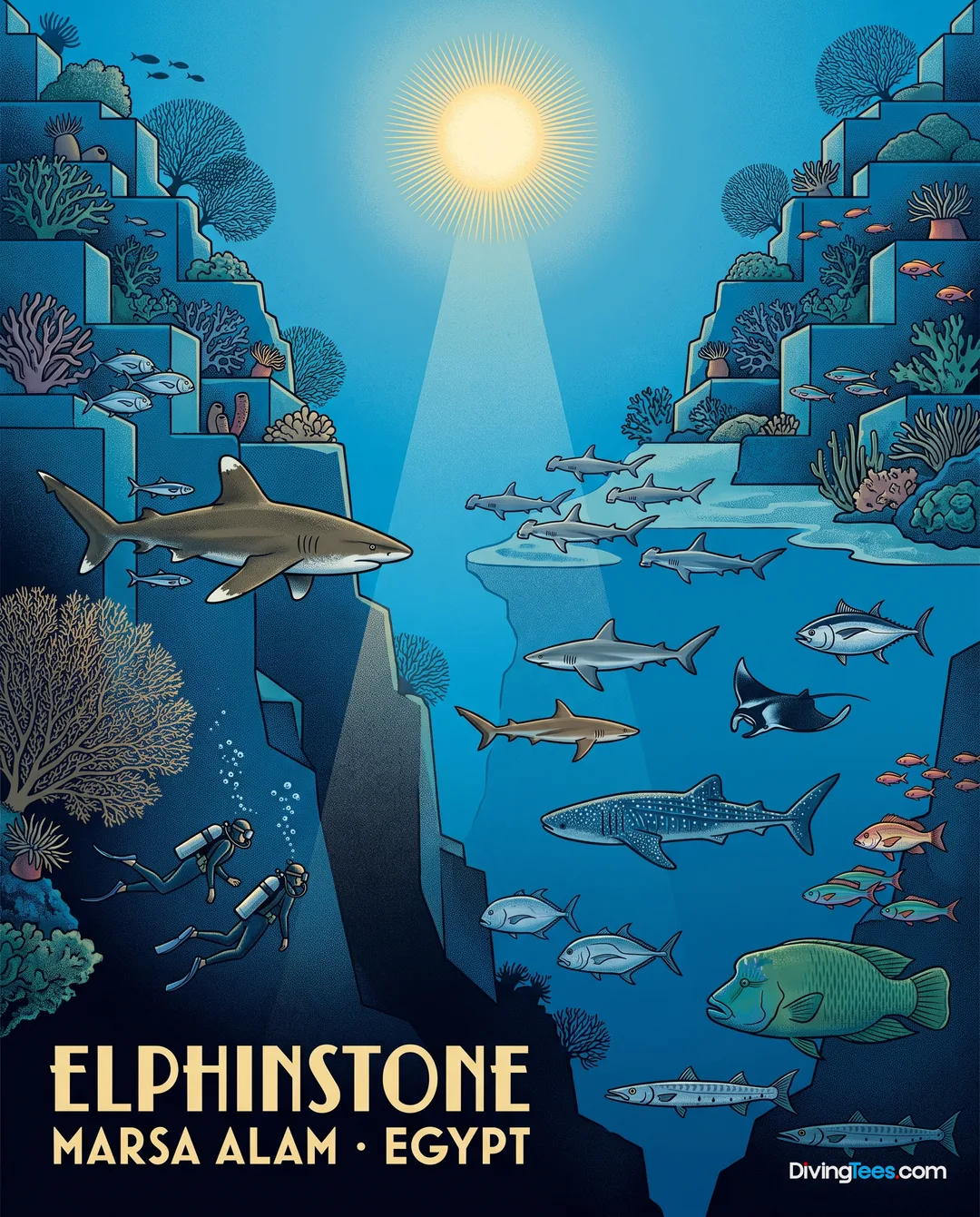
Elphinstone →
Max. depth · 60 m
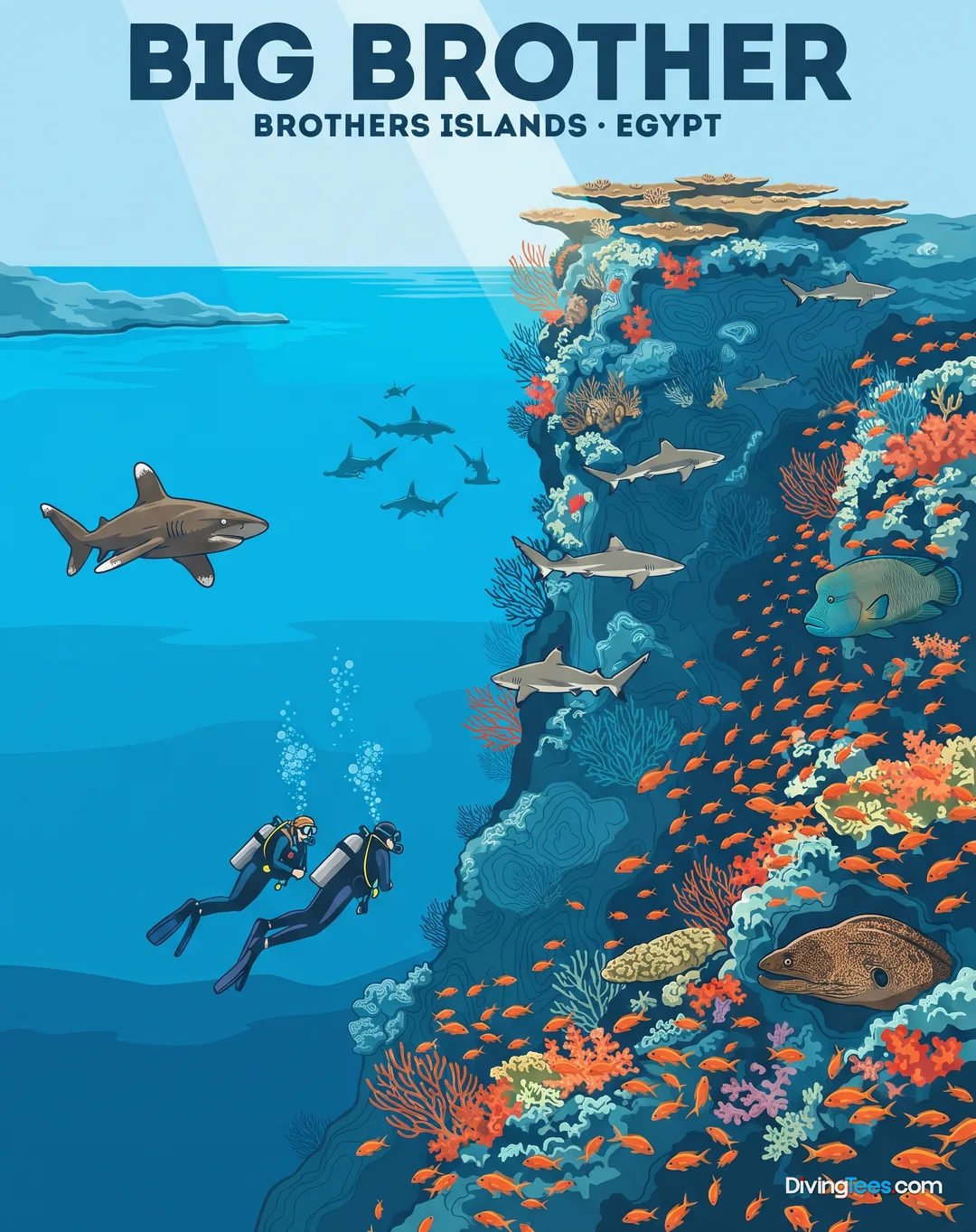
Big Brother →
Max. depth · 40 m
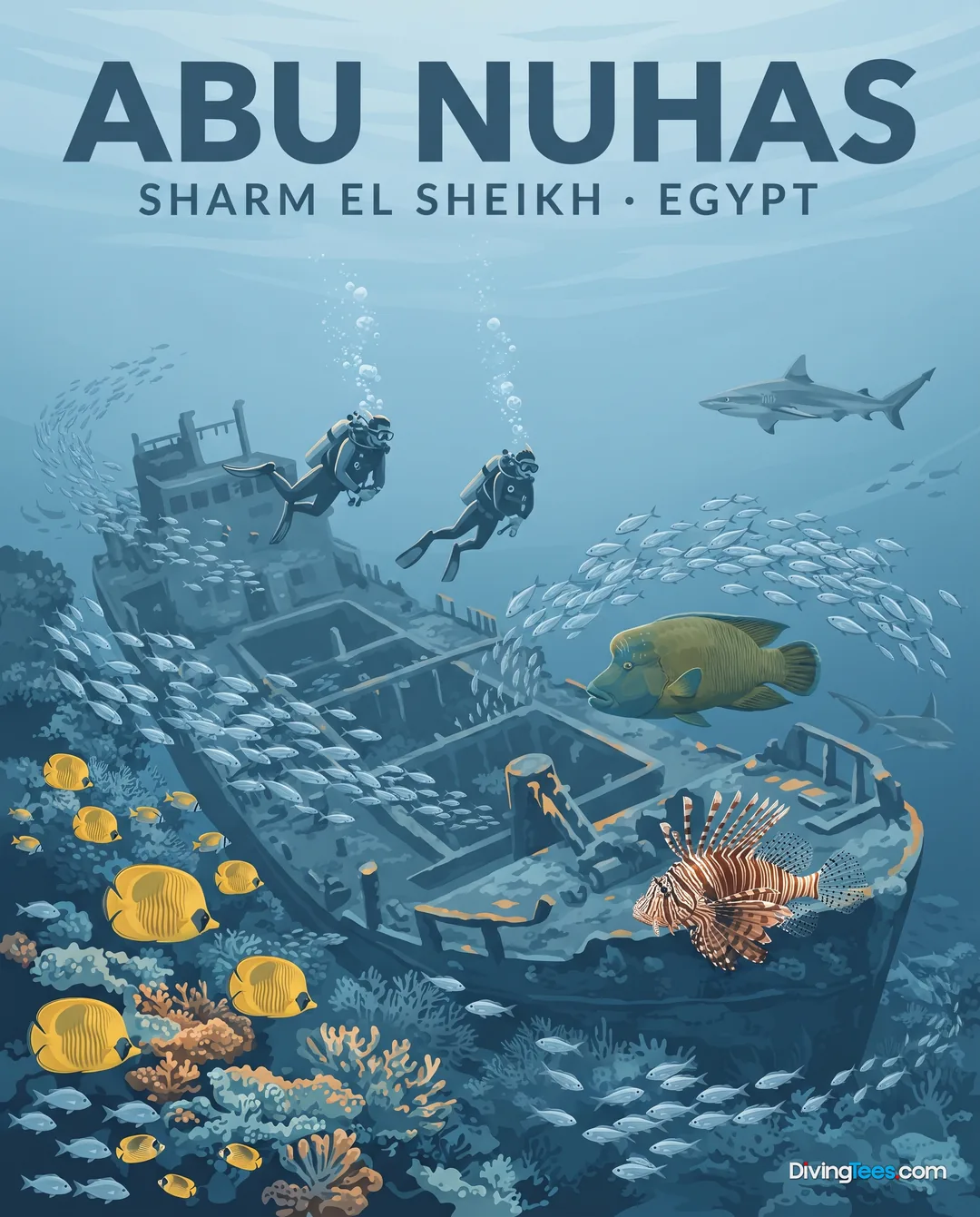
Abu Nuhas →
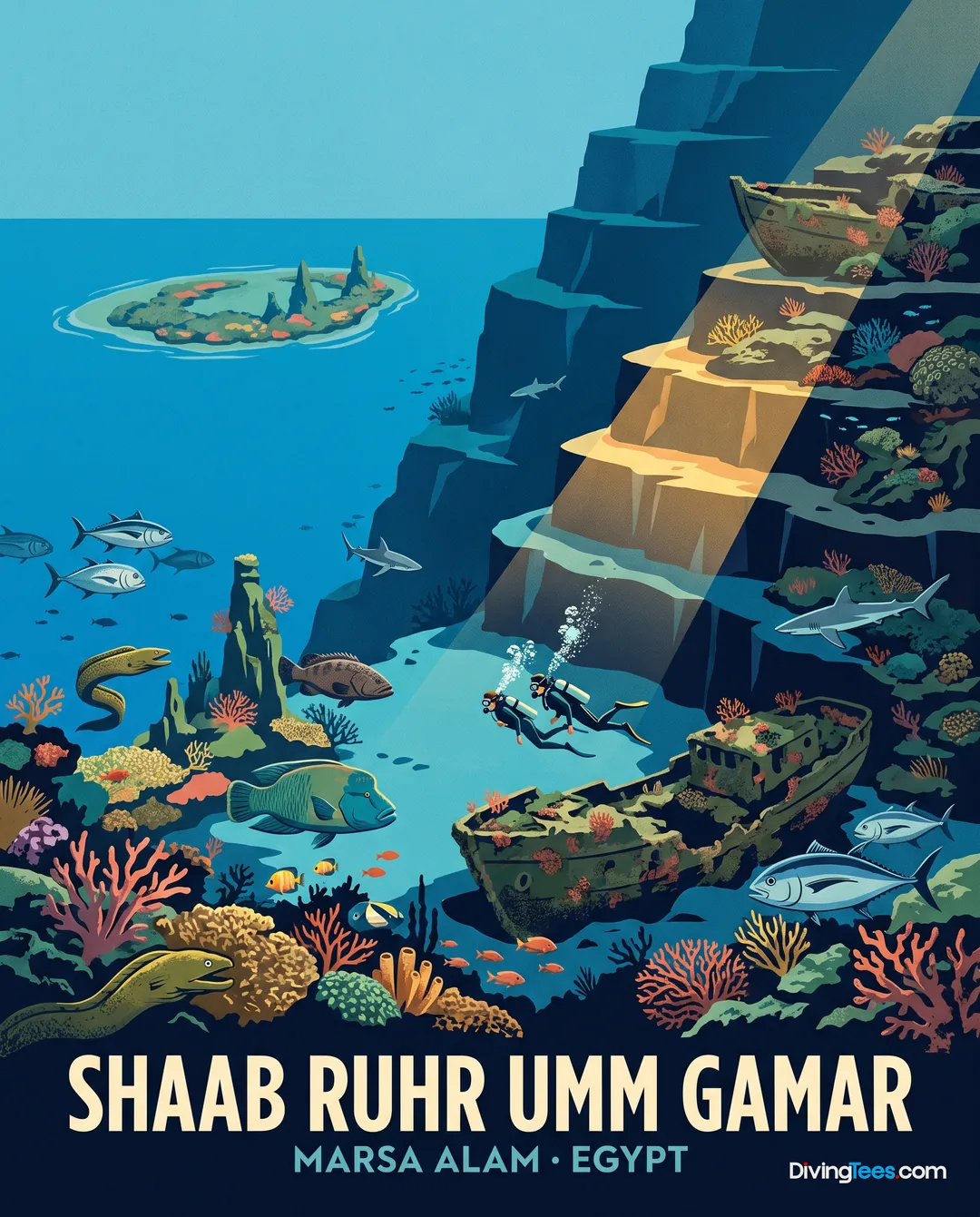
Shaab Ruhr Umm Gamar →
Max. depth · 40 m
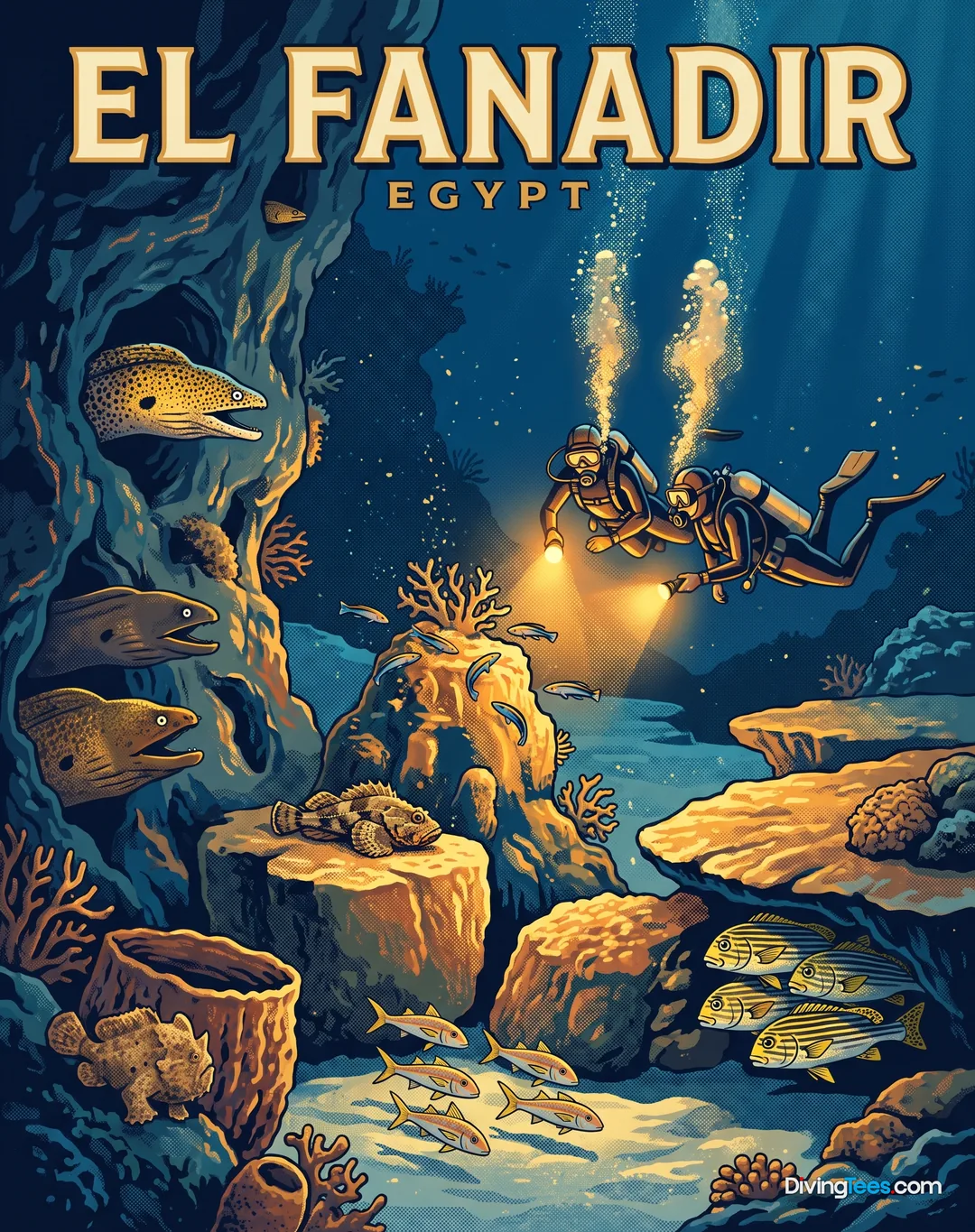
El Fanadir →
Max. depth · 40 m
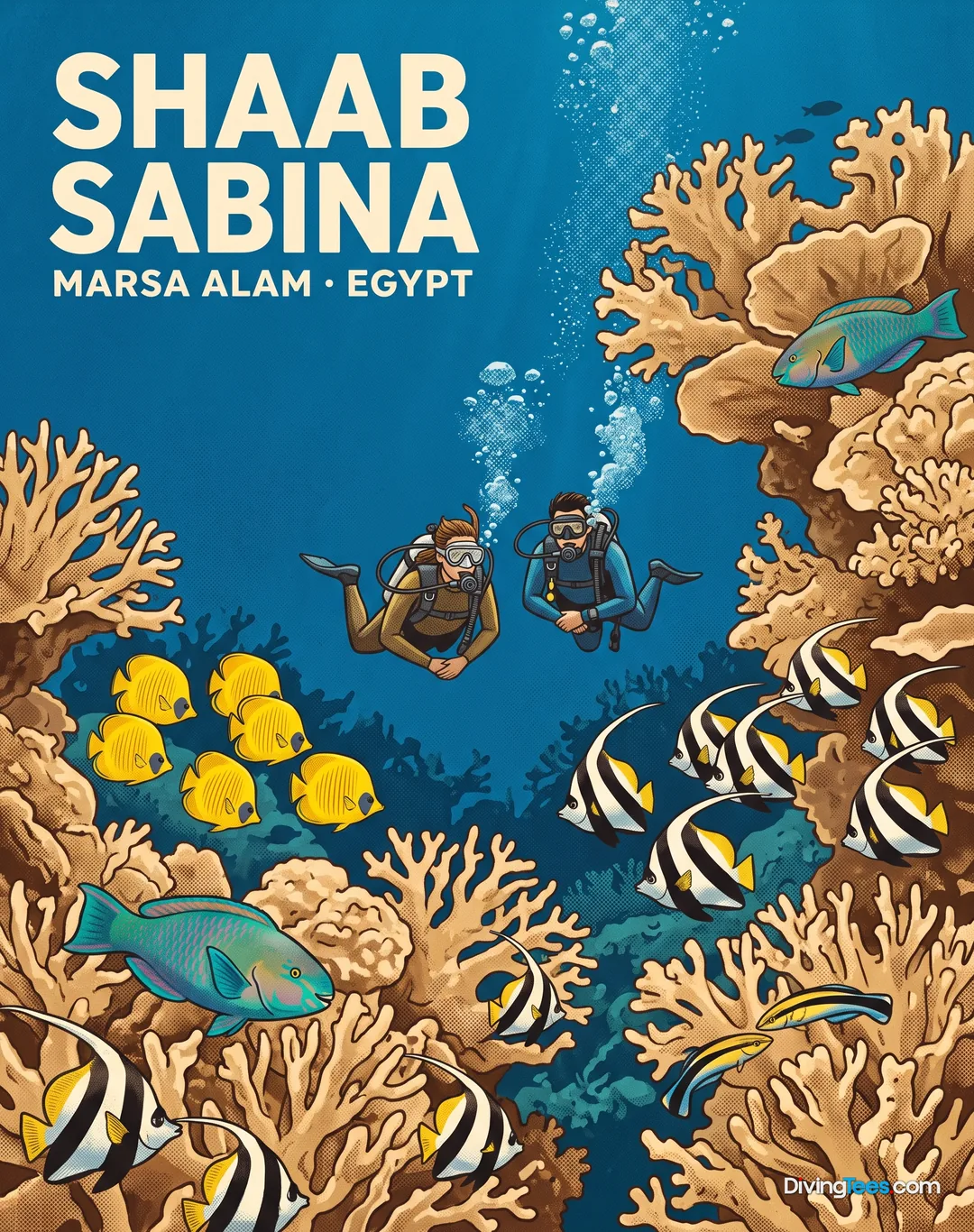
Shaab Sabina →
Max. depth · 14 m
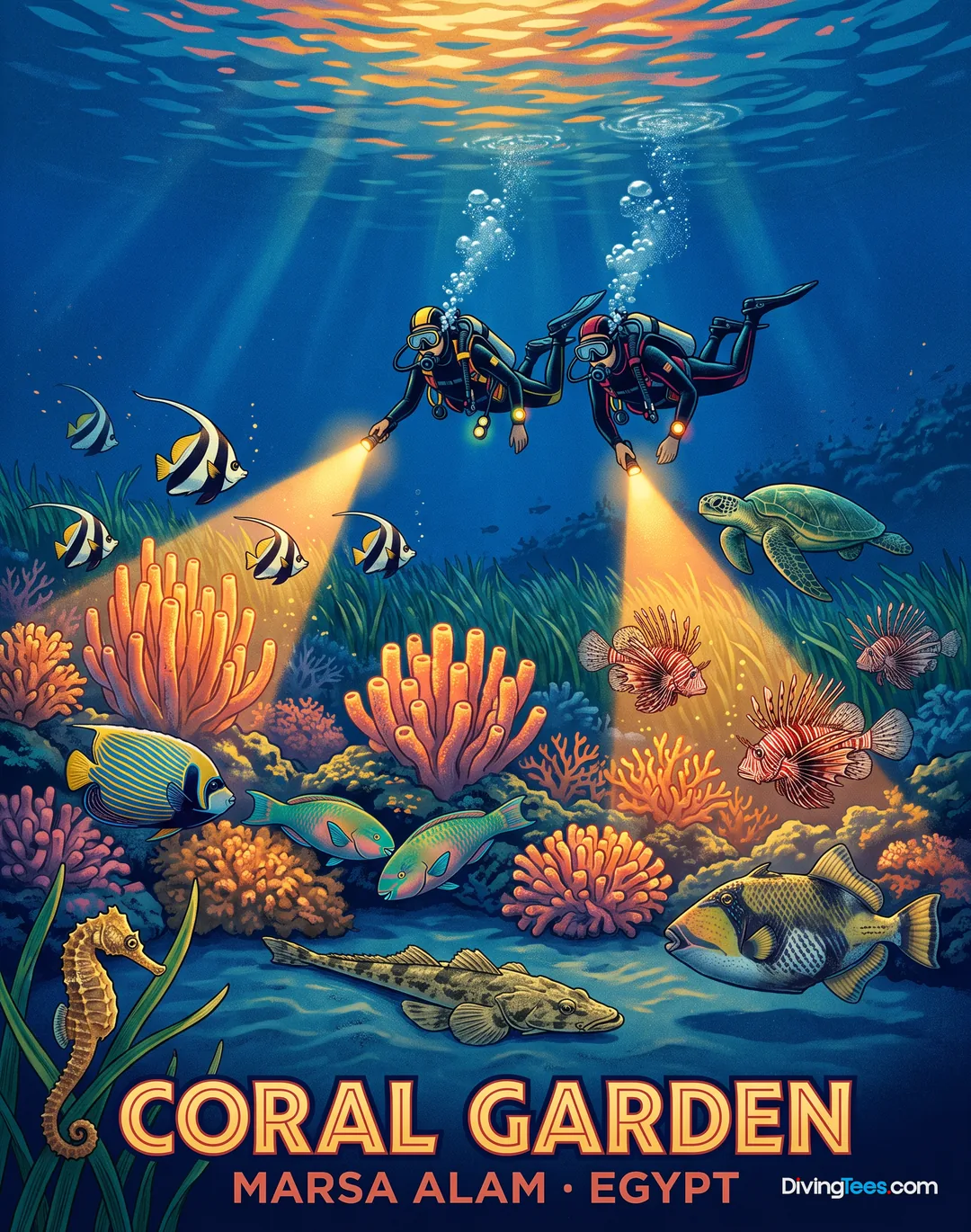
Coral Garden →
Max. depth · 20 m
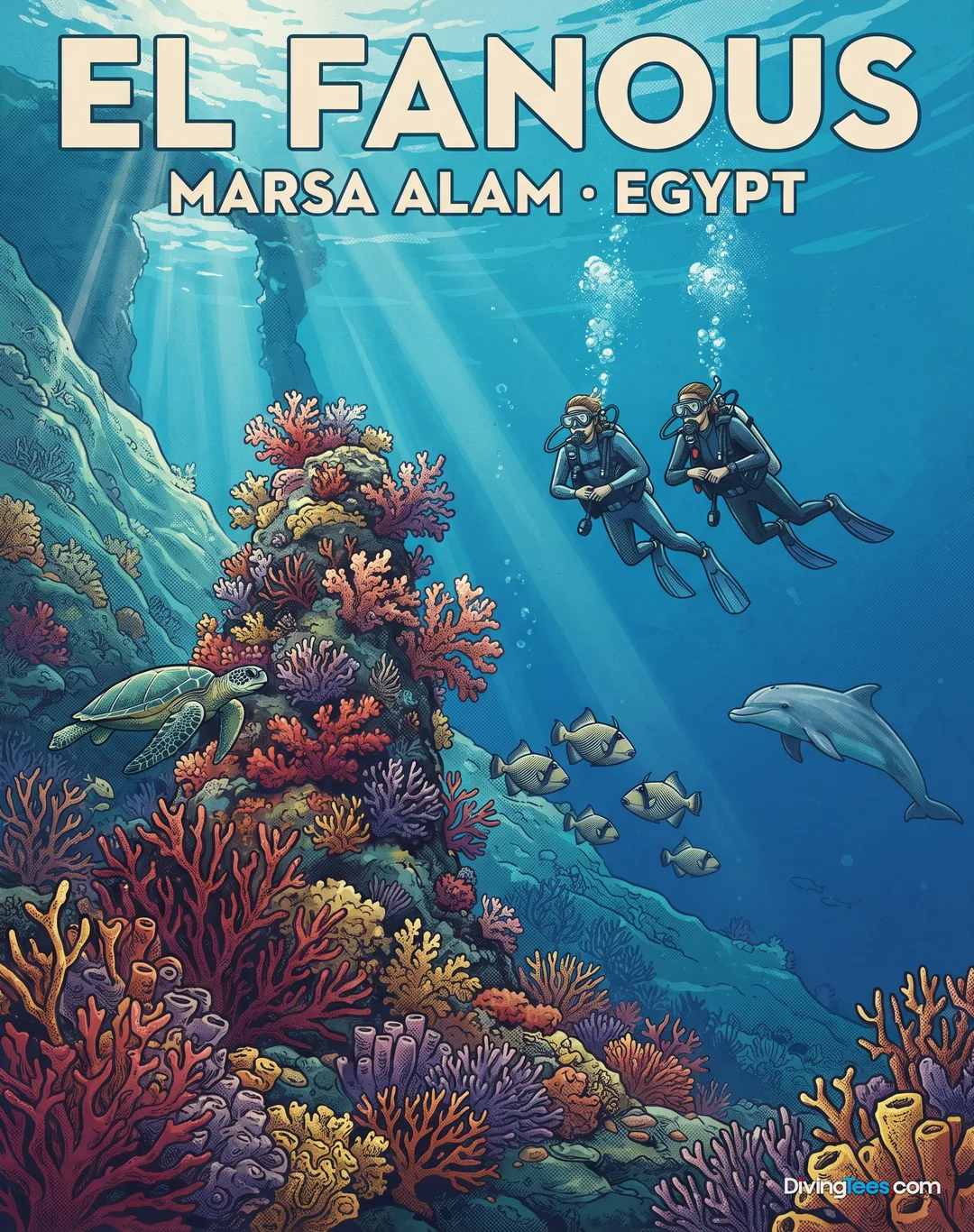
El Fanous →
Max. depth · 27 m
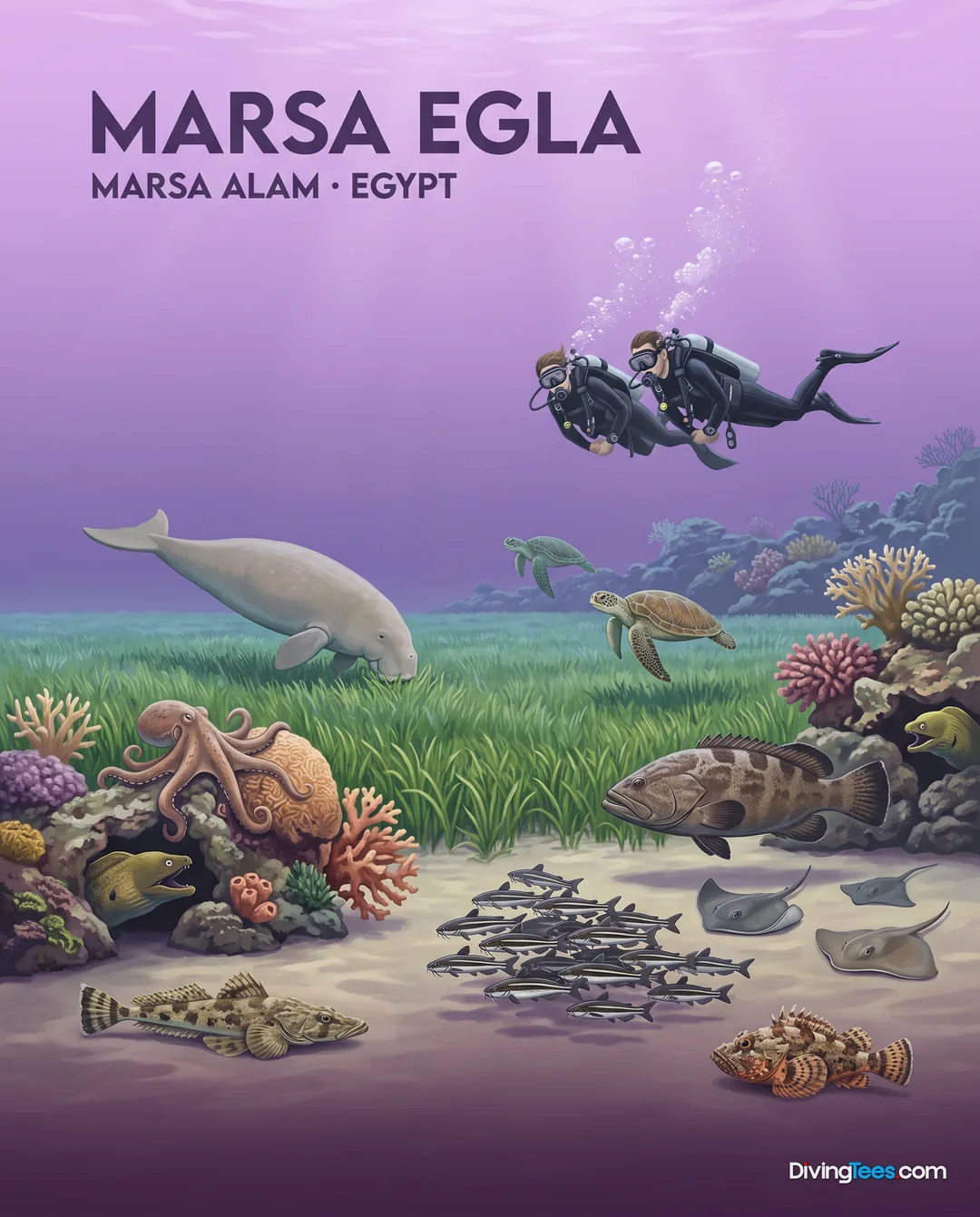
Marsa Egla →
Max. depth · 30 m
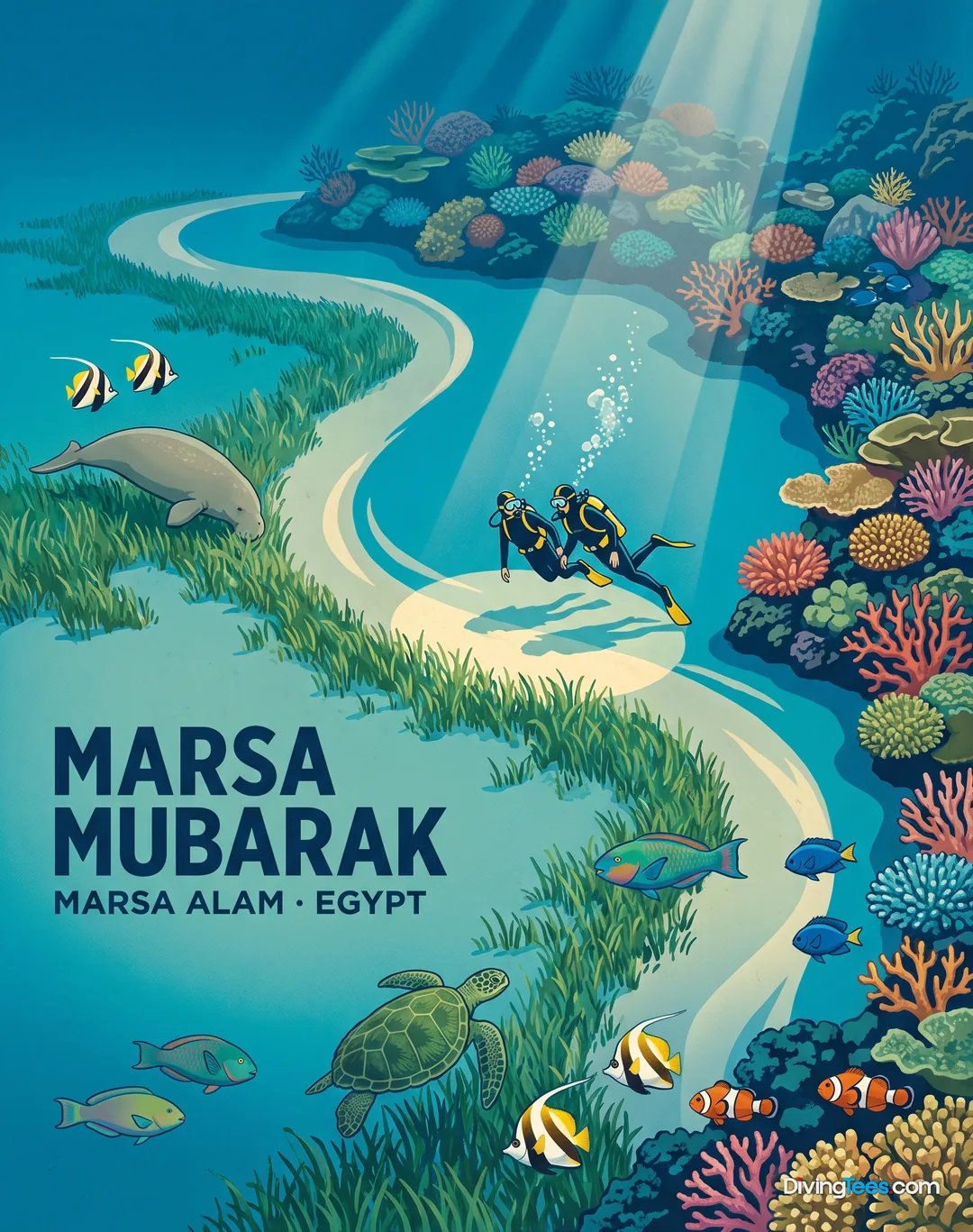
Marsa Mubarak →
Max. depth · 25 m
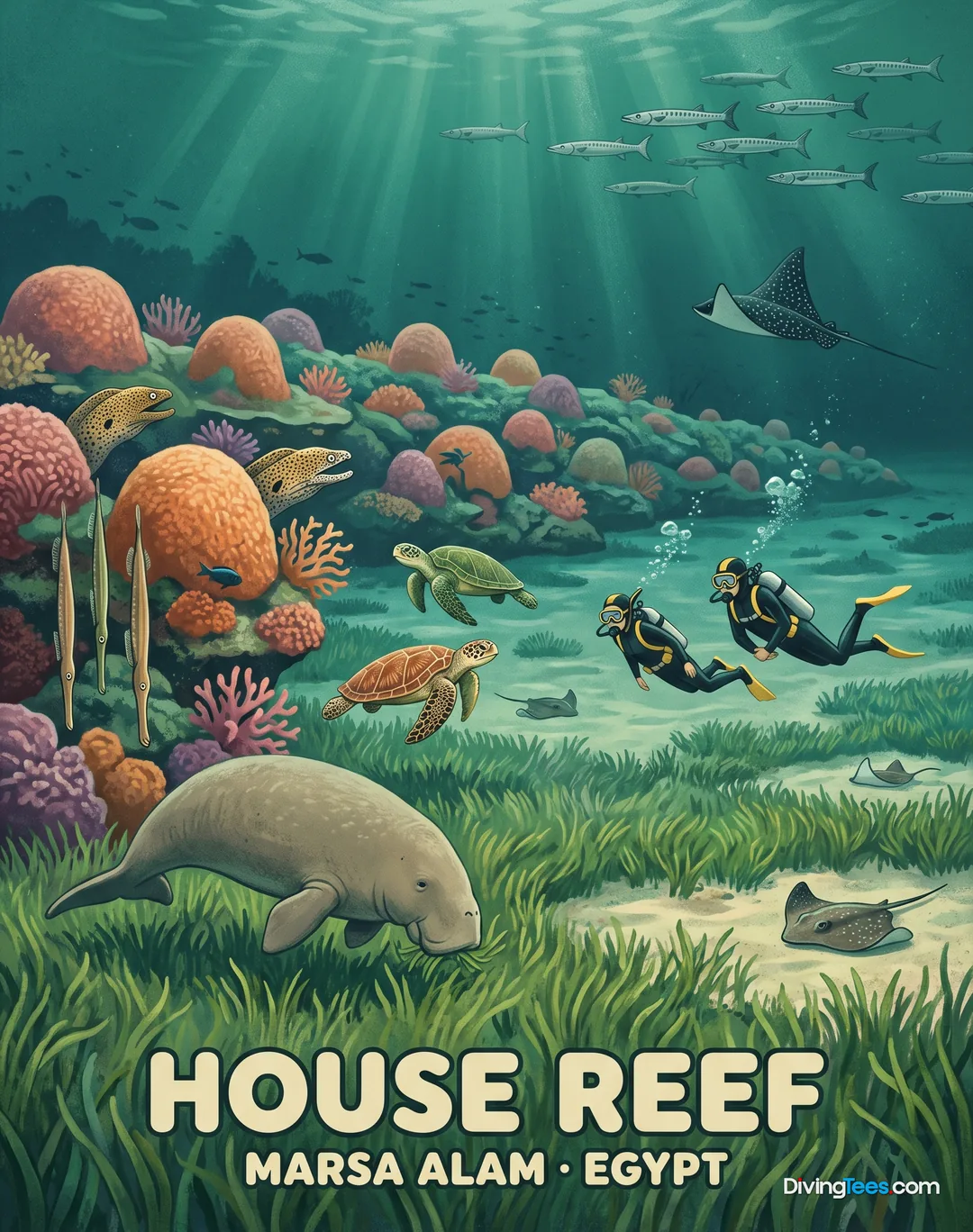
House Reef →
Max. depth · 40 m
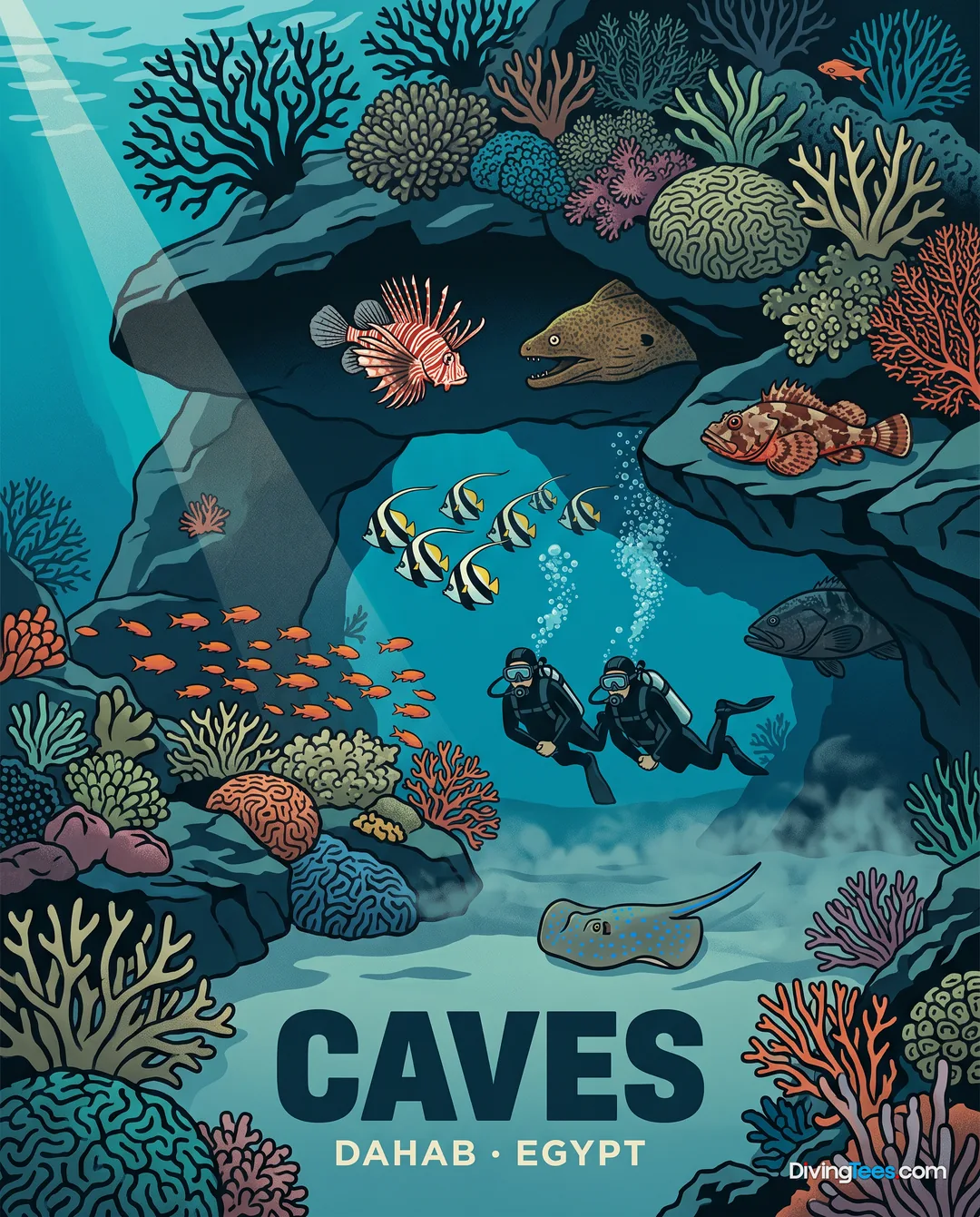
Caves →
Max. depth · 22 m
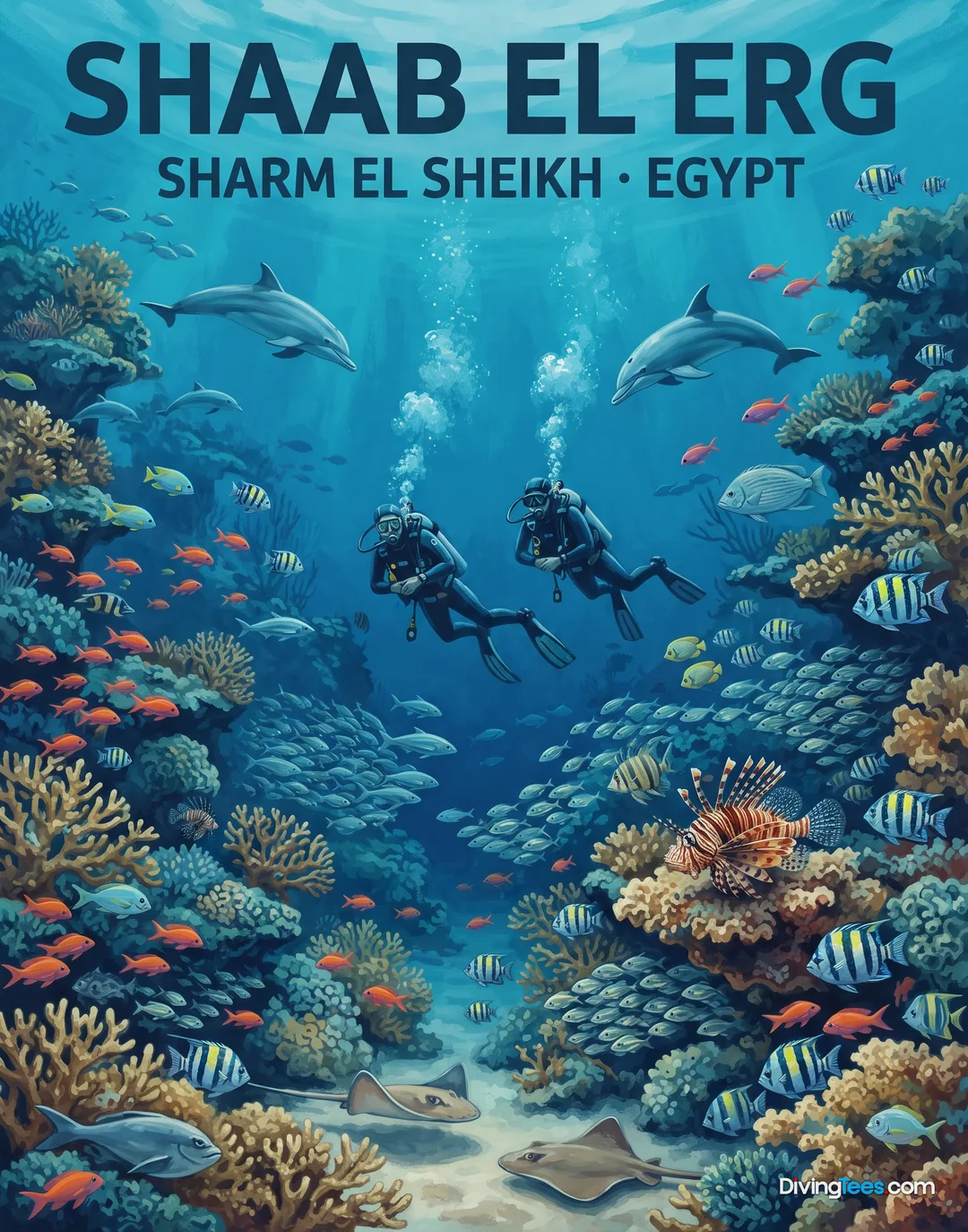
Shaab El Erg →
What you’ll meet underwater
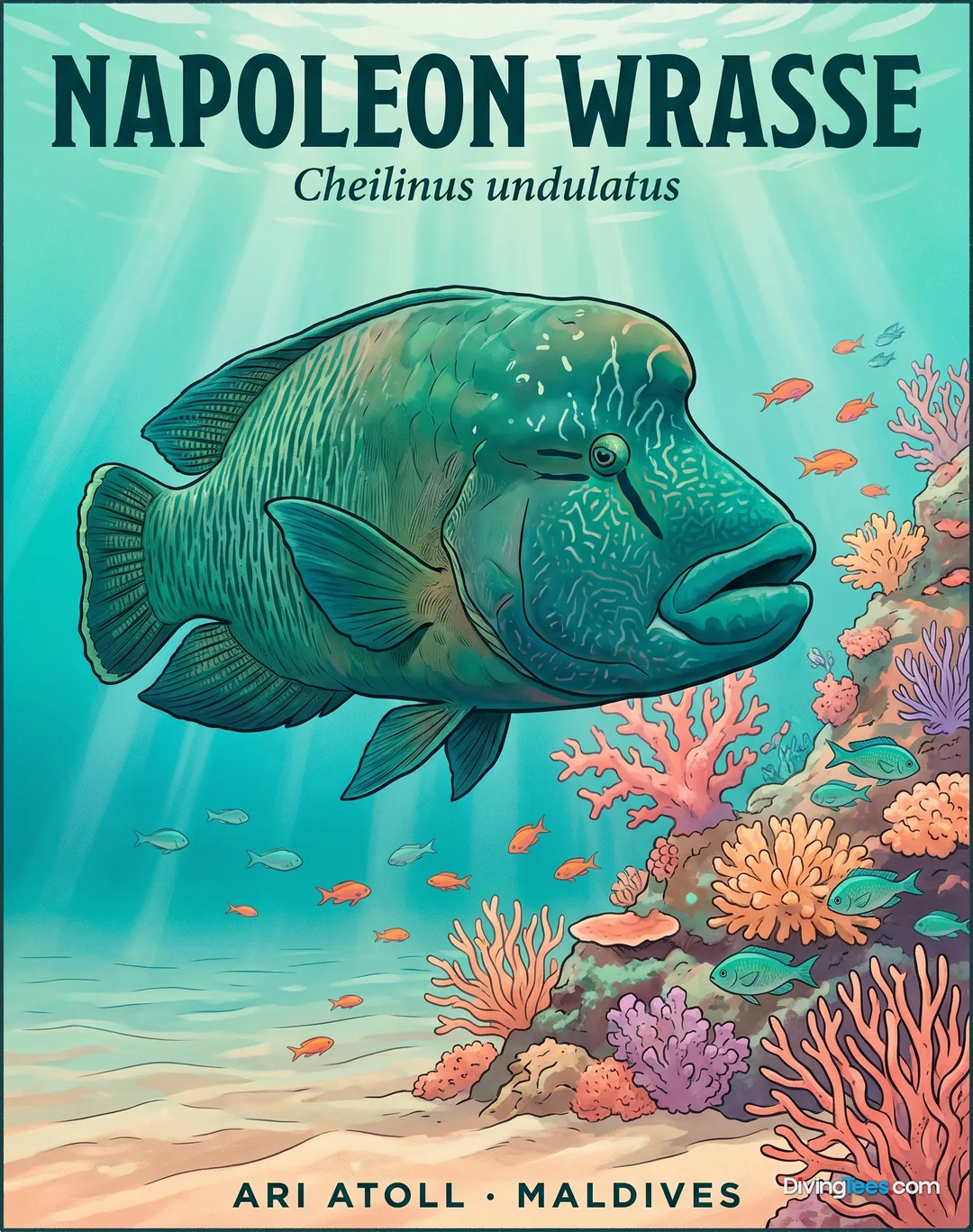
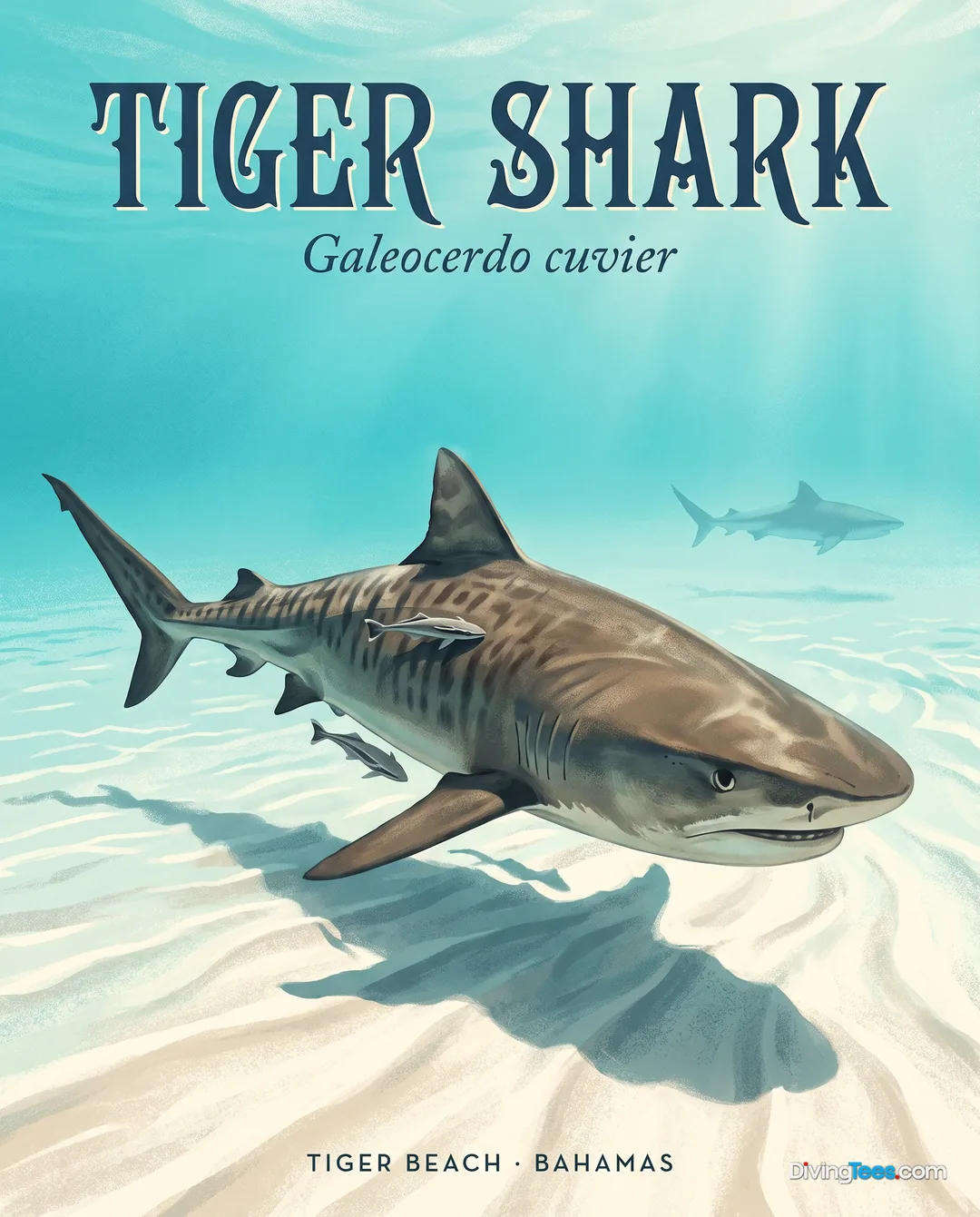
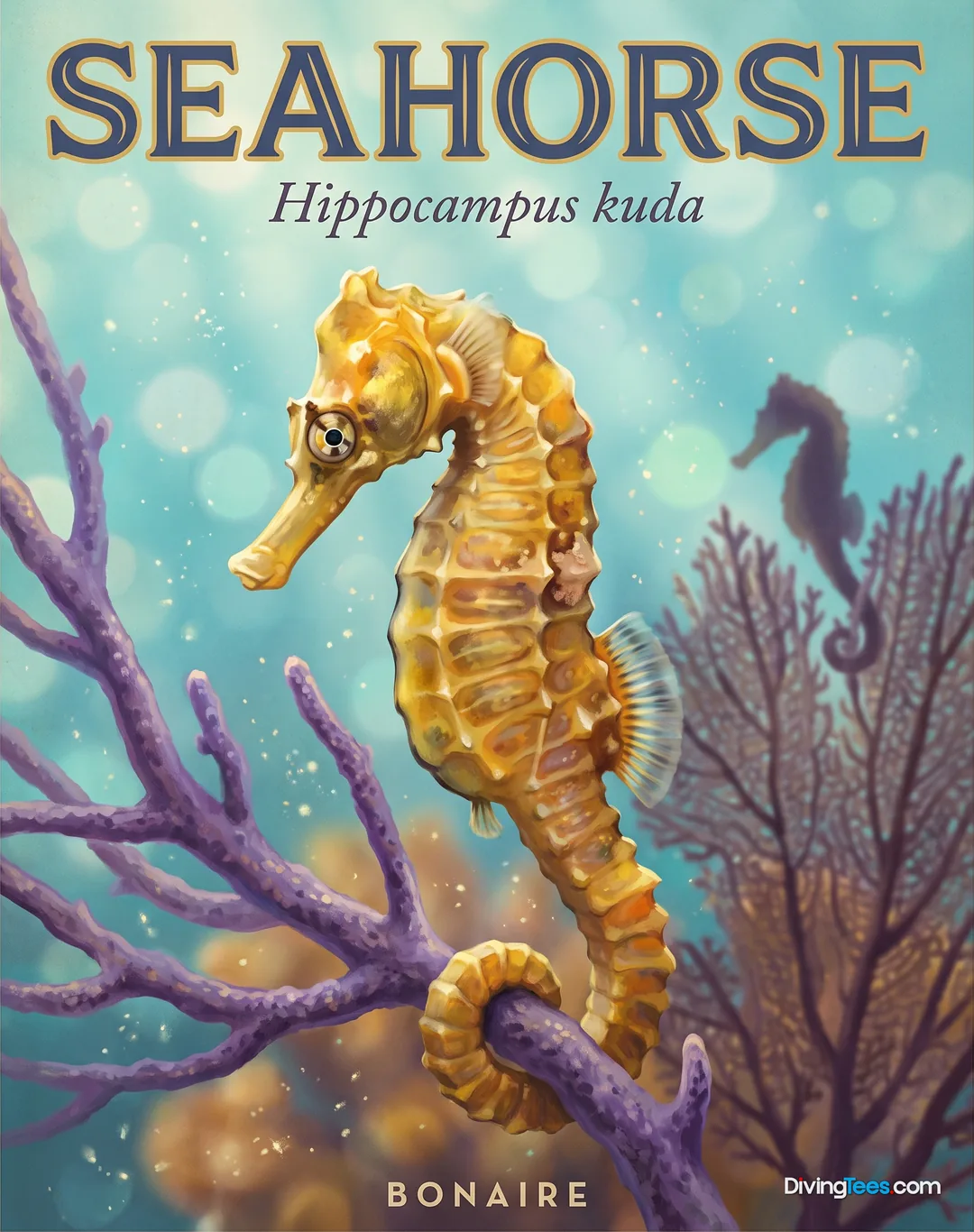
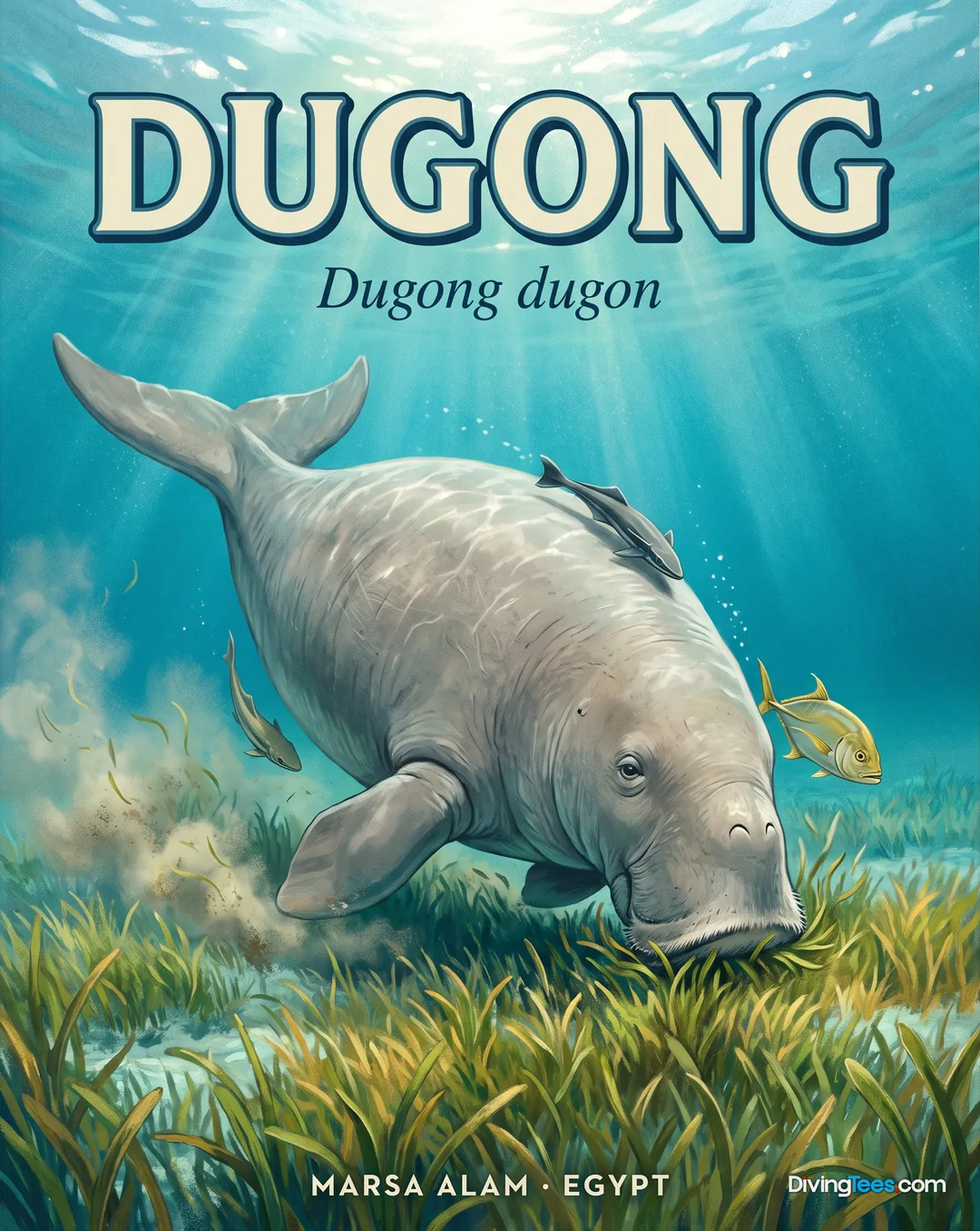
The recurring cast is broad: sea turtles, dolphins, barracuda, Napoleon wrasse, reef sharks, grey reef sharks, anthias, morays, scorpionfish and trevally appear across many of the recorded sites. Manta rays and hammerheads are recorded at four sites each, while tuna, soft corals and octopus add movement and texture to the reef scenes. The route's special sightings give particular dives their purpose. Brothers Islands is the place associated with white-tip reef sharks and anemones; Elphinstone is the recorded site for blacktip reef sharks, tiger sharks, gorgonians and labrids. Daedalus is where the big-eyed trevally appears in the site records. Shaab Ruhr Umm Gamar is the sole recorded site for giant grouper, and El Fanadir for sweetlips. Big Brother is linked with angelfish. House Reef offers the recorded seahorse, while Shaab El Erg is the site for glassfish. Dolphins are associated with the shallow El Fanous reefs, and dugongs with the seagrass bays at Marsa Egla and Marsa Mubarak. None of these encounters is guaranteed; the walls, current, cleaning stations and seagrass are what make them possible.

Who puts you in the water
Two to three guides work on board, and the crew speaks English. The published information does not give a fixed guide-to-diver ratio, a minimum logged-dive requirement, guide qualifications or a course programme, so Blue Melody should be chosen for guided liveaboard diving rather than for a promised training schedule. The sites themselves include exposed walls, currents and remote oceanic reefs; comfort with conditions and the ability to follow a boat briefing matter more than a glossy list of certificates. Safety equipment includes emergency oxygen, first-aid kits, life jackets, lifeboats, fire alarms and extinguishers, with crew trained in first aid. Radar, GPS and VHF, DSC and SSB radio support navigation and communication. The tender system uses radios, and the boat carries mobile and satellite phones.
The dive deck and the gear
The dive deck is shaded and leads directly to a diving platform, with two tenders supporting entries and exits at the sites. A generous working area matters on a boat carrying 26 divers: it gives people room to prepare without turning every cylinder change into a collision. Two Bauer compressors, each rated at 260 litres, support filling, and the membrane system makes nitrox available. Nitrox, equipment and cylinder rental can be arranged as optional extras; rental equipment should be booked in advance. The boat provides stations for charging and a camera room, along with the photo facilities listed on board. It also carries oxygen and first-aid kits. Tank volume, tank material, DIN or yoke fittings, rinse-tank layout, SMB supply and hot-water facilities on the dive deck are not details to assume from the boat's general equipment list, so divers with a specific setup should check those points before travelling.
Between dives
Between dives, the most useful place is the shaded outdoor seating on the upper deck, beside the bistro. It gives wet divers somewhere to sit in open air without forcing everyone into full sun. The sun deck adds both shaded and sunbathing areas, while the air-conditioned salon is the retreat when the heat, wind or accumulated fatigue wins. A bar, library and audio-video entertainment fill the quieter stretches without making them compulsory. There is also a dedicated camera room and photo space for people who spend surface intervals checking strobes, batteries and the last dive's frames. On a crossing, the boat offers enough separate corners to let a group spread out. On an afternoon without a dive, the choice is simple: shade, air-conditioning, a book, or the view from the upper deck.
A day on board
The day begins before the first descent, with the briefing coming before divers kit up and move to the platform or tenders. After the dive, the deck becomes a work area for rinsing, logging and getting warm, while breakfast or a snack replaces the effort just spent underwater. The next briefing comes after the surface interval, followed by another entry and recovery. Meals punctuate the sequence rather than interrupt it: food is ready when divers come back hungry, and snacks remain available between meals. Later, the boat may be underway between reefs, giving the group time in the shaded outdoor seating, salon or sun deck before the next site. Depending on the itinerary and conditions, the programme can include a later dive; the exact number and timing are set by the route, weather and site. The rhythm is not a clock printed on the wall. It is briefing, kit, water, recovery, food, then doing it again.
What you eat aboard
The galley serves both Western and local food, with full-board meals, vegetarian options and snacks available throughout the day. Beer and a selection of wines are available, while non-alcoholic drinks, water, tea and coffee are included. That combination suits a diving boat better than a formal restaurant menu: food appears when divers are ready for it, with something available between entries rather than one meal having to carry the whole day. The passenger score for food is 9.7, the strongest result in the boat's ratings. On a liveaboard, that is not a decorative distinction. A good plate after a demanding dive, and a snack waiting before the next briefing, decide how well the body holds up across a week.
Nights at sea
Blue Melody offers two cabin categories, and the choice is mainly about deck position and bedding. Classic Twin cabins sit on the lower deck with two single beds, air-conditioning and a private bathroom. Premium Double cabins are on the upper deck, with a double bed and ocean views. Every cabin has air-conditioning and an ensuite bathroom, which is the baseline worth having after repeated saltwater entries. The rest of the boat gives the night its shape: the indoor salon is a place to cool down before sleep, while the shaded outdoor seating lets passengers stay outside after dinner without sitting directly in the glare of the sun deck. It is not a small-boat cabin experience, and the lower-deck twins are the practical option. The premium doubles buy position and view, not a different kind of voyage.
Classic Twin
Premium Double
What to know before boarding
Blue Melody's listed departures leave from and return to Hurghada, on eight-day, seven-night itineraries. Airport and hotel transfers are included. Arriving in Hurghada the night before boarding is the sensible choice, leaving the embarkation day free from flight delays and long surface transfers.
Deck plan
- Year built
- 2007
- Year renovated
- 2016
- Length
- 38 m
- Beam
- 8.3 m
- Maximum number of passengers
- 26
- Number of cabins
- 13
- Number of bathrooms
- 15
- Engines
- 2 × Cat 764 hp
- Website
- masterliveaboards.com ↗
Hello, I'm Marina, DivingDeal.com's AI assistant. I answer in detail about hotels, dive centres and liveaboards.

Thinking about the whole trip and the flights? Talk it over with Edith →
Marina is an AI. Some links are affiliate links: DivingDeal may earn a commission, at no extra cost to you. Bookings are made with the partner.