
Octopus World Dahab Dive Center
Google 5/5 (2,361 reviews)
3.6 km away as the crow flies
Dahab · Egypt · Red Sea
Max. depth · 30 mAt the edge of a sheltered lagoon, Napoleon Reef offers a vibrant coral garden where giant pufferfish find refuge beneath impressive tabular corals.
For subtitles in English: start the video firstthen click the gearat the top right of the video, select “Subtitles/CC”, then “Auto-translate” and choose “English”.
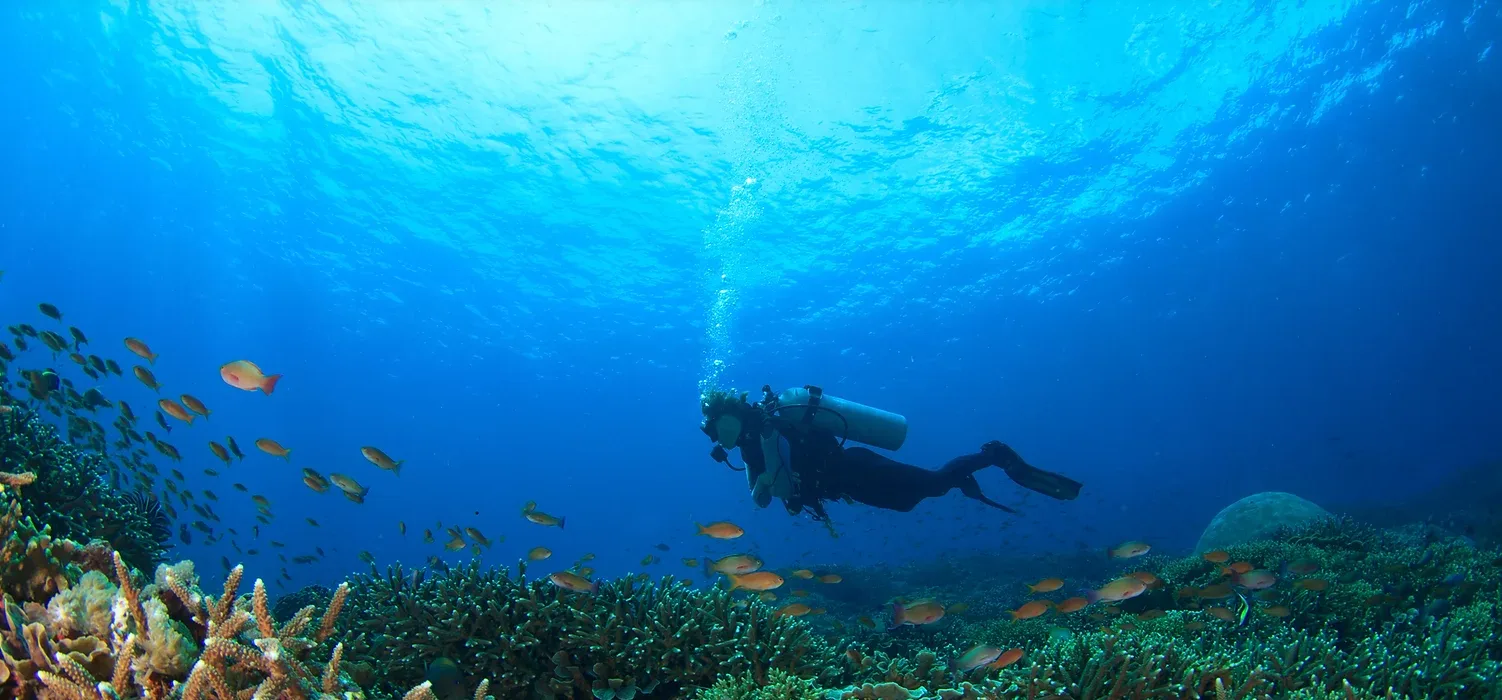
Diving Napoleon Reef brings you to the precipice of a vibrant lagoon, a sheltered pocket south of Sharm El Sheikh's scattered islands. Your descent starts gently, opening directly onto the reef at a cooperative 5 metres. From this shallow entry point, the reef structure unfolds and slopes gradually, inviting you to explore its contours as it deepens. The absence of strong currents often allows for a relaxed and unhurried exploration, giving you the time to properly observe the specific micro-ecology that thrives here, from the sunlit shallows down into the deeper sections of the reef.
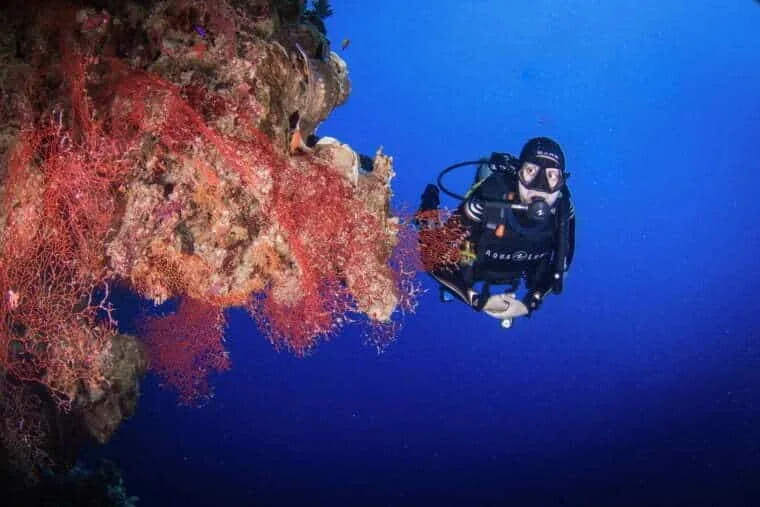
As you progress along the reef, the topography shifts, revealing a series of ledges and overhangs sculpted by the Red Sea currents. The most striking features are the tabular corals, vast plates extending outwards, forming perfect hiding spots. Beneath these living canopies, you will often find giant pufferfish (Tetraodontidae) settled into the shadows, their bulky forms almost camouflaged against the coral. These large, slow-moving fish are resident here, making the most of the reef's complex structure for shelter and foraging.
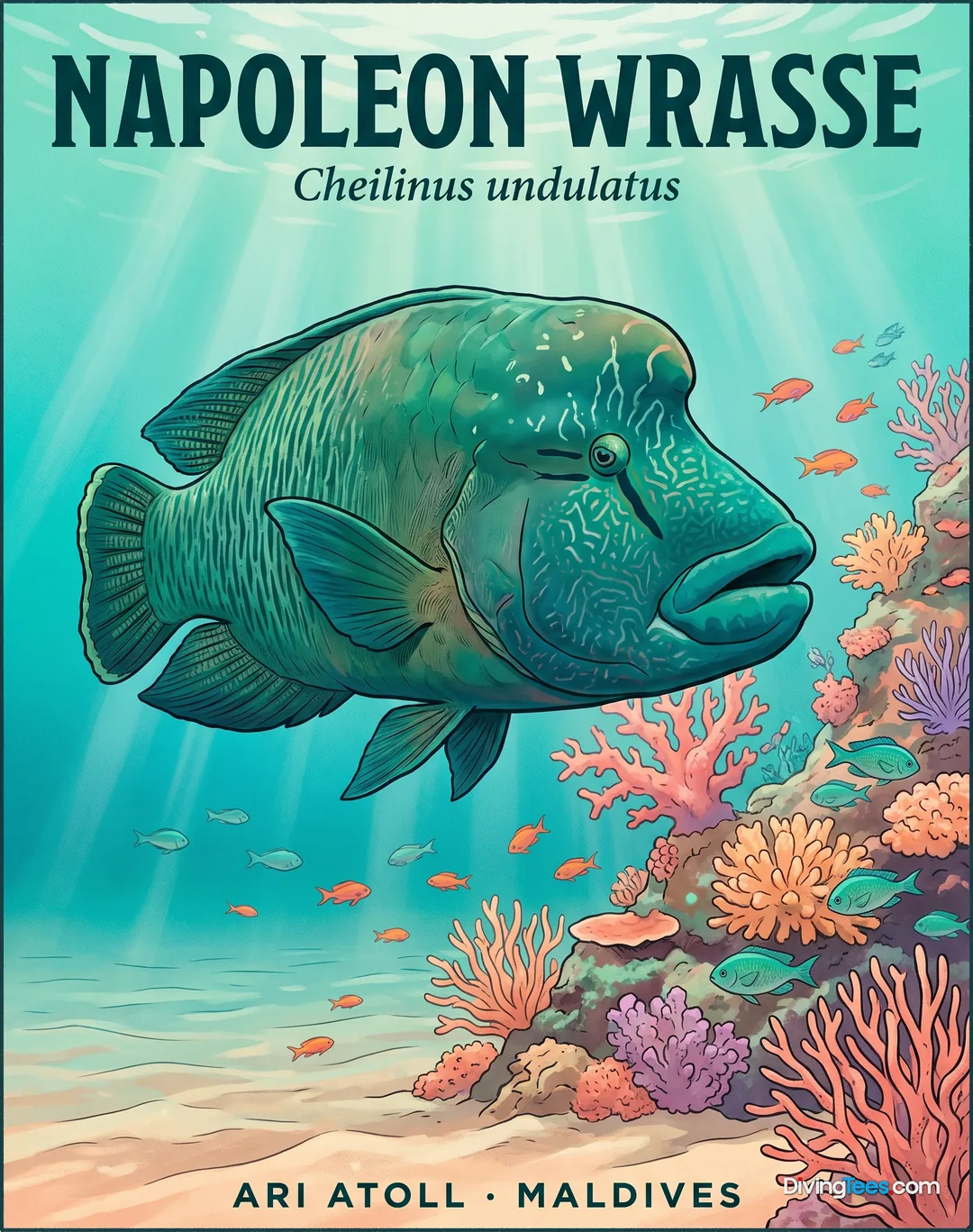
The reef is home to the majestic Napoleon wrasse (Cheilinus undulatus), a species that often patrols the deeper sections of the reef, occasionally venturing into shallower waters. Their sheer size and inquisitive nature make every encounter a memorable one as they glide gracefully past. Observing these impressive fish as they navigate the coral heads adds a dynamic element to the dive, contrasting with the more static beauty of the coral formations and the more demure reef dwellers.
The gentle slope of Napoleon Reef allows for diverse marine interactions across its entire depth range. While the shallower parts are bathed in light, fostering colourful reef fish and intricate coral growth, the deeper areas, extending to 30 metres, offer a different ambience. Here, the light shifts to deeper blues, and the large tabular corals grow even more substantially, providing crucial habitat. It is in these deeper, quieter zones that you are more likely to observe the larger, shier inhabitants of the reef taking refuge.
Napoleon Reef is accessible to divers holding a Diver Level 1 certification, making it suitable for a wide range of experience levels. The dive begins at a shallow 5 metres and reaches a maximum depth of 30 metres, allowing for a flexible dive profile. While regional currents can vary from weak to very strong on different sites, specific current information for Napoleon Reef is not provided, so be prepared to adapt to local conditions.
Napoleon Reef is accessible to divers holding a Diver Level 1 certification, making it suitable for a wide range of experience levels. You can begin on the shallow reef point and follow its gradually sloping structure, allowing you to explore the sheltered lagoon reef at a profile suited to your certification.
At Napoleon Reef, your dive begins at a shallow depth of 5 metres and can continue down to 30 metres. The reef slopes gradually, with ledges, overhangs and tabular corals appearing along the route. Shallower areas receive more light, while deeper sections offer a different, deeper-blue atmosphere.
At Napoleon Reef, conditions can require you to adapt to local conditions because currents vary across the region. The site description presents the reef as a sheltered lagoon where the absence of strong currents often supports relaxed exploration. You should still be prepared for changing conditions during your dive.
At Napoleon Reef, you can observe tabular corals that create shelter beneath their broad plates, where giant pufferfish hide. The reef also hosts Napoleon wrasse, particularly around deeper sections, along with colourful reef fish and intricate coral growth in the shallows. Ledges and overhangs add further habitat.