

Octopus World Dahab Dive Center
Google 5/5 (2,361 reviews)
6.2 km away as the crow flies
Dahab · Egypt · Red Sea
Max. depth · 54 mThe Canyon offers a unique opportunity to penetrate the heart of the reef through a natural geological formation, providing a distinct visual reward and an immersive experience unlike any other.
For subtitles in English: start the video firstthen click the gearat the top right of the video, select “Subtitles/CC”, then “Auto-translate” and choose “English”.
The Canyon dive site offers a unique geological experience, beginning with an easy entry from a shallow, sandy lagoon on the shoreline. After wading in, divers fin approximately 50 metres north over a gently sloping reef adorned with coral heads, which gradually deepens as it moves away from the coast. This area, populated by a variety of butterflyfish and unicornfish, serves as a vibrant introduction before reaching the main event, located roughly five minutes northeast from the lagoon's exit point. The transition from the open reef to the distinct canyon formation is visible as a fissure on the seabed, around 10 to 12 metres, marking the true entry point of the dive.
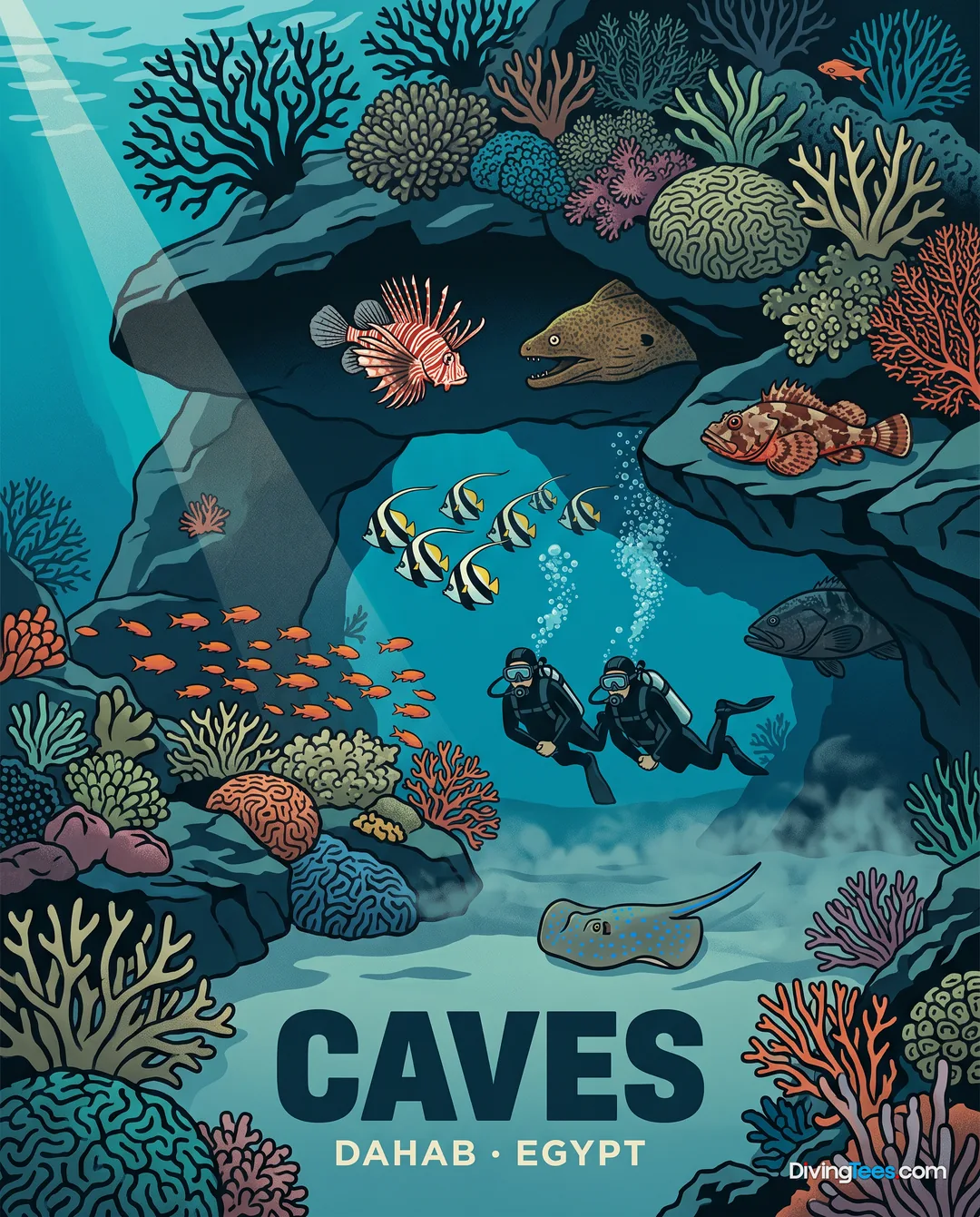
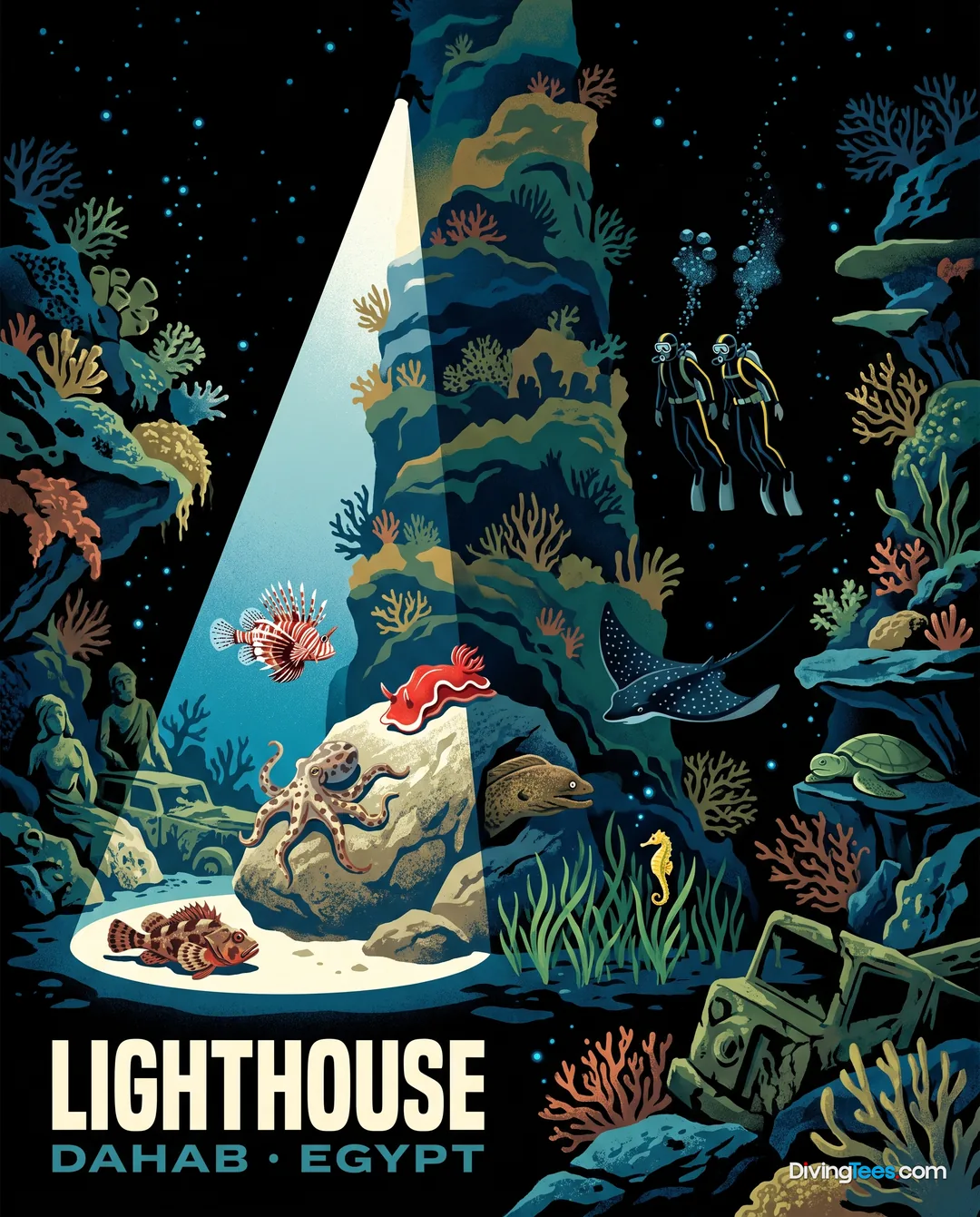
The main Canyon structure is a fissure in the seabed, around 10 metres deep at its entrance, that narrows as you descend. Its top walls nearly close over, forming a natural tunnel that gives the impression of a giant clam shell’s fluted mouth from above. As you sit inside, often in semi-darkness, the light filtering in through the overhead crack becomes a visual spectacle, creating shifting patterns through the water and illuminating the rock walls. This initial section gradually leads to the first large opening, often referred to as the Fishbowl or coral Dôme, at approximately 12 metres, where glass sweepers or glassfish (Parapriacanthus ransonneti) are frequently found, creating an animated, shimmering curtain of life.
Below the Fishbowl, the Canyon continues to deepen, opening into a second, wider bowl around 20 metres, which is the widest point of the Canyon. The walls of the Canyon here illustrate its volcanic origins, showcasing distinct stratifications and natural carvings. Within these confines, look for resident nudibranchs and groupers moving along the surfaces or tucked into crevices and under ledges. The interplay of light and shadow, combined with the enclosed feeling, makes this section particularly atmospheric, emphasizing the unique geological nature of the dive without requiring specialized overhead environment training if you stay within sight of the open water. The maximum depth reached within the main Canyon structure is 22 metres.
The main entry into the Canyon starts around 22 metres, leading you down through the fissure to the seabed at 28 metres. The structure of the canyon walls at this depth is particularly impressive, with sunlight shafts often piercing through from above, creating a dynamic light show. This section provides a good opportunity to observe details of the geological formations and the varied textures of the rock face. As you follow the bottom, the depth gradually shallows again, directing you towards the main chimney.
Beyond the deeper sections of the Canyon lies a vertical chimney or cave. To enter, you fin into its opening and, if you maintain neutral buoyancy, you'll find yourself surrounded by hundreds of dusky sweepers (Pempheris adspersa) that use this space for shelter during the day. Exercise caution with your hands during ascent, as lionfish (Pterois miles) often seek refuge inside the chimney. This chimney acts as a natural pressure relief valve for exhaled air, as bubbles collect and then filter through the reef to surface, creating a curtain of bubbles visible from outside.
For those with technical certifications, the Canyon offers a deeper exploration. A narrow exit at 52-54 metres leads to further depths. Beyond this point, the dive extends to 'Neptune's Chair,' a rock formation at 73 metres resembling a giant throne. Behind this, there's a cave extending 15-20 metres back with a maximum depth of 75 metres. This section requires a torch and precise buoyancy control; it is an impasse and does not require a guideline.
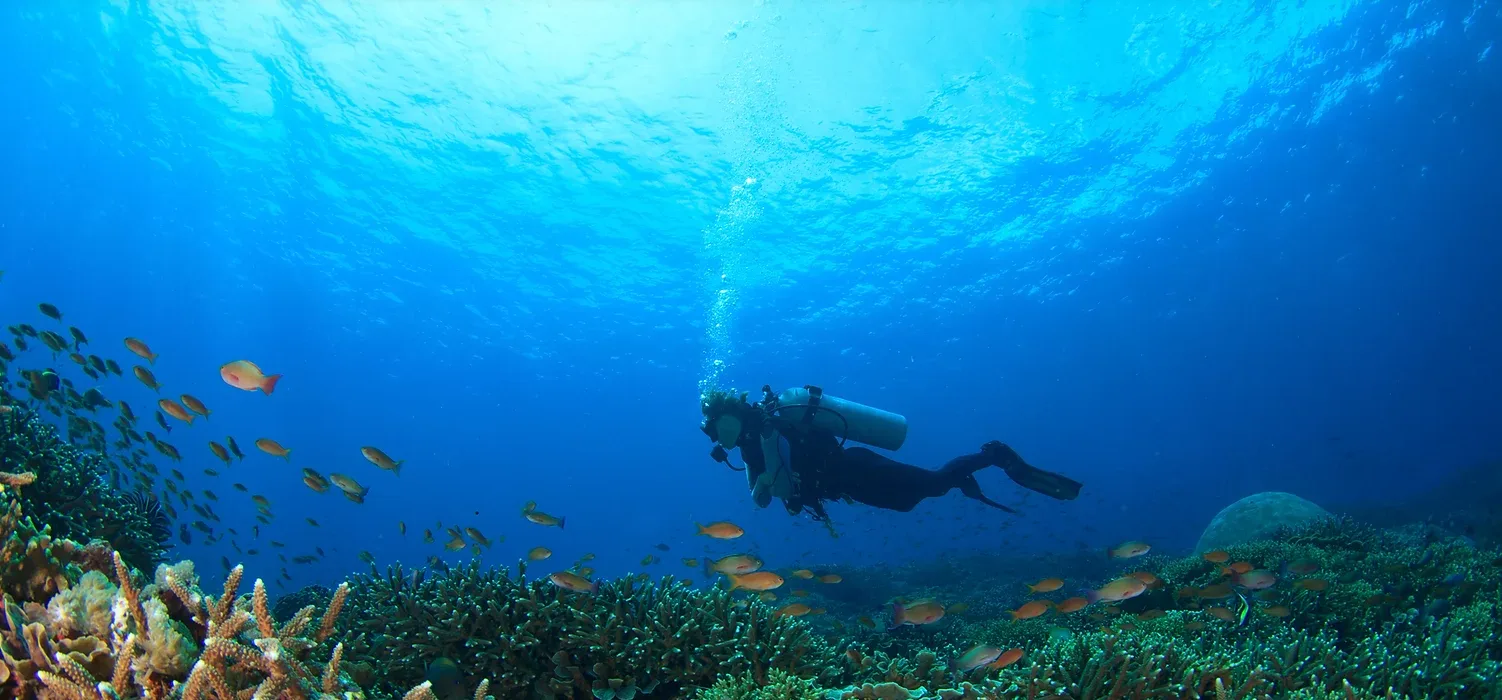
Beyond the Canyon and chimney structure, the dive typically continues back towards the lagoon entry point, following the outer reef. This area features a vibrant coral garden, providing a contrast to the deep, enclosed spaces of the Canyon. Here, you can observe a variety of reef fish, including octopuses, pufferfish, and the ever-present Red Sea anthias (Pseudanthias squamipinnis), and, occasionally, larger pelagic species. Keep an eye out for blue-spotted stingrays (Neotrygon kuhlii) on the sandy patches and passing fusiliers (Caesionidae) or schools of large trevallies (Caranx ignobilis) in the open water. Large schools of anthias add colour to the reef, particularly around the coral garden sections. While reef sharks are an infrequent sighting, they are sometimes encountered away from the main Canyon structure.
The Canyon (Dahab) in Faafu Atoll, despite its name evoking a Red Sea icon, is a distinct Maldivian dive site that carves a dramatic rift into the Atoll's underwater landscape. This geological wonder invites you to explore an unusual submerged canyon, offering a stark contrast to the often soft-sloping reefs found elsewhere in the Maldives. The exploration begins as you descend, with the reef wall gradually giving way to the impressive geological fault line that defines this site. As you approach the canyon, the sheer scale of the fissure becomes apparent, a deep cut in the ocean floor that promises a unique dive experience. The light, filtered through the Maldivian waters, shifts dramatically within the canyon, creating an atmospheric play of shadows and illuminated crevices.
You'll navigate along the natural contours of this submerged valley, feeling the distinct thermal changes that often accompany such deep geological features. While the specific inhabitants of this canyon are not detailed, the very nature of a canyon environment often creates sheltered pockets and unique current patterns that attract various forms of marine life. You'll be looking into the shadowy depths, searching for creatures that might seek refuge or find hunting grounds within these dramatic walls. This is less about specific encounters and more about the raw, visceral experience of exploring a submerged rift. This dive offers a different perspective on the Maldivian underwater world, moving away from the vibrant coral gardens and bustling thilas to a more structural, almost cavernous environment.
The experience is about appreciating the raw power of geological forces and the quiet majesty of a world sculpted by millennia of ocean currents and tectonic shifts. It's a dive that appeals to those who appreciate the architecture of the underwater realm as much as its inhabitants.
The Canyon is accessible with an Advanced Open Water Diver (AOWD) certification. For dives into the main chamber and deeper sections, an AOWD is required. Technical certifications are necessary for exploring depths beyond 40 metres, including Neptune's Chair at 73 metres and the deeper cave at 75 metres. Depths range from a minimum of 2 metres in the lagoon entrance to a maximum safe recreational depth of 30 metres, with technical limits reaching 75 metres. Currents are typically negligible to mild, particularly within the Canyon structure itself, making for a relaxed drift back. Visibility is consistently good. Entry and exit points are known to be stable, offering straightforward access from a shallow lagoon.
You need an Advanced Open Water Diver certification to access The Canyon de Dahab, including its main chamber and deeper sections. Technical certification is necessary for exploration beyond 40 metres, such as Neptune’s Chair at 73 metres and the cave at 75 metres. Stay within open water unless appropriately trained.
The Canyon de Dahab begins in a shallow lagoon entrance at 2 metres. The main Canyon reaches 22 metres, with the seabed descending to 28 metres. Recreational diving reaches 30 metres, while technical routes continue through a narrow exit at 52 to 54 metres, reaching Neptune’s Chair at 73 metres and a cave at 75 metres.
Currents at The Canyon de Dahab are typically negligible to mild, particularly inside the Canyon structure. This creates a relaxed drift back toward the lagoon. Entry and exit points are stable, and access is straightforward from the shallow lagoon, with a wading entry followed by a fin over the reef.
At The Canyon de Dahab, you can see volcanic rock formations, shafts of light, and shifting patterns on the walls. Glassfish gather in the Fishbowl, while dusky sweepers shelter in the chimney. Coral gardens hold reef fish, nudibranchs, groupers, octopuses, pufferfish, anthias, blue-spotted stingrays, and passing trevallies.