

Scuba Iguana
Google 4.7/5 (357 reviews)
Ecuador · Americas
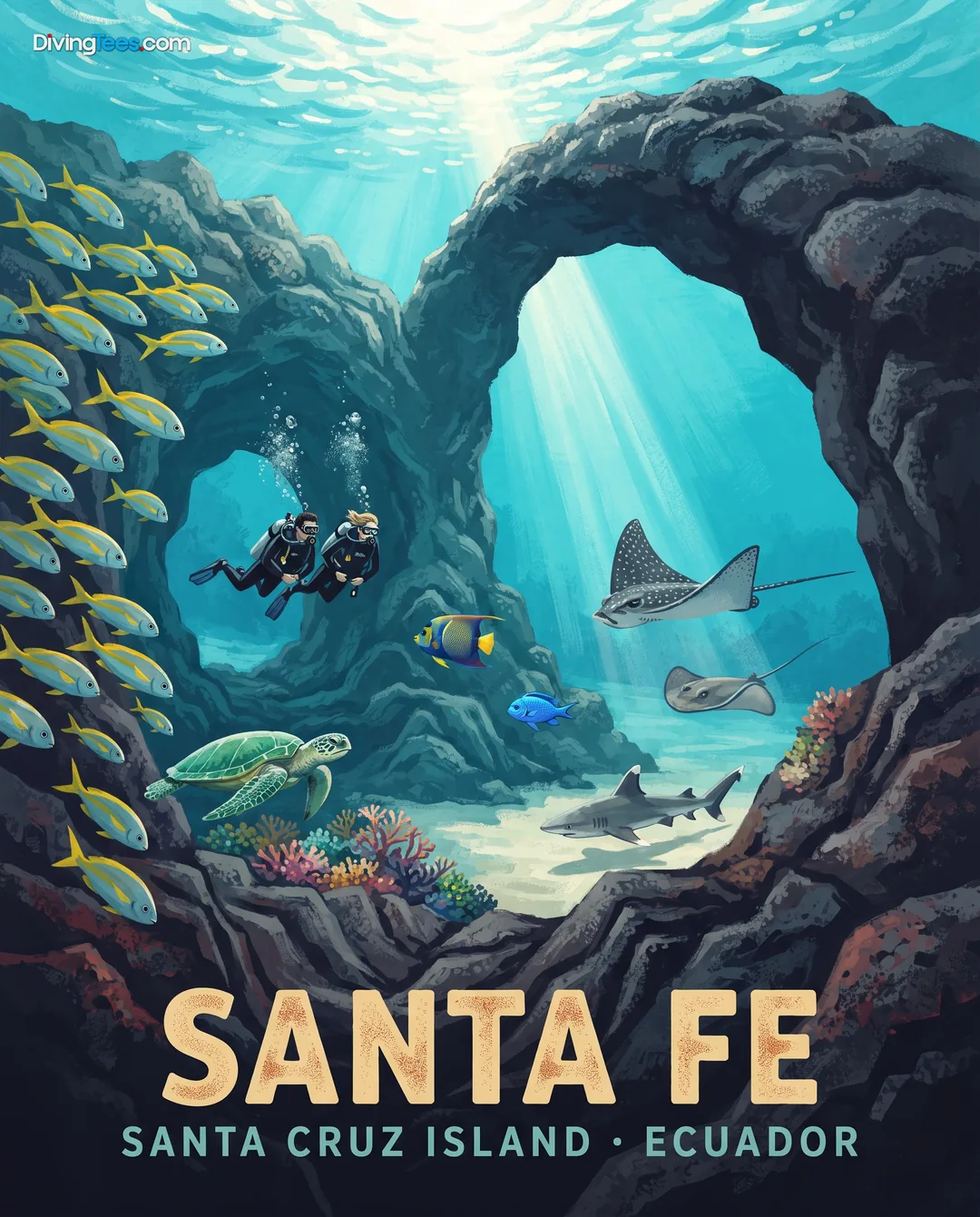
Extinct tuff cones, crater pinnacles, hammerhead sharks and rays define Santa Cruz diving, reached by day boat from Puerto Ayora through changeable open-water conditions.
For subtitles in English: start the video firstthen click the gearat the top right of the video, select “Subtitles/CC”, then “Auto-translate” and choose “English”.
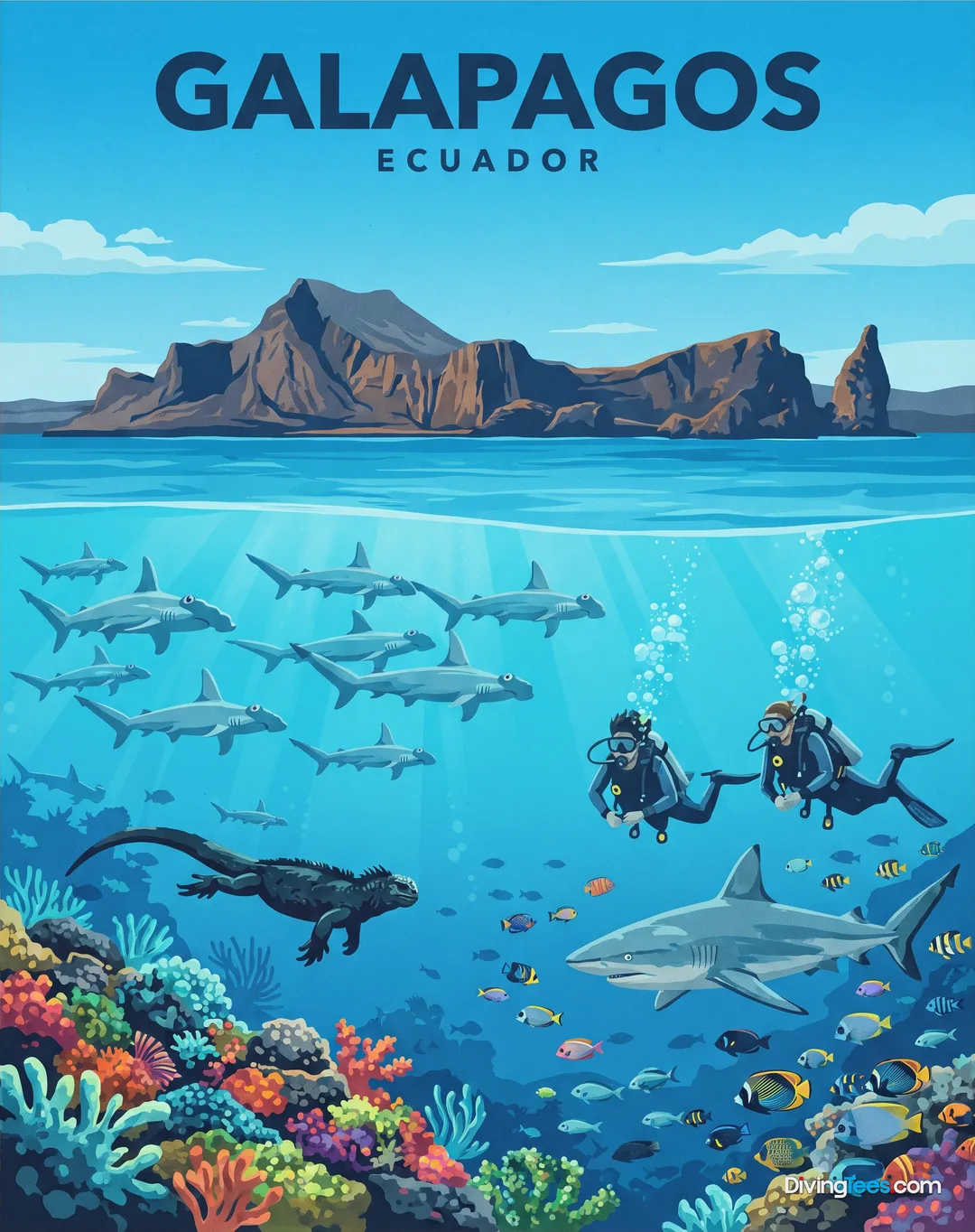
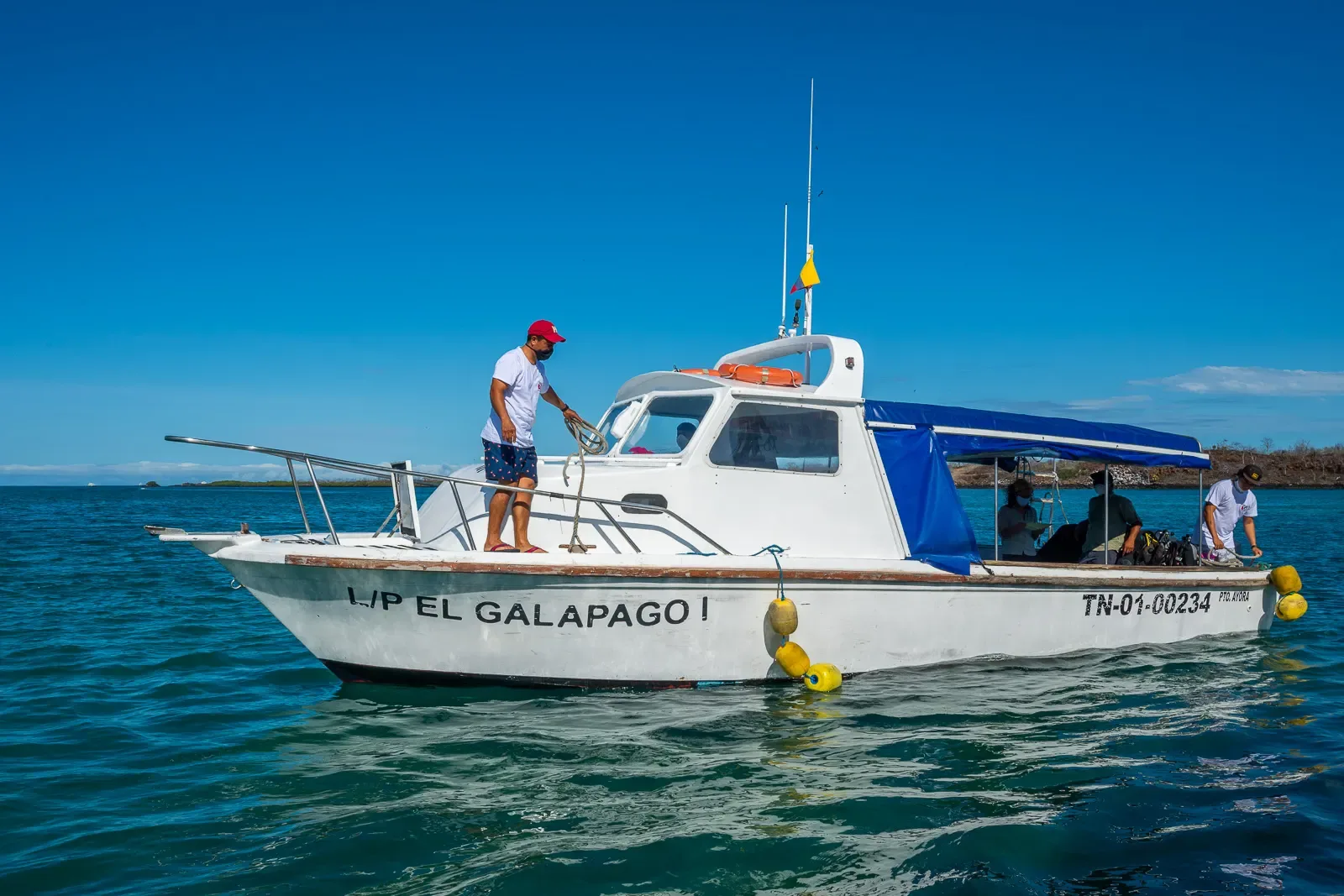
Gordon Rocks, an extinct tuff cone east of Santa Cruz, sets the tone for diving from this island. The usual base is Puerto Ayora, where divers stay ashore and join day boats rather than walk into the water from a beach. The reward is access to protected Galápagos waters, with marine wildlife and pelagic encounters taking priority over easy reef sightseeing. Santa Cruz also suits non-divers, thanks to its land-based wildlife and nature activities.
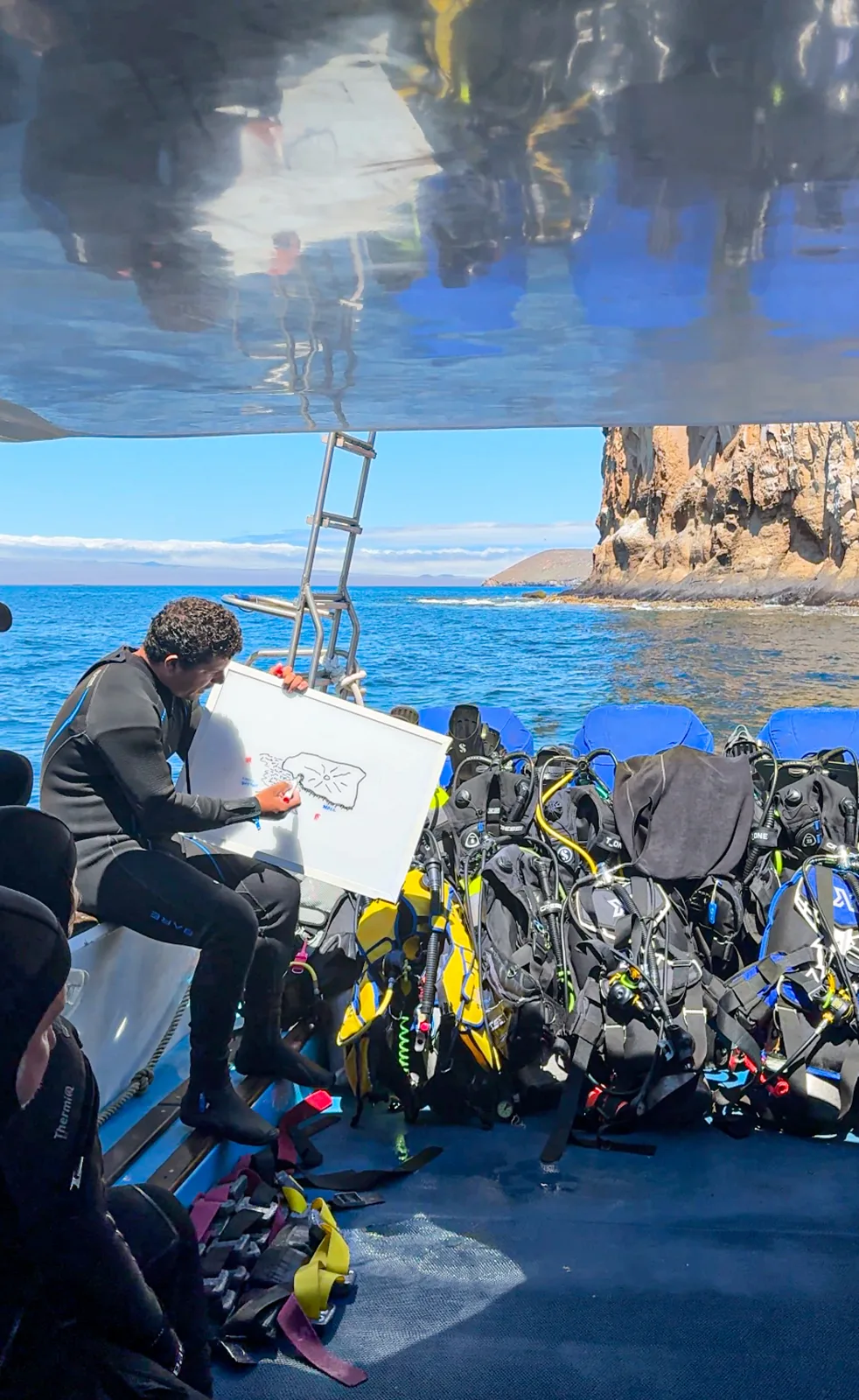
The diving is predominantly boat-based, and conditions are shaped by current, swell and the timing of the run from Puerto Ayora. At Gordon Rocks, underwater pinnacles rise inside an extinct crater, with the walls extending to 60 metres. Recreational divers generally work to around 30 metres, holding position and managing their descent rather than simply following a reef slope. Currents there are consistently strong to very strong, with limited visual references, so drift procedures and a disciplined ascent matter. Other outings around Santa Cruz and neighbouring islands can also be exposed, and the best plan is not always the nearest site. Visibility is changeable rather than guaranteed, affected by currents and suspended plankton or other particles. The format is a full marine day: boat travel, open-water entries and two dives governed by sea conditions.
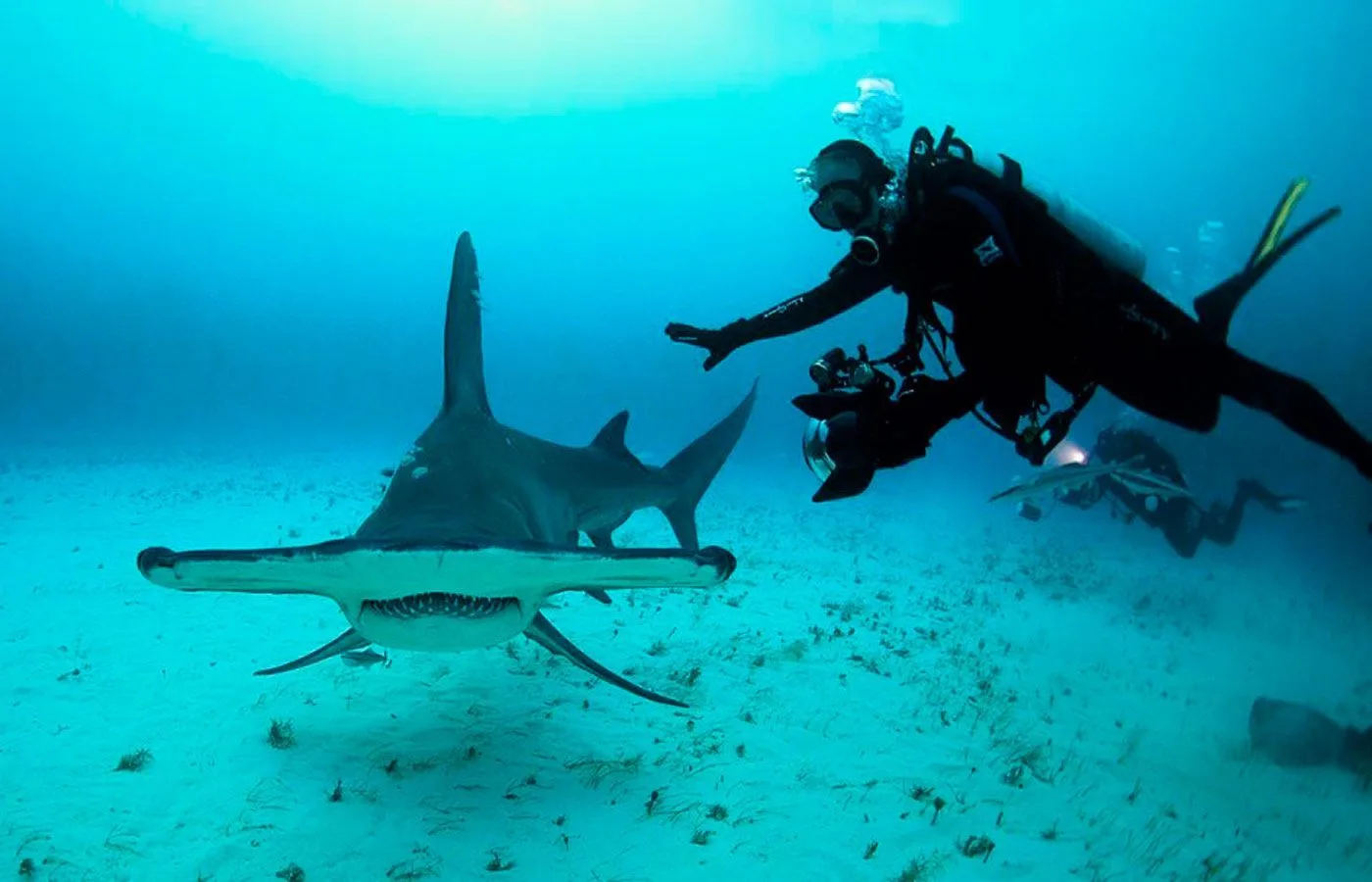
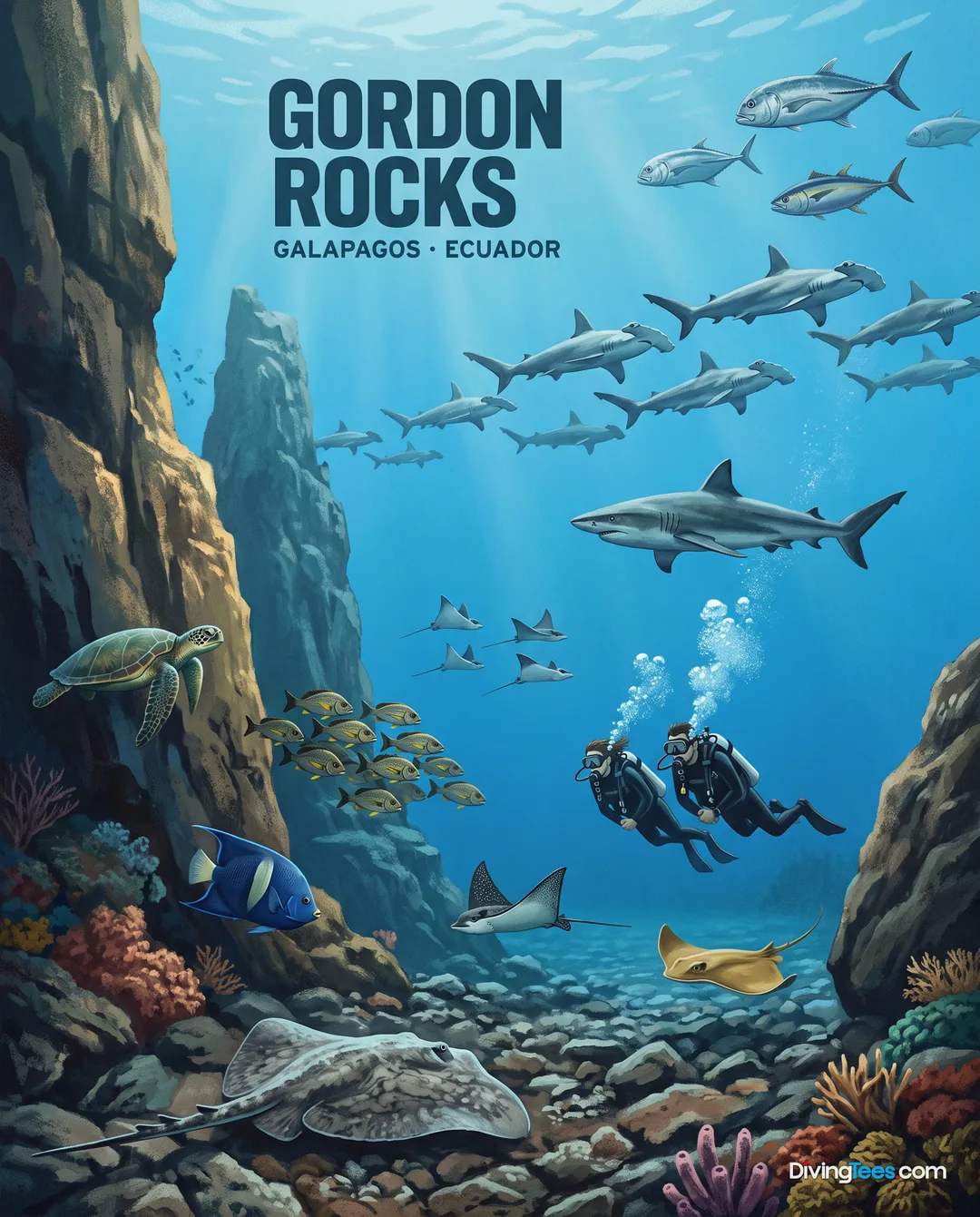
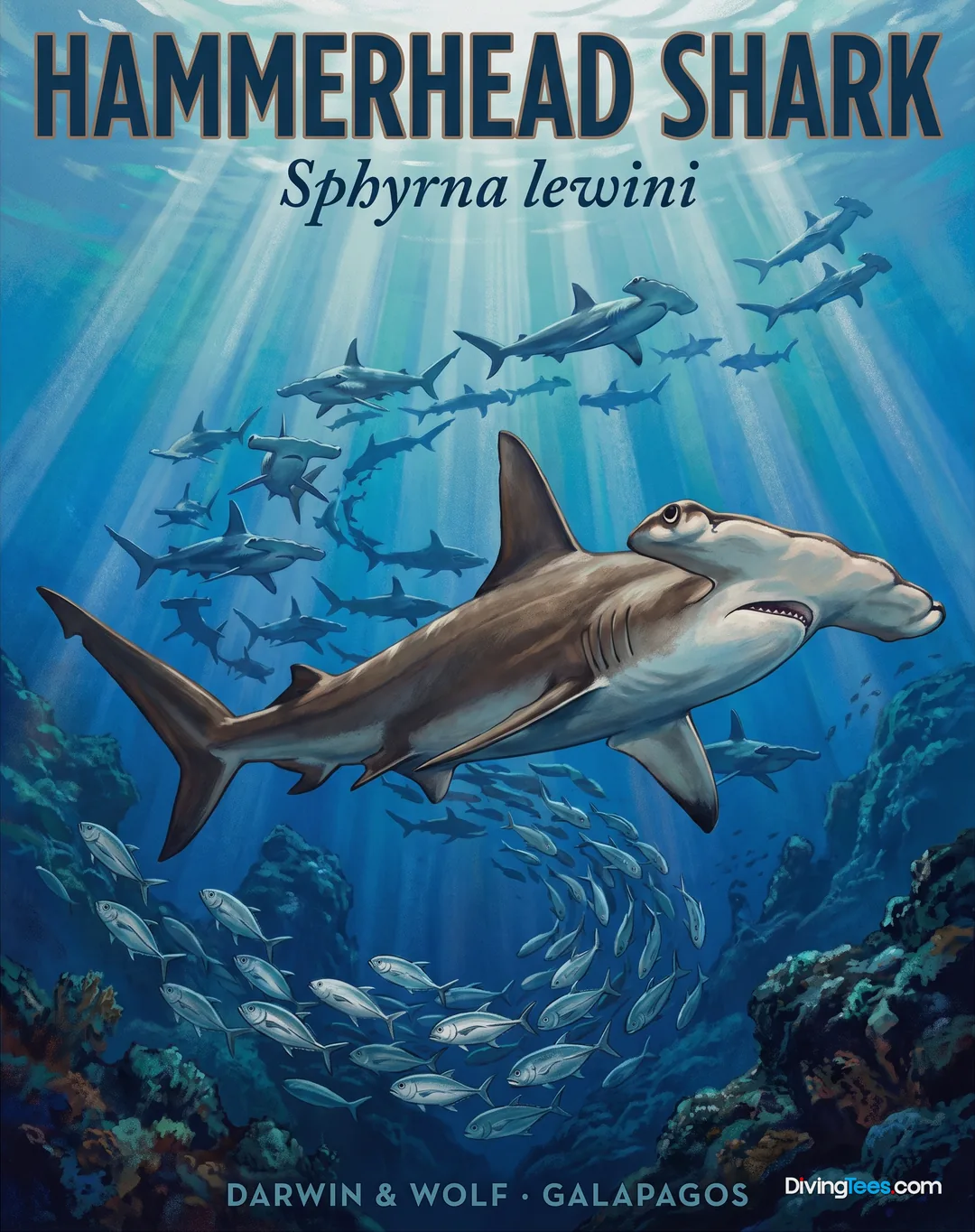
Santa Cruz diving is about what moves through the blue rather than a catalogue of delicate reef subjects. Around Gordon Rocks, divers frequently encounter schools of hammerhead sharks, various rays and other large marine life while working around the crater pinnacles. The encounters are shaped by current: divers may need to settle behind underwater structure, watch the blue and hold position without disturbing the animals. November to April offers the calmest sea conditions, which can make boat travel and in-water observation more comfortable, but it does not turn the site into a predictable aquarium. The protected status of the Galápagos Marine Reserve supports the long-term presence of wildlife, while strict no-touch and no-take rules keep the encounter at a respectful distance.
November to April is the clearest practical window for a Santa Cruz diving trip because the sea is measured as calmest during this period. That matters here: boats are central to the experience, and a more settled crossing makes it easier to reach exposed sites and repeat dives without allowing one rough day to dominate the itinerary. Conditions still change with currents, and visibility can shift with plankton and suspended particles. Outside this window, the destination is not automatically off-limits, but a tightly packed schedule leaves less room when boat travel or a demanding site becomes uncomfortable.
This coast is exposed to sargassum strandings, whose intensity varies greatly from year to year.
This is a destination for autonomous divers who are comfortable on boats, in open water and in current. Gordon Rocks requires at least 25 logged dives or an evaluation dive at a less demanding site, and its conditions are advanced rather than suitable for a first ocean experience. Advanced and Drift training are useful markers; BSAC, PADI and SSI divers should judge their actual current and boat-diving experience, not just the name of a qualification. Nitrox is helpful when several repetitive dives are planned, particularly alongside long boat days.
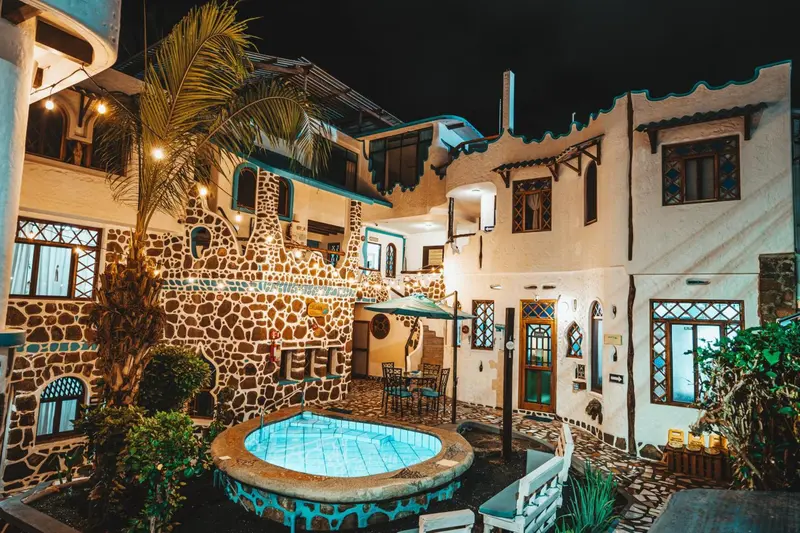
From London Heathrow, London Gatwick or Manchester, the journey involves an international long-haul flight, a domestic connection to the Galápagos, then a land-and-water transfer from Baltra to Santa Cruz. The route is therefore a sequence rather than a single arrival: connections need breathing space, especially when the onward boat schedule is part of the day’s plan. Once on Santa Cruz, Puerto Ayora is the practical base. Accommodation near the centre keeps short journeys to the port manageable, usually on foot or by local taxi, before the day boat heads out to the dive sites.
Treat Santa Cruz as a boat-diving base, not a shore-diving island. Staying centrally in Puerto Ayora reduces early transfers to the port, but the more important protection is leaving space in the programme for a sea day that becomes uncomfortable or unsuitable for the planned run. Do not make Gordon Rocks the first assumption for a diver without 25 logged dives or recent current experience; an evaluation at an easier site is the sensible route. A compact surface interval is not the only constraint here: the crossing, entries and repeated movement in current add to fatigue, so Nitrox can be worthwhile over several days. Keep a day available rather than booking every excursion back-to-back. The Galápagos Marine Reserve is not a place for collecting, touching wildlife or treating the pinnacles as an anchor point. Divers who arrive expecting a single easy local reef will miss the point of the island: Santa Cruz works through the combination of Puerto Ayora, a boat and the conditions on the day.
A seven- to ten-day stay gives the boat schedule room to absorb changing sea conditions and allows several outings rather than relying on one day. Puerto Ayora provides the land base, with diving arranged as day trips and non-diving days available for naturalist walks, national-park areas and surface excursions around the coast and bays. A liveaboard is the alternative when the priority is reaching more distant Galápagos sites, but Santa Cruz offers the more flexible shore-based arrangement.
Hello, I'm Marina, DivingDeal.com's AI assistant. I guide you through destinations, areas and countries.
Thinking about the whole trip and the flights? Talk it over with Edith →
Marina is an AI. Some links are affiliate links: DivingDeal may earn a commission, at no extra cost to you. Bookings are made with the partner.
Your last day stays dry: no diving in the 18-24 hours before a flight, the perfect window to see the destination from another angle.
 Culture
⏱ 1 day · ★ 5.0 (14 reviews)
from £49$66€59
see on Viator ↗
 Nature
⏱ 10 h · ★ 4.8 (21 reviews)
from £287$384€343
see on Viator ↗
 Culture
⏱ 2 h · ★ 4.5 (24 reviews)
from £7$9€8
see on Viator ↗
 City
City⏱ 3 h · ★ 4.3 (64 reviews)
from £57$76€68
see on Viator ↗
Ratings and reviews collected by Viator and Tripadvisor.
November to April offers Santa Cruz Island’s calmest sea conditions, making boat travel and in-water observation more comfortable. Conditions still change with currents, and visibility can vary with plankton and suspended particles. Outside this period, diving remains possible, but a tightly packed itinerary allows less flexibility if crossings or exposed sites become uncomfortable.
Santa Cruz Island suits autonomous divers comfortable with boats, open water and current. Gordon Rocks requires at least 25 logged dives or an evaluation dive at a less demanding site, with advanced conditions and strong to very strong currents. Advanced and Drift training are useful markers, but you should judge your practical experience too.
Diving Santa Cruz Island focuses on marine life moving through open water around Gordon Rocks’ extinct crater pinnacles. You may encounter schools of hammerhead sharks, various rays and other large marine animals. Encounters depend on current, so you may need to hold position behind structure, watch the blue and keep a respectful distance.
Use Puerto Ayora as your base and join day boats rather than expecting shore diving. Staying centrally keeps port transfers manageable, while leaving space for changing sea conditions is important. A seven- to ten-day stay allows several outings, and Nitrox can help with repetitive dives and long boat days. Follow the Marine Reserve’s strict no-touch and no-take rules.