
Blue Experience Diving
Google 5/5 (229 reviews)
8.7 km away as the crow flies
Puerto Aventuras · Mexico · Americas
Max. depth · 14 mExplore a vast underwater cavern system in the Yucatan jungle, revealing ancient geological wonders, a captivating halocline, and dramatic light effects.
For subtitles in English: start the video firstthen click the gearat the top right of the video, select “Subtitles/CC”, then “Auto-translate” and choose “English”.
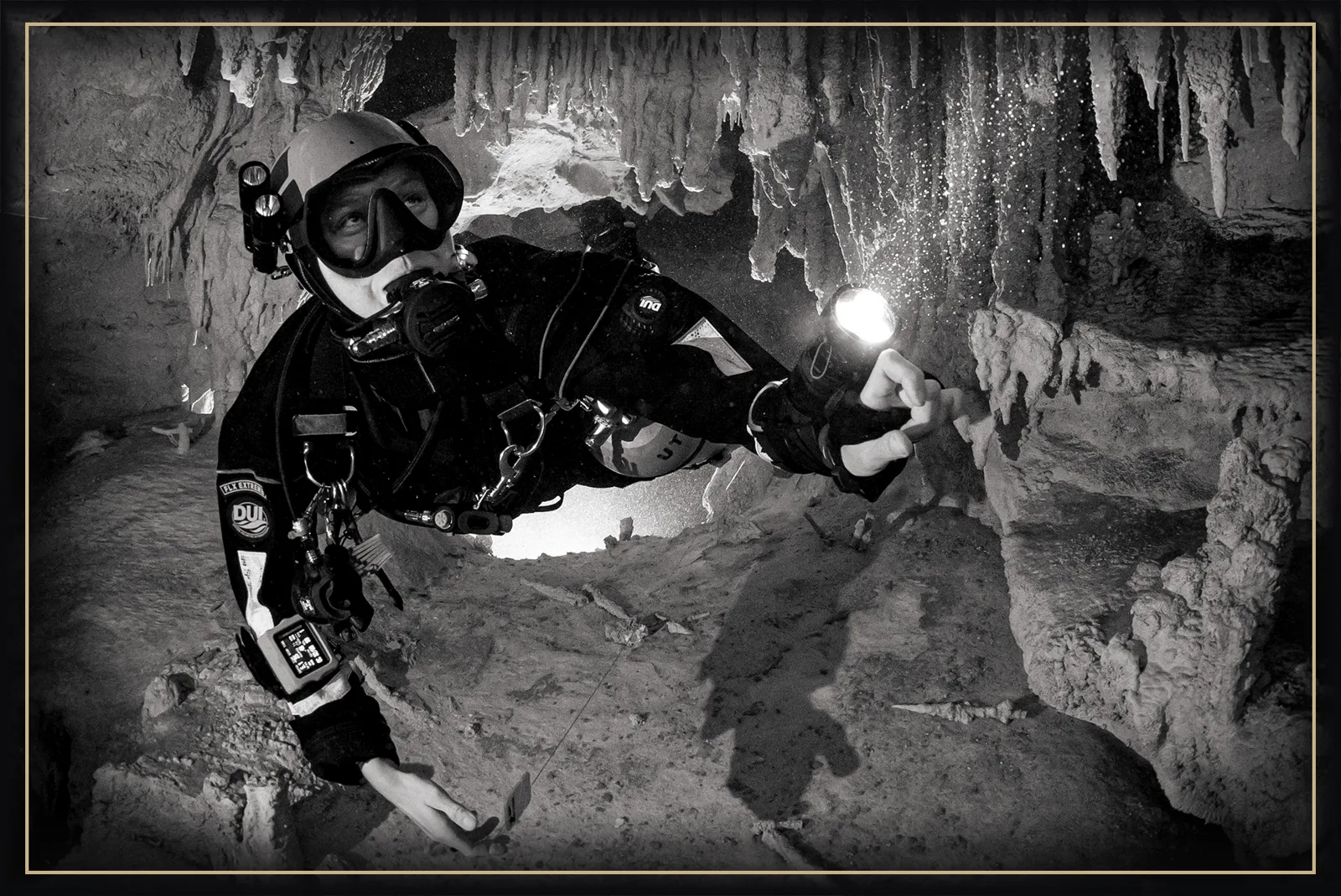
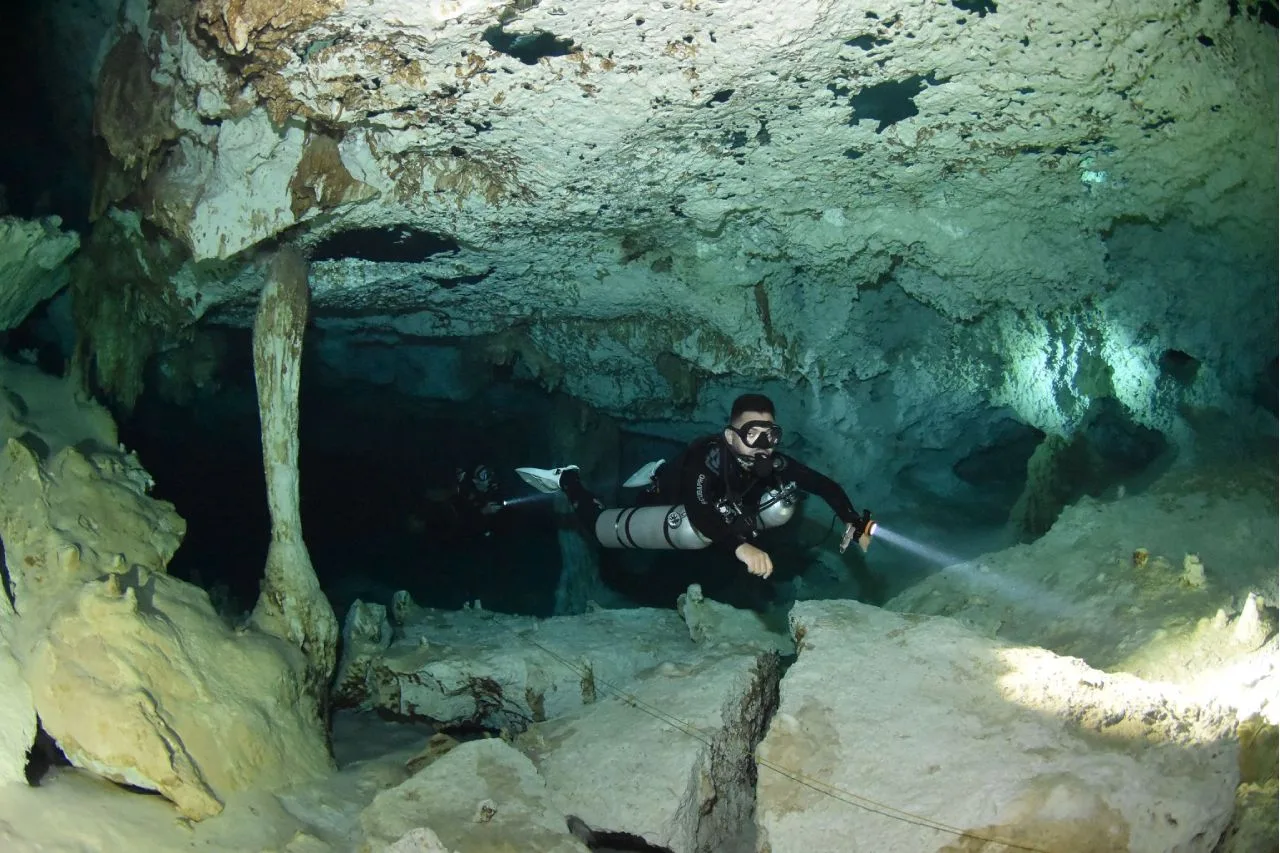
Cenote El Eden, also known as Ponderosa Cenote or Jardín del Edén, offers an exceptional cavern diving experience nestled within the verdant Yucatan jungle. Divers immediately enter an immense open-air section, a natural pool where sunlight penetrates, illuminating the clear freshwater. This initial open area provides a comfortable entry point before transitioning into the overhead environment of the cavern, where ambient light gradually gives way to the focused beams of dive lights.
The cenote is renowned for its truly impressive cavern, a geological marvel that unfolds before divers. This vast underwater chamber showcases an architectural display of rock formations, sculpted over millennia by water and time. As divers navigate deeper, they become aware of the sheer scale and natural artistry of the cenote, a testament to the powerful forces that shaped the Yucatan Peninsula.
A striking phenomenon encountered here is the halocline, a distinct visual and tactile layer where fresh river water meets deeper, denser saltwater. This ethereal boundary shimmers and distorts, creating a mirror-like effect that can be both disorienting and fascinating. This natural wonder adds another dimension to the dive, making precise buoyancy control crucial when passing through this unique interface.
Beyond the general cavern structure, dive lights reveal ancient details etched into the rock walls. Intricate geological patterns cover the surfaces, telling silent stories of Earth's past. Divers can discover various fossils, remnants from millions of years ago, perfectly preserved within the cenote's ancient limestone, offering a tangible connection to prehistoric life. These include ancient stalactites and stalagmites visible throughout the cavern system.
The light play within the cavern is a constant source of wonder, particularly the enormous window of natural light from the open section. This natural spotlight pierces the darkness, creating dramatic shafts of illumination that highlight geological details and the clear water. These sunbeams create a visual spectacle that shifts with the time of day, transforming the cavern's appearance and making each dive a slightly different visual experience.
While the primary allure is the geological formations, the cenote also hosts a unique ecosystem adapted to its freshwater environment. Freshwater fish, including mollies à voile (Poecilia velifera), swim through the clear waters, often congregating near the more open sections where plant life thrives. Their presence adds a dynamic element to the pristine geological landscape, particularly in shallower, brackish zones near the entrance.
The cenote also features tunnels that connect to further caverns, creating a natural circuit for exploration. These passageways demand precise finning techniques to avoid stirring up silt from the floor, thus maintaining the excellent visibility that typifies cenote diving. This ensures that divers can fully appreciate the delicate formations without causing disturbance.
Diving Cenote El Eden is an immersion in a living geological museum. The combination of its vast cavern, the compelling halocline, ancient fossils, and distinctive rock structures creates a dive profile unlike any other. It’s a journey into the earth, where the silence and history of the Yucatan surround you, offering a profound sense of natural discovery and making it an excellent location for underwater photography.
Accessible to certified Open Water Divers (OWD). Maximum depth is 14 meters. No significant current. Water temperature ranges between 24 and 28°C. Excellent visibility. Strong buoyancy control is essential to protect fragile formations. The best period for optimal light conditions is generally from May to September.
You can dive Cenote El Eden year-round, but the period from May to September is generally associated with optimal light conditions. Sunlight enters through the open-air section and creates changing beams inside the cavern, illuminating the freshwater, geological details, and natural formations in ways that vary with the time of day.
Cenote El Eden is accessible to certified Open Water Divers. The maximum depth is 14 meters, with the dive moving from an open-air freshwater pool into a cavern environment. You should also be prepared for overhead surroundings, tunnels connecting further caverns, and the need for precise buoyancy control around fragile formations.
Cenote El Eden has no significant current, with water temperatures ranging from 24 to 28°C and excellent visibility. Strong buoyancy control is essential, especially around the halocline and delicate formations. Precise finning through the tunnels helps prevent silt from reducing the clear water conditions that support viewing and photography.
At Cenote El Eden, you can see a vast cavern, an impressive window of natural light, and the shimmering halocline where freshwater meets saltwater. Dive lights reveal fossils in the rock walls, stalactites, stalagmites, and other geological structures, while freshwater fish, including mollies à voile, move through the open areas.