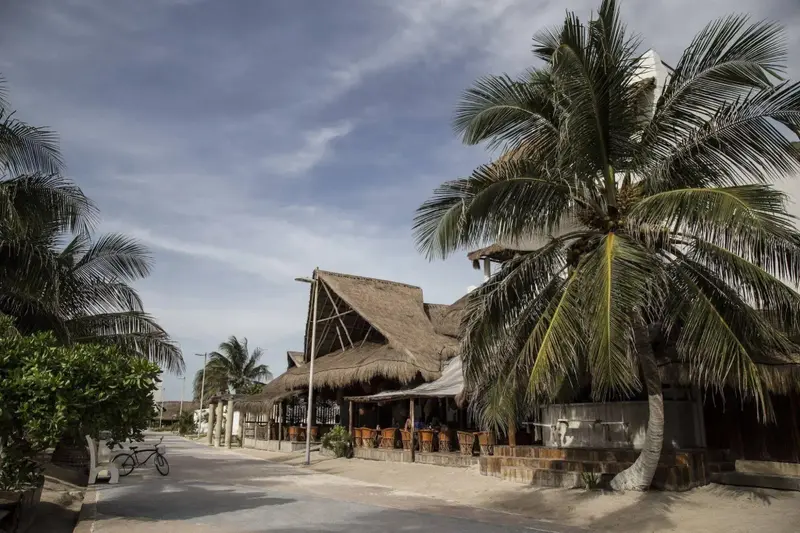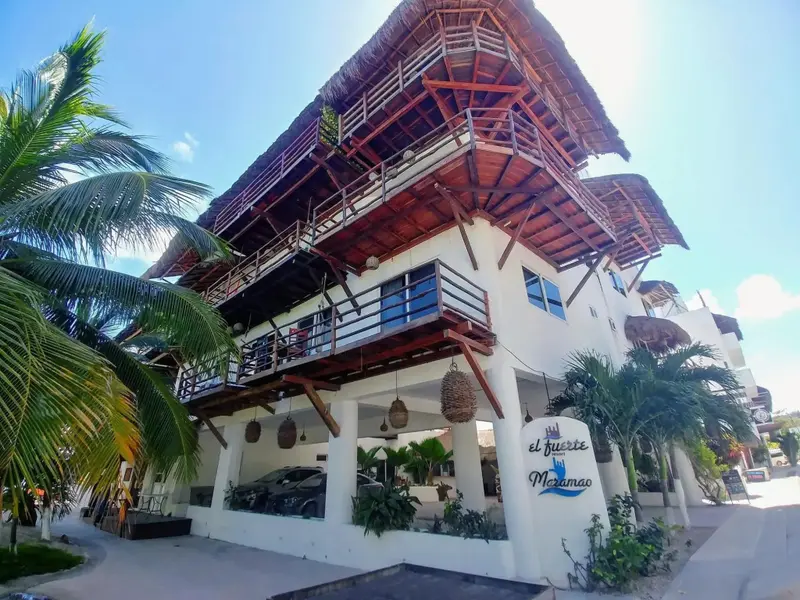
 Dive centre in the hotel
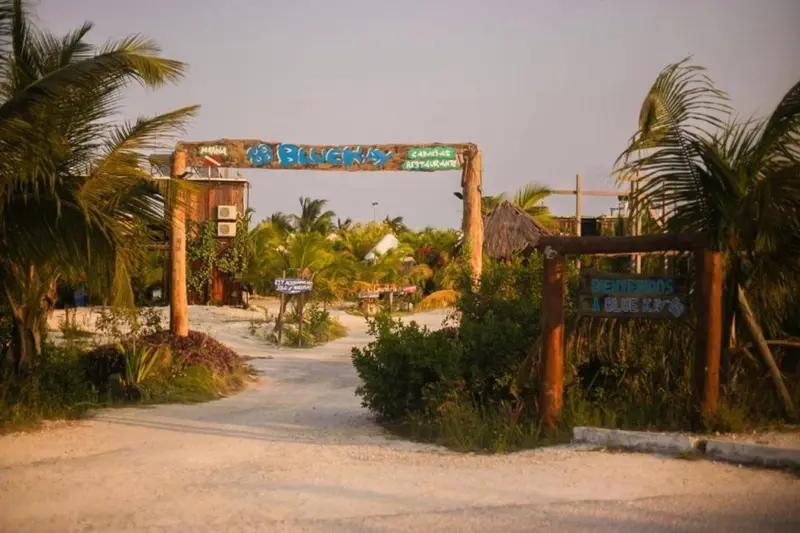
Eco Cabanas Blue Kay
0Google 4.2/5 (3,454 reviews)
The dive centre
MAR ADENTRO DIVING
PADI · SSI
Google 4.9/5 (506 reviews)
Dives: Xcalak, Banco Chinchorro, Mahahual (récif local)
Mexico · Americas
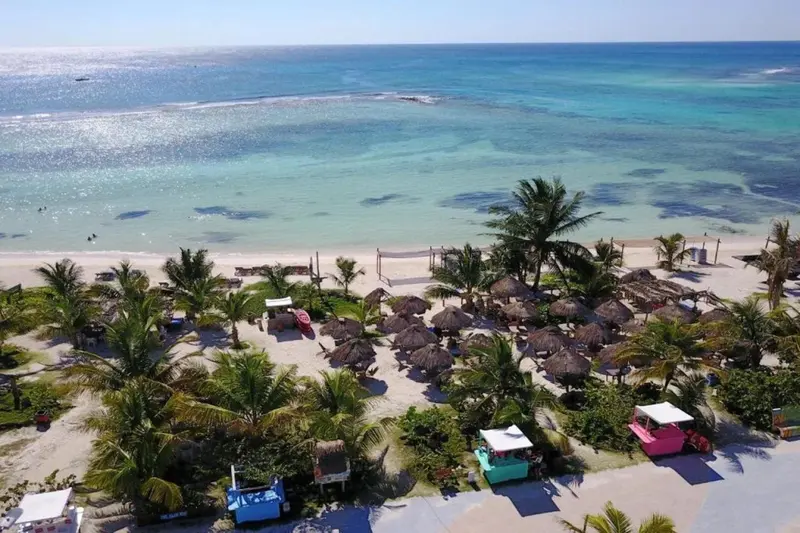
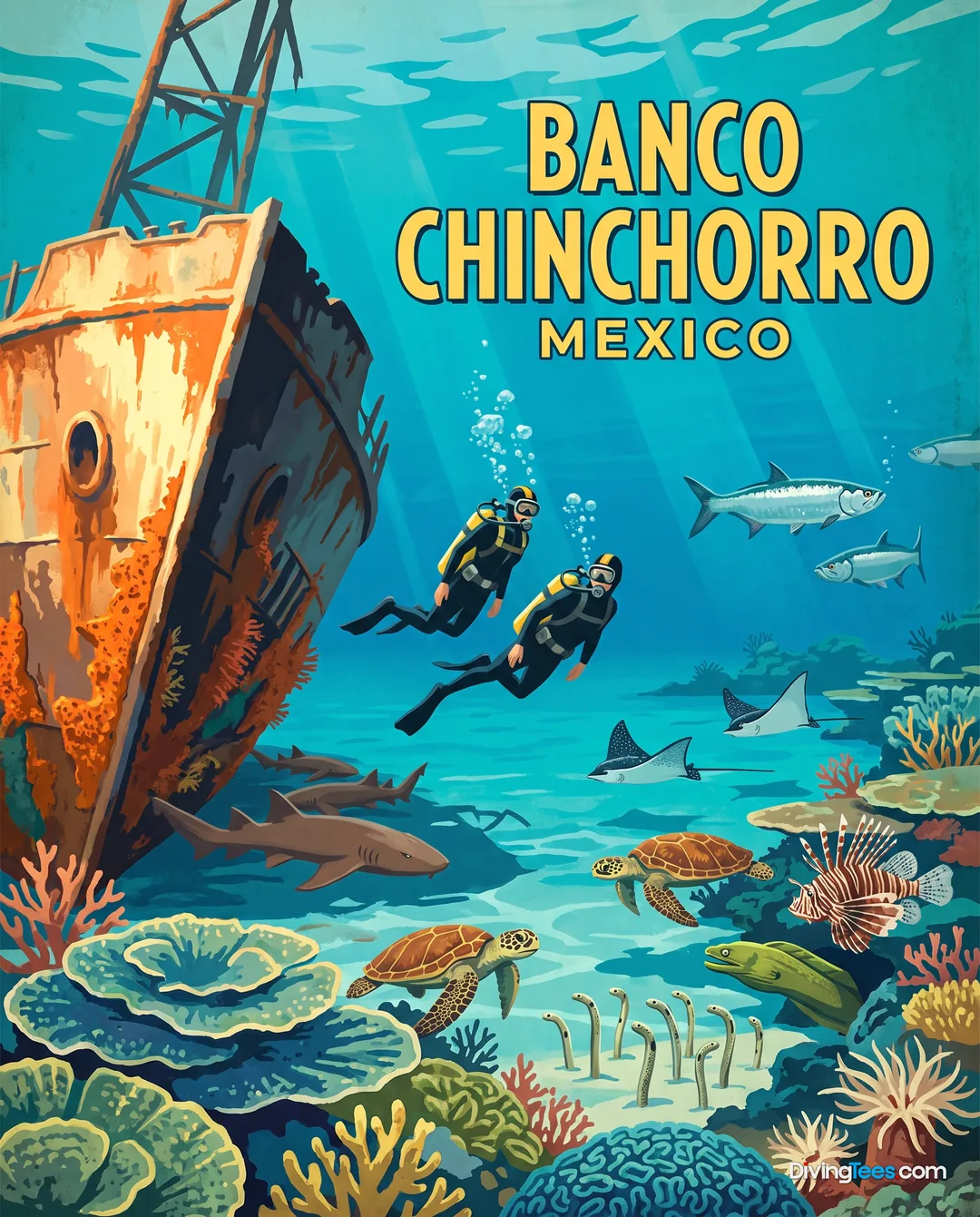
Shallow Caribbean reefs, broad sand flats and Banco Chinchorro’s coral atoll and historic wrecks define Mahahual’s diving days.
For subtitles in English: start the video firstthen click the gearat the top right of the video, select “Subtitles/CC”, then “Auto-translate” and choose “English”.
Banco Chinchorro, with its coral reefs, wide sand flats and historic wrecks, gives Mahahual its distinctive reach beyond the local coastline. The town works as a land-based diving base rather than a liveaboard port: short coastal outings sit alongside longer boat trips to the atoll. That makes it a sensible choice for divers who want reef diving, a small seaside setting and the possibility of a more ambitious day on the water, without committing to a cruise itinerary.
Mahahual combines fringing reefs near the coast with boat diving farther offshore. The clearest change of scale comes at Banco Chinchorro, where coral formations, open sand flats and shipwrecks occupy a marine landscape reaching from five to thirty metres. The atoll is suitable for certified divers, but the journey and exposure make it a different proposition from an easy coastal dive. Currents are variable, so some outings may feel like straightforward reef work while others take the form of a drift. Visibility at Banco Chinchorro generally sits between twenty and thirty metres, giving wreck outlines, coral structure and the open seabed room to register. Nitrox can be useful for repetitive diving, while a drift qualification is relevant when conditions and the planned route call for it. Most dives are reef-based rather than organised around wreck diving.
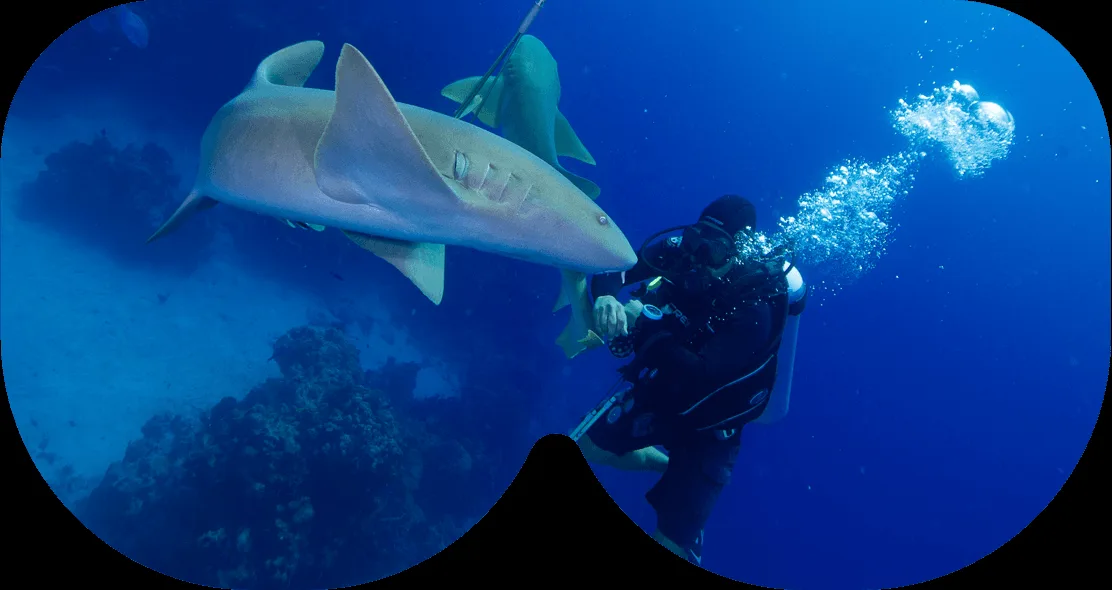
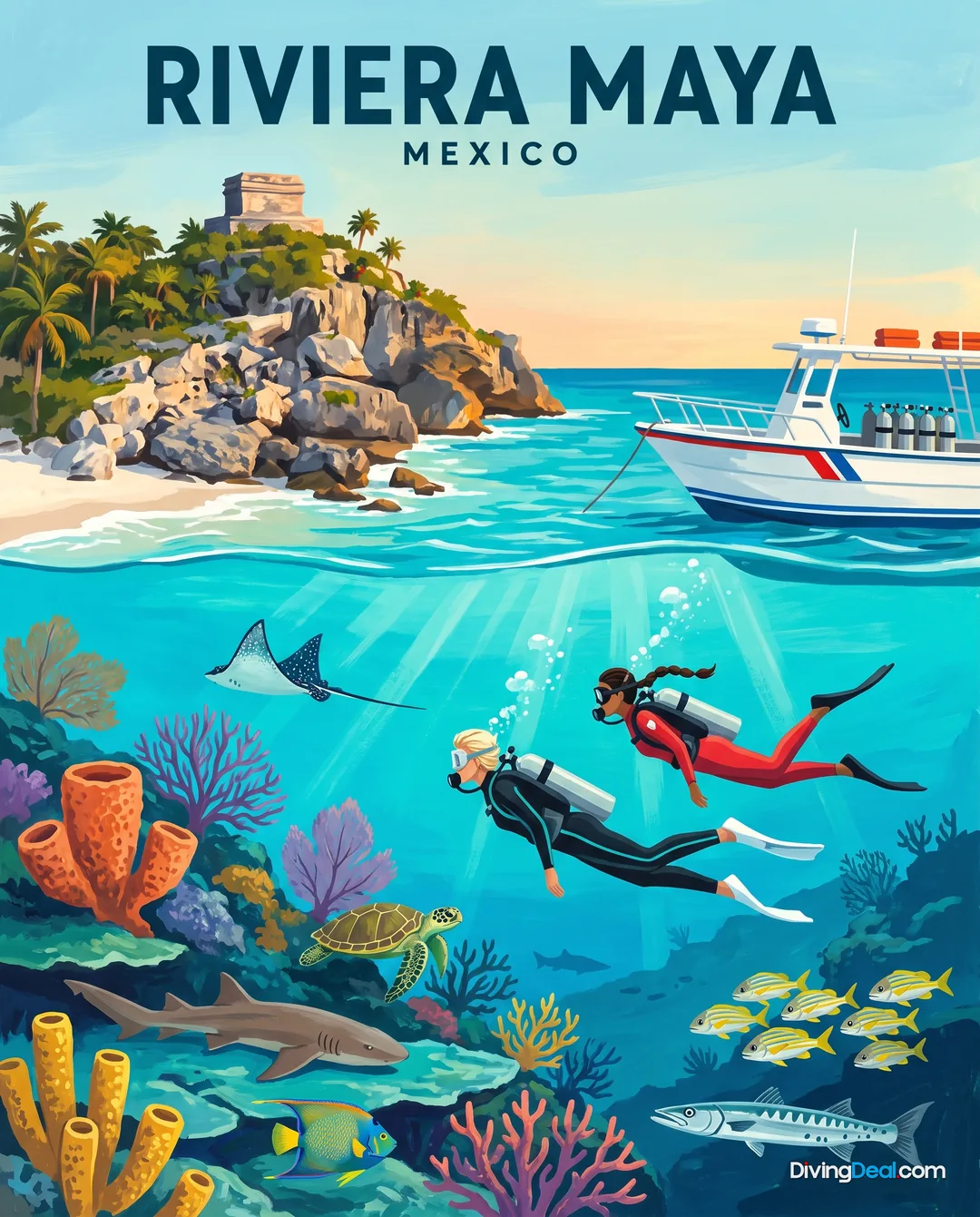
The dependable visual subjects are the coral reefs themselves, the pale sand flats and the historic wrecks preserved around Banco Chinchorro. Coral structure provides the close-range detail of a normal reef dive, while the atoll’s open seabed changes the sense of scale and gives the wrecks room to stand apart. Marine life is part of that reef setting. Banco Chinchorro can be dived throughout the year in broadly consistent conditions, so the timing decision is driven more by sea state and travel planning than by a named animal migration. July to October is especially useful when a calmer boat journey matters.
July to October is the measured window for the calmest sea, which matters most when the plan includes the longer run to Banco Chinchorro. Those months favour a more comfortable boat day and make it easier to use the atoll as the centrepiece rather than an uncertain add-on. January to May brings the lightest rainfall, which can suit a land-based stay and time on the coast, although it is not the stated calm-sea period. The atoll is described as diveable year-round, so Mahahual does not depend on a single narrow season; it rewards matching the month to the sort of day wanted.
This coast is exposed to sargassum strandings, whose intensity varies greatly from year to year. To find out more, see the “Sargassum alert” panel on this page.
The coastal reefs suit all levels, and Banco Chinchorro is accessible from Open Water level upwards. A PADI, SSI or BSAC Open Water qualification is therefore the sensible minimum for the atoll, provided the diver is comfortable with boat travel and changing conditions. More distant outings need a little more sea-going confidence than a shallow local reef. Drift training is useful where current becomes part of the plan, and Nitrox can help experienced divers manage repeated days without turning the destination into a technical-diving exercise.
From London or Manchester, the journey begins with an international flight towards Cancun or Mexico City, followed by a long road transfer into Quintana Roo. The practical approach to Mahahual is then by road from Chetumal; reaching the town itself does not require a compulsory sea crossing. Local transport links are limited, so the main planning issue is the overland connection rather than an airport-to-boat transfer. Banco Chinchorro adds a separate logistical layer: departures depend on local boat arrangements and a sea state suitable for the longer outing. Keeping accommodation close to the waterfront or diving base reduces unnecessary vehicle movements in a coastal town that is stretched along the shore rather than arranged around a compact centre.
Before booking, establish whether the planned day is on the nearby reef or at Banco Chinchorro. The names may sit on the same itinerary, but the distance, boat time and exposure make them quite different dives. Build weather margin into any atoll plan rather than treating it as a guaranteed extension of a coastal programme, and check the sea the day before departure. Mahahual is better handled as a short run of two or three consecutive diving days: that makes the long road access and boat arrangements worthwhile. Staying near the waterfront or dive base also avoids repeated vehicle journeys along the elongated coastal strip. Do not arrive expecting Cozumel-style drift diving, dense cruise infrastructure or shore access everywhere. Keep a spare day for weather or a delayed Banco Chinchorro departure, and separate the village experience from the atoll when judging comfort, time and logistics.
A practical stay is built around several consecutive diving days from Mahahual, with coastal reefs on the more straightforward outings and Banco Chinchorro reserved for a suitable sea day. Accommodation near the waterfront keeps daily movement simple. The town’s beaches and calm seaside rhythm give non-divers something to do, although the choice is modest. A final day on land is useful before the long road journey or onward flight, particularly if the atoll has required a full day on the water.
Hello, I'm Marina, DivingDeal.com's AI assistant. I guide you through destinations, areas and countries.
Thinking about the whole trip and the flights? Talk it over with Edith →
Marina is an AI. Some links are affiliate links: DivingDeal may earn a commission, at no extra cost to you. Bookings are made with the partner.
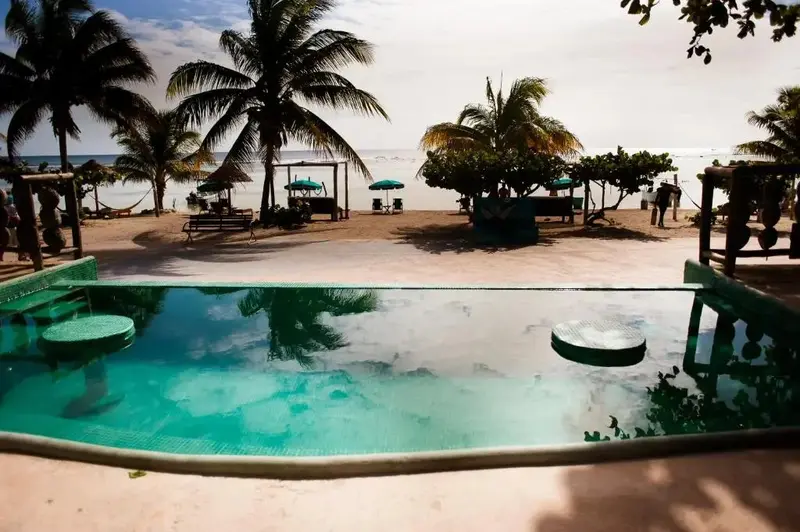
In each one, the dive centre is inside the hotel: step out of your room and go diving.
Dive centre in the hotelGoogle 4.2/5 (3,454 reviews)
The dive centre
MAR ADENTRO DIVING
PADI · SSI
Google 4.9/5 (506 reviews)
Dives: Xcalak, Banco Chinchorro, Mahahual (récif local)
Your last day stays dry: no diving in the 18-24 hours before a flight, the perfect window to see the destination from another angle.
 Culture
⏱ 2 h · ★ 5.0 (148 reviews)
from £60$80€72
see on Viator ↗
 Culture
⏱ 9 h · ★ 5.0 (9 reviews)
from £82$110€98
see on Viator ↗

⏱ 5 h · ★ 4.5 (15 reviews)
from £93$124€111
see on Viator ↗
 Adventure
⏱ 6 h · ★ 4.3 (6 reviews)
from £34$46€41
see on Viator ↗
Ratings and reviews collected by Viator and Tripadvisor.
Choose Mahahual from July to October when calmer seas make the boat journey to Banco Chinchorro more comfortable. January to May brings drier conditions for a land-based stay and coastal time. Banco Chinchorro remains diveable throughout the year, so match your timing to sea conditions and the kind of diving you want.
Mahahual’s coastal reefs suit divers of all levels. Banco Chinchorro is accessible from Open Water level, but you should feel comfortable with boat travel and changing conditions before choosing the atoll. Drift training is useful when currents shape the dive, while Nitrox may help experienced divers manage repeated days underwater.
In Mahahual, you can explore fringing coral reefs near the coast, broad pale sand flats and historic wrecks around Banco Chinchorro. Coral provides close-range structure and marine life, while the atoll’s open seabed gives wrecks space to stand apart. Visibility there generally ranges from twenty to thirty metres.
Plan several consecutive diving days from Mahahual, using nearby reefs for straightforward outings and reserving Banco Chinchorro for a suitable sea day. Stay near the waterfront or diving base to simplify local movement. Keep a spare day for weather or a delayed atoll departure, and allow time on land before onward travel.