


East Cape Explorers
Google 4.9/5 (552 reviews)
Mexico · Americas
Vertical walls, underwater sandfalls and turtles define boat diving from San José del Cabo, with sheltered reefs for beginners and deeper Pacific-facing sites when conditions allow.
For subtitles in English: start the video firstthen click the gearat the top right of the video, select “Subtitles/CC”, then “Auto-translate” and choose “English”.
Neptune's Finger gives a useful introduction to San José del Cabo: a rock formation, a vertical wall and an underwater sandfall, with the bottom dropping from five to 40 metres. The town is chiefly a land-based base for day boats rather than a liveaboard destination. From here, divers can reach sheltered reefs around the wider Los Cabos area, deeper walls and, when conditions permit, the protected waters of Cabo Pulmo. The town itself also works well for non-divers.
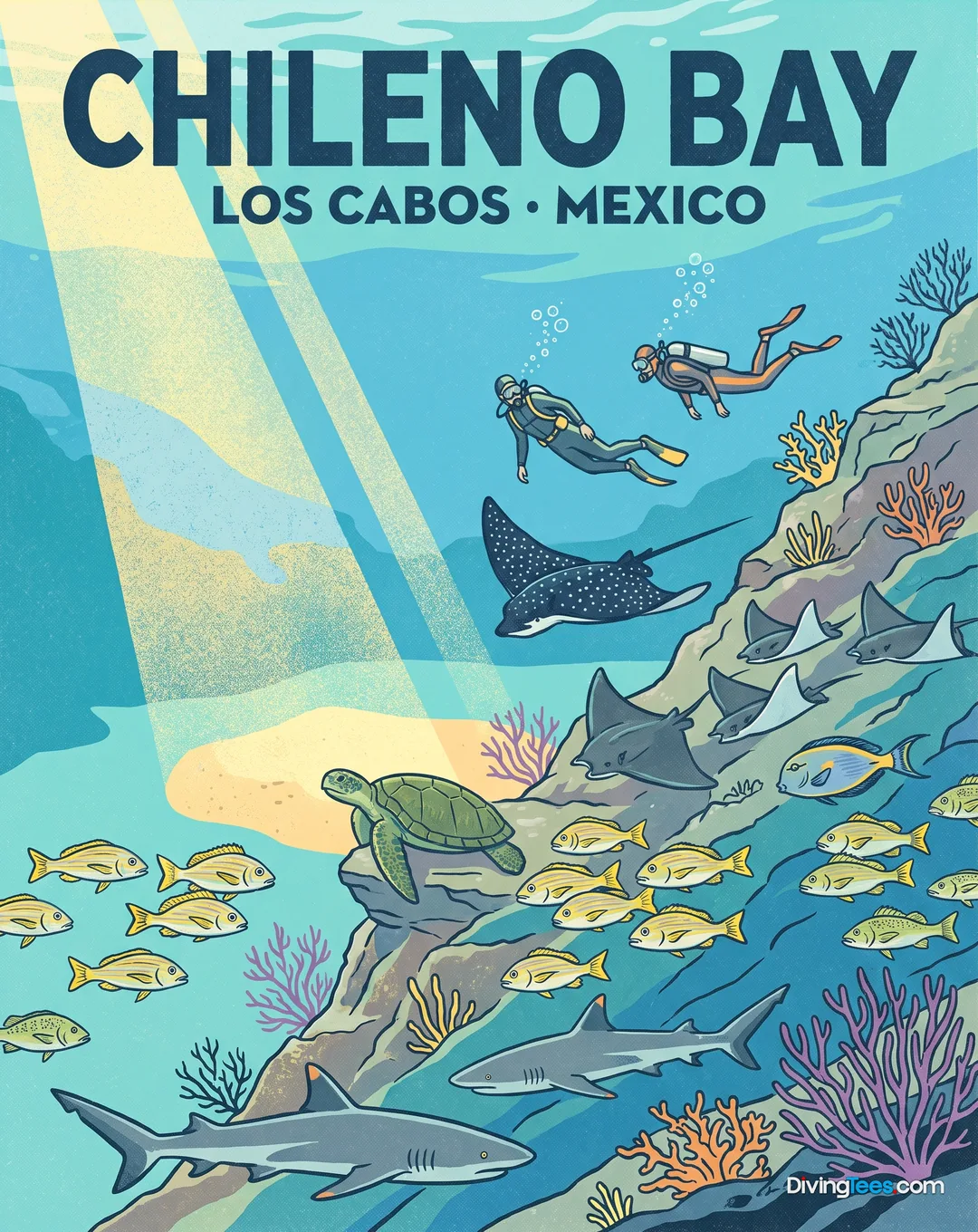
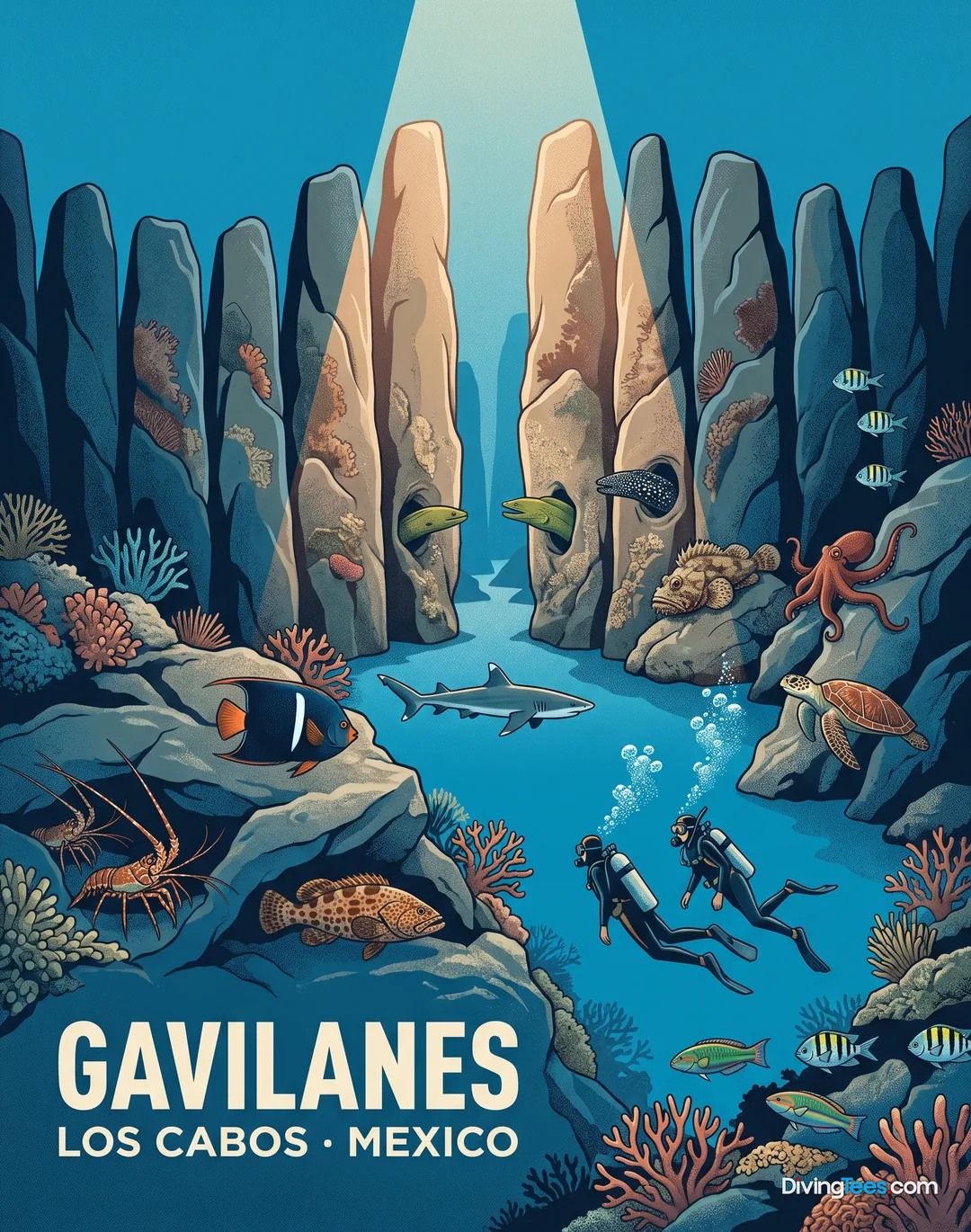
The diving is built around rocky reefs, walls, canyons and sandy slopes rather than a single house style. Chileno Bay and Gavilanes keep things relatively shallow, with reef work down to 18 metres, mild currents and shelter from southern swell. Pelican Rock combines a five-metre reef with a canyon reaching 27 metres. At the deeper end, Blow Hole reaches 35 metres, Neptune's Finger 40 metres and Middle Wall 43 metres. Middle Wall's sheer drop connects with the sandfall area near Pelican Rock and can bring more variable conditions. Currents are generally mild on sheltered reef sites but change with exposure, weather and site choice. Visibility can be good on the protected reefs, though clarity is affected by mixing and Pacific swell. Repetitive boat diving makes Nitrox useful, while an Advanced qualification helps with the deeper profiles.
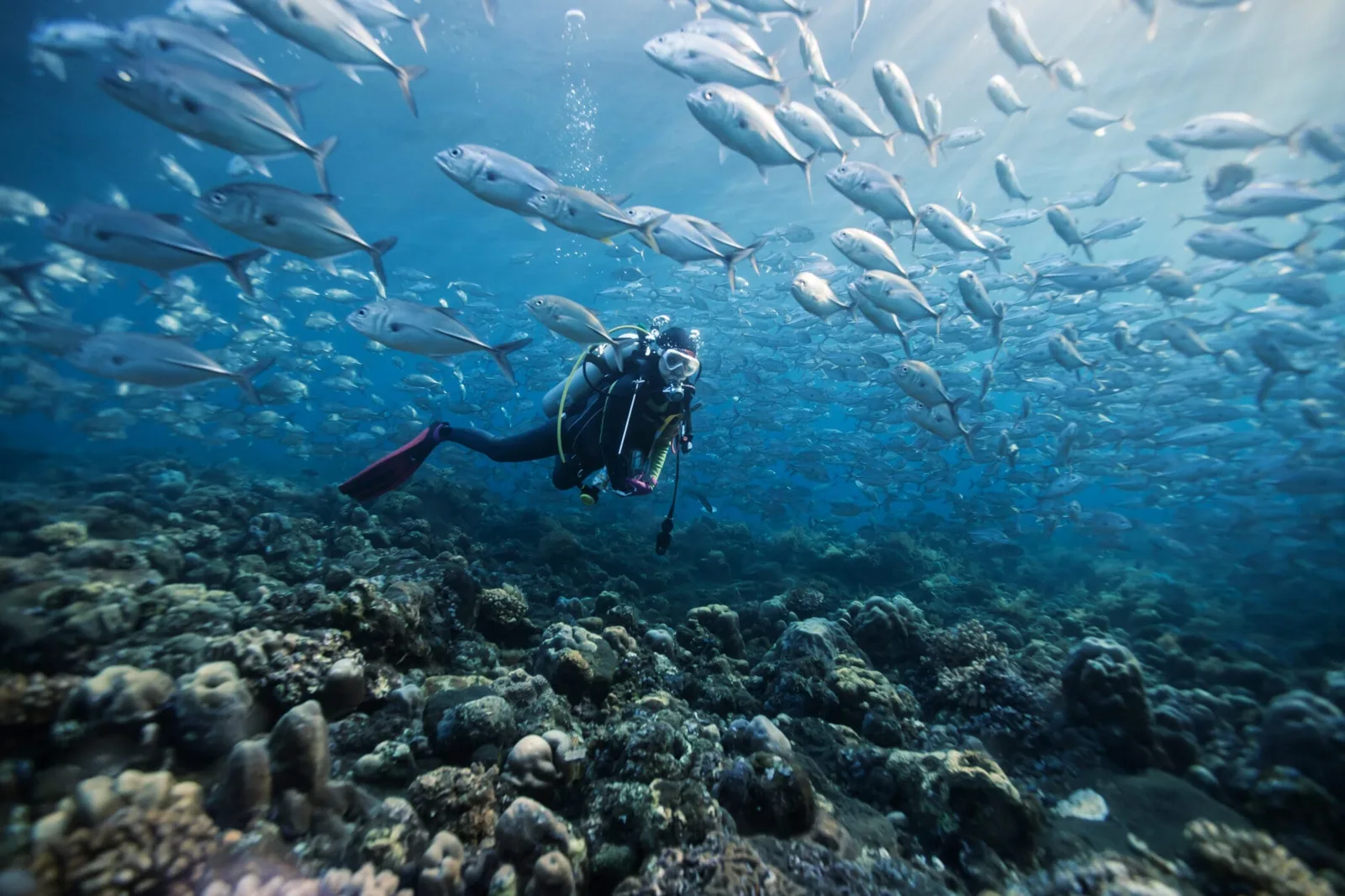
Turtles and rays are regular possibilities, with eagle rays, stingrays and cow rays moving over sand or along the reef. Groupers, snappers, angelfish, moray eels, pufferfish, scorpionfish, octopus and tropical fish fill the quieter reef work, particularly where rocky cracks and corridors provide cover. Chileno Bay is noted for turtles, schooling fish and reef sharks; Gavilanes adds morays and occasional white-tip reef sharks. Mobula rays are among the more memorable pelagic encounters, especially around the deeper walls. Whale sharks, manta rays and bull sharks are occasional rather than dependable appointments. The timing of migratory wildlife changes through the year, so a trip planned around one headline species can disappoint; the stronger proposition is the combination of seasonal animals, varied relief and protected Cabo Pulmo.
The measured window from November to April brings the calmest sea conditions and is the most practical period for arranging boat days, particularly when deeper or more exposed sites are the objective. Rainfall is lowest from November through June, giving a broader comfortable travel period, although the best sea state remains the more useful consideration for diving. Migratory wildlife also shifts with the seasons, so encounters with mobula rays and other pelagic animals remain opportunistic. Pacific-facing departures can still be altered or cancelled when swell rises. A flexible itinerary matters more than fixing every dive months in advance.
This coast is exposed to sargassum strandings, whose intensity varies greatly from year to year.
San José del Cabo suits both newer divers and experienced ones, provided the site is matched to the diver. Open Water divers can enjoy Gavilanes, Chileno Bay and the shallower sections of Pelican Rock. Advanced Open Water, PADI, SSI or equivalent BSAC experience is useful for Neptune's Finger, Blow Hole and Middle Wall, where depth, wall exposure and buoyancy control matter. Nitrox is worthwhile on repeated boat-diving days. Currents are variable, so comfort with changing conditions is more important than chasing depth.
From London Heathrow, London Gatwick or Manchester, the journey starts with a flight to Los Cabos, followed by the road transfer from the airport to San José del Cabo's hotel and seafront areas. There is no need to organise a liveaboard connection: local diving is arranged from marinas or beaches, depending on the day's operator and site. Once in town, a taxi or operator shuttle is the usual solution for reaching the departure point; accommodation in the urban core may also allow a walk. The practical complication is not a ferry or internal flight, but the final boat departure and its dependence on weather. Transfers can be moved between more sheltered and more exposed sites, so leaving room between arrival plans and the first boat day is sensible.
Treat San José del Cabo as a regional base, not as a single, fixed dive area. Before committing to a day, establish whether the plan is for the San José corridor, Cabo San Lucas or Cabo Pulmo: the navigation, exposure and character of the diving are not interchangeable. Keep at least one day flexible, because a Pacific swell can move an exposed trip, switch the itinerary to sheltered sites or make a land day the sensible option. Early departures are worth considering; boat traffic and crowding build later on the easier-to-reach sites. Bring personal equipment if fit and familiarity matter, especially for wetsuit sizing, a secondary regulator or camera accessories. Cabo Pulmo operates under strict protection: fishing, collecting and capturing marine life are prohibited, and park rules and permits apply. Finally, do not book the week around whale sharks, mantas or bull sharks. They are occasional encounters, not a timetable.
A seven- to ten-day stay gives the weather some room to rearrange the boat programme and leaves time for both sheltered and exposed sites. Accommodation in or near the town centre keeps taxis, shuttles and restaurants straightforward, while San José del Cabo offers enough history, beaches and coastal excursions to occupy non-divers. The natural rhythm is a land-based holiday with repeated day boats, not a cruise itinerary. A day kept free for Cabo Pulmo or a weather change can improve the whole week.
Hello, I'm Marina, DivingDeal.com's AI assistant. I guide you through destinations, areas and countries.
Thinking about the whole trip and the flights? Talk it over with Edith →
Marina is an AI. Some links are affiliate links: DivingDeal may earn a commission, at no extra cost to you. Bookings are made with the partner.
Your last day stays dry: no diving in the 18-24 hours before a flight, the perfect window to see the destination from another angle.
 Culture
⏱ 5 h · ★ 5.0 (17 reviews)
from £68$92€82
see on Viator ↗

⏱ 4 h · ★ 5.0 (9 reviews)
from £65$86€77
see on Viator ↗
 Nature
⏱ 4 h · ★ 5.0 (9 reviews)
from £91$122€109
see on Viator ↗
 Culture
⏱ 1 h · ★ 5.0 (7 reviews)
from £45$60€54
see on Viator ↗
Ratings and reviews collected by Viator and Tripadvisor.
November through April brings calmer seas and is the most practical period for boat diving, especially at deeper or exposed sites. Rainfall is lowest from November through June, but Pacific swell can still alter departures. Keep your itinerary flexible because migratory wildlife changes seasonally and pelagic encounters remain opportunistic.
San José del Cabo suits newer and experienced divers when sites match your ability. Open Water divers can explore Chileno Bay, Gavilanes and shallow Pelican Rock. Advanced training is useful for Neptune’s Finger, Blow Hole and Middle Wall, where depth, wall exposure and buoyancy control matter. Nitrox helps on repeated boat days.
Diving San José del Cabo features rocky reefs, vertical walls, canyons, sandy slopes and underwater sandfalls. You may encounter turtles, mobula rays, eagle rays, groupers, morays, octopus, schooling fish and reef sharks. Protected reefs offer varied marine life, while deeper walls can bring pelagic encounters, although whale sharks, mantas and bull sharks are occasional.
Plan San José del Cabo as a land-based holiday with repeated day boats rather than a liveaboard. Stay near the town centre for easier access to taxis, shuttles and restaurants, and leave time for sheltered and exposed sites. Keep a day flexible for weather or Cabo Pulmo, and allow room between arrival and your first boat departure.