
Dive in la Paz
Google 4.9/5 (595 reviews)
Mexico · Americas
California sea lions, Swanne Reef’s rocky seamount and La Reina’s manta-ray cleaning station shape boat diving from La Paz in the Sea of Cortez.
For subtitles in English: start the video firstthen click the gearat the top right of the video, select “Subtitles/CC”, then “Auto-translate” and choose “English”.
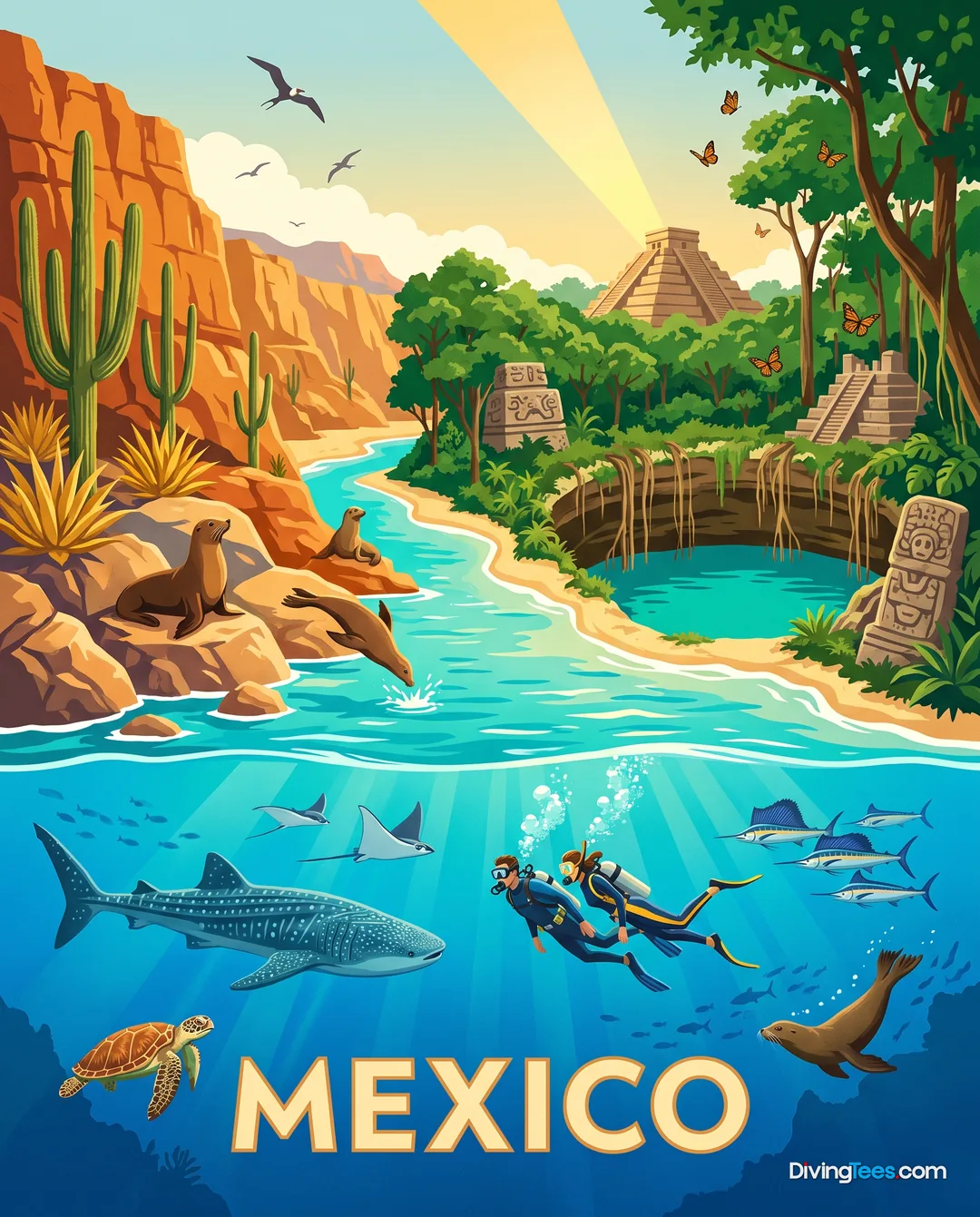
La Paz is a practical land-based base for boat diving in the Sea of Cortez. Days start in town, continue from the bay to rocky islets and channels, and can include California sea lion encounters, shallow reef work or more exposed sites farther out. Swanne Reef gives photographers a low-profile seamount with cracks, slopes and walls, while La Reina adds deeper water and the possibility of oceanic manta rays. The town also suits a mixed holiday, with marine excursions and quiet days ashore for non-divers.
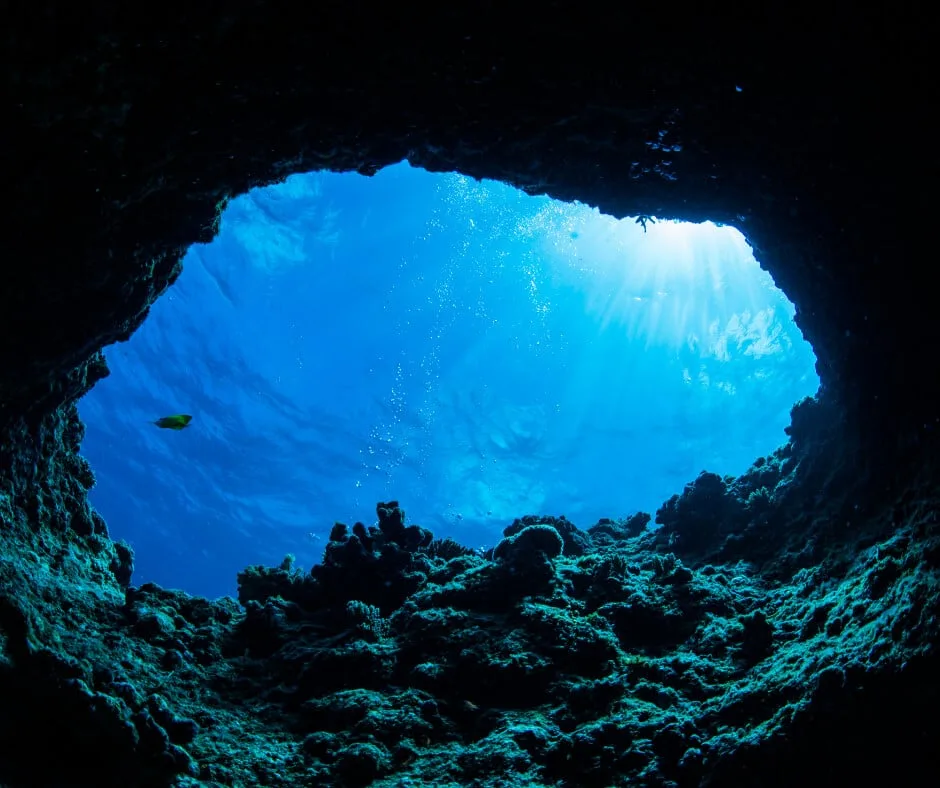
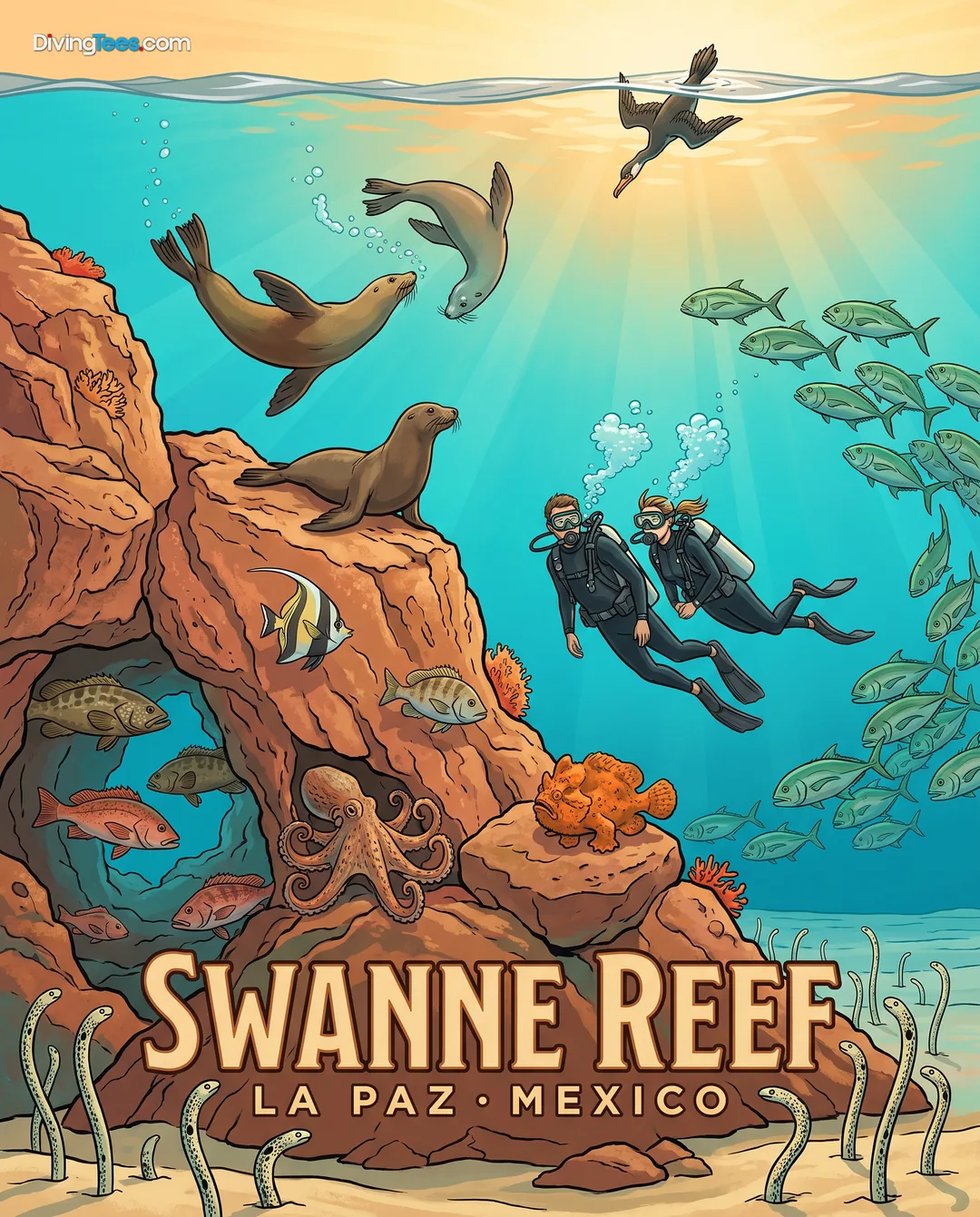
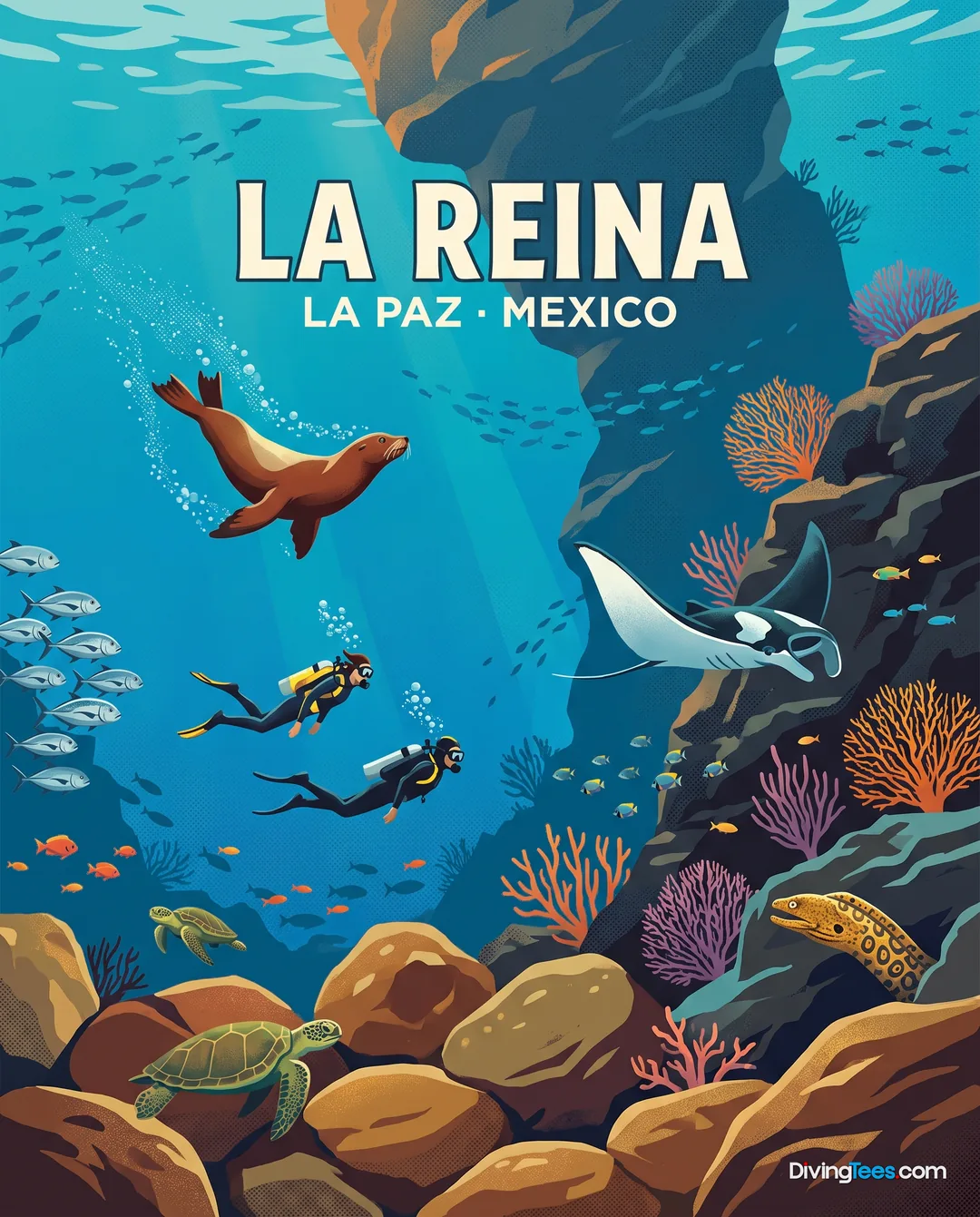
The diving is built around boat trips to islands, rocky points and more open sectors rather than a single fixed reef reached from shore. At Swanne Reef, the crown nearly reaches the surface: divers work along slopes, walls and crevices between six and twelve metres, looking for macro life and sea lions. The channel current can be absent or strong as the tide changes, so the site rewards sensible gas planning and confidence in moving water. La Reina reaches twenty-two metres and can carry a stronger current, particularly during its more active seasonal periods. Visibility at Swanne Reef is commonly ten to twenty metres; elsewhere, conditions depend on plankton, wind and sea state. Most dives are suitable for a broad range of experience, but the day’s site choice matters more than a blanket grade.
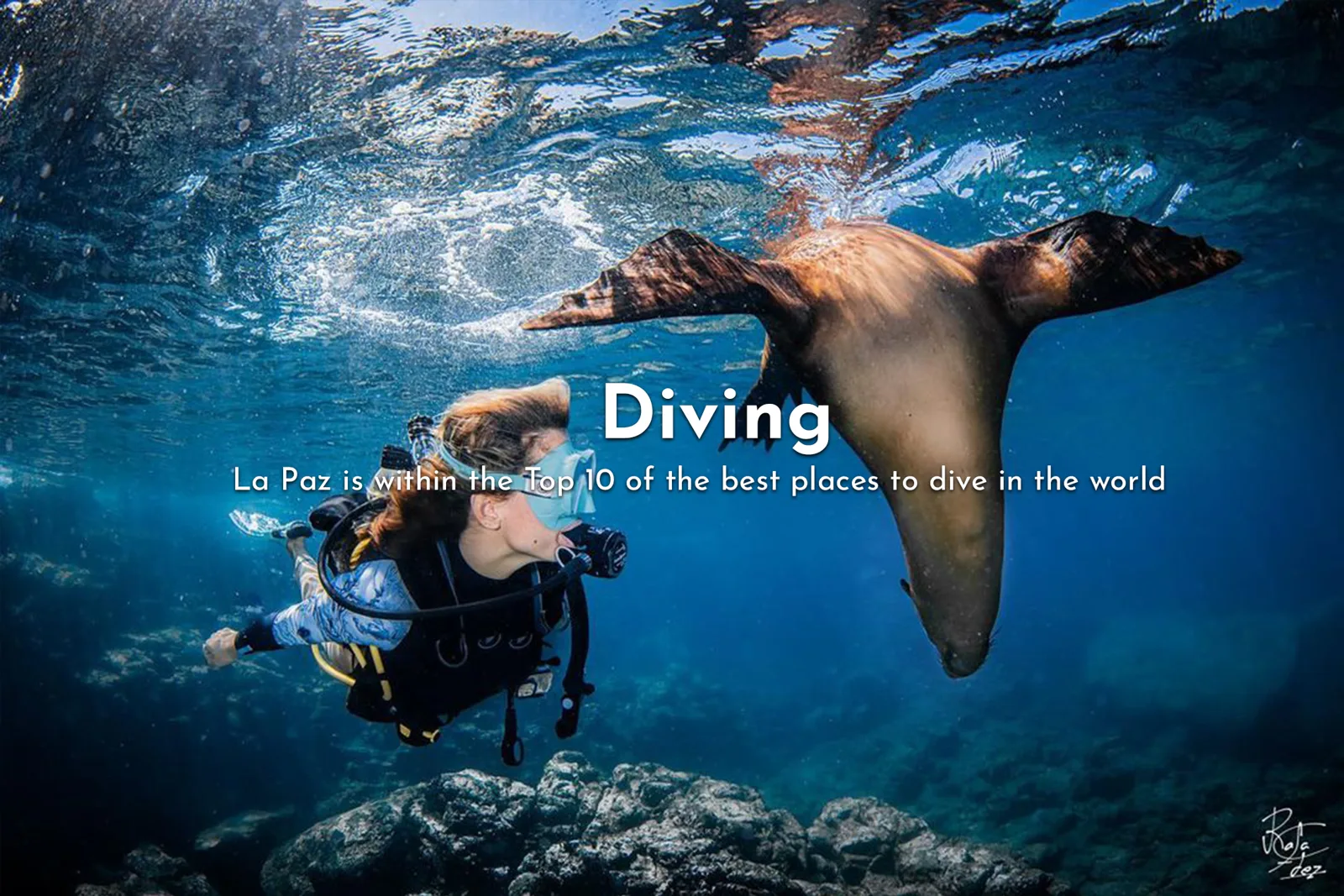
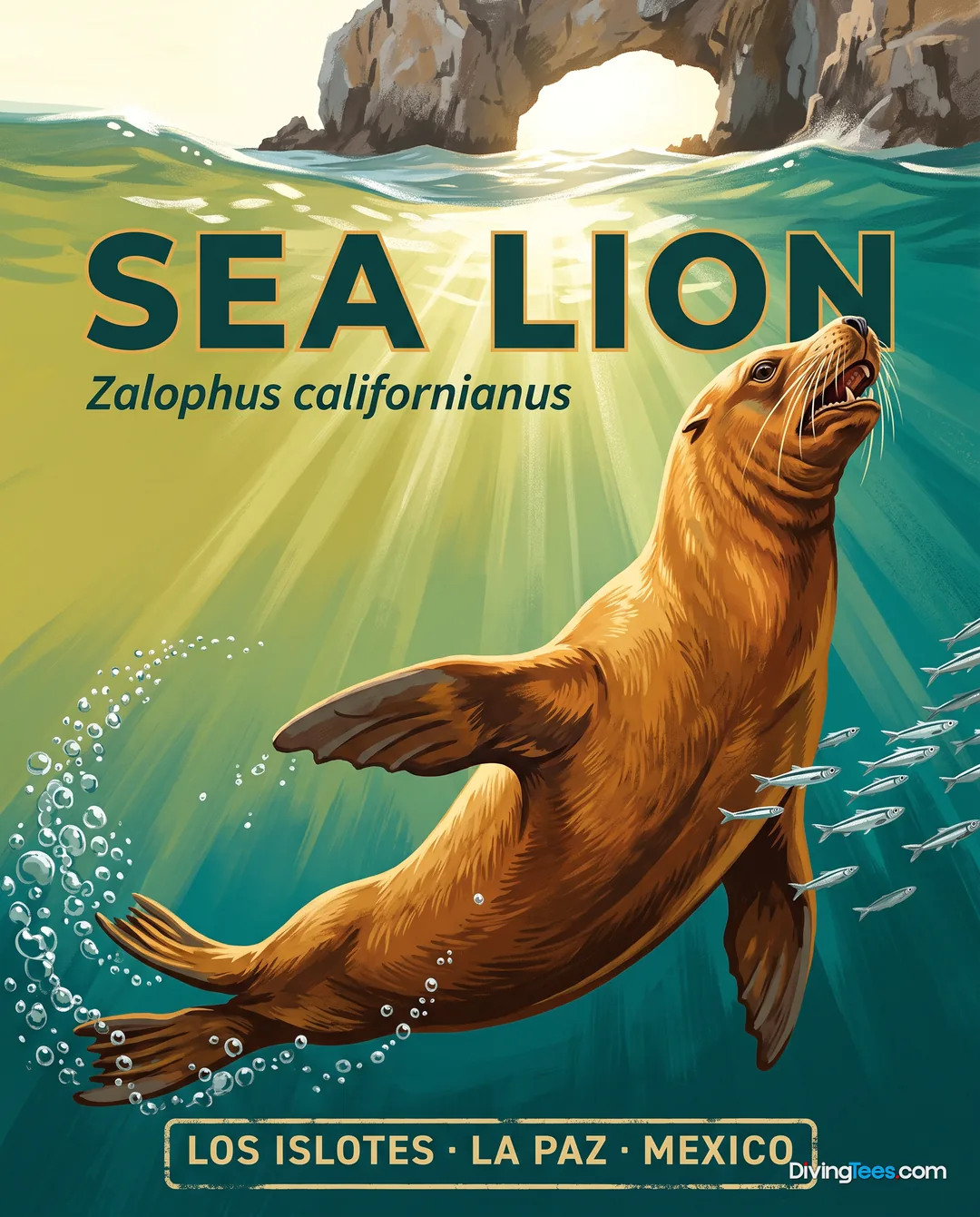
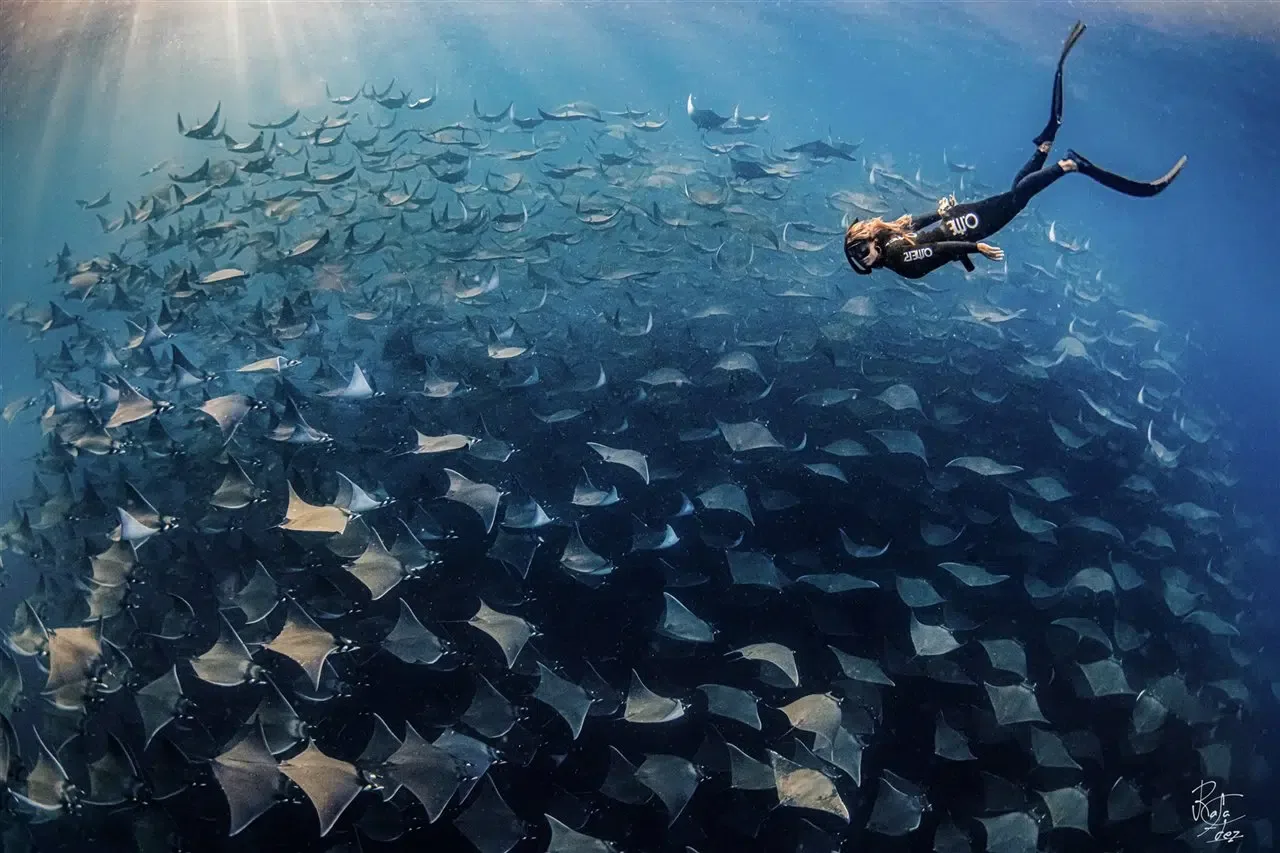
California sea lions are La Paz’s most dependable animal encounter, particularly around the island sites used for their interactions. At Swanne Reef, they share the rocky terrain with macro life, giving divers something to examine in the cracks between the larger, faster encounters. La Reina is more pelagic in character: groups of sea lions mix with schools of reef and open-water fish, while oceanic manta rays may use the site as a cleaning station in summer. Mobula rays, whale sharks and seasonal whale passages in the Sea of Cortez are possible on the wider programme, but they are occasional rather than a guarantee. The exact experience therefore depends on the season, sea conditions and which boat outing is running that day.
The measured seasonal window for La Paz runs from June to November, while the lowest rainfall period extends from November to July. That overlap makes the shoulder months useful when a trip needs a balance between workable conditions and the wider seasonal programme. Summer is particularly relevant for La Reina, when oceanic manta rays may gather at its cleaning station. Conditions still vary with wind and sea state, and the Sea of Cortez does not offer one uniform calendar for every site or animal. A stay should therefore allow spare boat days rather than being built around one encounter.
This coast is exposed to sargassum strandings, whose intensity varies greatly from year to year.
La Paz can suit beginners on sheltered, well-managed outings, but it is not uniformly easy. Swanne Reef is shallow, yet its current can change with the tide, so some experience in moving water is valuable. La Reina requires at least Advanced Open Water certification because of its depth and possible strong current. Advanced training is useful for the more exposed boat dives, while Nitrox can be worthwhile on consecutive diving days. BSAC, PADI and SSI divers should check the requirements for the specific trip rather than assuming every site carries the same grade.
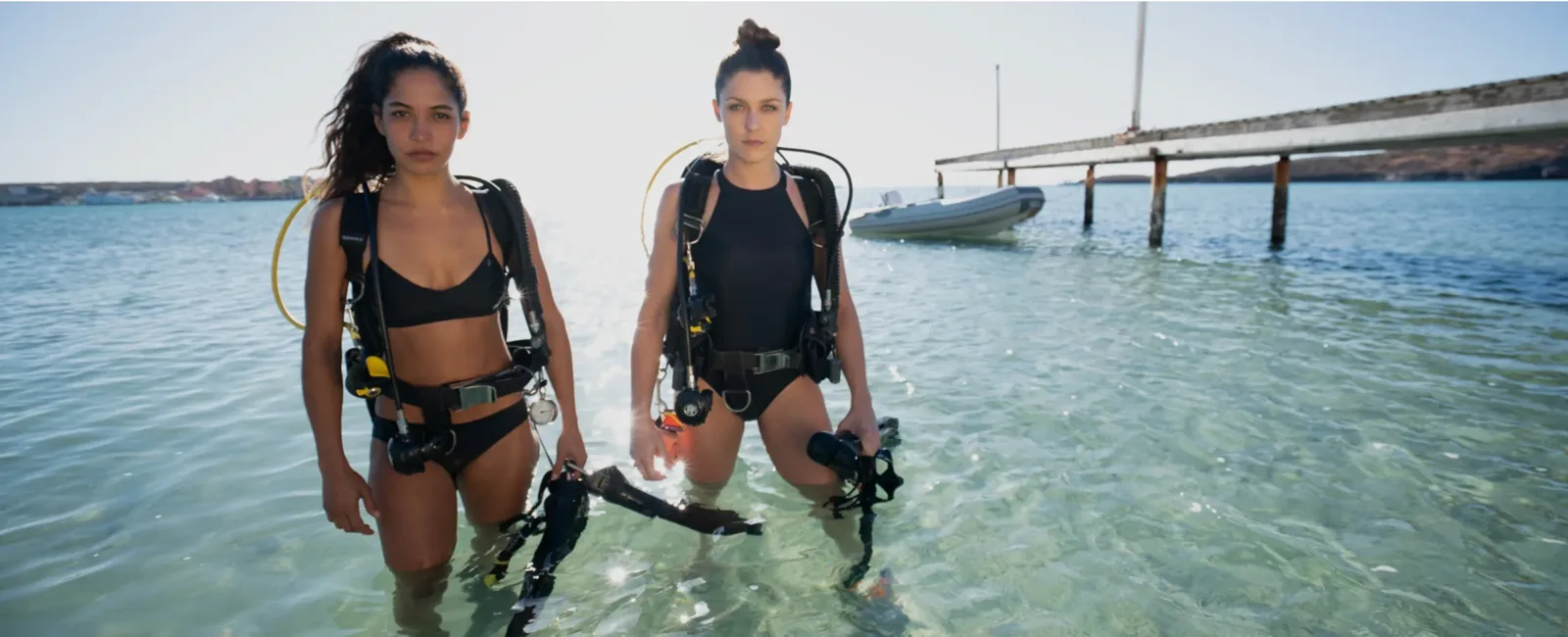
From London Heathrow, London Gatwick or Manchester, the journey involves flying to La Paz or travelling via Los Cabos and continuing by road to La Paz. European connections will normally require a change in North America or Mexico, so the onward road leg and the timing of the final connection need to be treated as part of the journey, not an afterthought. Once in La Paz, the diving remains land-based: accommodation around the waterfront and town centre is generally close enough for walking, or can be linked to the departure point by taxi or local shuttle. The boat then leaves from the bay, with the sailing time changing according to the island or site selected.
Book consecutive boat days rather than relying on one isolated outing; wind and sea state can alter which island or open-water site is practical. Early departures are useful for the most requested sites, especially when calm conditions concentrate boats around the same islets. Ask specifically whether the planned days include California sea lions, the seasonal La Reina programme or longer-running pelagic outings, because a generic La Paz booking does not describe one fixed experience. Bring a well-fitting personal mask, and consider carrying basic personal equipment if diving over several days. Do not assume every site is sheltered: La Reina and other exposed sectors can feel very different from a shallow island dive. In protected areas, keep hands off the animals, do not feed them, avoid collecting anything and use moorings rather than anchoring where they are available. Good buoyancy matters particularly around sea lions, where sudden finning or contact quickly disrupts the group.
A five- to seven-day stay gives enough room for several boat outings, a weather buffer and at least one non-diving day. La Paz works well for a couple or family because diving can be combined with surface wildlife trips, island excursions, waterfront walks and coastal beaches. Consecutive diving days make better use of the boat logistics, while a quieter day ashore helps keep the trip from becoming a sequence of early departures and long returns.
Hello, I'm Marina, DivingDeal.com's AI assistant. I guide you through destinations, areas and countries.
Thinking about the whole trip and the flights? Talk it over with Edith →
Marina is an AI. Some links are affiliate links: DivingDeal may earn a commission, at no extra cost to you. Bookings are made with the partner.
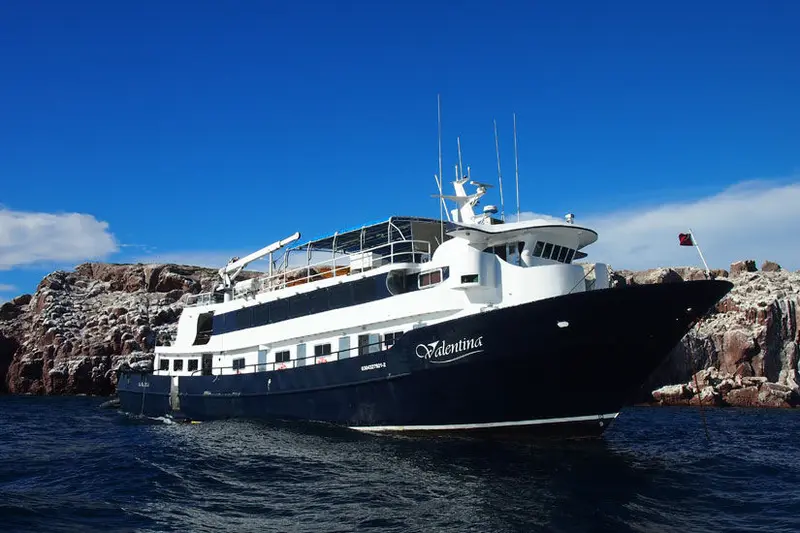
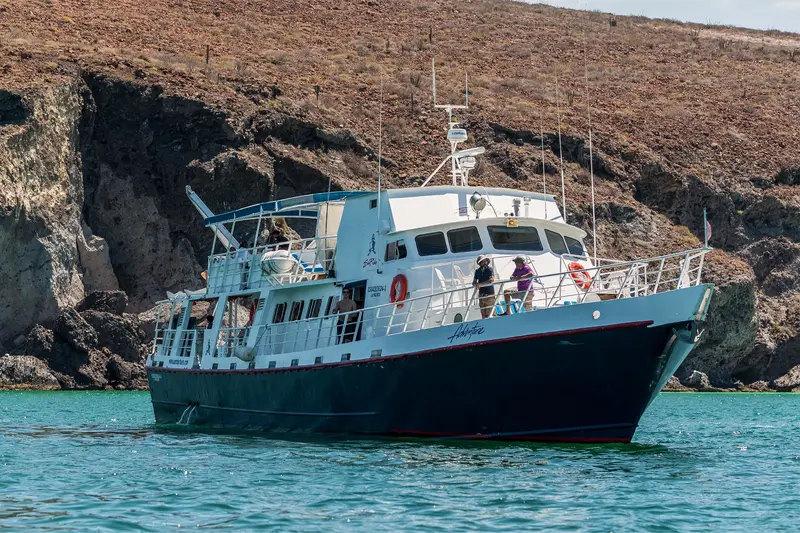
2 liveaboards depart from La Paz another way to explore the region, over several days at sea.
Your last day stays dry: no diving in the 18-24 hours before a flight, the perfect window to see the destination from another angle.
 Desert
⏱ 3 h · ★ 5.0 (27 reviews)
from £225$301€269
see on Viator ↗
 City
City⏱ 4 h · ★ 5.0 (5 reviews)
from £86$115€103
see on Viator ↗
 Nature
⏱ 1 h · ★ 4.9 (12 reviews)
from £76$101€90
see on Viator ↗
 Culture
⏱ 3 h · ★ 4.9 (87 reviews)
from £57$76€67
see on Viator ↗
Ratings and reviews collected by Viator and Tripadvisor.
La Paz’s measured diving season runs from June to November, while the lowest rainfall period extends from November to July. Summer is relevant for oceanic manta rays at La Reina’s cleaning station. Shoulder months can balance workable conditions with the wider seasonal programme, but allow spare boat days for wind and sea changes.
La Paz can suit beginners on sheltered, well-managed outings, but conditions vary by site. Swanne Reef is shallow, although tidal current can change. La Reina requires Advanced Open Water certification because of its depth and possible strong current. Advanced training helps on exposed boat dives, and Nitrox may suit consecutive diving days.
La Paz offers California sea lion encounters around rocky island sites, including Swanne Reef’s walls, slopes and crevices. La Reina may bring oceanic manta rays to its cleaning station, along with sea lions and schooling fish. Mobula rays, whale sharks and seasonal whale passages are possible on wider outings, but are occasional.
Use La Paz as a land-based base and book consecutive boat days, leaving room for wind and sea conditions to change the itinerary. Early departures help with requested sites. Stay near the waterfront or town centre for access to the bay, and include a non-diving day for wildlife trips, island excursions or coastal beaches.