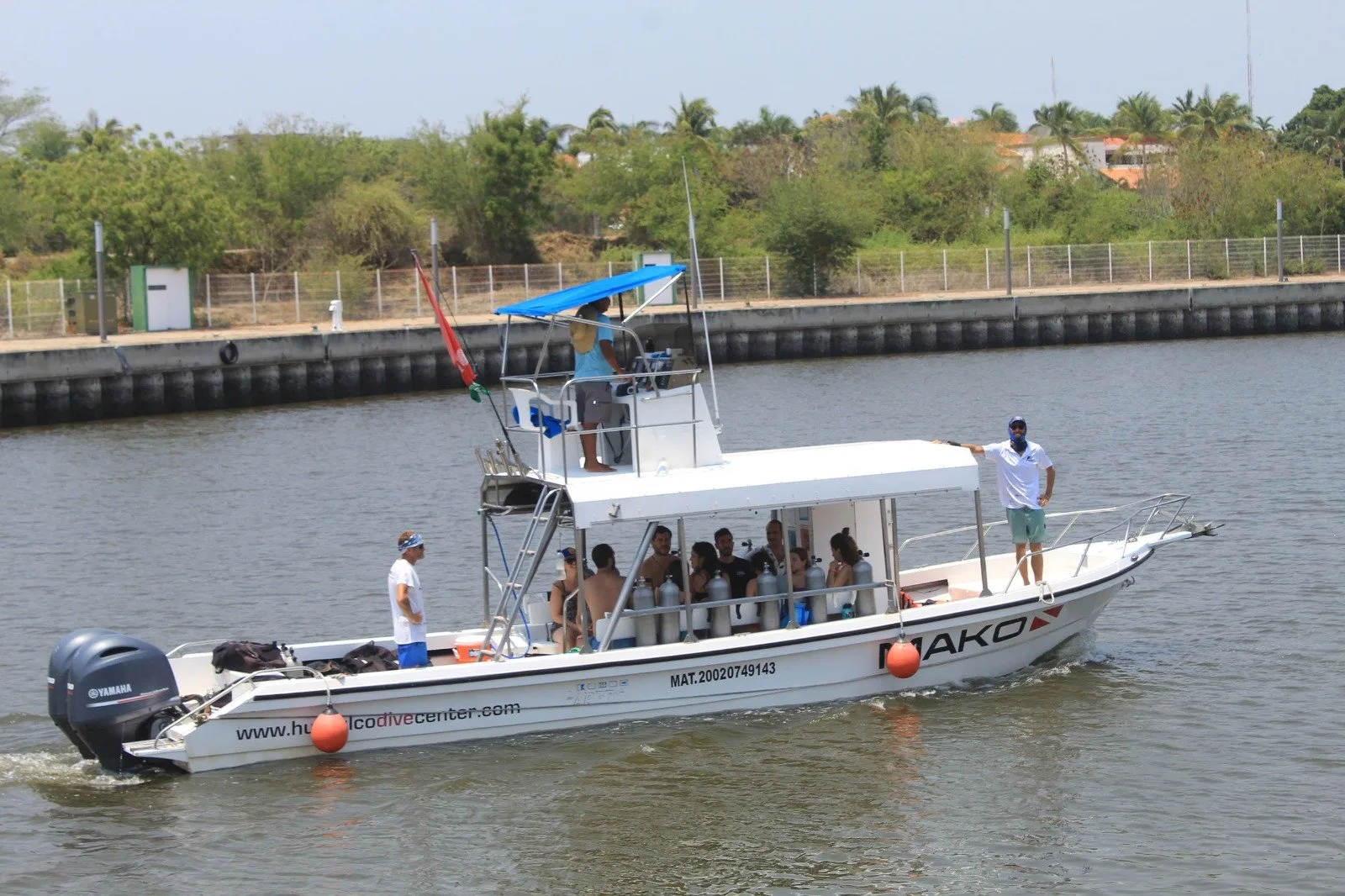

Huatulco Dive Center
Google 4.9/5 (141 reviews)
Mexico · Americas
Rocky reefs, sandy bays, turtles and eagle rays define boat diving around Huatulco, with winter whales and occasional mantas in water that can cloud quickly.
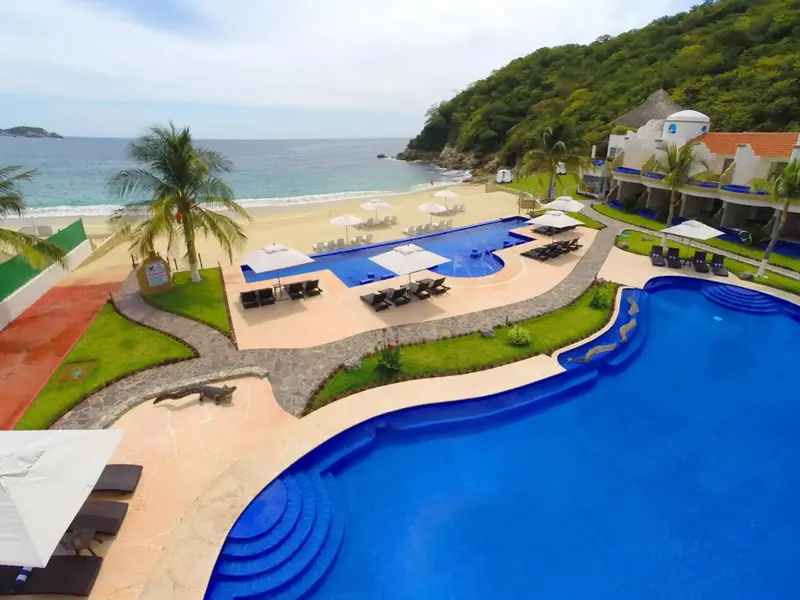
Rocky reefs rising beside sandy bottoms are the setting for Santa María Huatulco’s diving. Boats leave the bays for sheltered coves, small coral formations and rocky islets, often within or close to Parque Nacional Huatulco. Turtles, moray eels, rays and reef fish provide the dependable interest, while dolphins, humpback whales and mantas add a seasonal possibility. This is a shore-based holiday rather than a liveaboard trip, with beaches, boat excursions and national-park walks for anyone who is not diving.
Huatulco is explored mainly by boat, moving between sheltered bays and more exposed rock formations. Underwater, expect rocky reef, small coral communities, sandy patches and areas where surge moves water back and forth around the outcrops. Some bays can feel straightforward and calm, while exposed rocks may become distinctly lively, particularly for divers unused to surge. Current is variable rather than a defining feature of every dive, and this is not chiefly a drift-dive destination. Visibility is the practical caveat: roughly 6 to 15 metres is typical, but plankton, nutrients, runoff, swell and sand can reduce it sharply. Two sites in the same day may look very different. Ask before boarding which bay is planned and how exposed it will be, because the day’s best diving may be the site with the clearest water, not the most ambitious-sounding route.
Turtles and spotted eagle rays are among the more dependable encounters, joined by moray eels and reef fish around the rocks and coral formations. Dolphins may appear during boat journeys or other surface time at any point in the year. From November to May, the cooler period brings a better chance of seeing mantas, although they remain occasional rather than guaranteed. Humpback whales are most likely in winter, particularly from December to March, and are chiefly a surface encounter on a boat trip rather than something to plan around underwater. Whale sharks are rare and should not shape expectations for a Huatulco holiday. The productive, sometimes plankton-rich water helps explain why the wildlife can be rewarding even when the view is less clear than in Caribbean destinations.
November to May is the most appealing window for diving Huatulco. The cooler part of the year is when mantas are more often reported and humpback whales pass through in winter, especially from December to March. The other months are not ruled out, but plankton and runoff can make visibility less predictable, so the attraction shifts towards local reef life rather than seasonal pelagics. There is a sensible reason to allow several diving days: conditions can differ markedly between bays, and a change of site may turn a cloudy outing into a worthwhile one. Holiday periods and the main beach season can also mean busier boats, so flexibility remains useful even in the preferred months.
Some sheltered-bay dives suit beginners, provided the site is matched to the day’s sea conditions. More exposed rocks, surge and poor visibility demand better control and comfort in moving water, particularly when staying close to the reef is necessary. No specialist qualification is required for the general destination. Divers qualified through BSAC, PADI or SSI can use their normal recreational experience, while those with limited recent diving should ask for a protected site rather than assuming every boat outing will be gentle.
From London or Manchester, reach Huatulco by air, then continue by road from Huatulco airport to the chosen bay or marina. Allow room in the itinerary for whatever airline connections are required, as flight routes and timings need checking when you book. Huatulco can also be reached overland from Oaxaca or other coastal towns. No ferry is needed to reach Santa María Huatulco, and the dive sites are reached by boat after arrival. Around the bays, taxis are the practical link between accommodation and dive centres, with some centres able to provide a shuttle. The exact transfer depends on which bay you use, so it is worth arranging that final road connection rather than assuming everything is walkable.
Do not come expecting Caribbean visibility. Huatulco’s nutrients can bring turtles, rays and fish, but they can also leave one bay clear and another badly clouded on the same day. Ask before the boat leaves which sites are planned, how exposed they are to swell, and whether surge is likely around the rocks. Pack for time on the boat as well as underwater, including protection from wind between dives. If visibility matters most, ask the centre to compare the bays that day rather than insisting on a named site. Build several diving days into the trip, especially if mantas are a priority. In Parque Nacional Huatulco, keep clear of coral formations, never hold the reef, and do not anchor on coral. Leave shells, coral and animals alone, take every scrap of rubbish back, and use covering clothing instead of sunscreen in the water. Allow a margin before flying home, since sea conditions can delay the return to the marina.
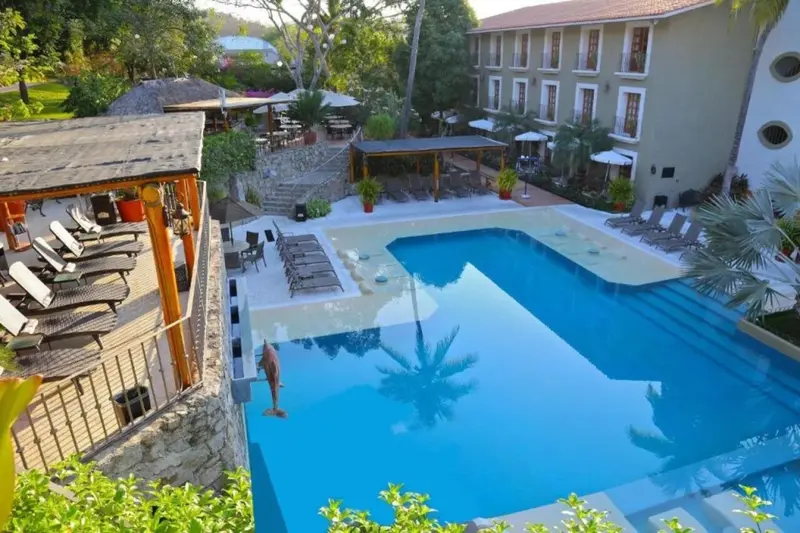
Plan on a five- to seven-day land-based stay, using several boat days to absorb changes in visibility and sea conditions. Accommodation is spread around Huatulco’s tourist bays, so taxis or a dive-centre shuttle may be needed for morning departures. Non-divers have plenty to do without leaving the area: beaches, sheltered-bay boat trips, snorkelling, national-park walks and coastal wildlife watching. Winter boat excursions may add humpback whales to the surface itinerary, while the park and its islands provide a useful change of pace between dives.
Hello, I'm Marina, DivingDeal.com's AI assistant. I guide you through destinations, areas and countries.
Thinking about the whole trip and the flights? Talk it over with Edith →
Marina is an AI. Some links are affiliate links: DivingDeal may earn a commission, at no extra cost to you. Bookings are made with the partner.
November to May is an appealing period for Santa María Huatulco, when mantas are reported more often and humpback whales pass offshore, particularly from December to March. Other months still offer turtles, spotted eagle rays, moray eels and reef fish, but plankton and runoff can make visibility less predictable.
Sheltered-bay dives in Santa María Huatulco can suit beginners when sea conditions are calm and the site is chosen carefully. Exposed rocks, surge and poor visibility require stronger control and comfort in moving water. No specialist qualification is required, and divers with limited recent experience should request a protected site.
Around Santa María Huatulco, expect rocky reefs, small coral formations, sandy patches, turtles, spotted eagle rays, moray eels and reef fish. Dolphins may appear during boat journeys. Mantas are an occasional possibility from November to May, while humpback whales are chiefly a winter surface encounter from December to March.
Plan a five- to seven-day land-based stay in Santa María Huatulco, with several boat-diving days to accommodate changing visibility and sea conditions. Accommodation is spread around the tourist bays, so taxis or a dive-centre shuttle may be needed. Allow time for beaches, snorkelling, park walks and coastal wildlife watching.