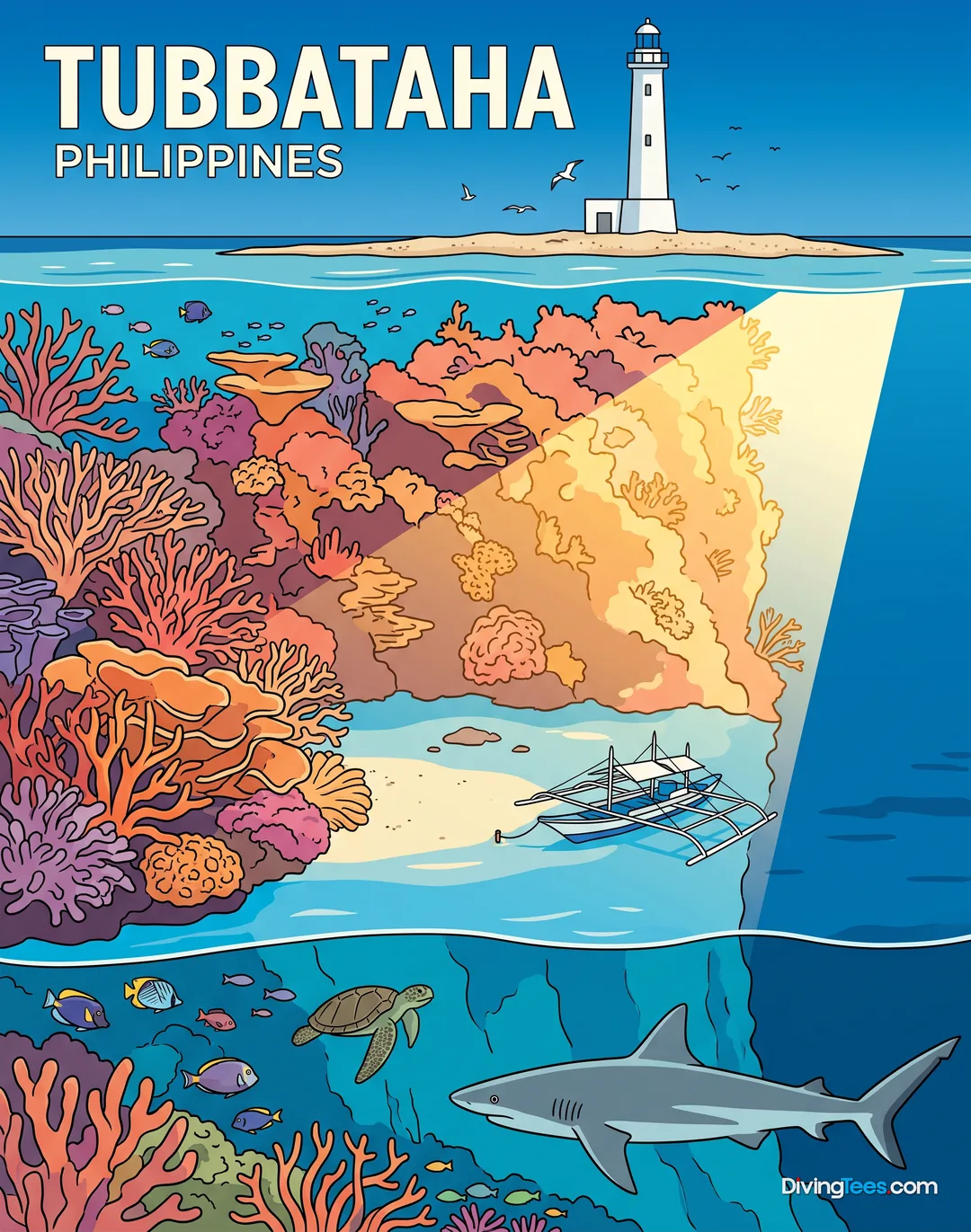
Tubbataha · Philippines · Asia
Max. depth · 37 mTerraces, Palawan: Multi-level reef and pelagic encounters
Descend along the distinct stepped profile of Terraces, where reef formations give way to a wall known for frequent pelagic encounters.
What makes this site special
- Multi-level reef with stepped profile and walls
- Overhangs, caves, and crevices throughout the reef
- Consistent reef shark and turtle encounters
- Potential for manta ray sightings
- Abundant giant gorgonian sea fans and black corals
- Healthy soft corals and barrel sponges
- Visibility often up to 37 metres
For subtitles in English: start the video firstthen click the gearat the top right of the video, select “Subtitles/CC”, then “Auto-translate” and choose “English”.
Terraces about the site
Terraces, also known as North Islet, North Face or Seafan Alley, presents a unique amphitheatre-like reef profile in Palawan. You begin your descent onto a series of sloping coral and sandy areas, which transition into a more defined wall structure. This multi-level topography creates numerous ledges and overhangs, inviting exploration as you follow the reef's natural contours down. The site is a gradual descent, often starting shallower and progressing towards its deeper sections, allowing for a varied dive profile.
As you move along the reef, you'll find the structure broken by small caves and crevices, providing shelter for various reef inhabitants. The hard coral heads dominate the shallower sloping areas, giving way to more profuse soft coral growth and a higher concentration of gorgonian sea fans as you deepen. Large barrel sponges are also a common sight, adding to the intricate biodiversity of the reef. The density of encrusting life defines the experience, making each section of the 'terraces' distinct.
The site's reputation for pelagic encounters is well-founded. Keep an eye on the blue during your dive, as reef sharks are regular visitors patrolling the deeper wall sections. Turtles are also commonly seen, often resting on ledges or swimming leisurely past. The open Sulu Sea exposure means that larger pelagic species are drawn to this area, adding an element of unpredictability and excitement to each dive.
One of Terraces' standout features is the potential for manta ray sightings. While not guaranteed, the site offers better opportunities for these encounters compared to many other wall dives in the region. There have been reports of larger rays found in specific alcoves along the wall, indicating that these gentle giants use the site's topography as well. This pelagic activity reinforces the site's dynamic character.
Currents at Terraces are generally mild, allowing for comfortable exploration of the reef's intricacies. However, conditions can shift, and the current has the potential to strengthen, transforming the dive into a more demanding drift. This variability is typical for sites in the open Sulu Sea, influenced by tidal movements. Adapting your dive plan to these potential shifts is part of diving this region.
Visibility at Terraces is consistently good, often reaching up to 37 metres, which allows you to appreciate the scale of the multi-level reef and spot marine life from a distance. The clear water enhances the experience, particularly when scanning the blue for passing pelagics or observing the detailed life on the corals. This clarity, combined with the site's topography and marine life, makes for a complete diving experience.
Diving Terraces: the marine life you’ll meet

Diving conditions
Terraces is an Advanced level dive site. You should have experience with drift diving, as currents can become strong, even though they are typically mild. The dive depth ranges from 20 to 37 metres. Visibility is generally excellent, often reaching up to 37 metres. The best time to dive this site is during the season from mid-March to mid-June, when conditions are most stable.