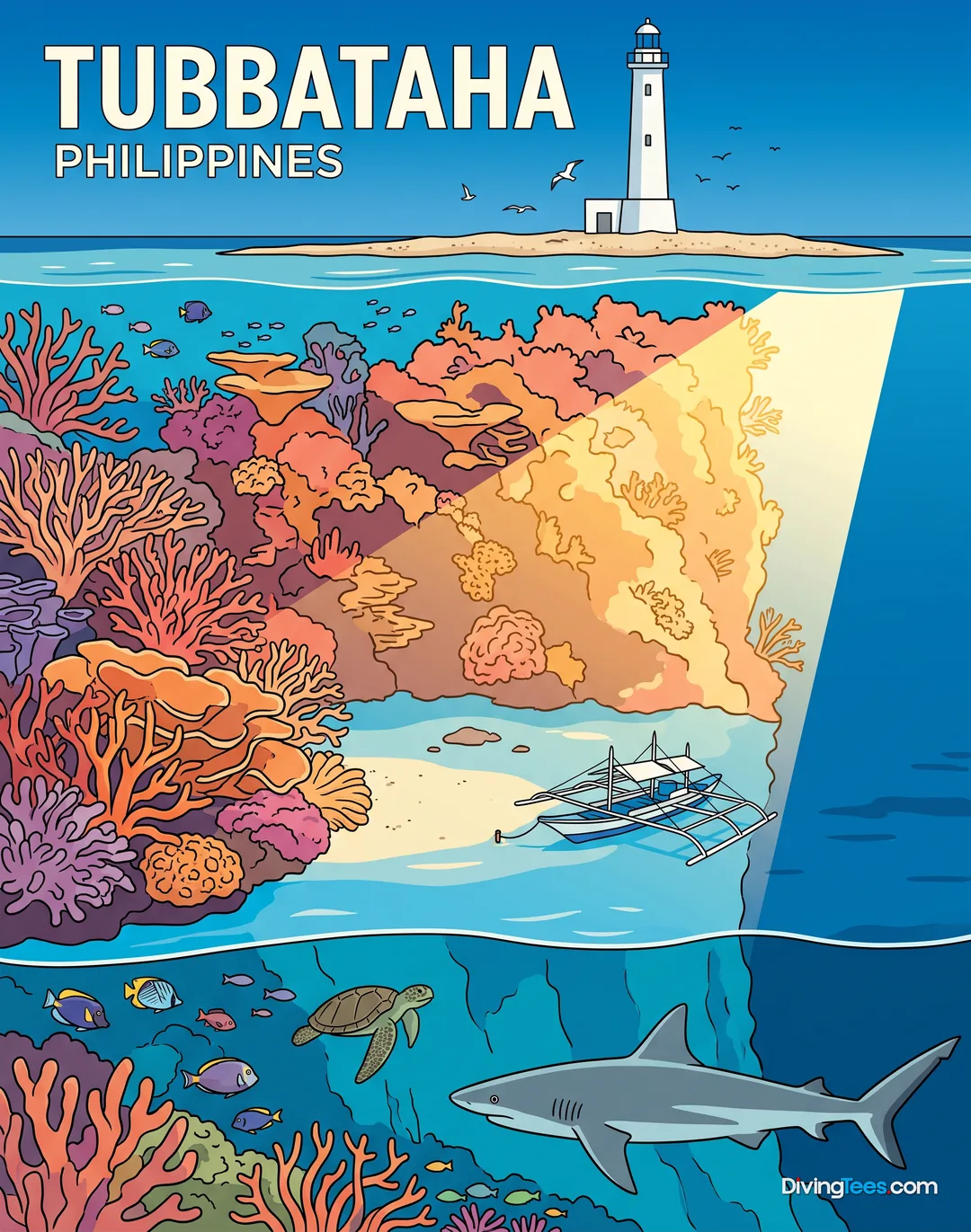
Tubbataha · Philippines · Asia
Max. depth · 40 mBlack Rock, Tubbataha: pelagic action on a reef plateau
Descend onto a sloping reef plateau at Black Rock, where strong currents bring in manta rays for cleaning and attract schooling pelagics.
What makes this site special
- Reliable manta ray cleaning station with reef manta rays.
- Frequent encounters with white-tip and grey reef sharks.
- Possibility of tiger sharks and hammerhead sharks in the blue.
- Dense schools of giant trevally, dogtooth tuna, and barracuda.
- Significant pelagic action driven by nutrient-rich upwellings.
- Drift diving along a sloping plateau and wall.
For subtitles in English: start the video firstthen click the gearat the top right of the video, select “Subtitles/CC”, then “Auto-translate” and choose “English”.
Black Rock about the site
Black Rock sits on the northeast corner of Tubbataha’s South Atoll, presenting as a long, sloping plateau that transitions into a wall. You typically start your dive near a buoy attached to a rock in the shallower section, around 8 to 10 metres. From this focal point, the reef gently slopes down to 25 to 40 metres, creating a vast blue-water environment that draws in oceanic species. This contour, combined with the site's exposed location, means you are entering a zone defined by nutrient upwellings and significant pelagic activity.
As you move along the reef edge, the dive often becomes a drift, dictated by the prevailing currents. These currents, which can vary from mild to powerful, are key to understanding Black Rock. They concentrate nutrients, forming a rich feeding ground that attracts large schooling fish and their predators. You will likely find yourself holding position or moving with the flow, always attentive to the reef structure and the deeper blue where most of the action unfolds.
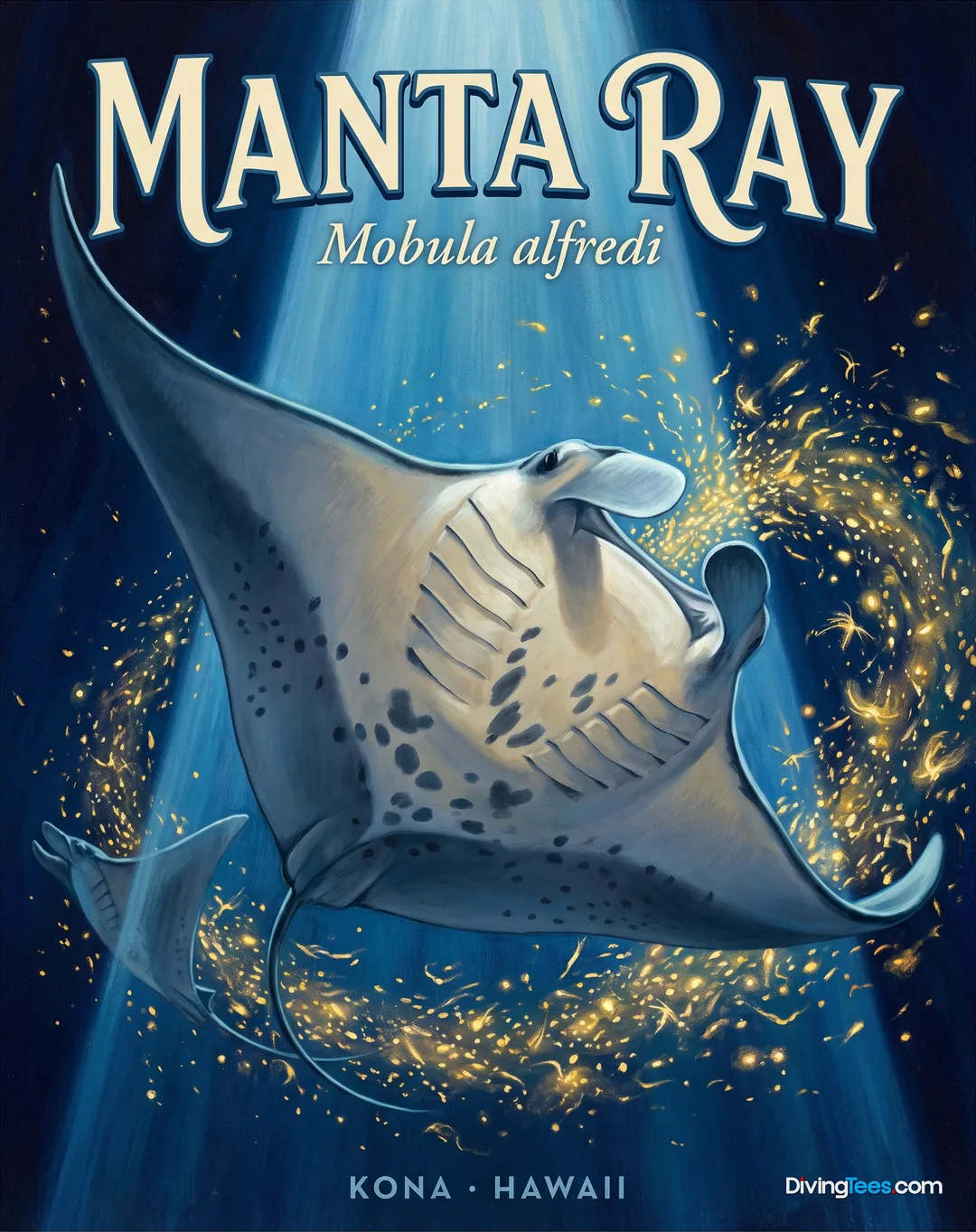
One of the defining features of Black Rock is its role as a cleaning station for manta rays. Specific sections of the reef, particularly where cleaner wrasse are abundant, serve as regular stops for families of manta rays. These gentle giants, including reef manta rays, come to these spots, often hovering patiently while smaller fish remove parasites. Observing this natural interaction requires a calm approach and an understanding of their behavior, respecting their space while witnessing a critical part of their life cycle.
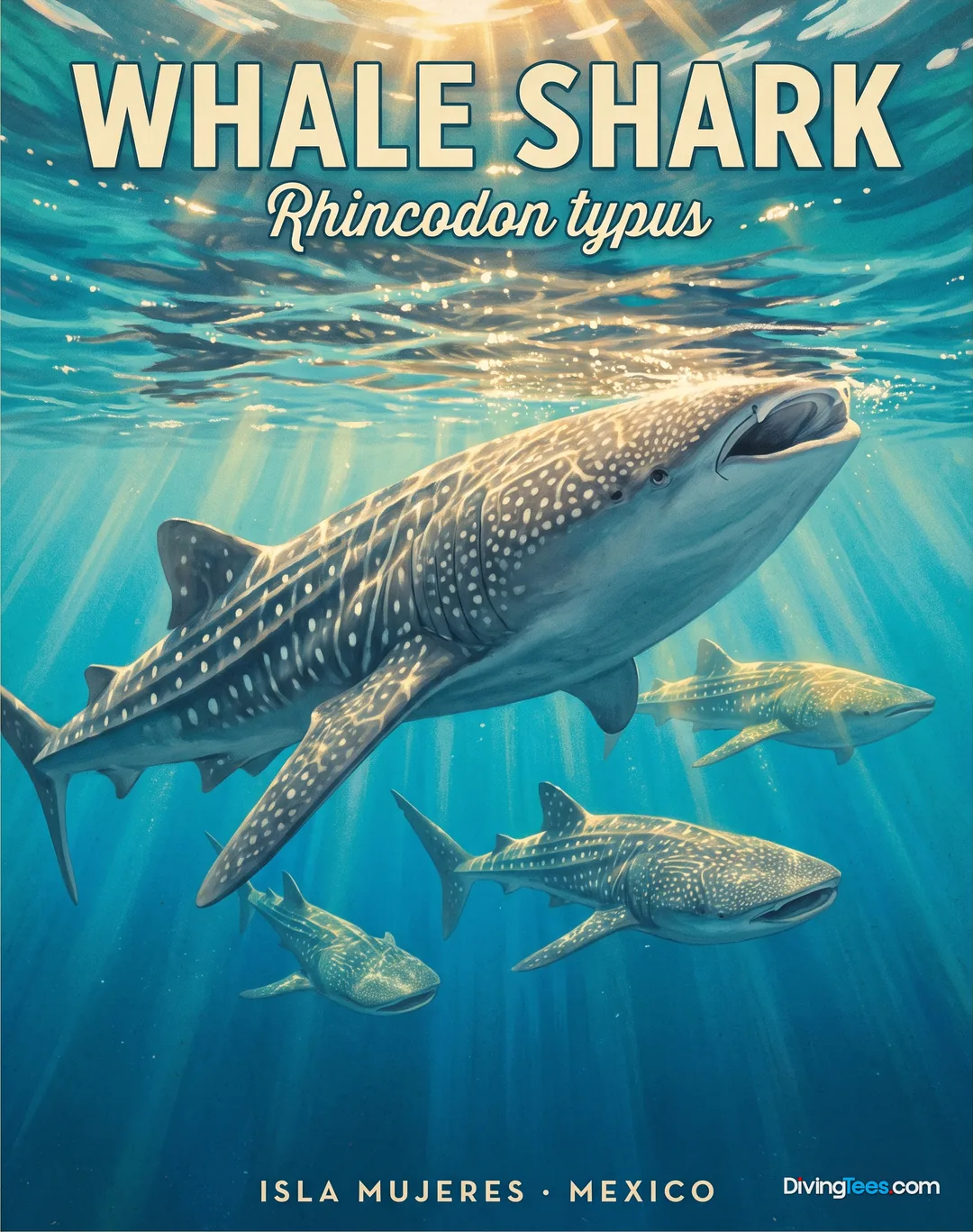
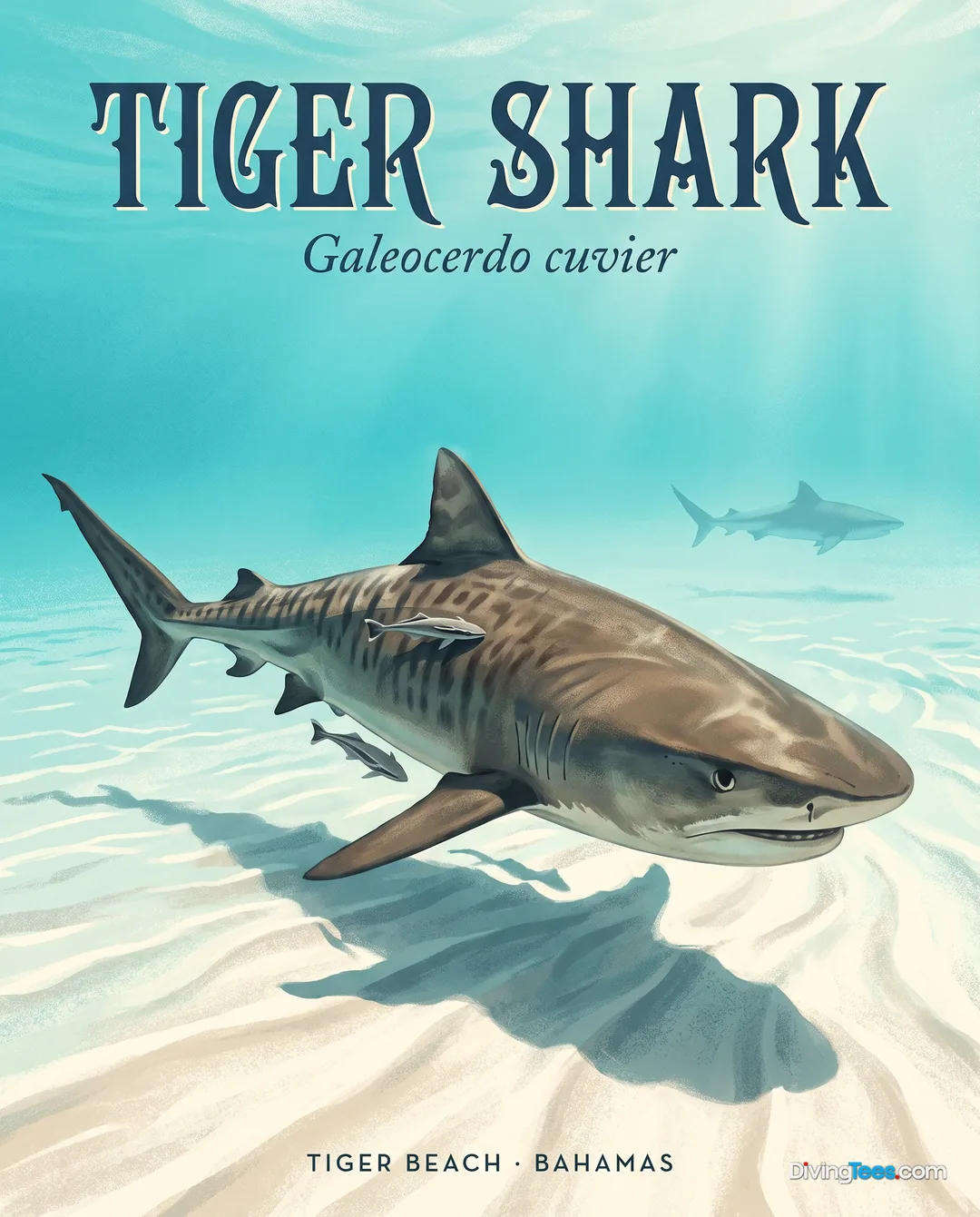
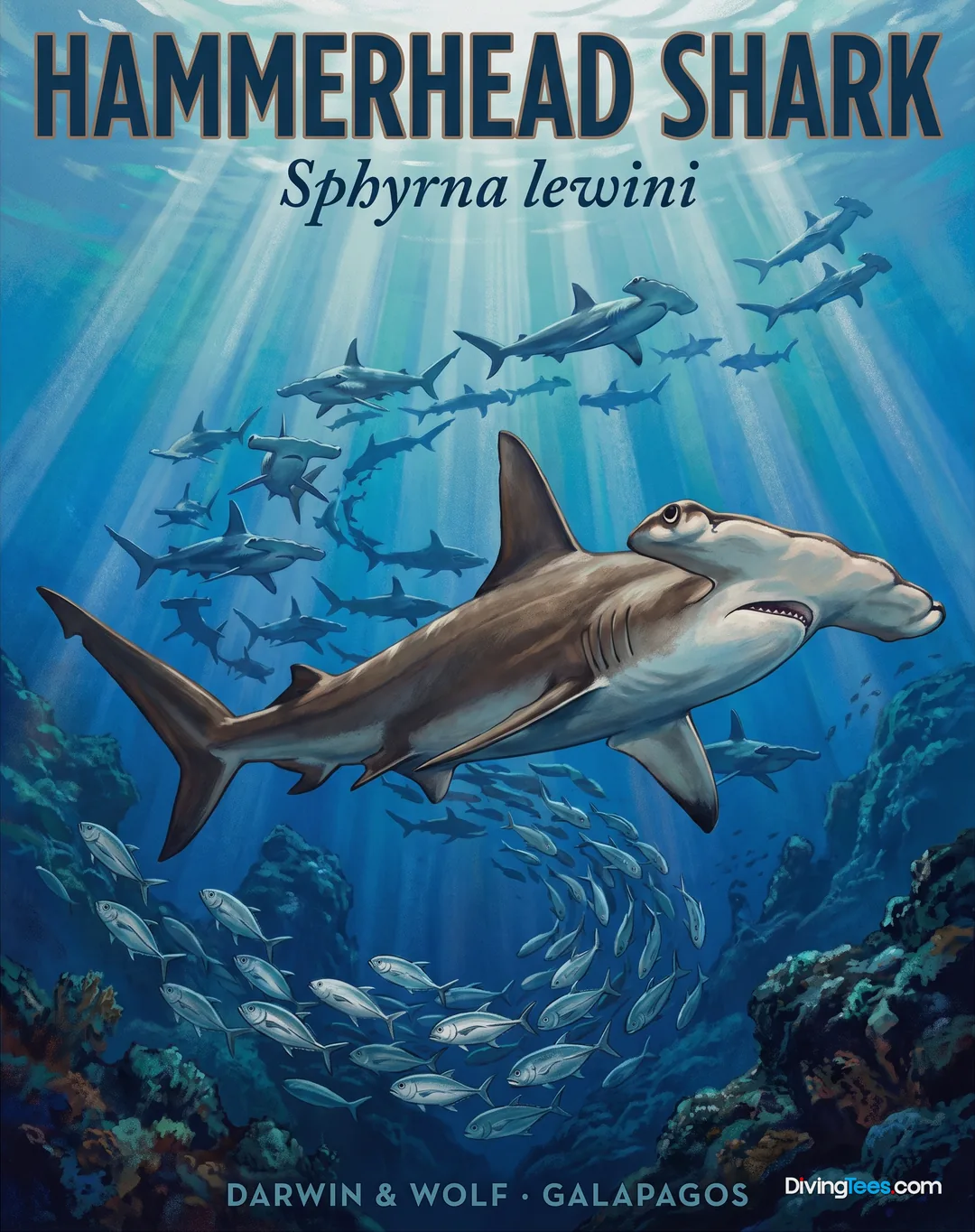
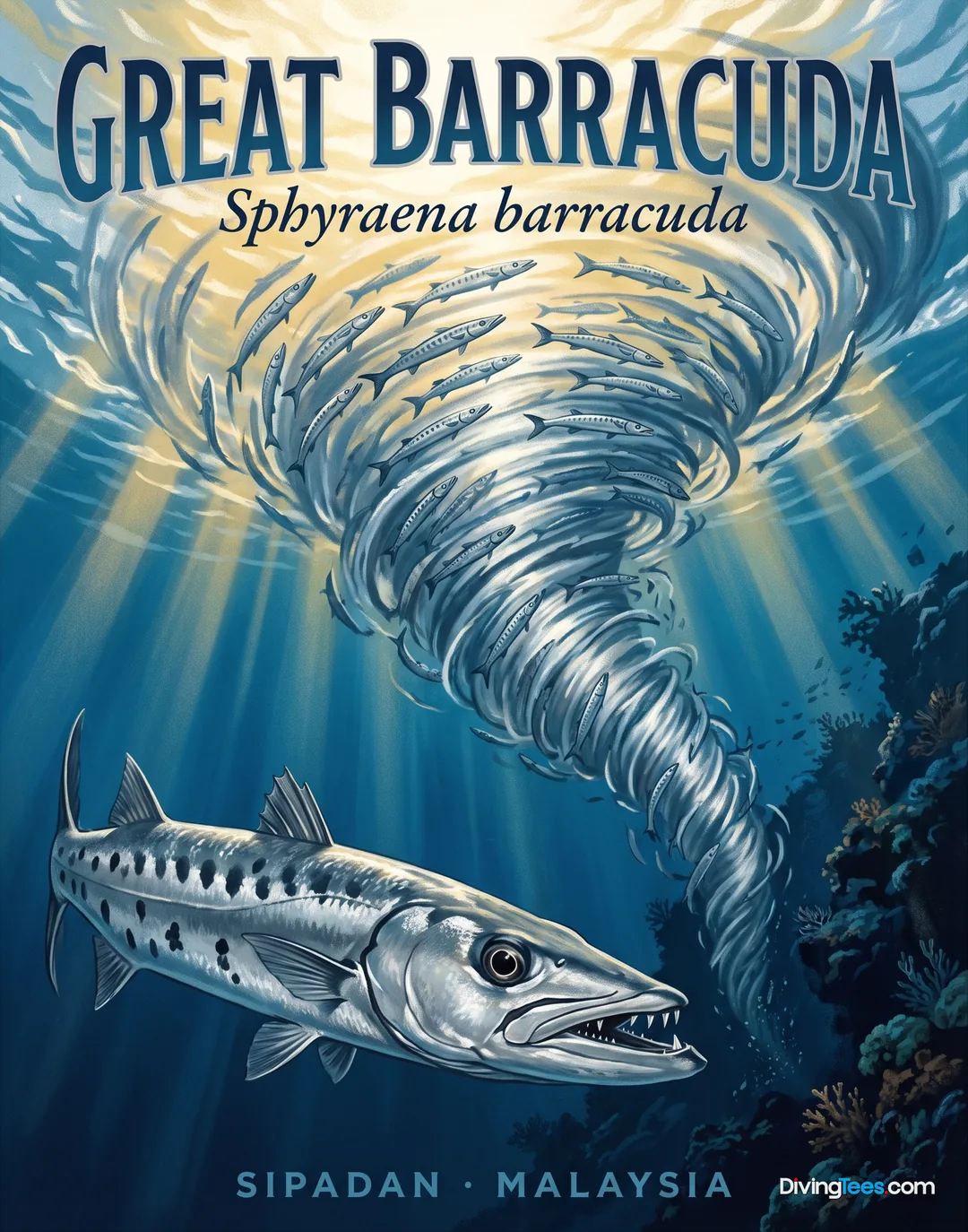
Beyond the mantas, the site is a magnet for large pelagics. White-tip reef sharks and grey reef sharks are common, often patrolling the deeper parts of the plateau and the drop-off. You might also encounter the more elusive tiger shark and hammerhead sharks, especially in the blue. These larger predators are drawn to the abundance of prey, including giant trevally, bluefin trevally, and dogtooth tuna, which often school in the currents.
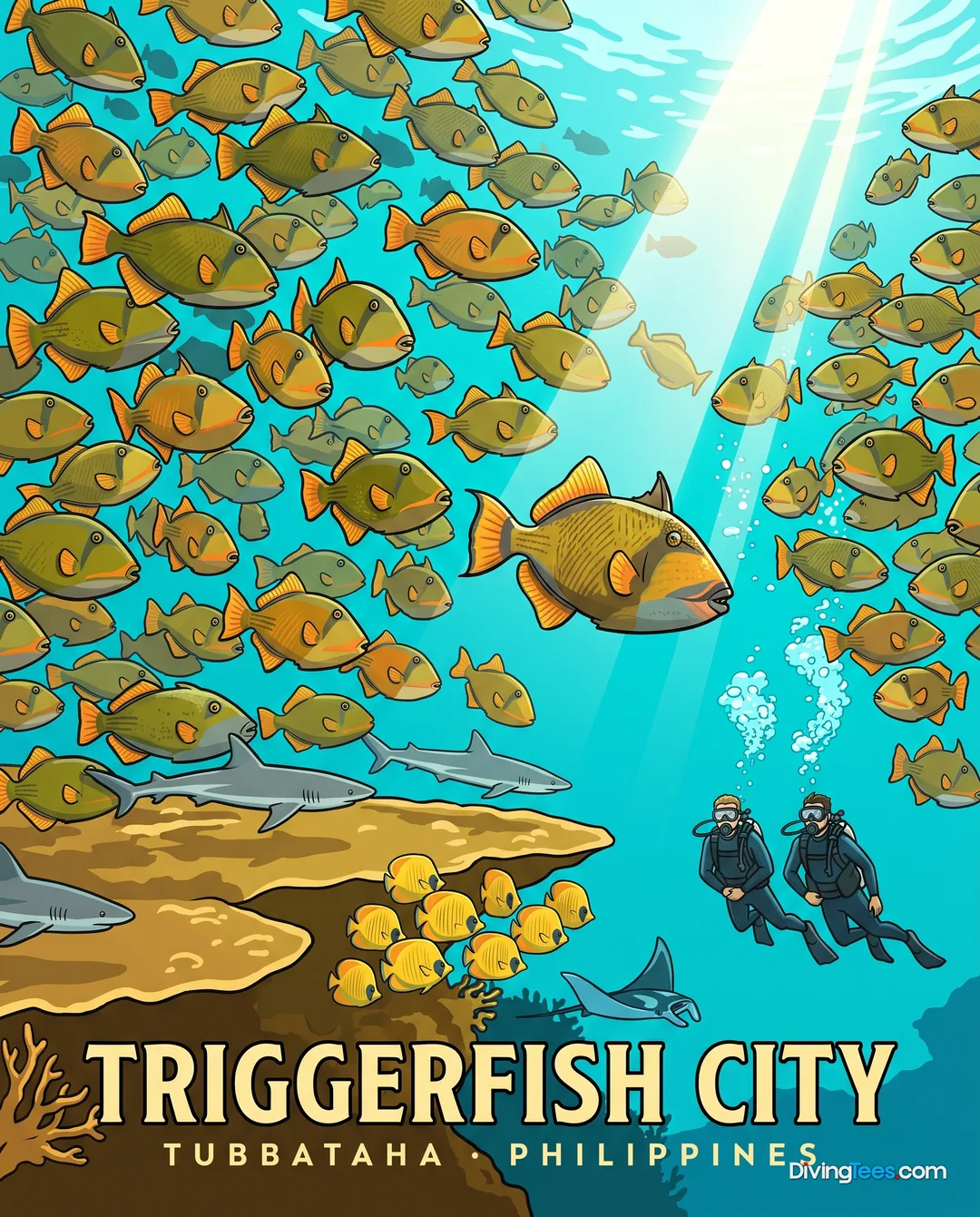
The rich waters also support massive schools of other species. Sweetlips, emperor fish, and various snappers form dense aggregations along the reef. Chevron barracuda are frequently seen, often holding formation against the current. Bumphead parrotfish, with their distinctive profiles, can be found grazing on the coral, contributing to the health of the reef structure. The sheer volume of fish life here underscores the productivity driven by the currents and upwellings.
Diving Black Rock is less about intricate coral gardens and more about the scale of marine life and the energy of the open ocean. While corals are present, the emphasis shifts to the continuous flow of pelagic encounters. The topography – a sloping plateau leading to a wall – provides both shelter and exposure, allowing for varied experiences depending on where you position yourself relative to the main current lines.
Visibility at Black Rock can range from 10 to 40 metres, generally clear, but it is always dynamic. The presence of upwellings, while vital for the ecosystem, can sometimes affect water clarity, though it rarely detracts from the overall experience. The best conditions for encountering the large pelagics and manta rays are typically found when these currents are active, bringing the abundant life closer to the reef structure.
Diving Black Rock: the marine life you’ll meet
Diving conditions
Dive depths at Black Rock typically range from 10 to 40 metres. This site requires an Advanced Open Water certification minimum, along with experience in managing currents and blue-water pelagic dives. Currents at Black Rock are variable; they can be mild but often become strong or powerful, especially with tidal changes or in exposed sections where upwellings occur. Visibility usually ranges from 10 to 40 metres. The best season for diving Black Rock is from March to June, when conditions are generally more stable and pelagic activity is high.
Three dives not to miss
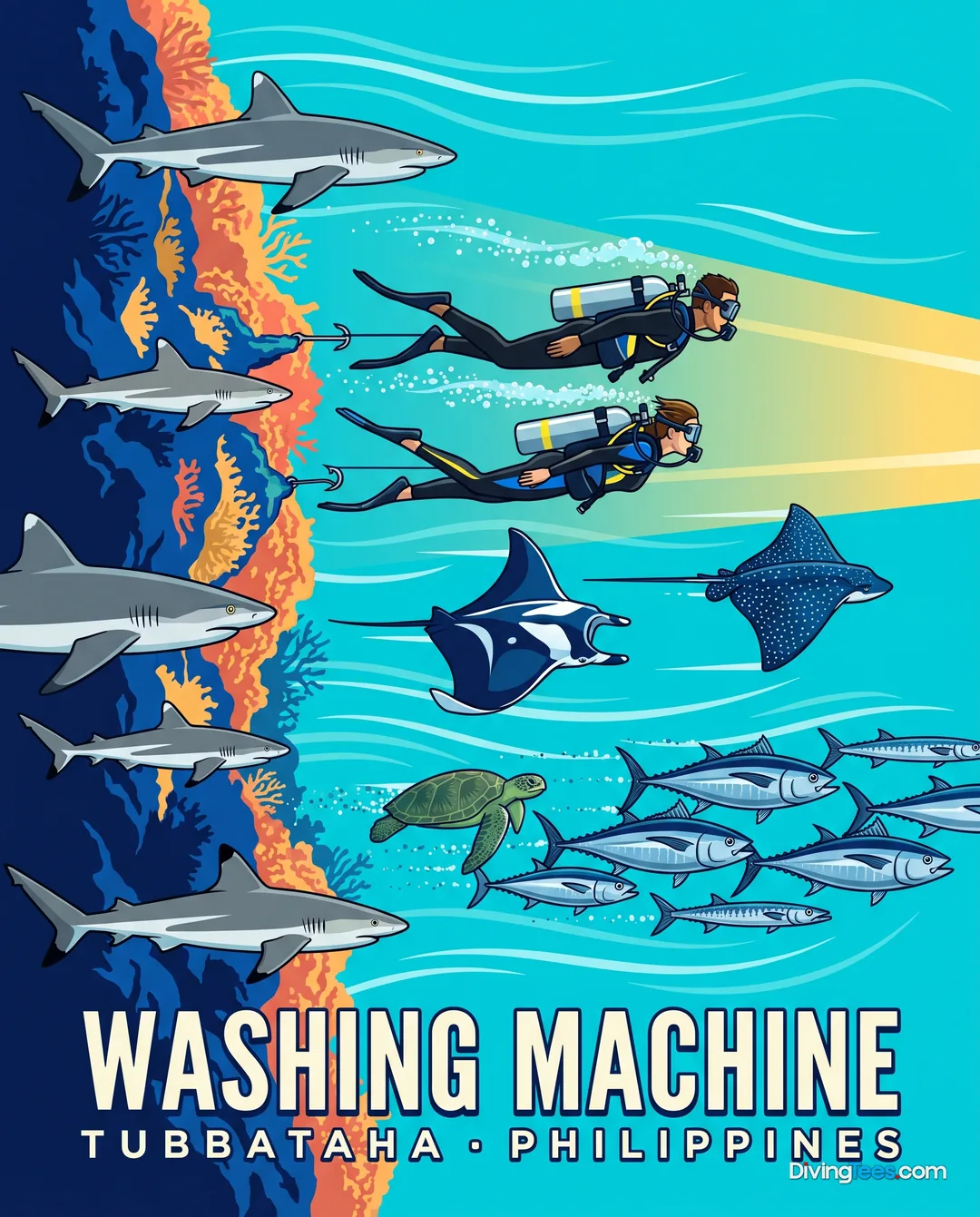
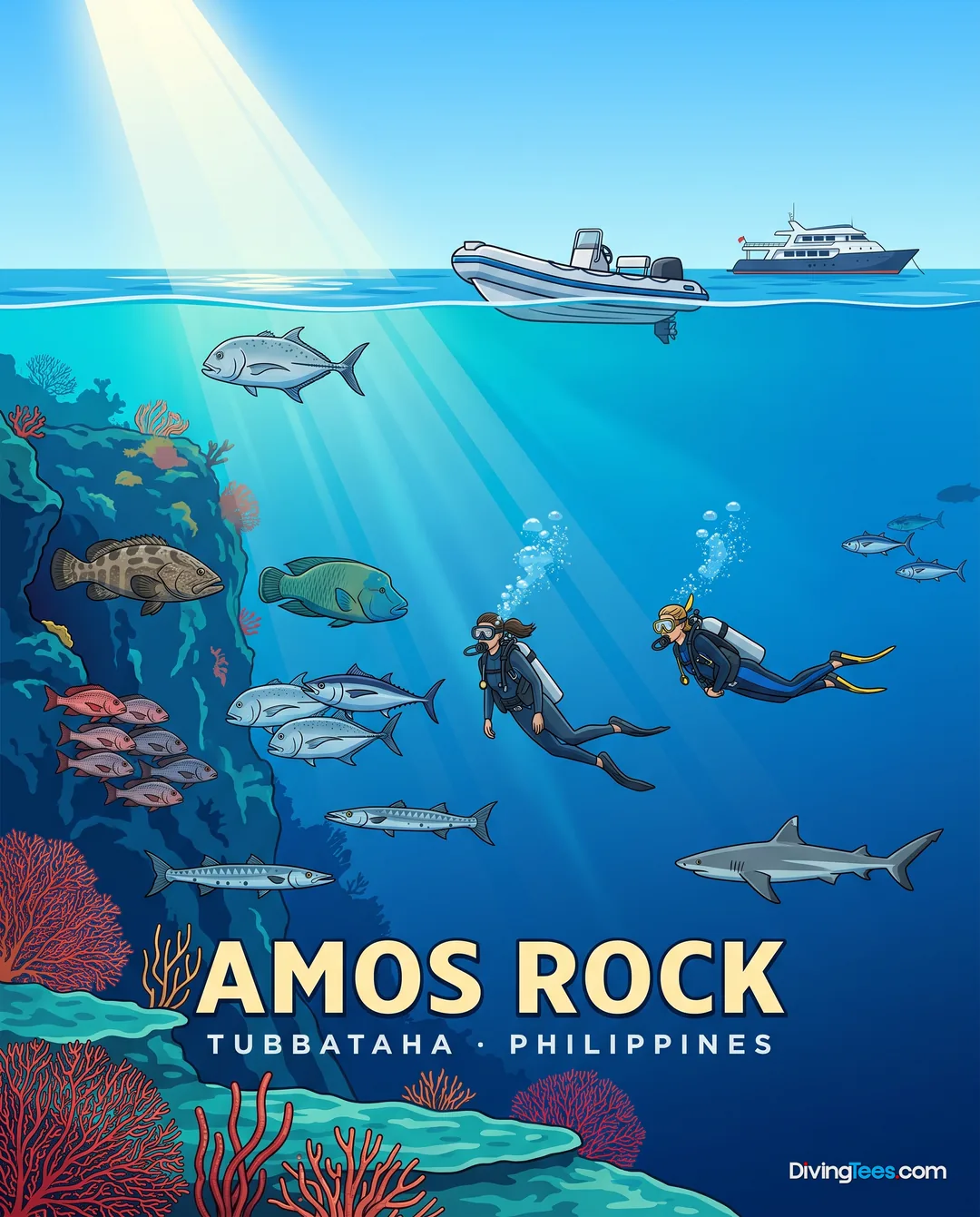
Map of dive sites in Tubbataha
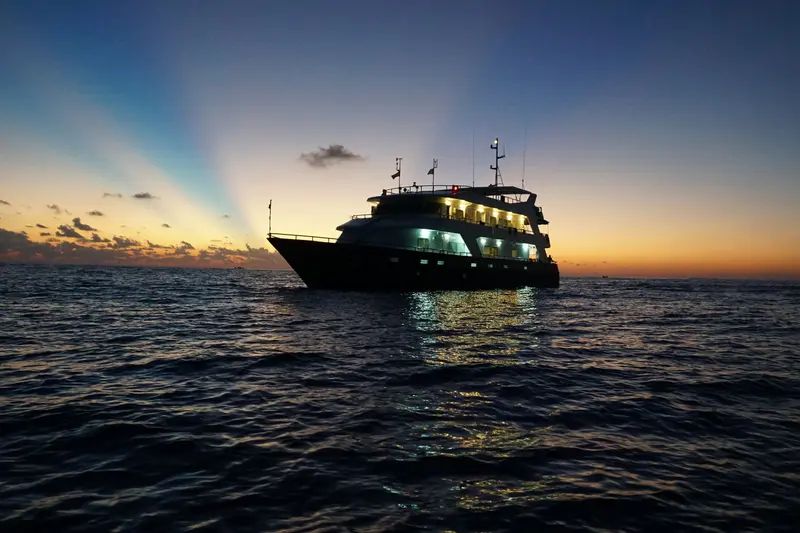
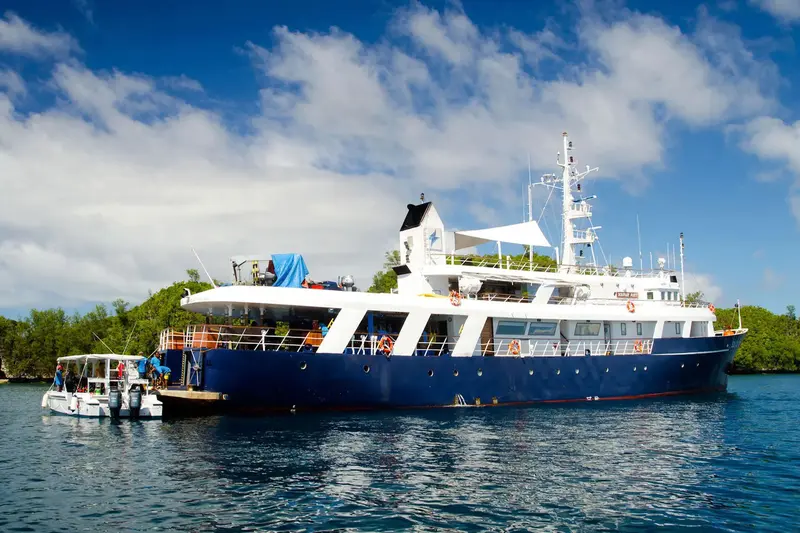
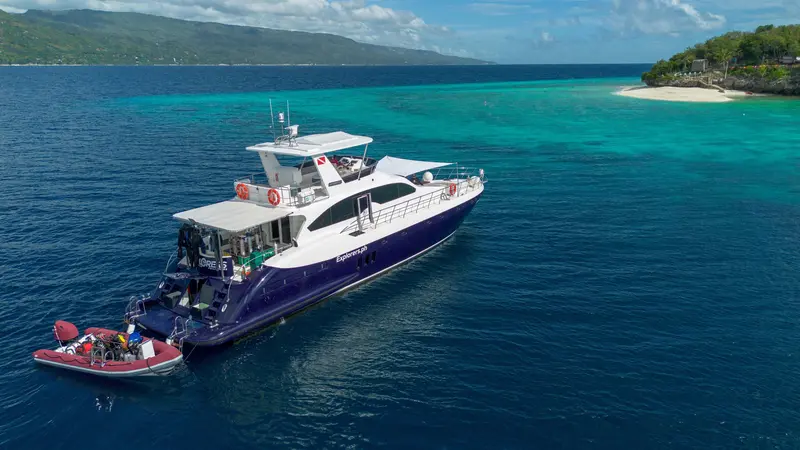
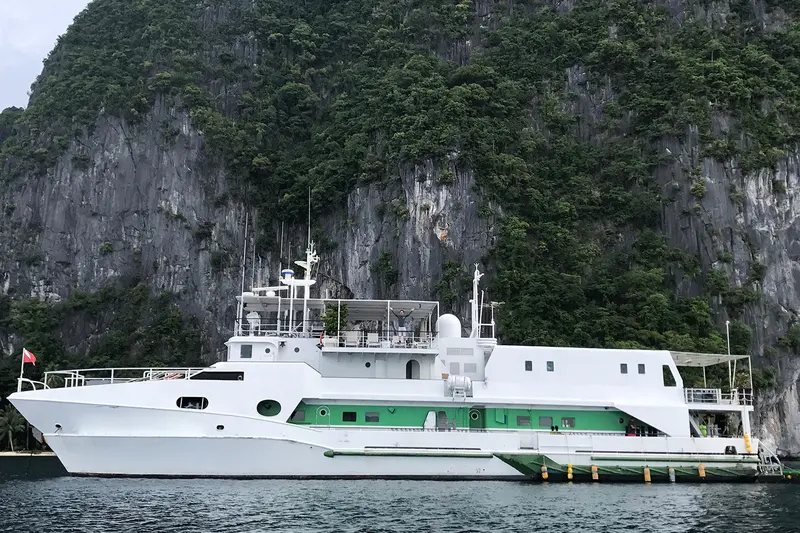
Dive liveaboards Tubbataha
14 liveaboards run trips to Tubbataha.
Frequently asked questions about Black Rock
When should you dive Black Rock?
March to June is the recommended season for diving Black Rock, when conditions are generally more stable and pelagic activity is high. During this period, nutrient-rich upwellings can support encounters with manta rays, sharks, schooling fish, and other open-ocean species along the sloping plateau and wall.
What certification and experience do you need for Black Rock?
Black Rock requires Advanced Open Water certification. You also need experience managing currents and blue-water pelagic dives, because the site is exposed and the current can change from mild to strong or powerful. Comfort with drift diving and staying attentive to the reef structure is important here.
How deep is Black Rock?
Black Rock is typically dived from 10 to 40 metres. You usually begin near a buoy attached to a rock in the shallower section, around 8 to 10 metres, then follow the reef as it slopes toward 25 to 40 metres before transitioning into a wall and blue-water environment.
What can you see, and what are the currents like at Black Rock?
Currents at Black Rock are variable, ranging from mild to strong or powerful, particularly with tidal changes, exposed sections, and upwellings. Drift diving may bring you past a manta ray cleaning station, white-tip and grey reef sharks, schooling trevally, tuna, barracuda, and occasional tiger or hammerhead sharks in the blue.