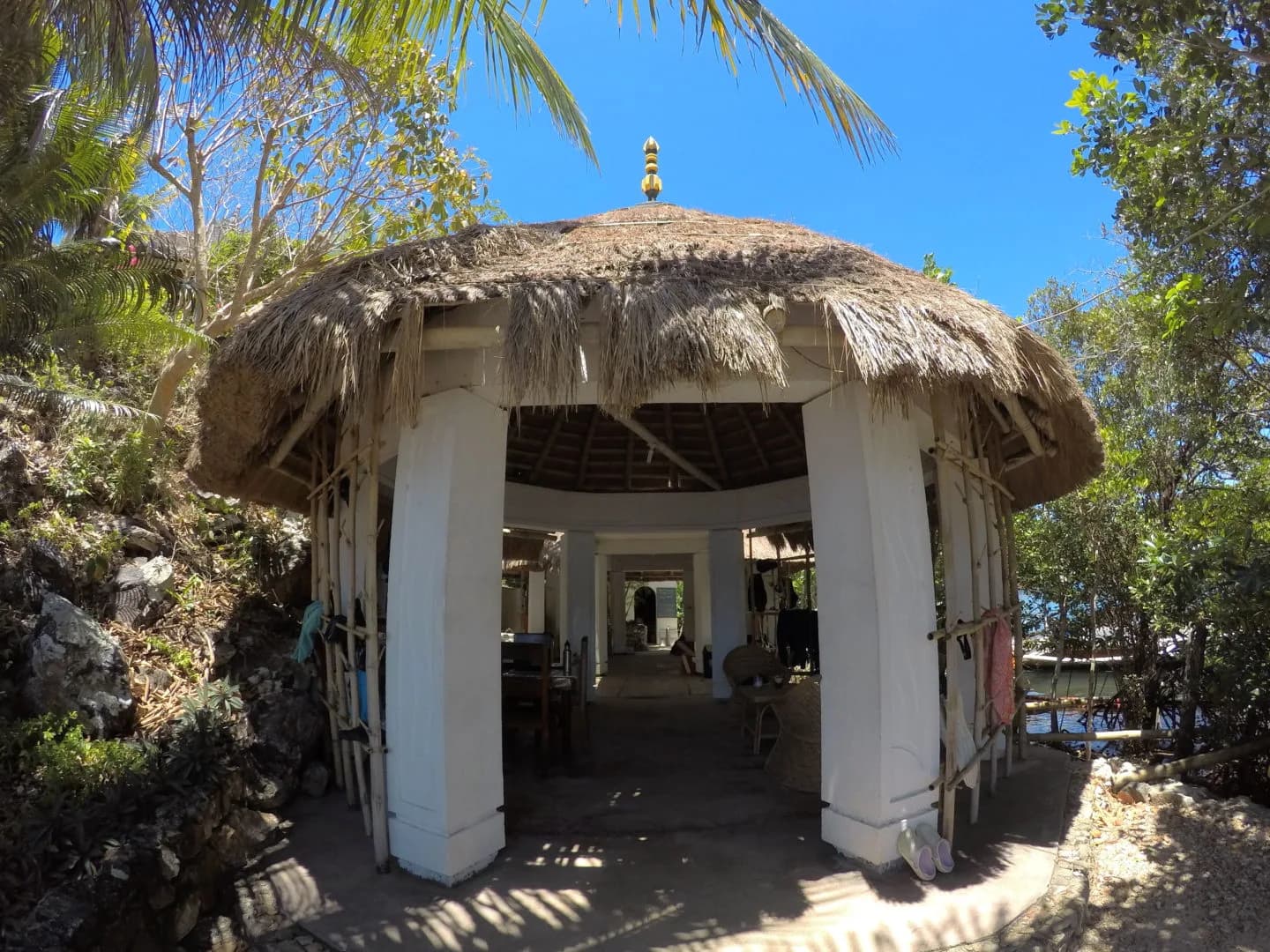

Gunter's Dive Center
★ 5/5 (158 reviews)
7.3 km away as the crow flies
Coron · Philippines · Asia
Max. depth · 36 mExplore the immense Kogyo Maru, a WWII Japanese auxiliary cargo ship, offering a unique blend of historical artifacts and vibrant marine life within its largely intact structure.
For subtitles in English: start the video firstthen click the gearat the top right of the video, select “Subtitles/CC”, then “Auto-translate” and choose “English”.
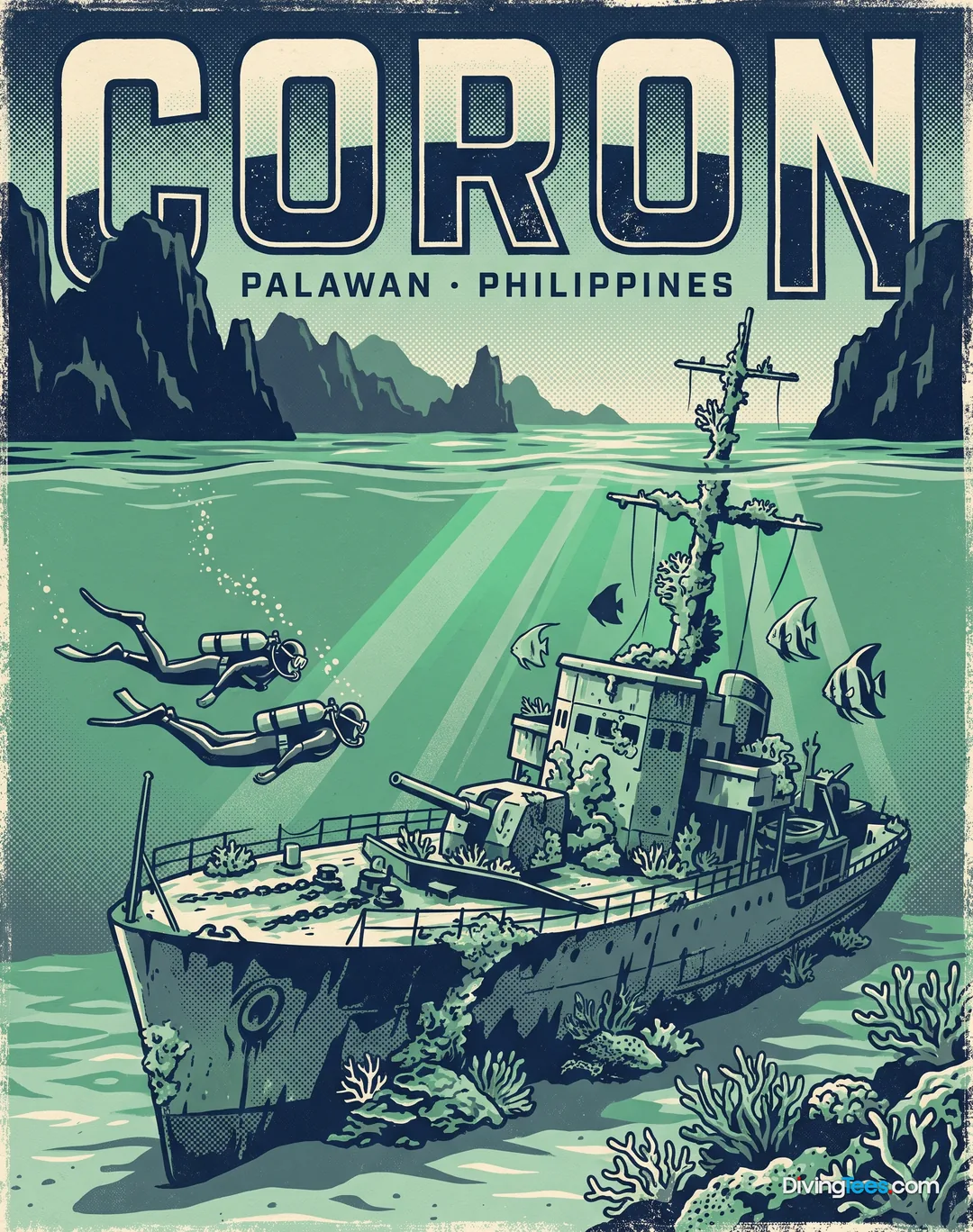
The Kogyo Maru, a formidable Japanese Imperial Navy auxiliary cargo ship, lies silently near Lusong Island, a testament to the dramatic events of September 24, 1944, when it sank following a U.S. air raid. Measuring between 135 and 141 metres in length, this substantial diving site rests on its starboard side on a sandy bottom at 34 metres. As you descend, the sheer scale of this vessel becomes apparent, a stark contrast between its wartime purpose and its current role as an artificial reef, now softened by decades underwater.
The wreck's port side hull begins at 22 metres, gradually extending deeper to the sandy bottom at 34 metres along its length. Approaching the wreck, the superstructure emerges from the blue, hinting at the history held within its massive hull. The structure remains largely intact, allowing for an immersive experience as you trace the outlines of its decks and cargo holds. This wreck is more than just a metal hulk; it is a living monument where history and marine life intertwine.
The primary draw here is the extensive opportunity for wreck penetration. The Kogyo Maru features six distinct cargo holds, each offering unique exploration. For those with appropriate training and equipment, the engine room provides a cavernous space to navigate. The general orientation allows for relatively safe entry and exit points, but the sheer size means that a thorough exploration requires multiple dives. You'll find yourself navigating through darkened passages, where light filters in from various openings, casting dramatic shadows on the ship's internal structure.
One of the most notable features inside is found within the second cargo hold. Here, an incline of cement bags, having shifted during the sinking, creates a unique geological feature within the wreck. Above these bags, you'll discover a small bulldozer, along with a tractor and an air compressor, all remarkably preserved. These artefacts offer a tangible connection to the ship's wartime mission of transporting construction materials, intended for airfield development. The sense of a moment frozen in time is strong as you hover next to this equipment.
As you move along the exterior, particularly the port side, the hull is extensively covered in both soft and hard corals, creating vibrant patches of colour against the rusted metal. Corals have begun their slow, steady reclamation, painting the ship's stern and bow with splashes of color, transforming its industrial silhouette into a vibrant underwater garden. This biological growth has attracted a diverse range of marine life. While navigating its corridors and open decks, you’ll encounter tropical fish moving through the structure, a perpetual dance of life around the silent iron.
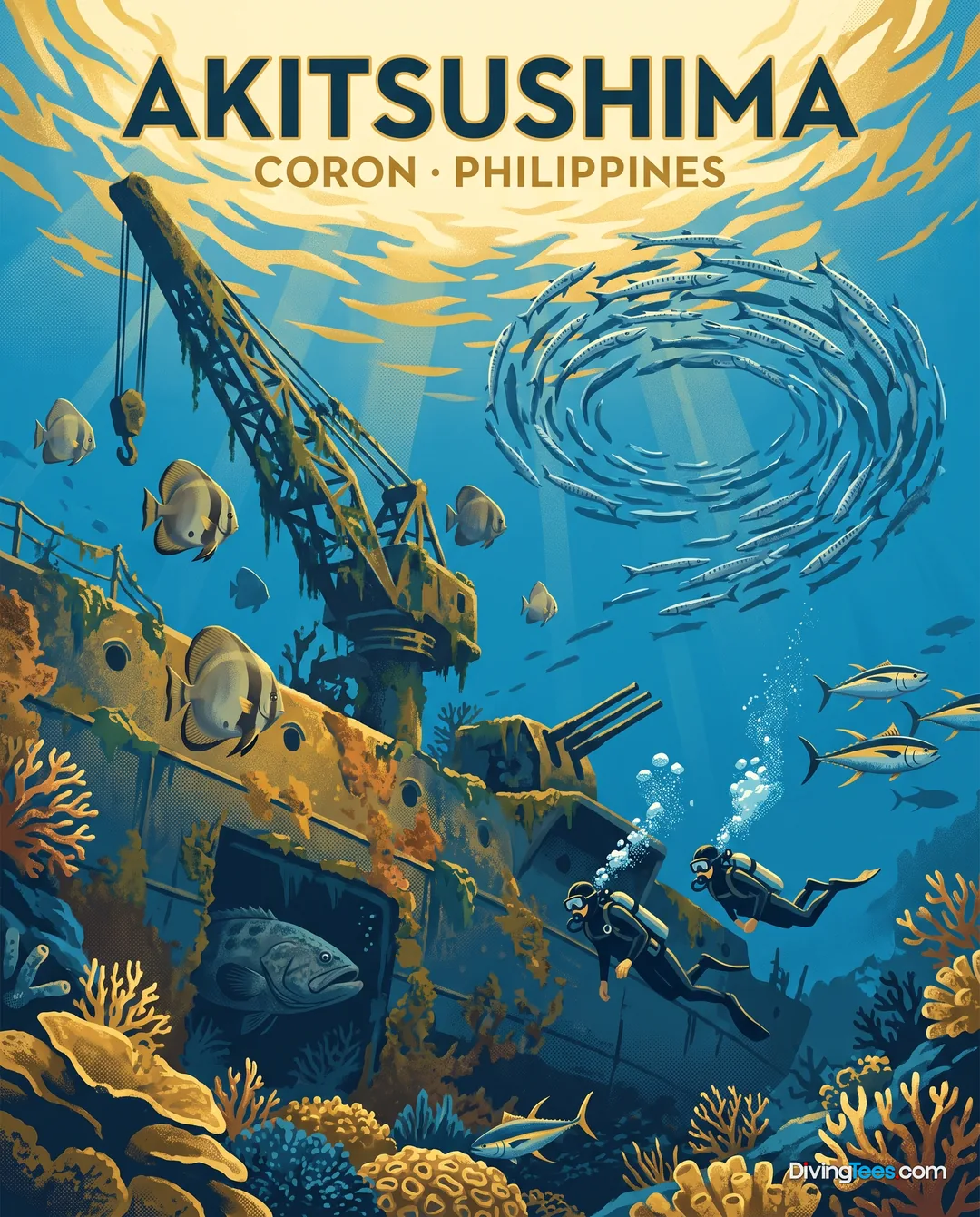
You'll regularly encounter large schools of barracudas (Sphyraena barracuda) patrolling the wreck, often holding formation against any prevailing current. These schools are generally observed around the deeper sections and near the more open areas of the wreck, providing impressive photographic opportunities as they flow past. The resident reef fauna is also plentiful around the Kogyo Maru. Keep an eye out for batfish (Platax orbicularis) moving gracefully between coral formations, while groupers (Epinephelus fuscoguttatus) can be found in sheltered nooks and crannies. Lionfish (Pterois volitans) are often seen perched on ledges. The wreck also hosts a rich variety of nudibranchs (Nudibranchia species) and wrasse (Labridae family) that dart among the coral growth. Occasionally, you may encounter rays (Myliobatiformes order) gliding over the sandy bottom near the wreck, and sea turtles (Chelonioidea superfamily) are also sighted, often resting on the deck or exploring the coral-encrusted hull.
While the Kogyo Maru offers less ambient light compared to shallower wrecks like the Olympia Maru due to its depth, the atmosphere created by the filtered light and the scale of the structure is distinct. The deeper parts of the wreck, specifically on the starboard side that rests on the seabed at 34 metres, provide a more challenging, yet rewarding experience for those comfortable with deeper profiles. The light plays differently through the structure depending on the time of day, creating dramatic shadows and highlighting the resilience of life as it flourishes on and within this sunken giant. The preservation of its cargo and the sheer size of the Kogyo Maru set it apart.
It’s not just a wreck dive; it’s a journey into a specific point in history, complete with the construction equipment that defined its purpose. The juxtaposition of man-made structures and the flourishing marine ecosystem that has claimed it creates a dynamic and immersive dive. The varying depths across its structure also allow for different types of dives, from exploring the higher sections of the hull to deeper penetrations into the holds for those qualified.
This site is accessible from Advanced Open Water Diver level, though a Wreck Diver Specialty certification is highly recommended for any penetration beyond the entrances of the holds. Minimum depth begins at 22 metres on the port side, extending to the sandy seafloor at 34 metres. While some sources suggest it's open to all levels, the depths and potential current dictate a stronger recommendation for advanced training and experience; you should have at least 50 logged dives under varied conditions. Currents can vary from moderate to strong, depending on tidal cycles, so careful dive planning and an awareness of prevailing conditions are essential. Visibility can be generally good, but local conditions or significant currents can influence it.
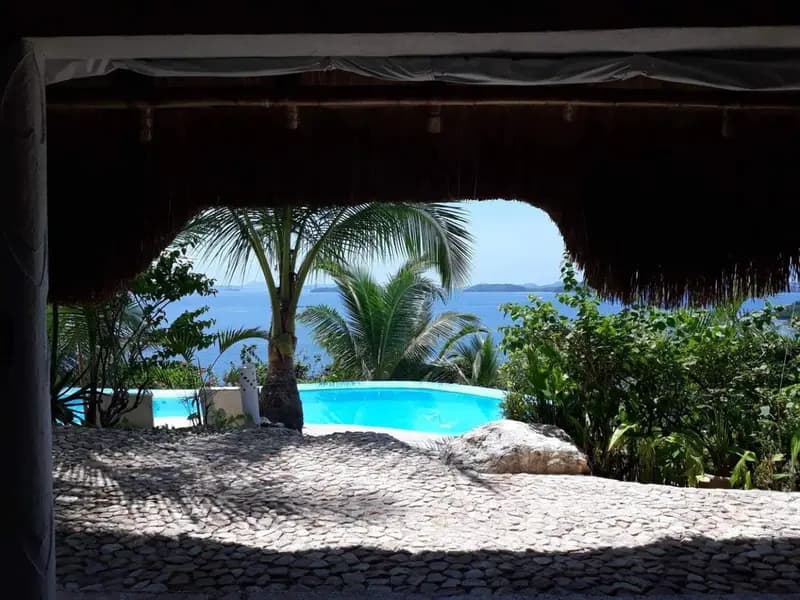
★★★★
★ 9.5/10 (303 reviews)
7.3 km away as the crow flies
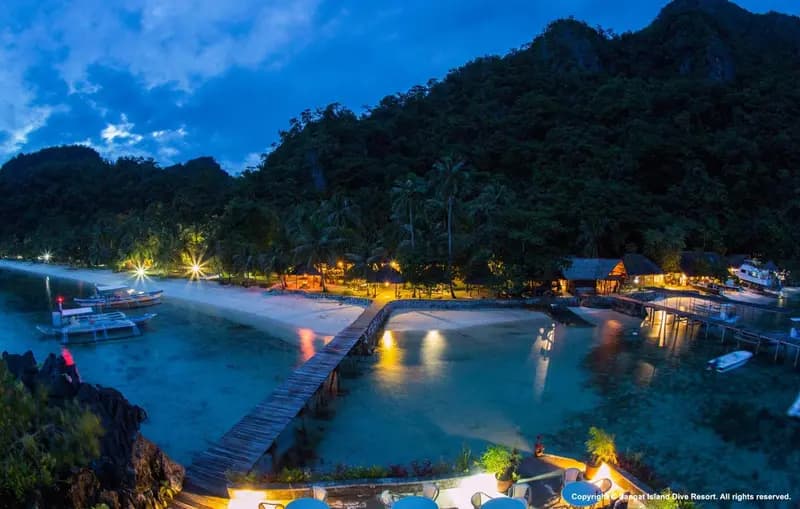
★★★
★ 9.3/10 (277 reviews)
4.4 km away as the crow flies
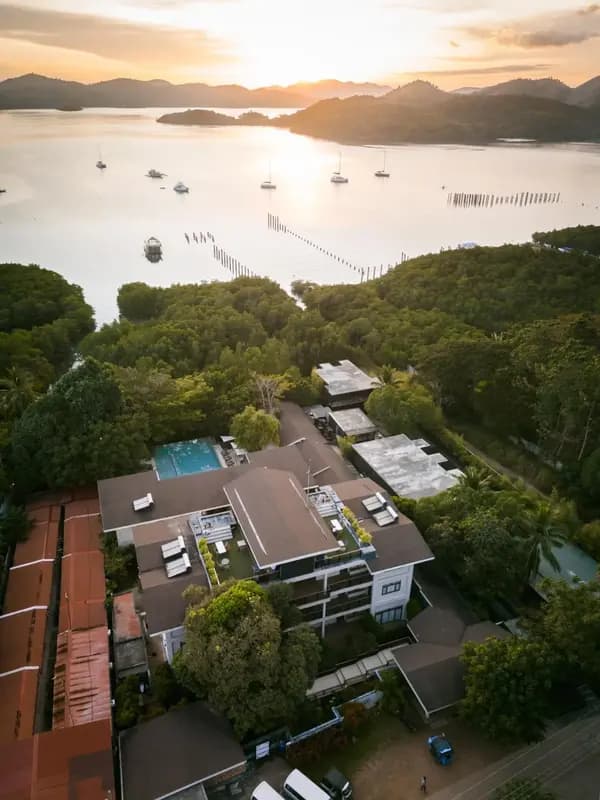
★★★★
★ 9/10 (912 reviews)
17 km away as the crow flies
★★★
★ 8.8/10 (246 reviews)
12 km away as the crow flies
2 liveaboards depart from Coron another way to explore the region, over several days at sea.