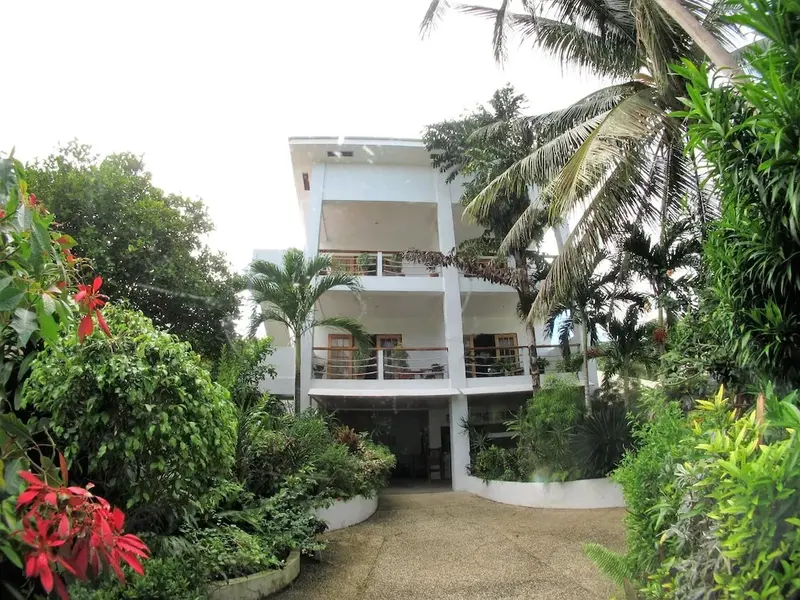
Sogod Bay Scuba Resort
★★★
Google 4.8/5 (162 reviews)
Philippines · Asia
Vertical walls dropping towards 50 metres, giant sea fans and black corals, shoals of anthias and fusiliers, and seasonal whale sharks shape Panaon Island diving.
Napantao Marine Sanctuary is the reason to come to Panaon Island: a long-protected reef where vertical walls drop towards about 50 metres beneath dense coral cover, giant sea fans and shoals of reef fish. Around it, Sogod Bay adds coral gardens, canyons, drift dives and macro sites. This is a Southern Leyte trip for divers who would rather follow a wall and a current than settle for a packaged resort itinerary.
The signature dive is a boat trip to Napantao, where a coral-covered wall falls away through changing depths and can reach roughly 50 metres. Canyons, gardens and overhangs give the reef a more varied shape than a simple drop-off, while current turns some descents into a proper drift dive. Conditions are variable, so the guide’s briefing on current direction, planned depth and the exit point matters more than a fixed site routine. On the outer walls, visibility can reach 20 to 30 metres when the sea is settled. Coastal and muck sites may be less clear, particularly after rain or in swell. Some shallower sections suit a wider range of divers, but Panaon is not simply a sheltered reef holiday. It is a Southern Leyte boat-diving day, with open-water conditions and a wall that demands attention to depth and air.
Napantao’s appeal is the life spread across its wall rather than a single headline animal. Giant sea fans and black corals give the drop-off its structure, with anthias and fusiliers moving in banks above the reef. Pygmy seahorses reward a slower look on the smaller coral growth, particularly when a dive is planned around observation rather than distance. Sogod Bay also provides macro and muck settings, useful for photographers who want to change scale between dives. Whale sharks are the seasonal bonus, generally encountered from November to May around Sogod Bay and Panaon Island. They remain wild-animal encounters, not a scheduled part of every boat trip. The reef itself is the dependable subject: healthy coral cover, large fans and abundant fish, with visibility and behaviour changing according to the site and the weather.
November to May is the most sensible window for Panaon Island. The sea is generally calmer, visibility is more often favourable on the outer walls, and whale sharks are reported in Sogod Bay during these months. From June to October, the rainy season brings more wind, rain and exposure, which can disrupt boat trips and reduce visibility after runoff, although diving remains possible. Build the trip around conditions rather than assuming every day will suit a deep wall. The monsoon period is precisely when a spare day or two protects the main plan.
Panaon suits experienced recreational divers, particularly those comfortable with boat entries, changing current and vertical terrain. Advanced Open Water training is useful for the deeper walls, while Drift Diver training helps when a current turns the dive into a moving descent. BSAC and SSI divers should bring equivalent depth and current experience. Less experienced divers may find suitable shallower sections, but Napantao should not be treated as a first independent wall dive.
From London Heathrow, London Gatwick or Manchester, the journey involves an international arrival in the Philippines followed by either an internal connection or a maritime route towards Leyte. One practical approach is to travel from Tacloban overland to Southern Leyte. Another is to reach Cebu, take the ferry to Leyte, then continue by road. Panaon Island is connected to Leyte by road, but the dive sites are reached by boat from Southern Leyte bases. Allow slack between each connection, because the ferry, road transfer and boat departure are separate parts of the journey rather than one seamless transfer. Once based in Southern Leyte, plan on boat transport for the diving, not on walking between the island’s separate sectors.
Keep Napantao flexible. Before entering, confirm the current, the direction of any drift and the depth planned for the wall, which can descend towards 50 metres. A morning departure is useful because it can combine the sanctuary’s northern and southern sections before boat traffic builds. Do not put every deep dive on one day, and leave several spare days for wind or sea conditions that interrupt the boats. Photographers should bring their own macro equipment and specialised accessories, then alternate Napantao’s walls with Sogod Bay’s macro and muck sites. Whale sharks are a reason to choose November to May, not a guarantee of an encounter. Keep Panaon distinct from Padre Burgos, Liloan and Limasawa when planning boat movements, and leave a proper surface interval in the itinerary before travelling on after the final dive.
Most divers base themselves in Southern Leyte and make boat trips to Panaon Island, rather than changing accommodation on the island for every dive. Allow seven to ten days, including reserve days for the sea and the long journey in and out. The stay works best when Napantao is combined with other Sogod Bay diving, a macro or muck day, and time for coastal villages, scenery or snorkelling. Keep the final day free of diving if onward travel is planned.
Hello, I'm Marina, DivingDeal.com's AI assistant. I guide you through destinations, areas and countries.
Thinking about the whole trip and the flights? Talk it over with Edith →
Marina is an AI. Some links are affiliate links: DivingDeal may earn a commission, at no extra cost to you. Bookings are made with the partner.
Visit Panaon Island from November to May, when seas are generally calmer, outer-wall visibility is more often favourable, and whale sharks are reported around Sogod Bay. From June to October, wind, rain, exposure and runoff can disrupt boat trips. Keep spare days available, since conditions may still affect your plans.
Panaon Island suits experienced recreational divers who are comfortable with boat entries, changing currents and vertical terrain. Advanced Open Water training is useful for deeper walls, while Drift Diver training helps with moving descents. Shallower sections suit less experienced divers, but Napantao is not a first independent wall dive.
Around Panaon Island, you can explore coral-covered vertical walls, canyons, gardens and overhangs, with giant sea fans, black corals, anthias and fusiliers. Slow observation may reveal pygmy seahorses, while Sogod Bay offers macro and muck sites. Whale sharks may appear seasonally, but the reef life remains the dependable attraction.
Base yourself in Southern Leyte and use boat trips to reach Panaon Island’s sites. Combine Napantao with Sogod Bay macro or muck diving, and allow reserve days for sea conditions and travel connections. Keep Napantao flexible, confirm current and planned depth before entering, and leave the final day free of diving before onward travel.