
All4Diving® Phuket
Google 4.9/5 (1,050 reviews)
107 km away as the crow flies
Kata Beach · Thailand · Asia
Max. depth · 50 mDeep Six offers a dynamic dive across submerged boulders and walls, from a shallow reef extension to depths past 40 metres, patrolled by pelagics.
For subtitles in English: start the video firstthen click the gearat the top right of the video, select “Subtitles/CC”, then “Auto-translate” and choose “English”.
Deep Six is part of the Similan Islands, specifically a submerged extension northwest of Similan Island 7 (Koh Pa-Yu). The site profile begins shallow, with patch coral and scattered rocks at around 10 to 15 metres, fanning out from the main island. These shallower sections serve as excellent anchor points before you let the current carry you into the deeper structures that give the site its name, allowing you to gauge the day's flow before committing to the full descent.
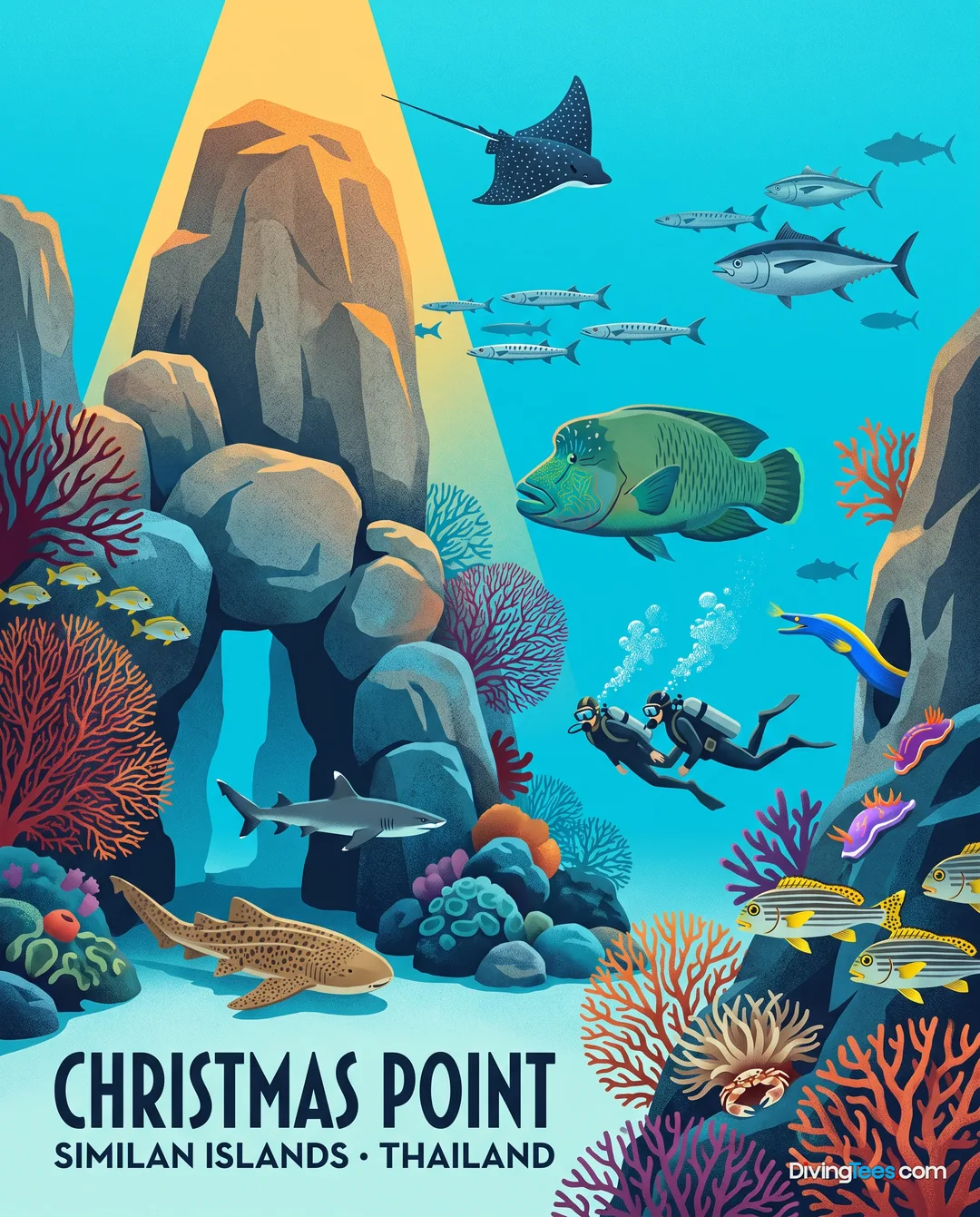
The topography here is dominated by large submerged boulders and a central rock formation that creates distinct underwater passages. These swim-throughs are found between 12 and 25 metres, offering a chance to navigate through the rock architecture rather than just over it. Keep an eye on your depth and buoyancy here; the passages can feel tighter than they look, and the current can shift as it's channeled through these natural bottlenecks.
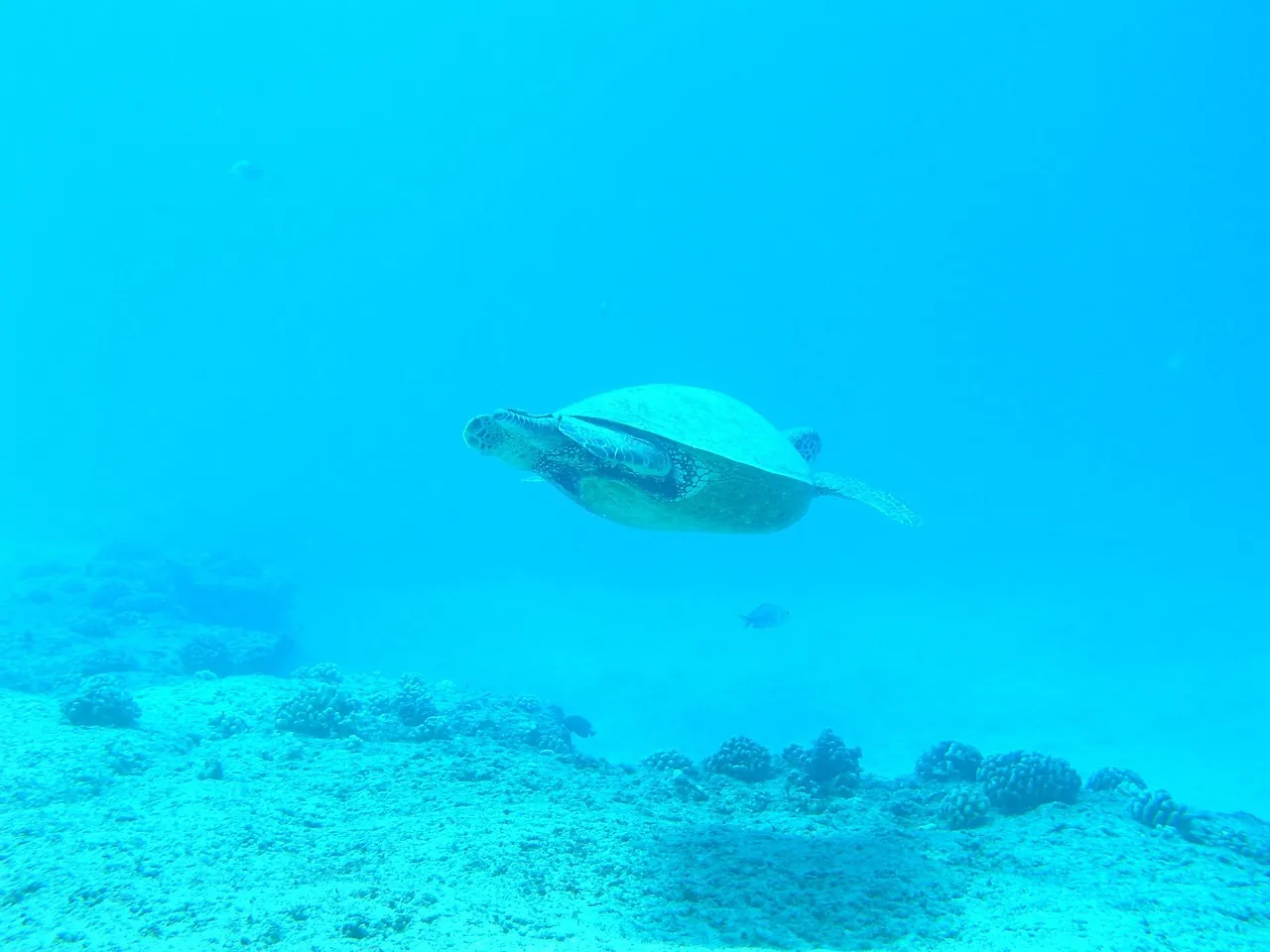
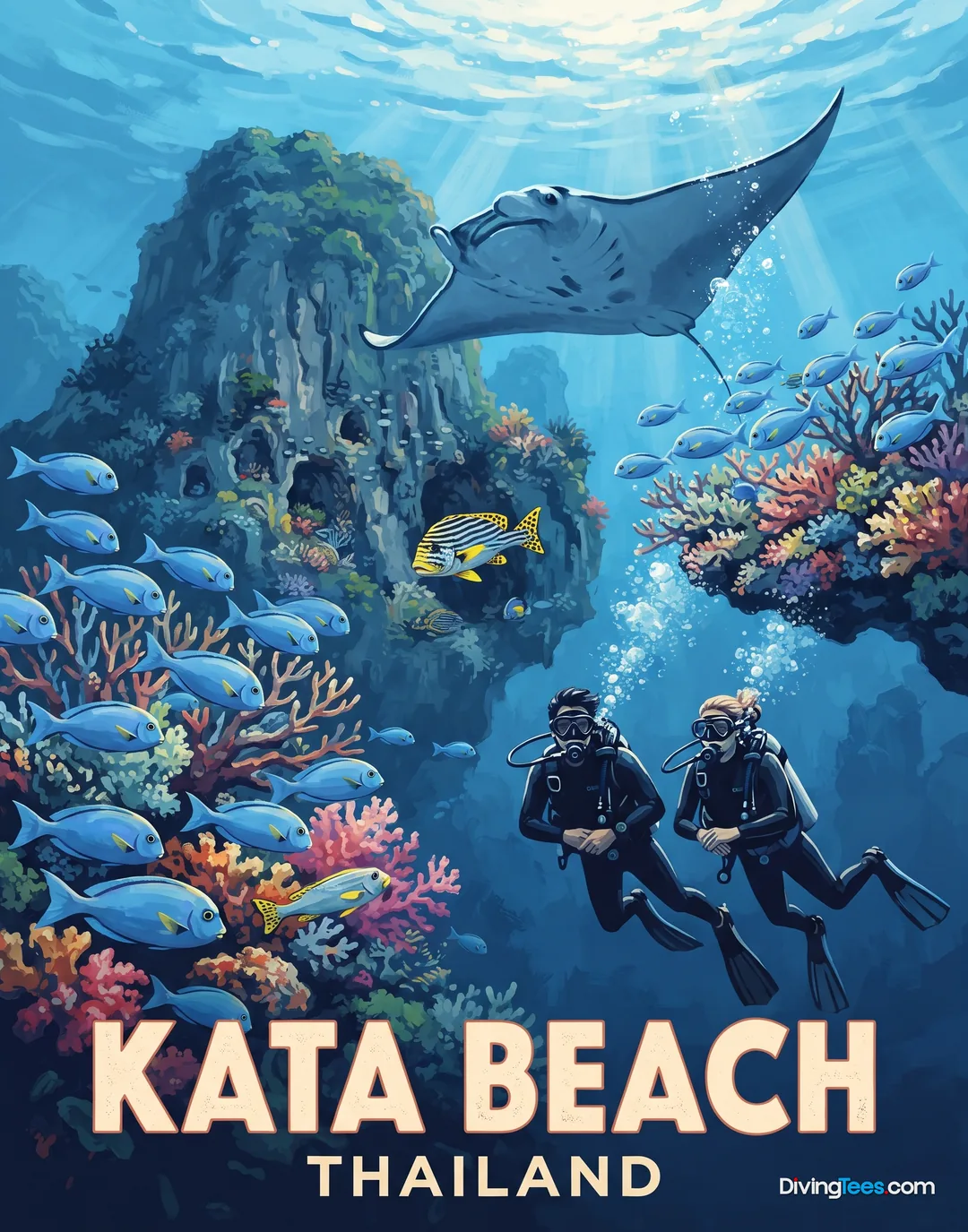
Beyond the central boulder field, the site continues with abrupt drop-offs, particularly on the west face, pushing past 50 metres. These sheer walls are covered with dense soft corals and giant orange gorgonians, creating a vibrant, colourful tapestry that thrives in the nutrient-rich currents. The east face, conversely, tends to be more sheltered, featuring hard and soft corals that hint at a different current exposure and a slightly calmer environment for reef life.
Pelagic encounters are a regular feature at Deep Six, with whitetip reef sharks (Triaenodon obesus) often cruising the deeper sections and along the walls. You'll also likely see schools of giant trevallies (Caranx ignobilis), tuna (Thunnnus spp.), and bluefin trevallies (Caranx melampygus) in the open water, especially where the current is more pronounced. Keep a vigilant eye beyond the reef; these larger fish move quickly and often appear from the blue.
Closer to the reef, the site teems with a variety of resident fish. Look for black and white snapper (Macolor niger), yellow snapper (Lutjanus fulvus), and neon fusiliers (Pterocaesio diagramma) schooling amongst the boulders. The more intricate parts of the reef are home to Kuhl's stingrays (Neotrygon kuhlii) on the sandy patches, and if you take your time, you might spot the well-camouflaged ghost pipefish (Solenostomus paradoxus) and frogfish (Antennarius spp.) hiding in the soft corals.
The variability of this site is one of its defining characteristics. While you might find arches near the surface on one side, leading down to depth rapidly, the opposite face offers more extensive reef flat. This means careful dive planning is essential to make the most of the topography and current conditions on any given day. Adapting your dive plan to the prevailing conditions will allow you to experience the site's full range of ecosystems.
Deep Six also presents opportunities for macro life if you move slowly along the coral-encrusted rocks. Red fire gobies (Nemateleotris magnifica), blennies (Blenniidae spp.), and various nudibranchs (Nudibranchia spp.) are present, particularly in the more sheltered areas. Even a juvenile black and white coral banded sea snake (Laticauda colubrina) has been observed, adding to the site's rich biodiversity and offering different points of interest depending on your focus.
Deep Six is suitable for advanced divers due to its depth range of 4 to 40 metres and the frequently moderate to strong currents. You should be comfortable diving in currents and managing your buoyancy in varying conditions. Visibility typically ranges from 15 to 25 metres. The best period to dive this site aligns with the Similan Islands' diving season, from October to May.
You can dive Deep Six during the Similan Islands’ diving season, from October to May. Visibility typically ranges from 15 to 25 metres during this period. Conditions can vary around the site, so you should assess the current and plan your dive according to the prevailing flow and topography.
Deep Six is suitable for advanced divers. You should be comfortable diving in moderate to strong currents, managing buoyancy in changing conditions, and monitoring your depth. The site includes swim-through passages, abrupt drop-offs, and deep structures, so careful planning and the ability to adapt your dive plan are important.
Deep Six ranges from shallow reef sections to depths beyond 50 metres along the west face. Currents are frequently moderate to strong and may shift where they pass through the swim-throughs. The east face is more sheltered, while deeper structures and walls experience more pronounced flow that attracts open-water fish.
At Deep Six, you can explore large boulders, swim-through passages, sheer walls, soft corals, and giant orange gorgonians. Whitetip reef sharks, giant trevallies, tuna, snapper, fusiliers, and Kuhl’s stingrays inhabit the site. Look closely among coral-encrusted rocks for ghost pipefish, frogfish, blennies, gobies, and nudibranchs.