Vila Barca
★ 9/10 (471 reviews)
9.4 km away as the crow flies
Dive centre · Faial · Azores
4.5207 Google reviewsHead offshore to the Princess Alice bank on the catamaran Physeter for a chance to encounter Mobula rays and pelagics.
For subtitles in English: start the video firstthen click the gearat the top right of the video, select “Subtitles/CC”, then “Auto-translate” and choose “English”.
Located in the Marina da Horta on the island of Faial, Norberto Divers has been a fixture of the Azorean diving scene since 1996. The centre is built on a deep foundation of local marine biology, led by Norberto Serpa, a professional diver and former technician for the University of the Azores' Department of Oceanography and Fisheries.
This expertise translates into a highly specialised approach to marine life encounters. Whether you are looking for coastal reef exploration or long-range offshore expeditions, the centre uses traditional land-based lookouts to help locate cetaceans, ensuring a high success rate for those coming to the islands for whale and dolphin watching.
The team consists of four professional instructors and dive guides, many of whom bring a scientific background to the boat. This includes marine biologists who contribute to local studies, providing a level of ecological insight that goes beyond standard recreational diving.
Instruction is available for a range of levels, from those taking their first breaths underwater to professional-level candidates. The centre also offers specialised training for those looking to advance their careers through Divemaster and Open Water Instructor courses.
The centre provides a structured path for both recreational and professional divers. You can begin with foundational training or work towards professional certifications including the Divemaster Course, Open Water Instructor Course, and the Professional Diver Course.
The fleet is diverse, catering to different types of maritime experiences. The catamaran Physeter serves as a stable platform for larger groups and longer trips, such as the full-day excursions to the Princess Alice bank.
For more targeted diving, the centre operates several Zodiacs, including the Chá preto, Faidoca, and Gonçalo. For technical dive logistics, they utilise dedicated diving Zodiacs named Silvino and Dalila, which are equipped with oxygen emergency kits on board.
Full equipment hire is available for divers who prefer not to travel with their own kit. This includes complete sets of diving gear to ensure you are ready for any scheduled excursion.
Safety is a priority on the water, with oxygen emergency kits carried on the dedicated diving Zodiacs. For those participating in shark dives or offshore trips, the centre provides the necessary equipment to facilitate these specific encounters.
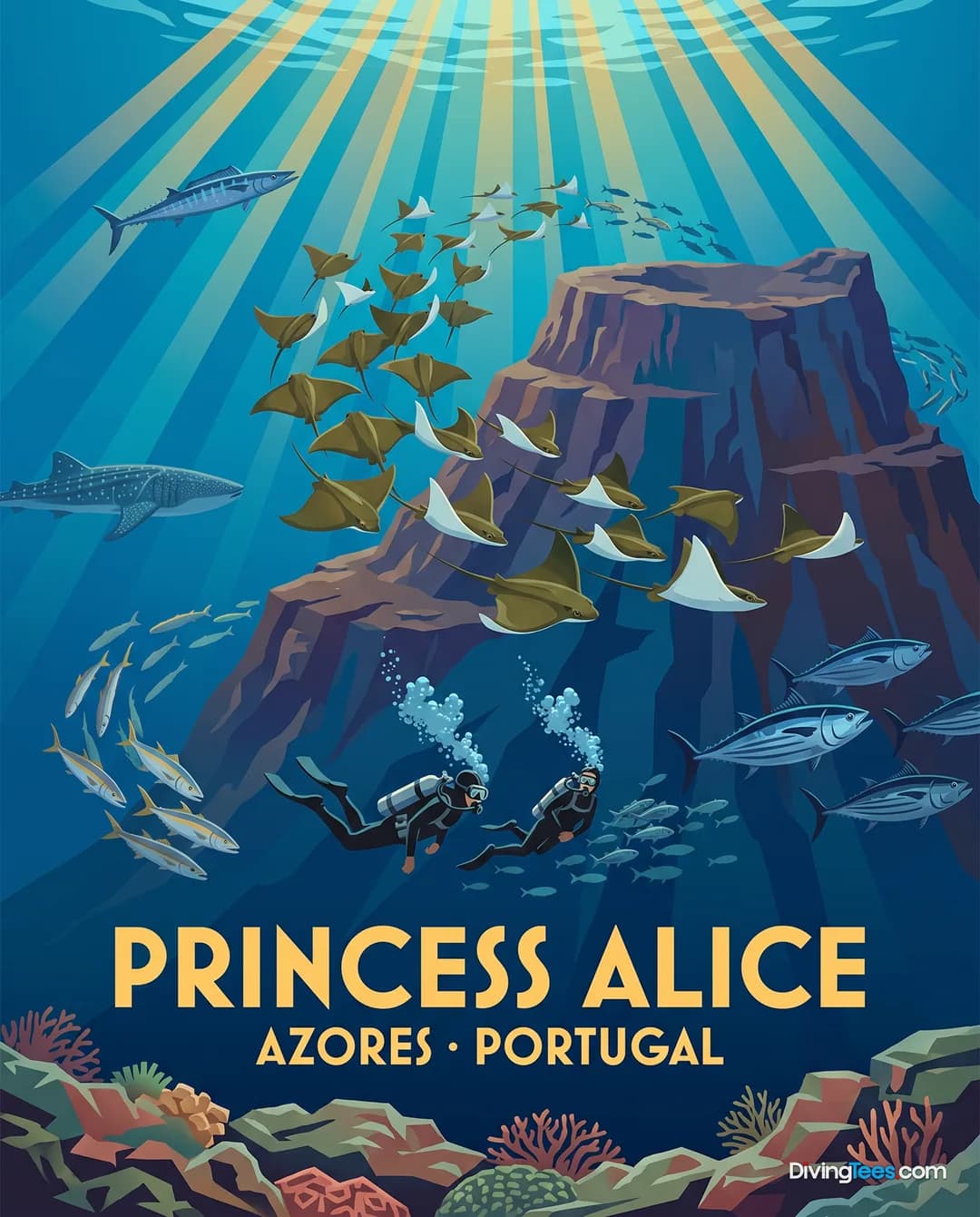
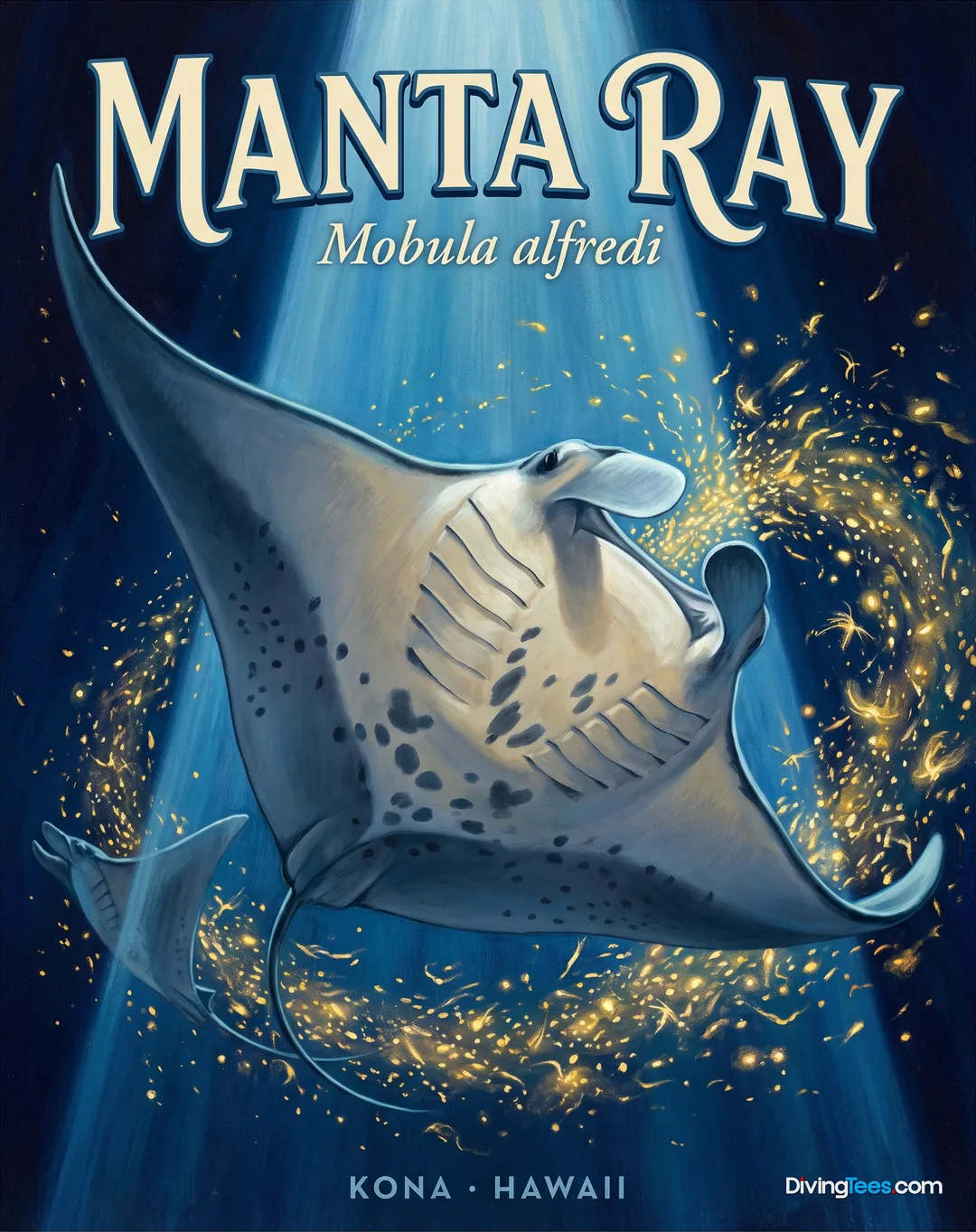
Princess Alice bank is an offshore site located approximately 45 nautical miles south of Faial, reaching depths of 35 metres. This advanced level site is famous for Mobula rays and large pelagics like tuna and barracudas, with trips typically running from July to September.
The coastal spots around Faial and Pico offer more than 20 different locations suitable for all experience levels. These rocky reefs and sites within the Monte da Guia marine protected area are only 5 to 15 minutes away by Zodiac and are home to groupers, moray eels, and octopus.
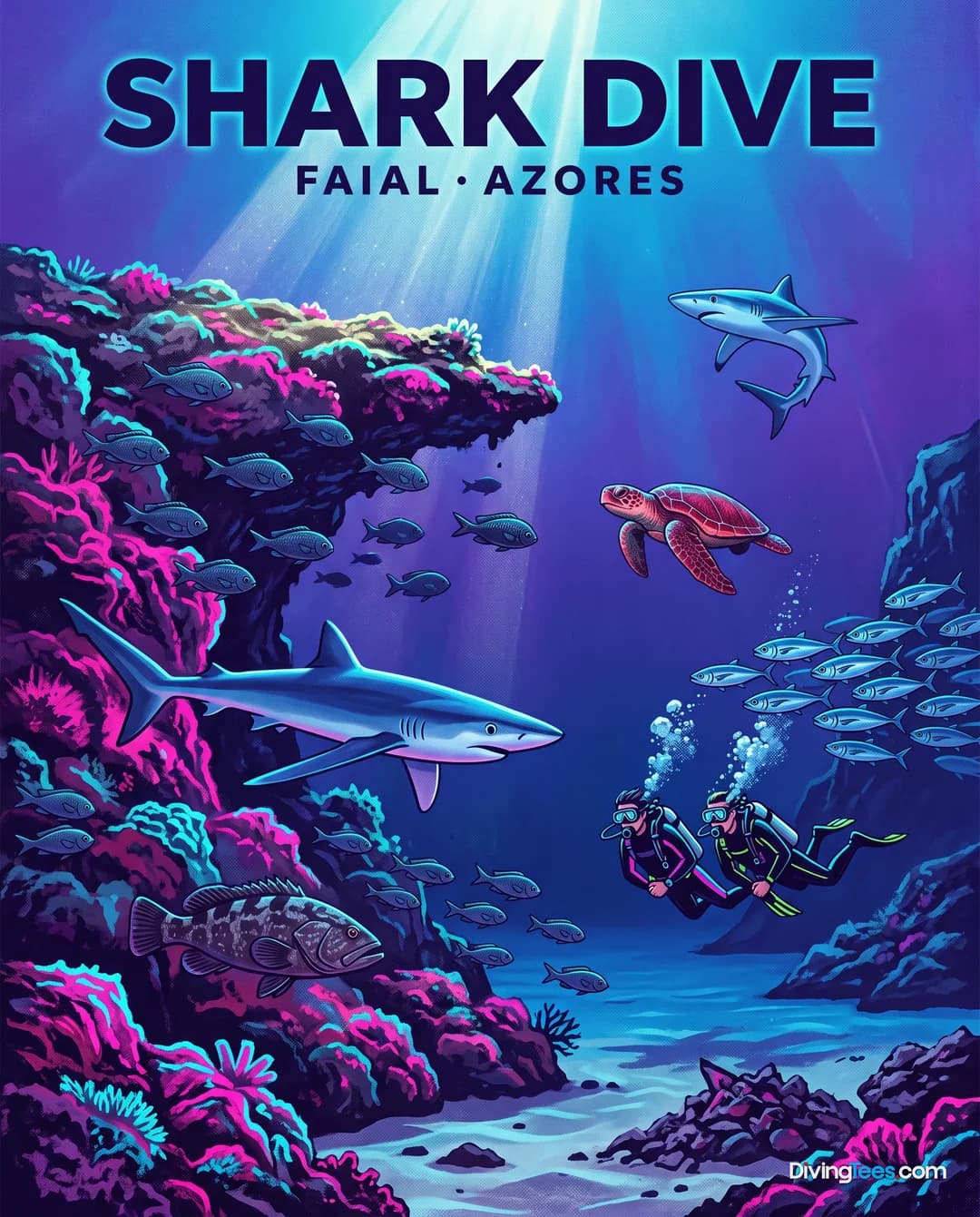
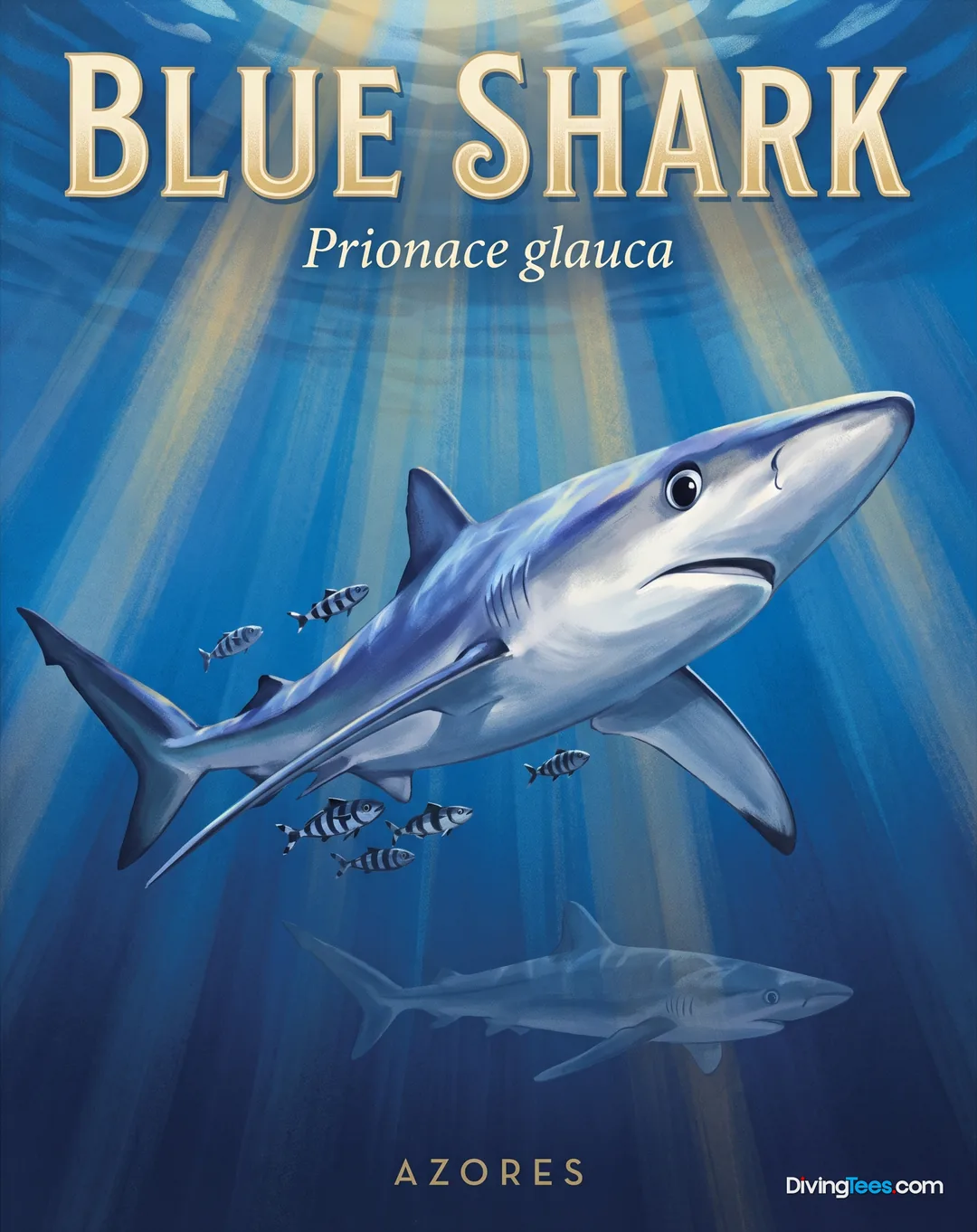
The Shark Dive is an advanced, blue-water experience typically available from July to September. Divers stay between the surface and 10 metres while drifting near the boat to encounter Blue shark (Prionace glauca), with a check dive required before participation.
And some of the dive sites the centre runs.
The offshore waters are a magnet for large pelagics. From July to September, you can encounter Blue shark (Prionace glauca), Mobula rays, and various tunas, including skipjack tuna. The area is also known for barracudas and almaco jacks.
In the spring, the Azores become a hub for migratory whales, including Blue whales, Fin whales, Sei whales, and Humpback whales. Throughout the year, resident species like Sperm whales, Common dolphins, and Risso's dolphins are frequently sighted by the centre's lookouts.
On the coastal reefs, the biodiversity is high and varied. You will find Triggerfish (Balistidae), groupers, and moray eels among the rocks, alongside various octopus and nudibranch species.
For those with an eye for the small, the reefs host a variety of macro life, including several species of nudibranch and octopus that inhabit the crevices of the rocky seabed.
Diving in the Azores is highly seasonal. The best window for shark encounters and trips to the Princess Alice bank is between July and September, while the most reliable period for whale and dolphin watching is during the spring.
Coastal diving is generally accessible from April to October. While the centre manages various offshore excursions, please note that weather conditions can affect the availability of all maritime activities.
Hello, I'm Marina, DivingDeal.com's AI assistant. I answer in detail about hotels, dive centres and liveaboards.

Thinking about the whole trip and the flights? Talk it over with Edith →
Marina is an AI. Some links are affiliate links: DivingDeal may earn a commission, at no extra cost to you. Bookings are made with the partner.
Your last day stays dry: no diving in the 18-24 hours before a flight the perfect window to see the destination from another angle.
 Culture
⏱ 7 h · ★ 5.0 (47 reviews)
from €125
see on Viator ↗
 Culture
⏱ 8 h · ★ 5.0 (19 reviews)
from €175
see on Viator ↗
 City
City⏱ 2 h · ★ 5.0 (5 reviews)
from €435
see on Viator ↗
 Adventure
⏱ 5 h · ★ 4.9 (19 reviews)
from €140
see on Viator ↗
Ratings and reviews collected by Viator and Tripadvisor.