
Tagoro Dive
Google 5/5 (756 reviews)
2.8 km away as the crow flies
El Hierro · Canary Islands · Atlantic
Max. depth · 50 mTwo massive volcanic towers rise from the sandy slope to create a rugged, vertical seascape outside the Mar de las Calmas reserve.
For subtitles in English: start the video firstthen click the gearat the top right of the video, select “Subtitles/CC”, then “Auto-translate” and choose “English”.
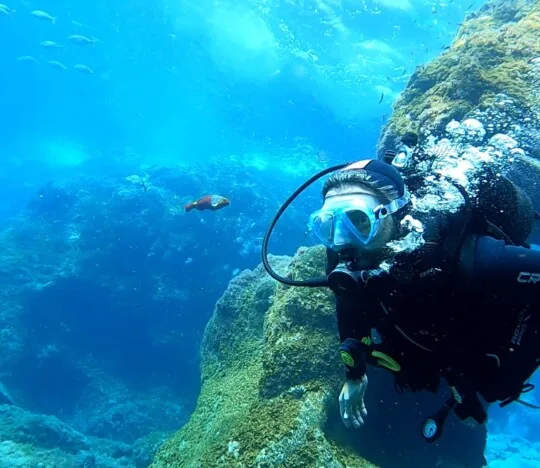
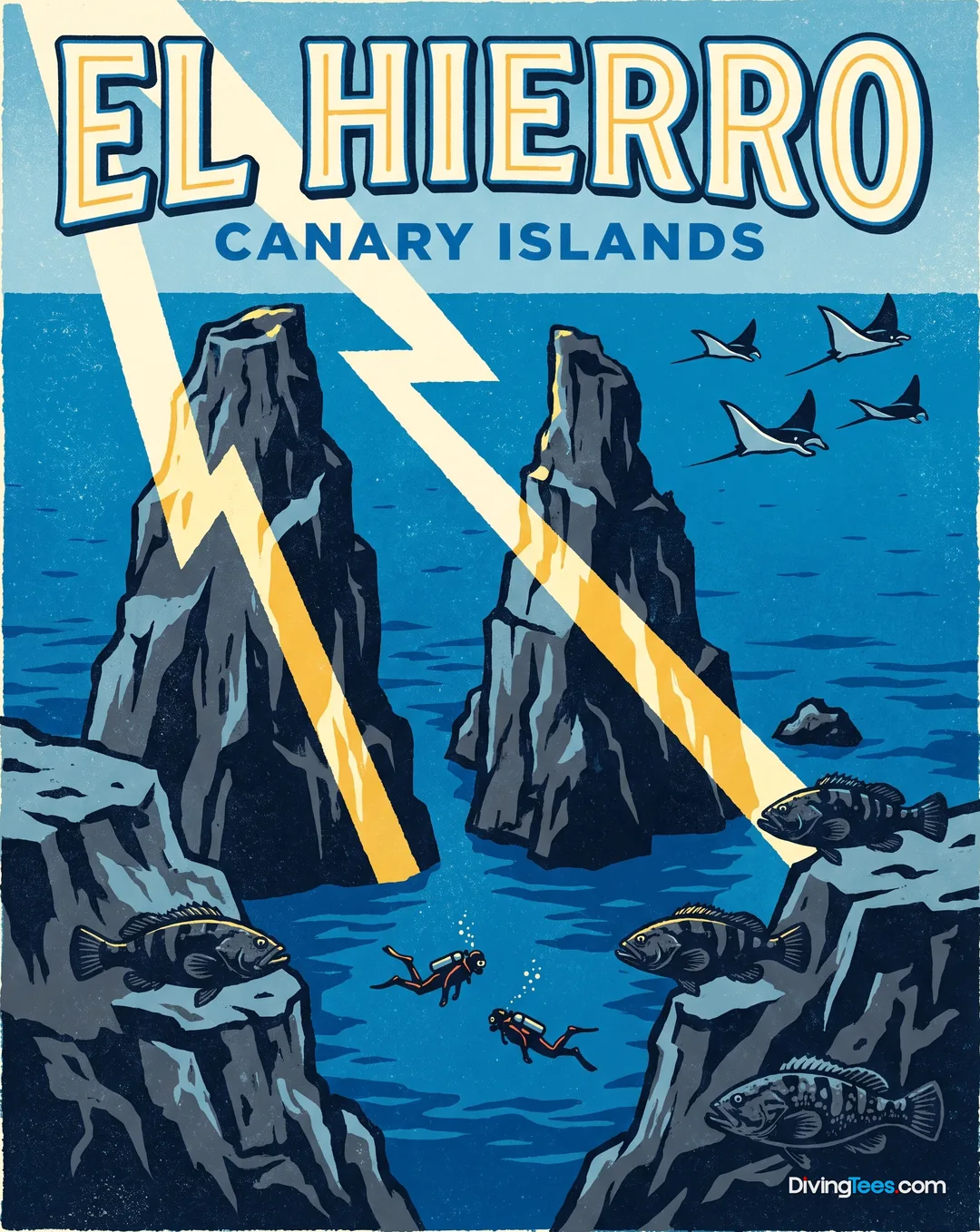
Baja Bocarones is defined by its unique volcanic topography, consisting of two primary submerged towers that rise abruptly from the surrounding sandy slope. These pinnacles are not simple mounds; they are steep, volcanic structures with near-vertical walls that create a complex, three-dimensional environment. As you descend, the relief changes rapidly, moving from the relatively flat bottom into narrow passages and abrupt shifts in the rock face. This verticality provides a sense of scale and depth that is quite different from the shallower, more sheltered sites closer to the coast.
The dive profile offers options for different levels of experience and certification. One of the summits sits at a shallow 7 metres, providing an accessible entry point for those wanting to explore the upper reaches of the formations. The second summit reaches 12 metres, while the base of the structures and the surrounding slopes drop down to 50 metres. For experienced divers, the descent along the walls offers a chance to explore the deeper sections of the volcanic structure, where the light and the terrain transition into much more dramatic depths.
The site is located on the eastern coast of El Hierro and is notably more exposed than the dives found within the Mar de las Calmas reserve. This positioning means it has a different character, often influenced by the east-coast trade winds. Unlike the calmer, protected areas, Baja Bocarones is a site where the ocean's energy is more apparent. You will feel the impact of the environment through changes in light and the movement of the water around the steep rock faces.
Currents at Baja Bocarones can be highly variable and are heavily dependent on weather conditions and wind patterns. While the site can be straightforward for a boat dive when the water is calm, the combination of wind and topography can create unpredictable conditions. For those navigating the walls or moving between the two pinnacles, being prepared for shifting water movement is essential. This variability is a primary reason why the site is often approached with caution, particularly when the trade winds are active.
The marine life here is typical of the volcanic slopes of El Hierro, with many species finding shelter in the cracks and crevices of the steep walls. You will frequently encounter the Atlantic blue tang and the Mediterranean rainbow wrasse moving along the reef edges. For those looking closer at the rock faces, the Trumpetfish often stand out against the darker volcanic stone. These resident species use the intricate relief of the pinnacles to navigate the currents and find food.
Deeper in the vertical sections or near the base of the walls, the resident fauna becomes more substantial. You might observe the Dusky grouper or the Barred hogfish tucked into the structure's recesses. The presence of the Salema porgy and the Nursehound is also common along the sloping sides. For those observing the Moray eel, the numerous narrow passages and cracks in the volcanic rock provide ideal hiding spots throughout the depth range.
Visibility at the site is generally good, typically ranging between 10 and 30 metres depending on the specific conditions and local swell. The clarity allows for a clear view of the vertical drop-offs and the textures of the volcanic rock. When visibility is at its peak, the scale of the pinnacles becomes even more impressive, allowing for long-range observation of the surrounding sandy slope and the vertical transitions of the walls.
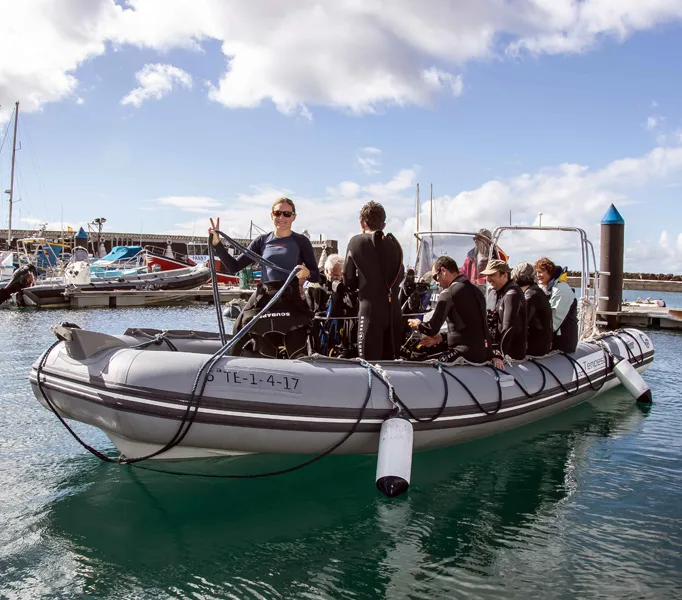
The seasonality of the site is influenced by the regional weather, with autumn and spring typically providing the most consistent windows for diving. During these periods, the trade winds tend to be less disruptive, allowing for more predictable conditions. Regardless of the season, the site remains weather-dependent, and access is often determined by whether the surface conditions permit a safe and comfortable boat approach.
Depths range from 7 to 50 metres. The site is suitable for Open Water to Advanced divers, but due to the variable currents and steep topography, an Advanced level is recommended. Visibility ranges from 10 to 30 metres. Best seasons are autumn and spring; however, site accessibility is weather-dependent due to east-coast trade winds.
Baja Bocarones is generally most consistent for diving in autumn and spring, when trade winds tend to be less disruptive. However, access remains weather-dependent on the eastern coast, and surface conditions must allow a safe, comfortable boat approach to the site. Local swell can also affect visibility during the dive.
Baja Bocarones is suitable for Open Water through Advanced divers, with an Advanced level recommended because of its variable currents and steep volcanic topography. A shallow summit offers an accessible entry point, while narrow passages, vertical walls, changing relief, and deeper sections require careful navigation and appropriate experience.
Baja Bocarones ranges from 7 to 50 metres, with one summit at 7 metres, another at 12 metres, and the surrounding slopes descending to 50 metres. Currents can vary considerably with weather and wind patterns, while the steep walls and exposed position may create shifting water movement around the pinnacles.
At Baja Bocarones, two steep volcanic pinnacles create vertical walls, narrow passages, and cracks sheltering Atlantic blue tang, Mediterranean rainbow wrasse, and trumpetfish. You may also encounter dusky grouper, barred hogfish, Salema porgy, Nursehound, and moray eel along the walls, recesses, and sloping volcanic sides.