
Tagoro Dive
Google 5/5 (756 reviews)
1.5 km away as the crow flies
El Hierro · Canary Islands · Atlantic
Max. depth · 30 mExplore a complex labyrinth of basaltic caves and vertical walls as you descend through volcanic ravines.
For subtitles in English: start the video firstthen click the gearat the top right of the video, select “Subtitles/CC”, then “Auto-translate” and choose “English”.
The approach to Hoyos del Feo begins with a descent along volcanic ravines and gullies that mark the upper section of the site. These geological features lead you down a gradually deepening slope, transitioning from the shallower plateau into more dramatic vertical structures. As you follow the descent, the terrain shifts from these sloping channels into a series of sharp, vertical basalt walls. This topographically diverse area is structured by the intense volcanic history of El Hierro, creating a complex environment of steep drops and subtle changes in contour.
As you reach the base of the drop-off, the landscape changes significantly as the vertical wall meets the seabed. The bottom here is composed of light-colored sand, which provides a high-contrast backdrop against the dark volcanic rock. This contact zone is where the site's true complexity emerges through a labyrinth of interconnected chambers and crevices. The combination of steep walls and cavernous systems creates numerous microhabitats that support a concentrated variety of marine life within a relatively compact area.
Navigating the site requires careful attention to the topography, especially when moving between the open walls and the smaller overhead environments. The basaltic structure is heavily cut by small caves and narrow cavities that can be challenging for less experienced divers. These openings and crevices serve as vital shelter for various species, making the textures of the rock a primary focus during the dive. Understanding the layout of these volcanic gullies is essential for maintaining buoyancy and orientation while exploring the tighter sections of the reef.
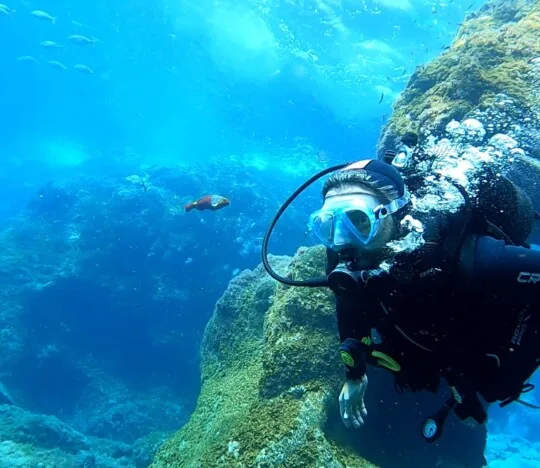
The resident fauna at Hoyos del Feo is heavily concentrated within these rocky recesses and crevices. You will frequently encounter moray eels and dusky groupers (Epinephelus morhua) tucked into the darker cavities of the wall. Large bream and damselfish tend to school in the more open sections of the ravine, while ornate wrasse are common along the reef edges. This density of life is a direct result of the intricate physical structure provided by the volcanic basalt, which offers endless hiding spots for smaller organisms.
Further inspection of the reef walls and sandy patches reveals more specialized inhabitants. Trumpetfish and parrotfish are often found patrolling the edges of the coral and rock formations. You might also notice large barracuda cruising the mid-water columns or searching near the edges of the deeper drop-offs. These species utilize the varying light and current conditions provided by the site's verticality to hunt or seek shelter, contributing to the site's high level of biological activity.
The environmental conditions at Hoyos del Feo are dictated by the oceanic swell and local tidal movements. While many dives occur in mild conditions, the topography of the ravines and the steepness of the wall can cause currents to pick up unexpectedly. These shifts are most noticeable around the main drop-off and within the narrower channels. Monitoring your position relative to the wall is crucial, especially when navigating transitions between the sheltered areas and the more exposed vertical faces.
Visibility at this site is generally consistent, typically ranging between 20 and 30 metres. This clarity allows for easy navigation through the deeper parts of the ravine and provides excellent visibility of the intricate details of the volcanic rock. The light filtering down through the water column highlights the textures of the basalt, making the deep crevices and cave entrances highly visible even at the 30-metre limit. This clear view is particularly helpful when orienting yourself within the complex cavernous system of the site.
Depth ranges from 8 to 30 metres. This site requires an Advanced level of certification and experience being comfortable in wall and small overhead cave environments. Currents can become strong around the wall and drop-off depending on the swell and tidal state. Visibility typically ranges between 20 and 30 metres.
Hoyos del Feo ranges from 8 to 30 metres. The dive begins along volcanic ravines and gullies before descending from a shallower plateau toward vertical basalt walls and a deeper drop-off. At the base, light-coloured sand contrasts with dark volcanic rock, while caves, chambers and crevices shape the seabed.
Hoyos del Feo requires an Advanced certification and experience being comfortable in wall and small overhead cave environments. You need to manage buoyancy and orientation carefully while moving between open vertical walls, volcanic gullies, narrow cavities and interconnected chambers. Less experienced divers may find the tight openings and complex topography challenging.
At Hoyos del Feo, currents are influenced by oceanic swell and local tidal movements. Many dives occur in mild conditions, but currents can strengthen unexpectedly around the wall and drop-off, particularly near the main drop-off and narrower channels. Monitor your position relative to the wall when moving between sheltered and exposed areas.
At Hoyos del Feo, you can explore vertical basalt walls, a labyrinth of volcanic caves, ravine topography and microhabitats in crevices. Moray eels and dusky groupers shelter in darker cavities, while bream, damselfish and ornate wrasse occupy open sections and reef edges. Trumpetfish, parrotfish and barracuda also occur around the formations.