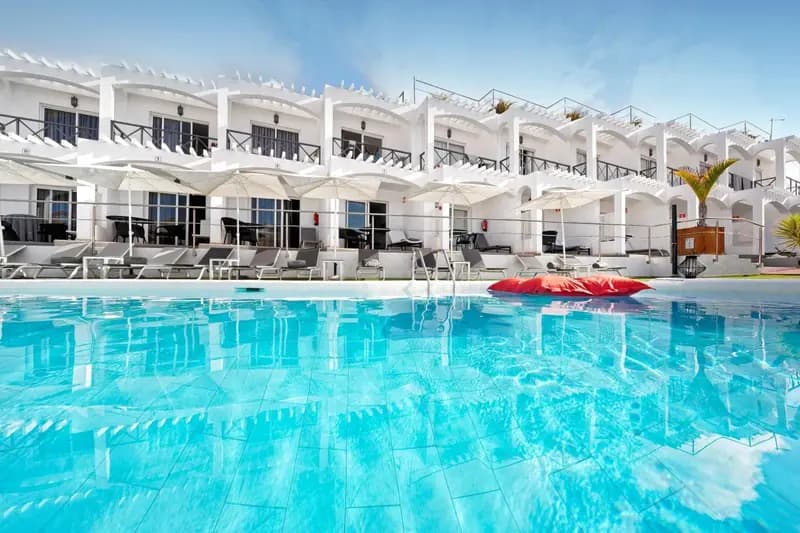
Vista Bonita - Gay and Lesbian Only Resort
★★★
★ 9.4/10 (665 reviews)
less than 1 km away as the crow flies
Dive centre · Gran Canaria · Canary Islands
4.595 Google reviewsDive the volcanic reefs and historic wrecks of Gran Canaria with a PADI 5 Star centre established in 1996.
For subtitles in English: start the video firstthen click the gearat the top right of the video, select “Subtitles/CC”, then “Auto-translate” and choose “English”.
Calypso Dive Center has been a fixture of the Gran Canaria diving scene since 1996. Situated at the front of the Hotel Dunas Mirador Maspalomas Sonnenland, the centre serves as a professional hub for divers looking to explore the diverse underwater topography of the Canary Islands.
The local waters offer a striking variety of environments, from the shallow, sandy bays of Arinaga to the deep, complex volcanic labyrinths near Las Palmas. This variety allows for everything from relaxed reef explorations to more advanced drift dives and wreck penetrations.
As a PADI 5 Star centre, Calypso provides a high level of professional instruction and safety. The team is experienced in guiding divers through various environments, including marine reserves and wreck sites.
Communication is straightforward for international visitors, as the instructors speak English, Spanish, German, French, and Italian. This multilingual approach ensures that training and dive briefings are clearly understood by a diverse range of divers.
The training programme covers the entire PADI spectrum, beginning with the Bubblemaker and Scuba Diver courses for those new to the water. For those working towards their initial qualifications, the Open Water Diver course is the standard starting point.
Advanced training is extensive, with courses including the Advanced Open Water Diver, Rescue Diver, and Divemaster levels. Specialist training is also available to refine skills, such as the PADI Peak Performance Buoyancy, Deep Diver, Wreck Diver, and Night Diver courses. The centre also offers environmental specialities like Project AWARE Specialist and Coral Reef Conservation.
The centre provides full equipment hire for those not travelling with their own kit. This includes wetsuits, fins, masks, and BCDs. While complete kit is included in the price of most dives and courses, divers should note that dive computers are rented separately.
For those using personal equipment, a discount is available on items such as BCDs, regulators, wetsuits, fins, masks, and computers. Nitrox is available on-site for divers looking to extend their no-decompression limits.
Marine Reserve Arinaga 'El Cabron' is a premier site for those with Advanced Open Water certification. This rocky platform descends to 23 metres and is famous for its high concentration of marine life within its caves and crevices.
Volcanic Labyrinth La Cathedral offers a scenic experience for Advanced Open Water divers. The site features a network of large vaults and corridors, with a siphon at 10 metres leading into a complex system of volcanic passages.
Wreck Meteor II El Pajar provides an engaging exploration for Advanced Open Water divers. This vessel, sunk in 2003, remains largely intact in its original position, allowing you to enter through the hatch to see the interior.
Artificial Reef Biotopos in Arguineguin is a rectangular platform suited for Advanced Open Water divers. The site features a basaltic tongue surrounded by sand, where you can find various rays and passing pelagics like tuna.
And some of the dive sites the centre runs.
The reefs and volcanic structures are home to a diverse array of fish. You will regularly encounter Dusky grouper (Epinephelus marginatus), Groupers (Epinephelus), and various species of Moray eel (Muraenidae). Schools of fish such as Jacks (Carangidae), Amberjack (Seriola), and Damselfish (Pomacentridae) are common, alongside colorful species like Angelfish, Triggerfish (Balistidae), and Wrasse (Labridae).
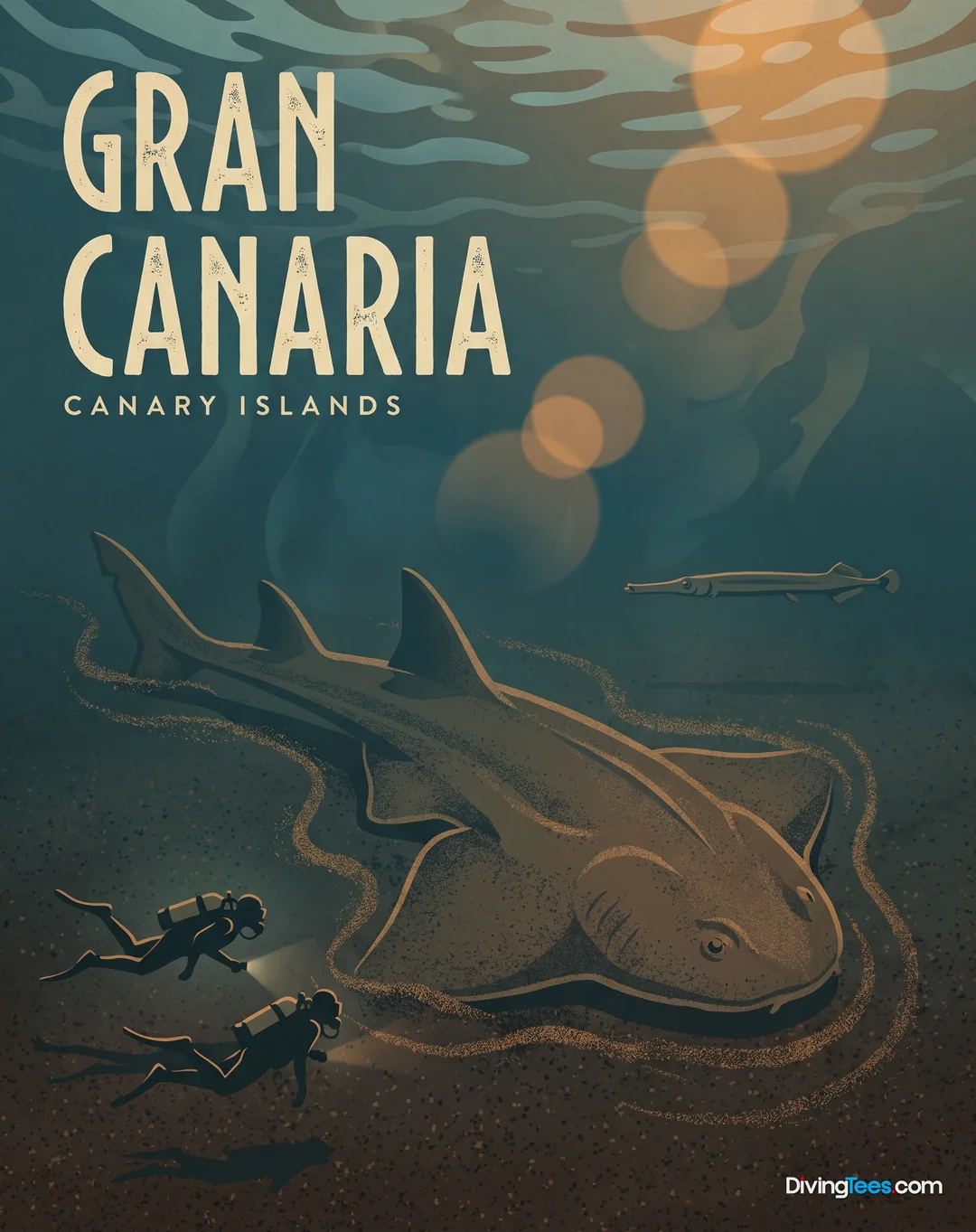
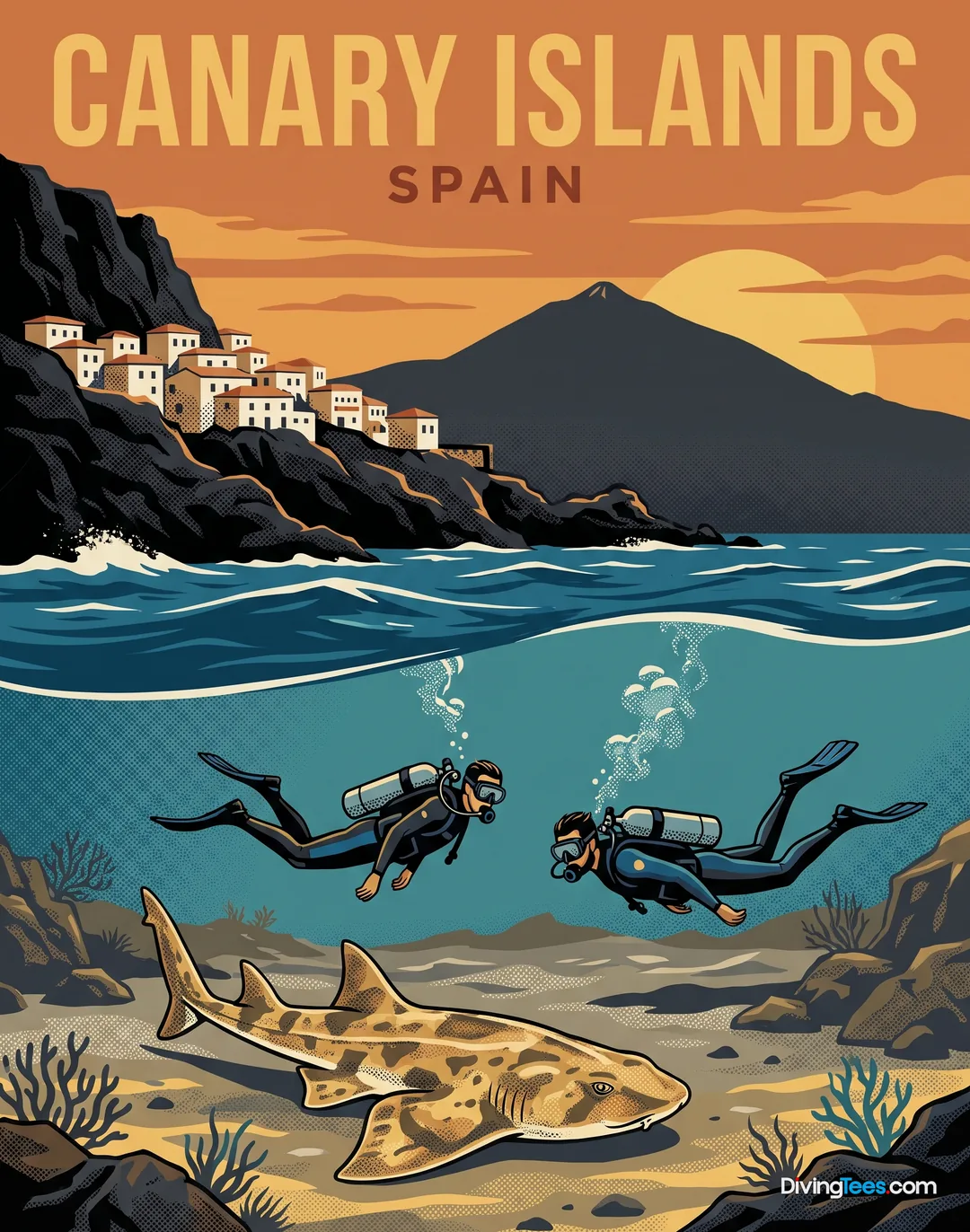
On the sandy patches and around the reef edges, look for different types of rays, including Angel sharks (Squatina), Stingrays (Batoidea), and Electric rays (Torpedinidae). You may also spot various species of Sea bream (Sparidae), such as striped red mullet, and larger pelagics like Tuna (Thunnus) passing through the area.
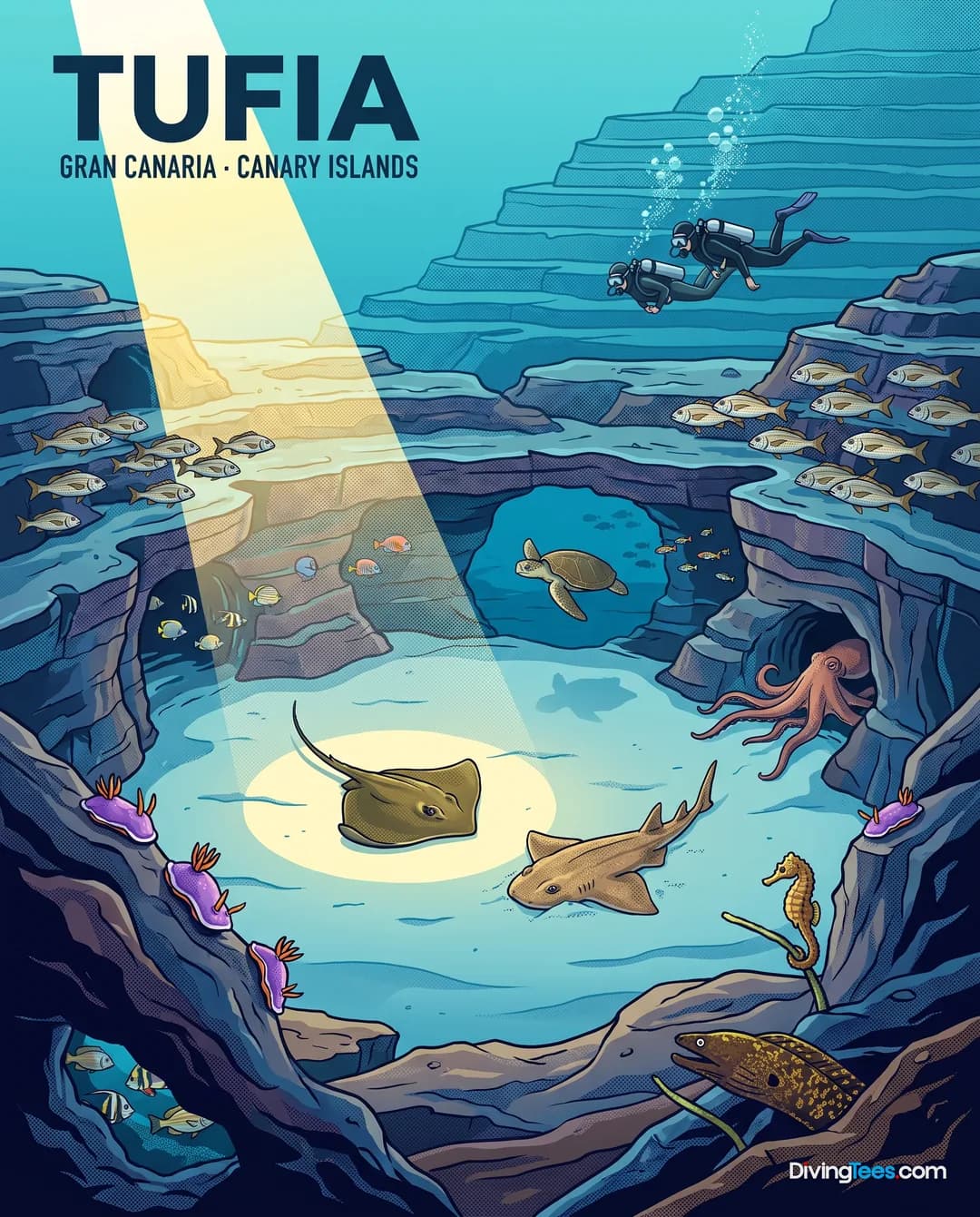
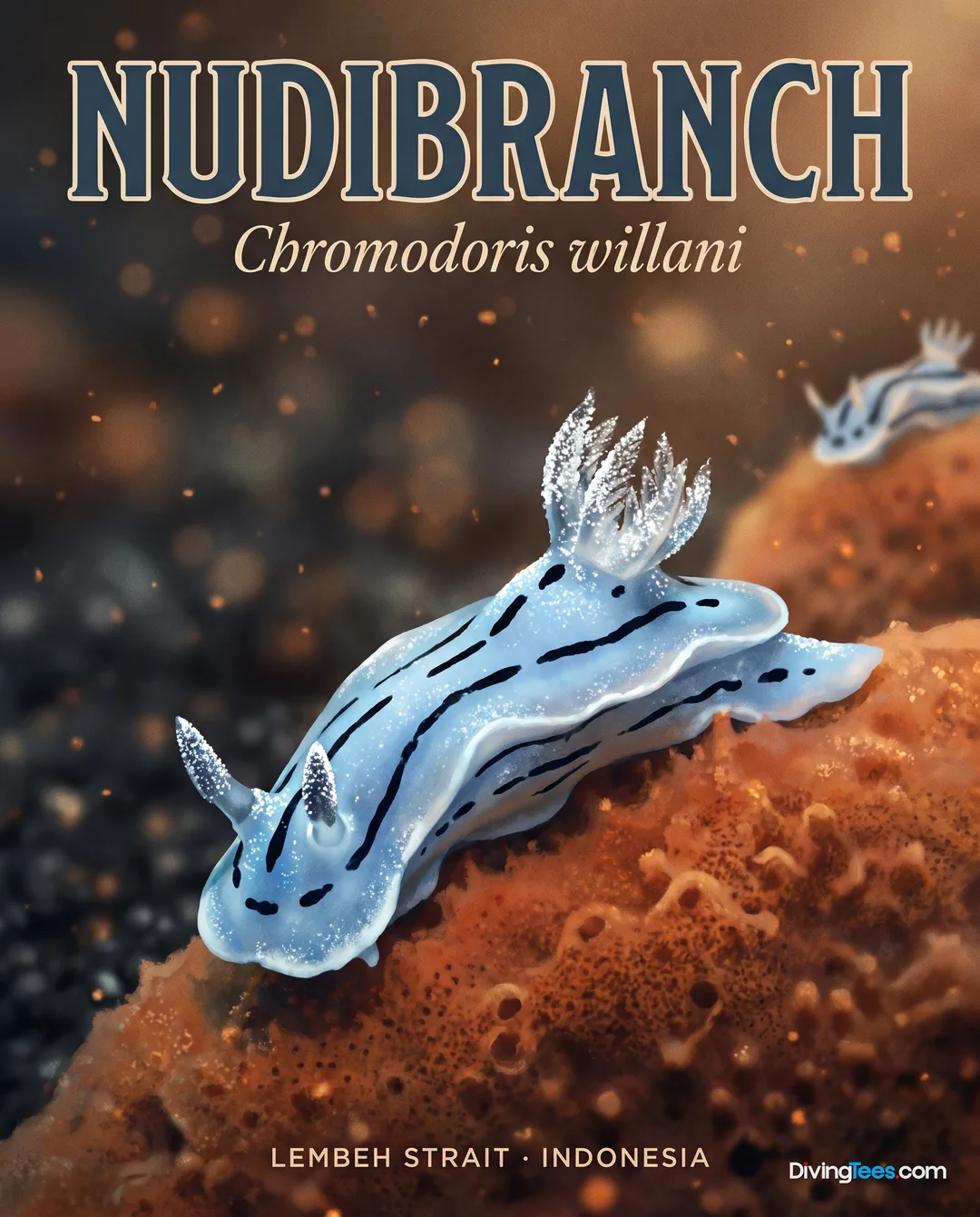
For those interested in macro life, the crevices and corals host many interesting invertebrates. Keep an eye out for Nudibranch (Chromodoris willani), Octopus (Octopus vulgaris), Cuttlefish (Sepiidae), and various crustaceans like shrimp and crabs. The seabed is also decorated with hard and soft corals, gorgonians, and sea anemones (Actiniaria).
Diving in the area can involve varying conditions depending on the specific site. Some locations, such as the El Cabrón reef, can experience currents, while others like the Arinaga beach sites are often more tranquil.
The volcanic sites and wrecks may require checking local conditions before heading out, particularly regarding swell and water movement in the more exposed areas.
Hello, I'm Marina, DivingDeal.com's AI assistant. I answer in detail about hotels, dive centres and liveaboards.

Thinking about the whole trip and the flights? Talk it over with Edith →
Marina is an AI. Some links are affiliate links: DivingDeal may earn a commission, at no extra cost to you. Bookings are made with the partner.
★★★
★ 9.4/10 (665 reviews)
less than 1 km away as the crow flies
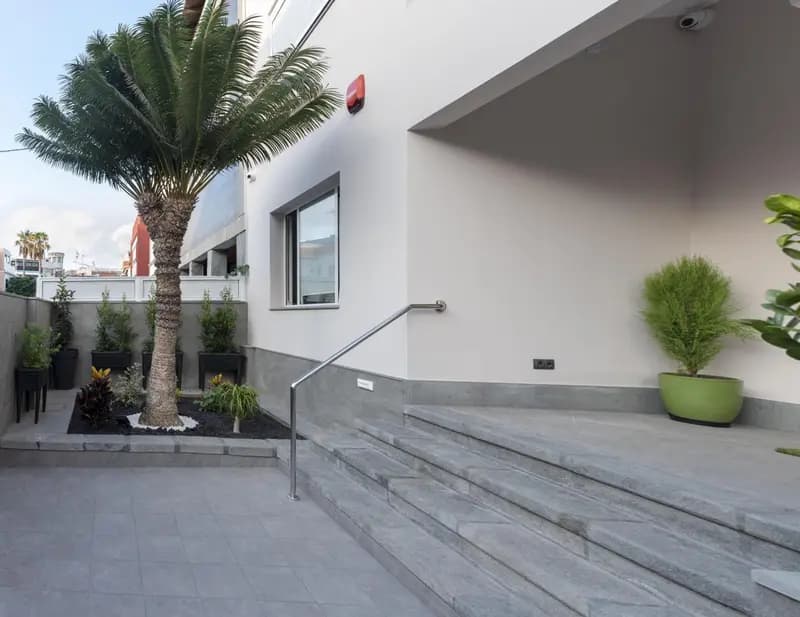
★ 9.4/10 (509 reviews)
44 km away as the crow flies
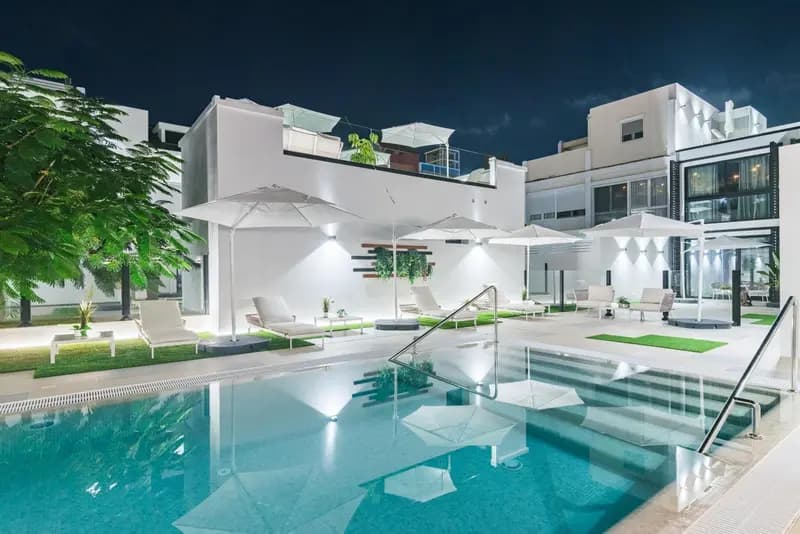
★★
★ 9.2/10 (851 reviews)
43 km away as the crow flies
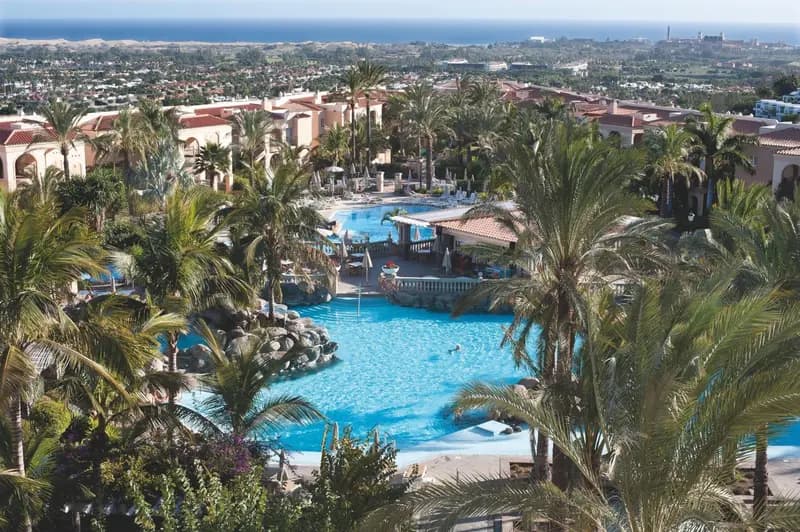
★★★
★ 9/10 (3,707 reviews)
less than 1 km away as the crow flies
Your last day stays dry: no diving in the 18-24 hours before a flight the perfect window to see the destination from another angle.
 Adventure
⏱ 3 h · ★ 5.0 (72 reviews)
from €224
see on Viator ↗
 Culture
⏱ 9 h · ★ 5.0 (64 reviews)
from €229
see on Viator ↗
 Culture
⏱ 7 h · ★ 5.0 (56 reviews)
from €1,000
see on Viator ↗
 Nature
⏱ 5 h · ★ 5.0 (25 reviews)
from €90
see on Viator ↗
Ratings and reviews collected by Viator and Tripadvisor.