
Margullar Diving
Google 5/5 (693 reviews)
less than 1 km away as the crow flies
Gran Canaria · Canary Islands · Atlantic
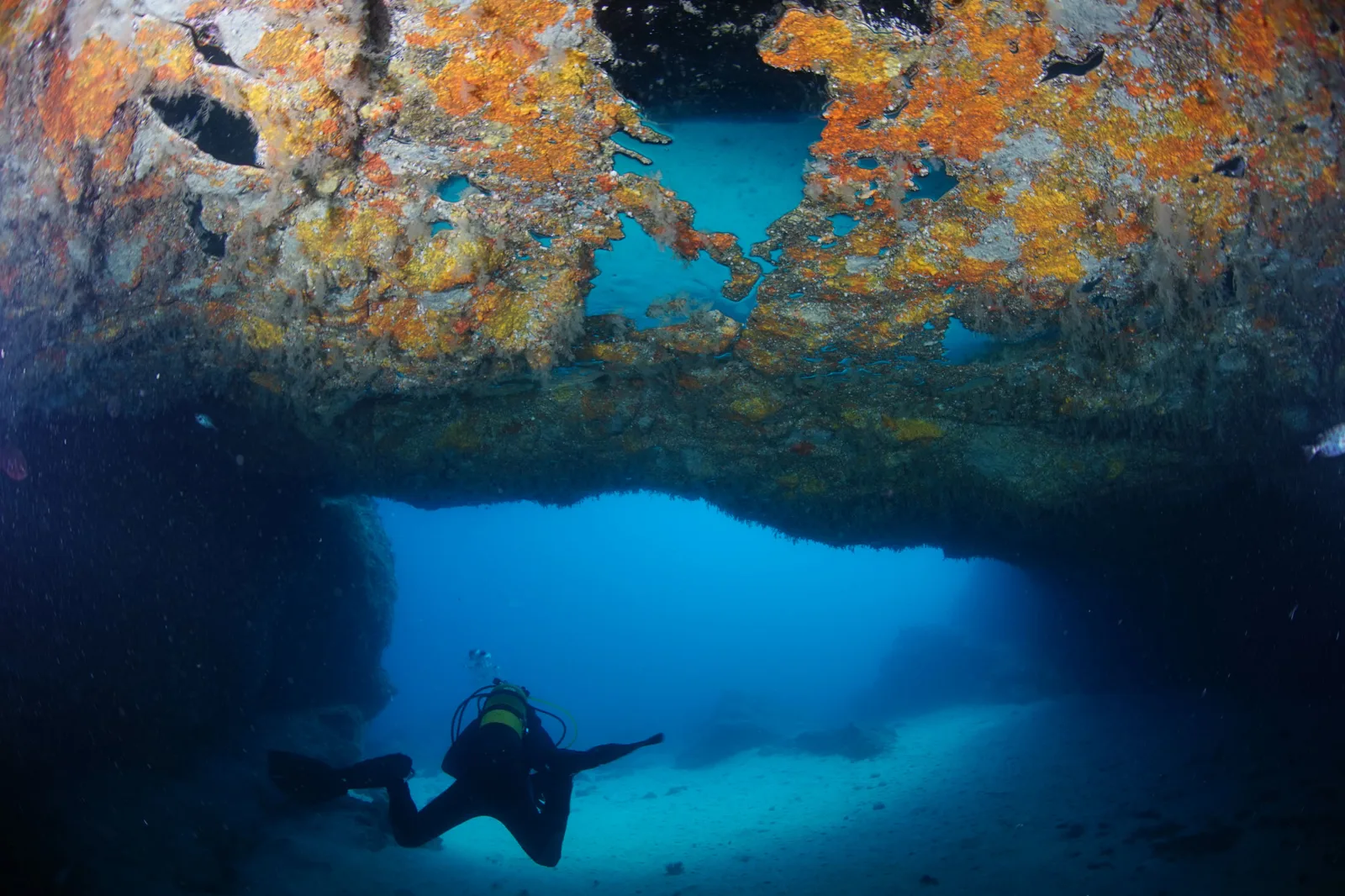
Max. depth · 22 mDescend into the 'aquarium' of Risco Verde, where volcanic formations create an illuminated habitat teeming with marine life, easily accessible from shore.
For subtitles in English: start the video firstthen click the gearat the top right of the video, select “Subtitles/CC”, then “Auto-translate” and choose “English”.
Risco Verde sits at the northern end of Arinaga beach in Gran Canaria, a natural reef reflecting the island's volcanic origins. The site's geology, devoid of significant sand, contributes to its consistently excellent visibility, often referred to as an underwater aquarium. Access is straightforward, with a designated parking area directly for divers and a simple entry point from the shoreline, either via a sandy beach or stairs from the promenade.
The dive profile at Risco Verde is generally shallow, catering to a range of experiences. You begin in depths around 6 to 7 metres, where the sunlight penetrates fully, illuminating the vibrant volcanic structures. This initial zone is where many discover the site's rich biodiversity, making it a frequent choice for introductory dives and refreshers. Even at these shallow depths, the volcanic terrain provides ample shelter and foraging grounds for smaller species.
As you move further out, the maximum depth reached is typically between 17 and 22 metres, depending on the specific route taken. This gentle slope allows for extended bottom times and a gradual exploration of the reef. The deeper sections still retain good light, thanks to the inherent clarity of the water, and continue to present the same structured volcanic landscape that defines the shallower parts of the site.
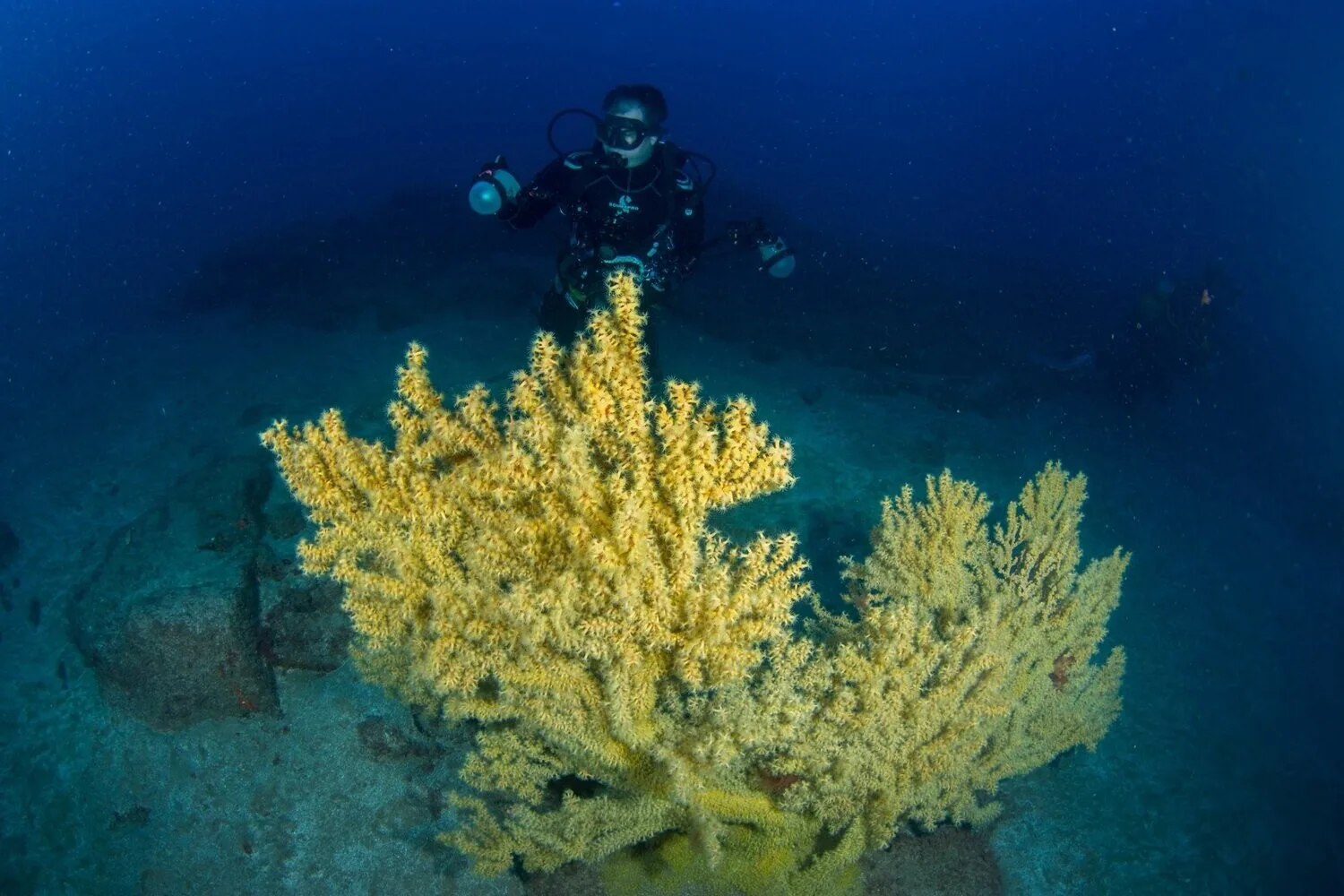
The marine life here is varied and often colourful. You'll encounter schools of both blue damsel and Atlantic damsel fish flitting amongst the rocks. Parrotfish and Turkish wrasse are common grazers, alongside pufferfish and striped red mullet. As you navigate the reef, look into crevices for octopus and cuttlefish, while spider crabs camouflage themselves against the volcanic substrate. Moray eels are resident, observing from their hideouts in the volcanic rock.
Risco Verde also attracts larger pelagic visitors. While not a consistent occurrence, barracuda patrol the middle waters, and eagle rays glide through on occasion. Schools of tunas and amberjacks are also reported, particularly in the outer reaches of the site, indicating the reach of the local marine currents and the abundance of smaller schooling fish that draw them in.
The site is also known for its invertebrate life. Spirographs are visible, their delicate crowns extended to filter feed. For those with a keen eye, spiny pufferfish blend into the surroundings. The general profusion of fish, from small schools to individual reef dwellers, contributes to the 'aquarium' nickname and makes Risco Verde a popular spot for underwater photography, particularly given the consistent light penetration.
One distinct feature of Risco Verde is its suitability for night diving. With easy entry and generally sheltered conditions, the site transforms after sunset, offering a different perspective on the resident fauna. nocturnal species emerge, and the reef takes on a new character under the beam of a dive light, making it a secure environment for experiencing the transition from day to night underwater.
Risco Verde offers a dive depth between 6 and 22 metres. While some sectors are suitable for Open Water Divers for entry-level experiences and training, the full site, especially its deeper sections, is best suited for advanced divers with experience. The current is consistently reported as weak, supporting its reputation as a calm site. Visibility remains excellent year-round, making it a reliable choice regardless of the season.
You can dive Risco Verde in any season because visibility remains excellent year-round. The clear water and volcanic reef allow strong light penetration, including in the deeper sections. Risco Verde is also suitable for night diving, when nocturnal species emerge and the reef takes on a different character under your dive light.
You begin Risco Verde in shallow water around 6 to 7 metres, making some sectors suitable for Open Water Divers, introductory dives, refreshers, and training. Routes can reach between 17 and 22 metres, while the full site, especially its deeper sections, is best suited to advanced divers with experience.
You can enter Risco Verde easily from the shore, using either the sandy beach or stairs from the promenade. The site has a designated parking area for divers and is generally sheltered. The current is consistently reported as weak, supporting calm diving conditions as you explore the volcanic reef.
At Risco Verde, you can see blue damsels, Atlantic damsels, parrotfish, Turkish wrasse, pufferfish, striped red mullet, octopus, cuttlefish, spider crabs, moray eels, and spirographs among the volcanic rocks. Barracuda and eagle rays appear occasionally, while tunas and amberjacks are reported particularly in the outer reaches.