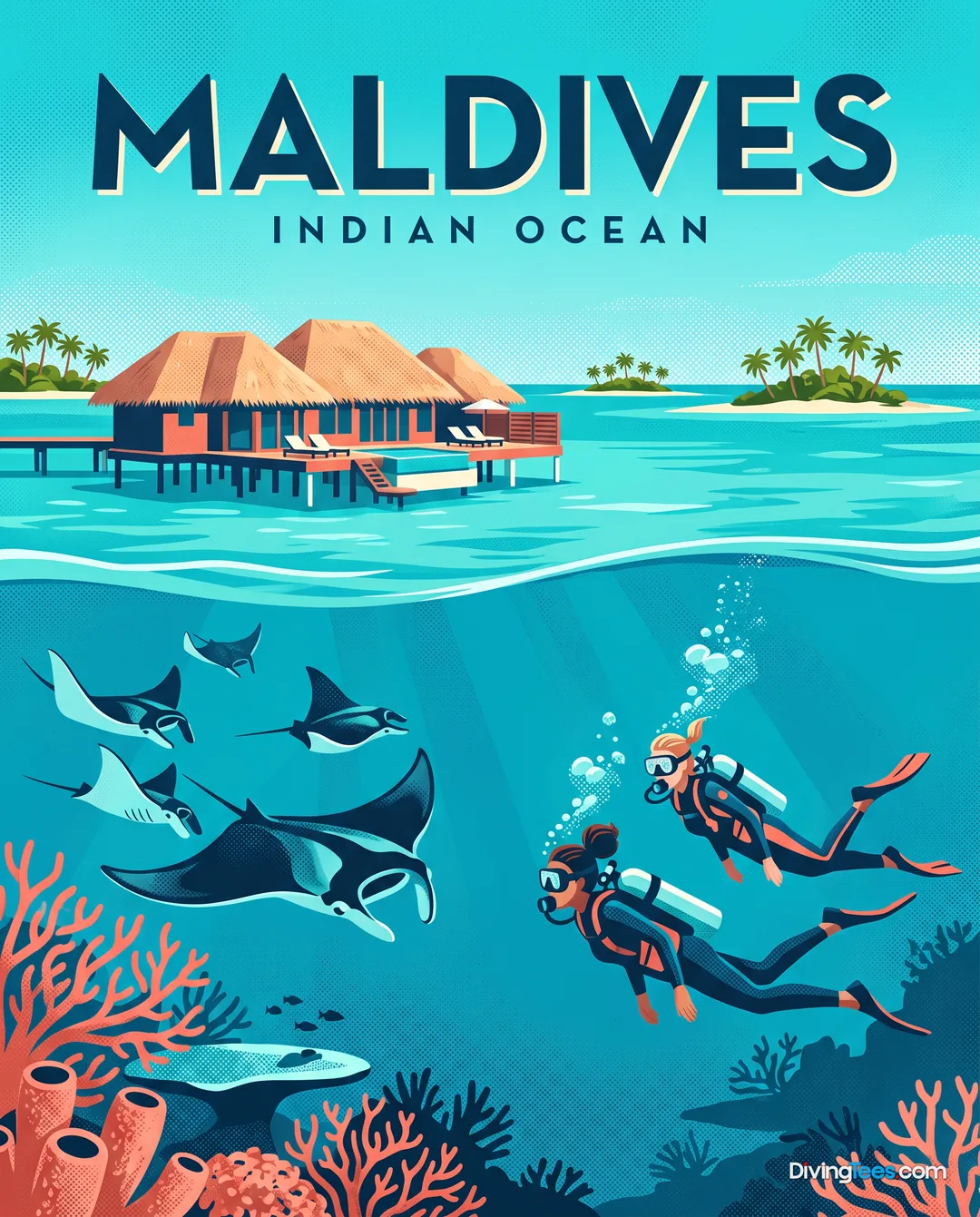
Liveaboards · Maldives
Seafari Explorer 2 — a spacious Maldives liveaboard built around serious diving
What makes this boat unique
- Seafari Explorer 2 visits the northern, central and southern atolls of the Maldives, depending on the itinerary.
- Free nitrox is available to certified divers, with 12-litre tanks and weights included in the dive package.
- The boat has 14 air-conditioned cabins, private bathrooms, sea views and an accessible balcony.
- The dive programme includes channels, thilas, pinnacles and outer reefs, with mantas, sharks and whale sharks among the possible encounters.
- Local crew members speak English, and snorkellers and non-divers are welcome aboard.
For subtitles in English: start the video firstthen click the gearat the top right of the video, select “Subtitles/CC”, then “Auto-translate” and choose “English”.
The invitation
Seafari Explorer 2 makes sense for divers who want one boat capable of reaching very different parts of the Maldives. One departure can focus on the central atolls and their channels; another can run north toward Baa, or south toward the pelagic sites around Ari and beyond. Free nitrox removes one recurring cost for certified nitrox divers, while the included dive package keeps the practical side simple. The reason to choose this boat over a smaller, more basic liveaboard is the combination of space, broad routing and a local crew that knows the reefs as working waters rather than as a postcard. It suits a diver who wants sharks and mantas, but also wants enough room to eat properly, dry kit, sit in the shade and sleep in an air-conditioned cabin between dives.
Boarding
The first impression is a proper expedition boat rather than a stripped-down diving platform. Seafari Explorer 2 was renovated in 2020, and its layout puts the useful spaces where a week of diving needs them: a dedicated dive platform, a lounge indoors, a terrace outside and a bar for the hours when nobody wants another briefing. The boat feels designed for a full complement of divers without making the whole trip about negotiating narrow passageways. Cabins are spread across lower and upper deck categories, so the choice is between location and access rather than between fundamentally different standards. Its routes range widely across the Maldivian atolls, which is the real character of the vessel: it is a base for moving through current-swept channels and reef systems, not simply a hotel anchored beside one island.
The atmosphere on board
The atmosphere is shaped more by the crew than by the boat’s decorative finish. Local staff speak English and handle the practical rhythm of transfers, meals, tenders and surface intervals, while the crew’s scores for service and food sit slightly above the score for diving itself. That is a useful distinction: the strength of Seafari Explorer 2 is the way people are looked after across a long week, not a claim that the vessel is a new-build showcase. A group of up to twenty guests is small enough for names and habits to become familiar quickly, but large enough to keep the evenings varied. After the last dive, conversation tends to move from sightings to the next route, with the bar, salon or terrace providing the meeting point. The boat’s local character is the part most likely to stay with a diver.
The sites you’ll dive
The route changes with the departure. Recorded formats include Central Atolls trips of 8 days and 7 nights, Best of Mantas trips of 11 days and 10 nights, and the Great North Expedition of 15 days and 14 nights; itineraries may cover Malé, Ari, Vaavu, Baa and the southern atolls. The sites show why the boat needs that range. Barracuda Giri drops to a maximum of -30m across three pinnacles where current brings barracudas, tunas and schooling fish. Banana Reef is a lively reef landmark with reef sharks and eagle rays. Mushimasmigili Marine Reserve reaches -30m at an up-current pinnacle known for grey reef sharks, while Dhonkalo is a manta cleaning station in a sandy channel. Maamigili and Maamigili Beiyru, both to -30m, sit in the South Ari Marine Protected Area and are visited for whale sharks and mantas. Kudarah Thila reaches -30m, with clefts, overhangs and caves full of batfish. Guraidhoo and Myaru Kandu are current channels where sharks gather; Myaru Kandu reaches -30m. Foththeyo Kandu is the deepest listed site at -40m, combining strong current, caves covered in yellow soft coral and open-ocean pelagics. Dhigalhi Haa and Dhonfanu in Baa Atoll reach -30m and add corals, mantas and a swim-through. Dhigu Thila reaches -30m, and Fushifaru Thila Marine Reserve -35m, with manta cleaning stations.
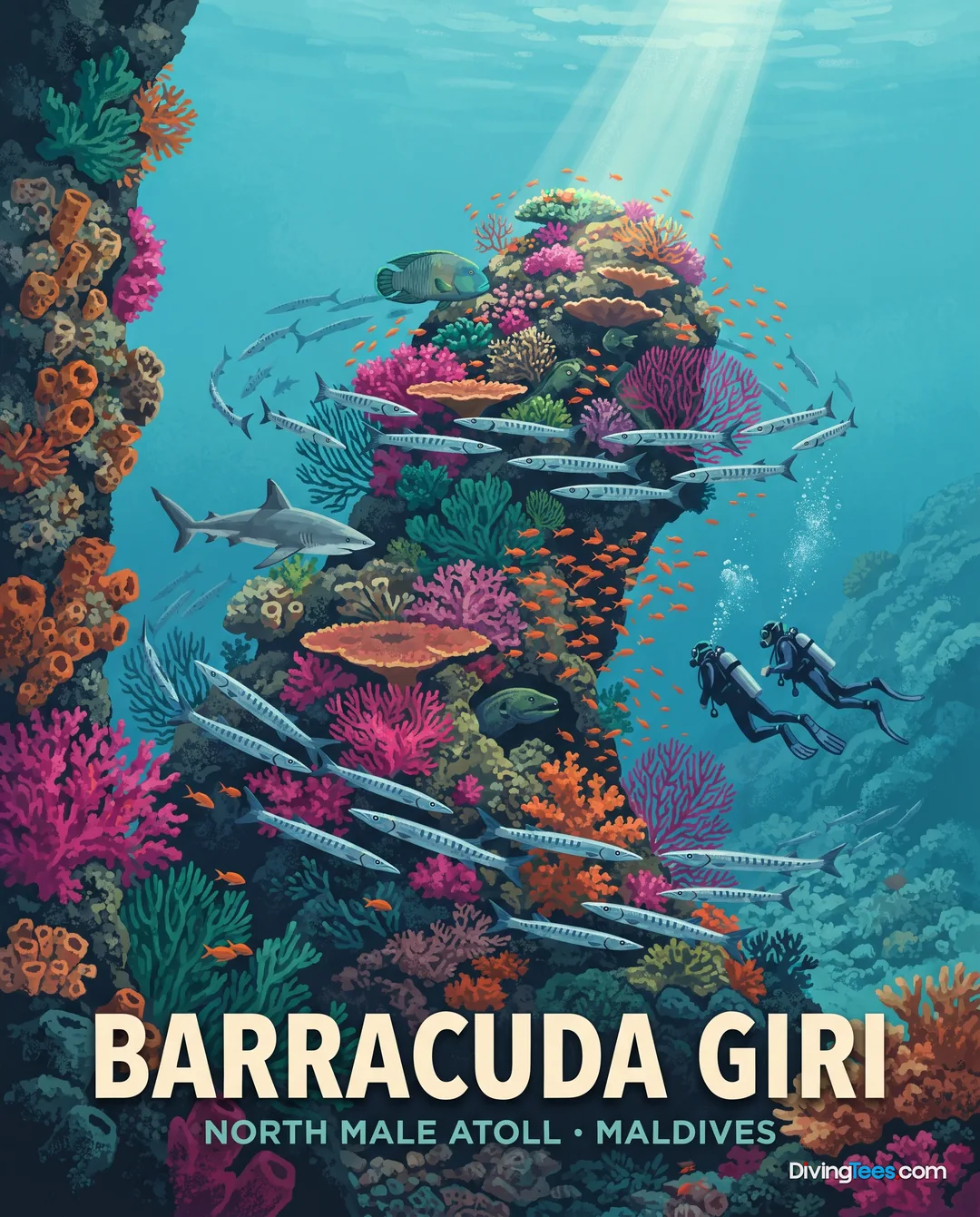
Barracuda Giri →
Max. depth · 30 m
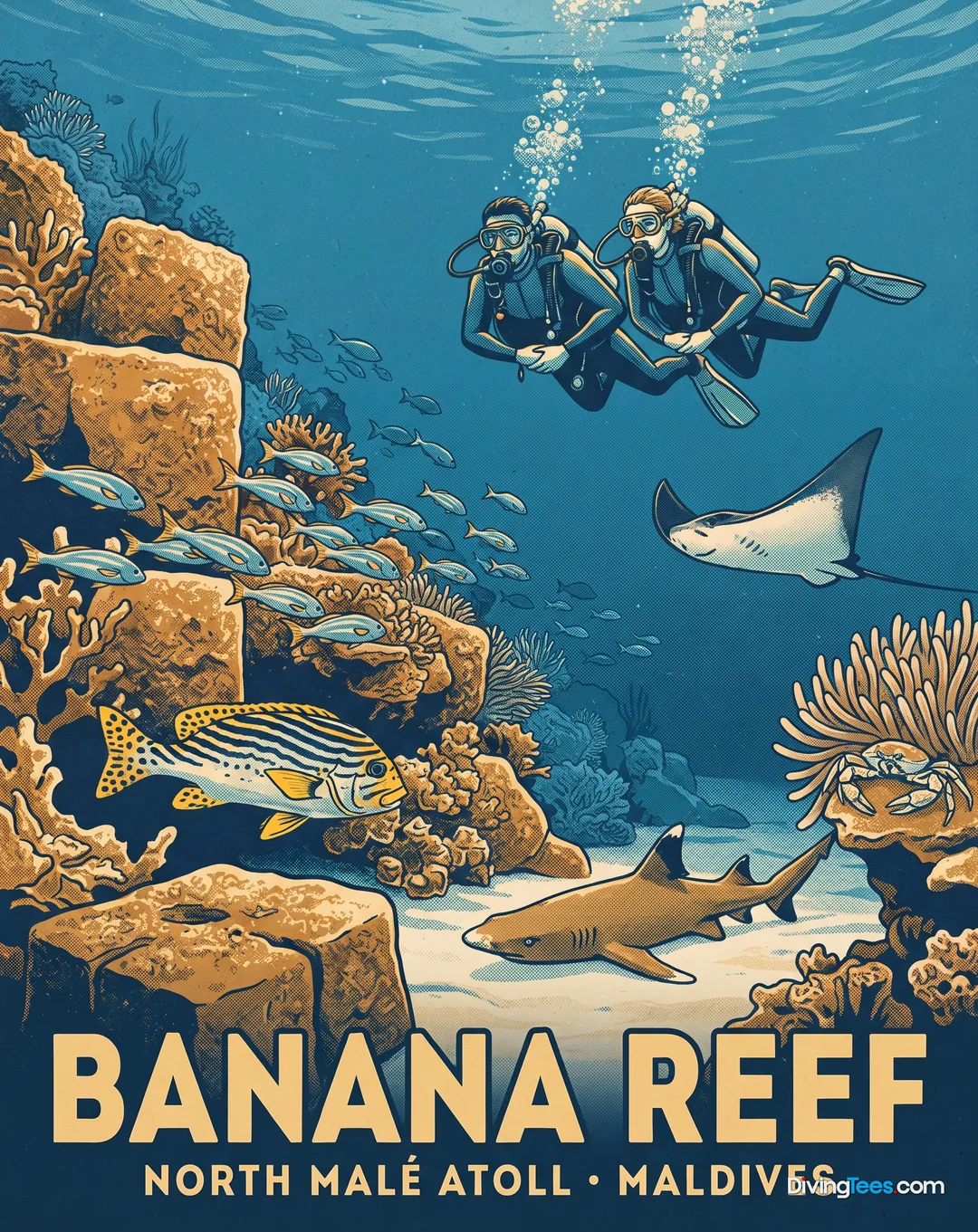
Banana Reef →
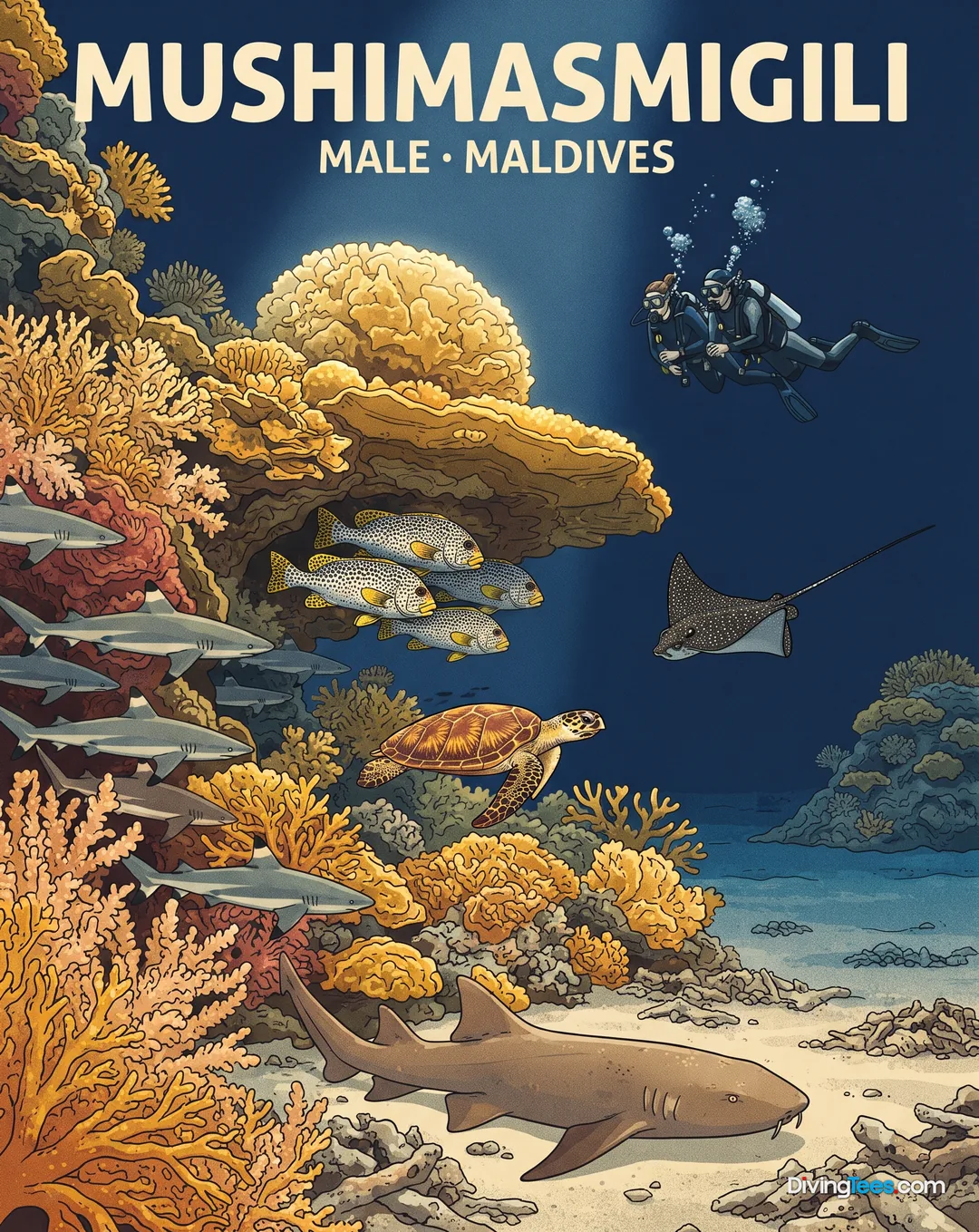
Mushimasmigili Marine Reserve →
Max. depth · 30 m
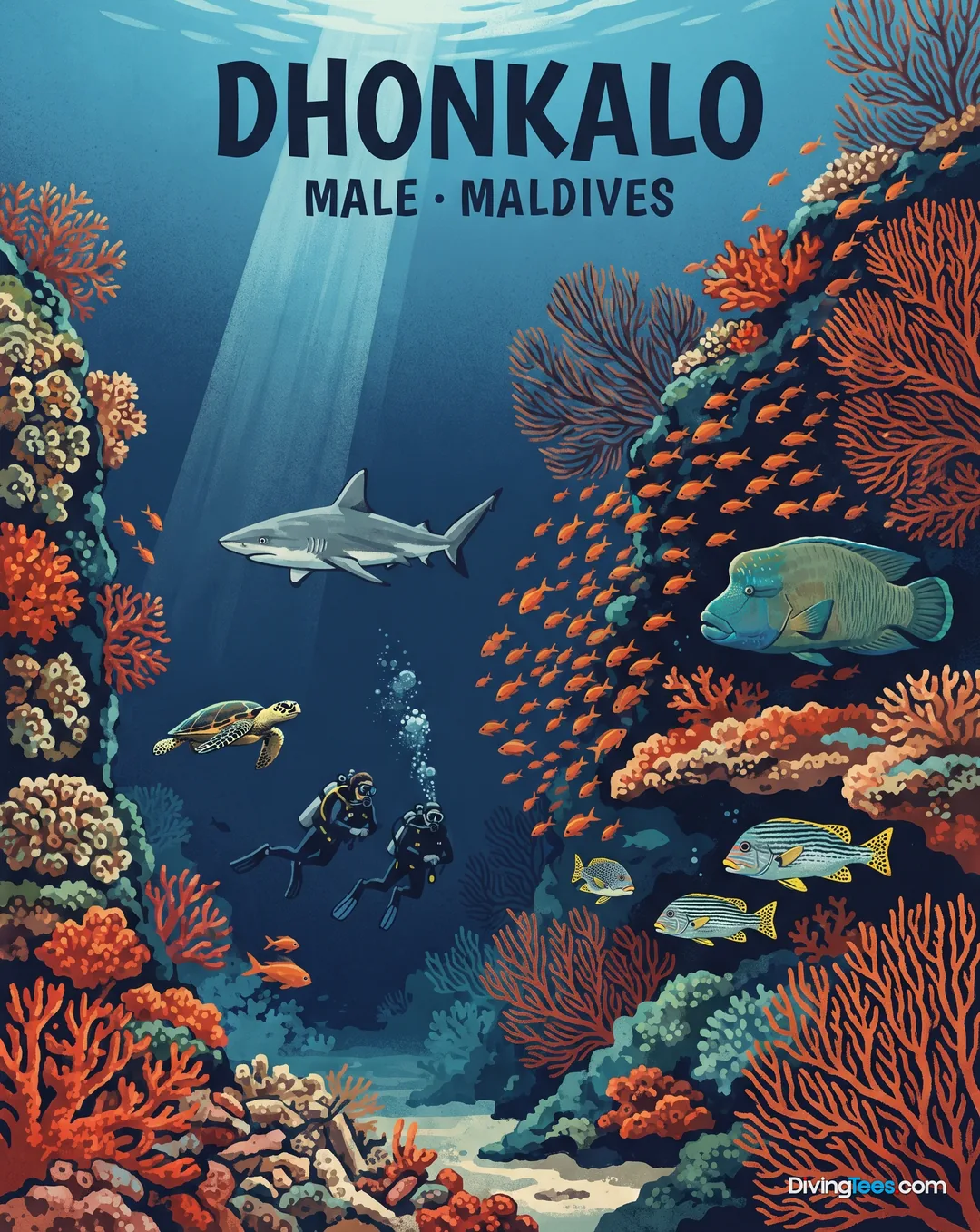
Dhonkalo →
Max. depth · 25 m
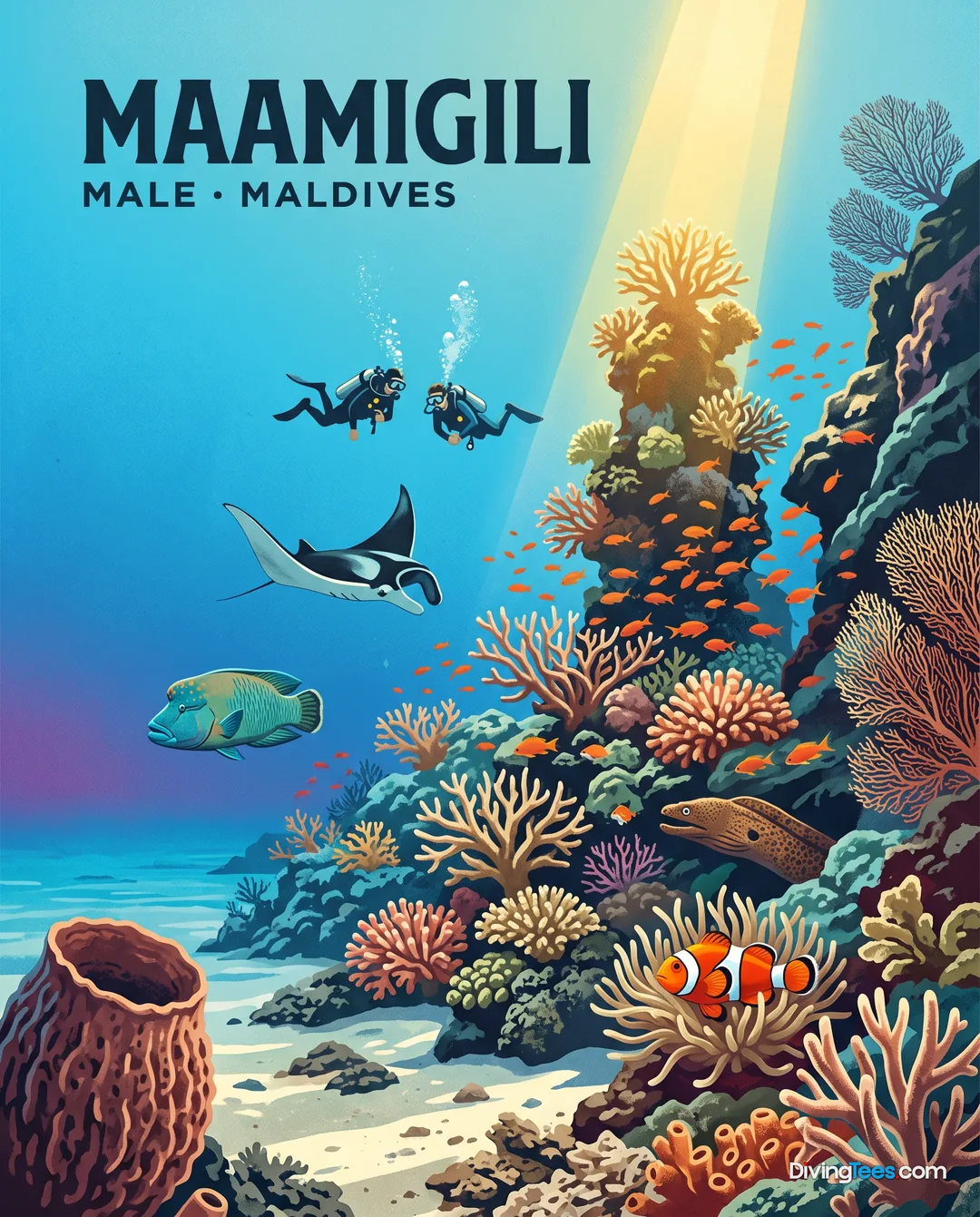
Maamigili →
Max. depth · 30 m
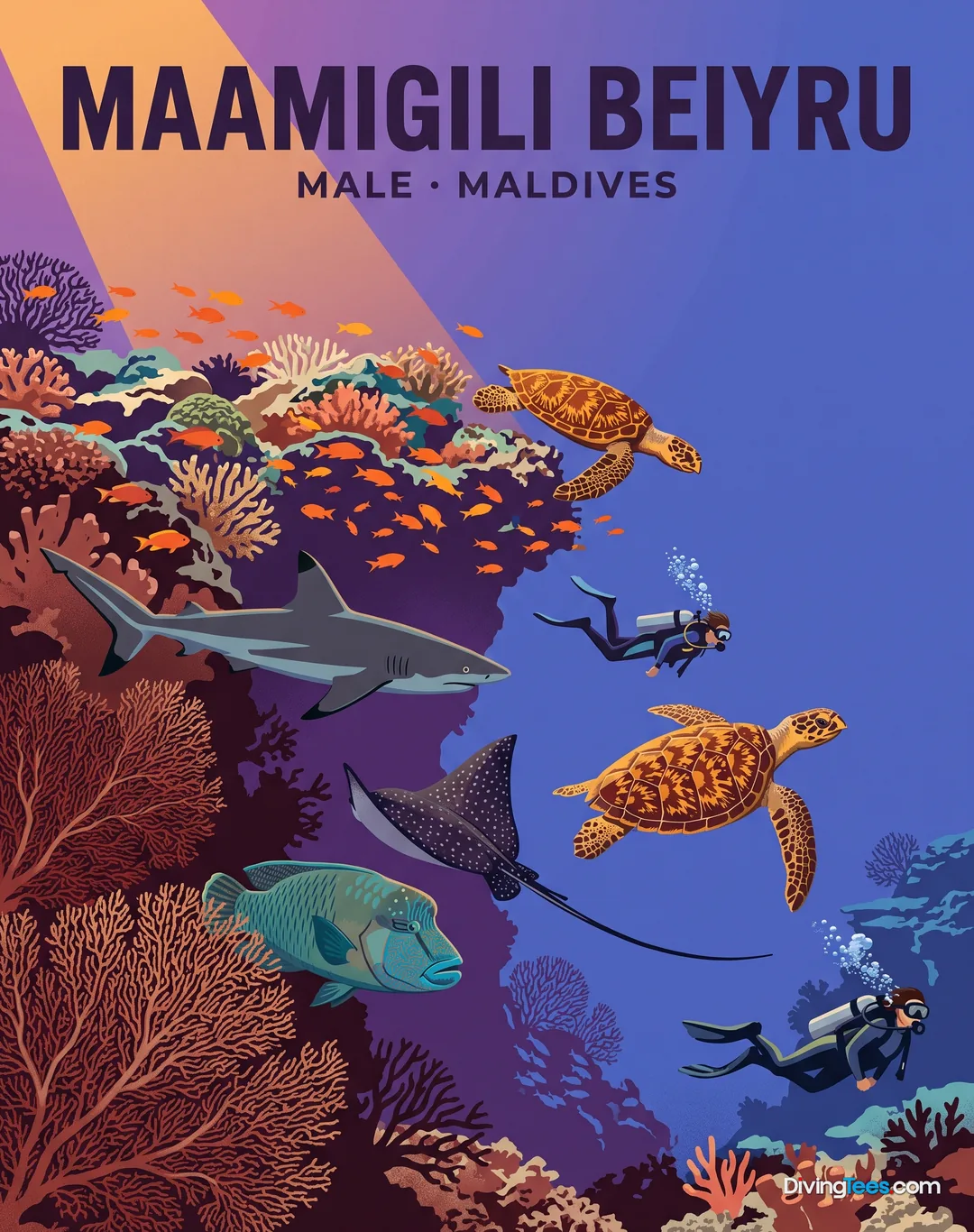
Maamigili Beiyru →
Max. depth · 30 m
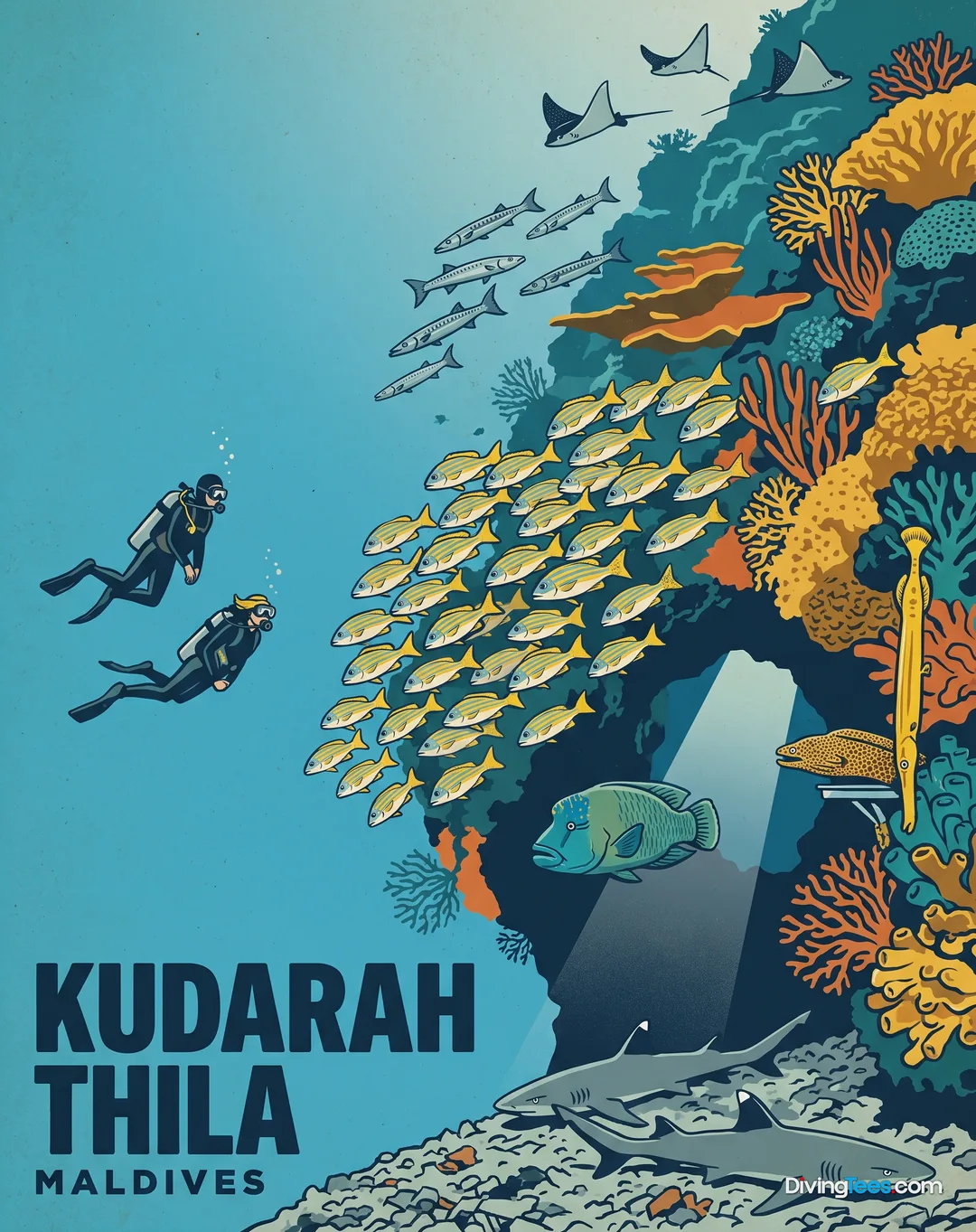
Kudarah Thila →
Max. depth · 25 m
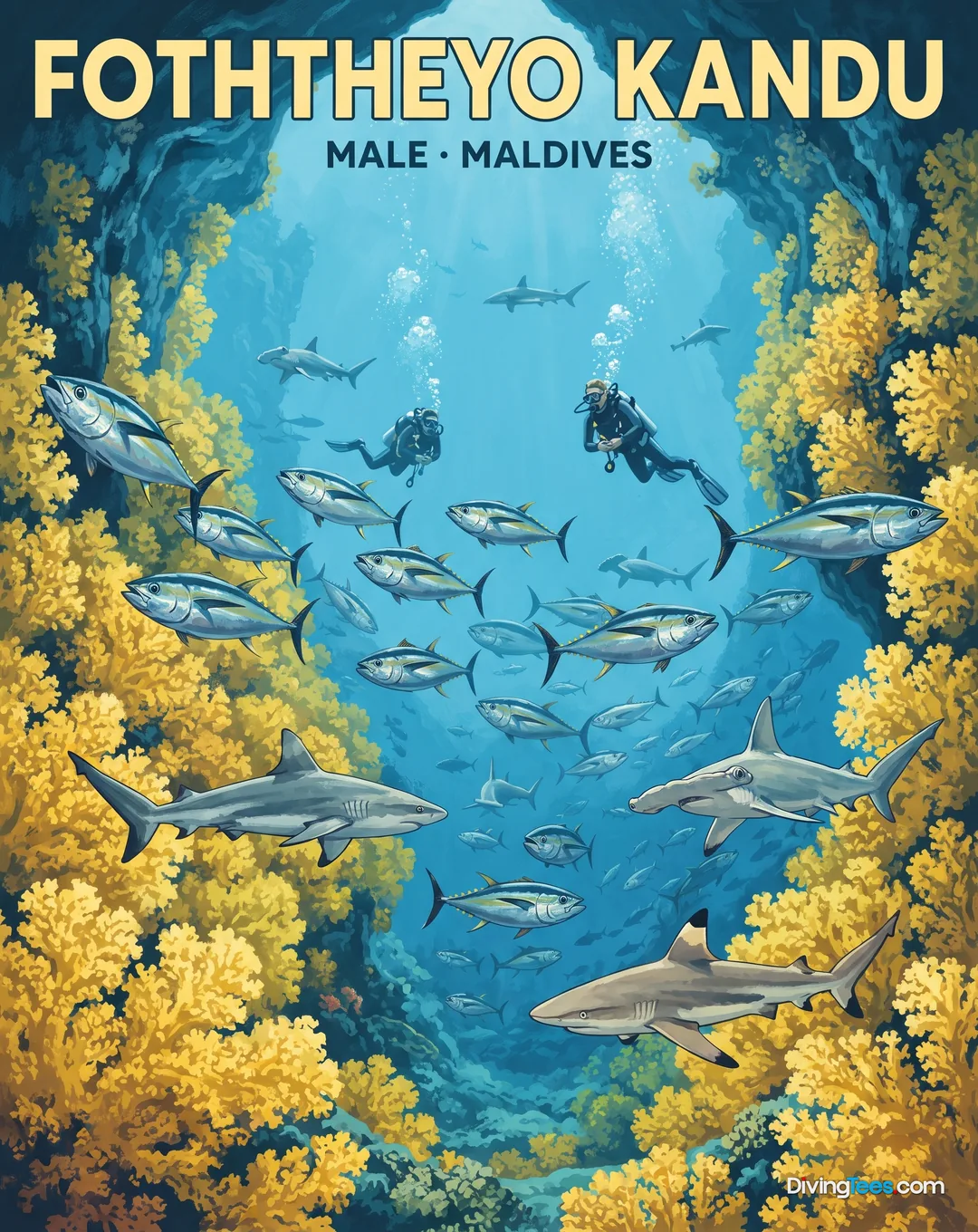
Foththeyo Kandu →
Max. depth · 40 m
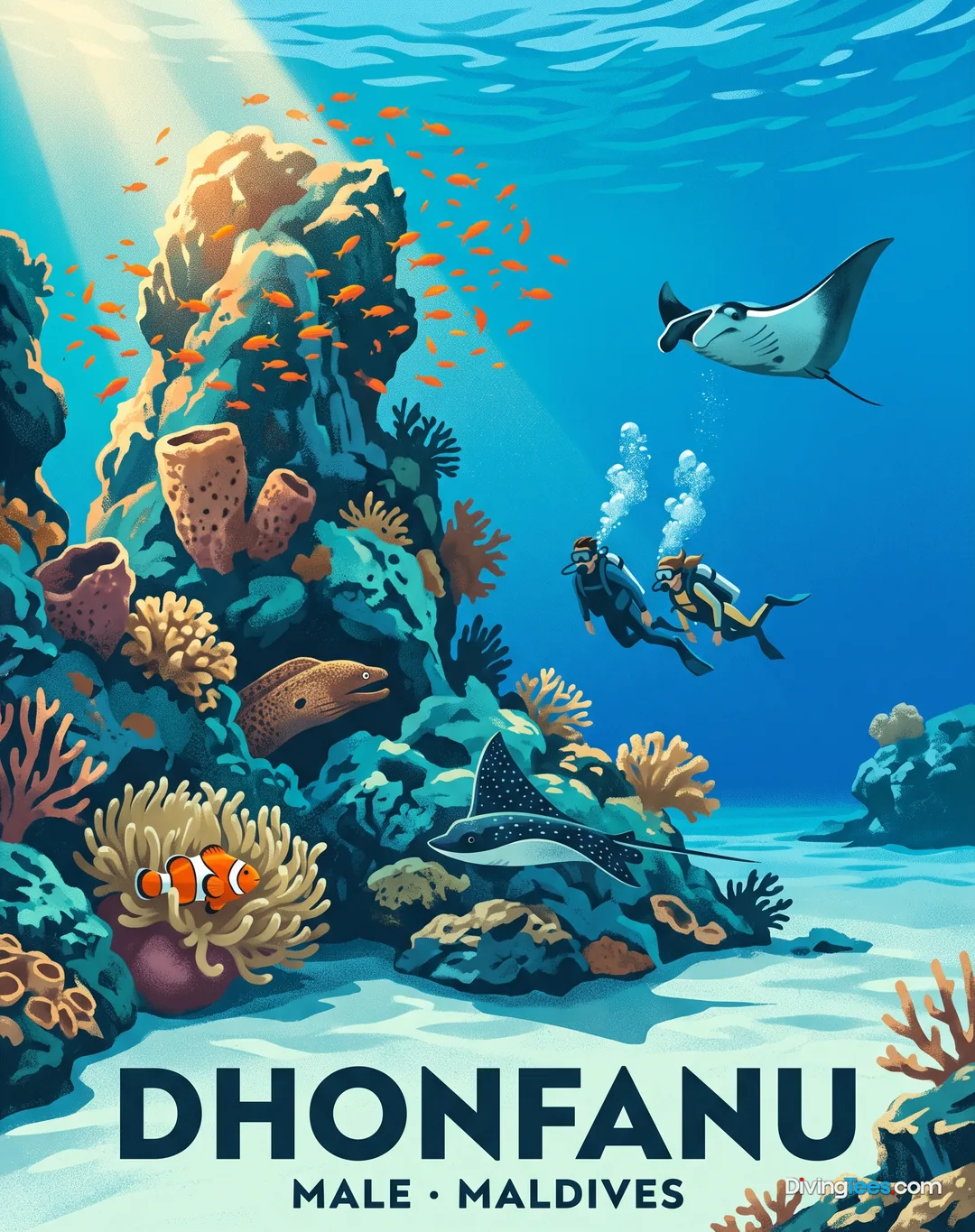
Dhonfanu →
Max. depth · 30 m
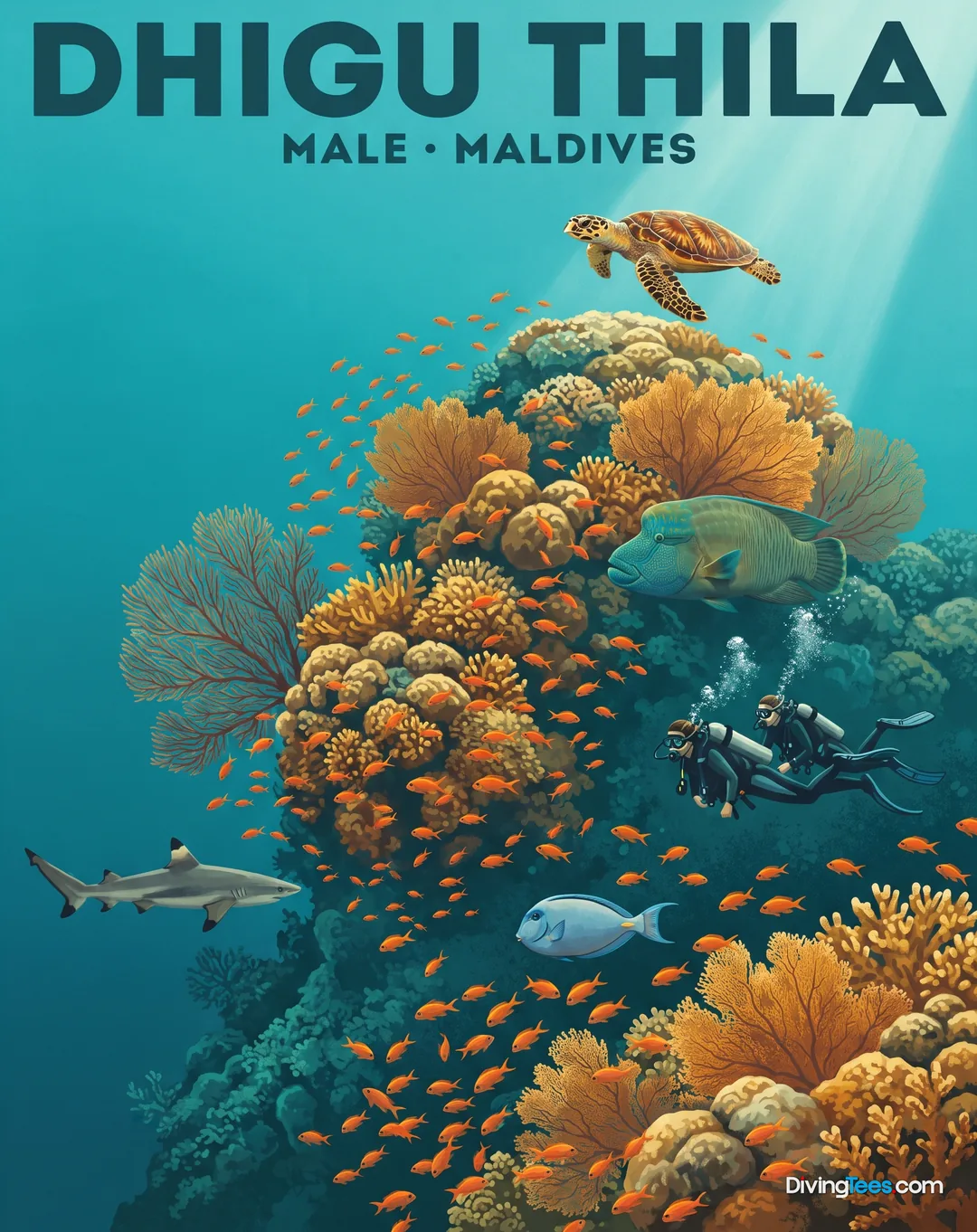
Dhigu Thila →
Max. depth · 30 m
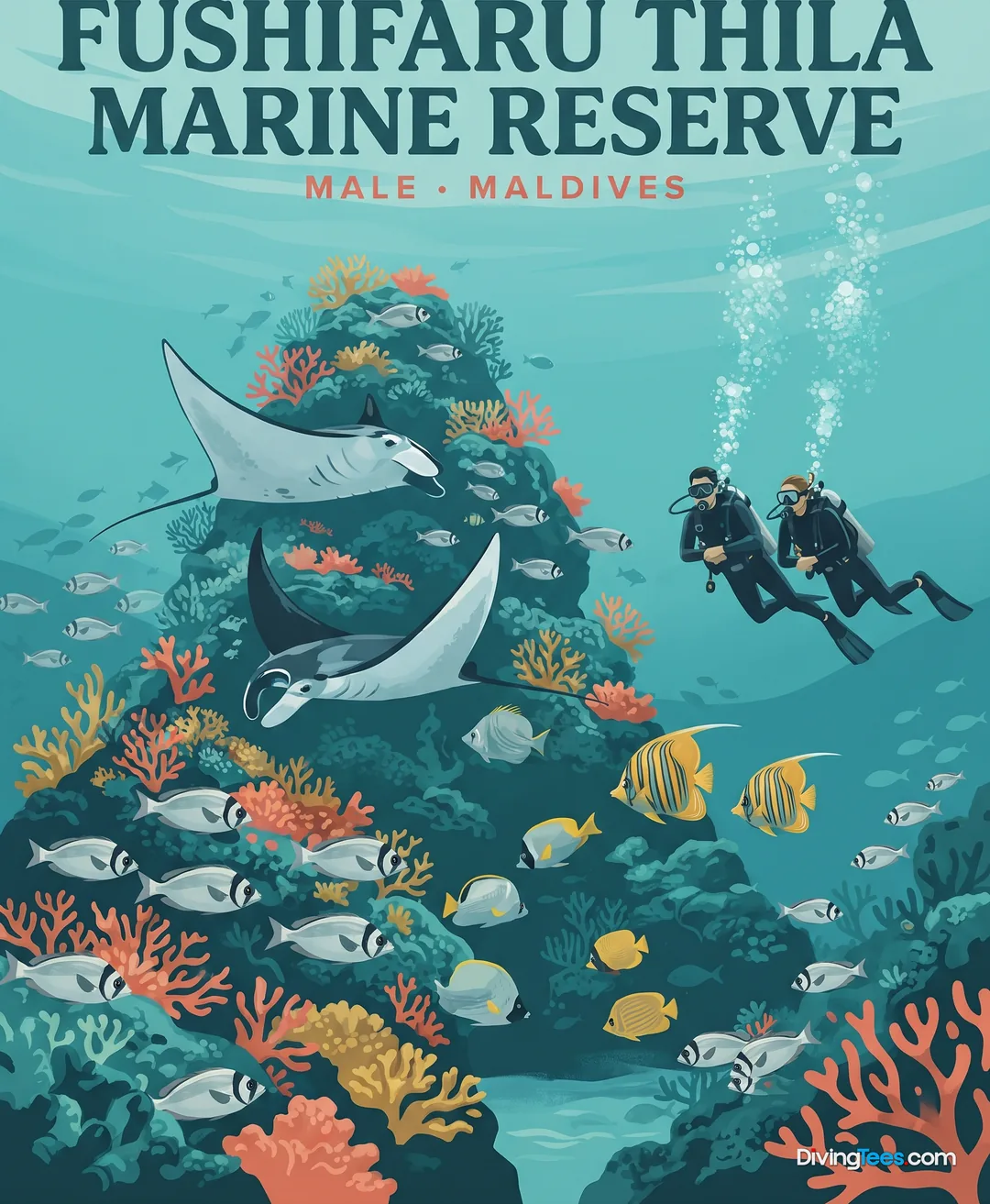
Fushifaru Thila Marine Reserve →
Max. depth · 35 m
What you’ll meet underwater
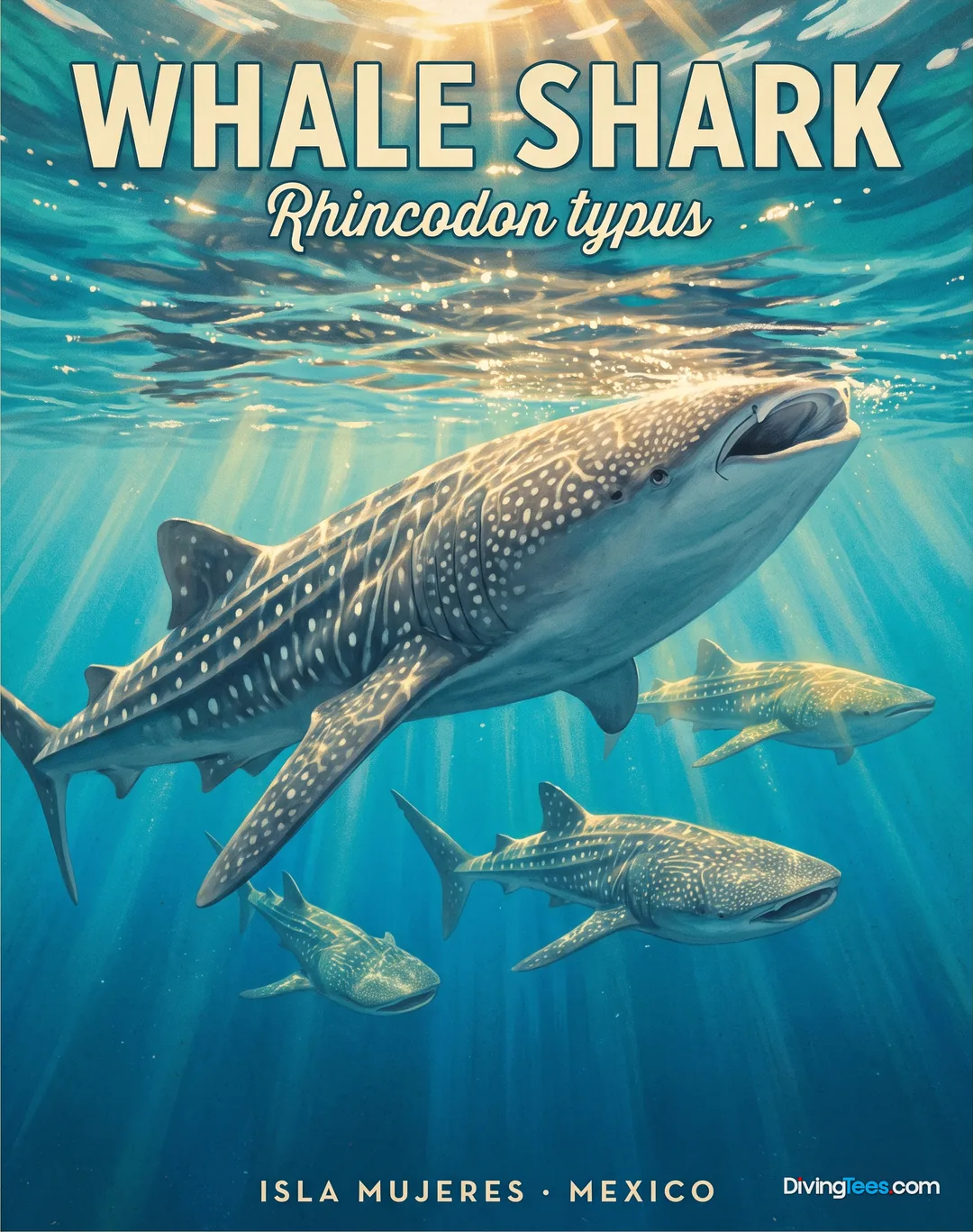
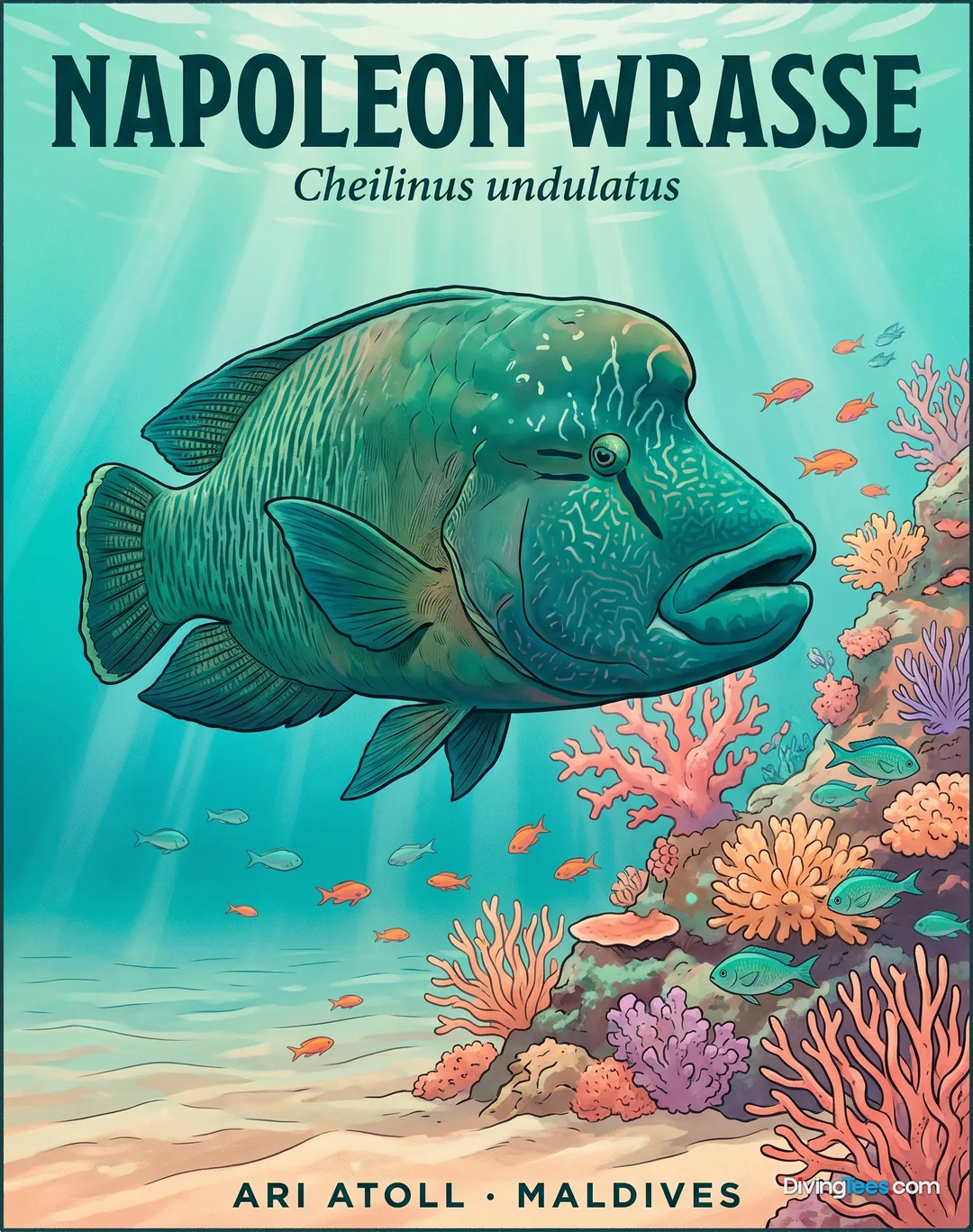
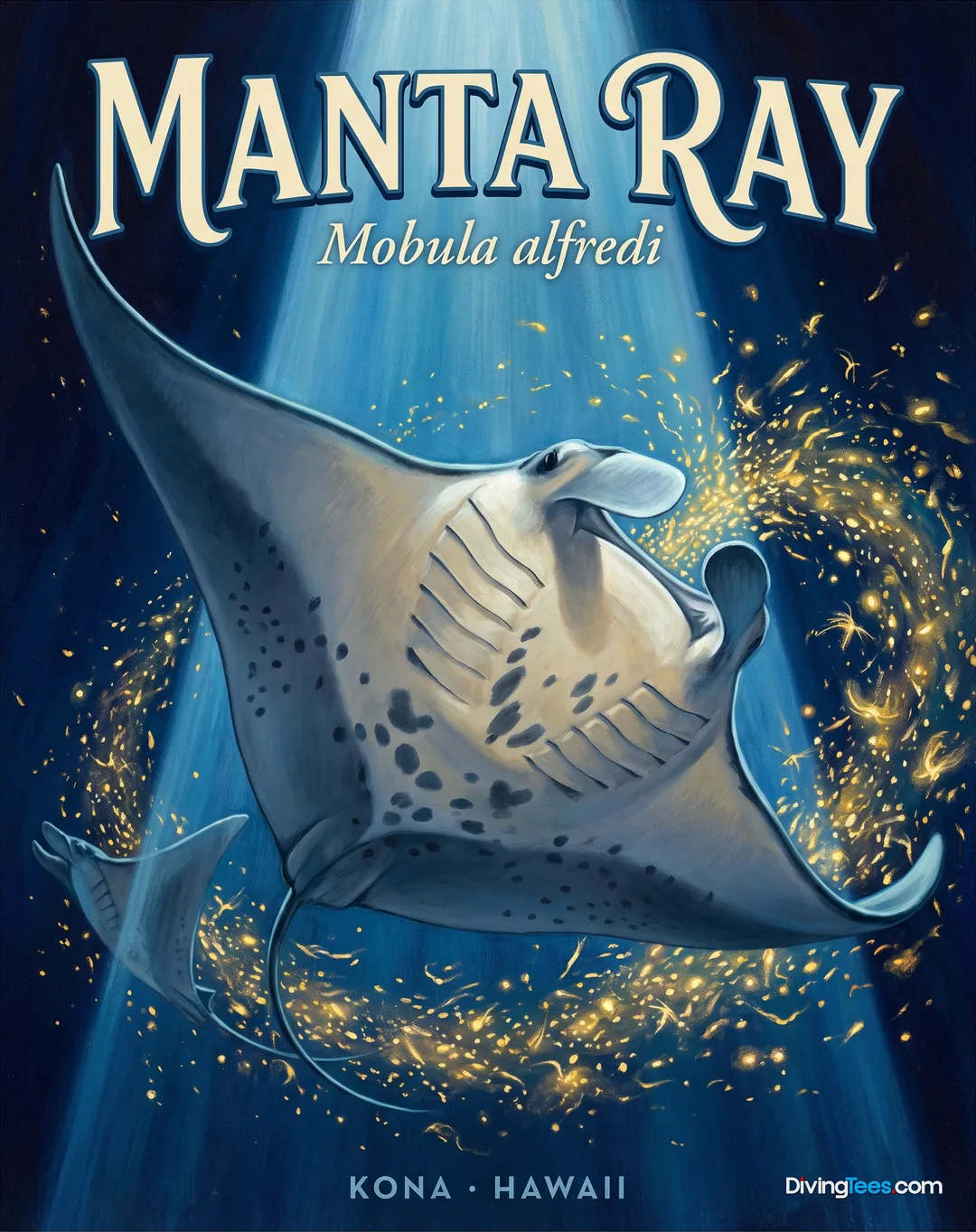
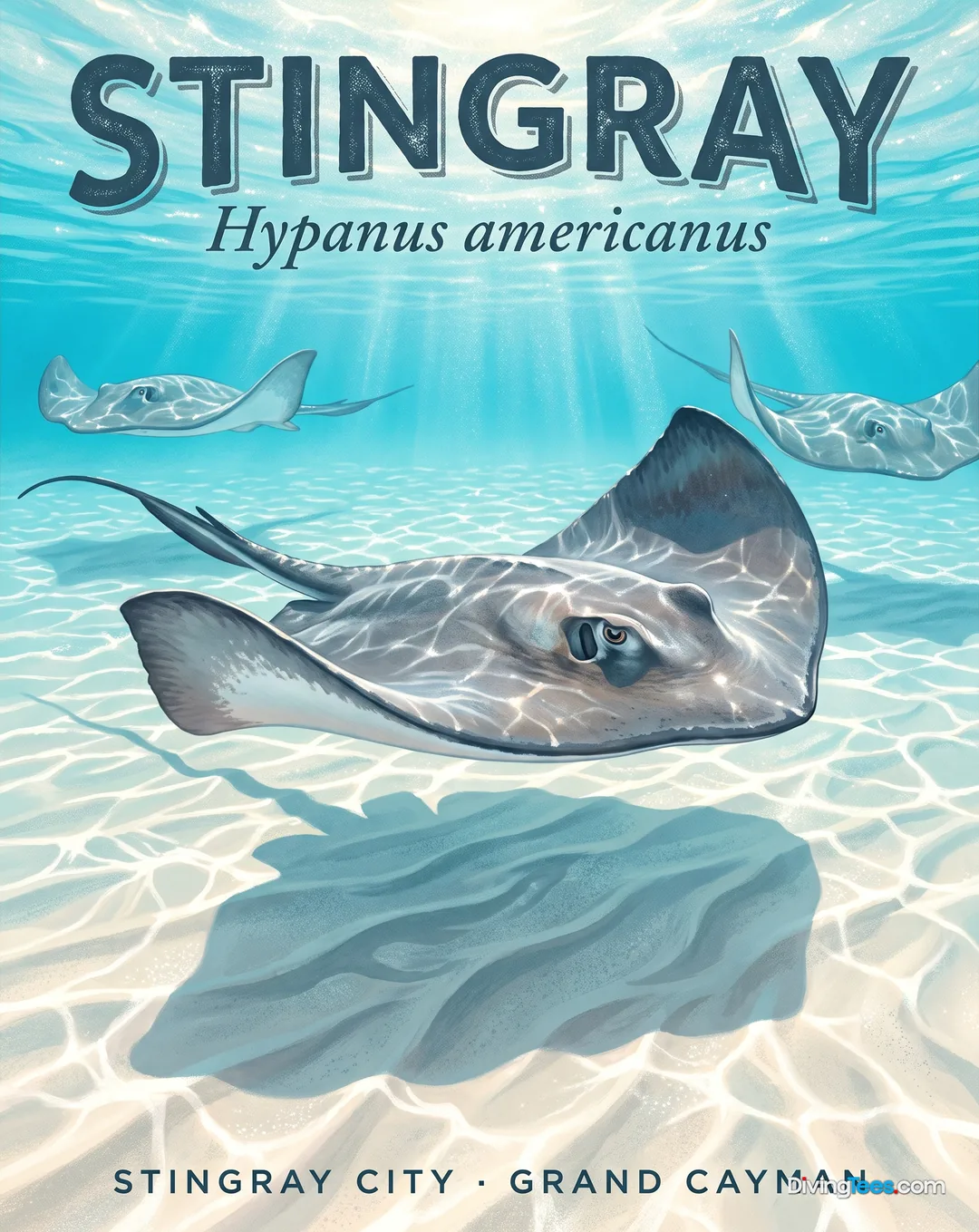
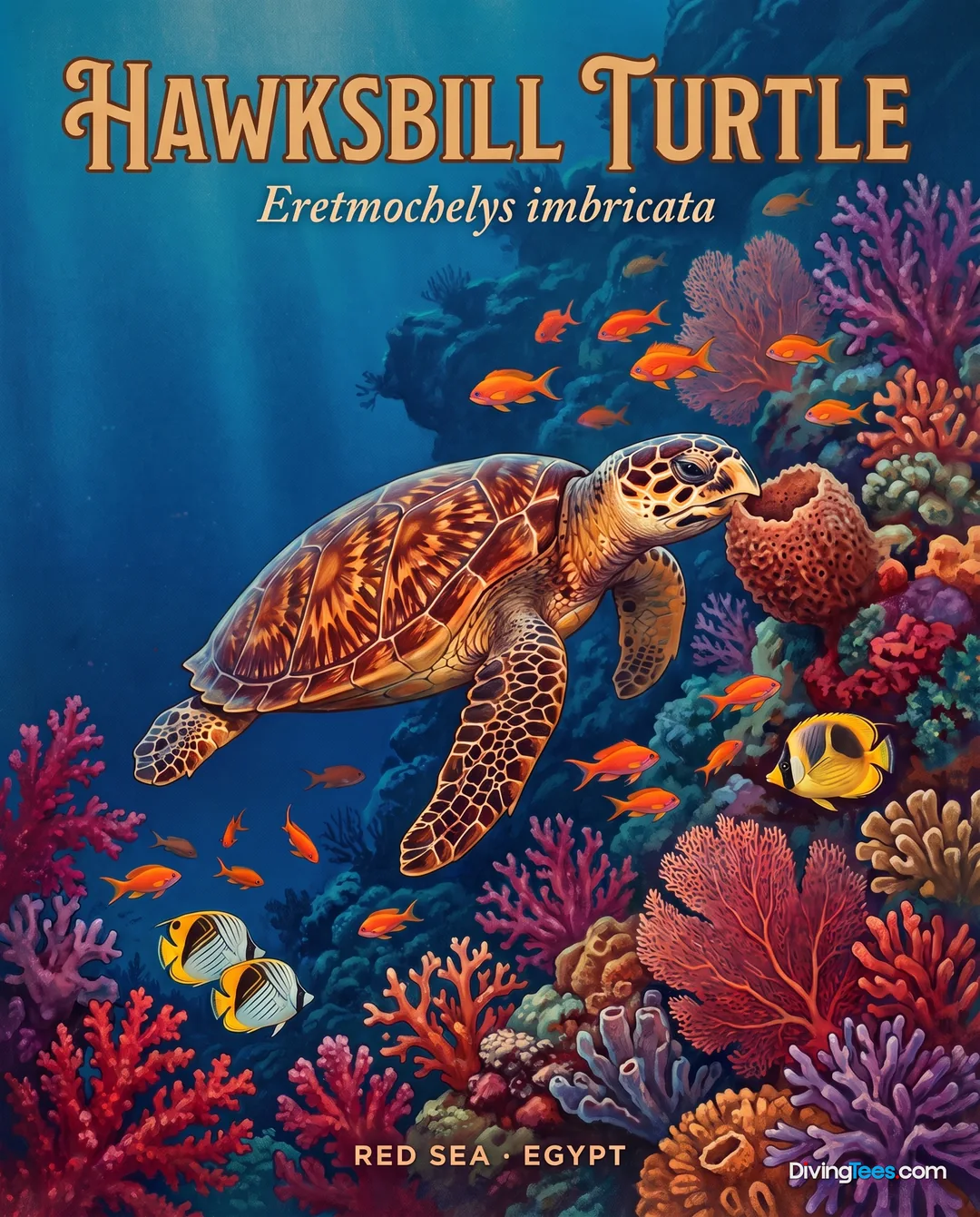
The recurring cast is substantial: Napoleon wrasse, grey reef sharks and fusiliers are recorded across nine sites, while turtles and eagle rays appear across much of the route. Barracudas, manta rays and tuna also return repeatedly, joined by white-tip reef sharks, jacks, trevallies, moray eels and batfish. The reason to follow a particular itinerary is what concentrates in one place. Grouper and anthias are recorded at Barracuda Giri; Banana Reef is the site associated with anemones. Dhigalhi Haa Marine Reserve is notable for soft coral and gorgonians, while Maamigili is where gaterins and porcupinefish appear in the site records. Fushifaru Thila Marine Reserve is the specific site for the recorded stingray, and Dhigu Thila for the hawksbill turtle. The northern Best of Mantas route runs toward Baa Atoll and Hanifaru Bay during the late-summer manta gathering, when plankton-rich water can bring large numbers of mantas and sometimes whale sharks. Sightings remain conditions-dependent, as they should.
Who puts you in the water
The crew speaks English and the itineraries are guided by a local dive team. The required level is Level 2, Advanced or equivalent, with at least 50 logged dives on the central and longer expedition routes. That threshold is a meaningful one in the Maldives: channels and drift dives require a diver who can descend, hold position when needed and manage a free ascent without turning the guide into a rescuer. Dive groups and guide ratios are not published, so the briefing is the place to understand how the particular departure will be organised. Supervision by an instructor can be arranged when a diver’s level is not sufficient for a safe dive, but it is not part of the standard programme. Nitrox certification and other diving courses are available on board. Oxygen, first-aid kits, fire equipment, GPS and radio communications are carried for emergencies; no defibrillator or recall system is specified.
The dive deck and the gear
The diving starts from a dedicated platform with tenders for transfers to the reefs and channels. Divers receive 12-litre tanks and weights as part of the included package; 15-litre tanks are optional, not standard. DIN adapters are available, and free nitrox is provided for certified divers. The boat has nitrox capability and equipment rental is available, although the rental inventory and compressor specifications are not stated here. There is no published camera-table or rinse-tank detail to rely on, so photographers should ask about their exact setup before boarding. The useful advantage is the Maldivian operating method: the tender takes divers to the drop point, then collects them where they surface, leaving the main boat free to serve as the stable base between dives. A hot shower and air-conditioned cabin matter after that transfer, especially on current dives repeated across several days.
Between dives
Between dives, the boat gives people several ways to come down from the water without disappearing into a cabin. The air-conditioned salon is the sensible refuge after a hot transfer from a channel, while the terrace offers open air, sea views and the chance to let a towel and a wetsuit dry. The bar belongs to the late surface interval rather than to a nightlife programme: a drink, a conversation, then another look at the next site briefing. Audio and video entertainment, a television in the cabins and free internet are available when the sea passage stretches on. Island visits and a beach barbecue may fill one of the quieter periods, depending on the route. The boat also welcomes snorkellers and non-divers, so a travelling companion need not follow the dive schedule to have a reason to be aboard.
A day on board
A day begins with the first briefing, followed by the first dive, breakfast and the next surface interval. The order changes with the site and the current, but meals punctuate a sequence of briefings, tender transfers, dives and recovery rather than a fixed resort timetable. Central Atolls departures include 16 dives over six diving days; longer expeditions list 34 dives, with additional dives possible. One or two night dives are included on a trip, depending on its duration and itinerary, so the day can finish with a very different reef: torch beams, hunting fish and the boat’s tender waiting above. Between entries, divers eat, dry kit, compare sightings and move between the air-conditioned salon and the terrace. On travel sections, the boat shifts the backdrop from one atoll to another. The appeal is the repetition with variation: another briefing, another drop point, another chance for the current to bring something large past the reef.
What you eat aboard
Meals are served as a full-board buffet, drawing on both Western and local cooking. That matters on a diving boat: a buffet lets an early riser eat without waiting for a formal service, then return for more after a current-heavy dive. Water, tea and coffee are included, while beer and wine are available aboard. A beach barbecue may break up the routine when the itinerary and conditions allow it. The food is practical rather than theatrical, with enough range for a mixed group of divers and non-divers. Local dishes give the trip a sense of place that a purely international menu would lose, while familiar Western options make the table easier after a demanding day in the water.
Nights at sea
The cabins are air-conditioned, with private bathrooms, standard windows and sea-view options; upper-deck, lower-deck double or twin, and single categories cover the main ways divers travel. Lower-deck cabins keep the sleeping space close to the waterline, while an accessible balcony gives some cabins a more direct connection with the outside. The useful point after a long day is not decoration but separation: a cabin lets a diver close the door, dry off and sleep without having to share every quiet hour with the group. The indoor lounge and terrace take care of the rest of the evening. With hot showers, towels and Wi-Fi included, the boat offers a comfortable recovery space after repeated entries from the tender. Alcohol is available at the bar, but the evening does not depend on drinking.
Upper Deck Cabins
Lower Deck Double/Twin Cabins
Single Cabins
What to know before boarding
Most listed departures leave from and return to Malé, while some southern itineraries use Kooddoo or Gan with a domestic flight included. Return airport-to-boat transfers are included, and flight choices are tied to the transfer windows: arrivals are listed for 10:00, 12:00 and 15:00, with departures from the boat linked to a 07:00 morning transfer. Arriving in the Maldives the night before gives more protection against a missed connection or a delayed international flight.
- Year renovated
- 2020
- Length
- 43 m
- Maximum number of passengers
- 20
- Number of cabins
- 14
- Number of bathrooms
- 12
- Website
- seafari-diving.com ↗
Hello, I'm Marina, DivingDeal.com's AI assistant. I answer in detail about hotels, dive centres and liveaboards.

Thinking about the whole trip and the flights? Talk it over with Edith →
Marina is an AI. Some links are affiliate links: DivingDeal may earn a commission, at no extra cost to you. Bookings are made with the partner.