
The Blue Jump Ecodiving
Google 5/5 (708 reviews)
3.6 km away as the crow flies
La Azohia · Spain · Mediterranean
Max. depth · 30 mA protected cove featuring expansive Posidonia oceanica seagrass beds and a small wreck at depth.
For subtitles in English: start the video firstthen click the gearat the top right of the video, select “Subtitles/CC”, then “Auto-translate” and choose “English”.
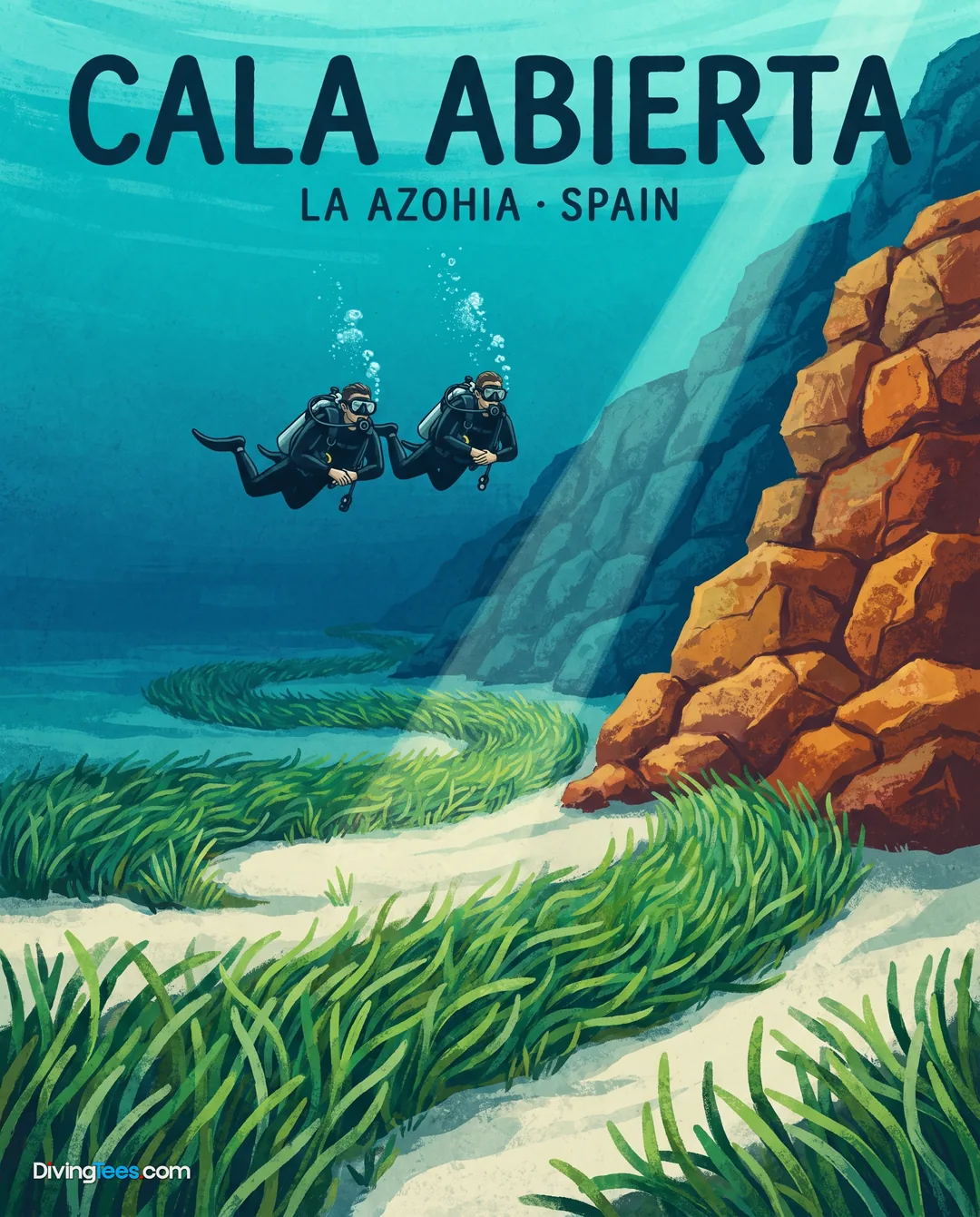
Cala Cerrada is a sheltered bay enclosed by high cliffs, providing a natural refuge from the prevailing winds and swell. The topography is defined by a relatively shallow interior where the seabed consists of large, healthy meadows of Posidonia oceanica. As you descend, the landscape transitions from sandy patches to rugged rocky blocks and small overhangs. This varied relief creates a diverse habitat that supports various small marine organisms within the seagrass structure.
For those looking to explore deeper, the profile changes significantly as you move toward the outer edge of the bay. The bottom drops away more sharply, reaching depths of approximately 30 metres. In this deeper zone, the terrain includes collapsed slabs and more complex rocky formations. This transition from the calm, shallow meadows to the more structured deeper sections allows for two distinct types of diving experiences within a single site.
The presence of a small vessel, resting at a depth between 22 and 30 metres, provides a specific point of interest for more experienced divers. This wreck sits in the deeper part of the site, offering a different level of complexity compared to the surrounding seabed. Navigating around the remains of the boat requires more precise buoyancy control than the shallow seagrass areas. It serves as a primary objective for those wanting to extend their dive time beyond the initial sheltered plateau.
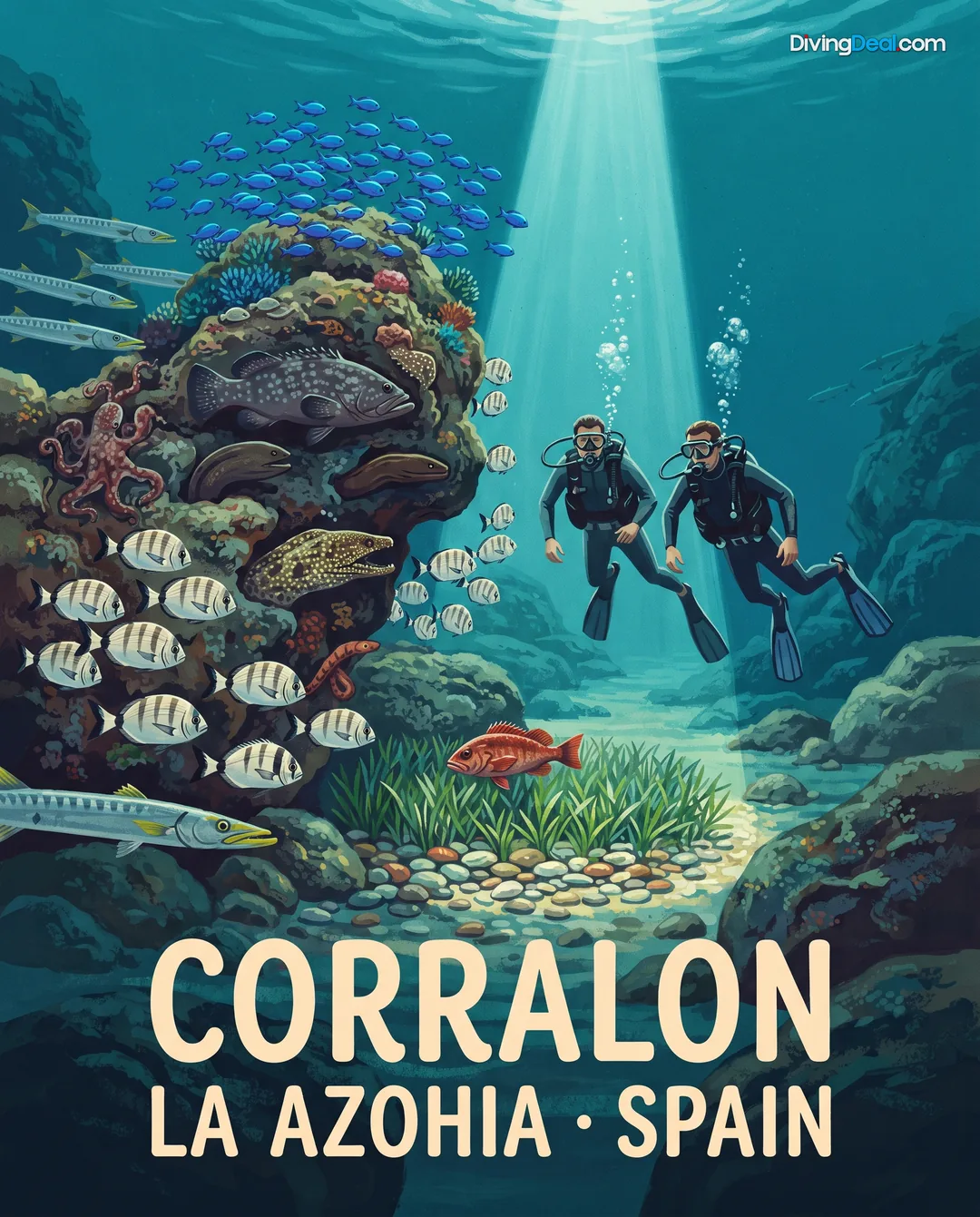
Marine life at Cala Cerrada is concentrated around the rocky outcrops and within the protective cover of the seagrass. You can encounter conger eels (Muraena helena) and moray eels (Muraena) seeking shelter in the crevices of the rocks or under the small overhangs. These predators are often found stationary, blending into the shadows of the reef. Observing their behavior requires a quiet approach to avoid startling them into their holes.
The site is particularly well-suited for training due to its protected nature and predictable conditions. The lack of significant current inside the bay makes it an ideal environment for practicing buoyancy or completing certification dives. The shallow depths and clear visibility allow for easy monitoring of depth and air consumption. This makes the inner section of the bay a reliable choice for novices under supervision.
Visibility at the site typically ranges between 10 and 25 metres, depending on the time of year and local conditions. This clarity helps in navigating the transition between the sandy areas and the rocky structures. Even in the deeper sections near the wreck, the light reaches the bottom well enough to define the underwater topography. Good visibility is a key factor in enjoying the subtle details of the rocky blocks and the textures of the seagrass.
Access to the site is most commonly managed by boat, typically departing from La Azohia or Puerto de Mazarrón. A twenty-minute transit from La Azohia brings you directly to the bay's entrance. While some sources suggest shore access might be possible, a boat approach is the standard method to ensure you reach the best sections of the site efficiently. Planning your logistics around a boat trip ensures you can access both the shallow meadows and the deeper wreck.
Depths range from 4 to 30 metres. The site is accessible from Open Water Diver level, though experience is recommended for the deeper sections around the wreck. Visibility is between 10 and 25 metres. The bay is naturally sheltered with no significant current, though conditions may shift when exiting the bay. The best period for diving is from late spring to autumn.
You can dive Cala Cerrada from late spring to autumn. The sheltered bay is enclosed by high cliffs, providing protection from prevailing winds and swell. Visibility typically ranges between 10 and 25 metres, although clarity depends on the time of year and local conditions. The bay is generally calm for diving.
Cala Cerrada is accessible to Open Water Divers, with the shallow interior offering suitable conditions for training and certification dives. Depths range from 4 to 30 metres. Experience is recommended for the deeper sections around the small wreck, which rests between 22 and 30 metres and requires more precise buoyancy control.
Cala Cerrada is naturally sheltered by high cliffs and has no significant current inside the bay. These calm conditions make the site suitable for practicing buoyancy or completing certification dives. Conditions may shift when you exit the bay, so you should allow for a change as you move toward the outer sections.
At Cala Cerrada, you can explore healthy Posidonia oceanica meadows, sandy patches, rocky blocks, small overhangs, collapsed slabs and a small wreck in the deeper area. Conger eels and moray eels shelter in rocky crevices and beneath overhangs. The varied relief also supports small marine organisms within the seagrass.