
The Blue Jump Ecodiving
Google 5/5 (708 reviews)
3.1 km away as the crow flies
La Azohia · Spain · Mediterranean
Max. depth · 13 mExplore a sheltered rocky reef under an ancient military lookout, ideal for macro photography and relaxed profiles.
For subtitles in English: start the video firstthen click the gearat the top right of the video, select “Subtitles/CC”, then “Auto-translate” and choose “English”.
Located on the northern side of Tarifa Island, Garita offers a distinct contrast to the more exposed and current-driven sites found elsewhere in the Strait. The site takes its name from the ancient military lookout, or guérite, that stands on the cliffs directly above the water. This sheltered position provides a relatively calm environment, as the northern face is protected from the primary swell and heavy currents that often define the region. You will find a landscape composed of large rocky blocks and irregular formations that create numerous cracks and overhangs. This topography is essential for the variety of life that inhabits the site, offering both hard surfaces and sandy transitions.
The dive profile at Garita is notably shallow, staying within a range of 3 to 13 metres. This makes it an accessible site for divers looking for a relaxed experience or those performing check-out dives to get comfortable in the water. As you descend, the seabed transitions between rocky structures and smaller areas of sand, interspersed with patches of Posidonia seagrass. The shallow depth allows for extended bottom times, even with standard air cylinders, providing ample opportunity to scan the rockwork. The presence of sandy patches between the rocks also introduces different micro-habitats that attract specific species looking for cover or prey.
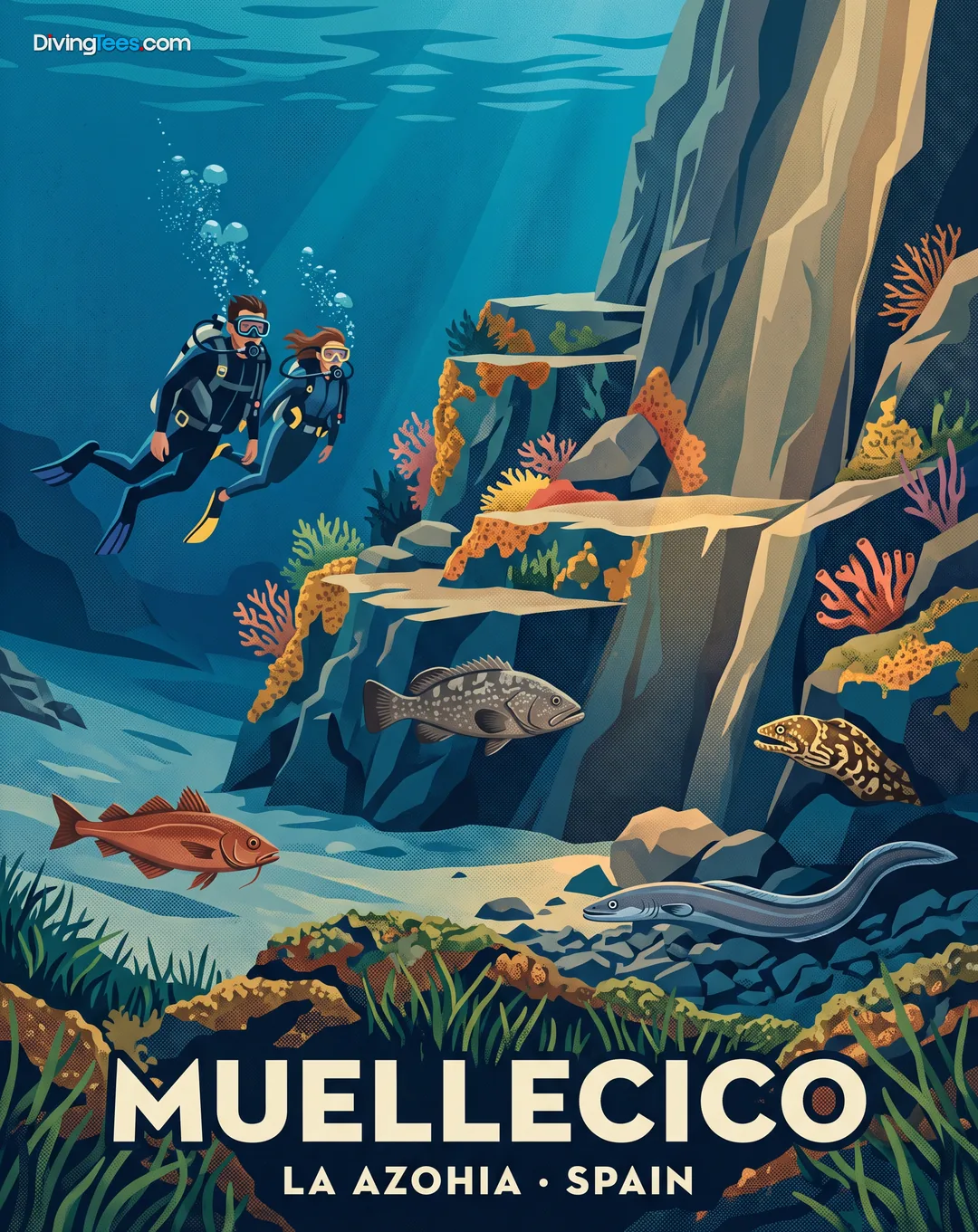
The topography is characterized by deep crevices and narrow ledges that require a careful, slow approach. These rocky recesses serve as the primary homes for many of the site's resident species, which rely on the structure for protection. While navigating the site, you should focus your attention on the interfaces where the rock meets the sand or where a vertical face meets a ledge. It is in these transition zones that the most interesting movement occurs. The site is not about long, sweeping swims, but rather about methodical observation of the small-scale details within the reef's architecture.
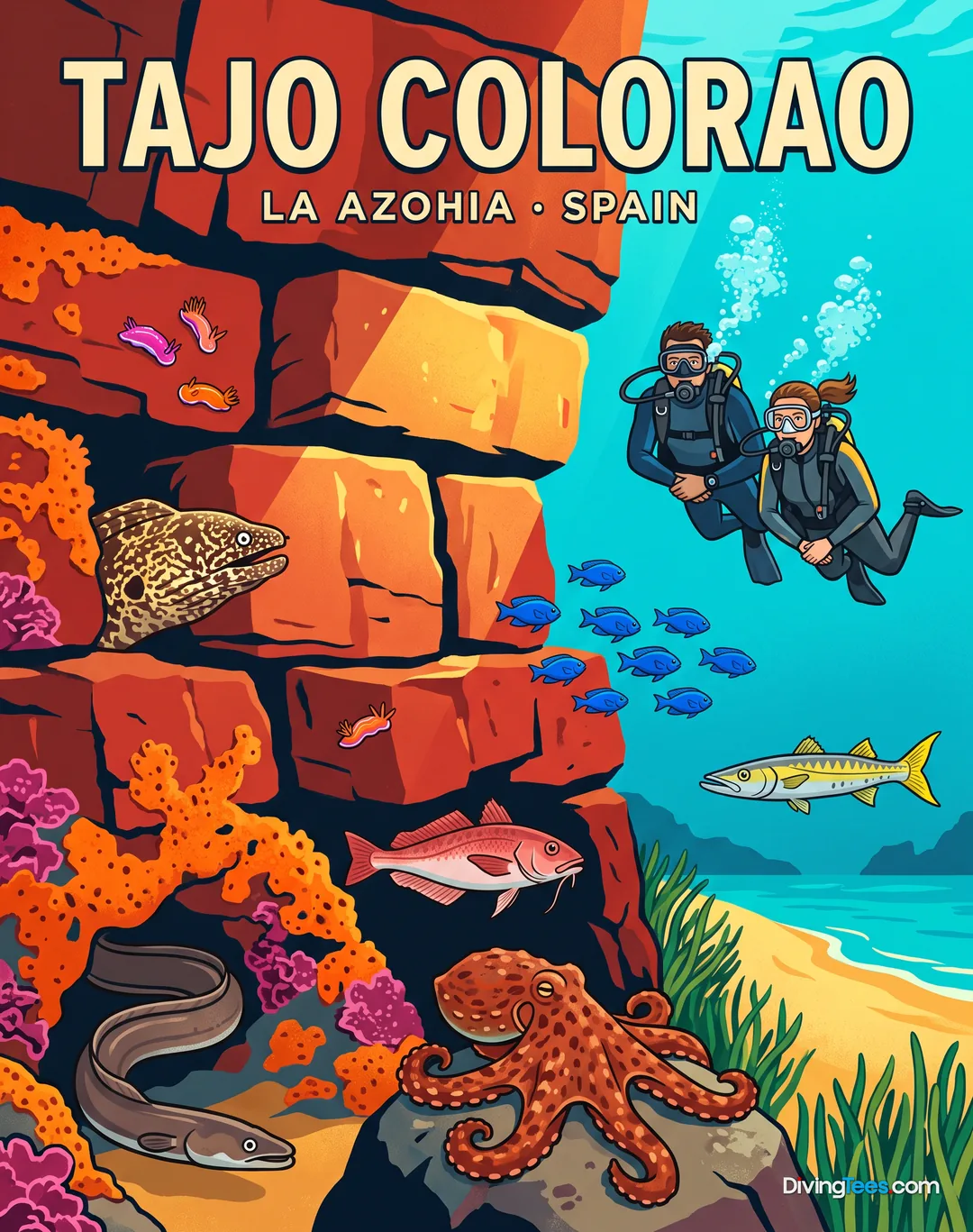
For those interested in macro life, Garita provides a steady habitat for several characteristic Mediterranean species. You can frequently find the common octopus (Octopus vulgaris) utilizing the many available hiding spots among the rocks. The seabed and rocky outcrops also host various nudibranchs, which are often found crawling along the hard surfaces. Looking closely at the sandy areas and near the base of the rocks, you might encounter hermit crabs or the thornback ray (Raja clavata) resting on the bottom. These encounters are best made by moving slowly to avoid disturbing the silt and to allow the animals to remain visible.
The mid-water column and the edges of the reef structure are often populated by schooling fish that utilize the protection of the rocks. You will regularly see Mediterranean chromis (Chromis chromis) and annular seabream (Diplodus annularis) moving around the formations. The three-tailed wrasse (Labrus bergylta) is another frequent visitor to these shallows, often darting in and out of the crevices. For a different perspective, keep an eye out for the spider fish, which use their specialized fins to hover near the bottom. These fish add a layer of constant, subtle movement to the underwater landscape.
The site's biological diversity extends to more specialized inhabitants that require stable conditions. European spiny lobster (Palinurus elephas) can often be spotted tucked away in deeper cracks or under heavy overhangs. These crustaceans remain well-hidden during the day, so successful sightings depend on searching the most sheltered parts of the rockwork. Small details, such as the presence of various sea slugs or small crustaceans, can turn a simple dive into a highly productive session for macro enthusiasts. The lack of heavy surge at this location allows for much clearer observation of these smaller, more delicate organisms.
Conditions at Garita are generally influenced by the local wind and tide, but the site remains one of the more predictable locations in the area. While the broader Strait of Tarifa is known for its volatility, the northern orientation of this reef offers a degree of sanctuary. This makes it a reliable choice for divers who want to avoid the technical challenges of high-current sites. However, it is always important to monitor the surface conditions, as local weather can still impact the ease of access and the visibility within the water column. The site remains a fundamental part of the local diving rotation due to its accessibility and reliable structure.
The site is shallow, with depths ranging from 3 to 13 metres. It is highly accessible from Open Water Diver level and is well-suited for beginners or those performing refresher dives. Currents are generally light, though visibility and conditions can change depending on local wind patterns.
Garita is accessible from Open Water Diver level and suits beginners or divers completing refresher or check-out dives. Its shallow profile and relatively calm northern orientation provide a manageable setting while you regain comfort in the water. You can focus on careful observation around the rocky formations without the demands of a high-current site.
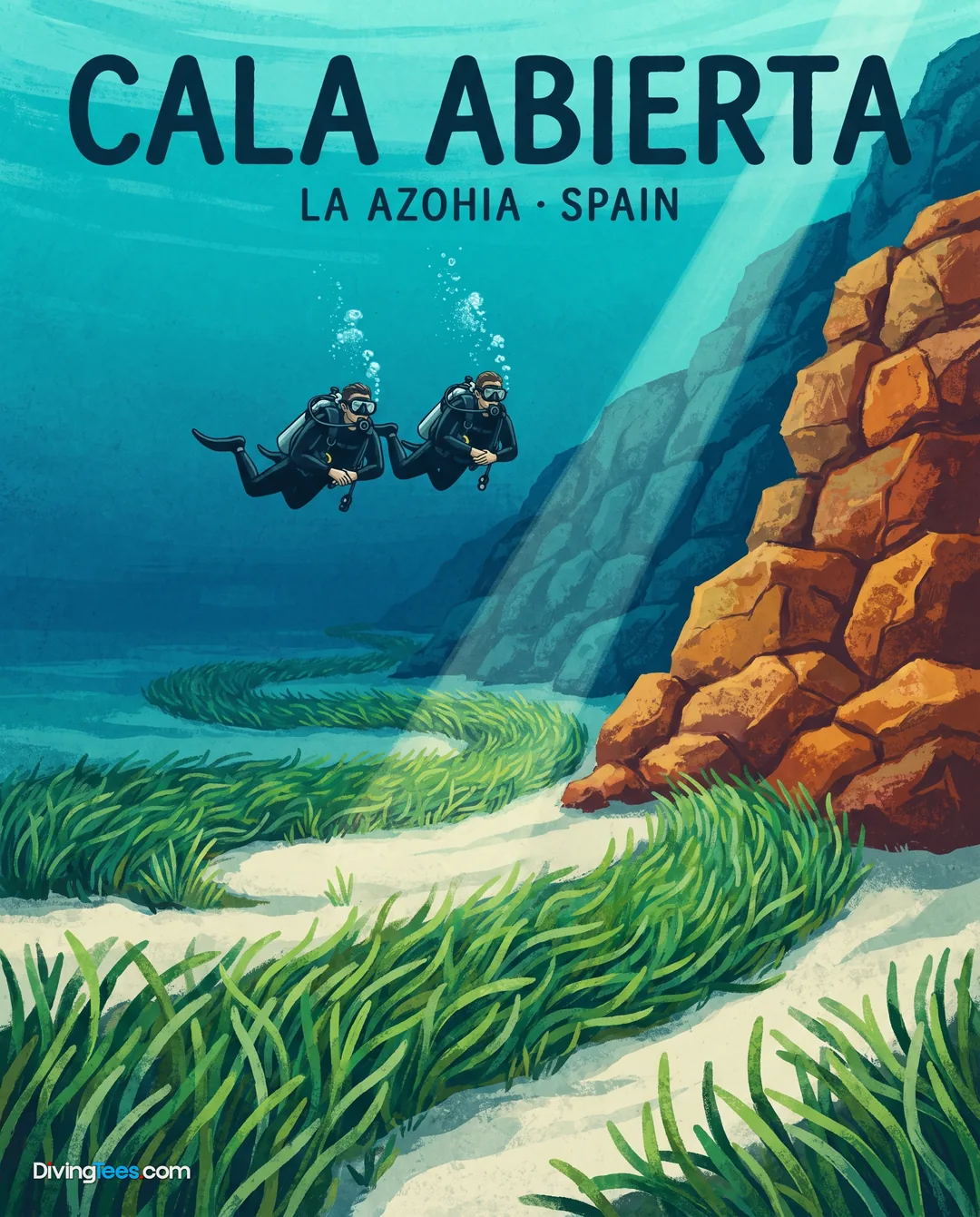
Garita remains shallow, ranging from 3 to 13 metres. The seabed alternates between rocky structures, sandy patches, and areas of Posidonia seagrass. This profile can support extended bottom times with standard air cylinders, giving you plenty of opportunity to examine crevices, ledges, overhangs, and the transitions between rock and sand.
Currents at Garita are generally light, and its northern orientation is sheltered from the primary swell and heavy currents found elsewhere in the Strait. Local wind and tide can still affect conditions, access, and visibility, so you should monitor the surface weather before entering and expect visibility to change with local wind patterns.
Garita offers rocky blocks, crevices, narrow ledges, overhangs, sandy transitions, and Posidonia seagrass to explore. By moving slowly, you may find octopus, European spiny lobster, nudibranchs, hermit crabs, thornback rays, Mediterranean chromis, annular seabream, three-tailed wrasse, spider fish, sea slugs, and small crustaceans.