
Eco&Dive Escuela de buceo en Málaga
Google 4.9/5 (191 reviews)
51 km away as the crow flies
Malaga · Spain · Mediterranean
Max. depth · 36 mDescend along the anchoring line into La Calita's diverse rocky seabed, where fissures and caves host a rich biodiversity down to 36 metres.
For subtitles in English: start the video firstthen click the gearat the top right of the video, select “Subtitles/CC”, then “Auto-translate” and choose “English”.
Diving La Calita means descending onto a seabed composed of scattered rocks after reaching the anchoring point. The initial descent follows the mooring line, guiding you towards the main features of the dive. From there, you have the option to navigate south, moving over large rock blocks spread across the seafloor, which deepens as you gain distance from the anchoring point. This progression allows you to adapt the dive to different experience levels, from shallower rock fields to the deeper walls and formations.
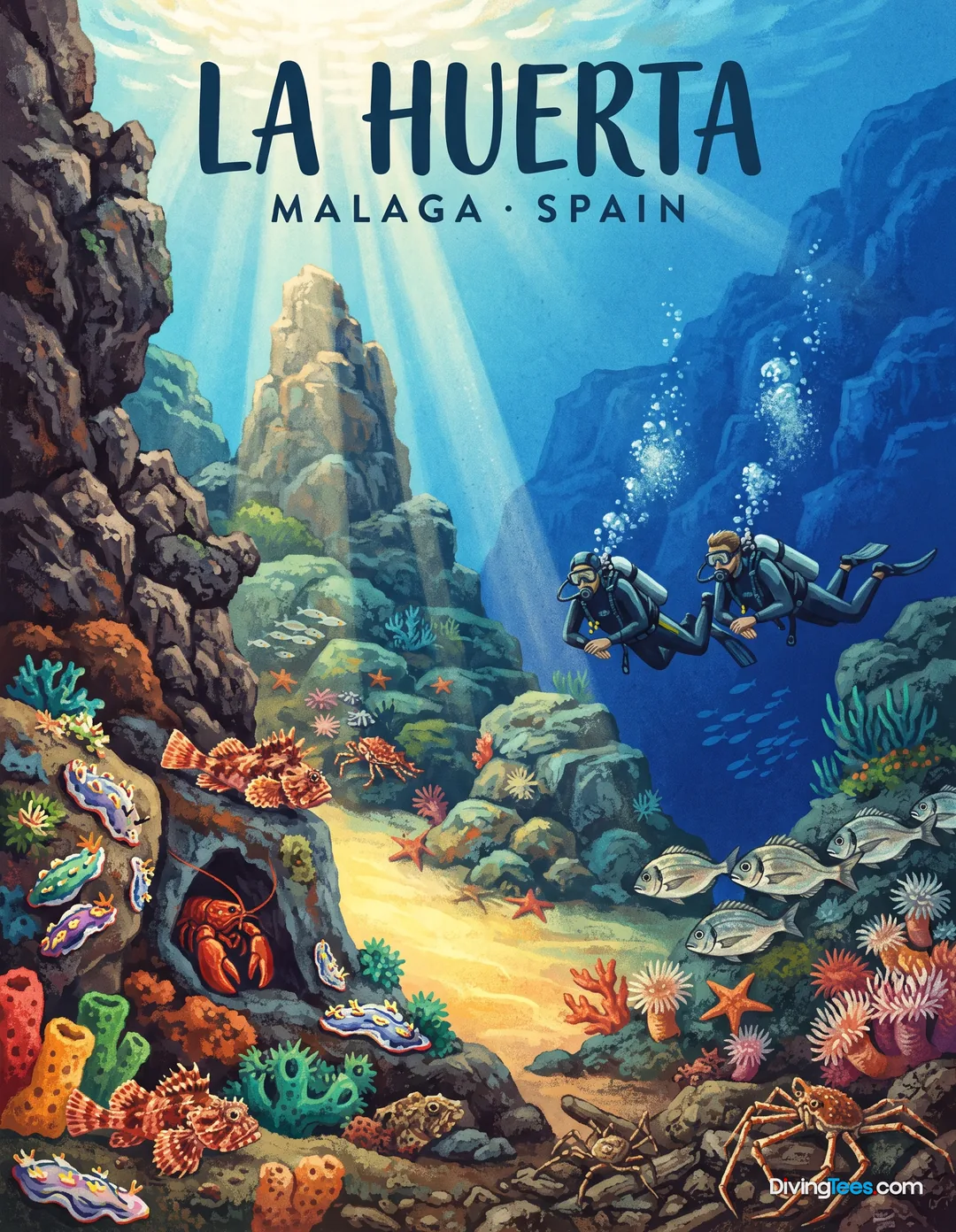
One distinct feature of La Calita is the imposing rock wall that rises from the deeper section, enriching the underwater landscape as you keep it on your left during a southbound trajectory. Alternatively, leaving the main anchoring area, you can explore the surrounding sandy patches. These sandy areas are noteworthy for hosting several artificial sculptures and figures, offering a different point of interest that contrasts with the natural topography of the site. After observing these artistic additions, the recommended path continues south, then southeast.
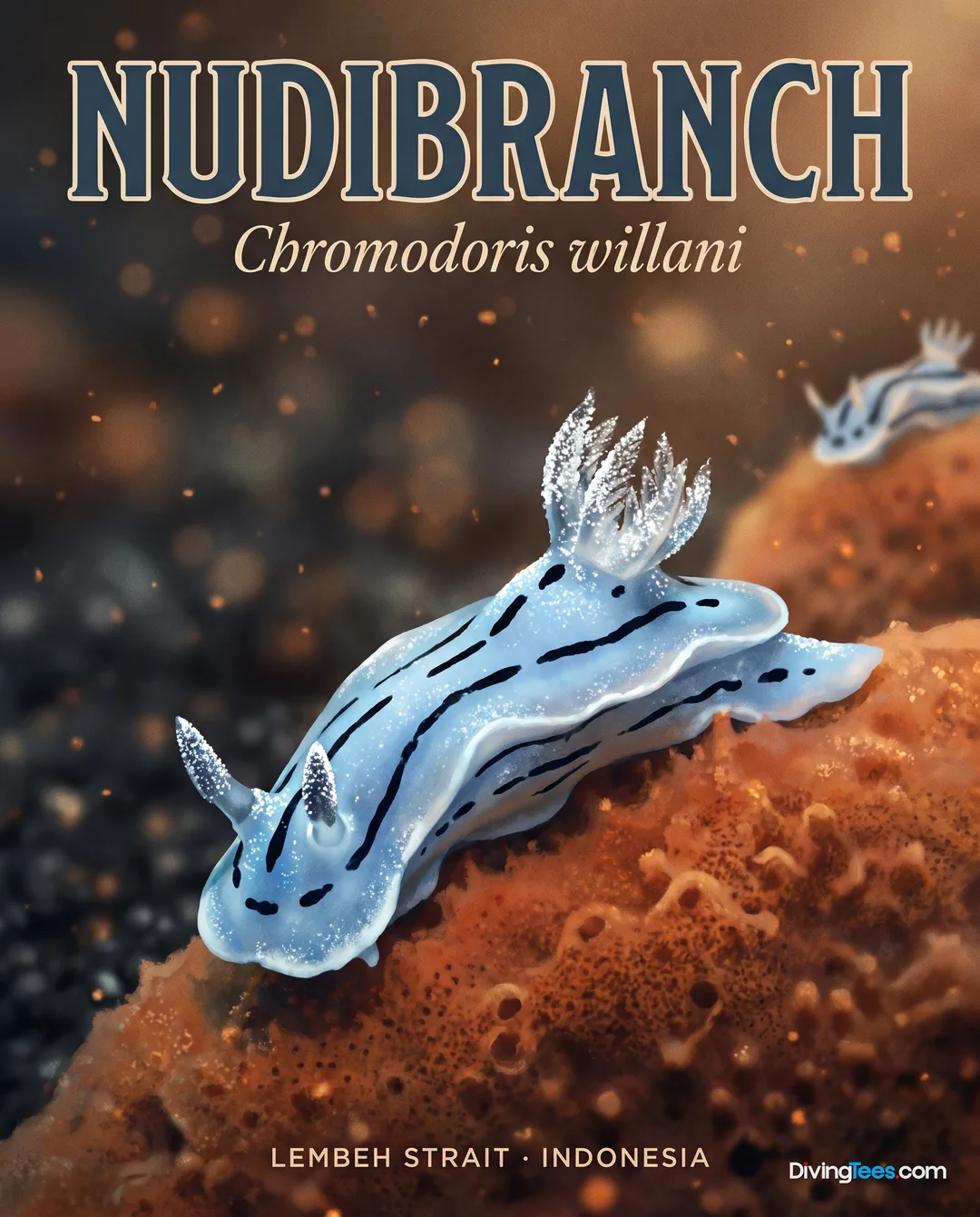
The rocky formations and a network of fissures and small caves define a substantial part of the dive at La Calita. These geological features are not merely static backdrops; they serve as a habitat for a variety of marine life. It is within these cracks and grottos that you will encounter species like conger eels and moray eels, often found sheltering in the natural crevices. Beyond the larger residents, these sheltered spots are also home to numerous nudibranch species, a highlight for macro photography.
Observing the resident fauna along the dive is a continuous experience. You will frequently encounter schools of damselfish (Chromis chromis) moving in unison, becoming a constant companion during your dive. Among the rocks and the reef structures, a variety of sparid and labrid species, such as rainbow wrasse (Coris julis), are common. Look into the smaller crevices to spot the less common, but equally striking, forkbeards (Phycis phycis).
La Calita is particularly rich in invertebrate life, especially within its intricate rock structures. Besides the numerous nudibranchs, you will find serpulid worms (tube worms) and various gorgonian species attached to the rock faces. Small colonies of orange coral can be observed, and with patience, candelabra coral (Ellisella paraplexauroides) can also be found. These corals add colour and complexity to the reef ecosystem, attracting smaller fish and crustaceans.
A notable feature of the site is the 'Cueva del Bogavante', or Lobster Cave. This specific location, within the main reef system, is known to harbor a significant decapod, typically a European lobster (Homarus gammarus). Locating this inhabitant adds a scavenger hunt element to the dive, making it a focal point for divers who take the time to explore the crevices. The Cueva del Bogavante, along with other similar formations, offers excellent opportunities to observe the habits of these larger invertebrates.
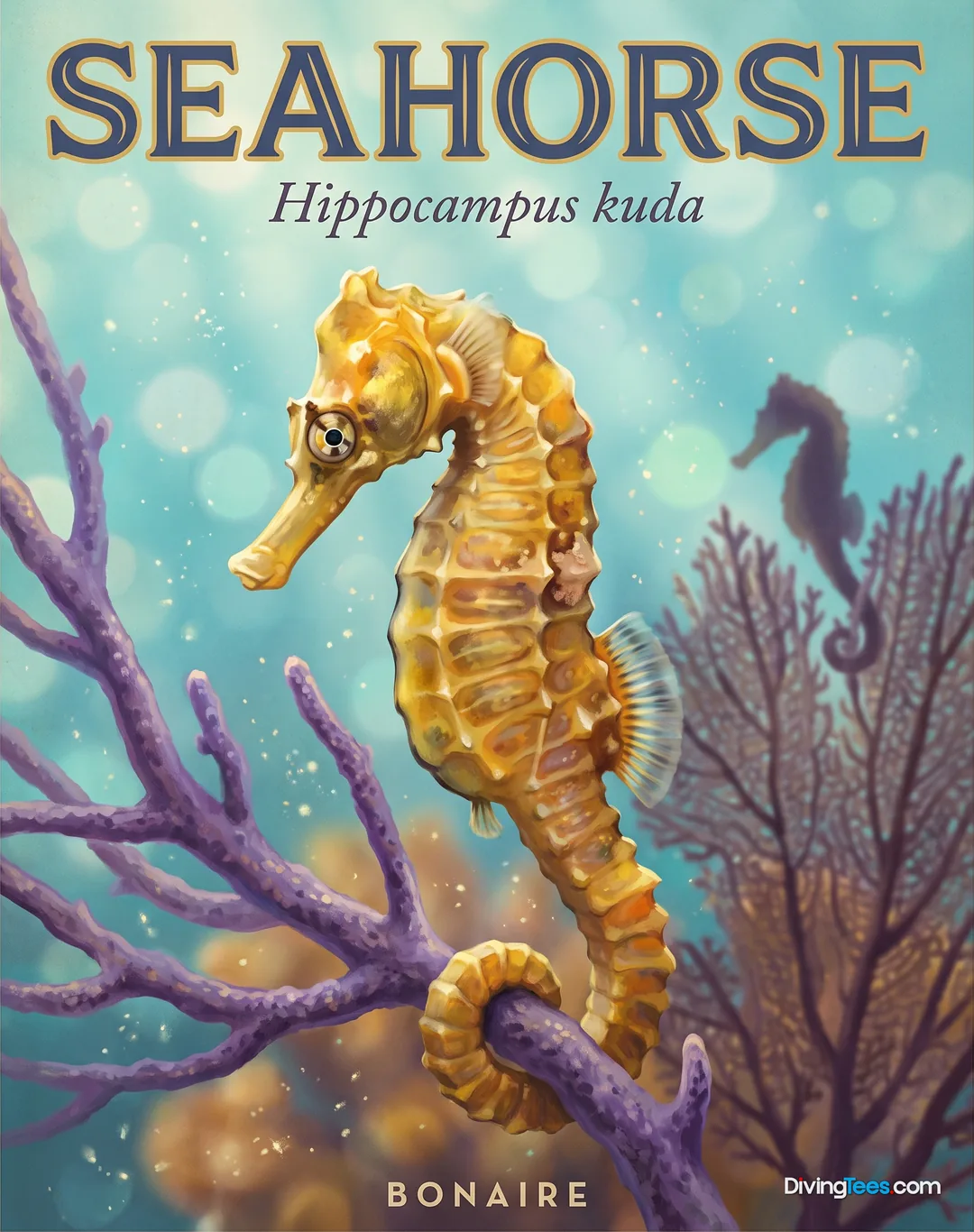
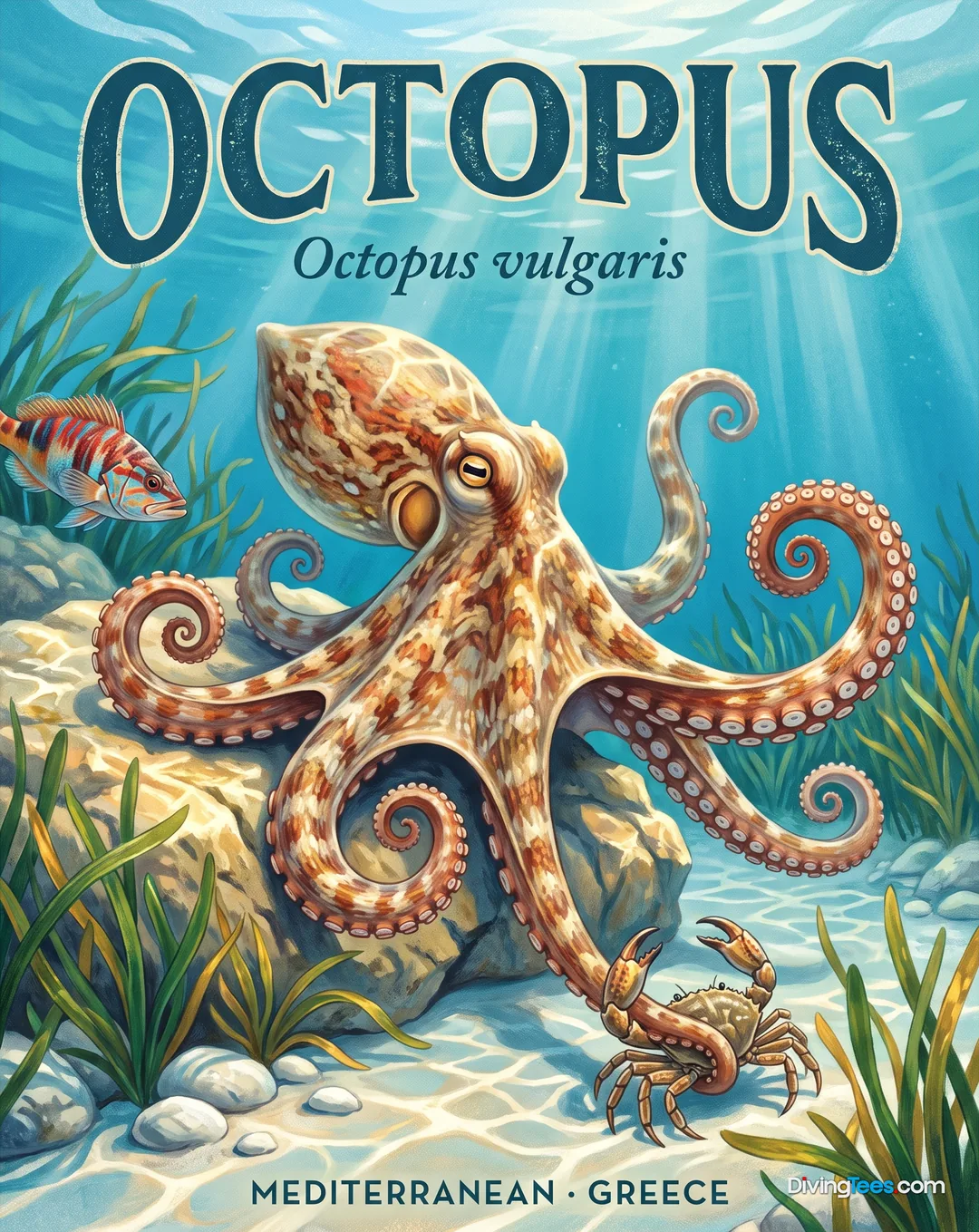
The site hosts a variety of octopuses, often seen camouflaged against the rocks or exploring the scattered boulders. For those with a keen eye, seahorses (Hippocampus hippocampus) can also be spotted, particularly in areas with lighter currents or more sheltered growth. The presence of schools of fish and the abundance of smaller invertebrates contribute to a constantly moving and vibrant underwater scene.
As you approach the latter part of your dive, typically on the return leg, you should generally follow the cliff line, keeping it to your right. This systematic ascent allows for a gradual reduction in depth, which is crucial for managing your no-decompression limits and preparing for a safe safety stop. The varied depths and contours of La Calita demand attention to your dive computer and gas management, especially considering the potential for reaching depths of up to 36 metres.
La Calita is accessible for Open Water Diver certified individuals, although its deeper sections down to 36 metres are better suited for Advanced Open Water divers. The average depth for a significant part of the dive is around 25 metres. While generally manageable, the area can experience moderate currents due to variable weather conditions; it is important to monitor air consumption and surface conditions. Access is typically via boat.
La Calita is accessible to you if you are an Open Water Diver. Its shallower rock fields can suit that experience level, while the deeper sections reaching 36 metres are better suited to Advanced Open Water divers. The site’s varied depths allow you to adapt your route to your experience.
At La Calita, a significant part of the dive averages around 25 metres, while the deeper walls and formations descend to 36 metres. You begin by following the mooring line, then can move over shallower rock fields or continue south toward deeper terrain. Monitor your dive computer and gas management throughout.
La Calita is generally manageable, but you may encounter moderate currents when weather conditions vary. Monitor surface conditions before and during your dive, and pay attention to your air consumption. Seahorses are more likely to be found in areas with lighter currents or more sheltered growth, so route choice matters.
At La Calita, you can explore rocky formations, fissures, small caves, sandy areas with artificial sculptures, and the Cueva del Bogavante with its resident lobster. Look for nudibranchs, octopuses, seahorses, conger and moray eels, damselfish, forkbeards, serpulid worms, gorgonians, orange coral, and candelabra coral.