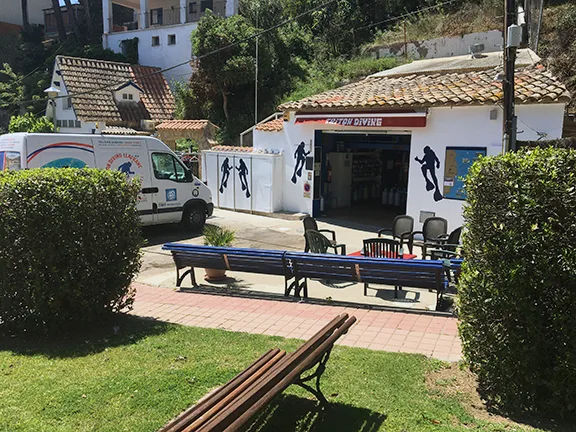


Poseidon Diving
Google 5/5 (1,065 reviews)
2.3 km away as the crow flies
Palamós · Spain · Mediterranean
Max. depth · 30 mA shallow plateau transitions into deep, gorgonian-covered rock walls reaching 30 metres.
For subtitles in English: start the video firstthen click the gearat the top right of the video, select “Subtitles/CC”, then “Auto-translate” and choose “English”.
Ullastres I is a prominent submerged rocky mountain situated close to the coast of Llafranc. It serves as the first and shallowest of the three major Ullastres pinnacles in the Palamós region. You approach the site by boat from nearby ports like Llafranc, Palamós, or Calella de Palafrugell. Once on site, you will typically descend along a mooring or an anchor line marked by a buoy. This position makes it more sheltered than the more exposed Ullastres II and III, though conditions still depend on the sea state.
The topography begins with a broad, relatively flat plateau located between 10 and 14 metres. This upper section provides an easy entry point before the terrain drops away into more complex structures. As you move away from the plateau, the seabed transitions into steep rocky walls and slopes. These slopes lead you down to a maximum depth of approximately 30 metres. This descent allows you to experience a significant change in light and pressure within a short distance.
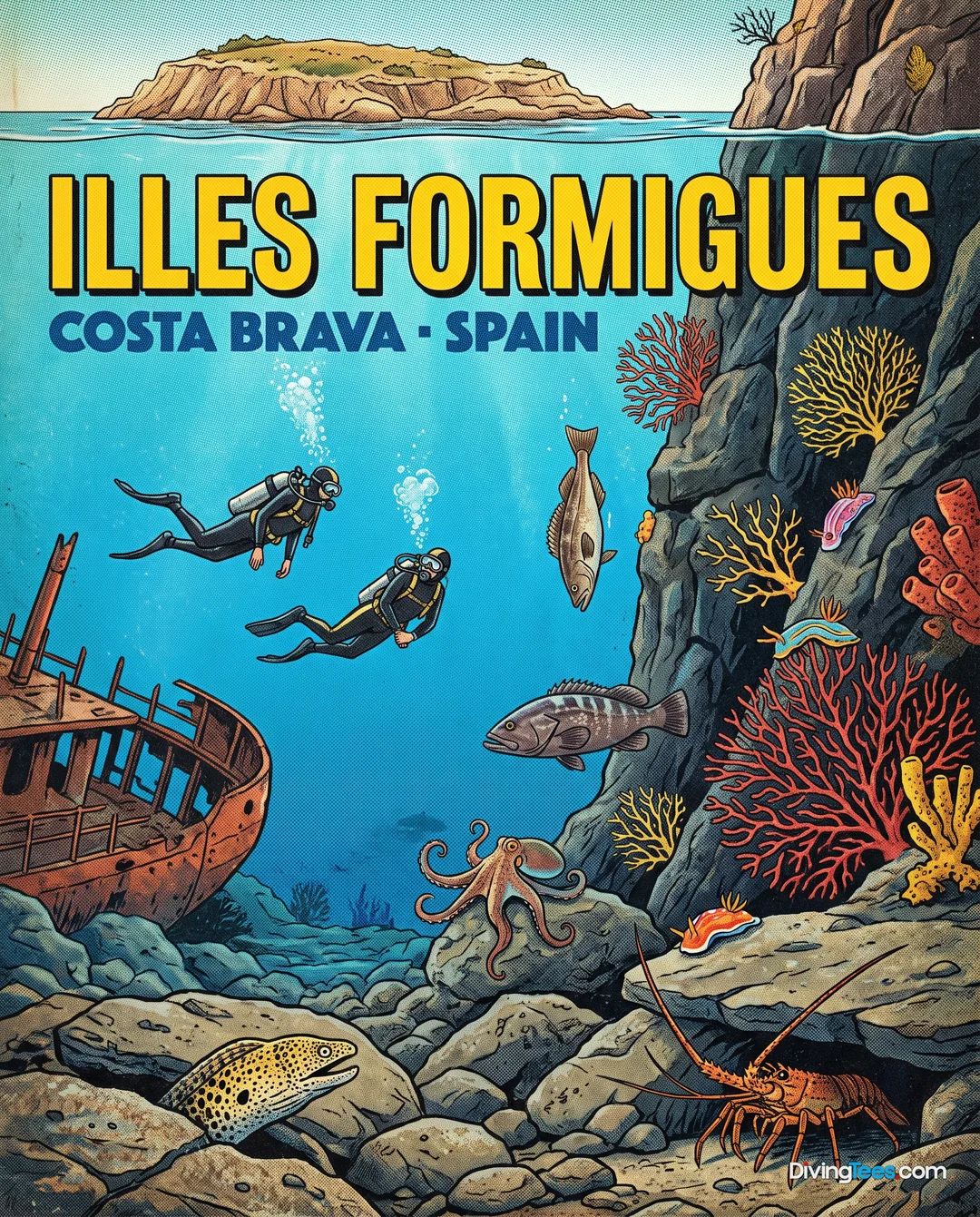
The mid-depth sections of the site are defined by intricate rock groups and deep cracks in the substrate. These geological features create numerous holes and crevices that serve as essential habitats for resident marine life. As you navigate these vertical sections, you will encounter a dense growth of gorgonian sea fans. These fans cover much of the northern and deeper-facing slopes where the current remains consistent. The structure of the rock provides a complex environment for a spiral descent.
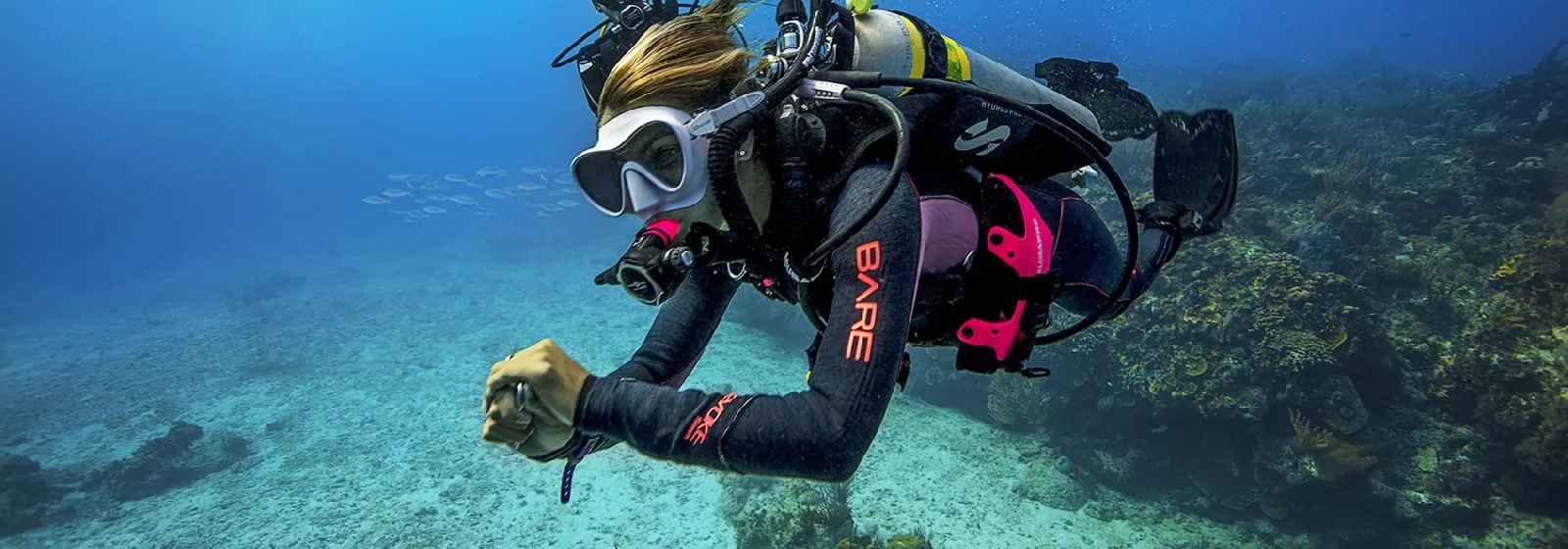
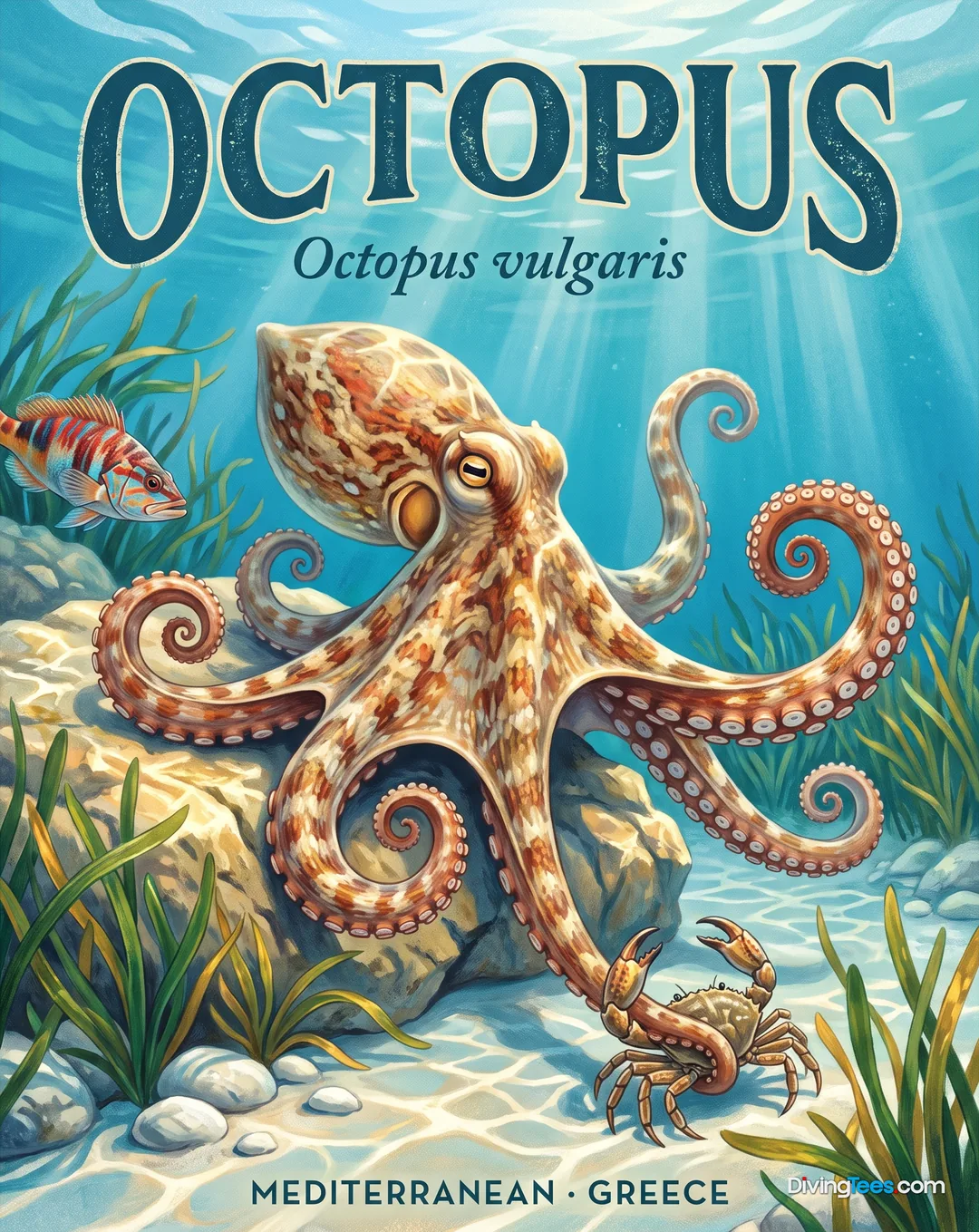
The fauna at Ullastres I is characteristic of the healthy Mediterranean rocky reefs. You will frequently observe various species of wrasse and damselfish navigating the upper plateau and the edges of the reef. Deeper in the cracks and along the walls, you can find moray eels and conger eels sheltering in the shadows. Scorpionfish and octopus are also commonly found camouflaged against the rocky bottom or tucked into crevices. For those looking closer at the reef surface, nudibranchs add detail to the limestone and rock surfaces.
Larger predatory species inhabit the deeper sections and the open water surrounding the pinnacle. You can expect to encounter European barracuda and groupers patrolling the walls. European spiny lobsters often hide within the deep holes and rock groups located near the base. Sea bass and various rockfish are also part of the resident ecosystem that moves through the water column. These species rely on the complex topography of the pinnacle for both hunting and protection.
The site's orientation and depth make it a versatile location for different diving profiles. You can choose to stay on the shallower plateau for a relaxed experience or follow the wall down to 30 metres for more challenging conditions. The presence of gorgonians on the deeper, north-facing slopes indicates a stable environment with consistent water movement. This movement is essential for the nutrients that support the high density of sessile organisms on the wall.
When planning your dive, remember that visibility and current can vary depending on the weather and sea state. Because it is the closest to the shore, it is generally more manageable than the outer pinnacles. However, the vertical nature of the walls means you should be prepared for shifts in orientation as you descend. Monitoring your buoyancy is critical when navigating the narrow cracks and steep slopes that define the lower half of the site.
The dive depth ranges from 10 to 30 metres. While the site is accessible from Open Water Diver level, advanced experience is preferable when navigating the stronger currents, waves, or the deeper wall sections. Visibility and currents are variable depending on the weather and sea state.
Ullastre I is more sheltered than Ullastres II and III, but visibility and currents vary with the weather and sea state. You approach by boat from Llafranc, Palamós, or Calella de Palafrugell, then descend along a mooring or anchor line marked by a buoy.
Ullastre I is accessible to Open Water Diver level, especially if you remain on the broad plateau. Advanced experience is preferable when you navigate stronger currents, waves, or deeper wall sections. The steep walls, narrow cracks, and changing orientation also require careful buoyancy control during the descent.
Ullastre I ranges from ten to thirty metres. Its broad, relatively flat plateau lies between ten and fourteen metres and offers a shallower profile, while steep rocky walls and slopes descend toward approximately thirty metres. You can choose to stay shallow or follow the wall into deeper sections.
You can see dense gorgonian sea fans on the deeper, north-facing slopes, along with wrasse, damselfish, moray eels, conger eels, scorpionfish, octopus, and nudibranchs. European barracuda and groupers patrol the walls, while European spiny lobsters shelter in deep holes among the rocky pinnacle.