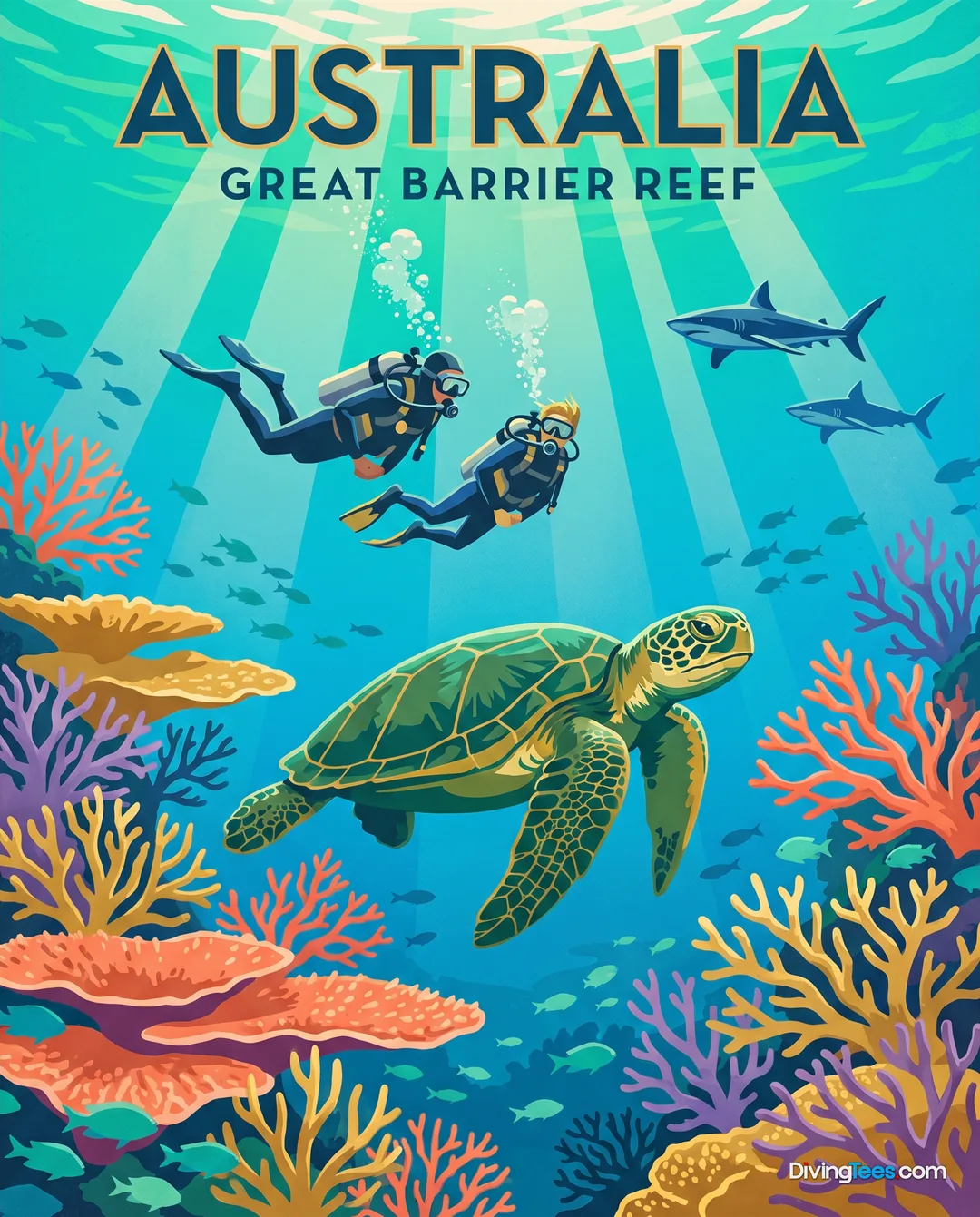
Liveaboards · Australia
Rodney Fox — a working shark-research liveaboard
What makes this boat unique
- The Rodney Fox is the only liveaboard operating on South Australia's Neptune Islands for great white shark expeditions.
- Surface cage diving needs no certification; the Ocean Floor Cage requires PADI Open Water or equivalent certification.
- The expedition includes a tender, a spacious dive deck, 12-litre tanks and weights, full board, and a dive guide.
- Cabins range from shared twin and double/twin rooms to an upper-deck Master Suite with a private bathroom.
- Trips run from Port Lincoln to Port Lincoln and last from 5 days/4 nights to 7 days/6 nights on the recorded routes.
For subtitles in English: start the video firstthen click the gearat the top right of the video, select “Subtitles/CC”, then “Auto-translate” and choose “English”.
The invitation
The Rodney Fox is not a liveaboard chosen for reef variety or technical diving. It is chosen for one animal, one place and one unusually direct way of meeting it: great white sharks around South Australia's Neptune Islands, from a surface cage or, for certified divers, the world's only Ocean Floor Cage. The boat stays with the expedition rather than rushing through a list of sites. There is time to watch sharks from above, enter the cage when ready, hear the research behind the encounters and go ashore when conditions allow. Non-divers belong here too. A surface cage needs no certification, and the tender opens the trip to sea-lion swims, shore walks and wildlife viewing. Dedicated divers come for the deeper cage, the photography opportunities and the chance to see a great white moving through its own blue-water habitat rather than being reduced to a staged close-up.
Boarding
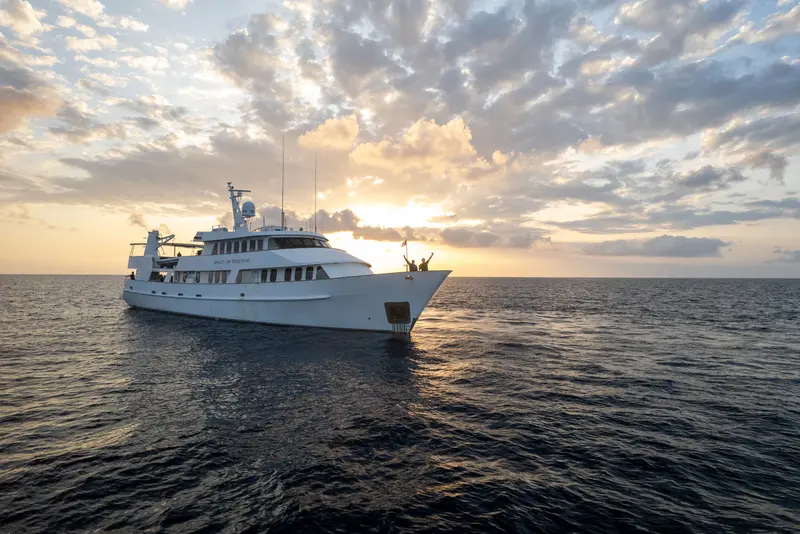
At Port Lincoln, boarding starts at the marina hotel before the group is escorted to the vessel. Once aboard, the Rodney Fox feels like an expedition platform first and a floating hotel second: a steel hull, an open-plan saloon and galley, three decks, and a dive deck built around getting people into the cages. The upper deck gives passengers a place to watch the water and the shark activity. Inside, the layout keeps the group close to the working parts of the trip, with the galley and saloon at the centre rather than a collection of isolated lounges. The tender is part of the boat's daily reach, taking guests towards islands, sea lions and shore excursions. This is a purpose-led vessel. Its useful luxury is the amount of time and equipment it puts between the dock and the sharks.
The atmosphere on board
The atmosphere is shaped by a small passenger group, a crew of up to seven and a subject that gives strangers something real to discuss from the first day. The crew's role is not limited to serving meals: qualified dive professionals brief surface-cage newcomers, accompany scuba divers in the Ocean Floor Cage and keep the operation moving between the vessel, tender and cages. In the evening, shark talks replace generic entertainment. Andrew Fox's presentations draw on behaviour, identification, photography and research, while the expedition's history reaches back to Rodney Fox's first shark-cage work. Guests can watch a large head rise through torchlit water, then sit down to talk about what that animal was doing rather than simply calling it a close encounter. English is the crew language. The result is more field station than cruise ship, with the crew's knowledge carrying much of the boat's character.
The sites you’ll dive
The recorded routes run Port Lincoln to Port Lincoln, with Great White Shark Expeditions lasting 5 days/4 nights or 6 days/5 nights, and the Course in Shark Biology lasting 7 days/6 nights. The destination is the Neptune Islands Marine Park, reached after the departure from Port Lincoln and the crossing through Thorny Passage. Hopkins Island is used for a weather-dependent sea-lion snorkel or dive before the vessel continues towards the shark grounds. Around the Neptune Islands, the expedition works from the vessel and tender: surface-cage sessions, the Ocean Floor Cage for certified divers, island walks and wildlife viewing. The Ocean Floor Cage places divers in the blue water below the surface with rocky outcrops, white sand and seagrass before a great white may pass through. There are no verified individual dive-site write-ups or site depths for this itinerary, so the route is best understood as a focused marine expedition rather than a catalogue of named reef dives.
Itineraries, dates and prices
Prices per person. Each month shows its lowest price: click a month, or pick an itinerary.
Next departures · 31 departuresfrom £1,289$1,723€1,539
October 2026
November 2026
December 2026
See dates and prices
If you click these links and make a purchase on the partner site, DivingDeal may earn a commission, at no extra cost to you.
Dates and prices taken from Divebooker, updated 22 October 2026
What you’ll meet underwater
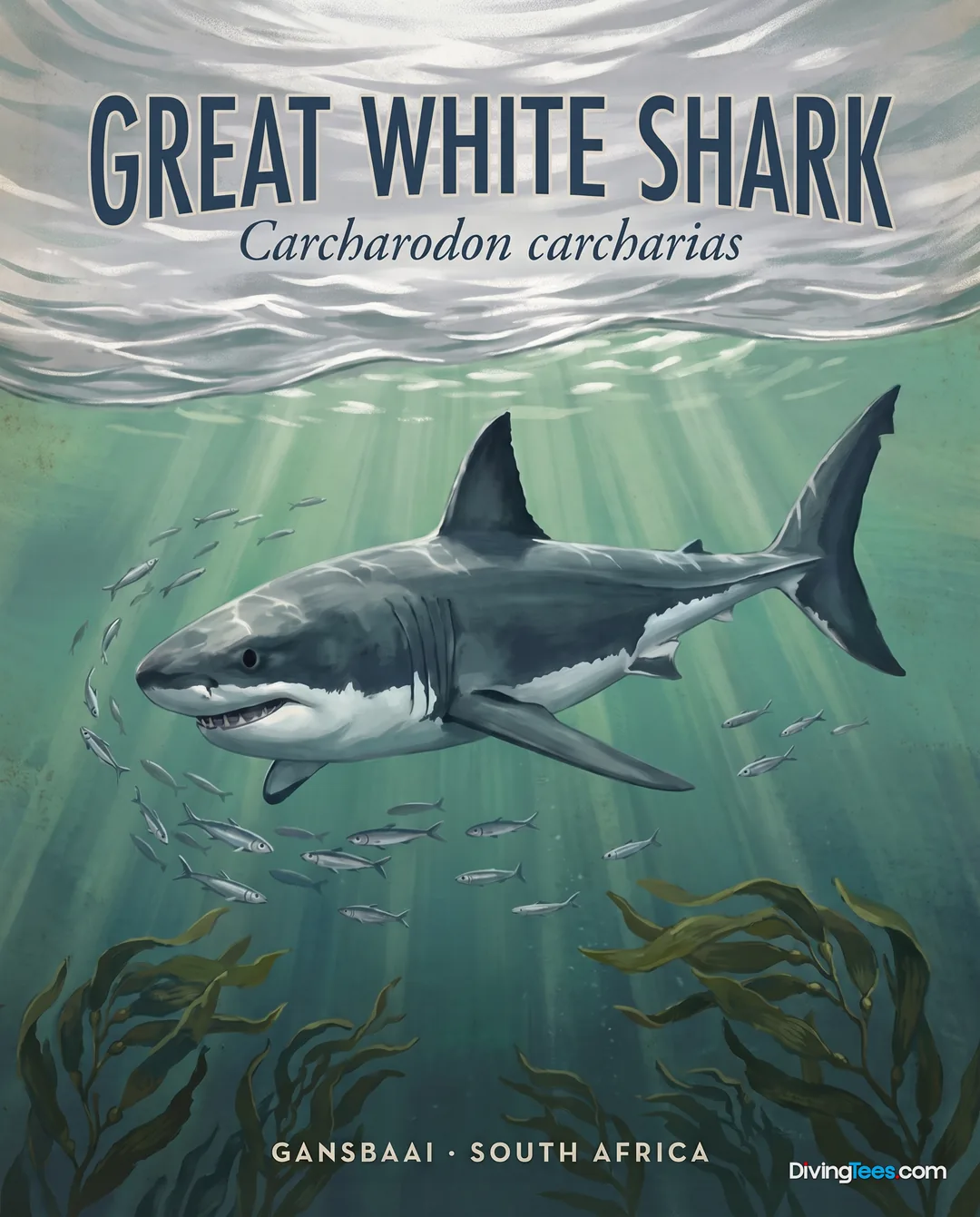
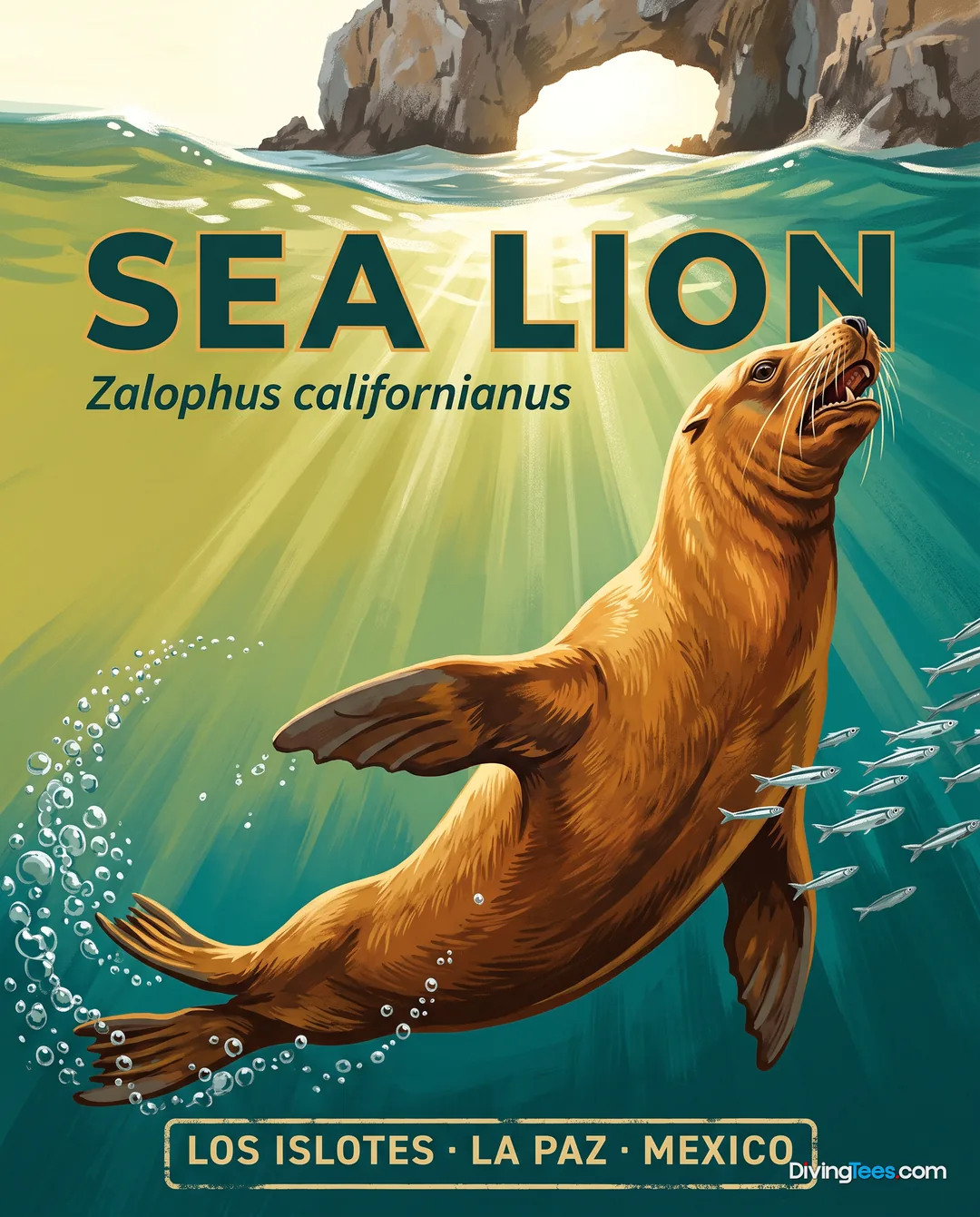
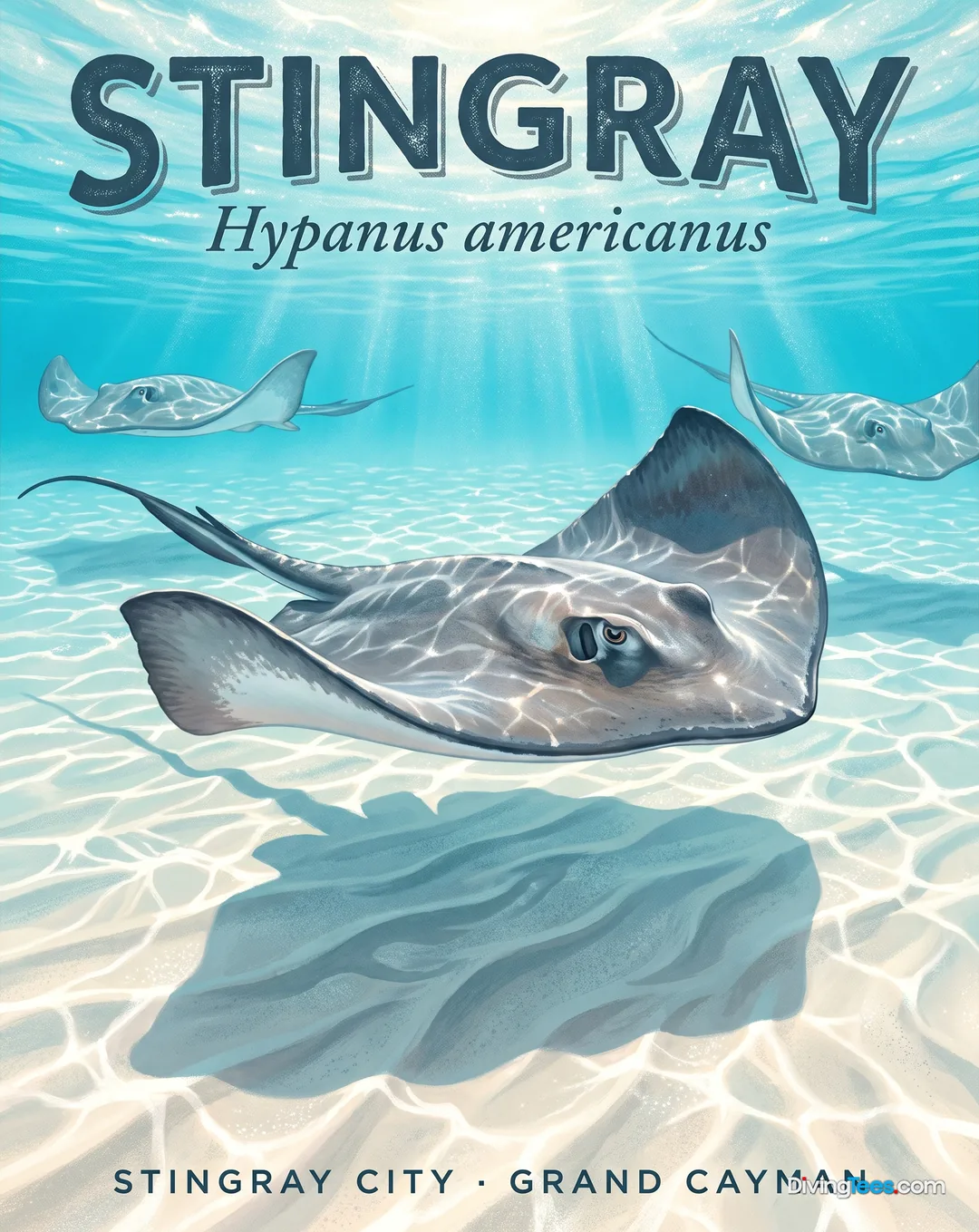
The main spectacle is the great white shark: a large animal approaching through open blue water, circling below the surface cage or sweeping around the Ocean Floor Cage. The Neptune Islands are a natural hunting ground because they support Australia's largest fur seal colony, and fur seals are part of the wildlife encountered around the islands. Australian Sea Lions may appear around Hopkins Island and the Neptune Islands, where the tender can support snorkels, dives and shore visits. Birdlife is also part of the island experience. Shark activity varies with season and conditions; the expedition does not promise a sighting, although peak periods can offer high success. The surface cage lets non-divers and first-time participants share the encounter without certification. The Ocean Floor Cage gives certified divers a different view: reef fish, giant blue groupers, stingrays, white sand and swaying seagrass can fill the frame before the shark arrives.
Who puts you in the water
Qualified dive professionals supervise the water work and accompany scuba divers in the Ocean Floor Cage. Surface-cage diving is open to everyone above the age of eight, with no certification or previous experience required. Guests are briefed and can enter when they feel ready rather than being pushed into a fixed time slot. The Ocean Floor Cage is for divers with PADI Open Water or equivalent certification, and a certification card is required for that activity. The crew speaks English. Surface-cage guests are shown how the cage works and supported throughout the experience, while scuba participants receive the briefing needed for the deeper cage. The boat's listed diving requirements are deliberately accessible for the surface experience, while the Ocean Floor Cage remains a supervised certified-diving activity.
The dive deck and the gear
The dive deck is the centre of the Rodney Fox. It is spacious enough to handle the cage operation, with an upper level for shark viewing and a tender for island tours, sea-lion snorkels and dives. The included scuba setup is built around 12-litre tanks, weights and a harness; equipment rental is available at extra cost. Nitrox is not available, and the boat is not set up for technical diving. Surface-cage guests enter a strong, steady cage from the dive deck, with room for four people. Certified scuba divers can descend with a dive professional in the Ocean Floor Cage. The tender supports access to the islands and water activities, while the main vessel remains the base for briefings, meals and repeated cage sessions. Details such as tank valve type, compressor arrangements, camera facilities and rinse systems are not part of the boat's stated diving setup, so the useful distinction is clear: this is a dedicated shark-cage platform, not a general-purpose technical dive boat.
Between dives
The quiet hours happen on the upper deck, in the open-plan saloon or alongside the tender. Between cage sessions, guests can watch the water from above, join a shore excursion on the Neptune Islands, look for birds and seals, or take a sea-lion swim or dive when weather permits. The boat also makes space for research talks and photography, so the gap between encounters has a purpose beyond waiting for the next shark. Some passages are made at night, leaving the daytime available for more time in the cages and around the islands. When the sea is calm, the night sky becomes part of the trip. When it is not, the saloon and the working deck are where the expedition continues.
A day on board
The day starts with the boat's working rhythm rather than a resort timetable: briefing, preparation and the first cage session come before long stretches of watching, waiting and returning to the water. On the first day, guests meet at the Port Lincoln marina hotel, board, pass through Thorny Passage and may stop at Hopkins Island for a sea-lion snorkel or dive if weather allows. The vessel then crosses to the Neptune Islands, where the crew tests the dive kit and prepares the shark operation. Later, a buffet meal and the Great White Shark Research Talk fill the evening. The following days centre on surface-cage time first, then the Ocean Floor Cage for scuba guests, with tender trips, island walks, wildlife viewing and more shark talks between sessions. Some sailing is done at night to preserve daylight for the cages. On return day, disembarkation at Port Lincoln is scheduled by 20:00.
What you eat aboard
Food is served as full board, with buffet-style Western and local dishes, hot and cold soft drinks, and snacks available through the day. Dietary restrictions are catered for when arranged. The galley becomes part of the expedition's timing: food follows the crossing, the cage sessions and the evening talks rather than appearing as a separate hotel service. On the first day, the crossing to the Neptune Islands leads into a buffet meal and a Great White Shark Research Talk. That matters on a shark trip. Guests can eat together, compare what they have seen and still have the research context fresh in mind. Alcoholic drinks are extra, while the included meals keep the practical side of a long day at sea straightforward.
Nights at sea
The cabins are compact expedition accommodation, with the choice of lower-deck twin rooms, upper-deck double/twin cabins and a Master Suite. The upper cabins use bunk-style bedding, with a double bed below and a single bunk above; their doors open onto the deck, so salty air and the dive location are close at hand. The lower cabins have two full-size single beds and a little more floor space because there is no double bed. The Master Suite has a double bed and its own bathroom, accessed through the wheelhouse. Other bathrooms and showers are shared, with facilities available off the dive deck. Every cabin has a television with a DVD player and 240-volt sockets. Nights are shaped by the boat's working purpose: warm showers after time in the water, a bunk below deck, and the possibility of waking to another briefing rather than a resort breakfast.
Twin Cabin
Double / Twin Cabin
Master Suite
What to know before boarding
The expedition departs from Port Lincoln and returns to Port Lincoln. A scheduled group transfer from the marina hotel to the boat is included; guests are met at the Marina Hotel at 10:15, with boarding at 10:30. Arriving in Port Lincoln the night before is the sensible plan, especially for anyone flying or taking the long bus journey from Adelaide. The recorded return time is 20:00, so onward travel should be arranged with that evening arrival in mind.
What the boat does for the ocean
The expedition uses a natural fish-based scent to attract great white sharks without deliberately feeding or harming them. Shark encounters also contribute to ongoing identification and research: the operation has catalogued individual great whites, uses non-invasive satellite tracker tags and works with research partners on behaviour, population trends and genetic sampling. Guests are welcome to take part in the research and education work on board. The boat's purpose is therefore tied to changing how sharks are understood, while keeping the interaction under regulated conditions designed to minimise disturbance and preserve natural behaviour.
- Length
- 32 m
- Beam
- 7.6 m
- Maximum number of passengers
- 18
- Number of cabins
- 10
- Tenders
- × 1
- Website
- rodneyfox.com.au ↗
Hello, I'm Marina, DivingDeal.com's AI assistant. I answer in detail about hotels, dive centres and liveaboards.
Thinking about the whole trip and the flights? Talk it over with Edith →
Marina is an AI. Some links are affiliate links: DivingDeal may earn a commission, at no extra cost to you. Bookings are made with the partner.