Tikehau - Tikehau Diving
Google 5/5 (448 reviews)
French Polynesia · Pacific
Atoll passes, abrupt walls, grey sharks, manta rays and dolphins shape a Pacific diving trip built around current, depth and open water.
For subtitles in English: start the video firstthen click the gearat the top right of the video, select “Subtitles/CC”, then “Auto-translate” and choose “English”.
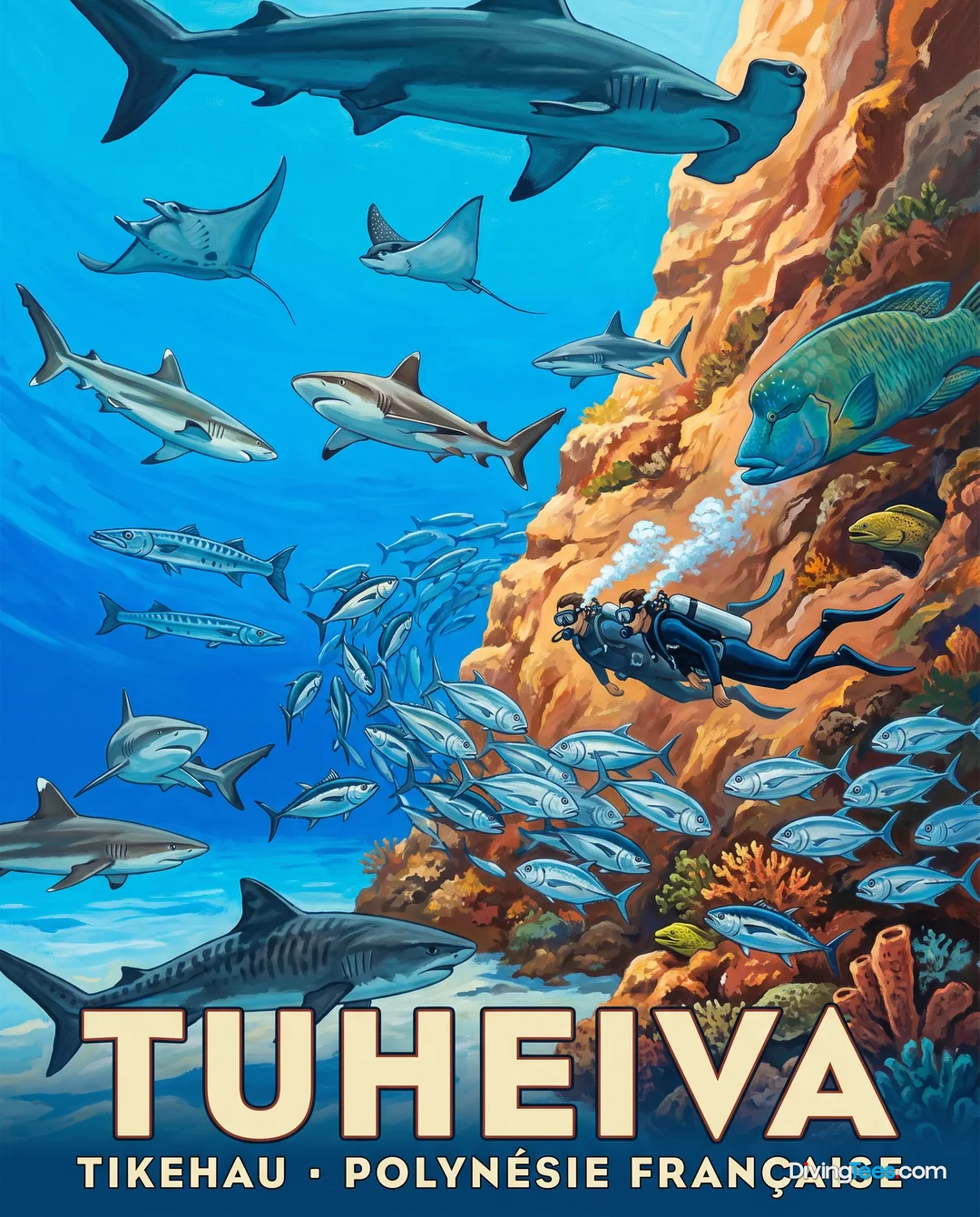
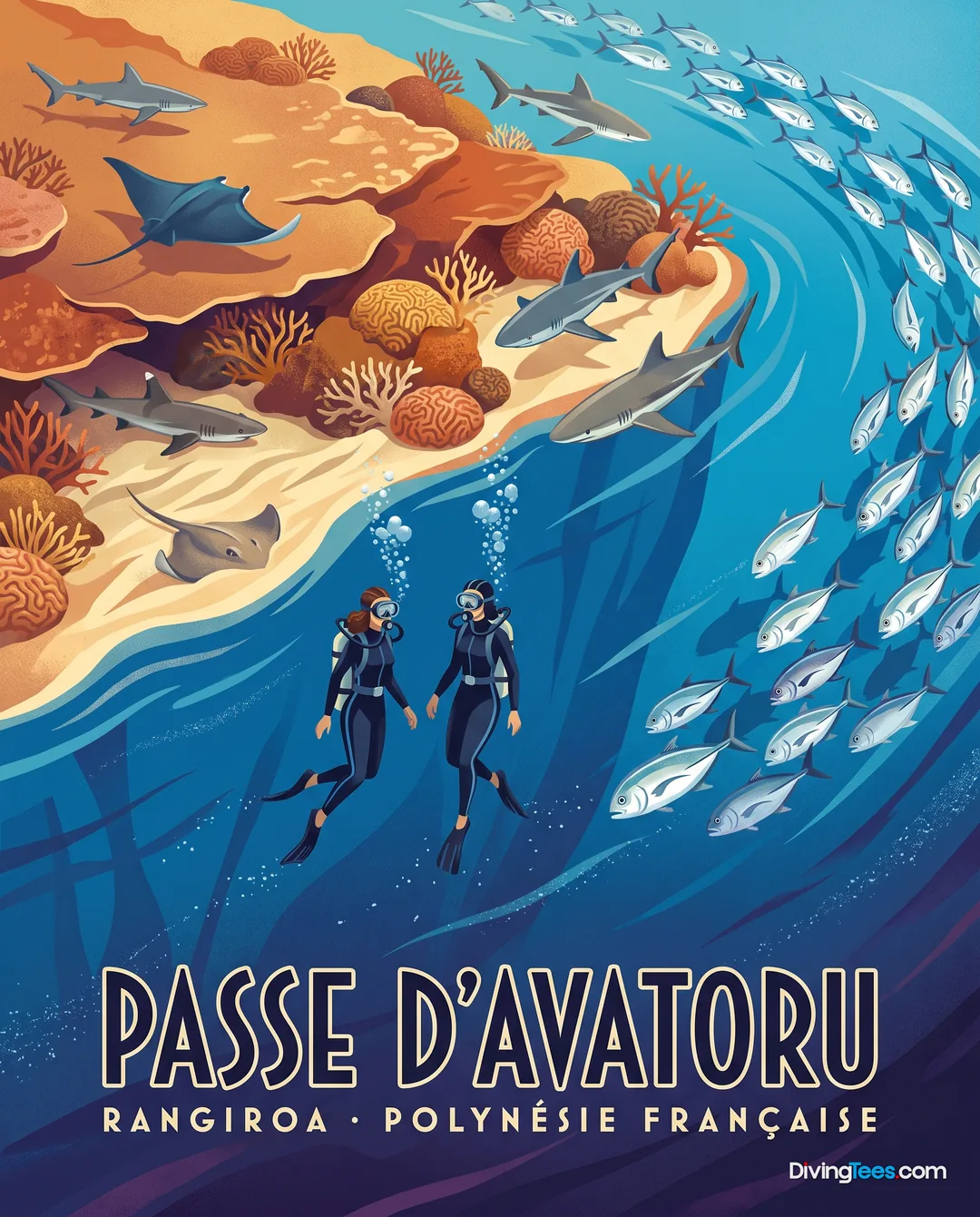
The Tuamotu are for divers who want atoll passes rather than a neatly packaged island circuit. The underwater landscape is shaped by channels, reef flats, walls and open-water drop-offs, with the tide setting the pace. Garuae Pass and Tiputa Pass bring the classic drift-diving experience; Tumakohua adds a narrow channel known for grey sharks, barracudas, tuna and Napoleon wrasse. Quieter alternatives such as Pufana show that the archipelago is not only about current, although the passes remain its defining reason to come.
Passes and current lines dominate the diving. At Garuae Pass, the drift typically works between 15 and 21 metres, with the site reaching 30 metres, while La passe de Tuheiava can take a diver to 50 metres and requires careful coordination with the tides. Maiuru combines a channelled reef flat with an abrupt wall down to 20 metres; its changing currents are the main challenge. Tairapa starts in only three metres before the coral rose cliff drops between 35 and 50 metres, then falls into much deeper water. Pufana is the useful contrast: a gently sloping lagoon site to 17 metres, with light or negligible current. Visibility is described as excellent at some sites, reaching 50 to 70 metres at Tairapa, but it remains dependent on weather. Boat drift dives, pass entries and controlled exits are the normal rhythm, rather than easy shore diving.
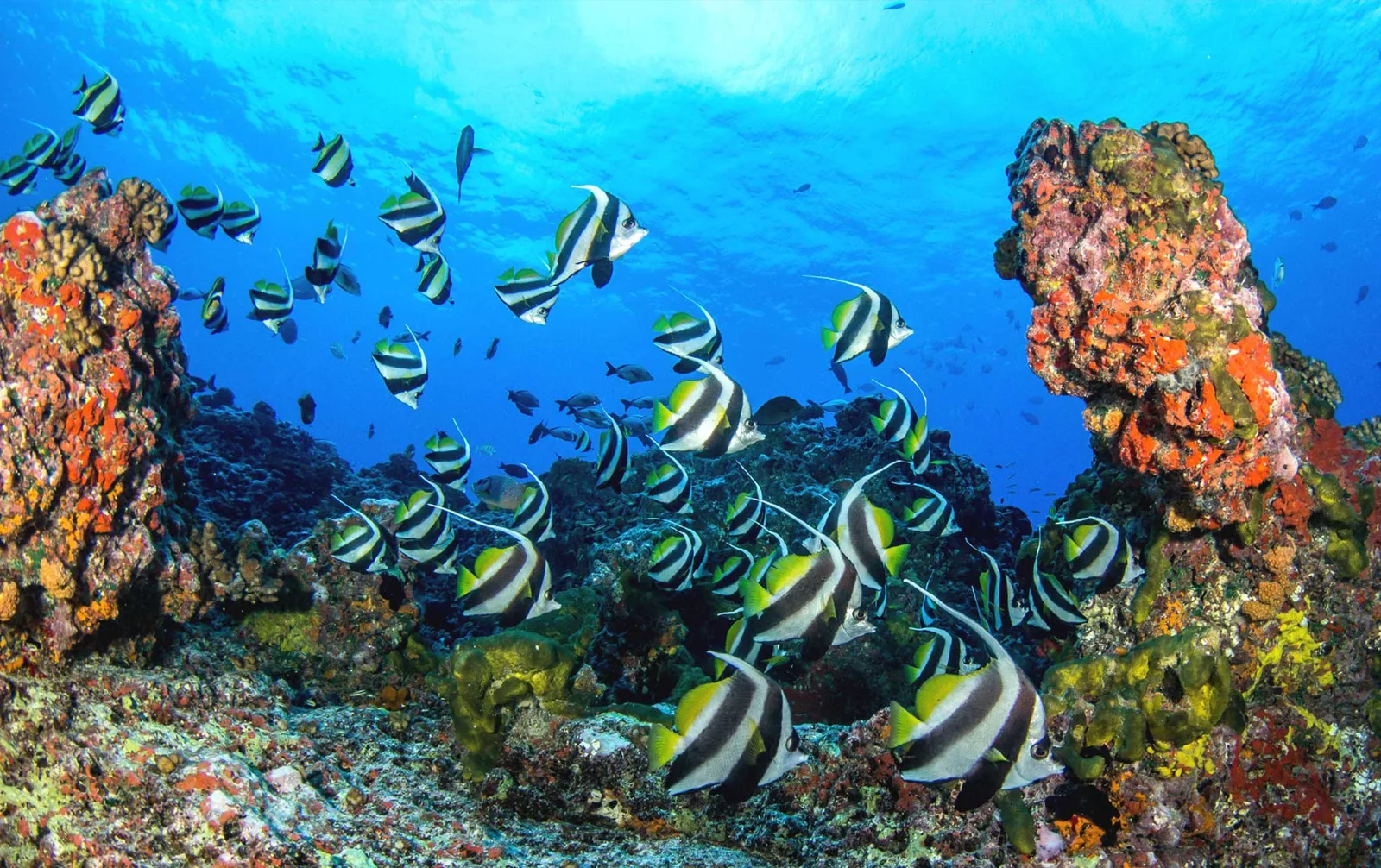
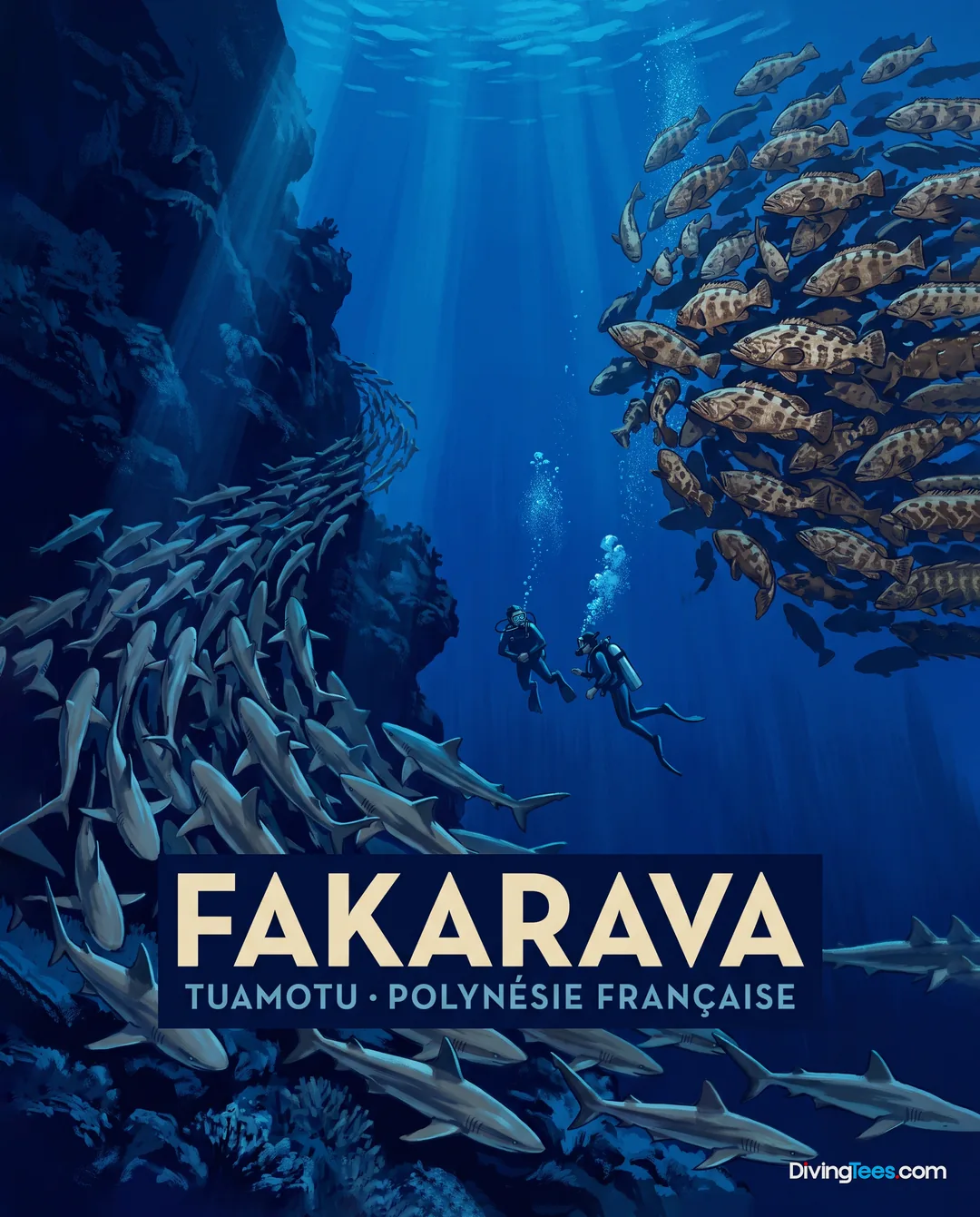
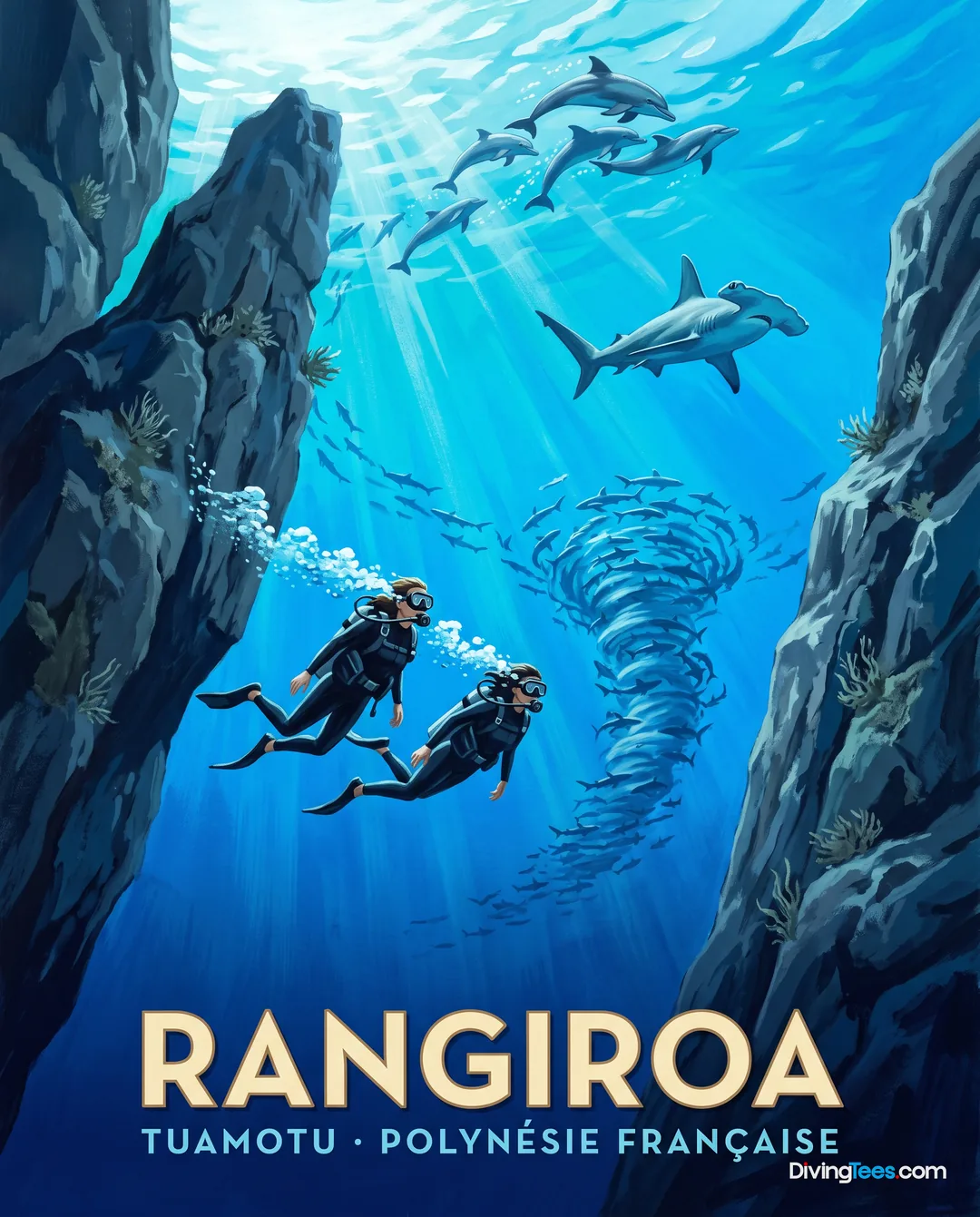
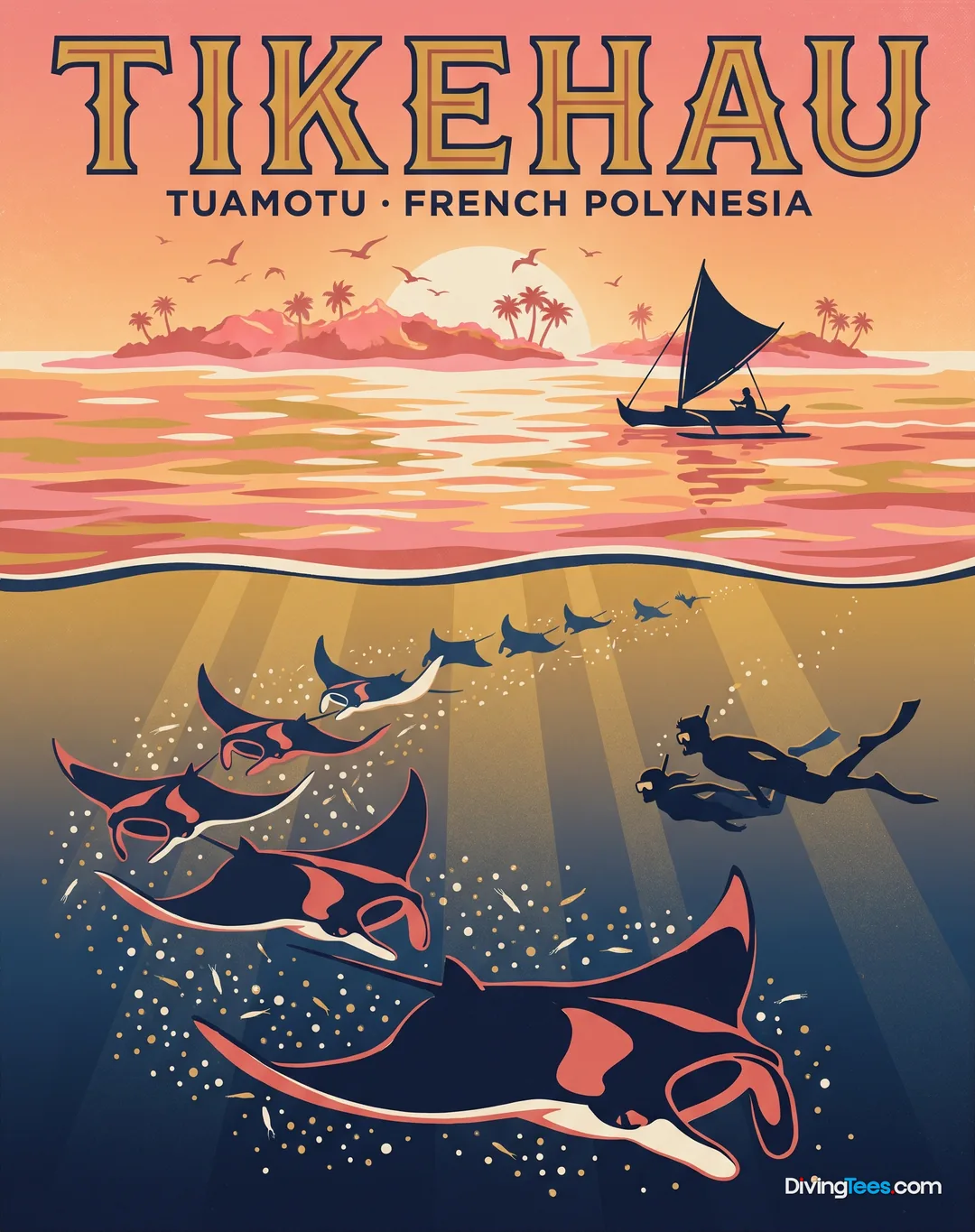
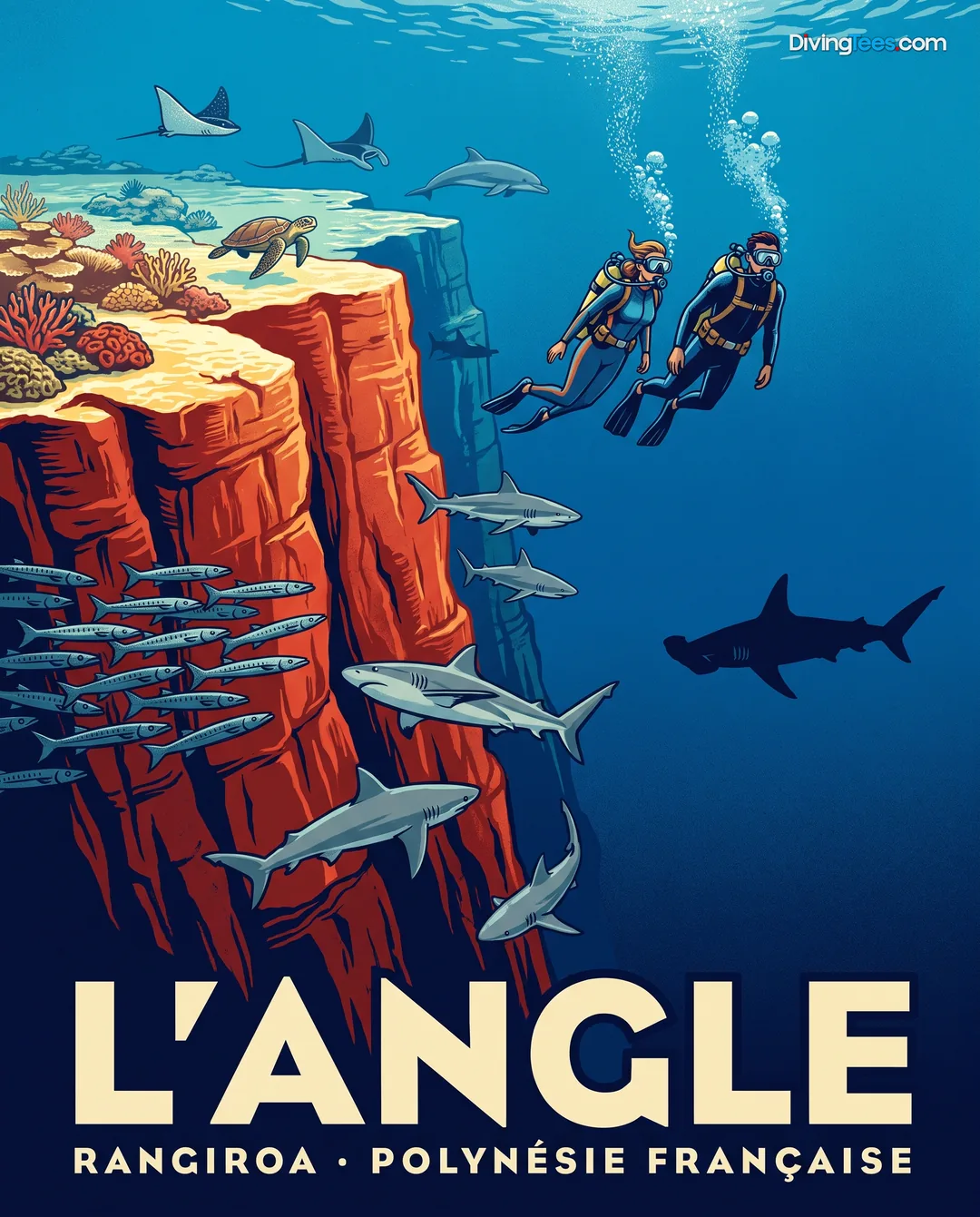
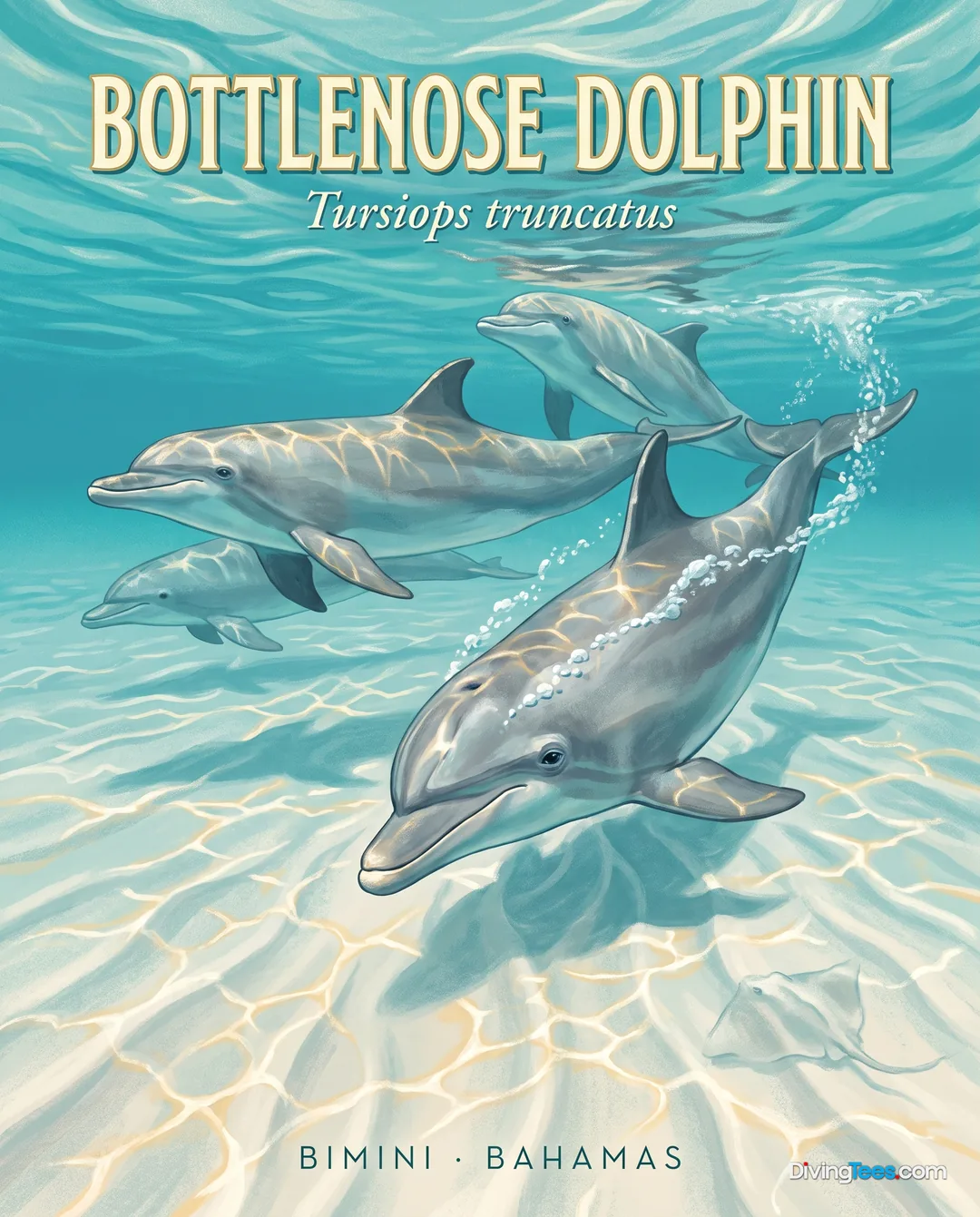
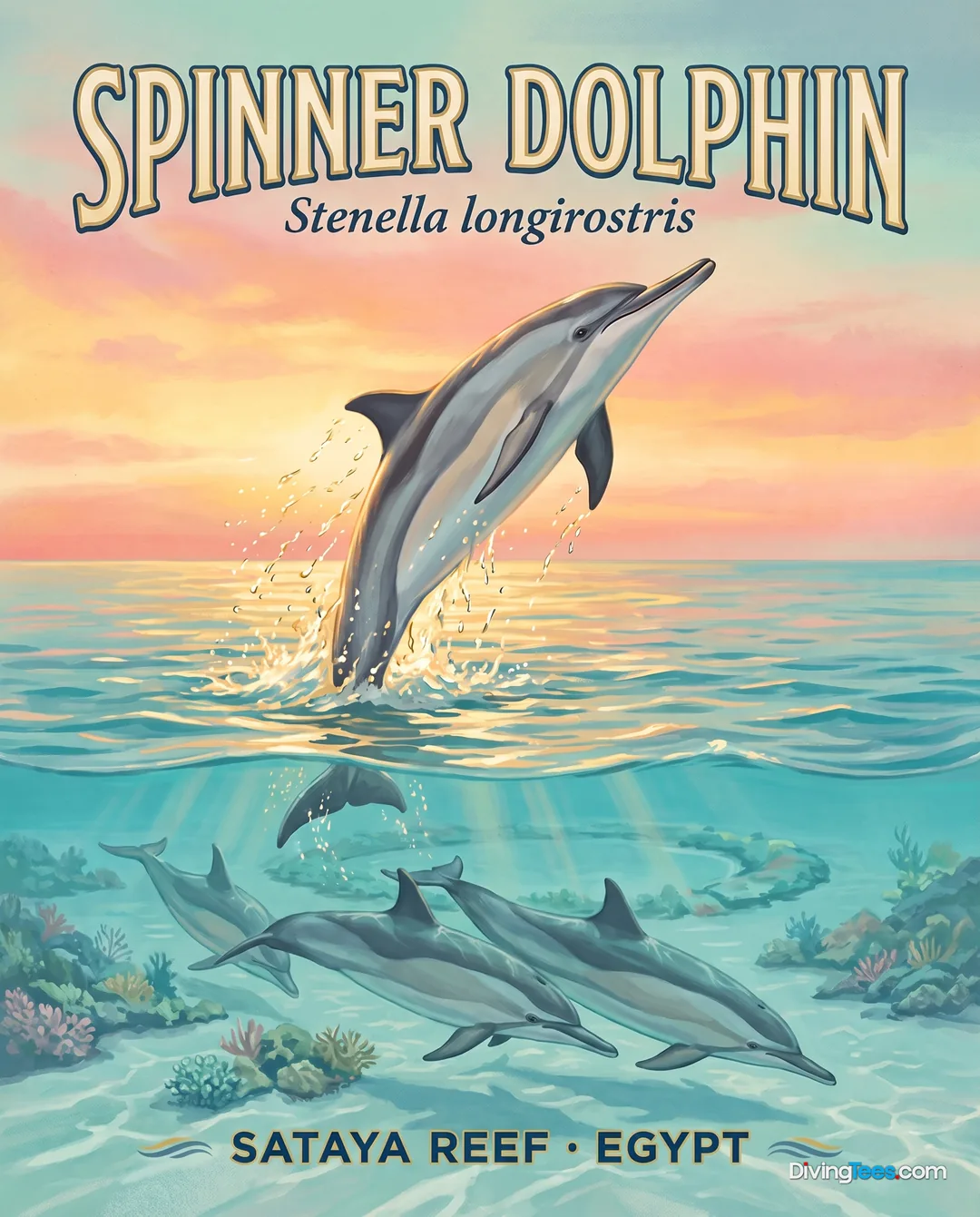
The passes are where the larger encounters tend to gather. Tumakohua is associated with one of the densest grey shark populations described in the site material, alongside barracudas, tuna and Napoleon wrasse. Garuae Pass brings reef sharks and a broad mix of reef fish, while the wider Tuamotu area can produce great barracuda, groupers, jack mackerels, jack, eagle rays and hammerhead sharks. Manta rays are possible according to season, and dolphins are recorded at Tiputa Pass. Pufana offers a slower look at parrotfish, angelfish, butterflyfish and turtles among the coral gardens. At Tairapa, late May to early June is a useful window for the aggregation of marbled groupers. Encounters remain wildlife encounters, not a fixed timetable, so repeated dives on the same pass make more sense than trying to force constant variety.
The measured drier period runs from May to October, making those months the more practical starting point for a trip organised around boat dives and pass conditions. The reason is straightforward: fewer rainy days can make the daily programme and inter-atoll arrangements easier to manage. Late May to early June also brings the recorded marbled grouper aggregation at Tairapa. Manta rays are seasonal visitors. A seven- to ten-day stay gives the weather, flights and currents room to dictate the diving, rather than leaving the whole trip dependent on a narrow sequence of departures.
Some Tuamotu sites suit beginners, notably the calm, shallow Pufana, and Maiuru et Ohutu is described as suitable for all levels. The destination becomes more demanding when its main attraction is involved: strong or unexpected currents at Maiuru, Garuae and Tiputa require confidence in drift diving, buoyancy and surface procedures. Advanced Open Water and Drift training are useful additions for divers arriving with PADI, SSI or BSAC experience. Nitrox is also practical on a trip built around repeated pass dives. Certification alone is less important than genuine comfort in moving water.
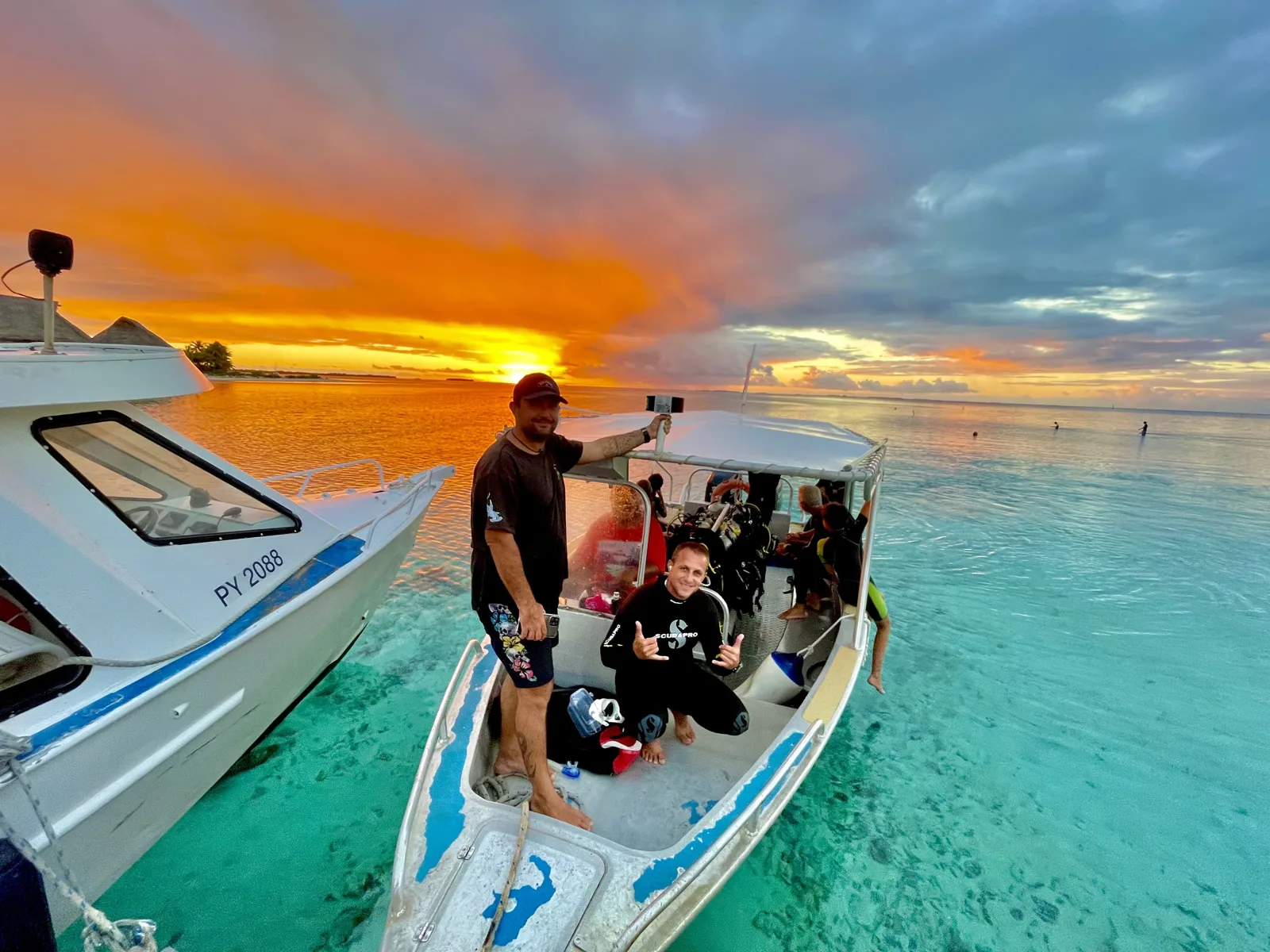
From London Heathrow, London Gatwick or Manchester, the journey begins with a long-haul flight to Tahiti. The Tuamotu atolls are then reached by domestic flights to inhabited islands; there is no road connection between them. Depending on the local service, inter-atoll travel continues by aircraft or boat, so an itinerary covering several atolls must be built around the internal transport rather than treated as one continuous destination. Once on an atoll, the transfer from a pension to the dive operation may be short, sometimes on foot, but arrangements are local and vary with the island. Allowing spare time around domestic connections matters: a missed link can cost more than a simple change of resort, because the next movement may depend on a limited local service.
Choose the atoll first, then build the rest of the journey around it. ‘Tuamotu’ covers very different diving arrangements, so check whether the local programme is centred on passes, walls or lagoon sites before assuming the headline experience will be on offer. Do not plan a chain of atolls with tight connections; the distances are structural, and extra transfers take time away from repeated dives on the passes. Keep some flexibility for current and weather decisions, especially for the full-day trip to Tumakohua, which involves a long boat run, two dives and a meal at the old village of Tetamanu. Bring well-set-up drift equipment and be particularly honest about buoyancy in current. A calm lagoon dive such as Pufana can provide a sensible change of pace, but choosing the Tuamotu for easy shore diving misses how the destination actually works.
Both land-based stays and liveaboards are possible, but the sensible format depends on the chosen atoll. A fixed stay allows repeated passes and avoids losing days to transfers; a liveaboard makes more sense when the aim is to reach dispersed sites by boat. On a land-based trip, expect a local, island-specific routine rather than a road-based touring holiday. Seven to ten days is a useful framework, giving enough time for pass repetition while absorbing domestic flights and weather-related changes.
Hello, I'm Marina, DivingDeal.com's AI assistant. I guide you through destinations, areas and countries.
Thinking about the whole trip and the flights? Talk it over with Edith →
Marina is an AI. Some links are affiliate links: DivingDeal may earn a commission, at no extra cost to you. Bookings are made with the partner.
May to October is the drier period, making it a practical time to organise boat dives and pass conditions. Late May to early June is the recorded window for the marbled grouper aggregation at Tairapa. Manta rays are seasonal visitors, while weather can still affect visibility and daily diving plans.
The Tuamotu suit different experience levels. Calm, shallow Pufana is suitable for beginners, and Maiuru et Ohutu is described as suitable for all levels. The passes are more demanding, with strong or changing currents at sites including Garuae, Tiputa and Maiuru. Confidence in drift diving, buoyancy and surface procedures is important.
Diving in the Tuamotu can include grey sharks, barracudas, tuna and Napoleon wrasse at Tumakohua, plus reef sharks and reef fish at Garuae Pass. Tiputa Pass is associated with dolphins and rays. Pufana offers coral gardens with parrotfish, angelfish, butterflyfish and turtles, while Tairapa has marbled grouper aggregations in season.
Choose the atoll first, then match your flights, boat transfers and diving schedule to its local operation. Avoid tight connections between atolls and leave flexibility for currents and weather. Land-based stays allow repeated dives on nearby passes, while liveaboards suit dispersed sites. A seven- to ten-day framework accommodates transfers and changing conditions.