Pacific Blue Adventure
Google 5/5 (101 reviews)
French Polynesia · Pacific
Coral gardens, archways, sandy channels and reef sharks shape Huahine’s diving, from sheltered six-metre plateaux to walls and caves reaching 40 metres.
For subtitles in English: start the video firstthen click the gearat the top right of the video, select “Subtitles/CC”, then “Auto-translate” and choose “English”.
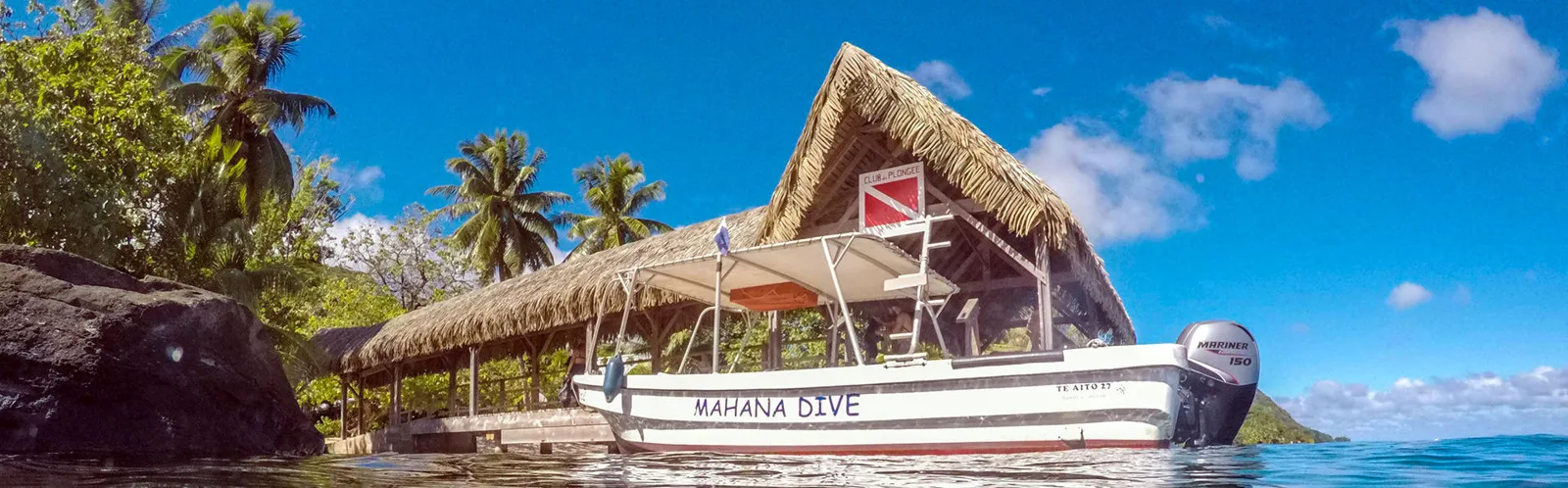
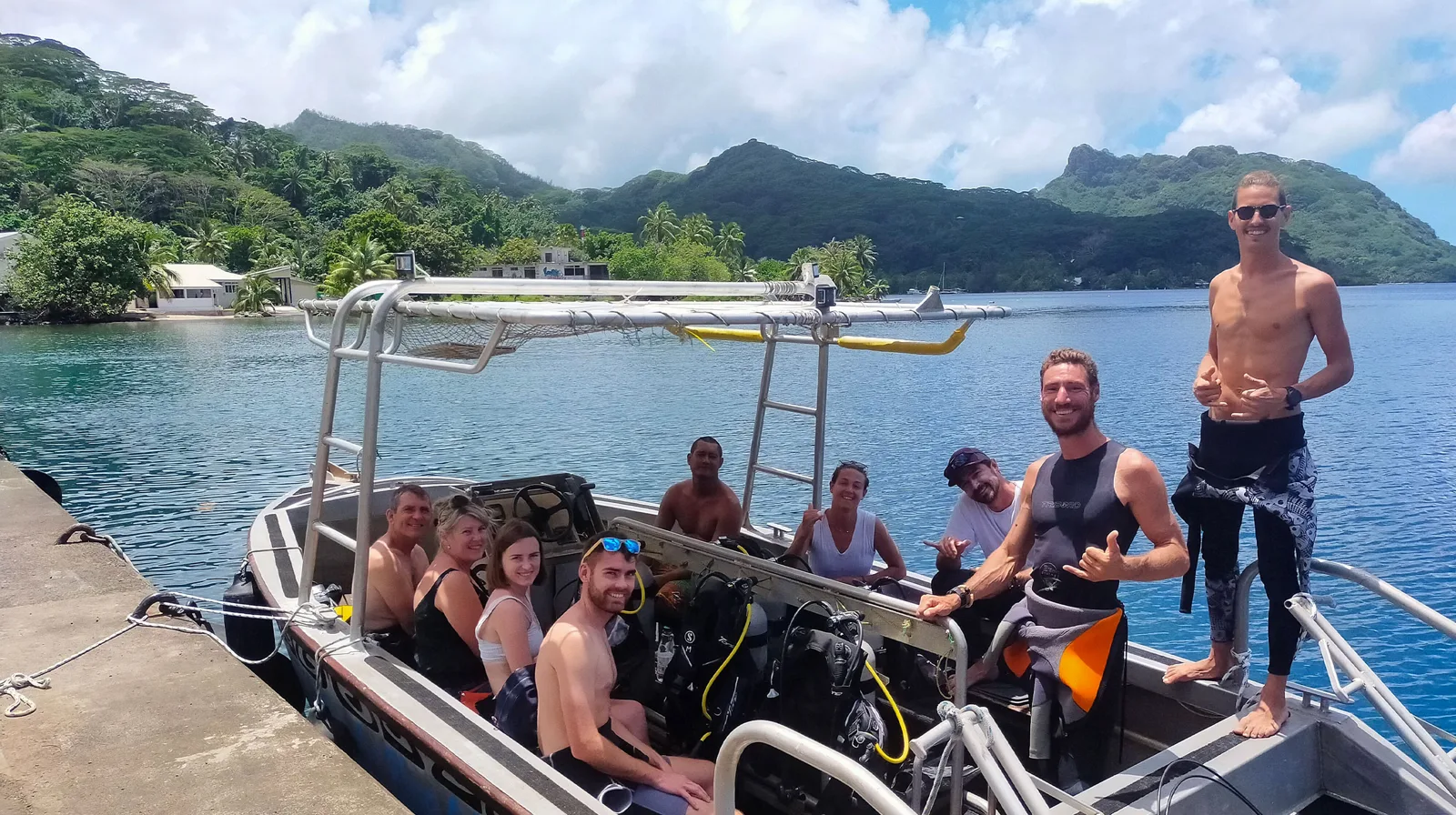
Huahine suits divers who prefer a quiet island stay to a tightly packed dive itinerary. The underwater scenery moves from lagoon plateaux and coral gardens to reef walls, natural arches and sandy channels. Fa'a Miti reaches 27 metres, while Les Grottes provides a deeper, more enclosed experience down to 40 metres. Diving is normally arranged from local boats, with enough variety for several relaxed days without turning the island into a dive-only commitment. Non-divers have a worthwhile lagoon and island programme alongside it.
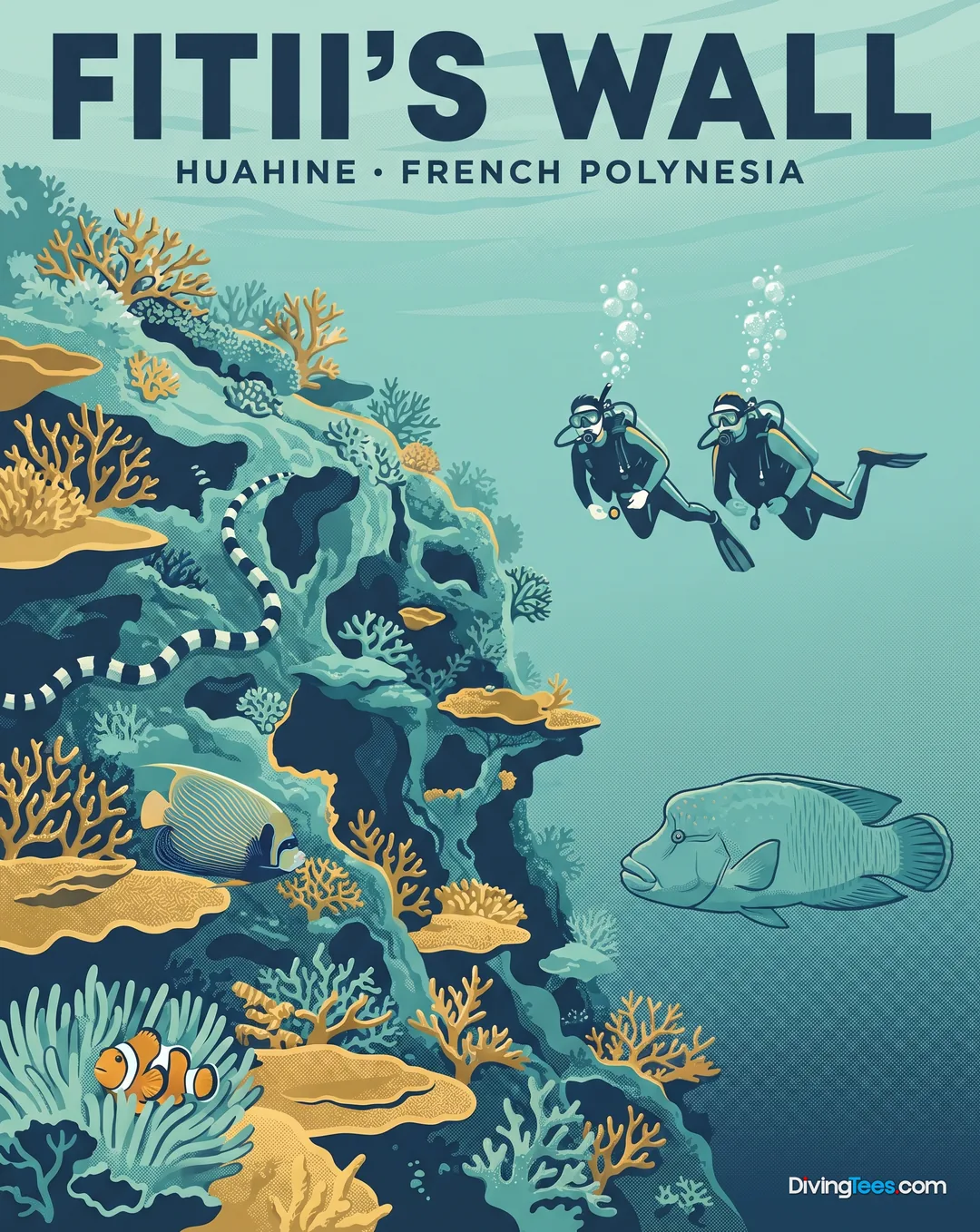
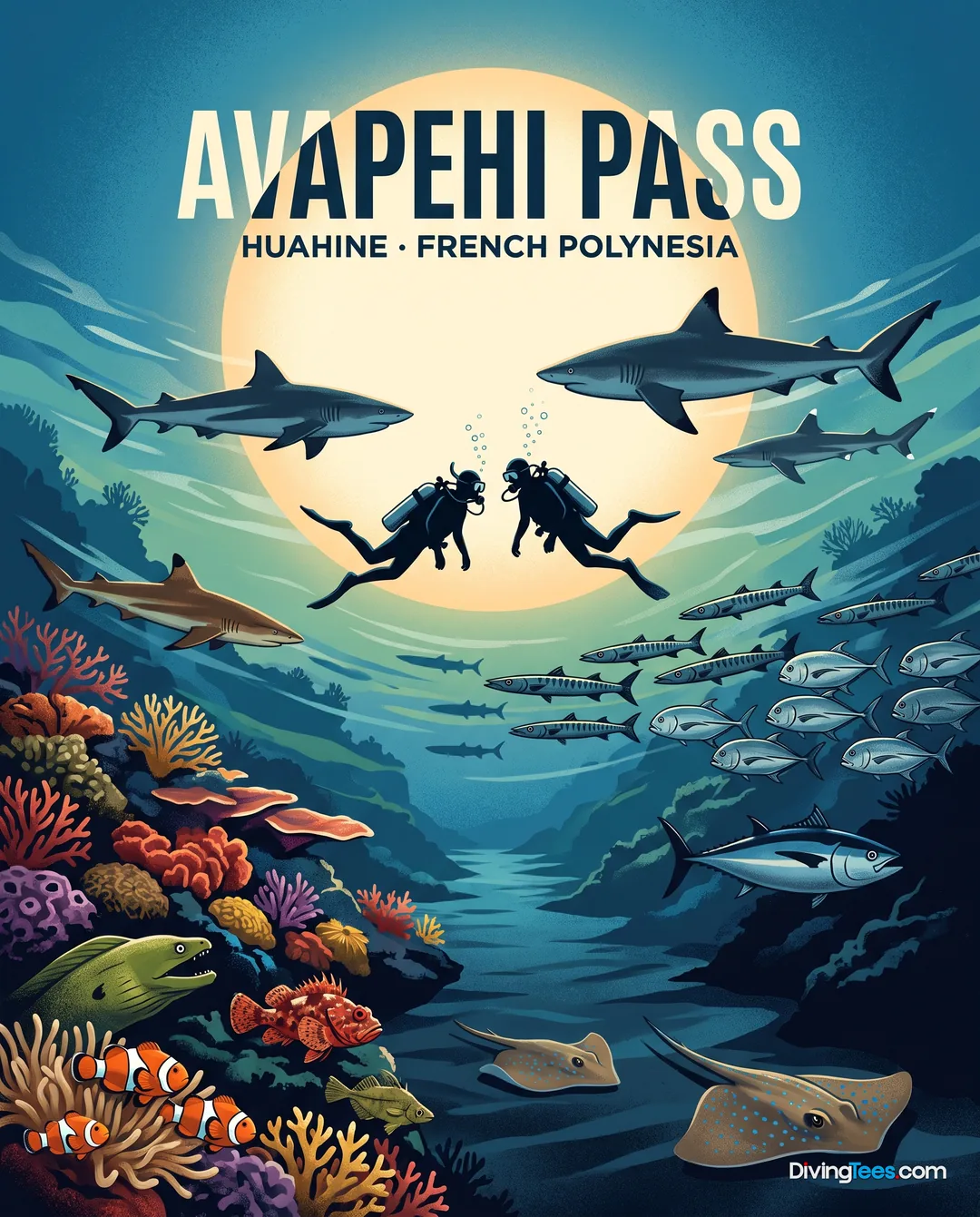
The diving mixes sheltered lagoon terrain with outer-reef features. Le plateau de Fare is a calm two-to-six-metre sandy plateau beside a coral garden, useful for introductions and training. Le Tombant de Fitii begins shallow before dropping into walls, while Fitii’s Wall follows a coral face through crevices and overhangs. Les Arches adds natural openings in the reef, and Les Grottes demands comfort with deeper, partly enclosed spaces. Currents are generally manageable but not uniform: Fitii is usually light, whereas Avapehi Pass can change from a gentle drift to a stronger flow with swell and tidal movement. Visibility is site-dependent; Fa'a Miti is noted for excellent conditions, and Fitii’s Wall is typically given as 20 to 30 metres. Local boat crews therefore matter in deciding which profile fits the day.
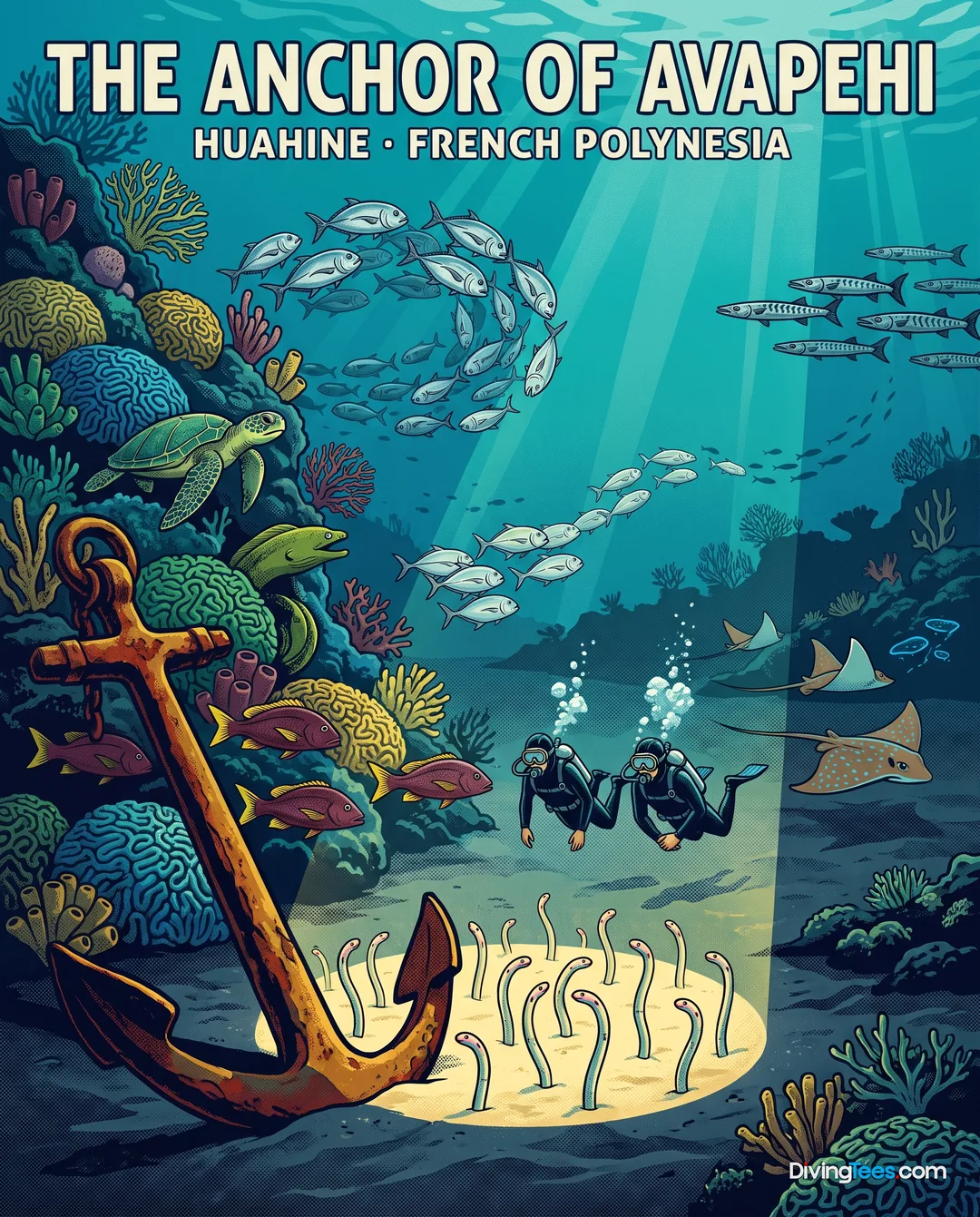
Huahine’s animal life is spread through the reef rather than tied to one guaranteed encounter. Coral gardens and walls hold colourful reef fish, moray eels, nudibranchs and crustaceans, with the shallow plateau at Le Tombant de Fitii particularly suited to slow searching. Turtles and rays may appear along the walls and sandy areas. Avapehi Pass is the place for more open-water movement, with barracuda, trevally schools and grey sharks reported in its drift profile. The wider destination’s recorded fauna also includes eagle rays, great barracuda and oceanic whitetip shark. Garden eels feature around The Anchor of Avapehi, where sandy bottoms meet reef structure. These encounters are best treated as part of the day’s site choice and conditions, not as a fixed seasonal schedule.
May to October is the clearest practical window for Huahine, when rainfall is at its lowest. That matters on a small island because drier days make boat departures, lagoon outings and non-diving plans easier to organise together. It is not a promise of identical sea conditions: Avapehi Pass can still respond to swell, tide and changing current, so the most exposed profiles remain subject to local judgement. The destination is therefore best planned around the drier part of the year for a more dependable island holiday, while leaving room for the occasional change of dive plan.
Huahine works for all levels, provided the site is matched to the diver. PADI or SSI Open Water, or an equivalent BSAC qualification, is enough for places such as Fa'a Miti and The Anchor of Avapehi. Le plateau de Fare is particularly gentle, while Le Tombant de Fitii stays within comfortable depths with weak current. Avapehi Pass calls for advanced training and experience because swell and current can strengthen. Les Arches and especially Les Grottes are better reserved for confident, experienced divers.
From London Heathrow, Gatwick or Manchester, Huahine requires a multi-leg journey through French Polynesia’s main gateway, followed by a domestic flight to the island. There is no ferry-based access constraint to build around: the important structural point is the inter-island flight and its timetable. Connections should not be treated as interchangeable, particularly when a later flight is being combined with a day of diving. Once on Huahine, accommodation is generally linked to the local dive base by a short transfer, or by walking when the base is nearby. The island format is straightforward, but it rewards a little slack in the itinerary rather than tightly stacked transport.
Approach Huahine as easy, locally guided boat diving, not as a Polynesian wreck or big-animal programme. The island’s character is clearest when the day follows local conditions: Avapehi Pass may offer a proper drift through its sandy channel, but stronger swell or current can make a quieter reef profile the better choice. Keep a full day free before flying onwards; a small-island schedule is not designed to absorb a missed connection after a tightly packed dive plan. Do not organise the trip around ferry or road transfers, because Huahine is reached by air. Nitrox is useful for several dive days, but no specialist technical pathway is central to the destination. A non-diver will fit comfortably into the holiday, particularly on lagoon or island days. Above all, set expectations around coral gardens, walls, arches and turtles rather than a dense list of headline encounters.
Five to seven days gives Huahine room to breathe: several boat-diving days, a weather or transport buffer, and time away from the water. Start with sheltered terrain such as Le plateau de Fare or Le Tombant de Fitii, then use local advice for Avapehi Pass, Les Arches or the deeper Les Grottes. Lagoon touring, beach time and general island exploration make natural alternatives for a non-diving companion and for the day before an onward flight.
Hello, I'm Marina, DivingDeal.com's AI assistant. I guide you through destinations, areas and countries.
Thinking about the whole trip and the flights? Talk it over with Edith →
Marina is an AI. Some links are affiliate links: DivingDeal may earn a commission, at no extra cost to you. Bookings are made with the partner.
Your last day stays dry: no diving in the 18-24 hours before a flight, the perfect window to see the destination from another angle.
May to October is the clearest practical window for Huahine, with the lowest rainfall and easier coordination of boat departures, lagoon outings and island plans. Sea conditions can still change, especially at Avapehi Pass, where swell, tide and current affect the drift. Leave room to adjust exposed dives locally.
Huahine suits all levels when you choose sites carefully. Open Water or equivalent training is enough for Fa'a Miti, The Anchor of Avapehi and the gentle Le plateau de Fare. Avapehi Pass requires advanced training and experience, while Les Arches and especially Les Grottes suit confident divers comfortable with deeper or enclosed spaces.
Huahine offers coral gardens, reef walls, sandy channels, arches and caves, with colourful reef fish, moray eels, nudibranchs and crustaceans. Turtles, rays, barracuda and trevally schools may appear, while Avapehi Pass has reported grey sharks. Garden eels feature around The Anchor of Avapehi, and sightings depend on site choice and conditions.
Plan five to seven days for several boat-diving days, a weather or transport buffer and time away from the water. Reach Huahine by domestic flight after travelling through French Polynesia’s main gateway, and allow slack between connections. Begin with sheltered sites, keep a full day before flying onwards, and include lagoon or island activities.