
Manihi - Blue Way
Google 5/5 (14 reviews)
French Polynesia · Pacific
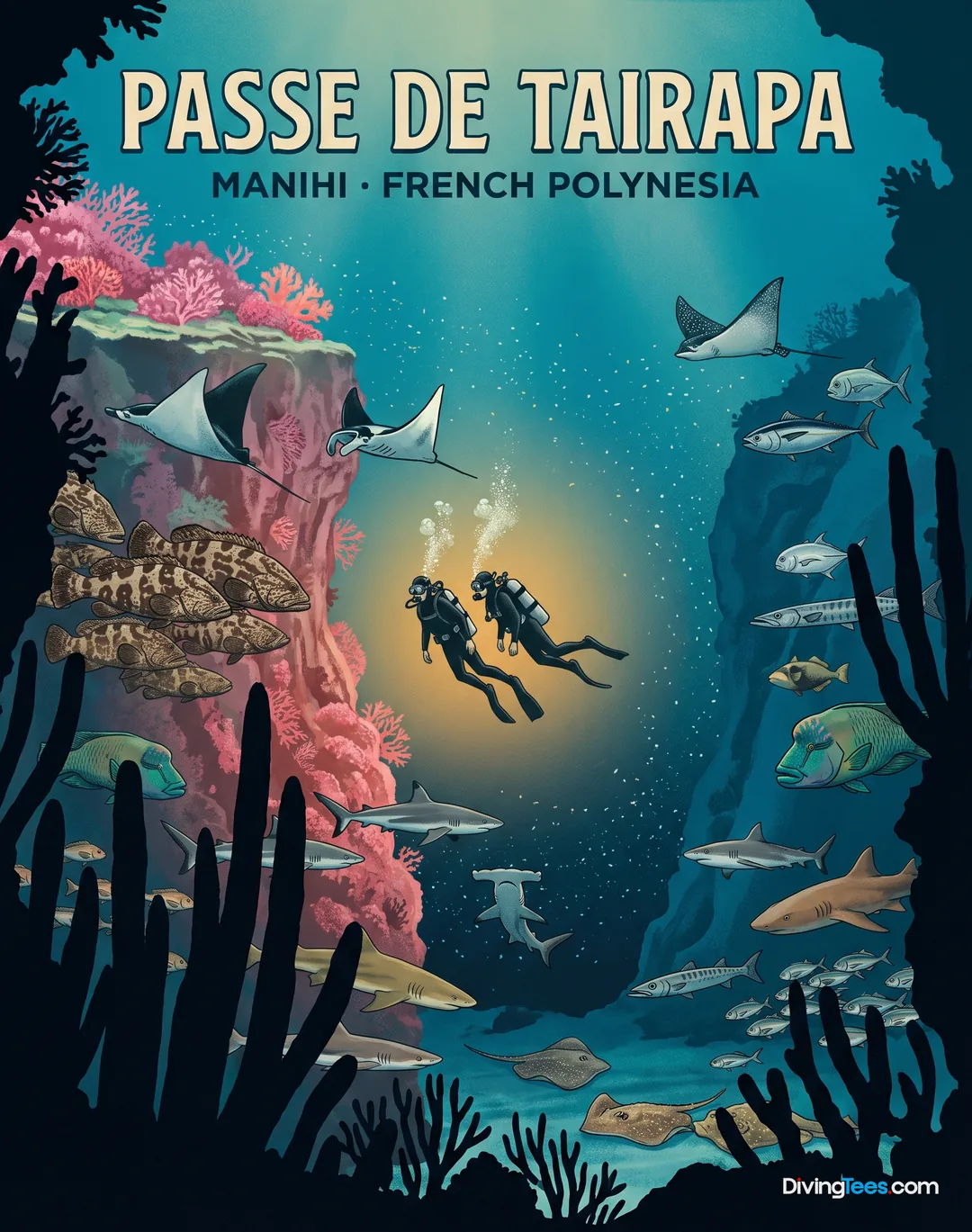
Drift along coral rose cliffs descending to 1,500 metres where protected waters host dense schools of fish and occasional reef mantas.
For subtitles in English: start the video firstthen click the gearat the top right of the video, select “Subtitles/CC”, then “Auto-translate” and choose “English”.
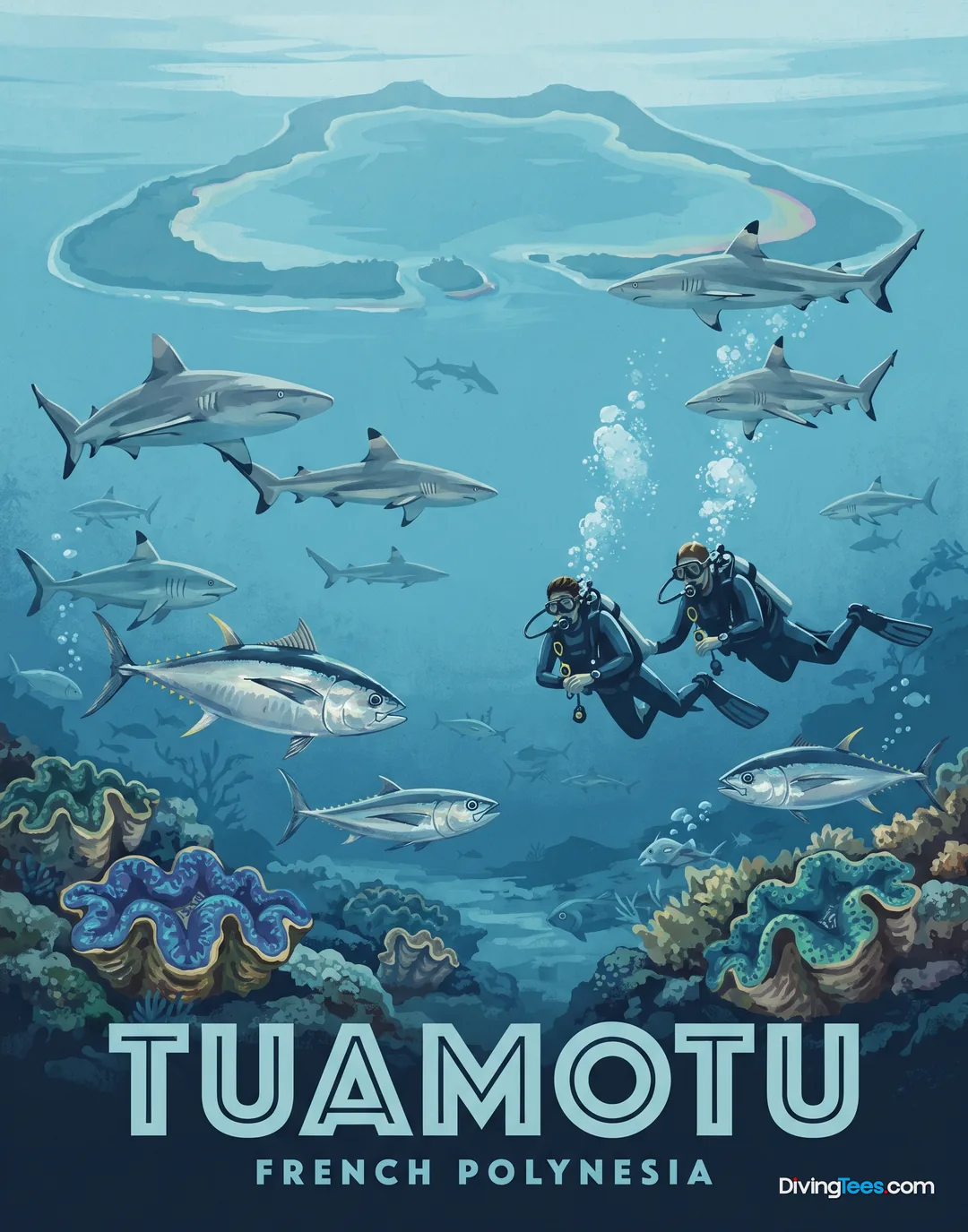
Manihi is a remote Tuamotu atoll that offers a much more intimate experience than its famous neighbours. With only one navigable pass, Turipaoa, the diving is concentrated around this single gateway where currents move between shallow coral gardens and massive drop-offs. Because the area has been a strictly protected no-take zone since 2019, the biodiversity is remarkably high, providing a sense of exploration that is increasingly rare in the South Pacific.
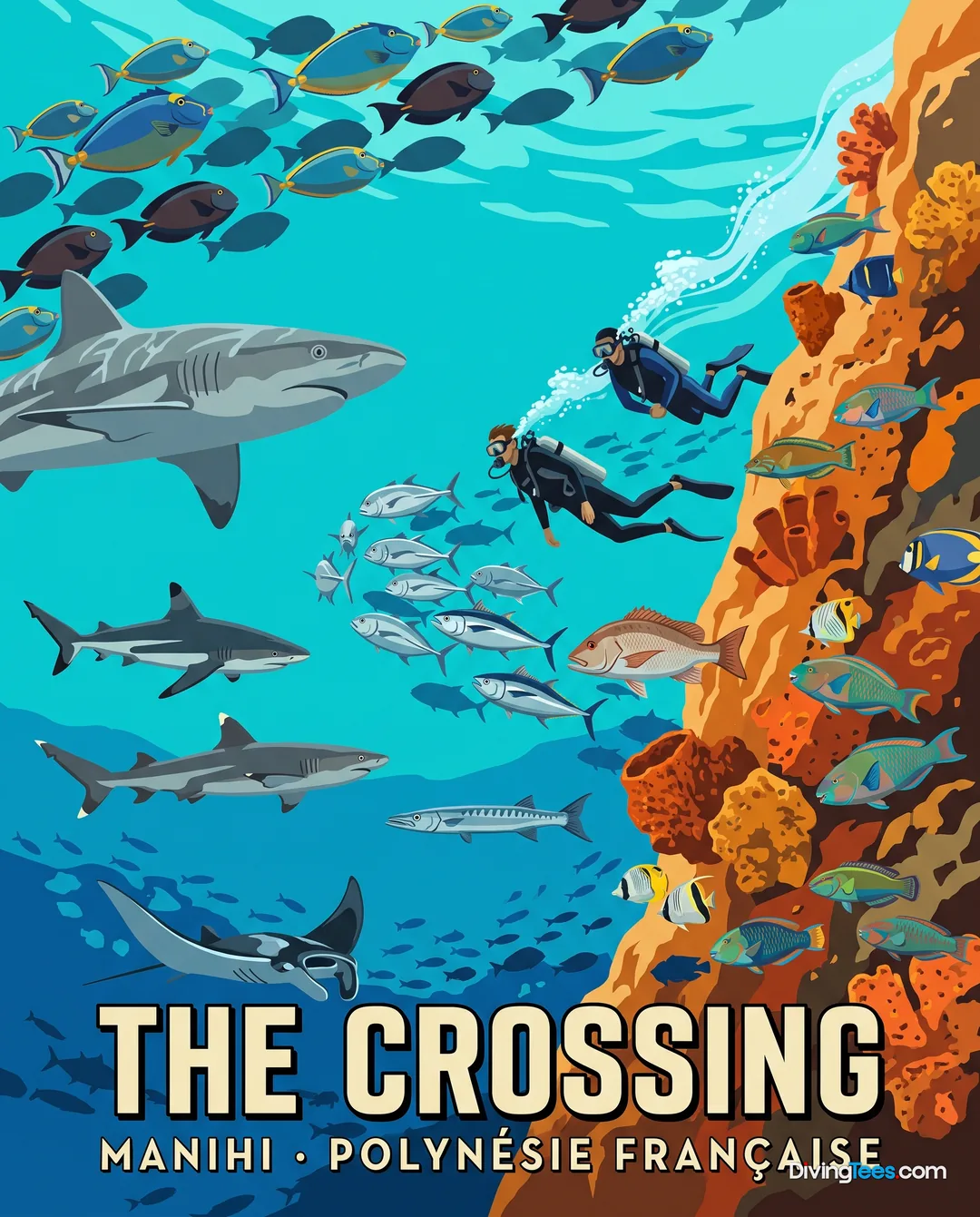
The diving here is defined by the drift. Most excursions focus on the Turipaoa pass, where you will find yourself gliding along steep walls that plunge from a few metres down to depths exceeding 1,500 metres. Visibility is typically exceptional, often reaching 30 metres or more, thanks to the clear lagoon waters and the constant refreshment provided by the pass currents. You can expect everything from calm, shallow reef explorations to more technical drift dives where managing buoyancy and position against the current is key. The topography is a striking mix of vibrant coral roses and sheer verticality.
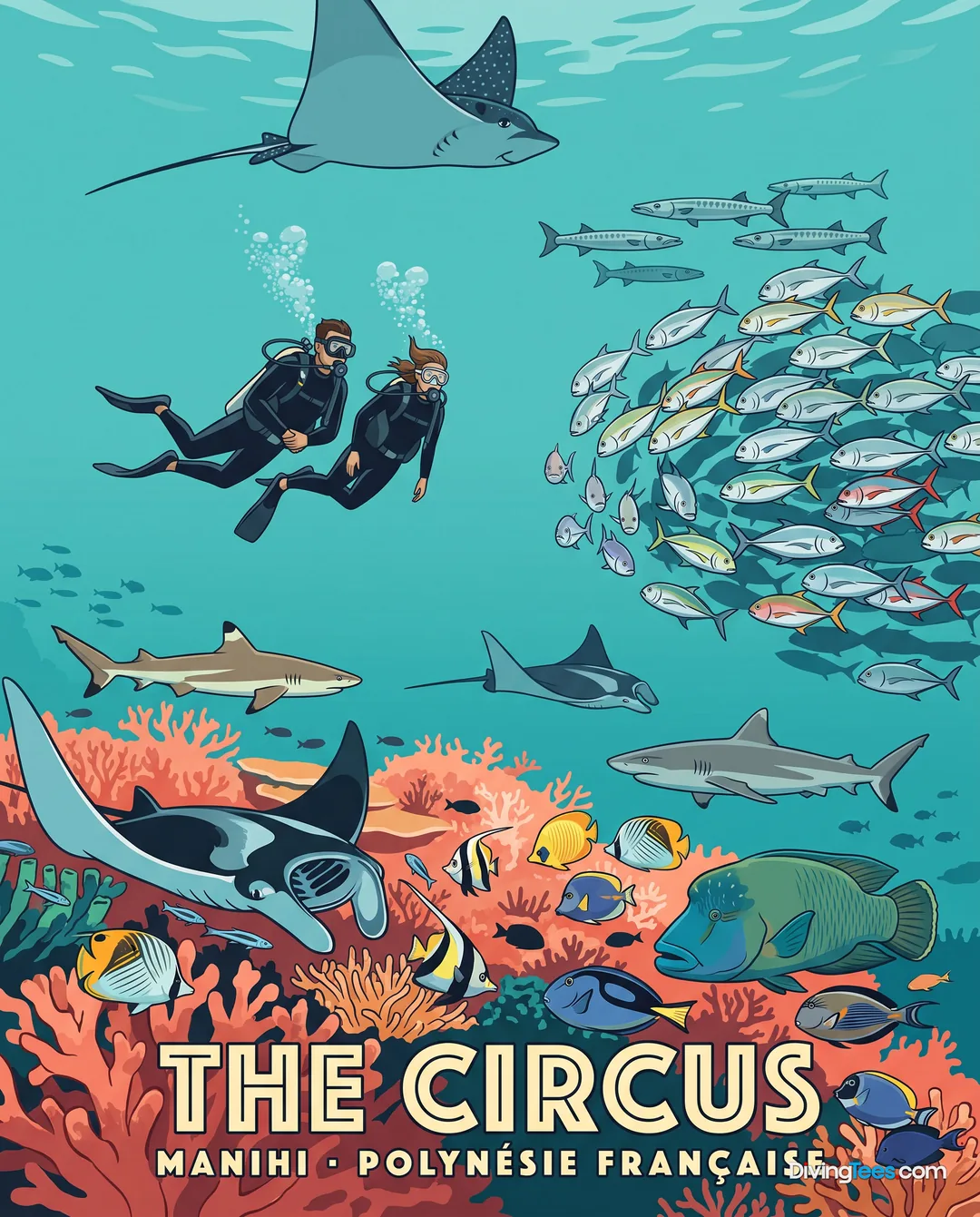
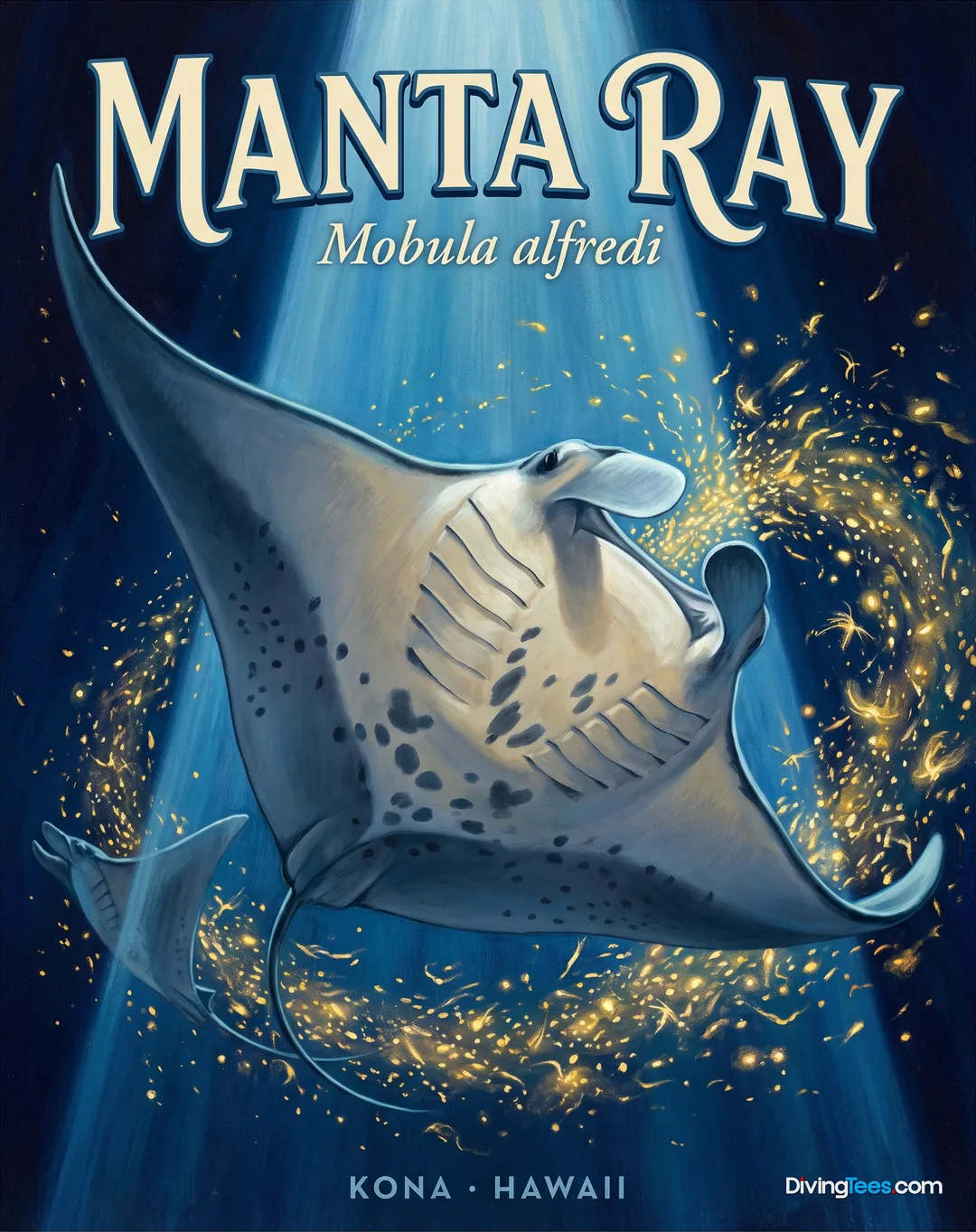
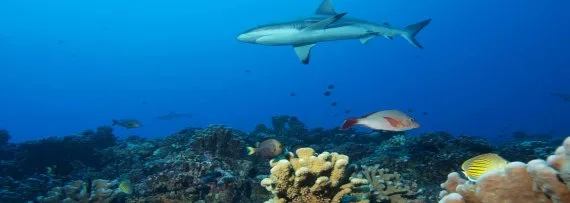
The marine life is dense, bolstered by the local fishing ban. Reef sharks and large schools of fish are constant companions. For those timing their trip around the full moon in June, the spawning aggregation of Marbled groupers provides a truly spectacular sight within the pass. While not a daily guarantee, reef mantas are also known to frequent the area between April and November, often appearing during drift dives in the pass.
The best window for visiting is from April to October. During these months, the weather is drier and the seas are generally calmer, which is crucial for safe and enjoyable drift diving in the pass. This period also coincides with the best visibility and the highest likelihood of seeing pelagic species. While the water remains warm year-round, the stable conditions of the dry season make logistics much more predictable.
While the shallow lagoon gardens are accessible to all levels, the primary draw of Manihi is the pass. Divers should be comfortable with currents and proficient in buoyancy control. An Advanced Open Water certification is highly recommended to fully enjoy the deeper walls, while a Drift Diver specialty will provide extra confidence during entries and exits. Nitrox is also a practical asset for managing multiple successive dives around the pass.
Reaching Manihi requires a domestic flight from Papeete via Air Tahiti, a journey of approximately 75 minutes. There are no international flights or regular cruise ships serving the atoll. Because the atoll is small and has limited accommodation, it is essential to have all your bookings confirmed well in advance. Once you land at the local airstrip, most transfers to the motus where accommodation and the dive centre are located are conducted by private boat or shuttle.
Do not attempt to arrive without pre-booked transport or accommodation; the limited capacity means you can easily find yourself stranded at the airport. If you are aiming for the Marbled grouper aggregation in June, book many months ahead as this specific window fills up instantly. When diving the pass, always carry your own specialized drift gear, such as a surface marker buoy and a reel, as the currents can be strong and can pull you away from the boat quickly. It is often best to schedule your more challenging wall dives for the morning when the light hits the reef relief most effectively, leaving the calmer lagoon gardens for the afternoon. Finally, remember that the most spectacular dives often occur during an incoming current, so work closely with your guide to time the tides.
A stay of 5 to 7 days is ideal. This allows enough time to experience the pass at different tidal states and provides a buffer for weather. It also leaves room to explore the quieter side of the atoll, such as visiting black pearl farms or snorkeling the shallow motu gardens, offering a balanced mix of high-adrenaline diving and relaxed Polynesian island life.
Hello, I'm Marina, DivingDeal.com's AI assistant. I guide you through destinations, areas and countries.
Thinking about the whole trip and the flights? Talk it over with Edith →
Marina is an AI. Some links are affiliate links: DivingDeal may earn a commission, at no extra cost to you. Bookings are made with the partner.
Visit Manihi from April to October, when the weather is drier, seas are generally calmer, and visibility is at its best. This period also offers the highest likelihood of pelagic encounters, including reef mantas, which frequent the pass between April and November. For Marbled grouper spawning, plan around the full moon in June.
Manihi suits all levels in its shallow lagoon gardens, but the main attraction is the current-swept pass. You should be comfortable in currents and proficient with buoyancy control. Advanced Open Water certification is highly recommended for deeper walls, while Drift Diver training, Nitrox, a surface marker buoy, and a reel add confidence.
Diving in Manihi combines vibrant coral gardens with walls descending beyond 1,500 metres, often in exceptional visibility. In the protected waters, you can encounter reef sharks and dense schools of fish. Reef mantas may appear between April and November, while Marbled groupers gather to spawn in the pass around June's full moon.
Reach Manihi by domestic flight from Papeete, then arrange a private boat or shuttle to your accommodation and dive centre. Confirm transport, accommodation, and diving well in advance because capacity is limited. A five to seven day stay allows dives at different tides, weather flexibility, and time for pearl farms or motu gardens.