
Moorea Blue Diving
Google 5/5 (404 reviews)
French Polynesia · Pacific
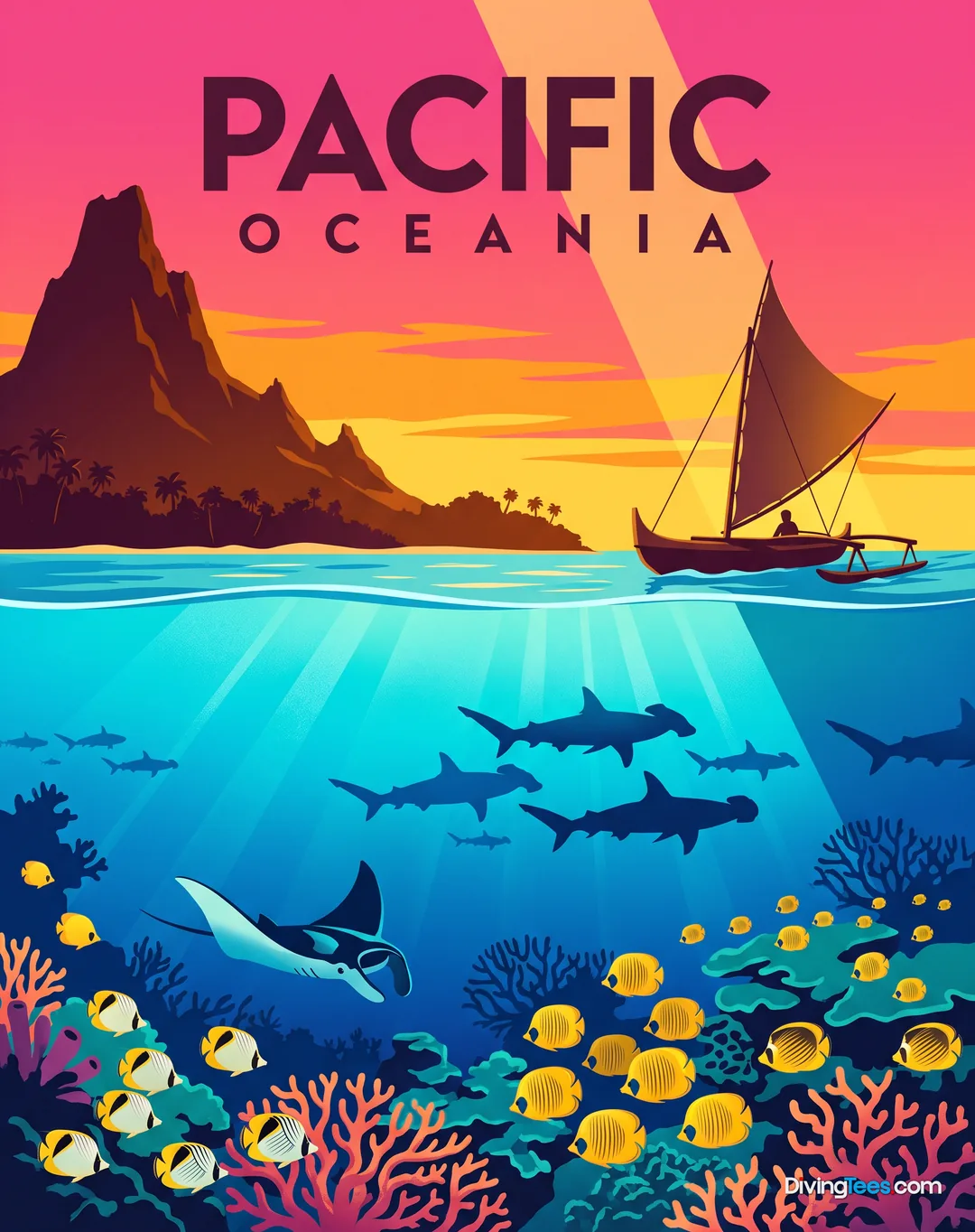
Moorea puts blacktip reef sharks, green sea turtles, lava formations and humpback whales within easy reach of a shore-based island stay.
For subtitles in English: start the video firstthen click the gearat the top right of the video, select “Subtitles/CC”, then “Auto-translate” and choose “English”.
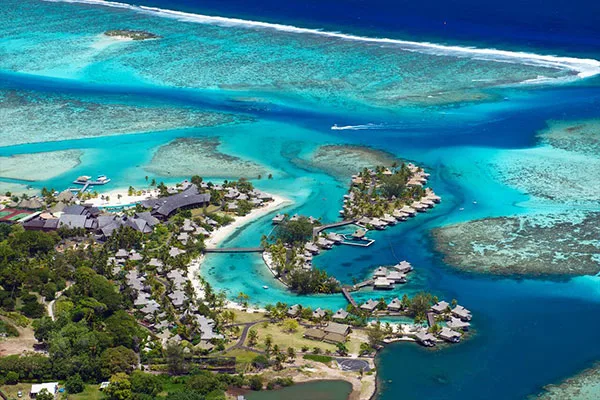
Moorea is a volcanic island close to Tahiti, suited to divers who want several days of boat diving without committing to a liveaboard. Reefs, passes, walls and sheltered lagoon sites sit around an island that also rewards time ashore. The underwater cast includes blacktip reef sharks, lemon sharks, green sea turtles, eagle rays and Napoleon wrasse. For a mature dive group or a couple travelling together, the useful combination is straightforward: diving from the coast, manageable transfers and plenty to do between outings.
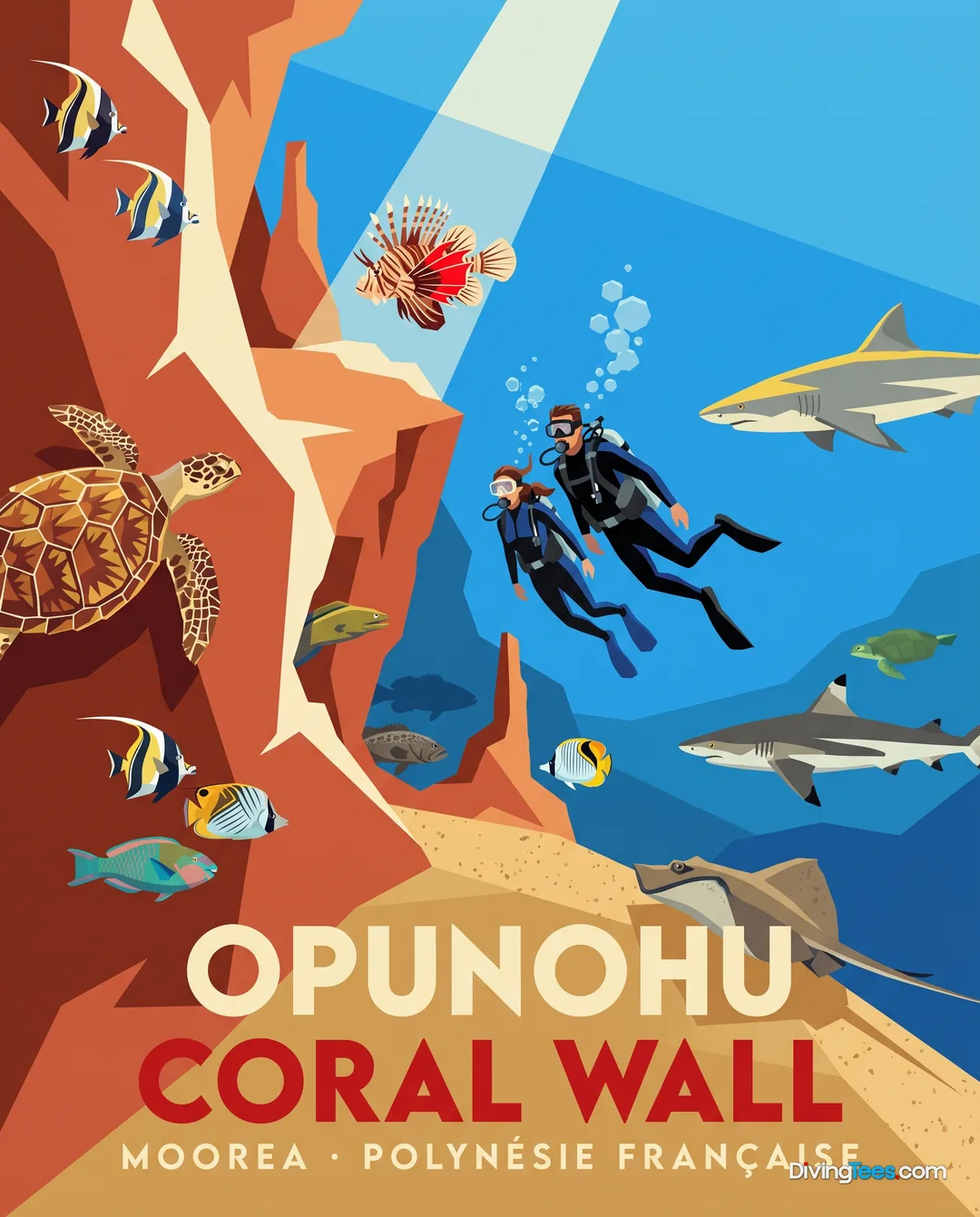
The diving moves between coral reefs, sandy training areas, lava formations, outer edges and channel-like passes. At La Virgule, a comma-shaped lava flow drops to 25 metres, while Canyons d'Opunohu uses darker, more dramatic cuts in the reef and reaches 35 metres. L'Aquarium is built around white sand and coral bommies; Roses de Corail goes deeper, with its coral structures between 30 and 45 metres. Most local profiles are described as having little or no current, but that should not be taken as a rule for every outing. Passes and tides can change the water movement, and the boat crew's site choice matters. Moorea is primarily a boat-diving destination, with profiles suitable for ordinary recreational diving as well as a few demanding deep sites. Visibility is not a sound reason to build a rigid itinerary around particular days.
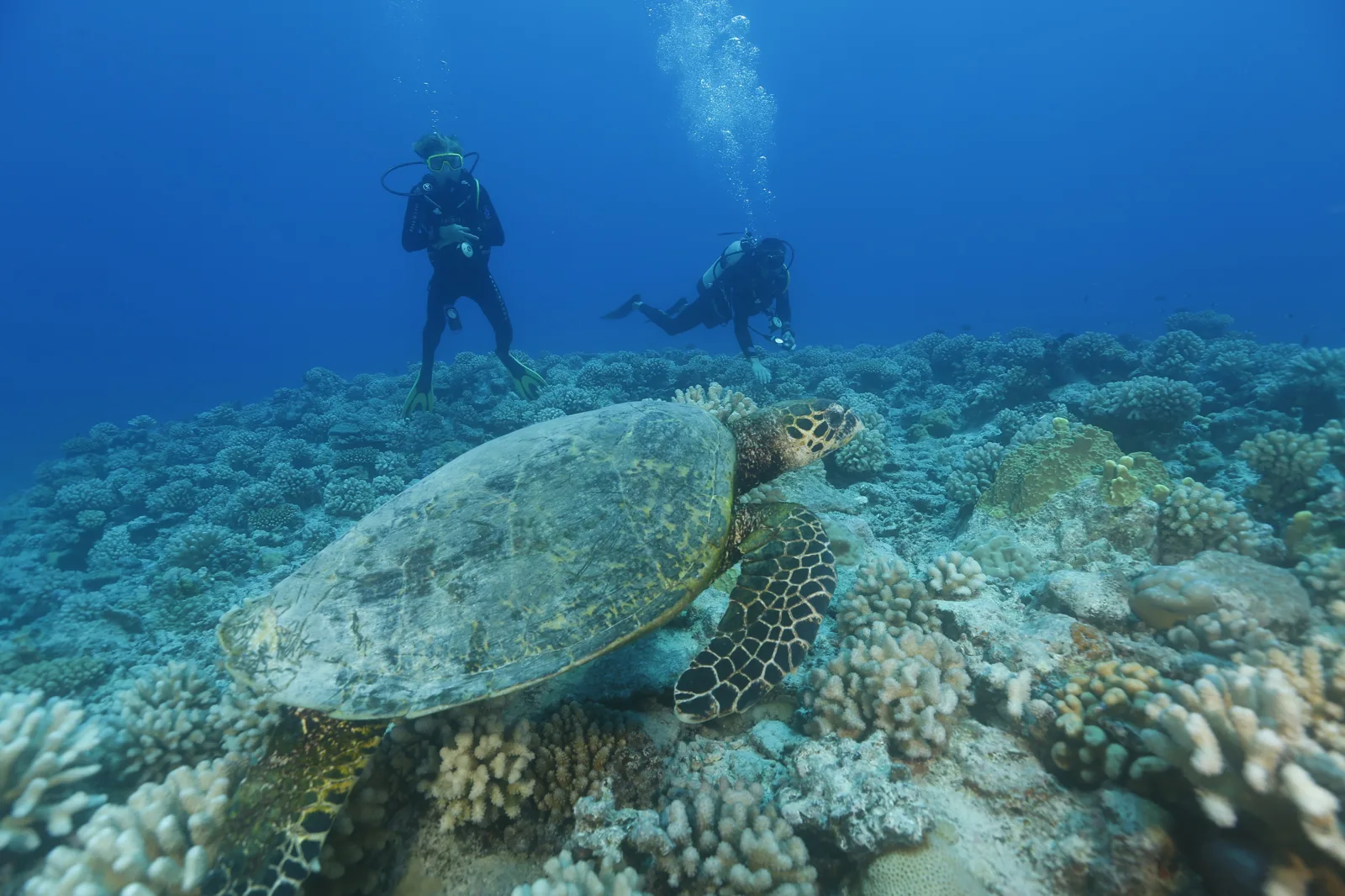
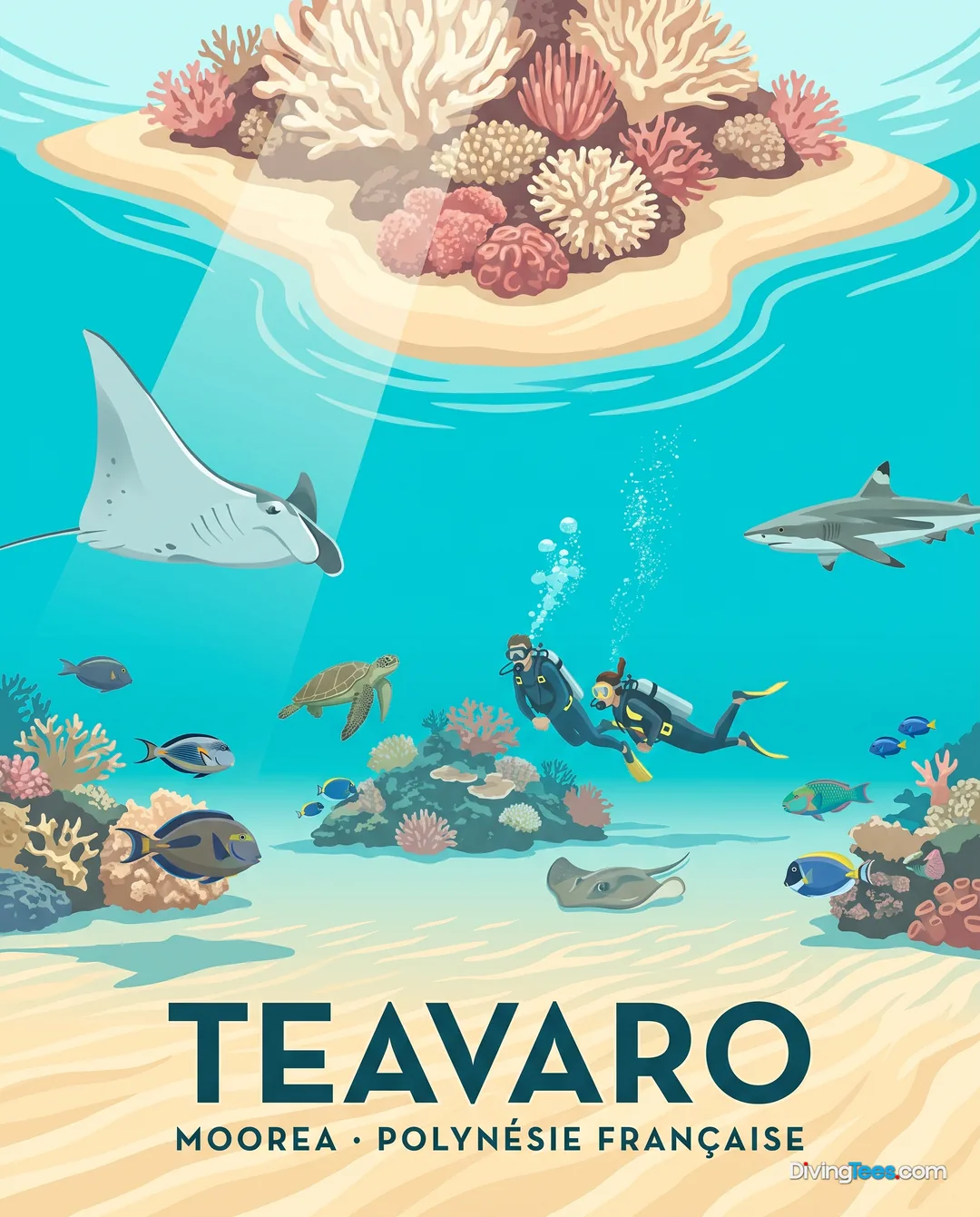
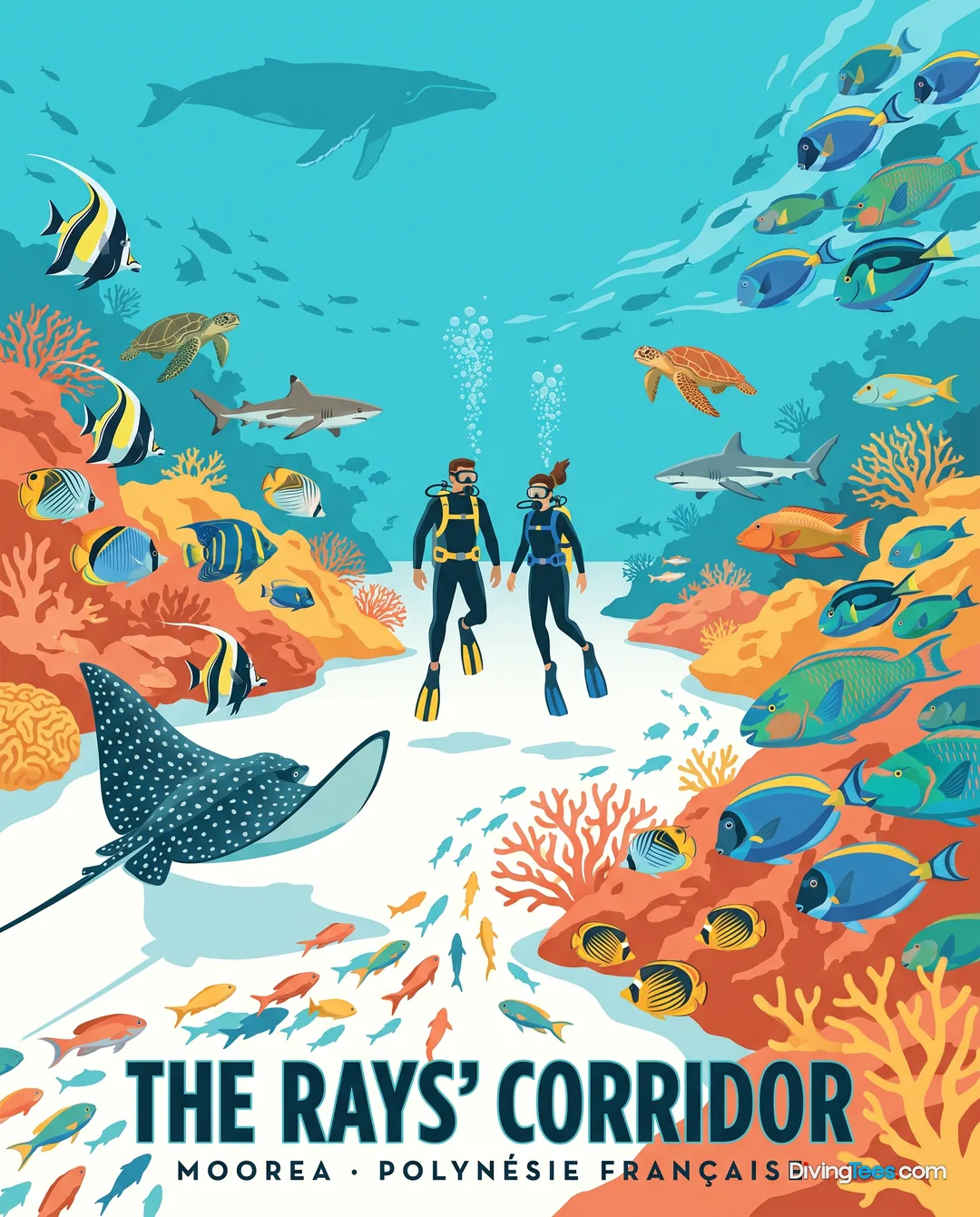
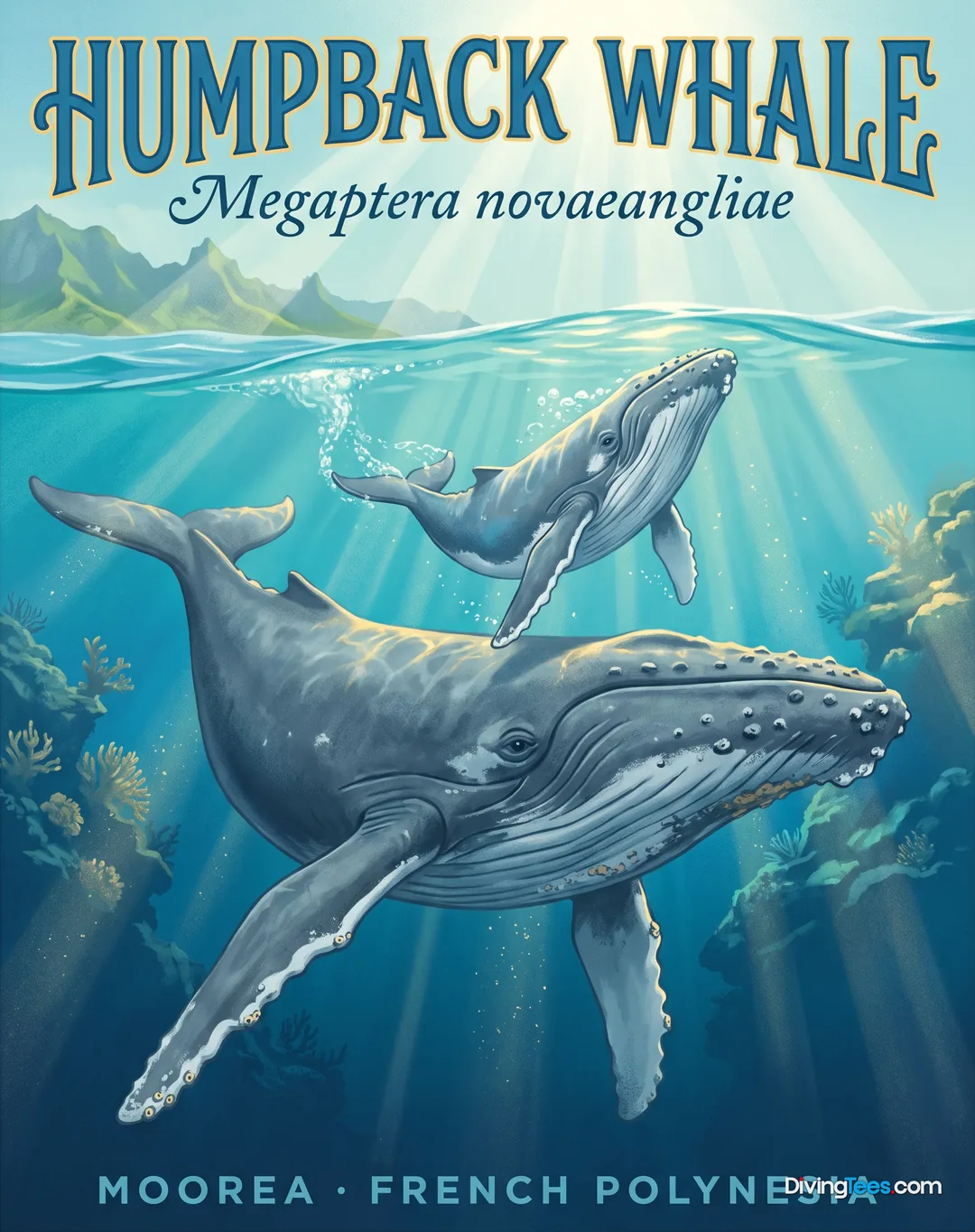
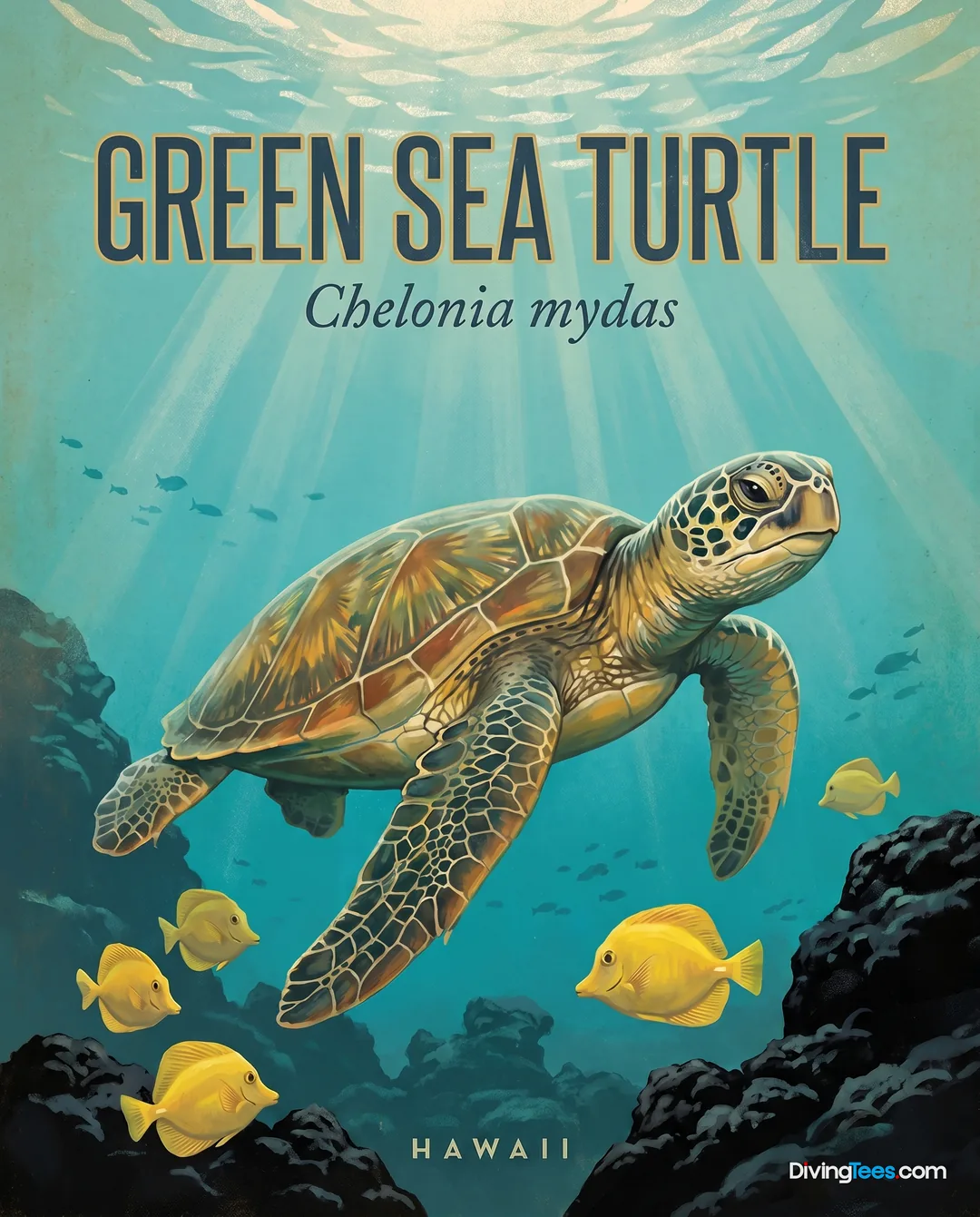
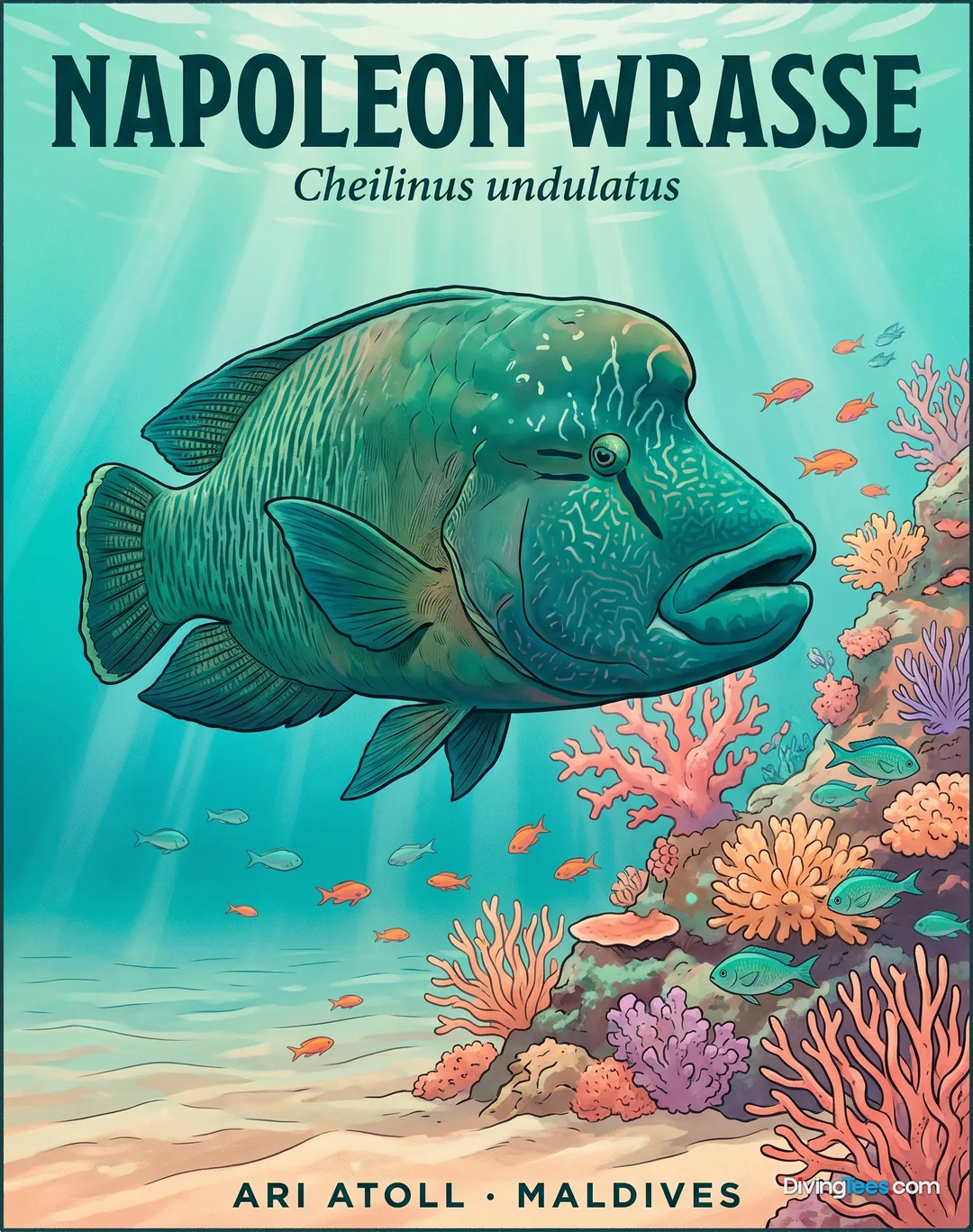
Sharks are a recurring part of Moorea's character. Blacktip reef sharks patrol sites such as Le Tiki, Rotui and Eden Park, while lemon sharks may appear around Le Tiki, Canyons d'Opunohu and Anémones. Taotoï combines reef life with Napoleon wrasse and tropical fish, and Passe de Taotoï is known for leopard rays and schools of bigeye trevally. Green sea turtles are regular subjects around La Virgule and Eden Park, with eagle rays possible over the sand at L'Aquarium. Trumpetfish, giant triggerfish, Javanese moray eels, lionfish, shrimp, parrotfish and butterflyfish fill in the smaller encounters. Humpback whales are the seasonal draw from June to November, generally an observation or PMT experience at the surface rather than a standard scuba dive. Manta rays and lemon sharks remain occasional rather than calendar-guaranteed sightings.
Moorea can be dived throughout the year, but May to August is the period with the lowest rainfall in the available records. That makes it a sensible window for a holiday built around several boat days, while still leaving room for island walks and lagoon trips. June to November adds the possibility of humpback whale encounters around Moorea and tends to bring more visitors, particularly during metropolitan holiday periods. The practical choice is therefore a trade-off: the drier months suit a more predictable land-and-sea itinerary, while the austral winter into spring is the period to consider for whales. A five- to seven-day stay leaves room for weather or sea-state changes without turning every day into a dive day.
Moorea works for beginners and for divers who have been away from the water for a while, provided the briefing is taken seriously. Open Water, PADI, SSI, BSAC or equivalent entry-level qualifications cover many of the calmer reef profiles, including Anémones, Eden Park and Rotui. Advanced certification is useful for deeper or more exposed outings. Roses de Corail is for experienced divers with Advanced Open Water or CMAS Level 2-equivalent training, while Les Failles d'Opunohu reaches 60 metres and is reserved for divers with substantially deeper experience. Current tolerance, not the certificate alone, should decide the day's plan.
From London Heathrow, Gatwick or Manchester, the journey first reaches Tahiti; Moorea has no international airport. The final approach is either a fast ferry from Tahiti or a short domestic flight, so the Tahiti-to-Moorea connection is the structural part of the trip rather than a continuous road transfer. It is worth leaving sensible margin around that change, especially when dive bookings or onward flights are involved. Once on Moorea, accommodation and dive centres are spread along the coast, with the south-western shore a common base. Depending on the bay and the exact lodging, the centre may be reached on foot, by arranged shuttle or by taxi. A booking that looks close on a map may still be awkward without transport, so the transfer plan belongs in the itinerary from the start.
Early morning departures are worth requesting when the aim is a quieter boat and a less crowded first dive. Before boarding, ask whether the plan is a lagoon, pass or wall: the labels matter here, because the depth, relief and current can change quickly with the tide. Do not assume that a calm lagoon outing describes every Moorea dive; Canyons d'Opunohu and deeper sites demand more composure on descent and return. Keep one day uncommitted near the end of the stay, since boat conditions can move a planned dive. If the accommodation lies away from the main bay, arrange the transfer with the diving rather than improvising a taxi each morning. A well-fitting personal mask and a familiar computer are particularly worthwhile on a boat-based schedule. For whales, book the expectation correctly: surface observation or PMT follows different approach rules from scuba. Do not touch or feed wildlife, take souvenirs from the reef, or allow a boat to anchor where a mooring is available.
Five to seven days suits Moorea because it allows several boat outings around the island without making diving the only activity. A typical stay can mix reef and pass dives with a slower training profile such as L'Aquarium, then reserve time for the belvederes, beaches, sheltered kayaking or paddleboarding. Non-divers are well served by the bays and island excursions. Staying near the chosen diving area simplifies mornings; staying farther away offers more independence only if transport is arranged.
Hello, I'm Marina, DivingDeal.com's AI assistant. I guide you through destinations, areas and countries.
Thinking about the whole trip and the flights? Talk it over with Edith →
Marina is an AI. Some links are affiliate links: DivingDeal may earn a commission, at no extra cost to you. Bookings are made with the partner.
Your last day stays dry: no diving in the 18-24 hours before a flight, the perfect window to see the destination from another angle.
 Adventure
⏱ 4 h · ★ 5.0 (39 reviews)
from £155$207€185
see on Viator ↗
 Culture
⏱ 3 h · ★ 5.0 (29 reviews)
from £167$224€200
see on Viator ↗
 City
City⏱ 3 h · ★ 5.0 (14 reviews)
from £544$728€650
see on Viator ↗
 Culture
⏱ 4 h · ★ 5.0 (8 reviews)
from £608$813€727
see on Viator ↗
Ratings and reviews collected by Viator and Tripadvisor.
You can dive Moorea throughout the year. May to August usually brings the lowest rainfall, making it a sensible period for several boat days and island activities. Visit from June to November if humpback whales matter, although this period can bring more visitors. Keep your plans flexible for weather and sea conditions.
Moorea suits beginners and divers returning after time away, with calm profiles at Anémones, Eden Park and Rotui. Entry-level qualifications cover many ordinary recreational dives, while advanced training helps with deeper or more exposed sites. Experienced divers are needed for Roses de Corail and the substantially deeper Les Failles d'Opunohu.
You may encounter blacktip reef sharks, lemon sharks, green sea turtles, eagle rays, Napoleon wrasse and tropical reef fish. Moorea also has coral bommies, sandy areas, lava formations, walls, passes and dramatic reef cuts. Humpback whales visit from June to November, usually for surface observation or PMT rather than scuba.
Plan several boat outings while leaving time for beaches, walks, kayaking or paddleboarding. A five- to seven-day stay allows room for changing sea conditions, with one day uncommitted near the end. Arrange your Tahiti connection, accommodation transfers and dive-centre transport early, especially if your lodging is away from the main bay.