Liveaboards · Egypt
MY Destiny — a modern Red Sea dive boat built around small groups
What makes this boat unique
- MY Destiny carries up to 20 divers in 10 modern cabins and was renovated in 2025.
- The boat runs 2–4 dives per dive day, with 12-litre aluminium tanks and included Nitrox.
- Three instructors organise dive groups at a maximum ratio of one guide to seven divers.
- Two Yamaha tenders with ladders collect divers from the water and return them to the dive deck.
- ENOS, oxygen, a defibrillator, DAN kits and two life rafts support the boat's safety system.
For subtitles in English: start the video firstthen click the gearat the top right of the video, select “Subtitles/CC”, then “Auto-translate” and choose “English”.
The invitation
MY Destiny is for divers who want demanding Red Sea sites without giving up space and order on board. It was designed by divers, not adapted from a passenger boat: the dive deck, camera area, storage and tender operation all serve the work of getting in and out of the water repeatedly. The strongest reason to choose it is the combination of small groups and access to routes that reach the Brothers, Daedalus, Elphinstone, Fury Shoals and the wrecks north of Hurghada. A week here is built around diving, but the boat gives the surface intervals enough room to recover properly. The choice is less about chasing the largest vessel or the cheapest berth than about having a newer, stable platform, three instructors and a crew that keeps the practical side of a safari moving.
Boarding
From the dock, MY Destiny presents as a large steel liveaboard with a clean, modern finish rather than a boat carrying years of visible safari wear. Its newer bow design is meant to cut through waves more effectively, which matters when the route leaves the coast for exposed reefs. Once aboard, the layout feels made for divers: the dive deck opens towards the salon, personal storage is close to the working area, and the route from cabin to gear to tender is direct. The boat was completed in 2023 and renovated in 2025, so the impression is of a current vessel rather than a refitted old hull. It is also built to move between distant Red Sea sites at a useful pace. The character is practical first, polished second.
The atmosphere on board
The atmosphere is shaped by a small guest load and a crew that covers the whole daily operation, from the captain and instructors to the mechanics, tenders, galley and salon. Three instructors keep the diving close enough to manage without turning every briefing into a crowd-control exercise. English and German are spoken on board. By evening, the boat shifts naturally from dive logistics to shared food, a barbecue, a themed dinner or a drink on the flybridge. The salon gives people somewhere to talk without making the whole boat one noisy room. The crew's role is most visible in the small corrections: gear gets back where it belongs, the next meal is arranged, and a diver who needs help does not have to search for the right person. That is what makes a week run smoothly.
The sites you’ll dive
The route list ranges from North–Tiran and North–Wreck trips to southern itineraries through the Brothers, Daedalus, Elphinstone, Fury Shoals and St. John's. Recorded departures are generally 8 days and 7 nights, with ports varying between Hurghada and Marsa Alam. At Elphinstone, walls fall to -60m and the exposed reef is visited for pelagic sharks, including oceanic whitetips and hammerheads. The Brothers are isolated oceanic drop-offs: Big Brother carries the Numidia and Aida II wrecks, while the steep coral walls and cleaning station bring the possibility of sharks and mantas; the site reaches -85m. Fury Shoals is a large hard-coral maze of canyons, while Abu Galawa adds a small wreck and glassfish. Marsa Egla reaches -30m in a sheltered bay with seagrass for dugongs and green turtles. Marsa Mubarak reaches -25m and combines seagrass, coral gardens, dugongs and turtles. House Reef reaches -40m; Shaab Alam and Fanadir North reach -30m, and Gotha Abu Nugar North is a shallow coral garden to -9m. Weather can change the exact sequence and sites.
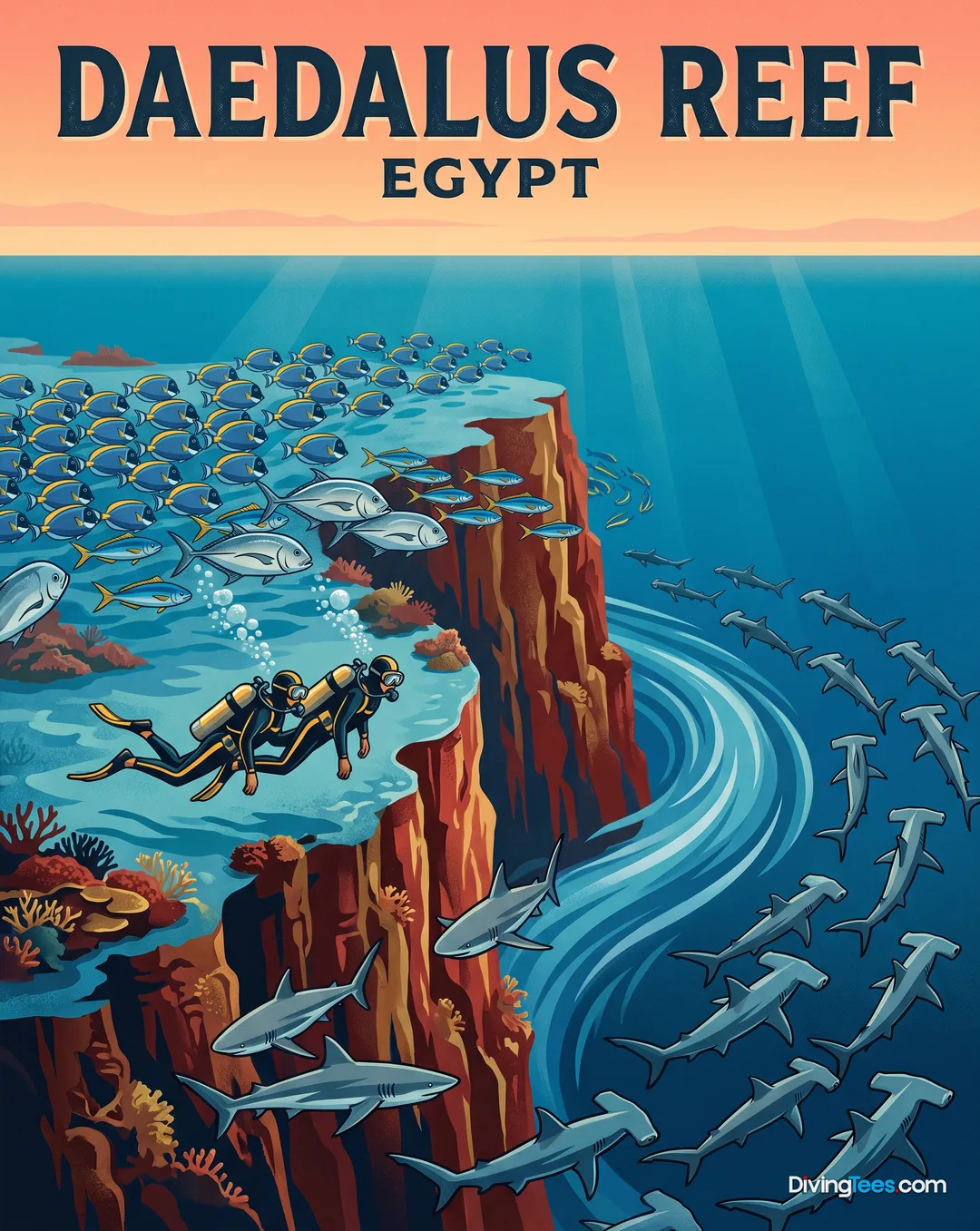
Daedalus →
Max. depth · 40 m
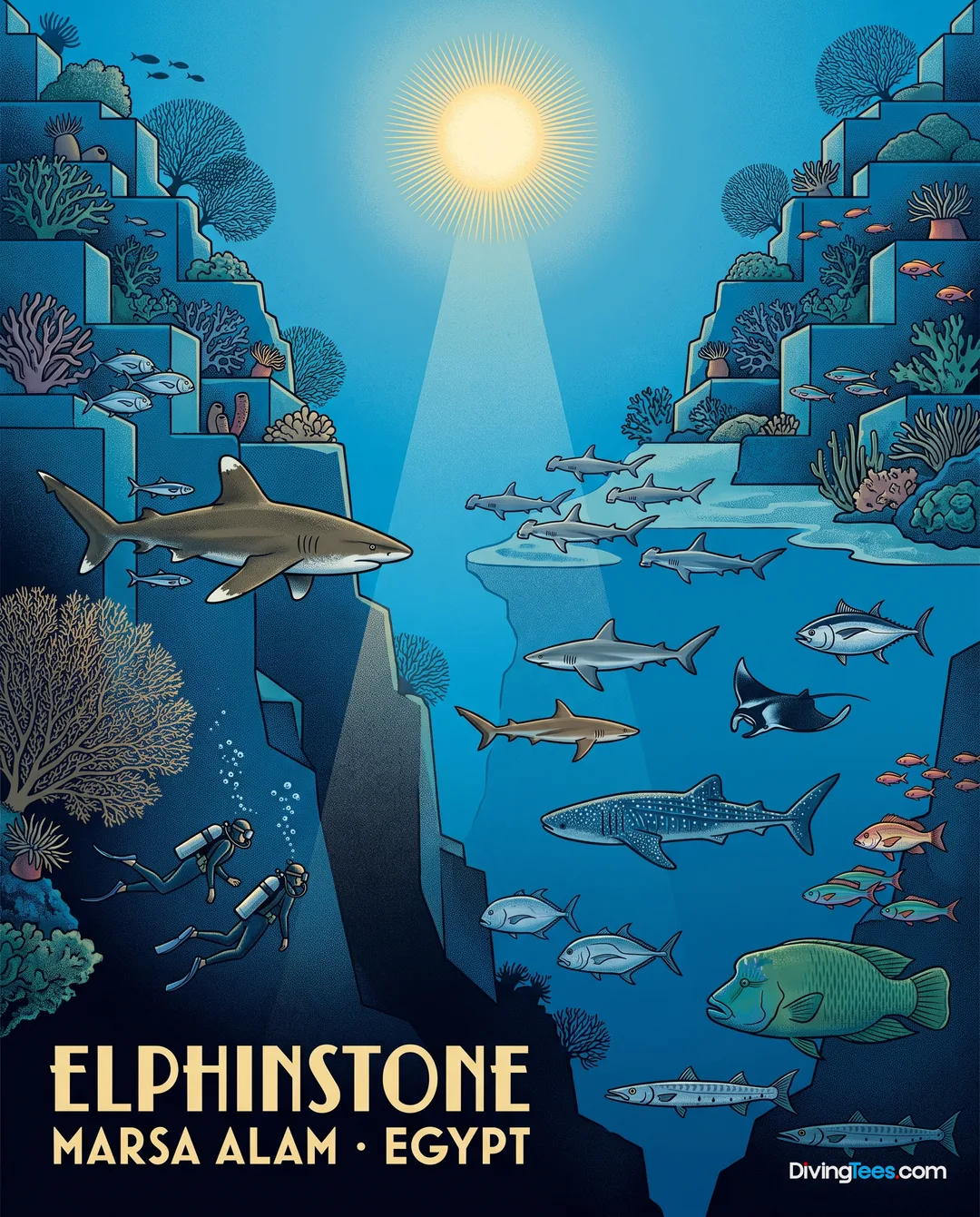
Elphinstone →
Max. depth · 60 m
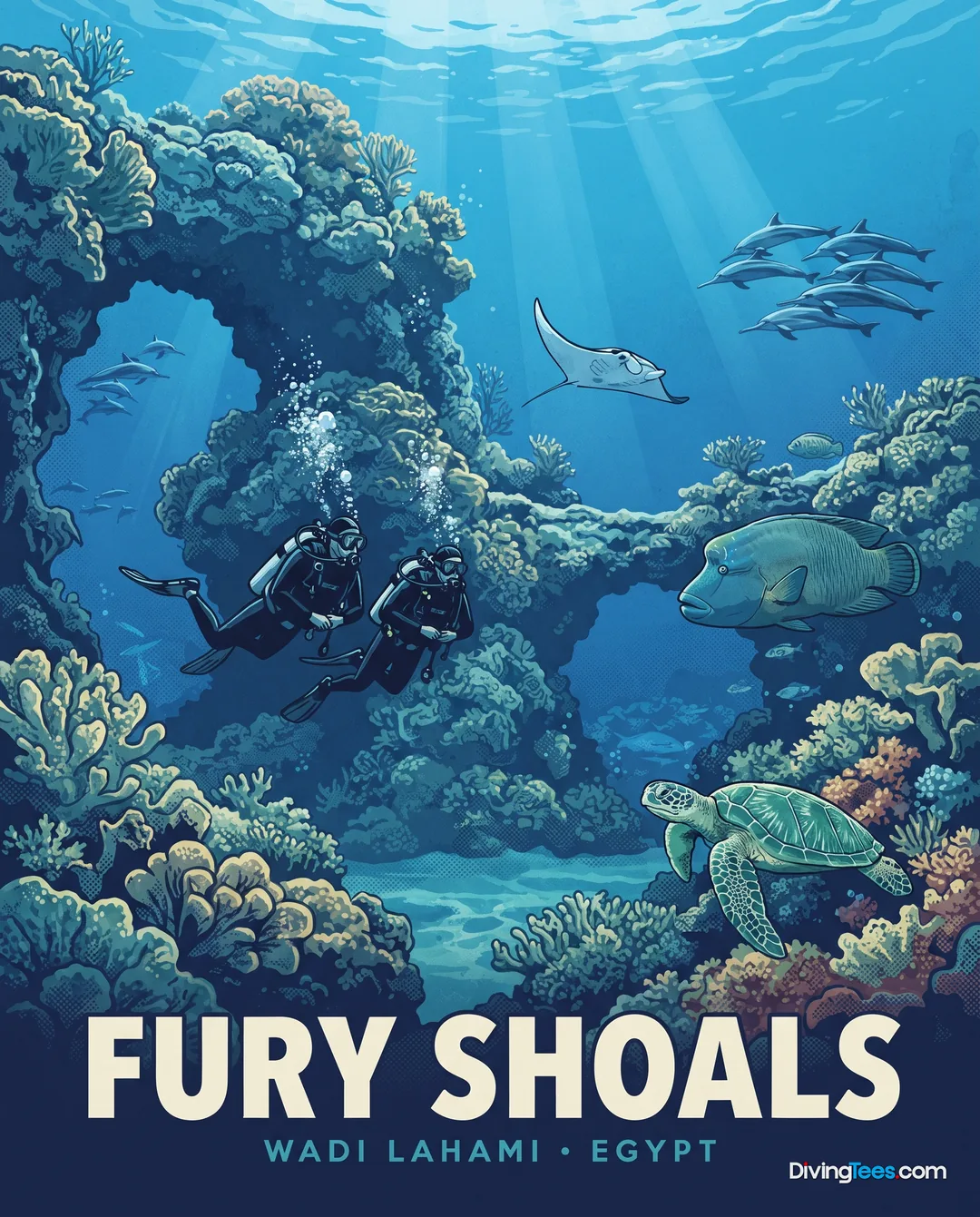
Fury Shoals →
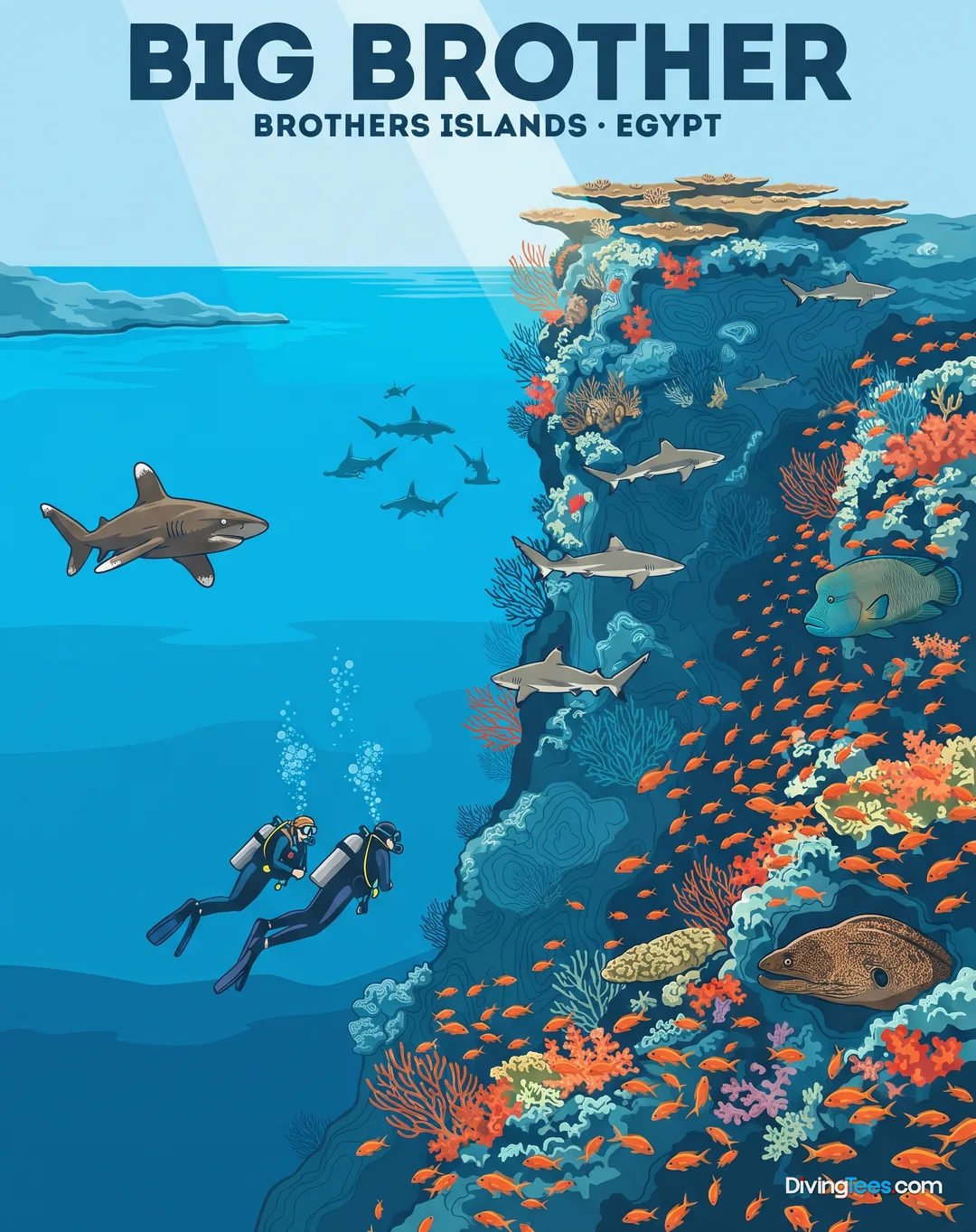
Big Brother →
Max. depth · 40 m
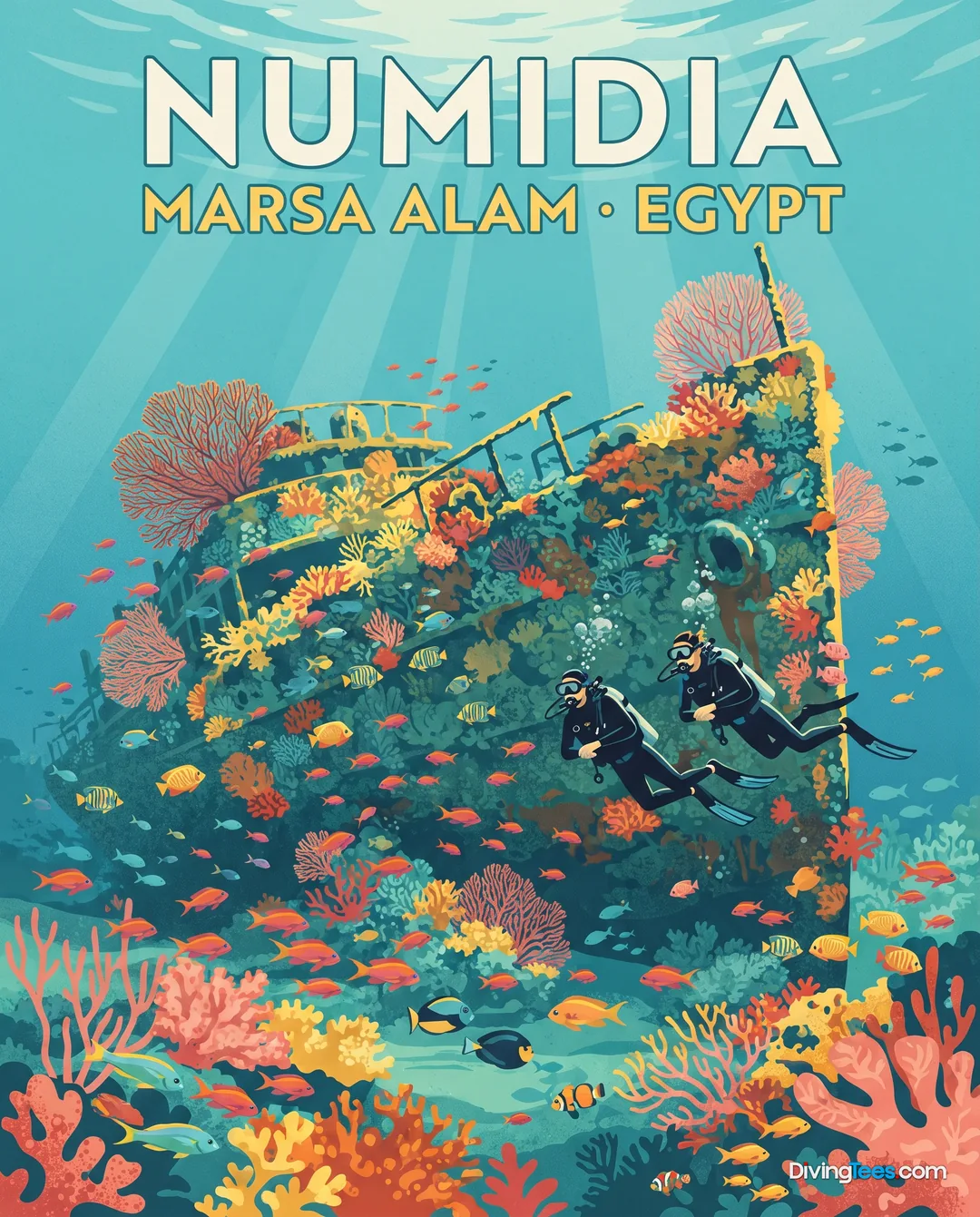
Numidia →
Max. depth · 80 m
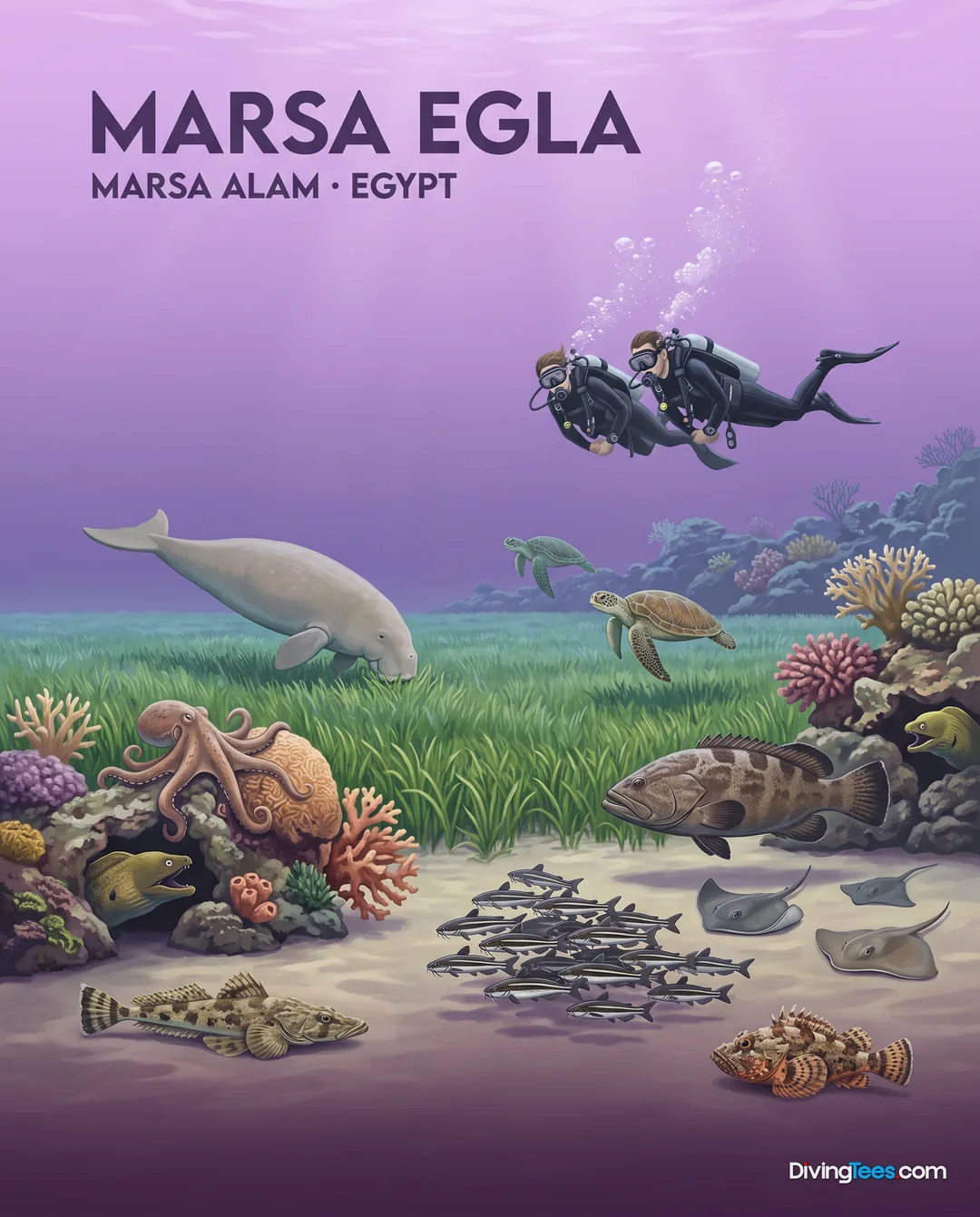
Marsa Egla →
Max. depth · 30 m
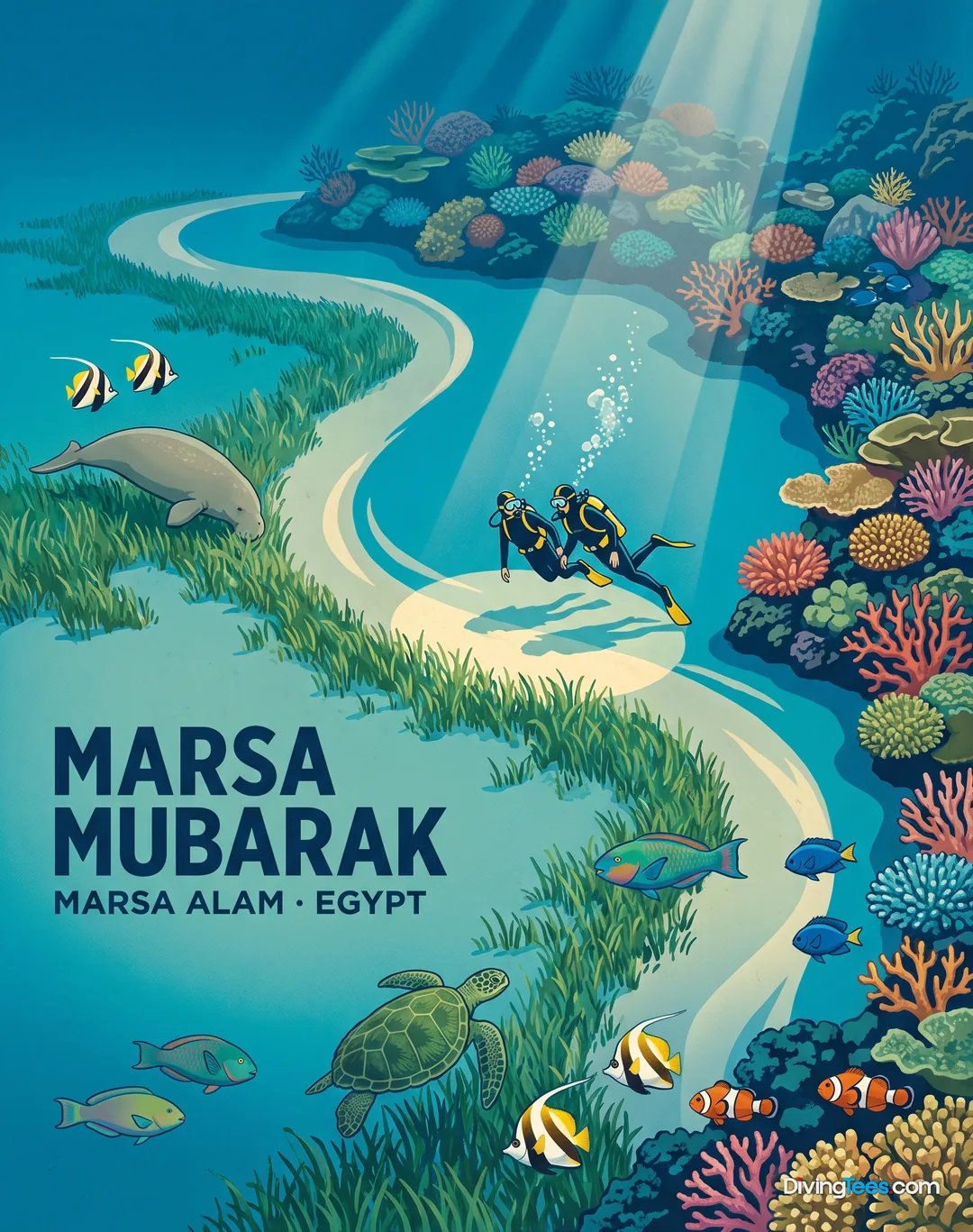
Marsa Mubarak →
Max. depth · 25 m
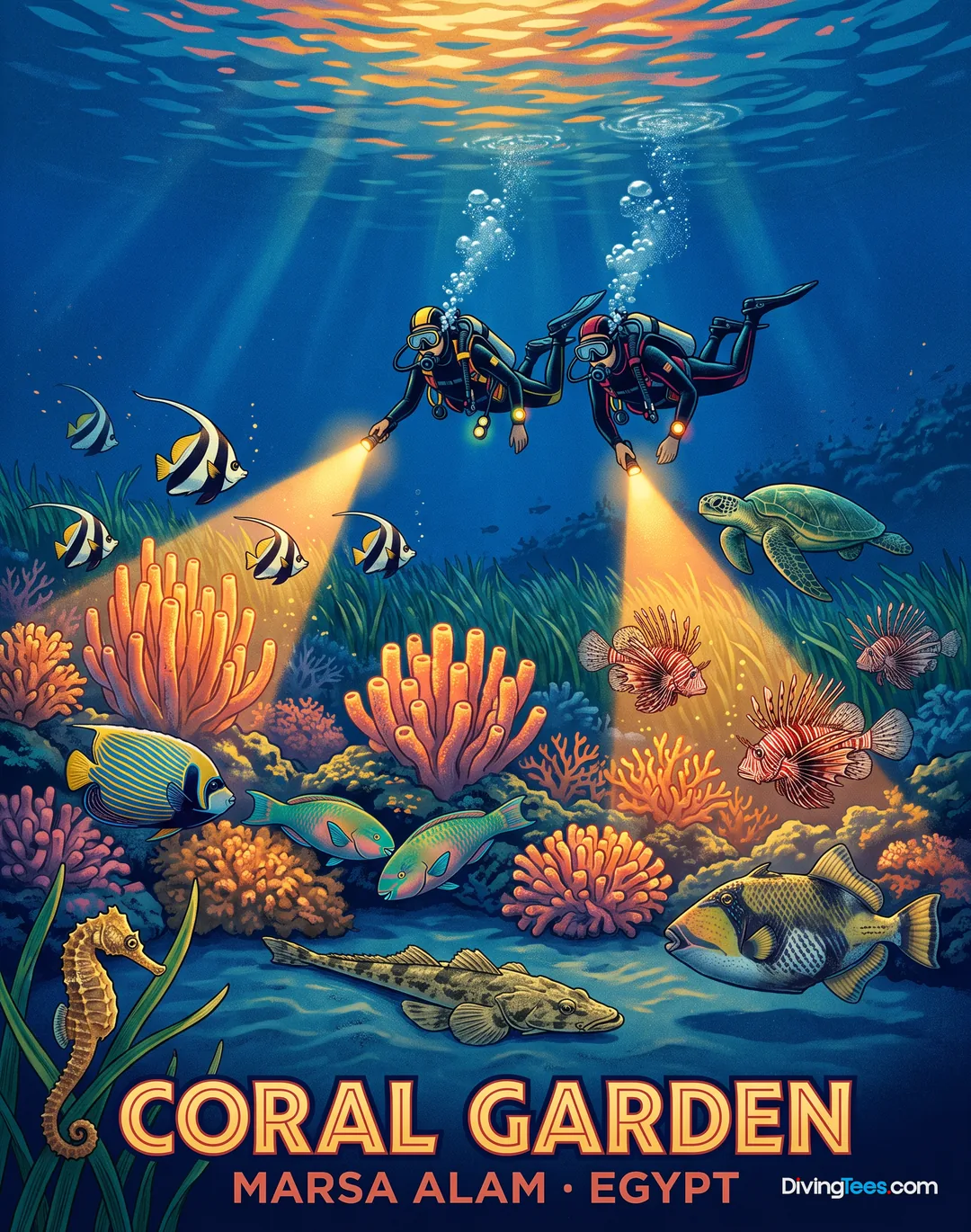
Coral Garden →
Max. depth · 20 m
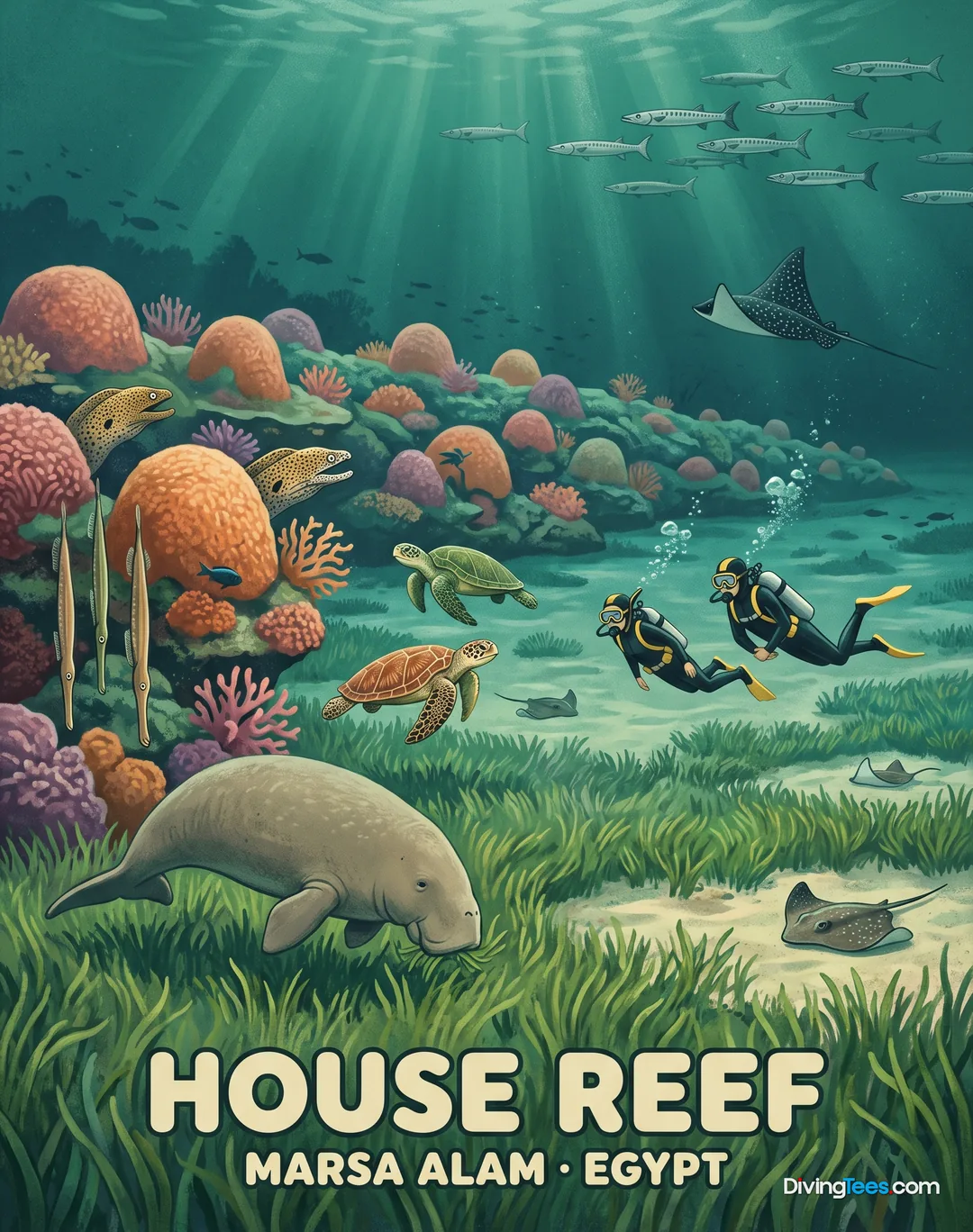
House Reef →
Max. depth · 40 m
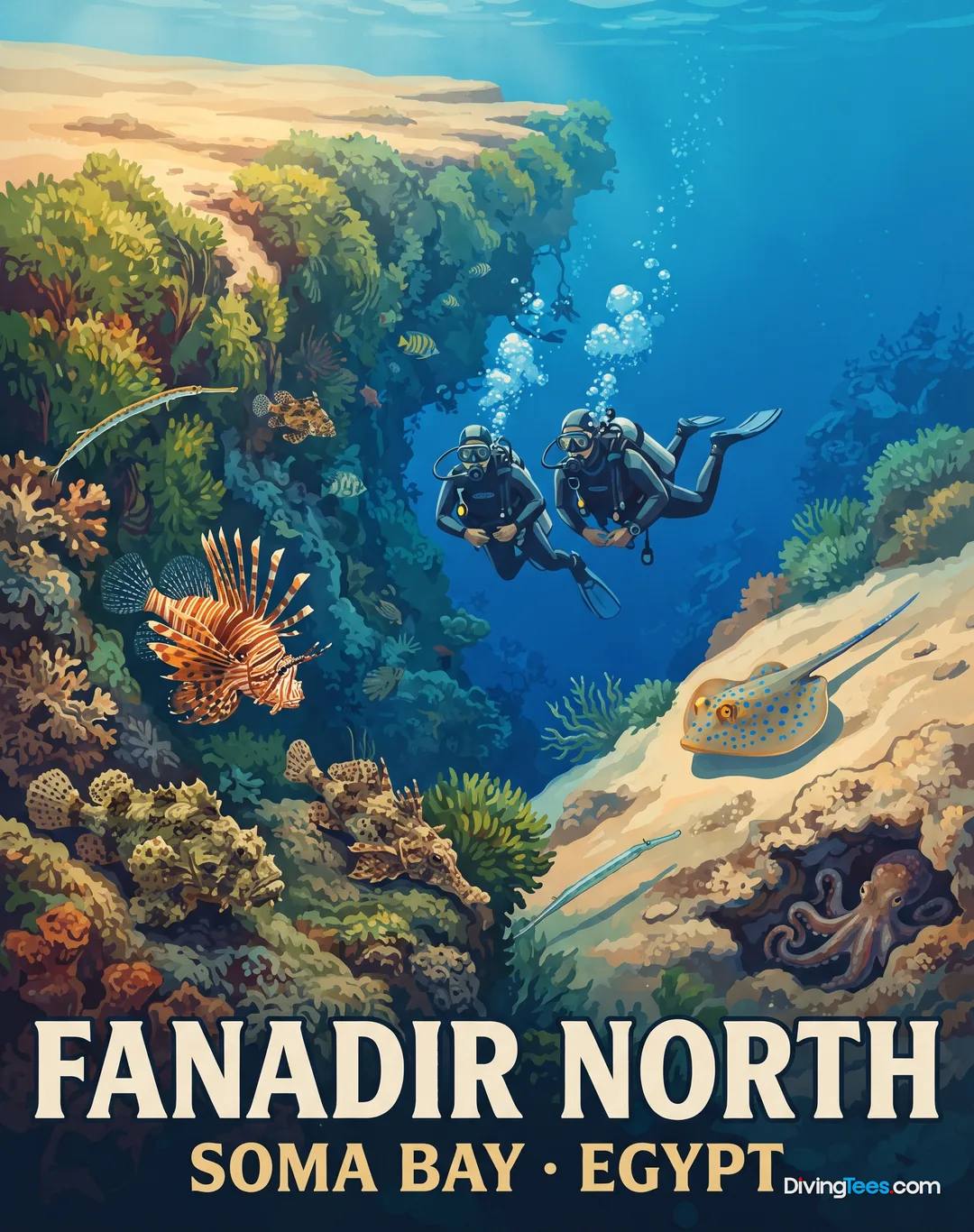
Fanadir North →
Max. depth · 30 m
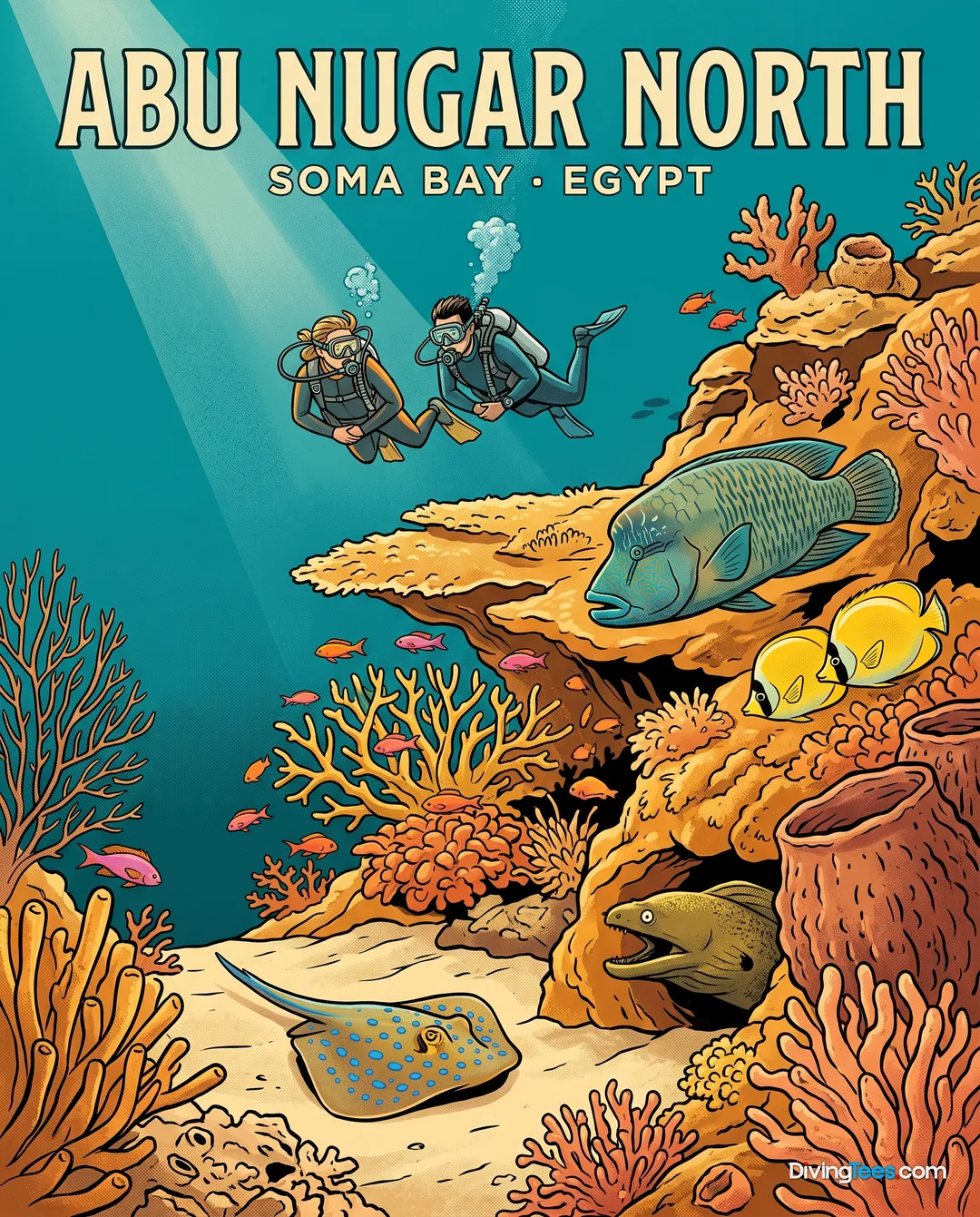
Gotha Abu Nugar North →
Max. depth · 9 m
What you’ll meet underwater
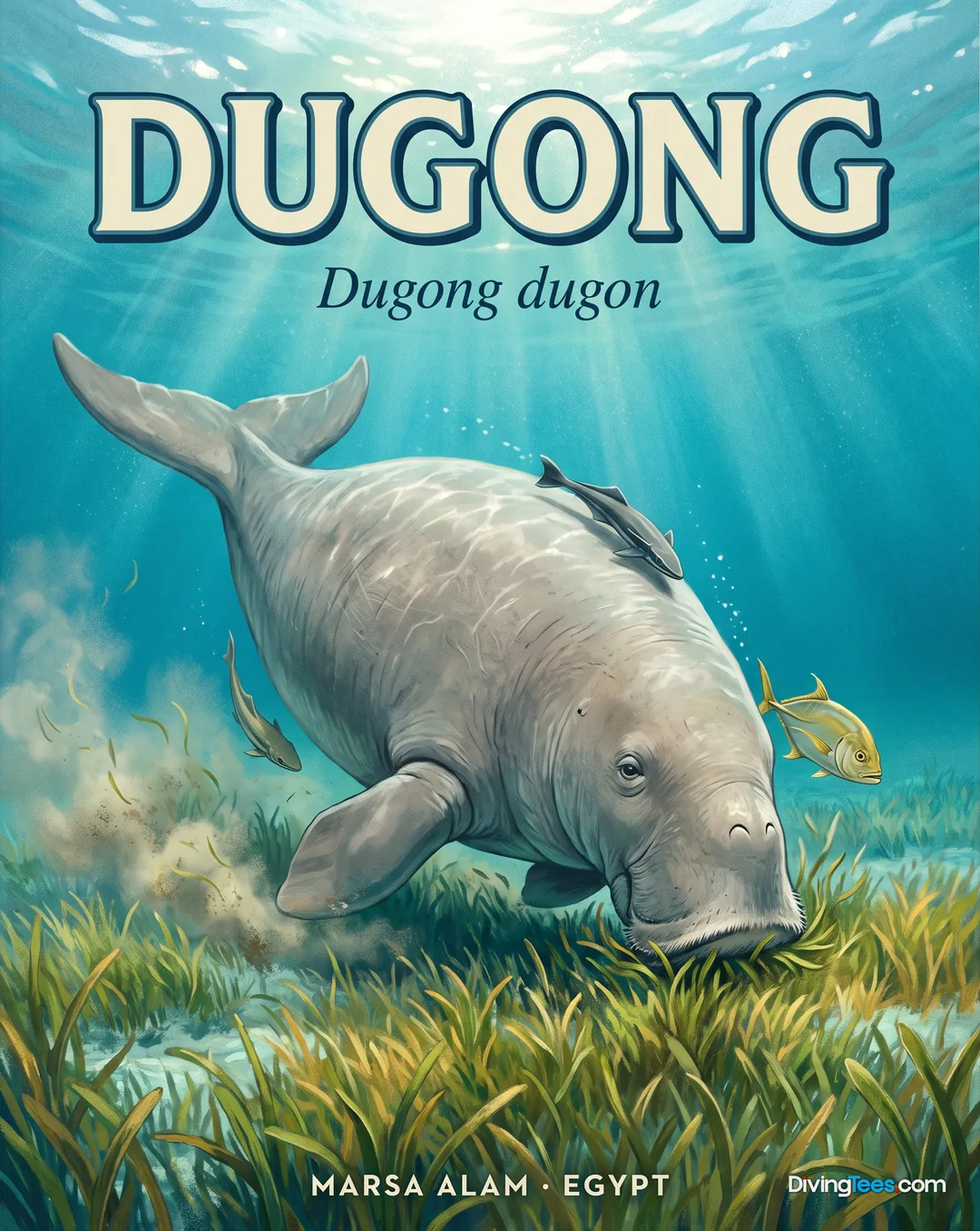
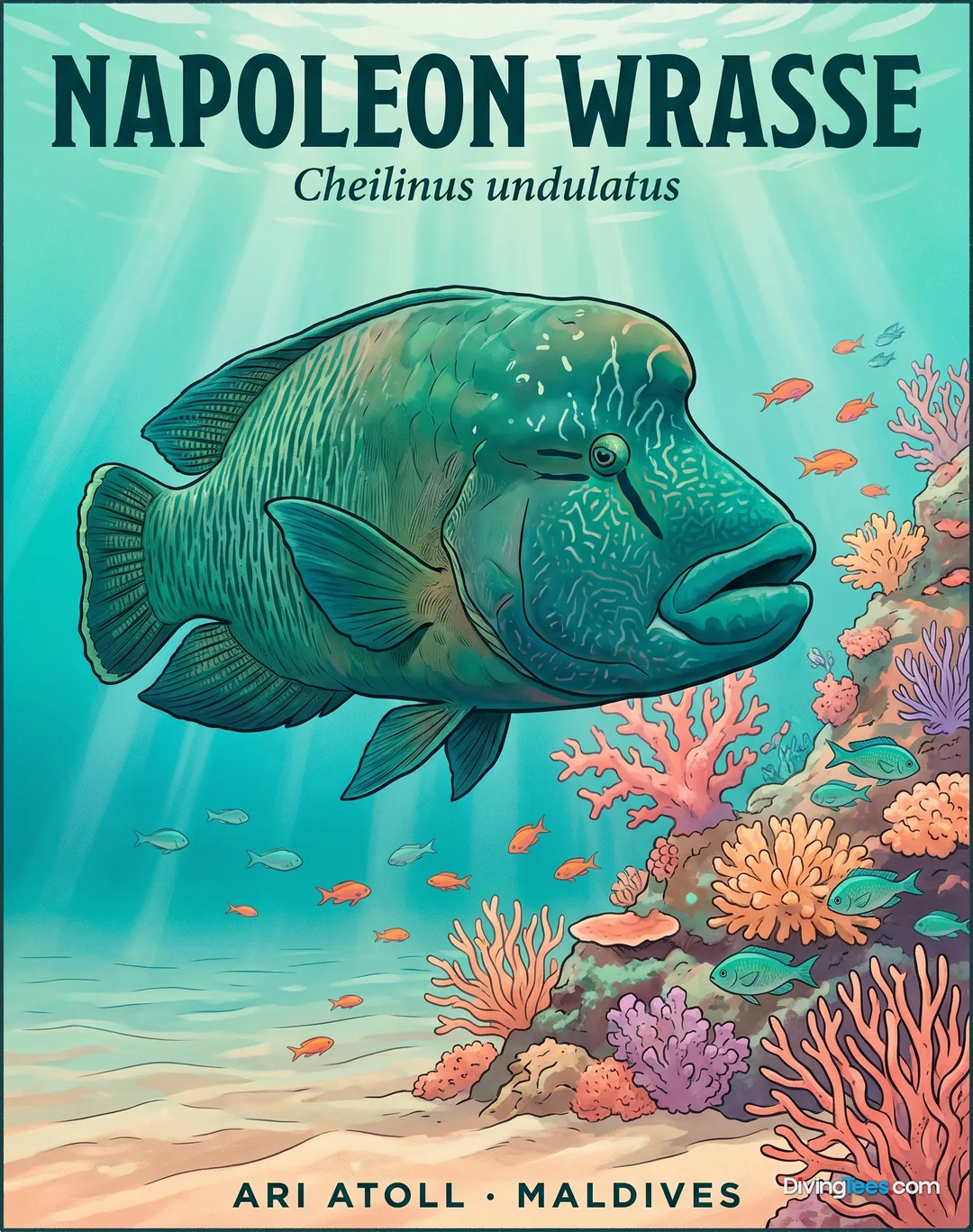
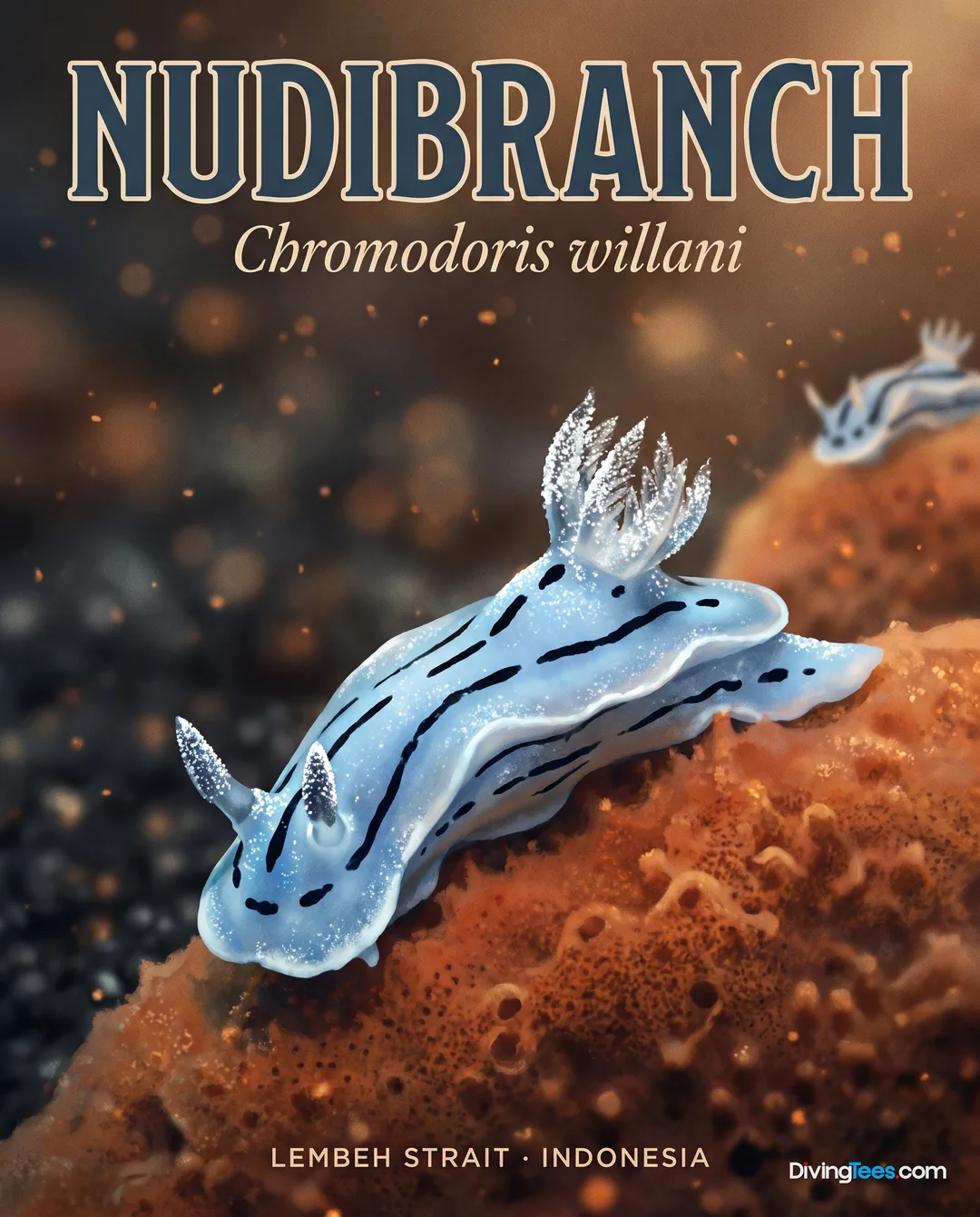
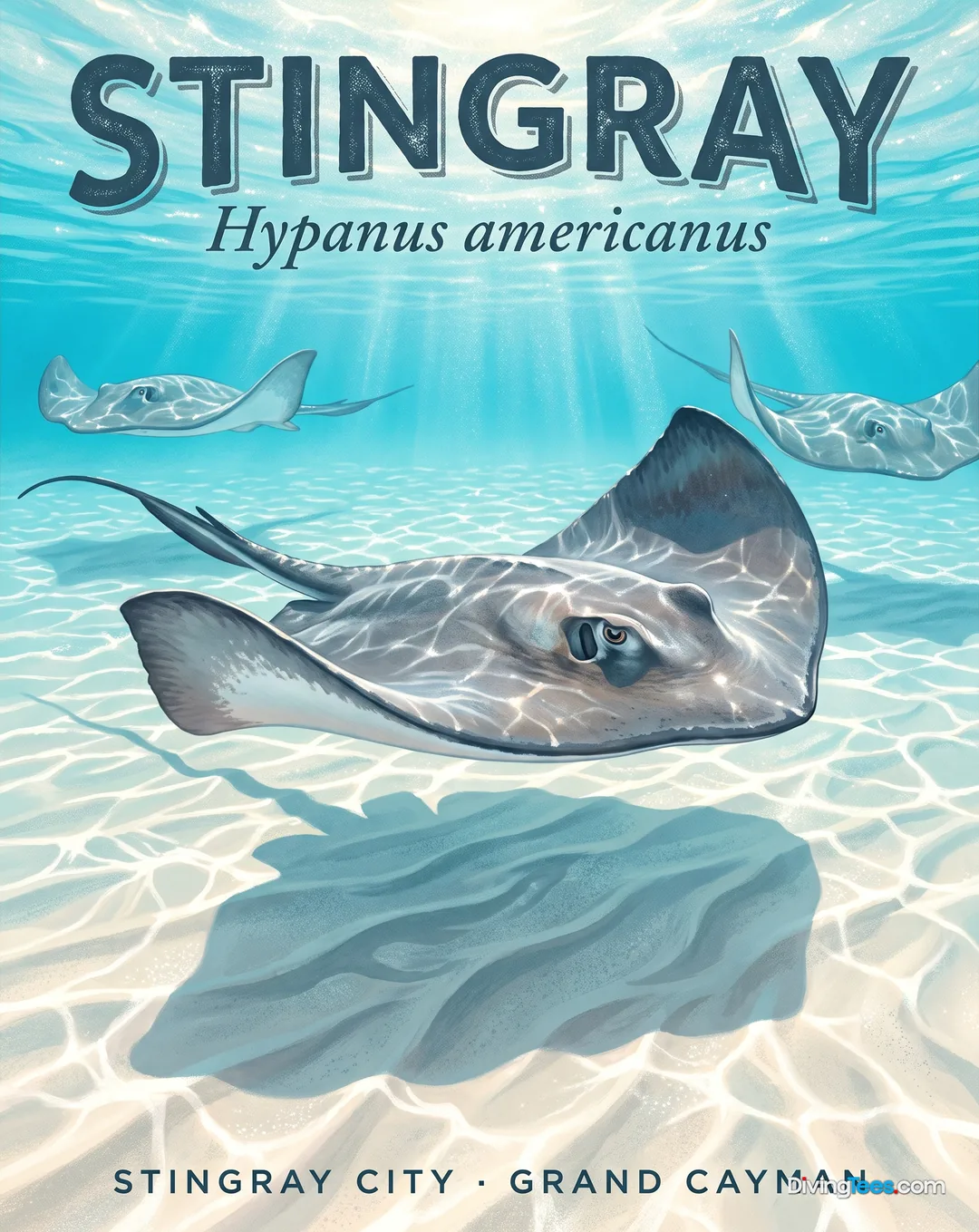
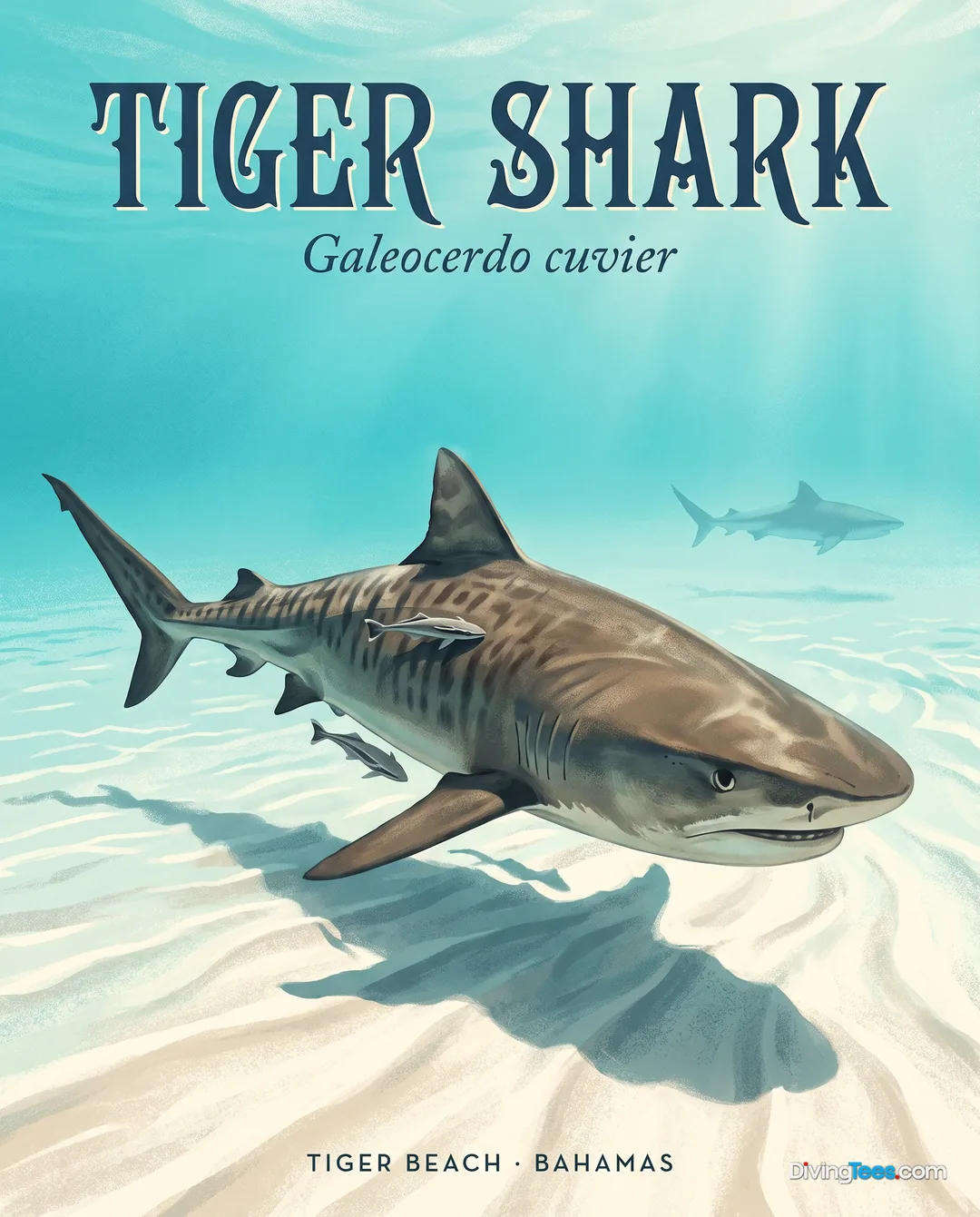
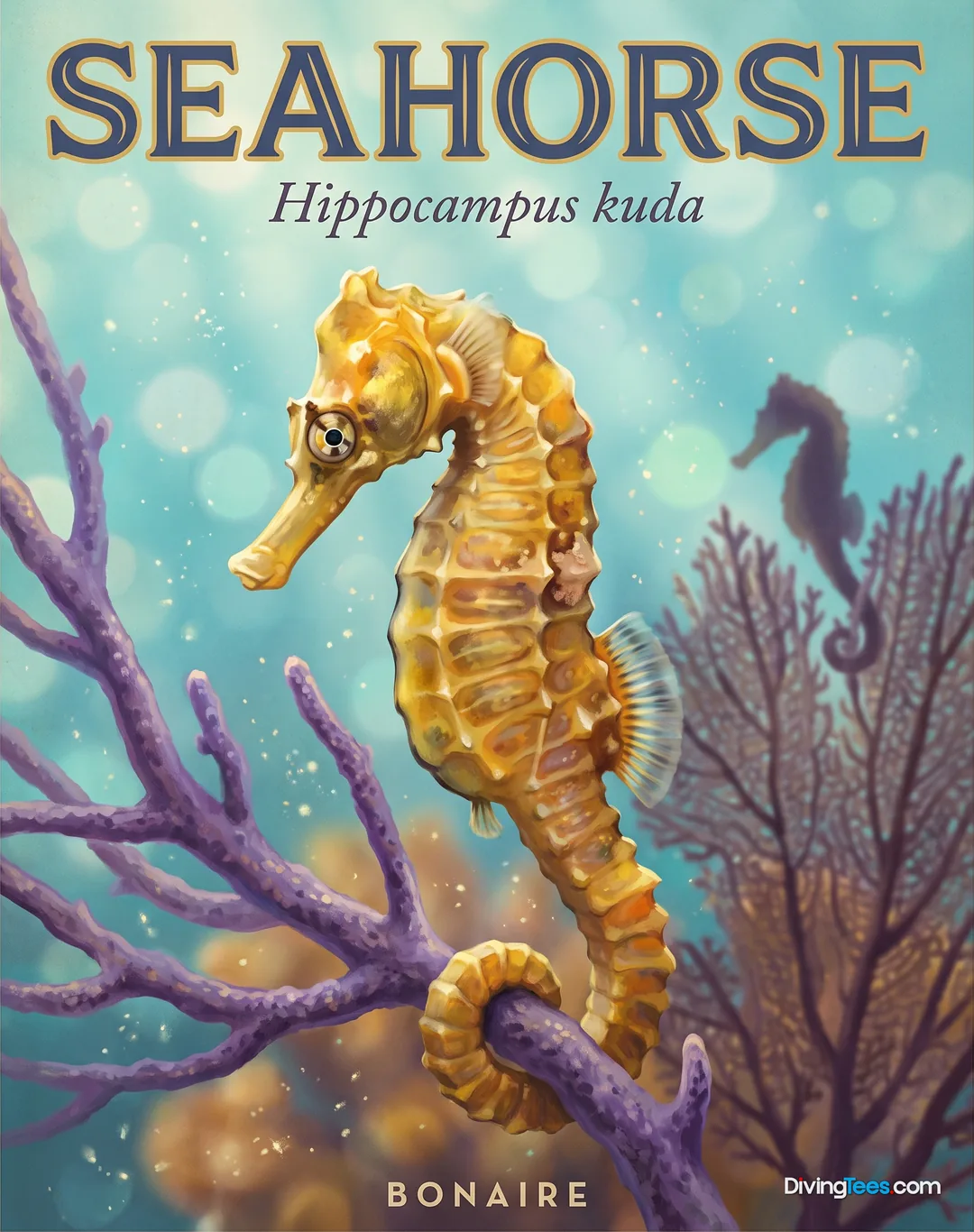
Sea turtles, dolphins, barracuda, morays, octopus, reef sharks, Napoleon wrasse, scorpionfish, nudibranchs and stingrays form the route's recurring cast. They are not guaranteed sightings, but the range is wide because the itinerary moves between sheltered seagrass bays, coral gardens, steep walls and current-exposed offshore reefs. Dugongs are associated with the seagrass at Marsa Egla, Marsa Mubarak and House Reef; dolphins are reported across several southern sites, while strong current at the Brothers helps draw pelagic life to the walls and cleaning station. Some encounters give a site its reason for being there: blacktip reef sharks and tiger sharks are recorded only at Elphinstone, glassfish only at Abu Galawa Soghayar, and seafans, hard coral and anemones are distinctive records at the Brothers Islands. Fury Shoals is the place to look for a triggerfish and angelfish. House Reef is the route's specific chance for a seahorse.
Who puts you in the water
Three instructors put divers in the water, with dive groups kept to a maximum ratio of one guide for seven divers. English and German are spoken on board. The experience required depends on the route: Fury Shoals is open to Open Water divers, northern wreck and Tiran trips ask for 30 logged dives with Advanced Open Water or equivalent recommended for Tiran, while marine-park routes including the Brothers, Daedalus and Elphinstone require at least 50 logged dives and Advanced Open Water or equivalent. The latest dive should have been within the previous year for marine-park trips. SSI courses include Nitrox, Deep, Drift, Night and Advanced courses; a private guide can also be arranged as a paid extra. Oxygen, first-aid kits, two DAN kits, a defibrillator and ENOS cover the main diving emergencies. Night dives are included on eligible trips, but are prohibited in the marine parks.
The dive deck and the gear
The dive deck is arranged for repeated use, not a single shore dive. Diving is from 12-litre aluminium tanks, with 15-litre and 10-litre tanks or a second tank available on request as paid extras. Nitrox is available and included, although its use is not a legal entitlement. The boat also supports technical diving, sidemount and rebreathers. Rental equipment is carried on board, but no equipment brand is specified; required rental items should be arranged when booking. A dedicated camera work area, camera rinse tank and separate rinse facilities protect the camera workflow from the rest of the kit. Three outdoor showers, including one rain shower, and toilet facilities are close to the deck. Two Yamaha 85HP tenders, each fitted with ladders, take divers to the site and collect them where they surface. ENOS adds a direct diver-recall and location system.
Between dives
Between dives, the boat offers several different kinds of quiet. The flybridge is the place for a wide view over the Red Sea, coffee in the morning and an after-dive beer at sunset. The sundeck has loungers and a separate outdoor area for sun, while the air-conditioned salon gives photographers and heat-weary divers somewhere cooler to sit. Sofas, a library, board games and a PlayStation 5 cover the occasional long surface interval without forcing anyone into organised entertainment. The spa and massage service add another way to deal with tired shoulders. Internet is available, but the better use of the gap between dives is often simple: dry kit, drink water, watch the tender move to the next drop point, and let the body come back before the next briefing.
A day on board
A dive day starts early, with the first briefing before the boat settles into the day's sequence of entries. MY Destiny runs two to four dives on each full dive day, using the tenders when the site is away from the boat and bringing divers back to the ladders after the dive. Breakfast, snacks, lunch and dinner divide the surface intervals, while the crew moves tanks, checks the next site and keeps the deck ready. The boat may get underway between sites, giving divers time to dry out, eat, work on cameras or sleep before the next call. On suitable itineraries, a night dive closes the diving rather than the day; marine-park rules exclude night dives there. Arrival and departure days have no dives, so the full rhythm belongs to the days spent offshore.
What you eat aboard
Meals are served à la carte, with the next dishes chosen from the menu and prepared fresh rather than laid out in one large spread at every sitting. Breakfast is the exception: it is offered as a buffet, while snacks are available through the day and all meals and non-alcoholic drinks are included. Vegetarian and vegan dishes can be prepared, and the kitchen covers both Western food and more elaborate dining on special trips. A barbecue may appear on the sundeck or on a beach, with seafood such as prawns and calamari alongside the usual grill fare. On a four-dive day, that arrangement makes sense: food arrives in portions and at the moments divers actually need it, instead of turning the table into another timetable to manage.
Nights at sea
The cabins are modern and deliberately more generous than the cramped rooms found on older safari boats. Upper Deck Double, Upper Deck Twin, Suite, Lower Deck Twin and Lower Deck Double categories cover the choice of berth; the cabin deck is below the main living areas. Each room has individually adjustable air conditioning, a private bathroom with rain shower and WC, and a standard window. The useful details are the ones that matter after a long dive day: towels, bathrobes and ponchos are provided, while biodegradable shampoo and shower gel are supplied. Mattresses, pillows and bed linen are chosen for recovery rather than decoration. The cabins are not just somewhere to leave a kit bag. They give divers a cool, private place to shut the door, rinse the salt from the day and sleep away from the salon.
Upper Deck Double
Upper Deck Twin
Suite
Lower Deck Twin
Lower Deck Double
What to know before boarding
Recorded departures and returns use Hurghada and Marsa Alam, depending on the itinerary. An airport guide meets arriving guests, while airport and hotel transfers are optional and handled by a local transfer company rather than the boat itself. Transfer details are arranged from the arrival airport or hotel and should be supplied with the flight information. Arriving in Egypt the night before boarding is the sensible choice, especially for an early departure or a route leaving from a different port.
Deck plan
What the boat does for the ocean
MY Destiny uses biodegradable shampoo and shower gel and offers reef-friendly sunscreen through the onboard shop. Homemade jam is served in glass jars to reduce single-use plastic, and à la carte meals are used to limit food waste. These are specific onboard choices; broader claims about wastewater, energy use, anchoring or conservation work are not supported here.
- Year built
- 2023
- Year renovated
- 2025
- Length
- 37 m
- Beam
- 8 m
- Maximum number of passengers
- 20
- Number of cabins
- 10
- Number of bathrooms
- 2
- Engines
- 2 × MAN 900 hp
- Cruising speed
- 12 knots
- Tenders
- 2 × Yamaha 85 hp with ladders
- Website
- mydestinyliveaboard.com ↗
Hello, I'm Marina, DivingDeal.com's AI assistant. I answer in detail about hotels, dive centres and liveaboards.

Thinking about the whole trip and the flights? Talk it over with Edith →
Marina is an AI. Some links are affiliate links: DivingDeal may earn a commission, at no extra cost to you. Bookings are made with the partner.