Liveaboards · Egypt
SS Serena Dreams — a compact Red Sea dive boat built around small groups
What makes this boat unique
- A 33-metre wooden liveaboard for up to 18 divers in nine en-suite cabins.
- The shaded dive area has two tenders, three compressors, free Nitrox and support for technical and rebreather diving.
- Routes run from Hurghada through northern reefs, wrecks, the Straits of Tiran, Dahab and the Brothers Islands.
- The boat was renovated in 2020 and is particularly suited to divers who value a smaller group and a carefully planned route.
For subtitles in English: start the video firstthen click the gearat the top right of the video, select “Subtitles/CC”, then “Auto-translate” and choose “English”.
The invitation
SS Serena Dreams is for divers who would rather spend a week with 18 people than with a full-size safari crowd. The small capacity matters most at the sites: guides can keep the operation personal, while the route is planned to avoid the busiest concentration of boats where possible. The boat covers the northern Red Sea, the Straits of Tiran, Dahab and the Brothers, so the trip can combine wrecks, coral gardens, walls and pelagic encounters rather than repeating one type of dive. It also suits divers who need more than standard recreational support: Nitrox is included, rebreathers are welcome, DIN adaptors are available and technical diving is supported. Choose it for the diving plan and the crew that makes a modest-sized boat work well, not for the largest salon or the newest hull in the fleet.
Boarding
From the dock, Serena Dreams presents as a compact wooden dive vessel rather than a floating resort. The 2020 renovation shows in the clean, modern cabin style and the practical spaces used between dives, while the teak decking keeps the boat connected to its working purpose. Movement is straightforward: cabins, lounge, shaded dive area and upper deck are close enough that a diver is not walking half the boat with a wet wetsuit and camera. The limited passenger count gives the boat a more familiar scale than larger Red Sea liveaboards. Crew members handle the luggage, show guests the emergency equipment and run the safety drill during check-in, so boarding quickly becomes about setting up the next day’s diving rather than finding one’s way around.
The atmosphere on board
The atmosphere is shaped by the boat’s scale. With no more than 18 passengers, the same people meet at breakfast, on the dive platform and around the evening table, while the crew can keep track of who is diving what and who needs help with a setup. The deck crew are known for efficient, well-practised handling, and the guides are multilingual and uncomplicated in their approach. That combination matters more than polished language: kit moves, tenders are ready and the day does not become a negotiation. Evenings settle in the lounge or on the upper deck after the last dive, with food, conversation and the occasional audio-visual distraction. The crew are the boat’s strongest asset; the hull has an older working character, but the people make the week feel cared for.
The sites you’ll dive
The recorded trips are eight days and seven nights, departing and returning to Hurghada, with routes covering North & Tiran, North–Tiran–Dahab, North & Brothers, and Northern Wrecks & Reefs. The range is unusually broad. In the Straits of Gubal, wrecks have become artificial reefs, with reef fish, lionfish, groupers and barracuda around the historic shipping route; the site reaches -50m. Fanadir North is a vegetated wall to -30m, a good place to look closely for stonefish, scorpionfish and blue-spotted rays. Shaab Ruhr Umm Gamar reaches -40m, moving from an oval reef and fish-filled plateau to pinnacles and the remains of at least three wrecks. The Brothers are the serious offshore draw: Big Brother’s wrecks and shark-filled walls reach -85m on the recorded route, while Ras Abu Galum drops to -80m. Dahab adds the Blue Hole, with technical passages and a recorded maximum of -130m, plus the shallower coral gardens of Napoleon Reef, The Islands and Gabr el Bint. For easier profiles, Shaab Sabina reaches -14m; for current and pelagic potential, the Strait of Tiran reaches -40m.
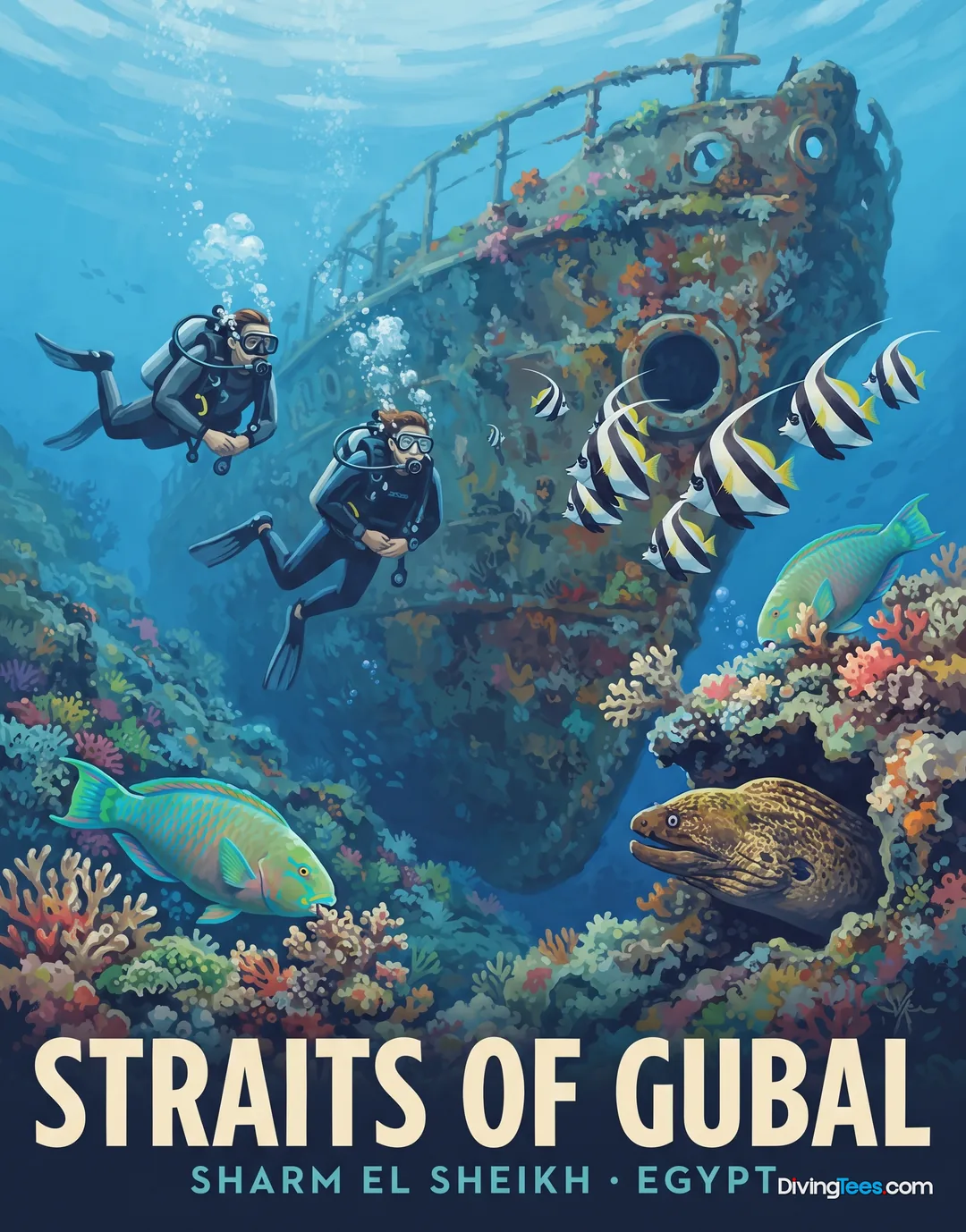
Straits of Gubal →
Max. depth · 50 m
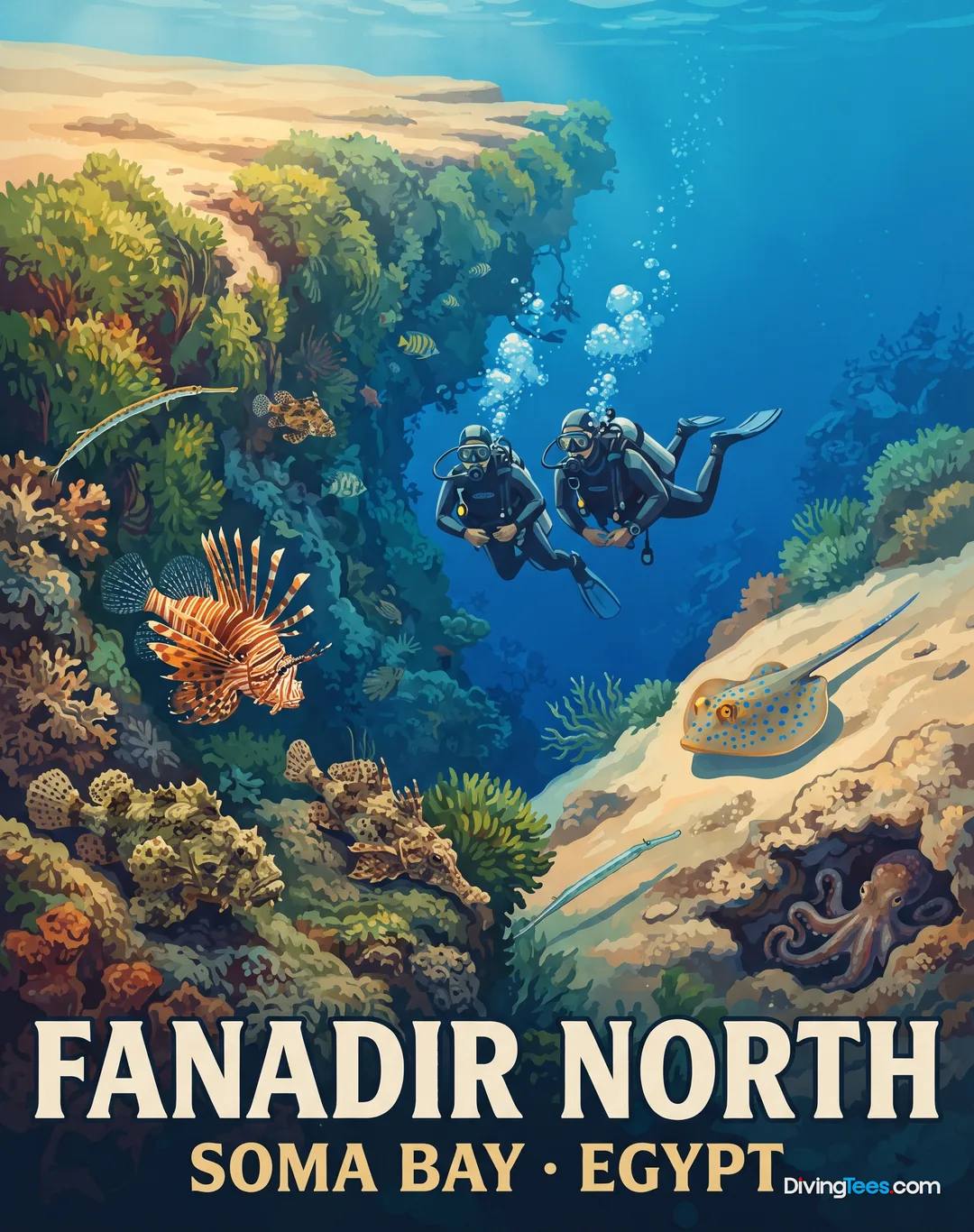
Fanadir North →
Max. depth · 30 m
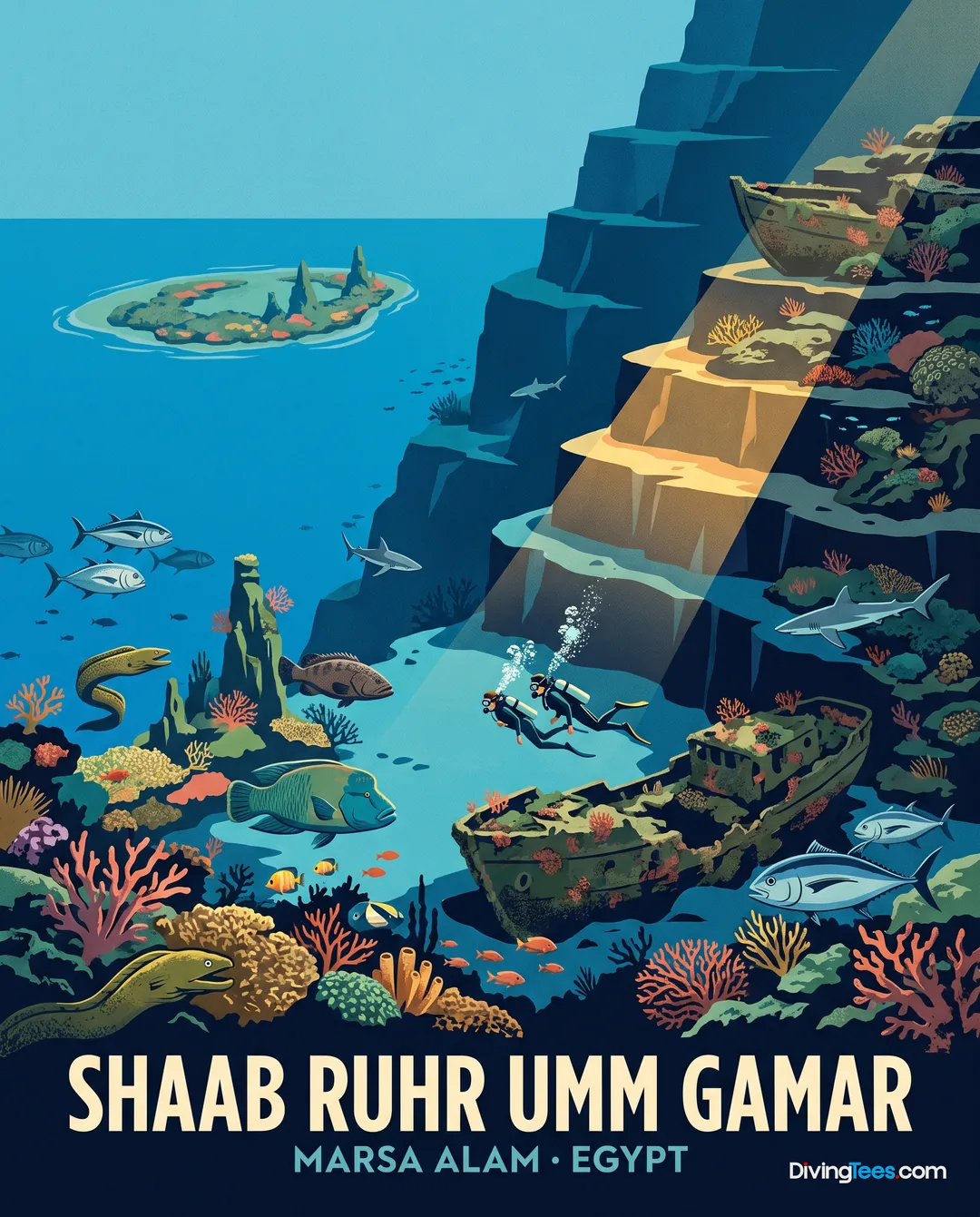
Shaab Ruhr Umm Gamar →
Max. depth · 40 m
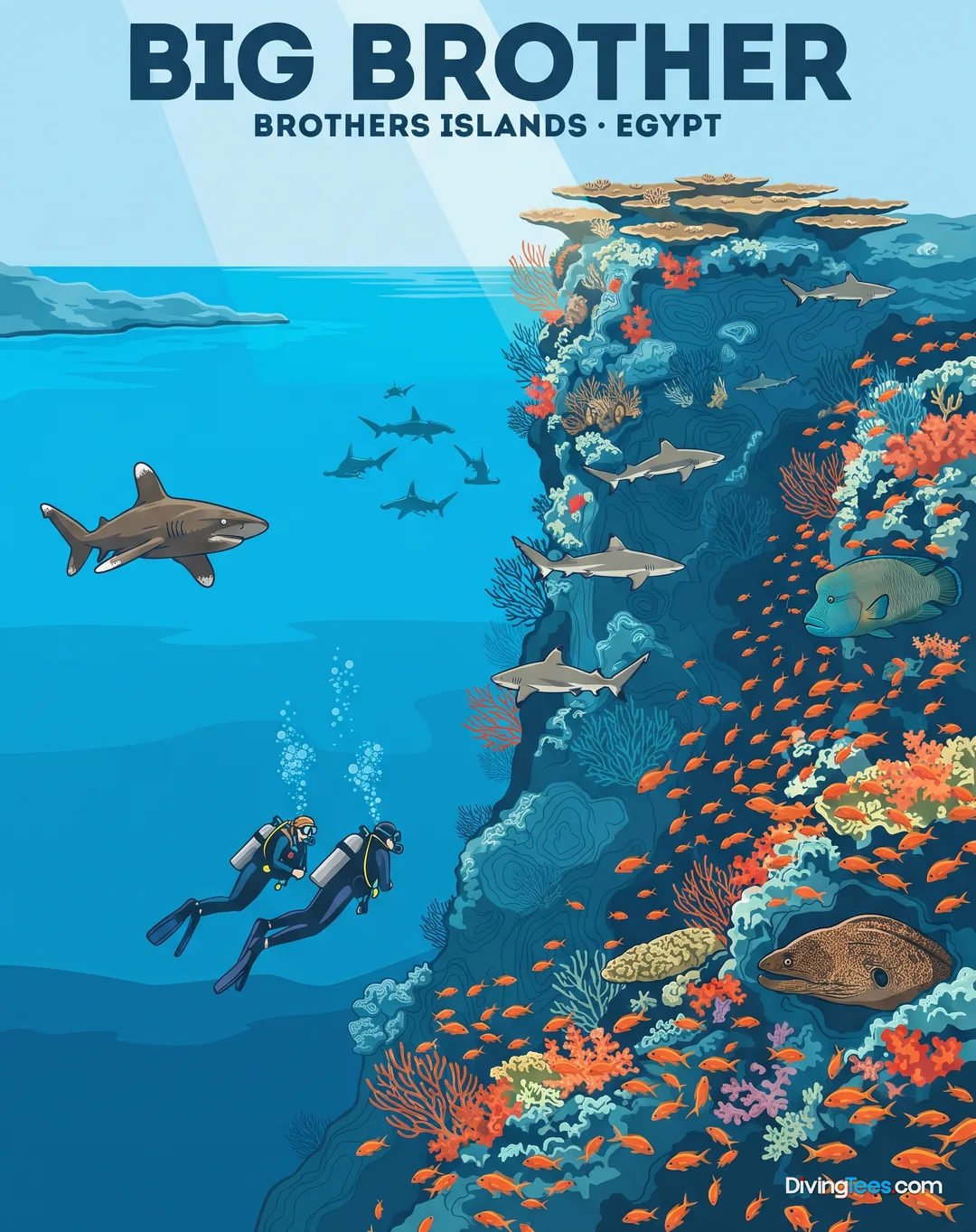
Big Brother →
Max. depth · 40 m
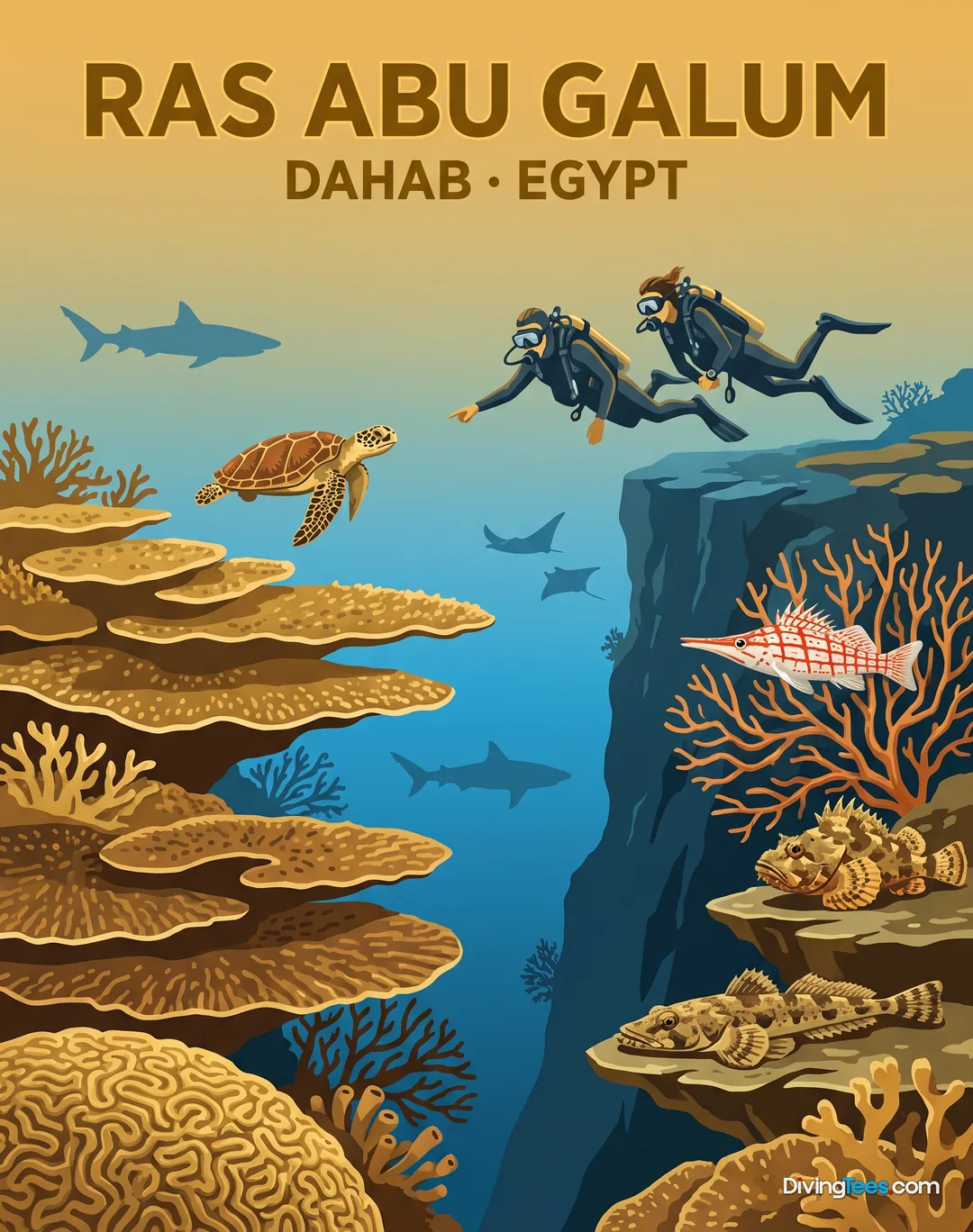
Ras Abu Galum →
Max. depth · 80 m
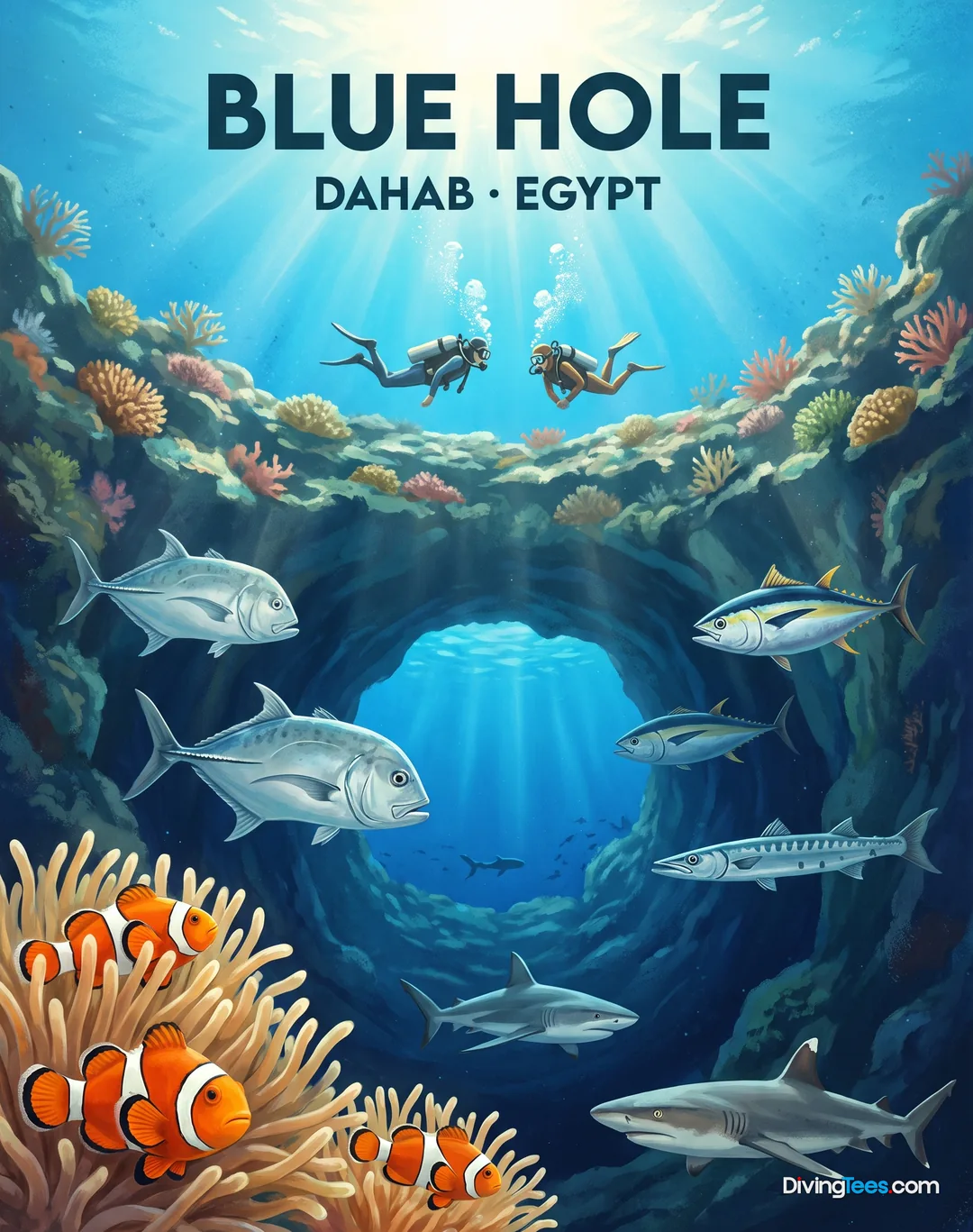
Blue Hole →
Max. depth · 130 m
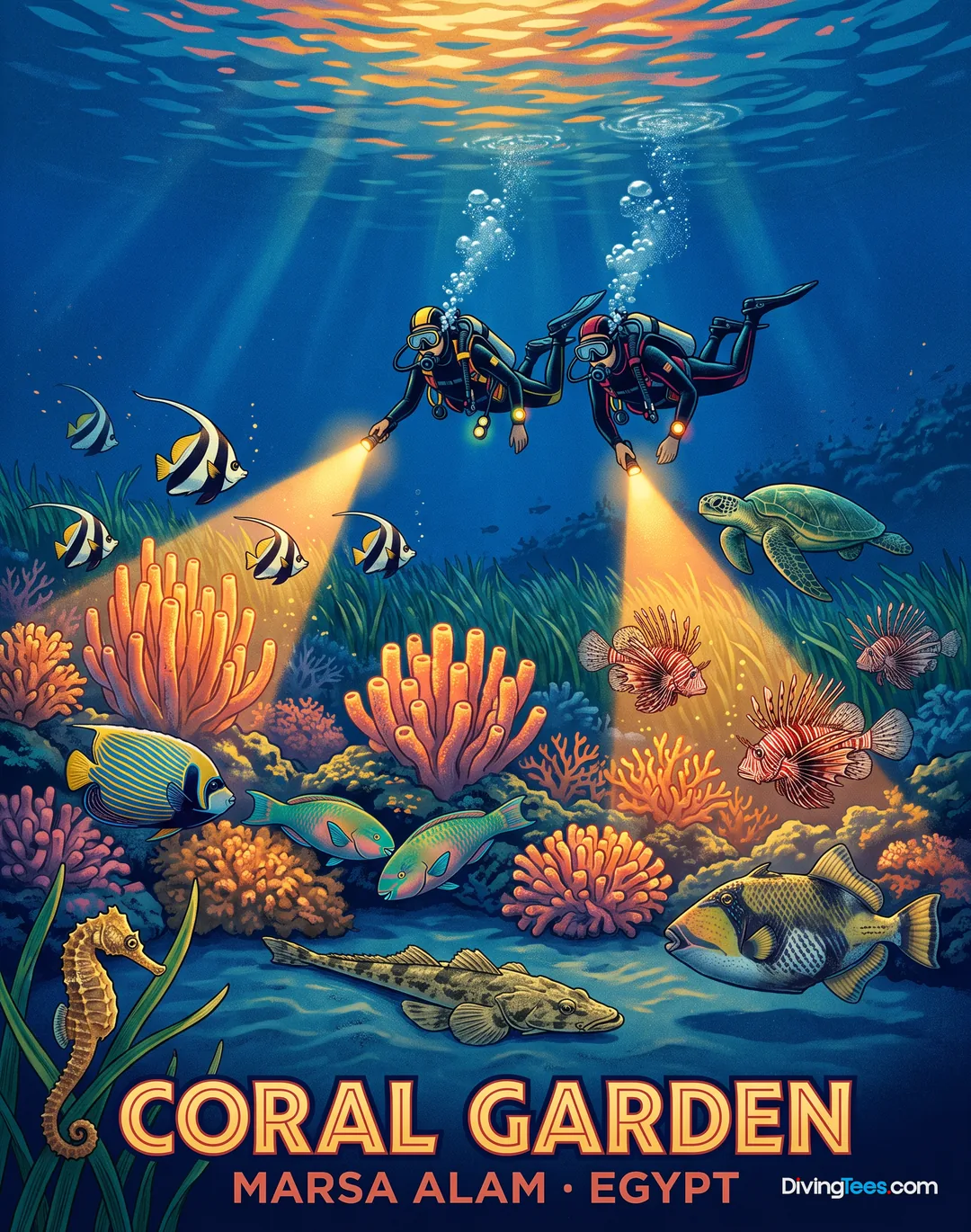
Coral Garden →
Max. depth · 20 m
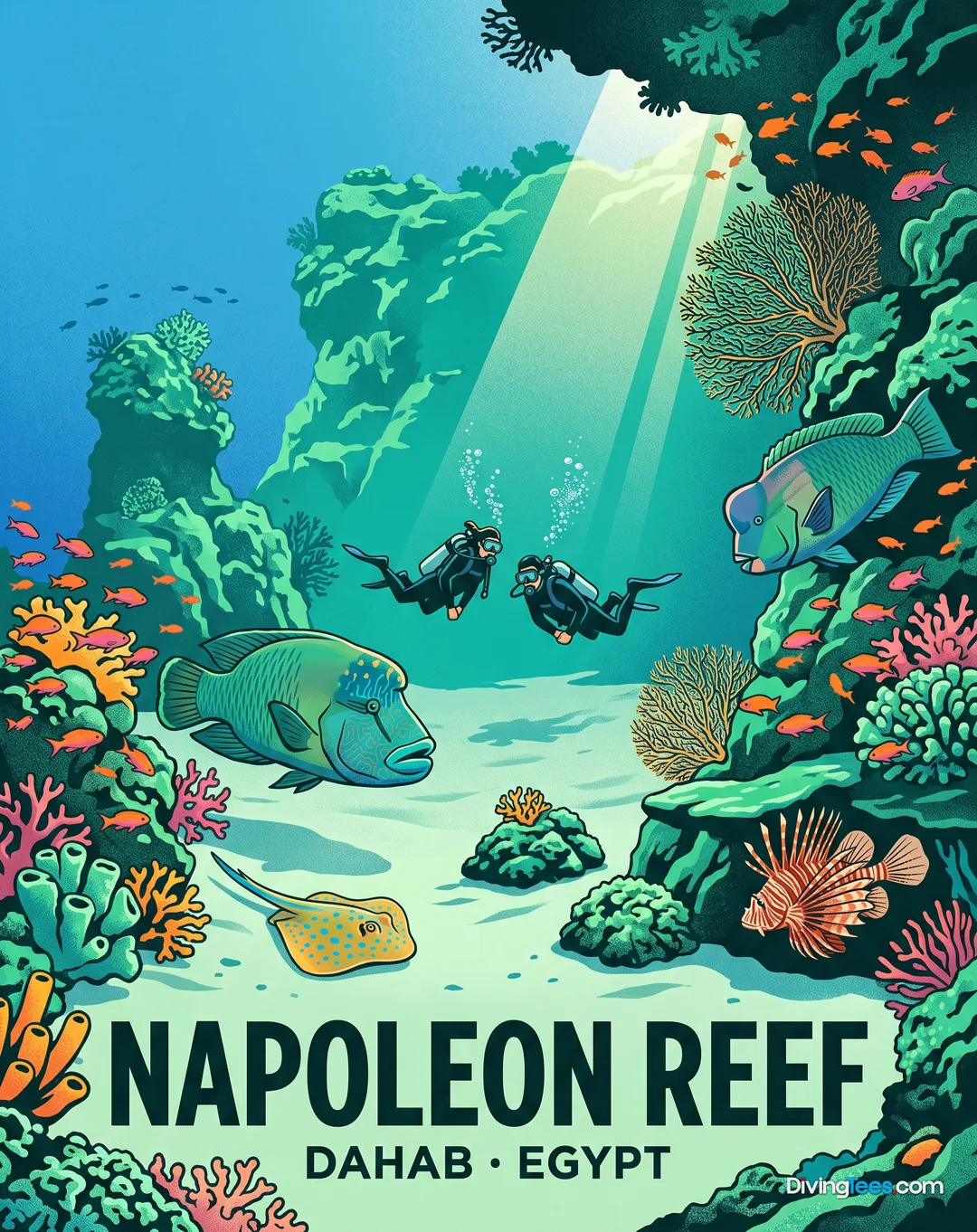
Napoleon Reef →
Max. depth · 30 m
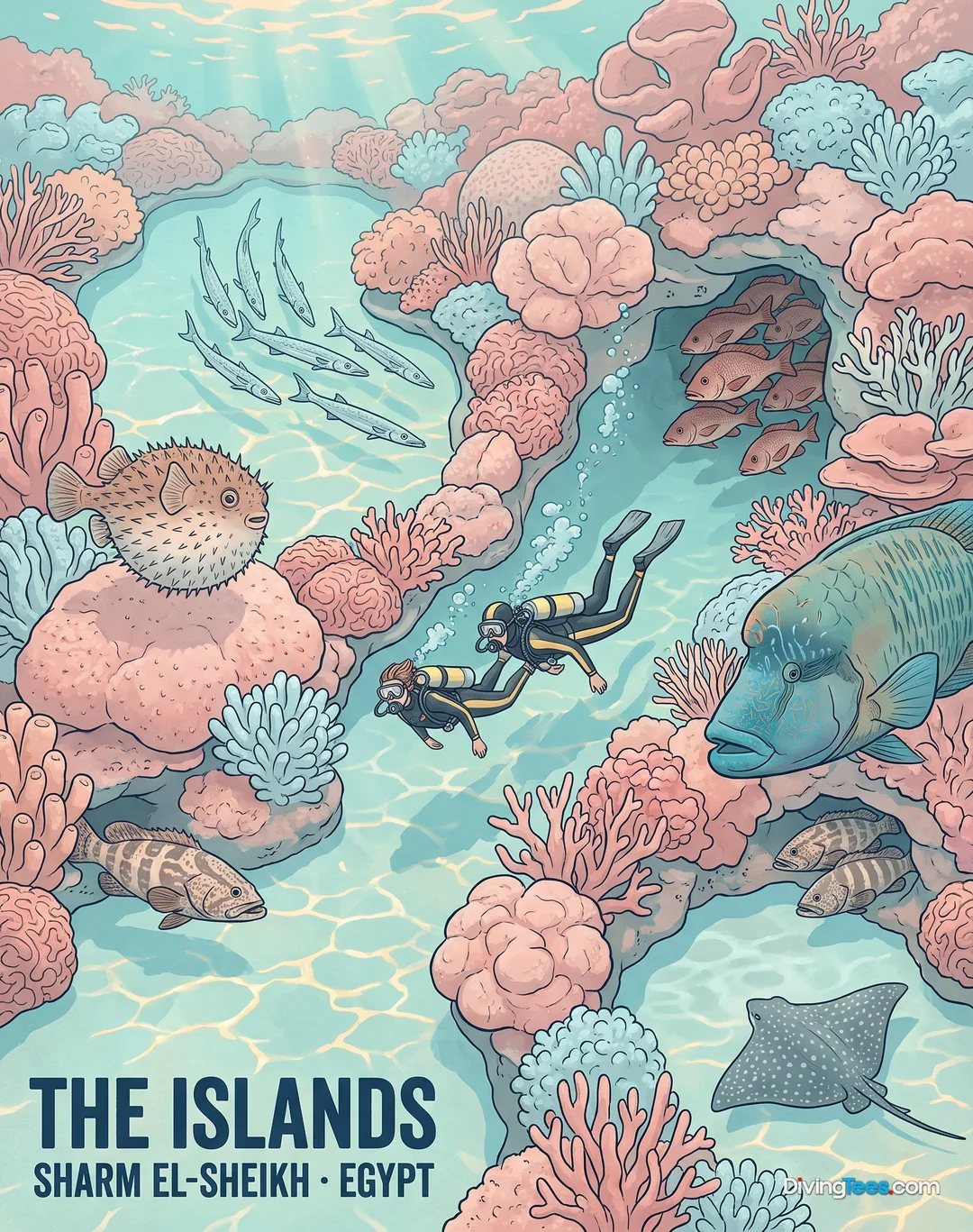
The Islands →
Max. depth · 18 m
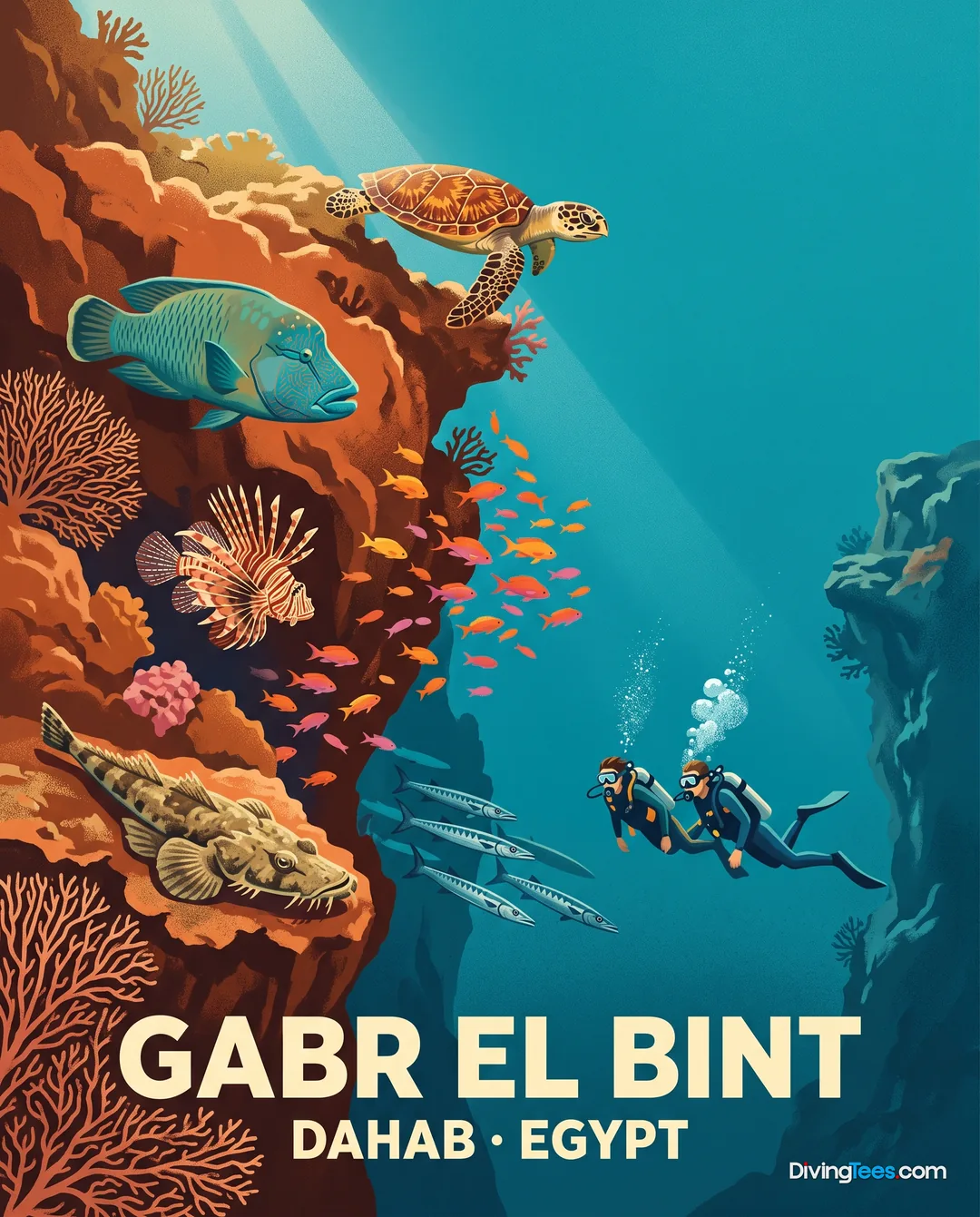
Gabr el Bint →
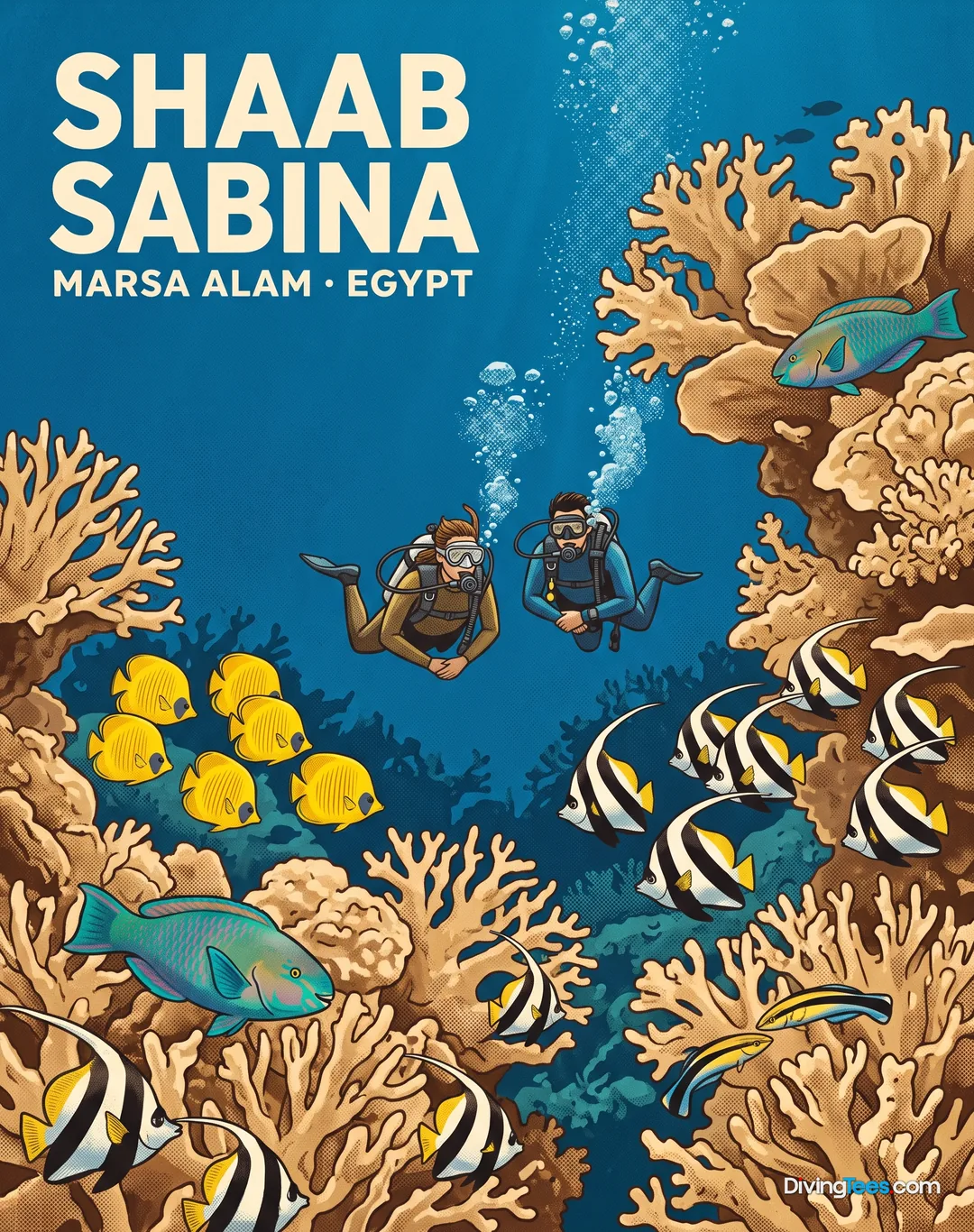
Shaab Sabina →
Max. depth · 14 m
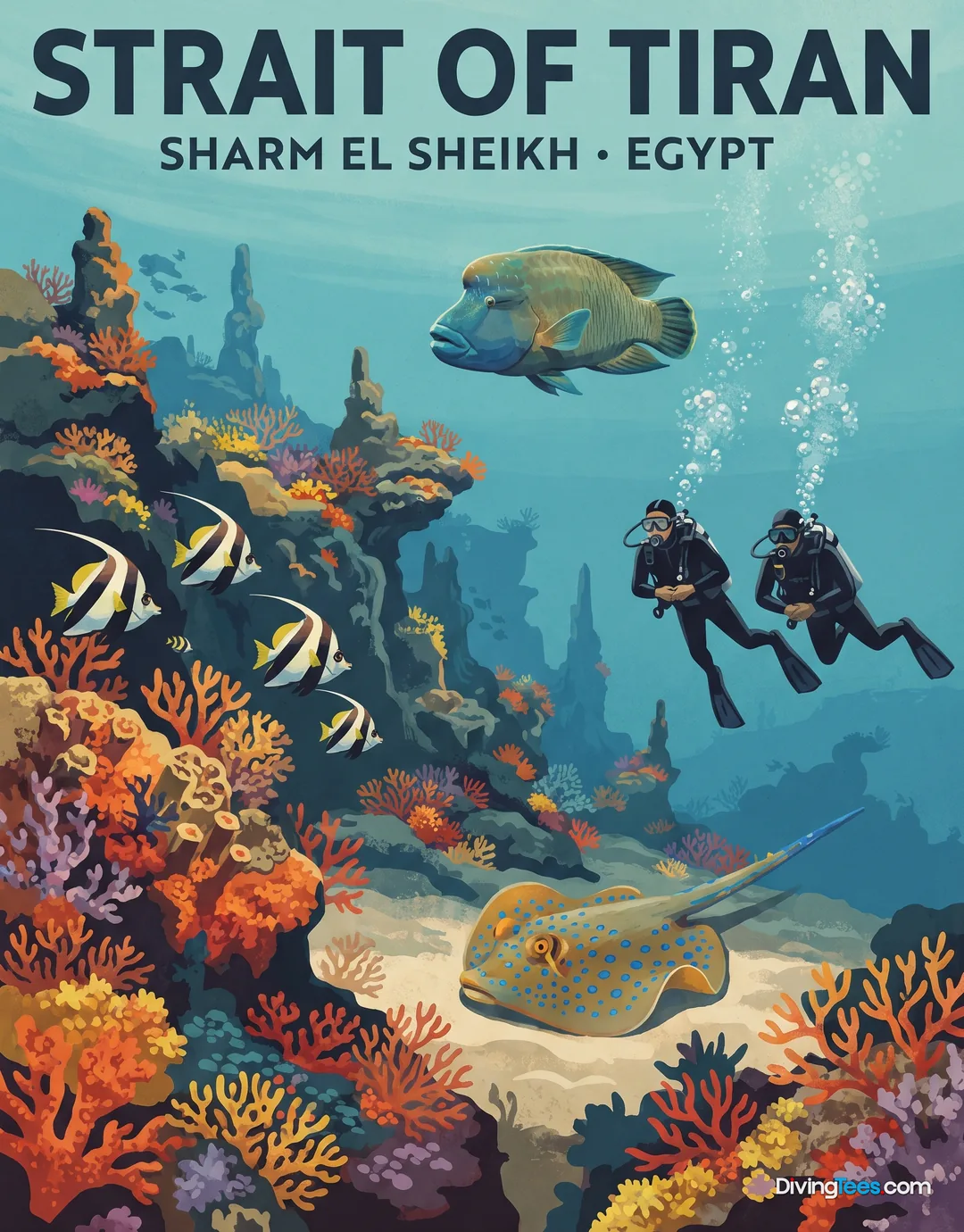
Strait of Tiran →
Max. depth · 40 m
What you’ll meet underwater
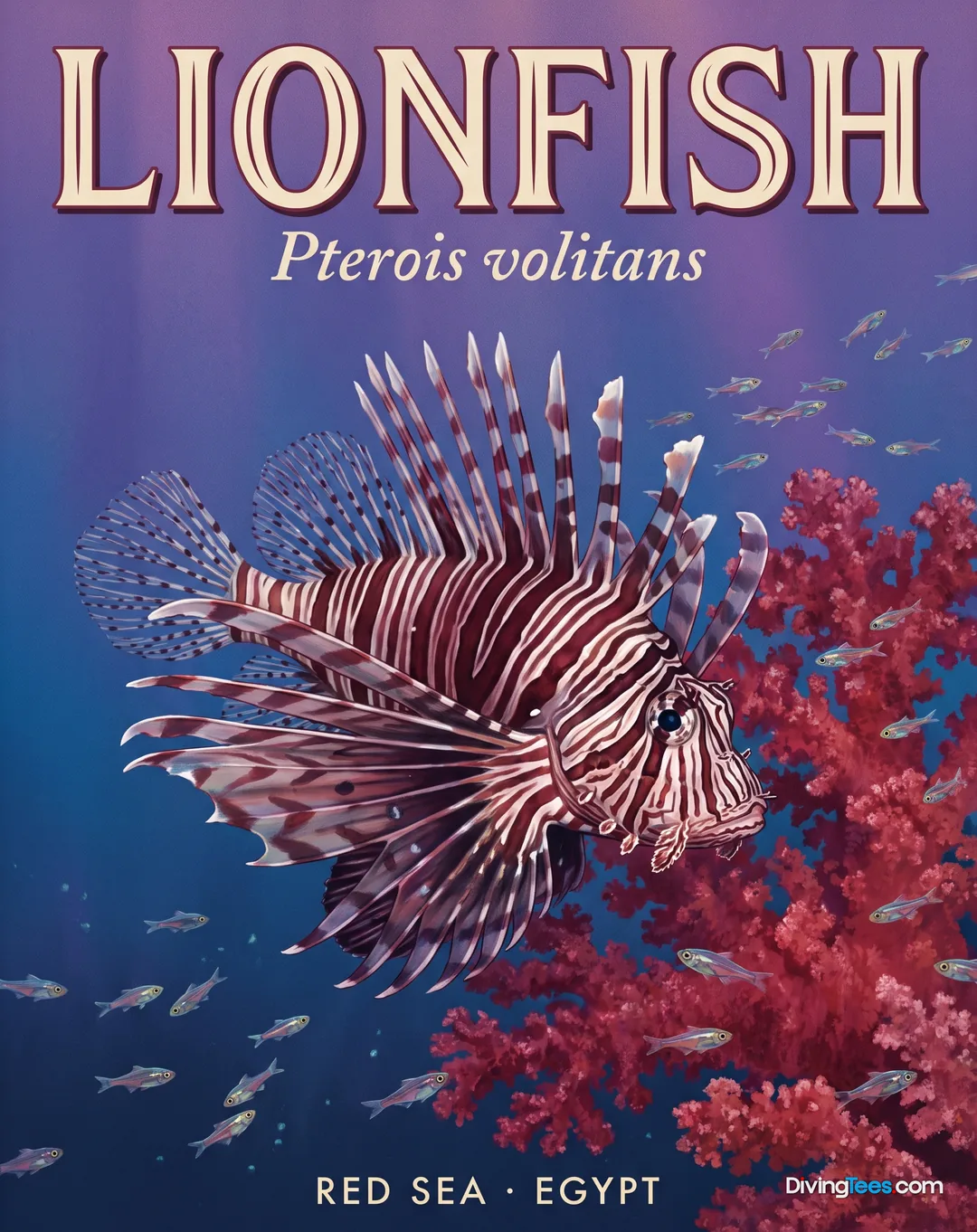
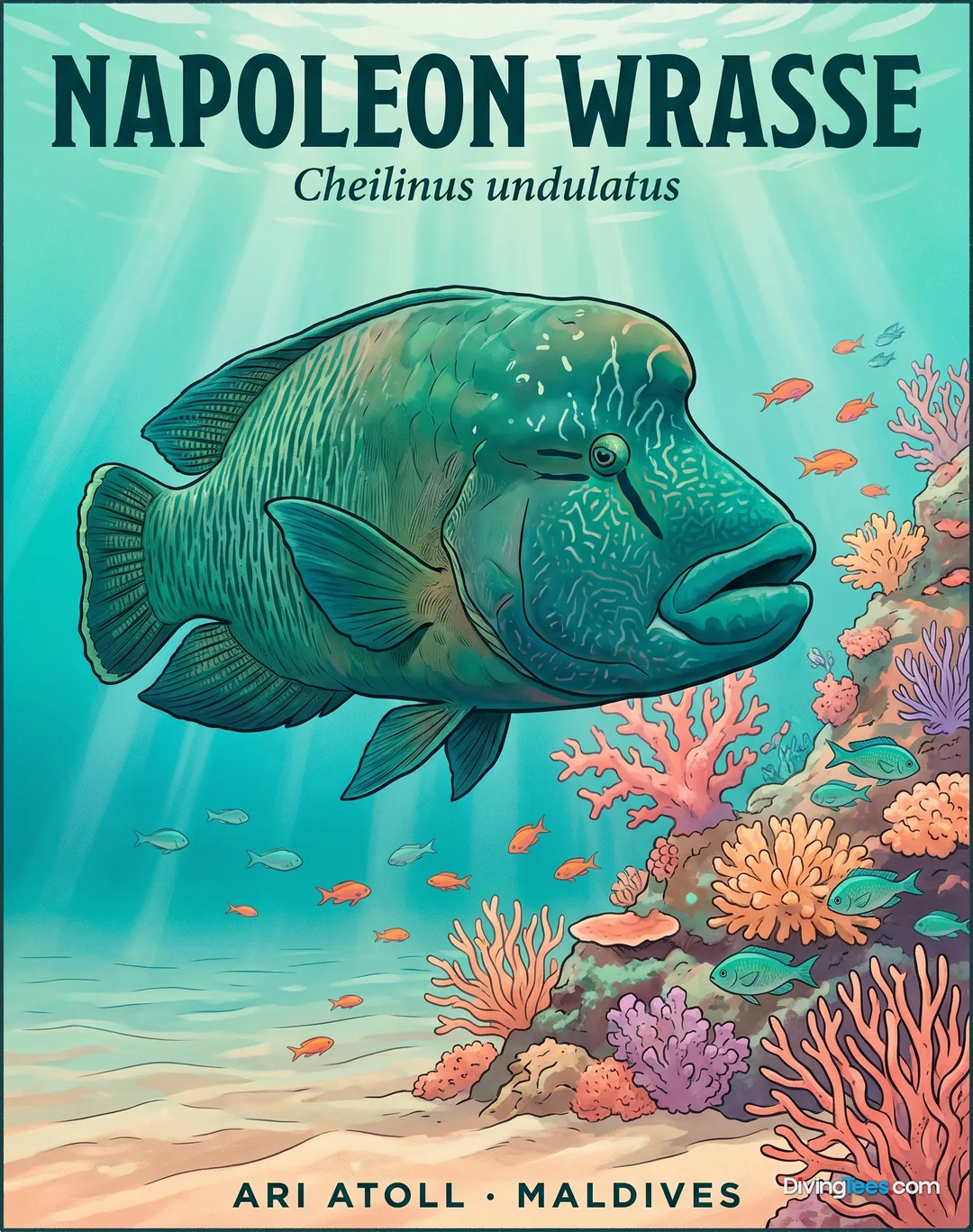
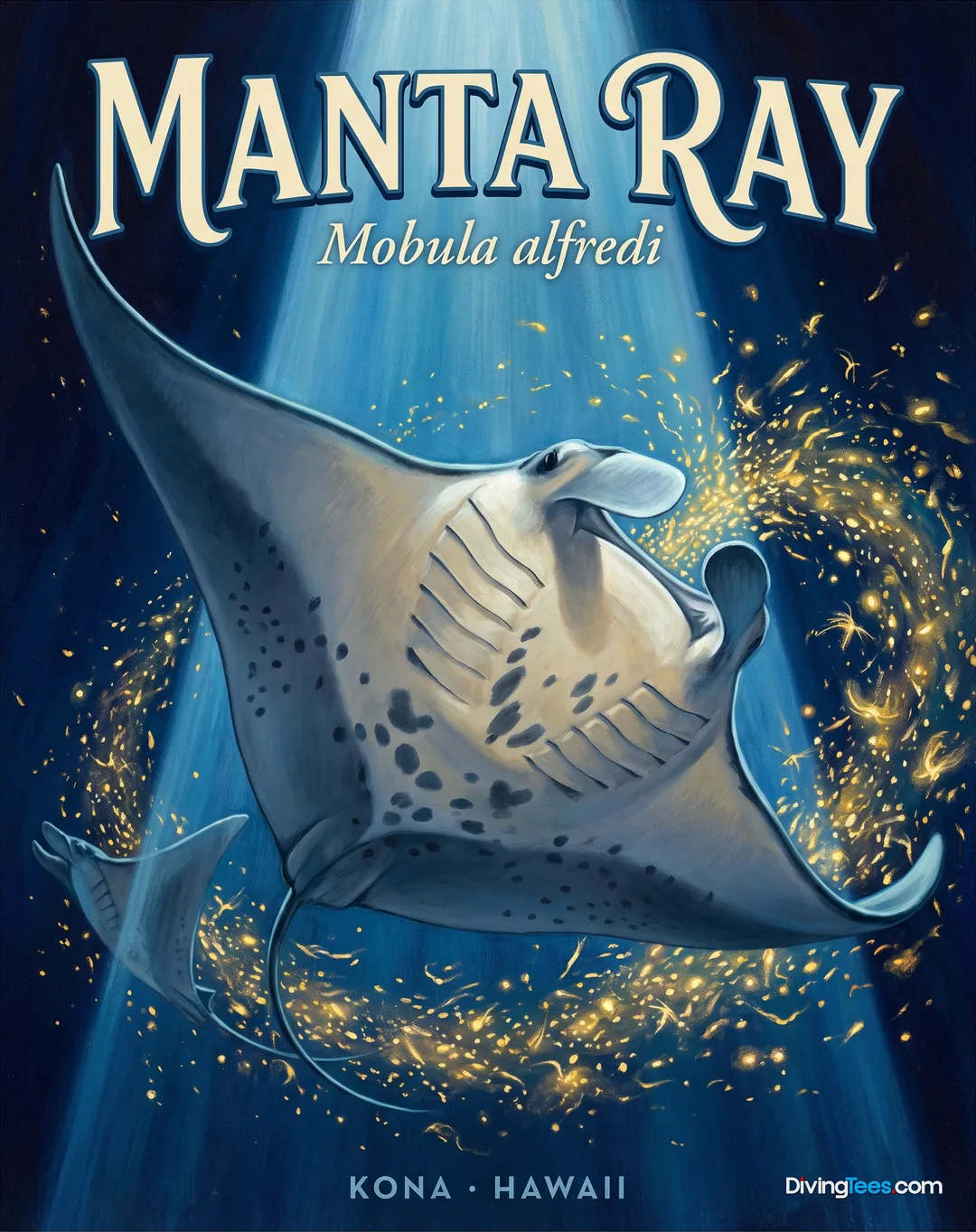
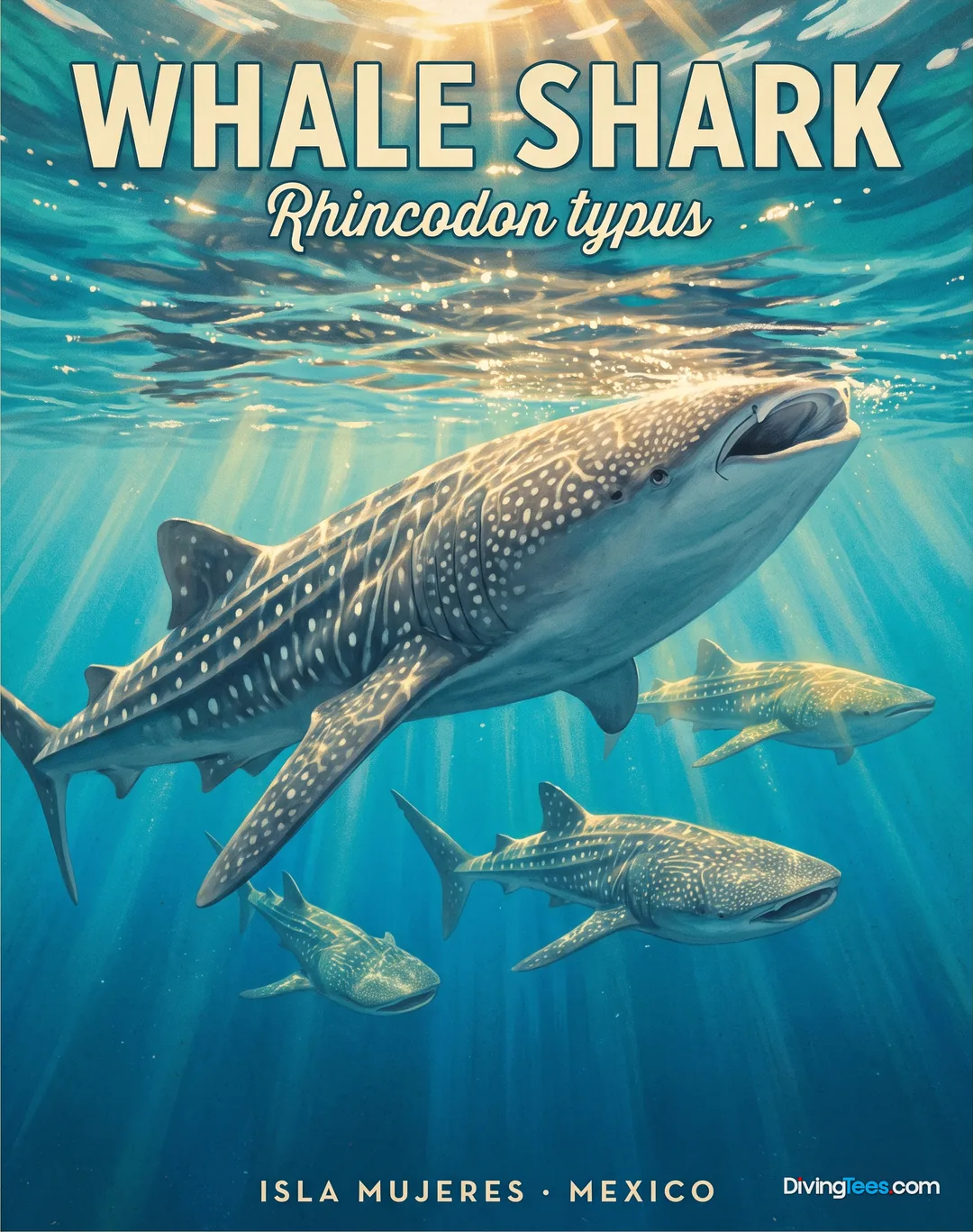
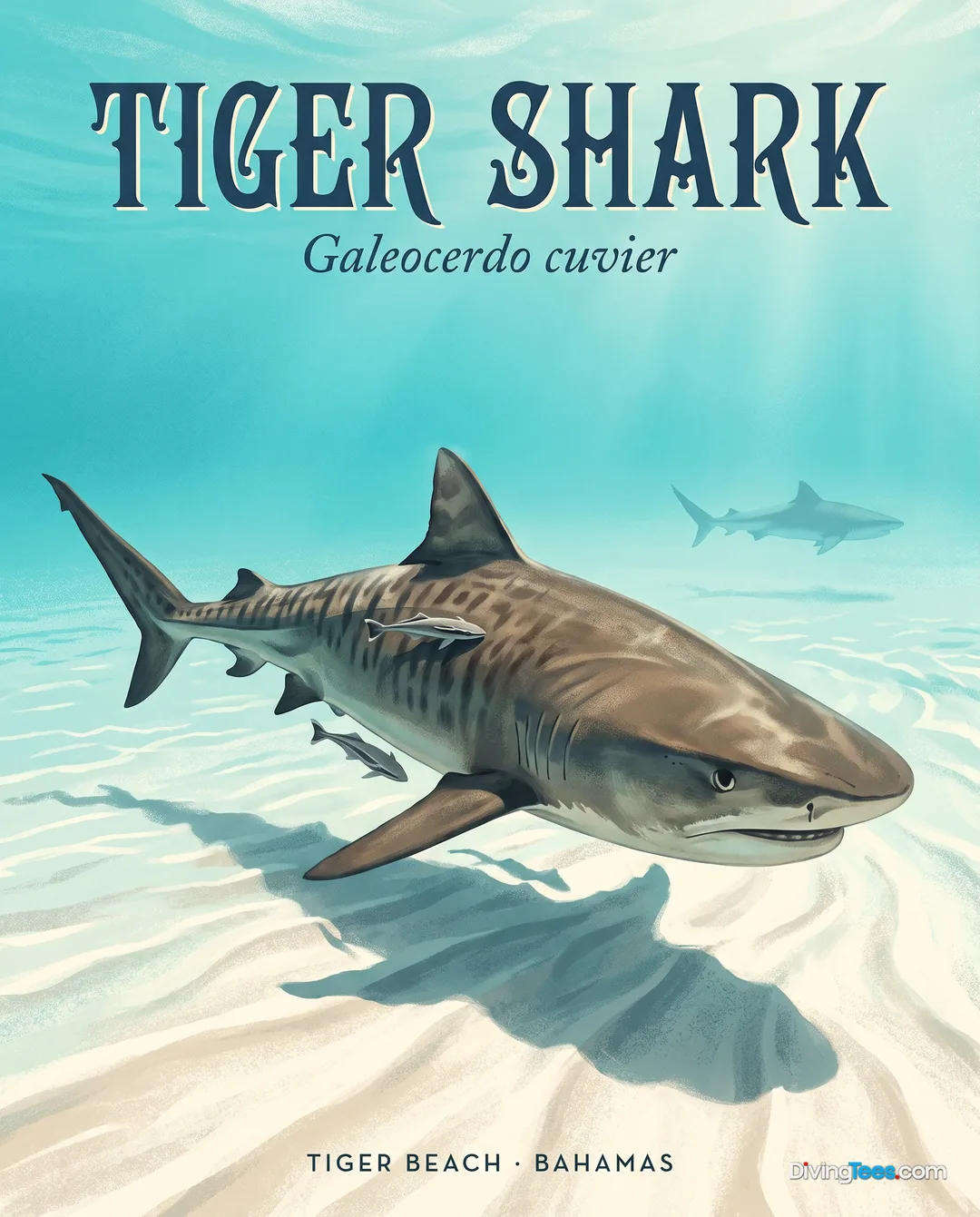
Across the route, the recurring cast is strong: moray eels, barracuda, turtles, groupers, Napoleon wrasse, tuna, jacks, scorpionfish, anthias, snappers and hard and soft corals. That gives the ordinary reef dive plenty to do—morays in cavities, scorpionfish disappearing against the rock, and schools moving over coral—without needing a rare sighting to make the dive worthwhile. The site-specific encounters are the reason to accept the longer passages. Brothers Islands are the place for a chance at manta rays, oceanic whitetips and whale sharks, as well as grey reef and other sharks. The Strait of Tiran is the only listed site for tiger sharks and green turtles. Blue Hole is where triggerfish are specifically recorded, Ras Abu Galum can bring large trevally, El Fanadir has gaterins, Shaab Sabina has damselfish, and Gabr el Bint is the site associated with fusiliers and gorgonians. At Shaab El Erg, dolphins are the attraction; at Brothers, current and isolation are part of what brings the bigger animals close.
Who puts you in the water
Dive guides and instructors speak English, German, French, Spanish, Russian, Portuguese, Polish and Italian. SSI courses can be completed on board, including Nitrox, Advanced Open Water, deep and wreck specialities, so the boat can support divers who want training alongside the safari. The operation is not built around a published guide-to-diver ratio or a stated minimum number of logged dives; the route and individual dives are still subject to certification, experience and conditions. Briefings precede the dives, and the crew’s role is visible in the practical details: guests receive a safety tour and fire drill at check-in, while oxygen, first-aid equipment and an ENOS emergency-location system are carried on board. Marine-park guides can stop a diver from joining a particular dive when conditions or experience make it unsuitable.
The dive deck and the gear
The dive area is shaded and arranged for repeated diving, with a platform at the water and two Yamaha tenders, each powered by 45 HP. The tenders take divers to the sites and collect them after surfacing, while the main boat remains the base for kitting up and returning from the water. Three compressors support filling, with a stated capacity of 750 litres per minute; Nitrox is produced through a 500-litre-per-minute membrane system. Nitrox 28–32% is available free of charge, and a Nitrox certification is required unless the course is completed on board. DIN adaptors, charging stations, camera facilities, rinse tanks and a separate camera rinse are available. Rebreathers are accepted, with a portable booster pump and blending support available on request. Sidemount is supported with one cylinder. Rental equipment is possible but should be arranged before sailing rather than assumed to be waiting on deck.
Between dives
Between dives, the main lounge is the useful refuge: air-conditioned, quiet enough for a book or a camera review, and close to the dining area when the next meal is ready. Above it, the sky-view fly deck gives the boat its best open-air space for sun, shade and the evening light. The camera station and separate camera rinse keep photo equipment from taking over the communal areas, while charging stations remove one small problem from a week of shooting. There is Wi-Fi, but it is limited; the Red Sea remains the better place to put the phone away. When the boat is under way, the deck is where the route becomes visible—open water, reef approaches and the changing light before the next briefing.
A day on board
A day begins with the first briefing before the boat and crew send divers into the water, often around a reef, wall or wreck chosen for the route and conditions. Breakfast follows or is ready around the first dive, then lunch and repeated surface intervals carry the group through the next entries. The normal pattern is three to four dives a day, with the night dive included when the itinerary allows; marine parks do not permit night dives. Between entries, divers rinse cameras, dry gear in the shaded area, eat, sleep, read in the lounge or climb to the upper deck while Serena Dreams moves toward the next site. The last dive is usually around midday on the day before departure, leaving the final afternoon for packing and the return to port. It is a diving day in clear stages: briefing, water, food, rest, then back to the platform.
What you eat aboard
The galley puts out European and Egyptian food, with local fresh seafood appearing alongside familiar dishes. Meals are served as buffets, and snacks remain available through the day, which matters when three or four dives have to fit around breakfast, lunch and dinner. Vegetarian and vegan choices are available, as are other dietary requests when arranged in advance. There is also outdoor dining when conditions allow. The food is one of Serena Dreams’ strongest points: varied, carefully presented and substantial enough for divers returning from the water hungry rather than merely looking for a plate to fill a gap. Non-alcoholic drinks, tea, coffee and water are included; beer and wine are available separately.
Nights at sea
The nine cabins are arranged between lower and upper decks, with twin and double-bed options, including upper-deck cabins with sea views. All have private bathrooms, individually controlled air-conditioning, towels and bathrobes. The standard windows are simple rather than panoramic, so the upper deck is the better choice for natural light and a view outside the bunk. At night, the air-conditioning gives the cabin its own temperature instead of forcing the whole boat into one setting. The lounge and upper fly deck provide a place to read or talk before turning in, but the boat remains a working dive platform: compressors, engines and deck activity are part of the setting. Cabin space is comfortable for a dive safari, not designed for unpacking an entire wardrobe.
Standard Twin Upper Deck Cabins
Lower Deck Twin Cabins
Lower Deck Double Cabin
Double Bed Upper Deck Cabin
What to know before boarding
Serena Dreams operates from Hurghada or Marsa Alam/Port Ghalib, depending on the scheduled itinerary, and the arrival and return port are given with the departure details. Airport and hotel transfers are included, with representatives handling the connection to the boat. Arriving the night before is the sensible choice, especially for a Hurghada transfer to Port Ghalib, which takes around three hours.
- Year built
- 2007
- Year renovated
- 2020
- Length
- 33 m
- Beam
- 7 m
- Maximum number of passengers
- 18
- Number of cabins
- 9
- Number of bathrooms
- 11
- Engines
- 2 × 600 hp CAT
- Cruising speed
- 9 knots
- Tenders
- 2 × Yamaha 45 hp
- Website
- seaserpentfleet.com ↗
Hello, I'm Marina, DivingDeal.com's AI assistant. I answer in detail about hotels, dive centres and liveaboards.

Thinking about the whole trip and the flights? Talk it over with Edith →
Marina is an AI. Some links are affiliate links: DivingDeal may earn a commission, at no extra cost to you. Bookings are made with the partner.