

Silent World
Google 4.9/5 (3,139 reviews)
13 km away as the crow flies
Key Largo · United States · Americas
Max. depth · 40 mDescend onto the USS Spiegel Grove, a 510-foot landing ship resting upright at 40 metres, now a vibrant artificial reef teeming with marine life.
For subtitles in English: start the video firstthen click the gearat the top right of the video, select “Subtitles/CC”, then “Auto-translate” and choose “English”.
The USS Spiegel Grove, a naval landing ship 510 feet long, was intentionally sunk in 2002 to become an artificial reef off Key Largo. Initially settling on its side, Hurricane Dennis in 2005 shifted it dramatically, leaving the massive vessel resting upright. This ship now forms the impressive backbone of a layered ecosystem, providing vast surfaces and sheltered areas for marine life to colonize and flourish in the open water.
When you approach the Spiegel Grove, you're looking at one of the largest wrecks ever purposefully sunk to create an artificial reef. Mooring lines are typically attached directly to the superstructure, giving you a clear path down to the hull. Its sheer size means you'll need multiple dives just to begin to orient yourself, let alone explore even a fraction of what this ship offers. The wreck starts at approximately 20 metres, with the main deck and much of its accessible structure lying between 24 and 27 metres.
The depth profile of the Spiegel Grove ranges from 20 metres at its shallowest points to a maximum of 40 metres at the sandline. Much of the ship's most compelling features and accessible areas, including large internal sections and upper decks, are found within the 24 to 27 metre range. This allows for multilevel dive planning, enabling you to spend adequate time exploring the structure while managing your bottom time effectively across different depth zones.
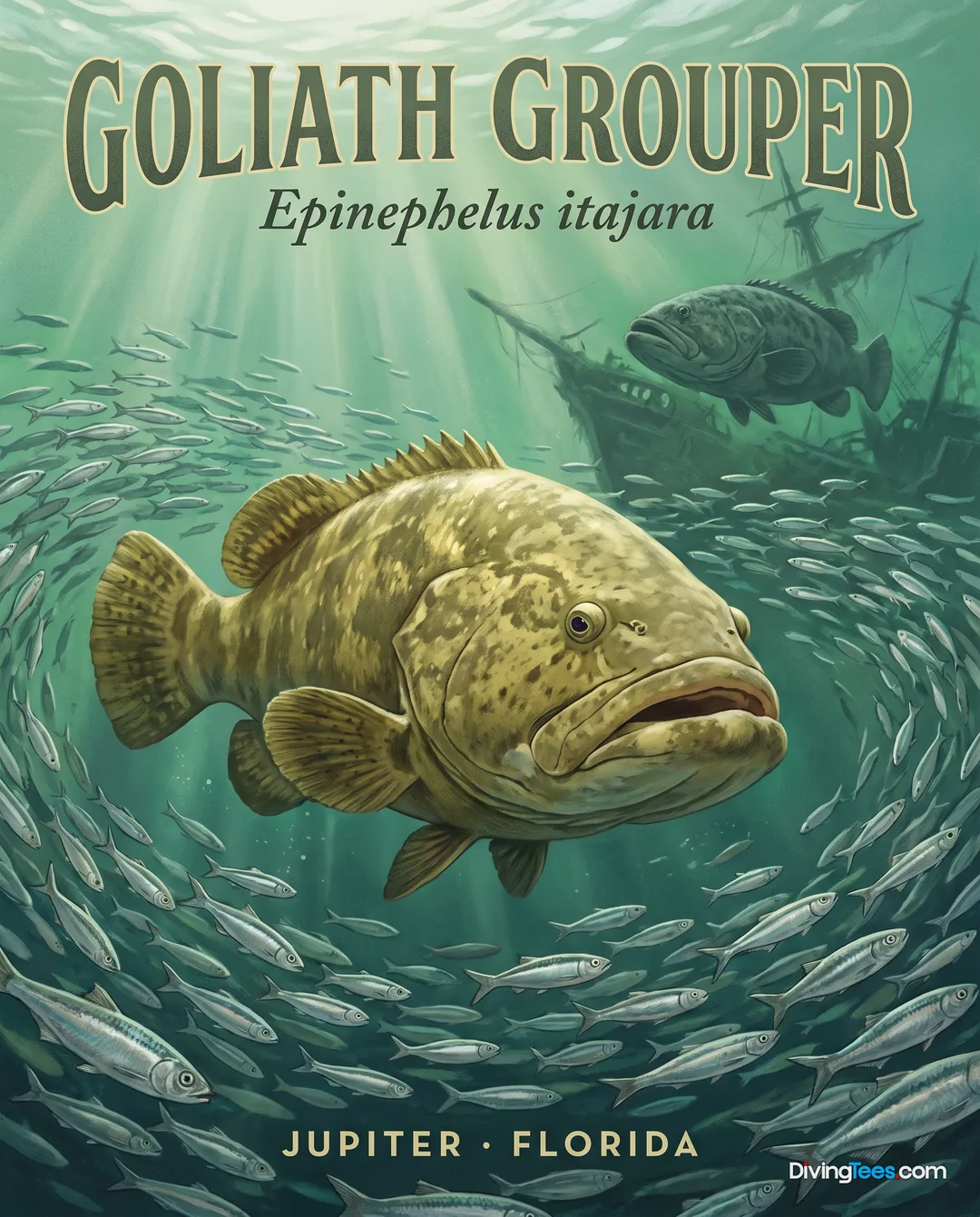
Marine life on the Spiegel Grove is abundant due to its status as a mature artificial reef. You will encounter large schools of barracudas (Sphyraena barracuda) often circling the mast and upper structures, along with impressive goliath groupers (Epinephelus itajara) that have taken up residence in the deeper sections and interior compartments. Look also for various species of jacks (Caranx ignobilis) moving around the wreck's periphery, using it as a hunting ground against the prevailing currents.
The surfaces of the Spiegel Grove are heavily encrusted with a mixture of algae, sponges, and hard corals, transforming the ship's grey steel into a vibrant, living canvas. Amongst these formations, you'll find numerous gobies (Gobiidae) darting in and out of crevices, providing small bursts of colour against the prevailing growth. This rich biotope attracts not just resident species but also pelagic fish, drawn to the structure in the otherwise open water column.
Navigating the Spiegel Grove requires careful buoyancy control and an understanding of wreck diving principles, especially given its variable current conditions. While moorings assist in descent, the current can be strong, particularly on the deeper sections and open deck spaces. Plan your descent and ascent with this in mind, and always be aware of your position relative to the main structure and the deployment of any planned ascent protocols.
This wreck is not just a dive site; it's a testament to how quickly an artificial structure can integrate into the marine environment, offering shelter and sustenance. Its size and the sheer volume of life it supports make it exceptional in the region, providing a complex and dynamic environment that changes with visibility and current. Each dive here reveals new details, from the smallest gobies to the largest goliath grouper moving silently through the shadows of the engine room.
Diving the USS Spiegel Grove requires an advanced certification due to its depth and the potential for strong currents. You can expect to dive between a minimum depth of 20 meters and a maximum of 40 meters. Good buoyancy skills are essential, particularly when exploring inside the wreck or in areas exposed to stronger flow. Visibility can vary, but generally ranges from 12 to 30 metres, offering clear views of the massive structure.
You need advanced certification to dive the USS Spiegel Grove because of its depth and potential for strong currents. Good buoyancy skills are essential, especially when exploring inside the wreck or areas exposed to stronger flow. Wreck diving principles and careful awareness of your position around the structure are also important.
The USS Spiegel Grove rests between 20 and 40 metres. Its shallowest points begin at about 20 metres, while the main deck and much of the accessible structure lie between 24 and 27 metres. The sandline reaches 40 metres, allowing multilevel dive planning across different depth zones.
Currents at the USS Spiegel Grove can be variable and strong, particularly around deeper sections and open deck spaces. Mooring lines help with descent and ascent, but you still need to plan carefully, maintain good buoyancy, monitor your position relative to the wreck, and consider your planned ascent protocols.
At the USS Spiegel Grove, you can explore a 510-foot naval landing ship resting upright as an artificial reef. Barracudas circle the mast and upper structures, while goliath groupers occupy deeper sections and interior compartments. Coral, sponges, algae, gobies, and jacks cover or surround the wreck.