
Sea Dwellers Dive Center
Google 4.8/5 (1,232 reviews)
22 km away as the crow flies
Key Largo · United States · Americas
Max. depth · 120 mDescend to 37 metres to explore the intact structure of the USCG Duane, a 100-metre cutter standing upright on the sand.
For subtitles in English: start the video firstthen click the gearat the top right of the video, select “Subtitles/CC”, then “Auto-translate” and choose “English”.
The USCG Duane, a 100-metre (329-foot) former Coast Guard cutter, was intentionally sunk in 1987 to create an artificial reef. She rests upright on a sandy bottom, with her keel at 37 metres (120 feet). The wreck’s vertical orientation provides significant relief, with the top of the mast and crow's nest visible as shallow as 15 to 18 metres (50-60 feet) below the surface, making for a dramatic descent. The vessel's structure is remarkably intact, preserving its original rudders, propellers, railings, ladders, and portholes.
As you descend, the sheer size of the Duane becomes apparent, with the outline of the hull often visible from a distance on clear days. The majority of the accessible structure lies between 27 and 32 metres (90 to 105 feet). Many decks and internal sections were prepared for diving, allowing for careful exploration inside the cutter. This access to the interior makes the Duane a complex wreck that rewards multiple dives.
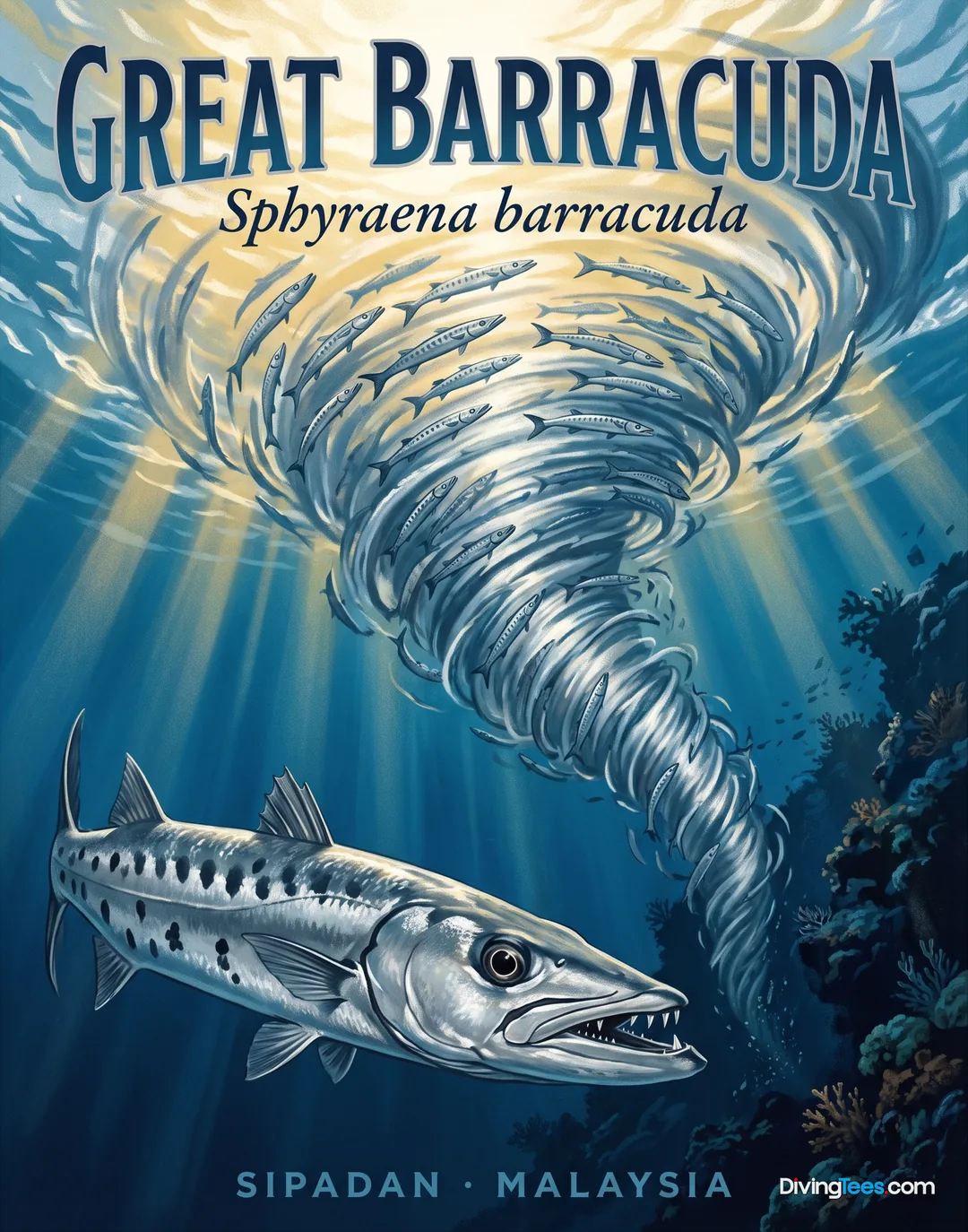
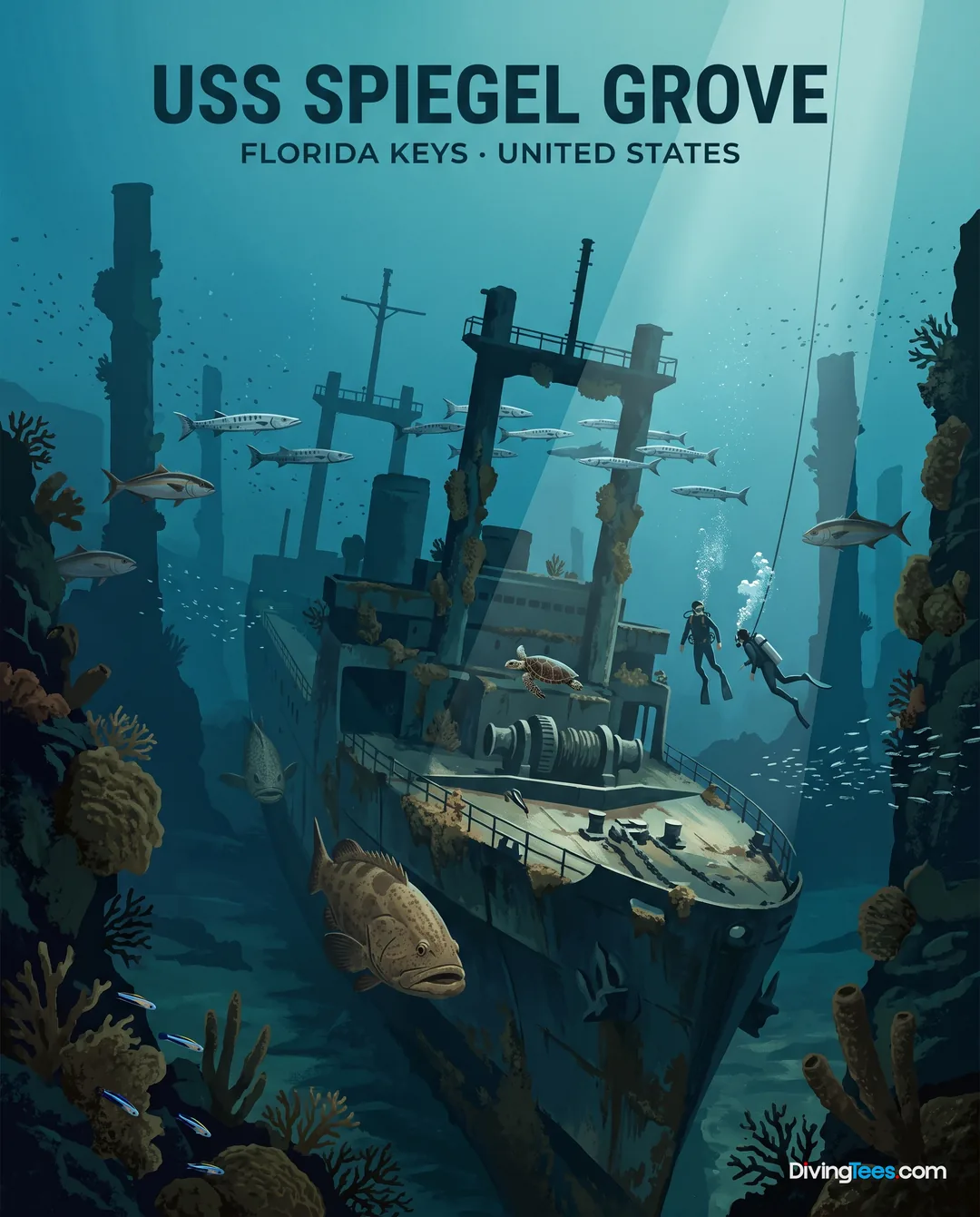
The Duane's proximity to the Gulfstream means you will often find clear water, with visibility frequently exceeding 30 metres. This constant flow also brings nutrients, supporting a diverse ecosystem. Large schools of barracudas often patrol the deck, sometimes alongside greater amberjacks (Seriola dumerili). You will also commonly encounter black groupers (Mycteroperca bonaci) and cobias (Rachycentron canadum) around the wreck's structure.
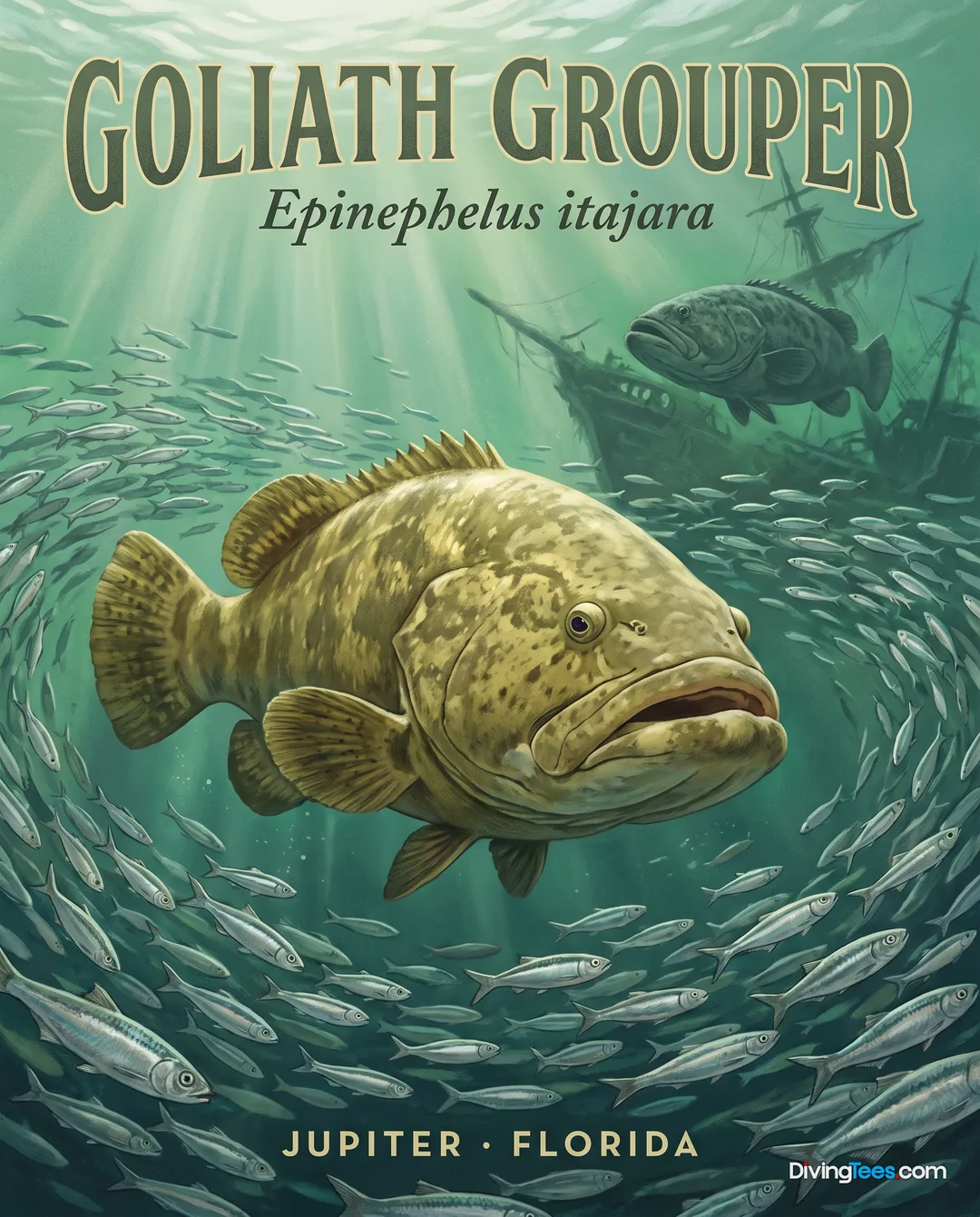
Beyond the schools of pelagic fish, the wreck is a magnet for larger marine life. Occasional bull sharks (Carcharhinus leucas) pass by, and various rays are seen gliding over the sandy bottom near the stern. Giant groupers (Epinephelus lanceolatus) make the Duane their home, adding to the sense of scale as they often appear from the deeper sections of the wreck. The vibrant coral growth across the metal structure attracts a range of smaller reef fish.
Lionfish (Pterois volitans) are also present, often found tucked into crevices or hovering near the coral-encrusted railings. The wreck functions as a complete artificial reef ecosystem, with life at every level, from the top of the mast down to the sandy seafloor. The depth and exposure to open current conditions allow for a richer, more diverse community compared to some shallower-water sites.
This dive demands careful attention to your gas consumption and decompression limits. While the main structure is at accessible depths for advanced recreational divers, the true experience requires proper planning for bottom time and ascent protocols. Being closer to the Gulfstream means currents can shift and intensify, particularly closer to the wreck's exposed profile, requiring good buoyancy control and awareness.
The USCG Duane is recognized as a premier wreck dive. It consistently draws divers who appreciate its preserved structure and the abundant marine life it hosts. Combined with other deep wrecks in the area, it solidifies Key Largo's reputation as a world-class destination for advanced wreck diving. The sheer size and upright position offer a unique perspective and exploration opportunities not found on many other artificial reefs.
The USCG Duane is a deep dive, with minimum depths around 29 metres and the keel resting at 37 metres. This site requires an advanced certification, with experience in wreck diving recommended due to its depth and potential for strong currents. Visibility averages around 30 metres, but currents can be a significant factor, potentially strong due to the wreck's exposure to the Gulfstream.
You need advanced certification for the USCG Duane. Experience in wreck diving is recommended because the site is deep, includes internal and deck exploration, and may have strong currents. Careful gas management, attention to decompression limits, good buoyancy control, and awareness are important when exploring this upright cutter.
The USCG Duane ranges from about 29 metres to 120 metres, with the keel resting at 37 metres. Much of the accessible structure lies between 27 and 32 metres, while the mast and crow’s nest reach 15 to 18 metres. You can explore prepared decks and internal sections.
The USCG Duane is exposed to the Gulfstream, so currents can be significant and potentially strong. Flow may shift and intensify near the wreck’s exposed profile. You should maintain good buoyancy control, remain aware of changing conditions, and plan gas consumption and ascent procedures carefully for this deep dive.
At the USCG Duane, you can see an upright cutter with intact rudders, propellers, railings, ladders, and portholes. Barracudas, jackfish, black groupers, cobias, rays, and occasional bull sharks occur around the wreck. Coral growth, lionfish, giant groupers, and the sandy bottom add life throughout the structure.