
Silent World
Google 4.9/5 (3,139 reviews)
11 km away as the crow flies
Key Largo · United States · Americas
Max. depth · 70 mElbow Reef offers a unique blend of historical wreck dives intertwined with vibrant coral formations, all fed by the clear waters of the Gulf Stream.
For subtitles in English: start the video firstthen click the gearat the top right of the video, select “Subtitles/CC”, then “Auto-translate” and choose “English”.
Located in Key Largo, Elbow Reef is a significant stretch of coral structure marked by a 36-foot light tower. This area is often referred to as 'Wreck Reef' due to the numerous ship remains integrated into the reef system. The proximity of the Gulf Stream ensures consistently clear, blue water across most of the site, which, while sometimes bringing a moderate current, provides excellent visibility for exploring both the natural and man-made features.
The diversity of Elbow Reef accommodates various dive profiles. Shallower sections of the reef begin at 6 meters, featuring coral heads and sand channels that support typical reef fauna. As you move deeper, the reef transitions into a large system of fingers and more defined coral structures, providing shelter and feeding grounds for a variety of fish species. These shallower areas are suitable for casual reef exploration.
Among the notable features are several wrecks, starting with the City of Washington, located east-north-east of the light tower. Nearby, at depths between 18 and 25 feet (5.5 to 7.6 meters), lies the Hannah M. Bell, also known as Mike’s Wreck. These shallower wrecks are well-integrated into the reef, providing habitat for many of the reef’s inhabitants.
Further wreck exploration includes the 'Civil War Wreck' situated close to the central tower. Slightly deeper, at 20 to 30 feet (6 to 9 meters), you'll find the scattered remains of the Tonawanda, a 300-foot steam cargo ship that sank in 1866. These wrecks offer opportunities for closer inspection of maritime history alongside the natural reef ecology.
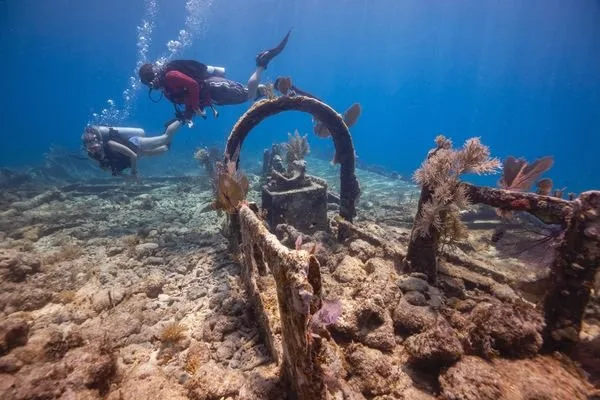
Beyond the named wrecks, other historical markers underscore the site's rich past. At a depth of roughly 25 feet (7.6 meters), a substantial anchor chain spans 25 to 35 feet (7.6 to 10.7 meters), leading to a concrete mooring block. Additionally, remnants of a ship that carried train wheels are visible at 20 to 30 feet (6 to 9 meters), including one complete train wheel still resting on the seabed.
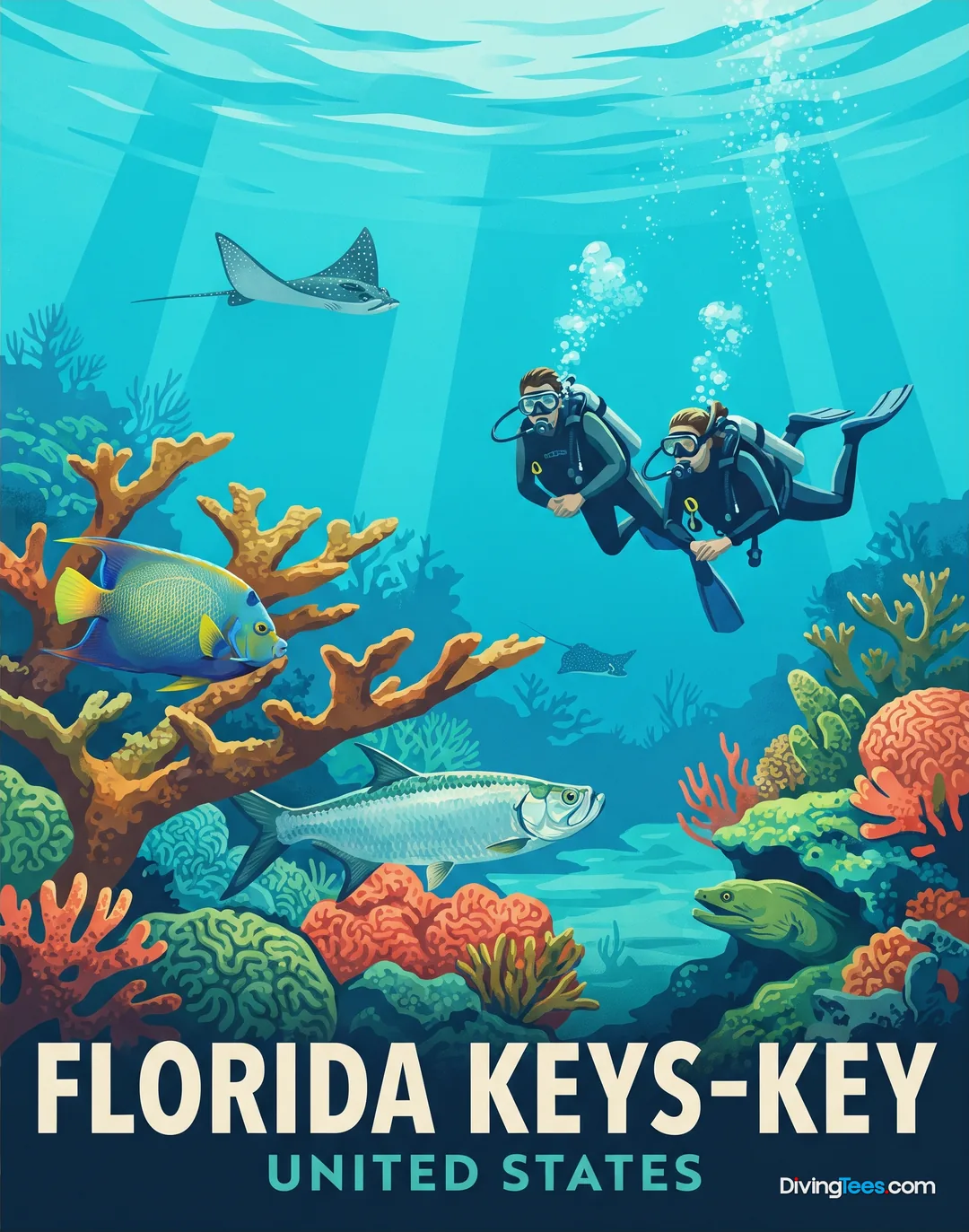
Marine life at Elbow Reef is diverse, with common sightings including snappers, hogfish, and goatfish. You’ll also find angelfish and butterflyfish navigating the coral formations. Turtles are regular visitors, with both hawksbill (Eretmochelys imbricata) and loggerhead (Caretta caretta) turtles observed feeding and resting on the reef.
The southern section of Elbow Reef presents the deepest part of the site, marked by a specific buoy. Here, the reef slopes gradually before reaching a distinct ledge known as Nelson’s Ledge. Beyond this ledge, the bottom drops more steeply, eventually giving way to a sandy seabed at 85 feet (26 meters), offering opportunities for deeper profiles.
Depths at Elbow Reef range from 6 meters to 26 meters. The site is generally accessible from Open Water Diver level for the shallower reef sections and intermediate for the deeper wrecks and southern wall. Currents are typically weak to moderate, influenced by the Gulf Stream, which also contributes to consistently clear water. Visibility is generally very good.
Elbow Reef suits Open Water Divers in its shallower reef sections, where coral heads, sand channels, and shallow wrecks can be explored. You need intermediate experience for the deeper wrecks and the southern wall, including the deeper profile around Nelson’s Ledge.
Elbow Reef ranges from 6 meters in the shallow reef sections to 26 meters on the sandy seabed beyond Nelson’s Ledge. The site includes shallow coral heads, sand channels, integrated wrecks, deeper reef fingers, and a southern wall that supports deeper profiles.
At Elbow Reef, currents are typically weak to moderate and can be influenced by the Gulf Stream. That influence also contributes to consistently clear, blue water, with visibility generally very good. You should still expect conditions to vary while exploring the reef, wrecks, and southern wall.
At Elbow Reef, you can explore coral formations, sand channels, and multiple historical wrecks integrated into the reef, including the City of Washington, Hannah M. Bell, Civil War Wreck, and Tonawanda. Marine life includes snappers, hogfish, goatfish, angelfish, butterflyfish, and hawksbill and loggerhead turtles.