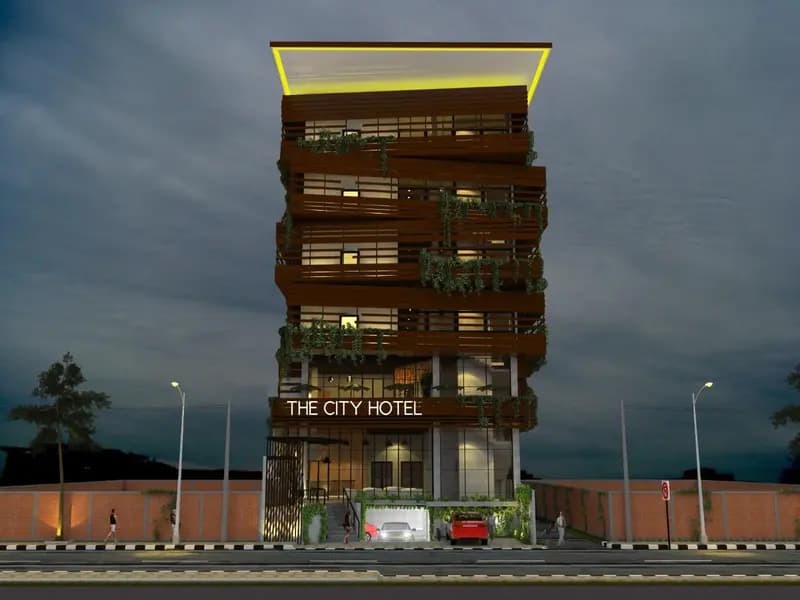
The City Hotel
★★★
★ 8.3/10 (695 reviews)
12 km away as the crow flies
Dive centre · Ambon · Indonesia
4.937 Google reviewsExperience world-class muck diving and pristine reef walls from an intimate resort in the heart of the Moluccas.
For subtitles in English: start the video firstthen click the gearat the top right of the video, select “Subtitles/CC”, then “Auto-translate” and choose “English”.
Located in the village of Seilale in Ambon, the Ambon Dive Resort occupies a unique position in the Moluccas. The resort is set within lush nature, providing a quiet and authentic alternative to the more crowded diving hubs of Indonesia. It is accessible via a 15-minute boat transfer from Pattimura Airport, or by car if weather conditions dictate.
The management team is multilingual, speaking English, French, and Indonesian, making communication straightforward for international divers. The resort is designed by diving enthusiasts, ensuring that the facilities meet the specific needs of the community.
A dedicated room is available on-site for photographers and videographers to review their work, process images, and charge equipment. This focus on the technical side of the hobby makes it a welcoming environment for those documenting the local marine life.
While the centre focuses heavily on exploration, they offer specialised diving experiences such as Blackwater Diving and Bonfire Diving. These are excellent options for divers looking to expand their skills in unique nocturnal environments.
For those looking to build their credentials, the centre is well-positioned to support divers through their various stages of certification, though specific course schedules should be confirmed upon arrival.
The centre operates three boats to facilitate different diving styles. Two of these vessels are configured for smaller groups of up to 5 divers, while a larger boat accommodates 8 divers. All boats are powered by twin 40cc engines.
Nitrox is available on board for your dives. The fleet supports various diving activities, including night dives and drift dives in the open water outside the bay.
The dive centre is well-equipped with air and Nitrox compressors. Divers can choose between 12-litre and 15-litre aluminium cylinders, with 15-litre options available for those requiring more gas.
For those not travelling with a full kit, the centre offers rental equipment including BCDs, regulators, dive computers, and torches. Safety is a priority, with O2 DAN kits and first aid supplies carried on every boat and maintained at the centre. A DAN-standard hyperbaric chamber is also accessible in Ambon via the navy.
The House Reef is a sandy slope located right at the resort, ideal for all levels. It is a prime spot for finding nudibranchs, octopuses, and various species of seahorses.
Pintu Kota, Tanjung Mahia, Tanjung Kilang, and Tanjung Hukurila are all drift dive sites located outside the bay. These sites are subject to strong currents and serve as transit points for pelagics, including reef sharks, manta rays, and hammerhead sharks.
Depan Tupa and Namatu offer stunning wall diving. These sites feature vibrant colonies of hard corals, gorgonians, and sponges, attracting large schools of fusiliers, barracuda, and turtles.
And some of the dive sites the centre runs.
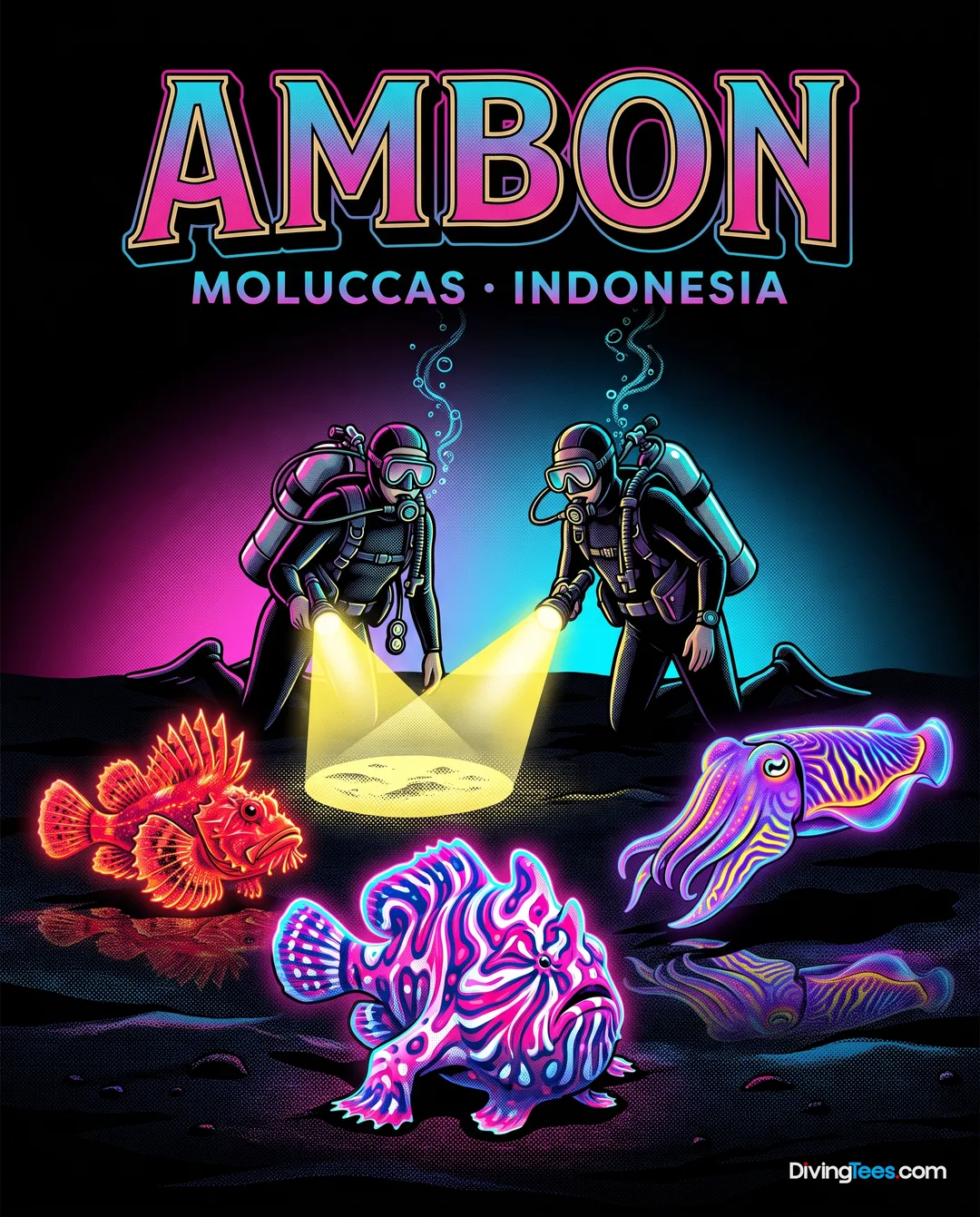
The macro life in Ambon Bay is exceptional. You will find a vast array of specialist species including the psychedelic frogfish (endemic to Ambon Bay), mimic octopuses, wunderpus, and the blue-ringed octopus. The sandy areas and reef flats are also home to various nudibranchs, pygmy seahorses, thorny seahorses, and ghost pipefish such as the robust, halimeda, and harlequin varieties.
For those looking for larger encounters, the drift dives outside the bay offer significant pelagic sightings. You can expect to see tuna, napoleon wrasse, reef sharks, manta rays, and hammerhead sharks passing through the current.
The reef structures themselves are teeming with life, including various species of anthias, angelfish, parrotfish, and damselfish. Look closely among the corals to find zebra crabs, harlequin shrimps, and Coleman shrimp.
The best time to visit is from early September to late May. Within the bay, currents are generally minimal or non-existent, making for easy exploration of the reef flat and sandy slopes.
When diving the sites outside the bay, be prepared for impressive currents. These drift dives are highly dependent on the movement of the water, which brings in the larger pelagic species.
Hello, I'm Marina, DivingDeal.com's AI assistant. I answer in detail about hotels, dive centres and liveaboards.

Thinking about the whole trip and the flights? Talk it over with Edith →
Marina is an AI. Some links are affiliate links: DivingDeal may earn a commission, at no extra cost to you. Bookings are made with the partner.