
Viking Divers Gili Trawangan
Google 5/5 (331 reviews)
Indonesia · Asia
Turtle plateaux, sandy macro bottoms, coral pinnacles and occasional reef sharks define Gili Trawangan, where short boat dives link the three islands.
For subtitles in English: start the video firstthen click the gearat the top right of the video, select “Subtitles/CC”, then “Auto-translate” and choose “English”.
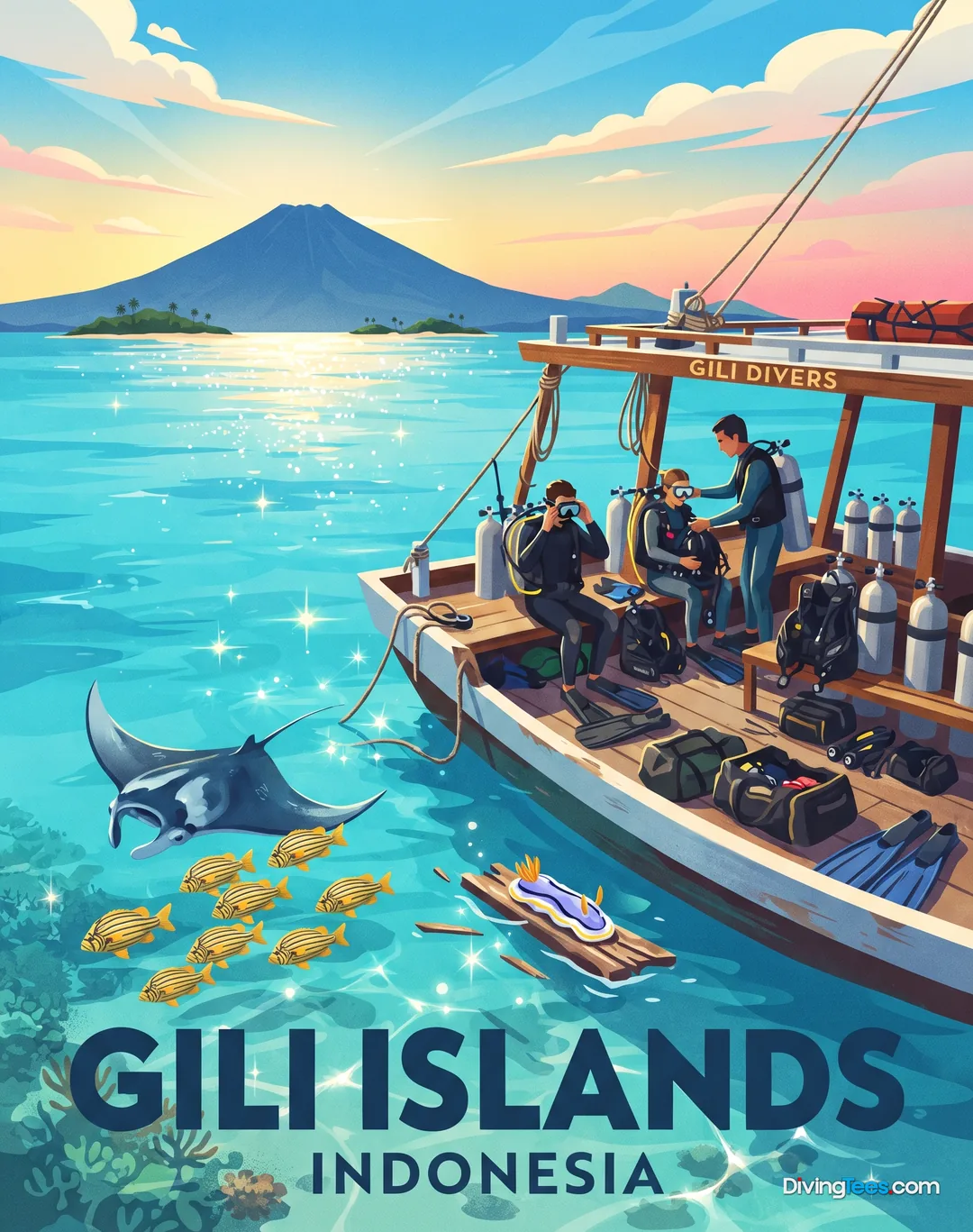
Gili Trawangan works best as an island-based diving holiday rather than a liveaboard destination. Centres leave by boat for reefs, sandy macro ground and neighbouring sites around the three Gilis, with several short outings possible during a stay. Turtle Heaven gives newer divers a shallow plateau and sloping reef, while Deep Turbo and Takat Malang provide deeper pinnacles for those wanting more demanding profiles. Above the water, the island is busy, social and easy to explore on foot or by bicycle.
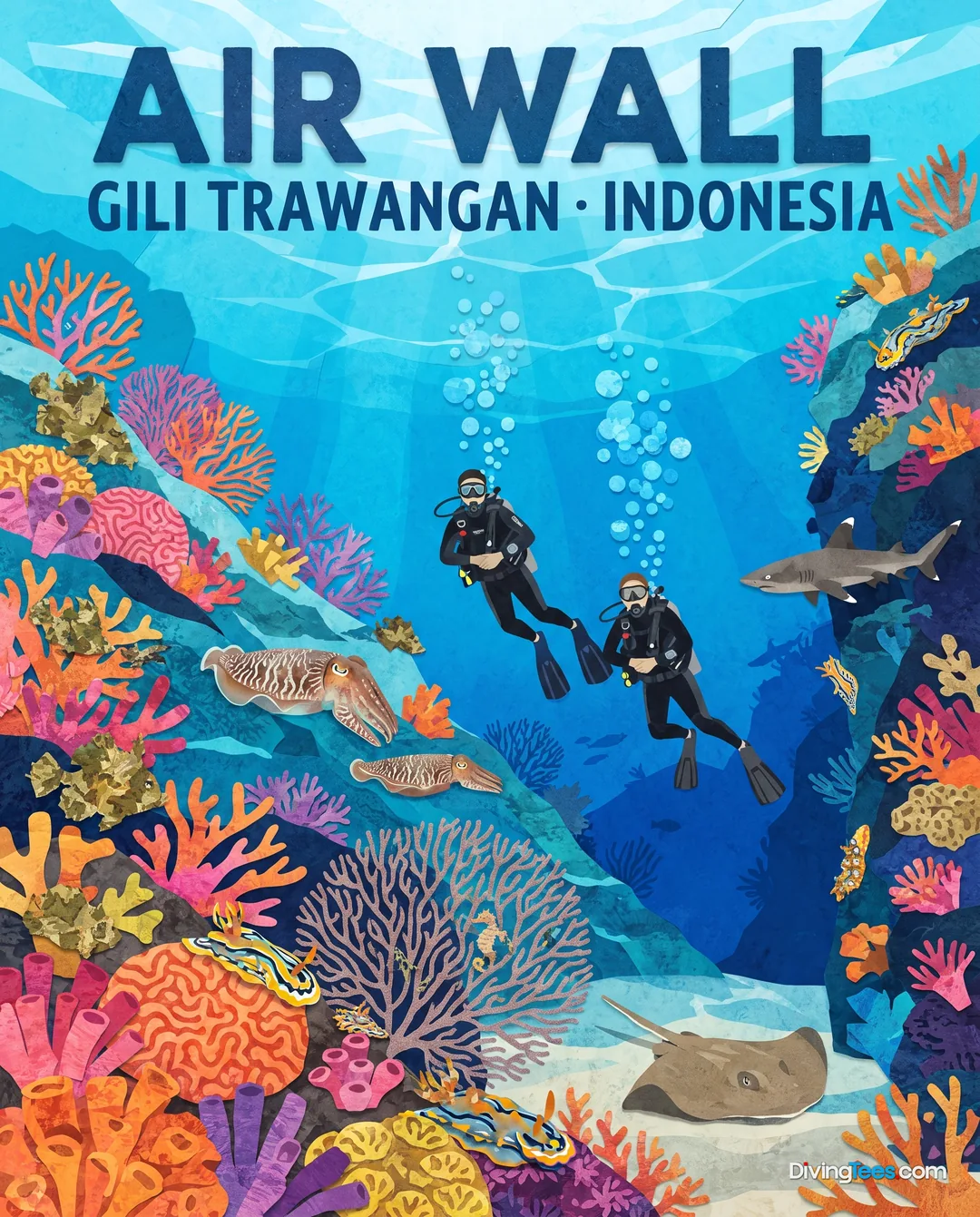
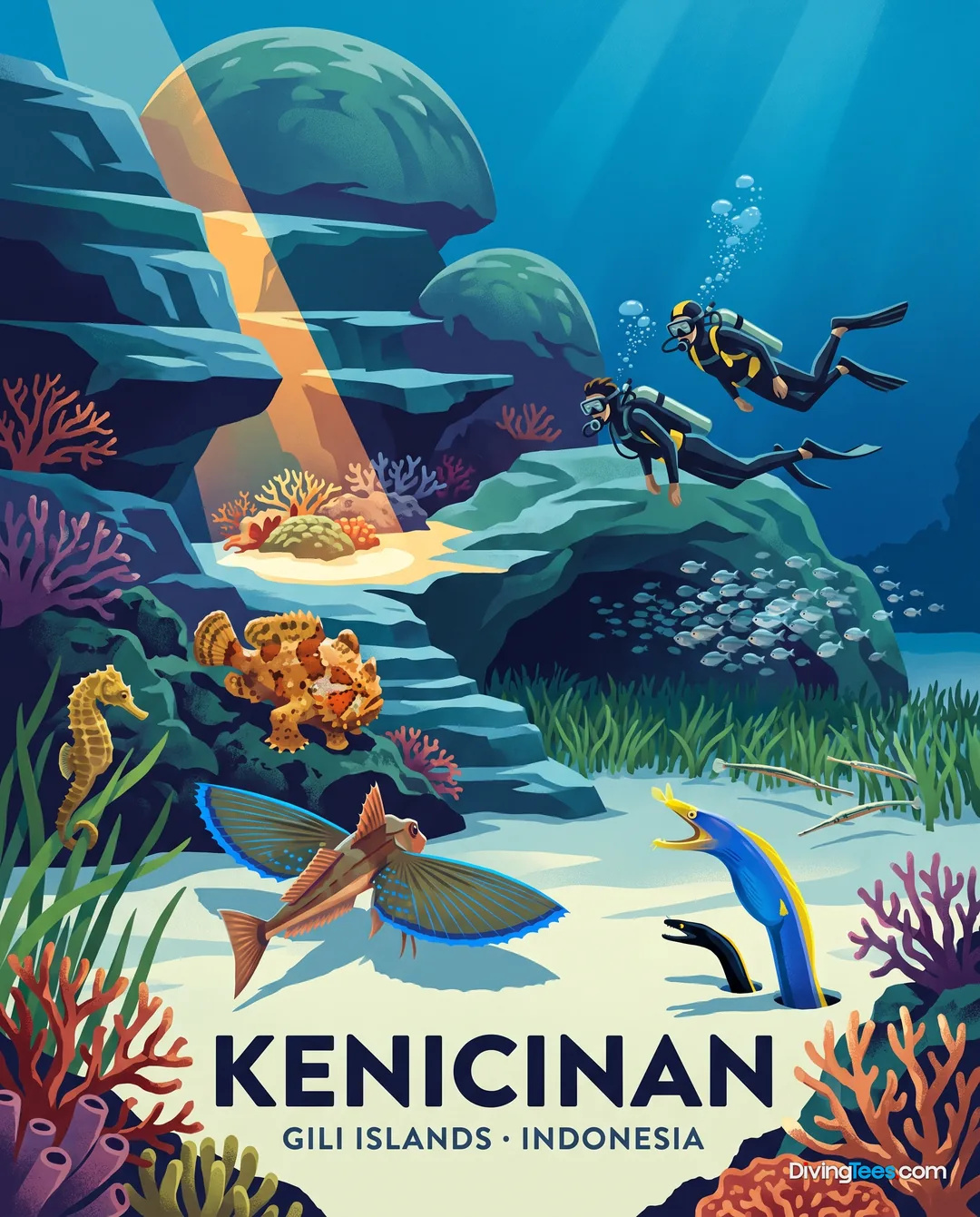
The underwater scenery shifts between gently sloping coral reefs, walls, sandy bays, seagrass and isolated pinnacles. Turtle Heaven runs from a shallow plateau into a sloping reef and pinnacle, while Air Wall combines a coral-covered slope with a wall falling towards 30 metres. Deep Turbo is more serious: its pinnacles rise from roughly 18 metres and continue to a sandy bottom around 32 metres. Takat Malang reaches 40 metres and can involve strong current. Elsewhere, Kenicinan offers a calm, gently sloping bottom down to 21 metres, useful for a relaxed macro dive. Current is the main variable across the area, from almost none at Kenicinan to brisk drift conditions at Coral Fan Garden and potentially challenging water at the deeper sites. Regional visibility is often good, with several site descriptions giving 20 metres or more, though conditions remain site- and tide-dependent.
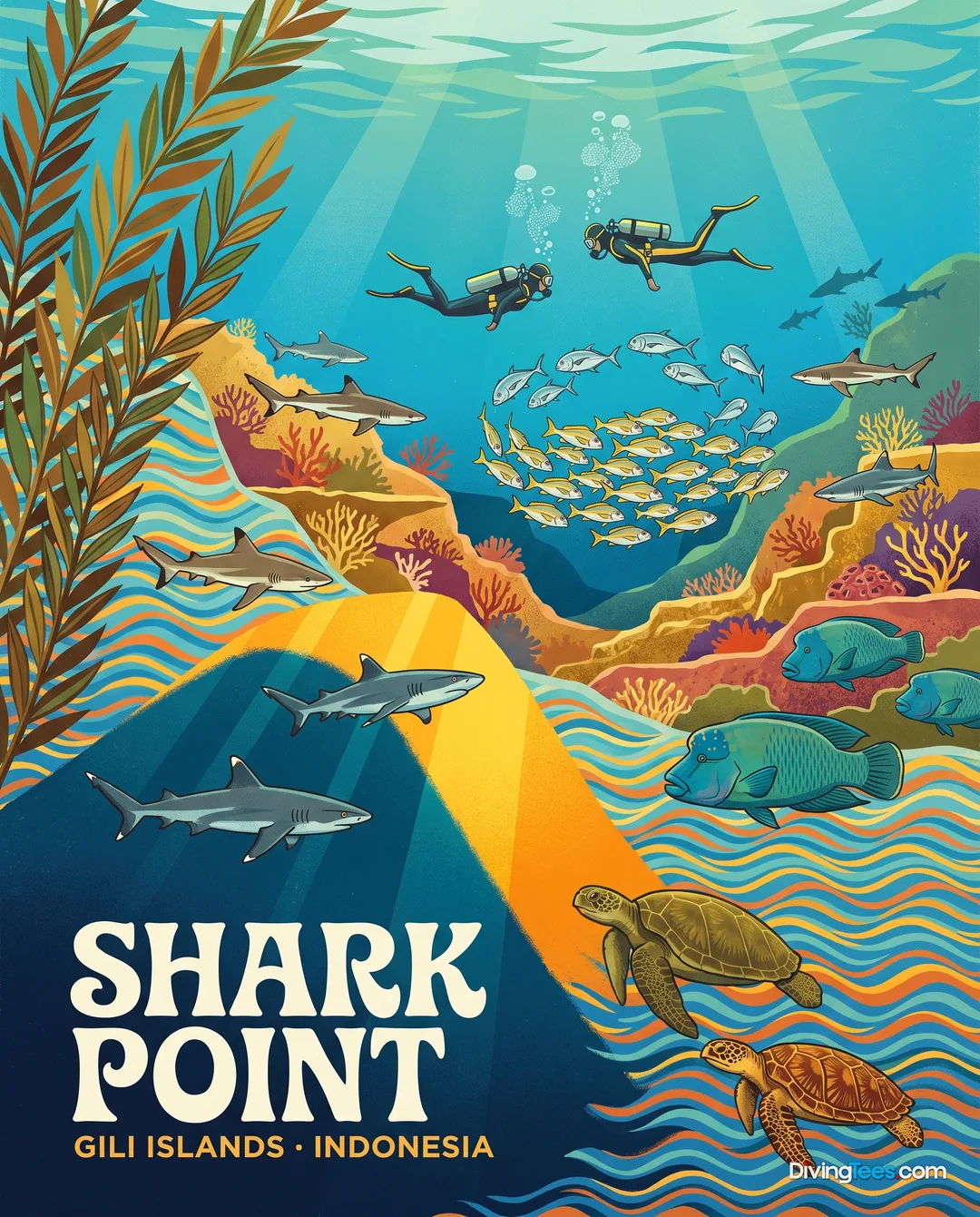
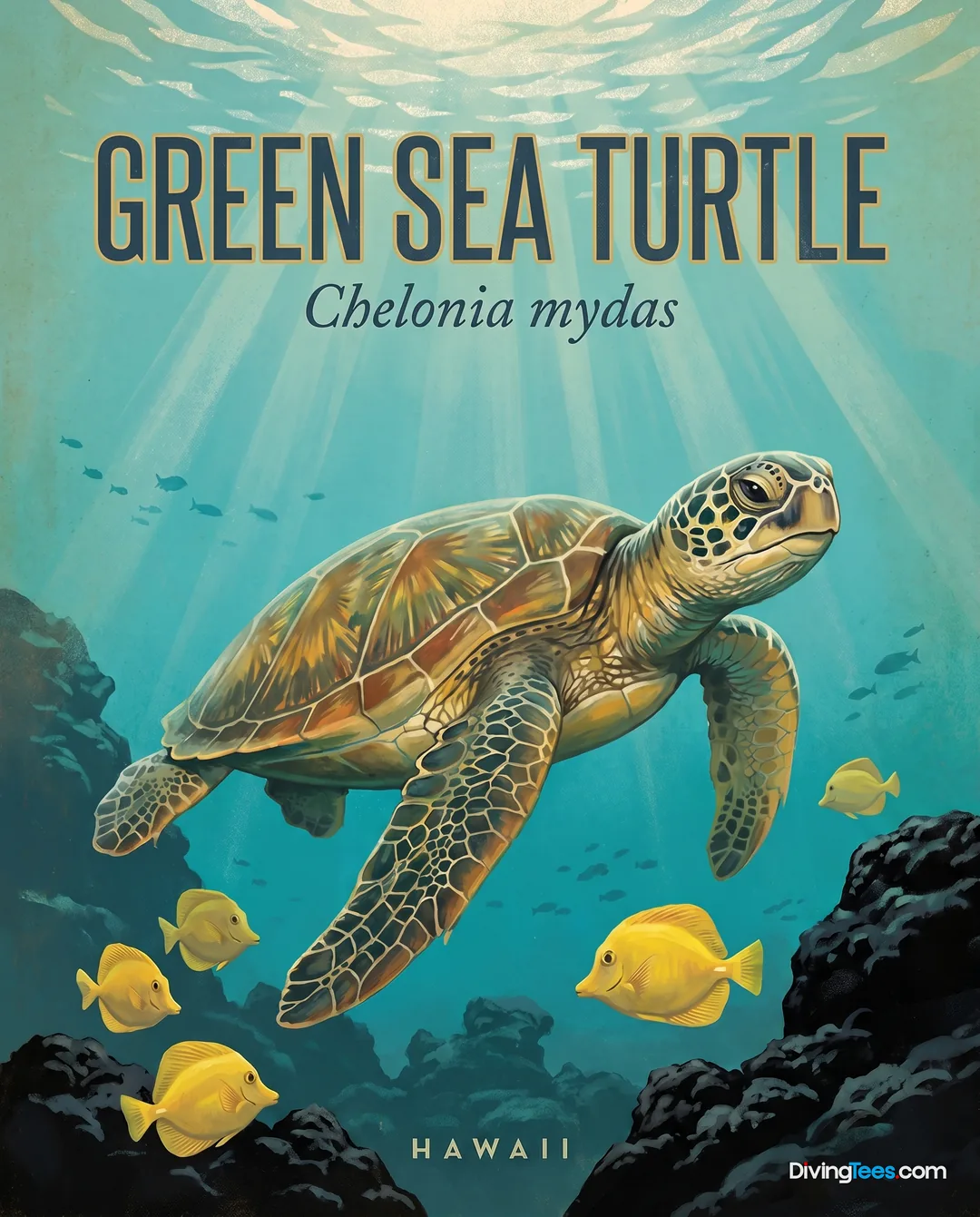
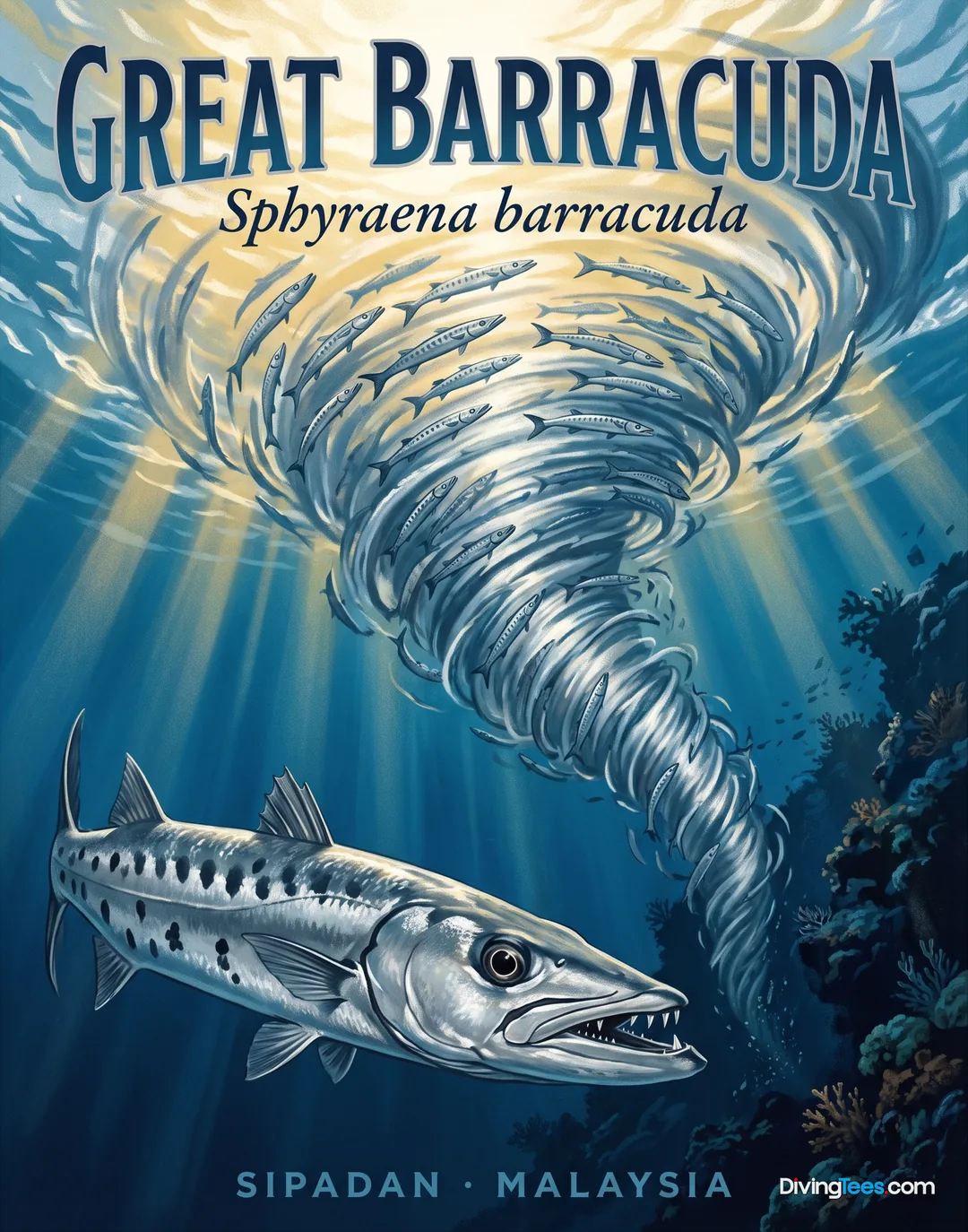
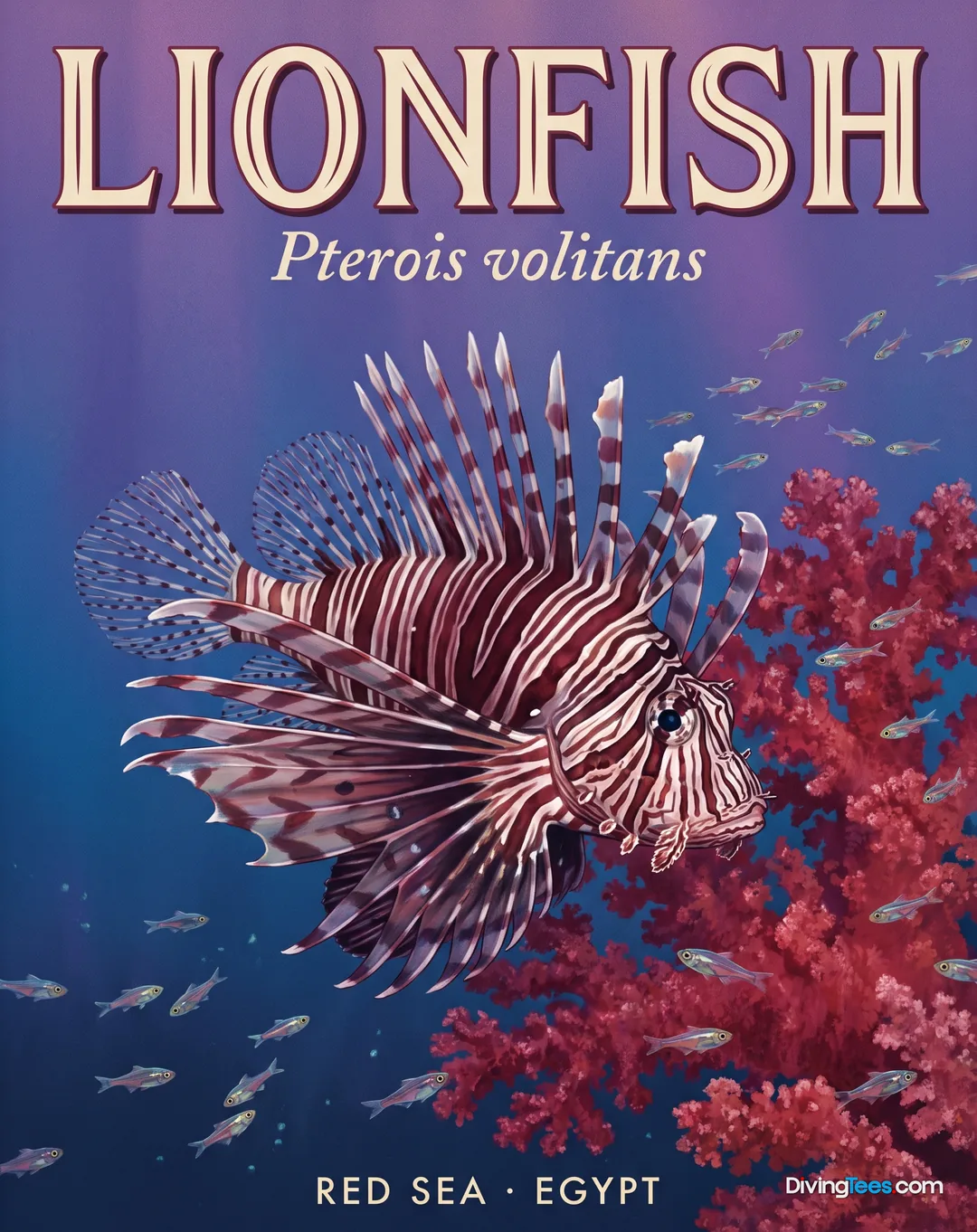
Turtles are a regular reason to dive here. Turtle Heaven is built around encounters with them, while Shark Point combines green turtles with reef sharks and schooling fish. Whitetip and blacktip reef sharks may appear around the deeper reefs, and eagle rays are associated with Deep Turbo. Macro divers should slow down over Frogfish Point’s coral blocks and white sand, or search Kenicinan’s seagrass and sandy slope for pipefish, frogfish and ribbon eels. Nudibranchs, moray eels, lionfish, scorpionfish, trumpetfish, fusiliers, jacks and snapper add interest to the reef scenery. Expect a year-round mix of reef and small-life encounters rather than a narrowly timed seasonal spectacle.
The measured period with the lowest rainfall runs from May through November, making it the sensible window for combining several boat days with time on land. The dry-season pattern is also associated with the clearer conditions described for deeper sites such as Takat Malang. That does not remove the need for flexibility: currents vary between sites, boat traffic is a consideration around a busy island, and a day can be lost to weather or boat rotation. Outside the drier months, diving remains possible, but a less tightly planned itinerary is wiser.
Gili Trawangan suits newly certified divers, returners and experienced recreational divers, provided the day’s current is matched to their ability. Open Water divers can use the shallower reef sites and Turtle Heaven for straightforward profiles. Advanced Open Water is useful for Deep Turbo and Takat Malang, where depth and current matter; Deep Turbo is best reserved for divers with varied-condition experience. Nitrox is sensible for repeated or deeper days. BSAC, PADI and SSI qualifications should be discussed in terms of equivalent experience and logged dives.
From London Heathrow, London Gatwick or Manchester, the journey involves at least one connection into Indonesia, followed by onward travel to Lombok. Gili Trawangan has no airport and no direct road link, so the final leg is necessarily by public or fast boat from Lombok to the island. Flight schedules, the Lombok transfer and the boat crossing need to be treated as one connected journey rather than separate bookings with no margin between them. Once on Gili Trawangan, most accommodation and dive centres are close enough to reach on foot. For a farther stay, short transfers by bicycle taxi or local cart may be arranged. Keep the return journey loose: the boat connection is the part that can disrupt a tightly timed onward itinerary.
Use the first morning for a shallow check or refresher dive before committing to the deeper pinnacles. A site that looks benign from the boat can still become a drift dive when the current changes, so ask how the entry, exit and surface safety stop will be handled on that day. Early departures are practical here: they reduce exposure to boat traffic and usually give calmer conditions on nearby sites. Macro photographers should book consecutive dives rather than isolated trips, allowing time to work slowly over Frogfish Point or Kenicinan’s sand and seagrass. Carry any small buoyancy or camera accessories needed for repeated dives; sandy bottoms sit close to coral in several areas, leaving little room for careless positioning. Keep one day uncommitted for weather and boat rotation, and leave a proper margin before the final Lombok transfer. On a busy reef, check whether the boat uses a mooring or anchors on sand before entering the water.
A four- to seven-day stay gives enough room for a check dive, several reef and macro outings, and a spare day for changing conditions. The island suits a mixed party: divers can spend the morning on the boats while a non-diving companion uses the shallow water, beach or cycle path. Evenings and shore time are more active and social than secluded, particularly in the busier parts of the island. The diving itself remains organised around short daytime boat rotations from Gili Trawangan.
Hello, I'm Marina, DivingDeal.com's AI assistant. I guide you through destinations, areas and countries.
Thinking about the whole trip and the flights? Talk it over with Edith →
Marina is an AI. Some links are affiliate links: DivingDeal may earn a commission, at no extra cost to you. Bookings are made with the partner.
Your last day stays dry: no diving in the 18-24 hours before a flight, the perfect window to see the destination from another angle.
 Culture
⏱ 2 h · ★ 5.0 (264 reviews)
from £30$40€35
see on Viator ↗
 City
City⏱ 10 h · ★ 4.9 (222 reviews)
from £62$82€74
see on Viator ↗
 Nature
⏱ 1 h · ★ 4.9 (12 reviews)
from £31$41€37
see on Viator ↗
 Nature
⏱ 2 days · ★ 4.9 (34 reviews)
from £165$221€197
see on Viator ↗
Ratings and reviews collected by Viator and Tripadvisor.
Choose Gili Trawangan from May through November, when rainfall is lowest and conditions are often clearer for deeper sites. Diving remains possible outside this period, but weather can interrupt boat outings, so keep your plans flexible. Currents, tides, boat traffic and daily rotations still influence which sites are practical.
Gili Trawangan suits newly certified, returning and experienced recreational divers when the day’s current matches your ability. Open Water divers can focus on shallow reefs and Turtle Heaven. Advanced training and varied-condition experience are useful for Deep Turbo and Takat Malang, where depth and current require more careful planning.
Gili Trawangan offers turtles, reef sharks, schooling fish, eagle rays and varied reef life. Look for frogfish and other small creatures around white sand, coral blocks, seagrass and sandy slopes, including pipefish and ribbon eels. Coral reefs, walls, pinnacles, sandy bays, statues and artificial reef structures add variety between dives.
Plan an island-based diving holiday with several short daytime boat outings from Gili Trawangan. Begin with a shallow check or refresher dive, keep a day flexible for weather and boat rotation, and leave margin for the Lombok transfer. Accommodation and dive centres are generally walkable, while bicycles or local carts help with farther stays.