 Dive centre in the hotel
Blue Marlin Dive Gili Air
★★★
Google 4.7/5 (640 reviews)
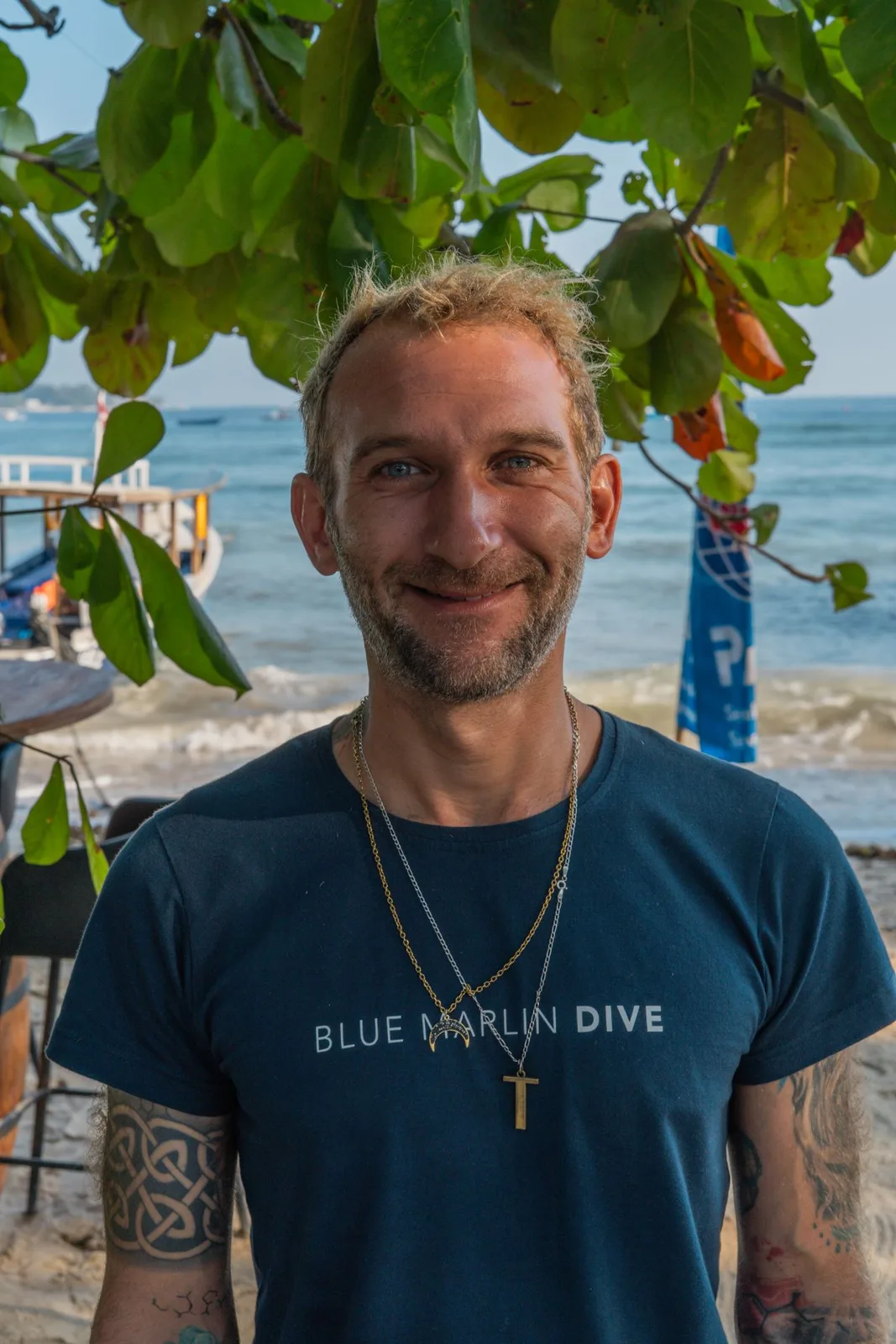
The dive centre
Blue Marlin Dive Gili Air
PADI
Google 4.7/5 (672 reviews)
Dives: Shark Point, Halik, Turtle Heaven
Indonesia · Asia
Turtle-filled coral slopes, figure-eight pinnacles, seagrass macro sites and light drift dives define the Gili Islands’ straightforward island diving.
For subtitles in English: start the video firstthen click the gearat the top right of the video, select “Subtitles/CC”, then “Auto-translate” and choose “English”.
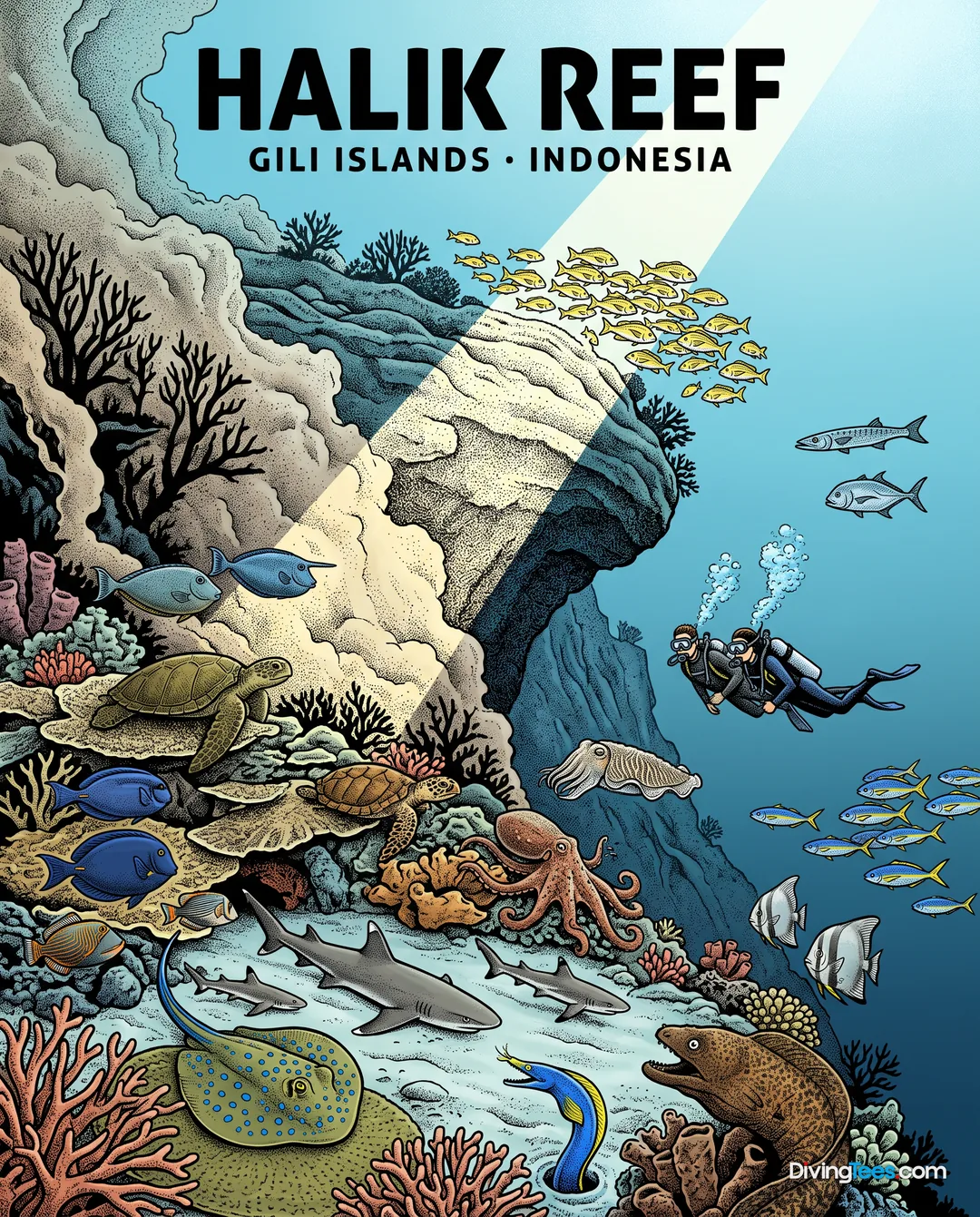
At Halik Reef, coral slopes give way to a wall where turtles and reef sharks may pass. That combination captures the Gili Islands: short boat trips from Gili Trawangan, Gili Air or Gili Meno, followed by mostly uncomplicated reef diving, snorkeling and time on the beach. It is a land-based holiday rather than a liveaboard itinerary, well suited to divers who prefer several manageable outings and a non-diving companion with plenty to do ashore.
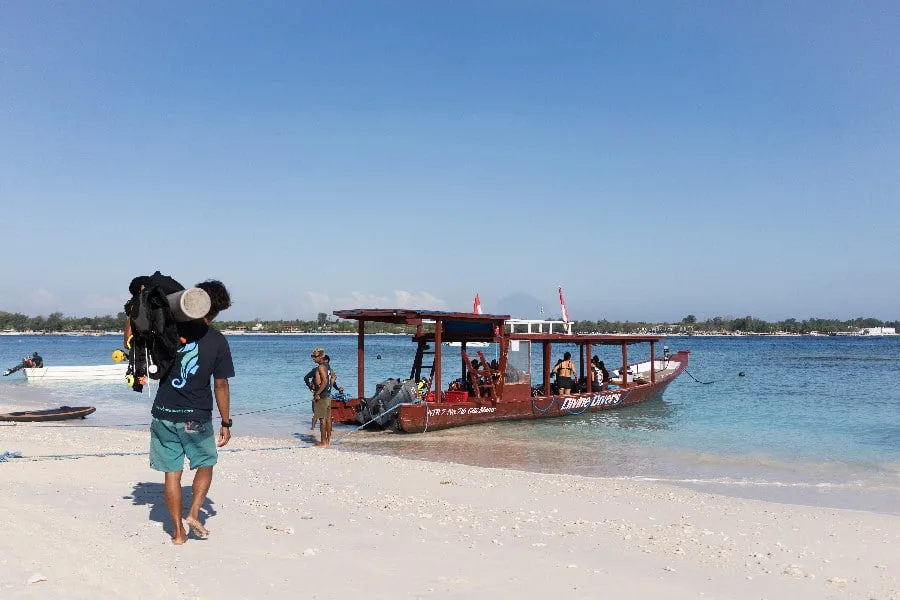
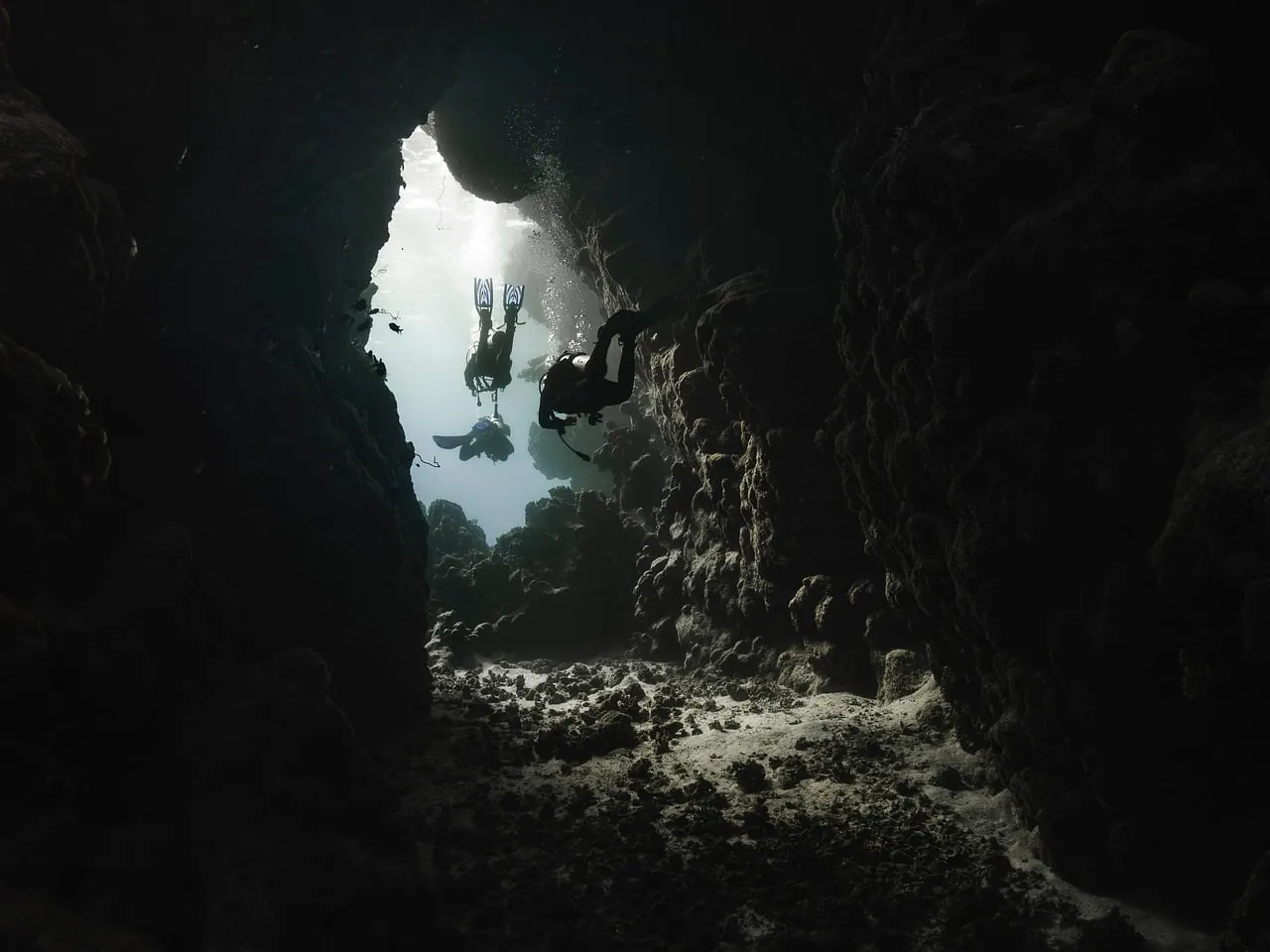
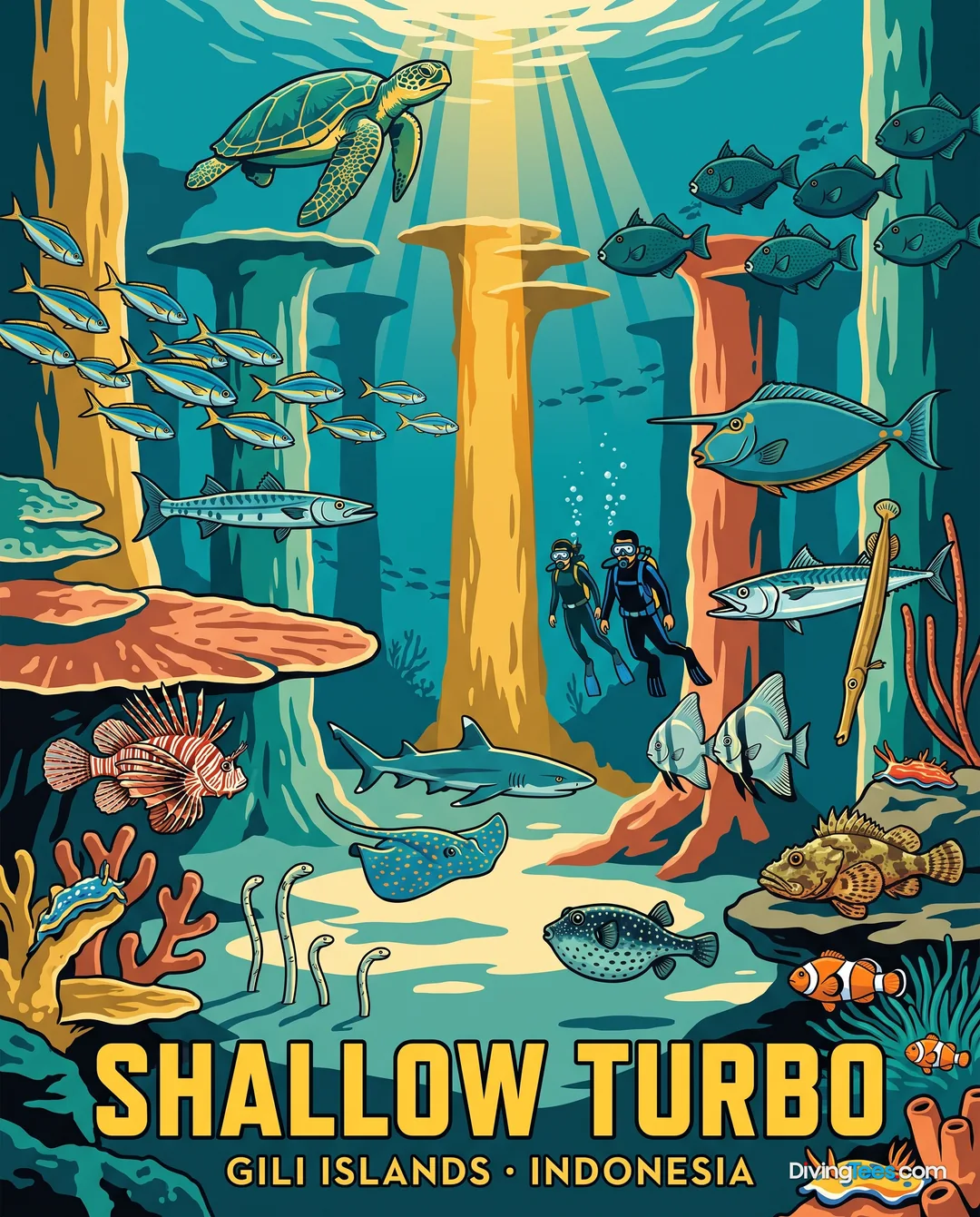
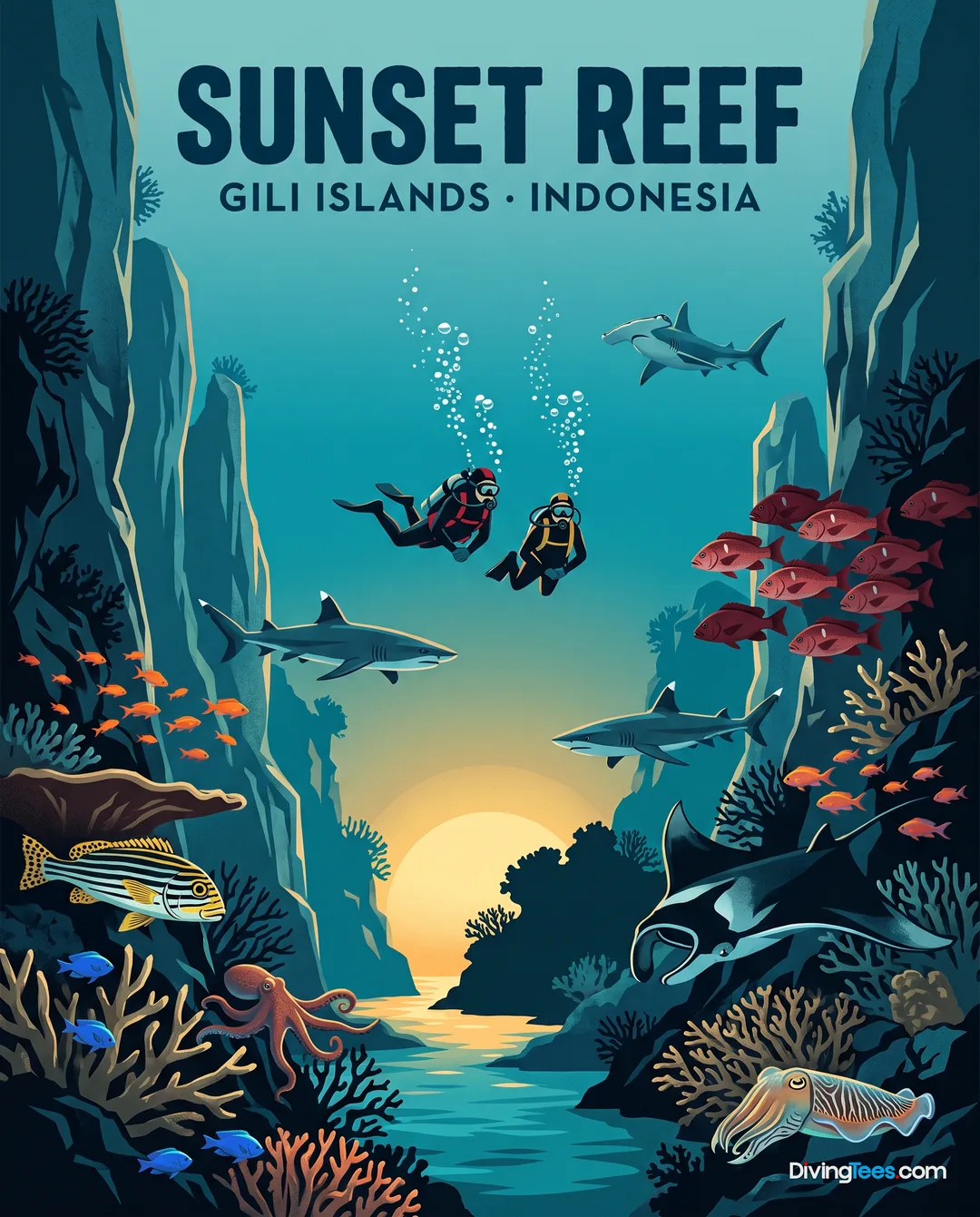
The underwater terrain is mainly fringing reef, sloping coral ground, shallow pinnacles and modest walls. Sunset Reef descends gently to around 22 metres, while Shallow Turbo keeps much of its interest above 10 metres. At the other end of the scale, Simon’s Reef forms a figure-eight pattern of eight main pinnacles and reaches 40 metres; it is a very different proposition from a relaxed novice dive. Currents are variable rather than uniformly strong. They can remain mild at sites such as Halik Reef, but exposed passages, including Secret Reef, may turn into proper drift dives. Visibility is not a dependable constant: wind, plankton and sea conditions can change it. Most diving is done from small boats on short day trips, with morning departures often giving calmer water and less surface traffic.
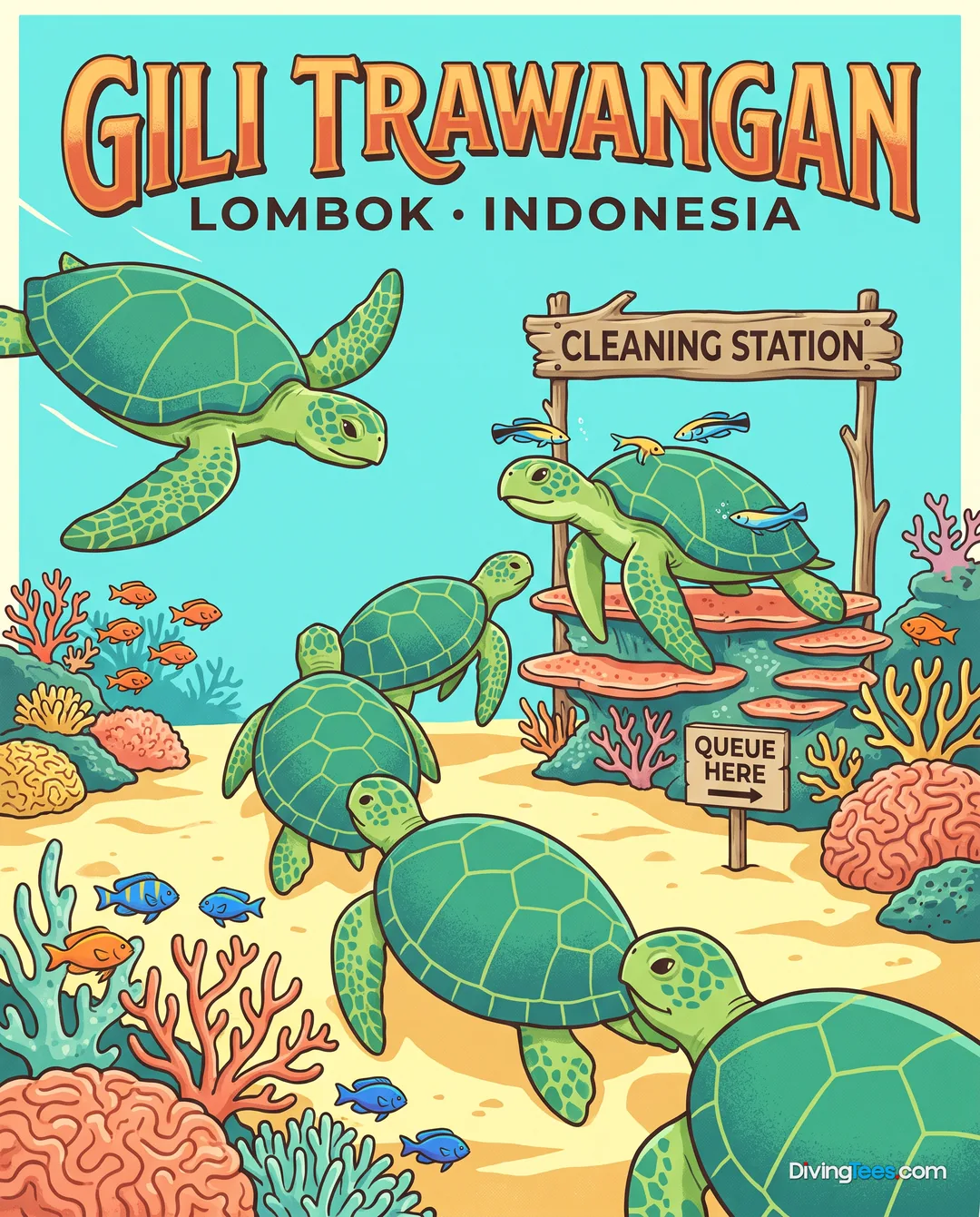
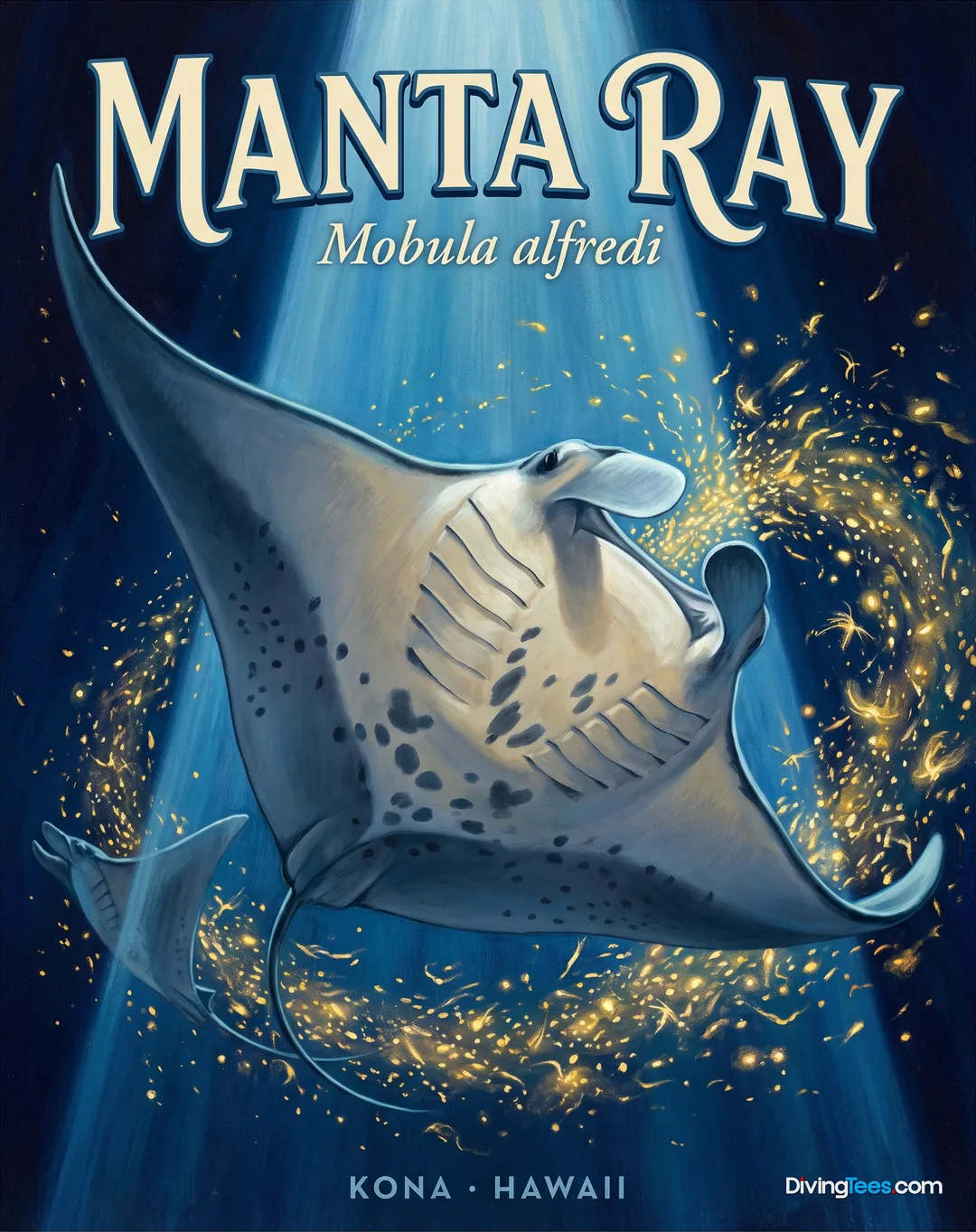
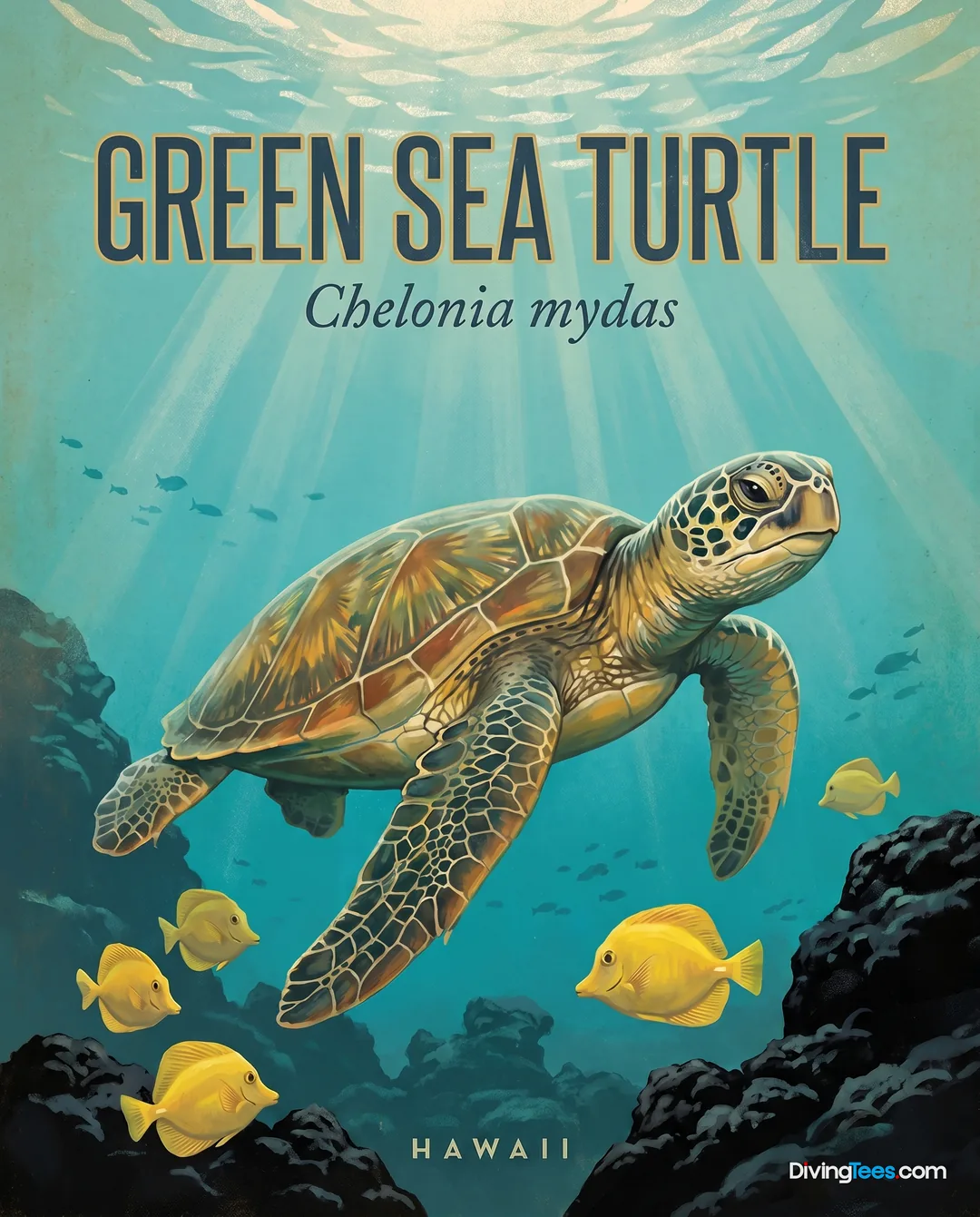
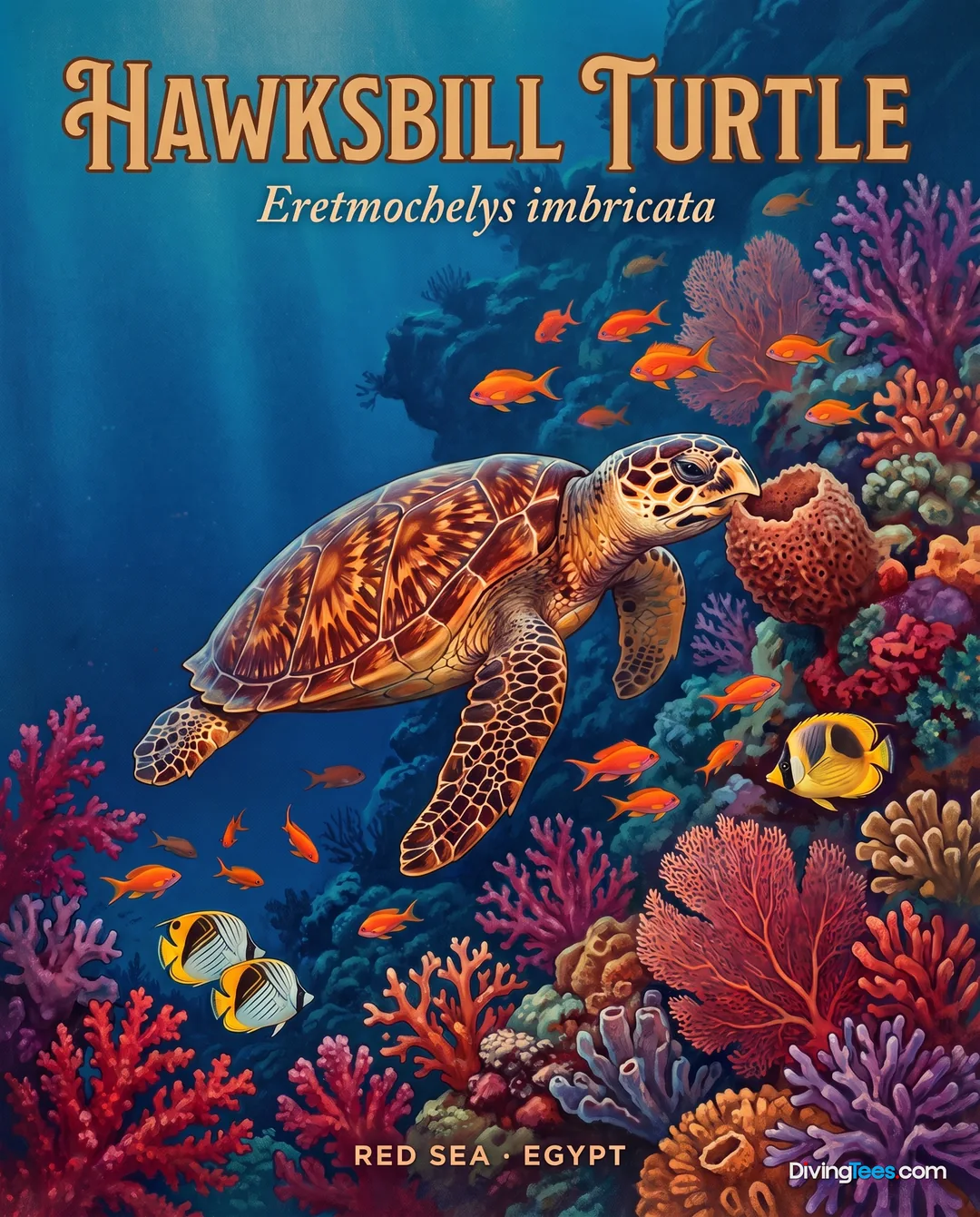
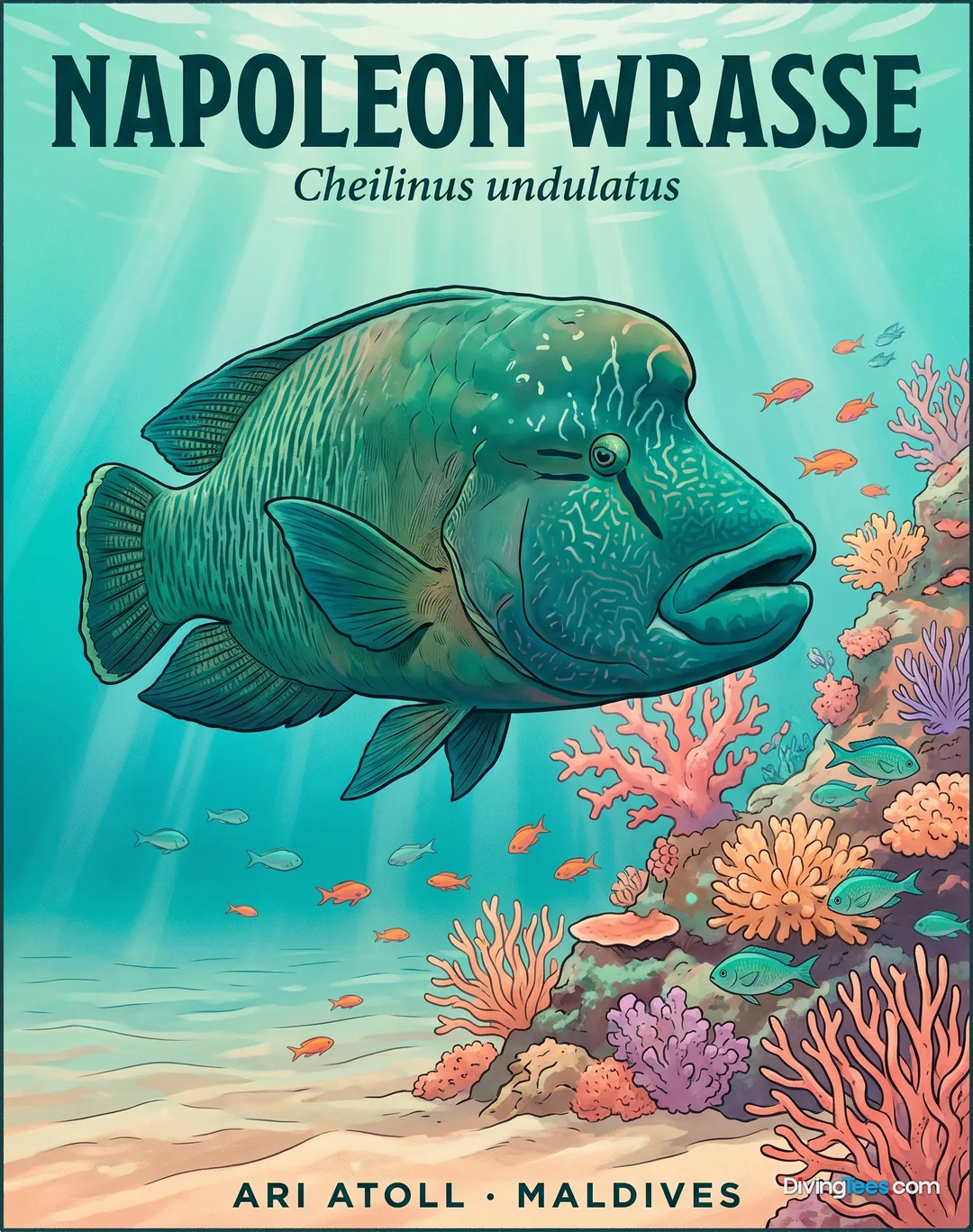
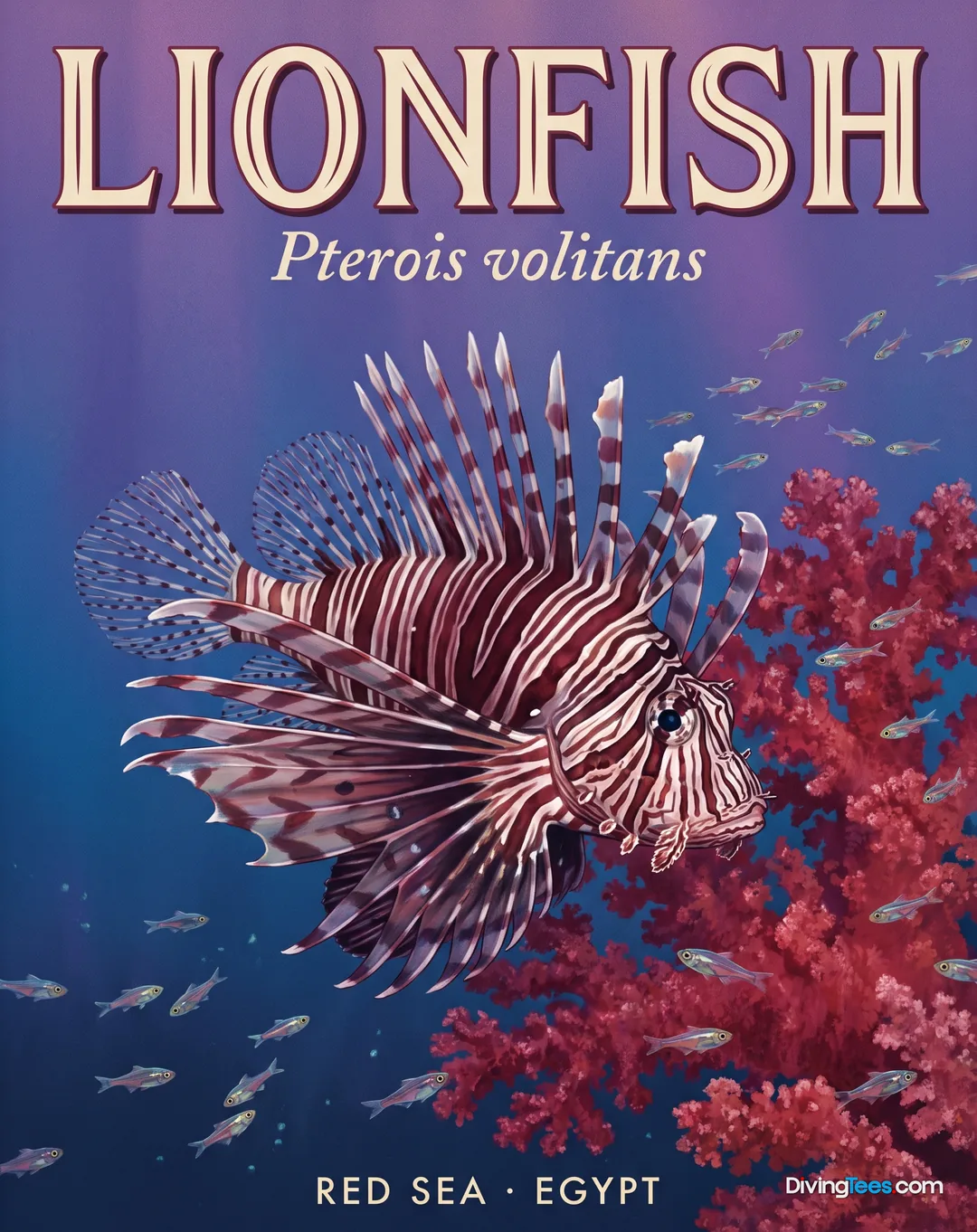
Sea turtles are the dependable headline, with sightings possible throughout the year around the islands. Halik Reef is associated with turtles and patrolling whitetip reef sharks, while Sunset Reef can bring reef sharks and schools of snapper. Reef fish, fusiliers, damselfish, angelfish, sweetlips and triggerfish fill the coral scenery, with cuttlefish and clownfish around the shallows. The smaller subjects are especially worthwhile at Seahorse Bay, where sandy bottom and seagrass provide cover for seahorses, frogfish, pipefish and nudibranchs. Bio Rocks adds juvenile frogfish and other macro life around its electrified metal structures. Blacktip reef sharks and passing pelagic fish are possible, but irregular; manta rays are a rare, plancton-dependent possibility rather than a reason to book the Gili Islands.
May to November is the useful window, with the driest conditions and generally steadier sea conditions. The measured pattern is supported by the seasonal weather: the dry season usually brings calmer water and more predictable boat operations, while January and February sit in the more troublesome north-west monsoon period. Wind and rough crossings can disrupt both the journey to the islands and the daily diving then. May, June, July, August, September and October are the practical core months, although the islands are busier during high-season holidays. Manta sightings may coincide with dry-season plankton, but they remain occasional at best; turtles are not tied to a particular month.
The Gili Islands suit Open Water divers, including those building confidence on shallow reefs such as Shallow Turbo or Sunset Reef. Some sites can carry more water movement than their easy reputation suggests, so a calm response to drift diving matters. Advanced Open Water is useful for deeper sections at Halik Reef and essential for the 40-metre profile and stronger, less predictable currents at Simon’s Reef. Nitrox makes sense for repeated, relatively shallow dives over several days. BSAC, PADI and SSI divers should match the site briefing to recent experience rather than assume every island site is benign.
From London Heathrow, Gatwick or Manchester, the journey normally involves a major Asian hub, then a flight towards Bali or Lombok before the sea crossing. There is no airport on the Gili Islands, so a ferry or fast boat is unavoidable; the total journey is commonly around 18 to 24 hours, depending on connections. Boat transfers are organised through ports on Bali or Lombok, and rough weather can affect the timetable, so the final connection should not be treated like a fixed land transfer. Once on the islands, the scale is manageable: villages and dive centres are generally reached on foot, by bicycle, or by local cart or small shuttle. Moving between Trawangan, Meno and Air is possible by local boat, but those rotations still take planning.
Stay on the island where most of the diving will take place. The three islands are close together on a map, but inter-island boat rotations are the part of the day most likely to erode useful time. Book morning departures where possible: the water is often easier for the boats and the popular reefs attract fewer snorkellers early on. Keep a weather margin in the itinerary, particularly around the arrival and departure crossings; a rough sea can disrupt more than one planned dive. Take a well-fitting mask for snorkeling, because surface time over the shallow reefs is a genuine part of a Gili holiday. A small photographic light is more useful than heavy deep-diving equipment at Seahorse Bay or Bio Rocks. Do not arrive expecting an expedition of deep walls or major wrecks, and do not assume every coral garden is intact. Follow the local briefing when currents shift, avoid touching the reef or feeding animals, and make sure boats do not anchor on coral.
Four to seven days works well for a shore-based stay: enough time for repeated morning boat trips, a macro outing and a day left open for weather or simple rest. Gili Trawangan offers the liveliest base, while Gili Air and Gili Meno can suit a quieter rhythm. A non-diver can snorkel, walk or cycle the coastal tracks, take short boat trips between the islands, or spend a recovery day on the beach. The Gili Matra Marine Recreation Park gives the setting a conservation framework, but responsible behaviour remains practical rather than decorative: no contact, feeding or anchoring on coral.
Hello, I'm Marina, DivingDeal.com's AI assistant. I guide you through destinations, areas and countries.
Thinking about the whole trip and the flights? Talk it over with Edith →
Marina is an AI. Some links are affiliate links: DivingDeal may earn a commission, at no extra cost to you. Bookings are made with the partner.
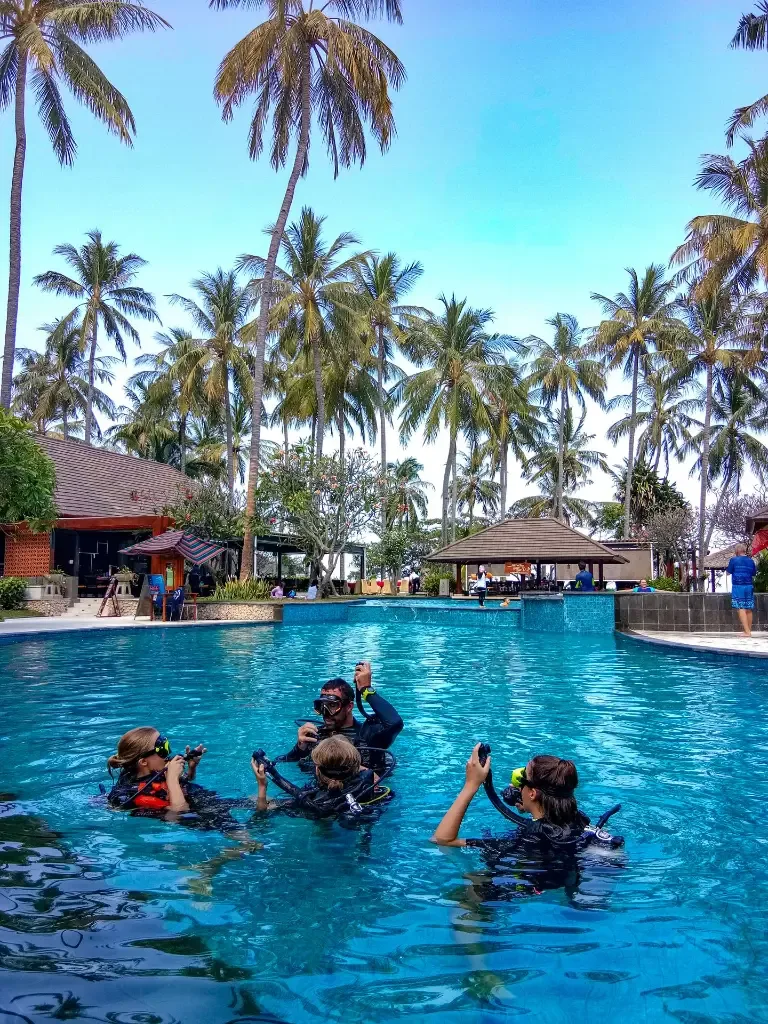
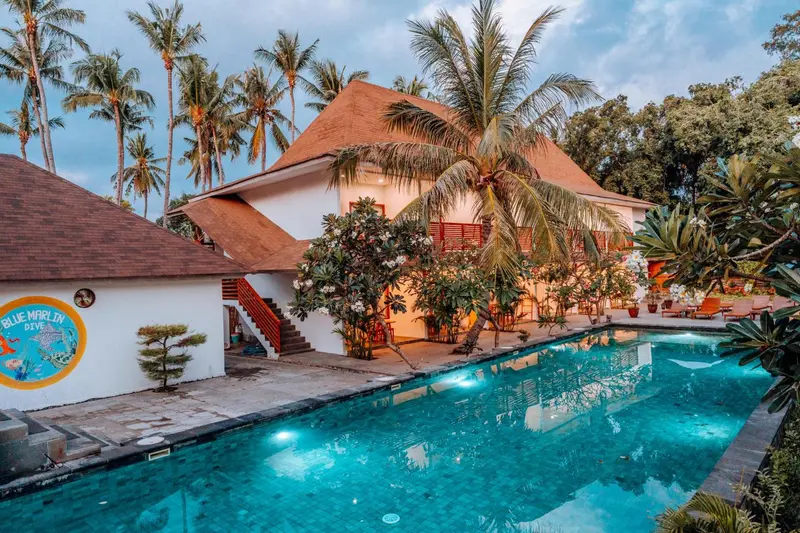
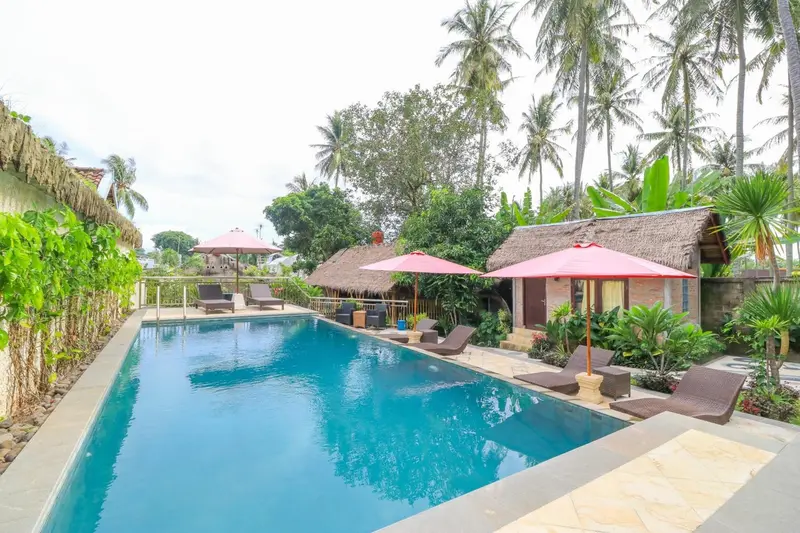
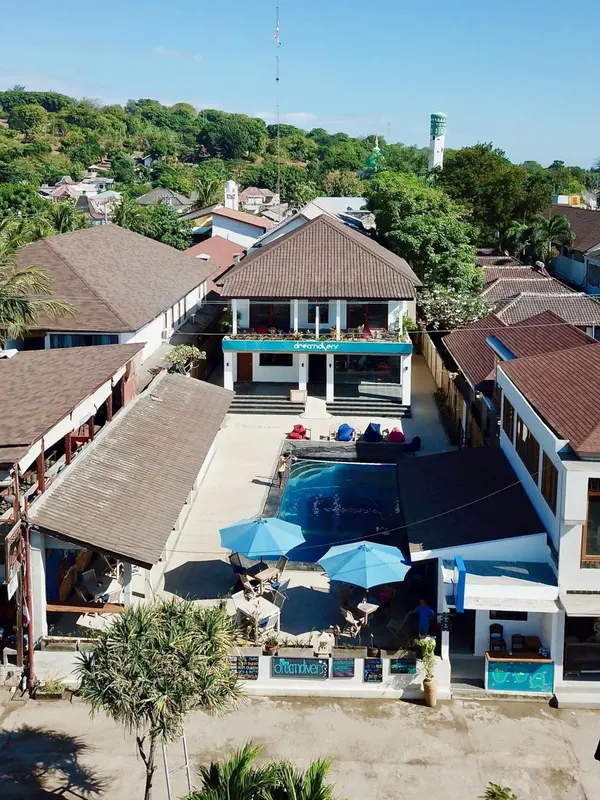
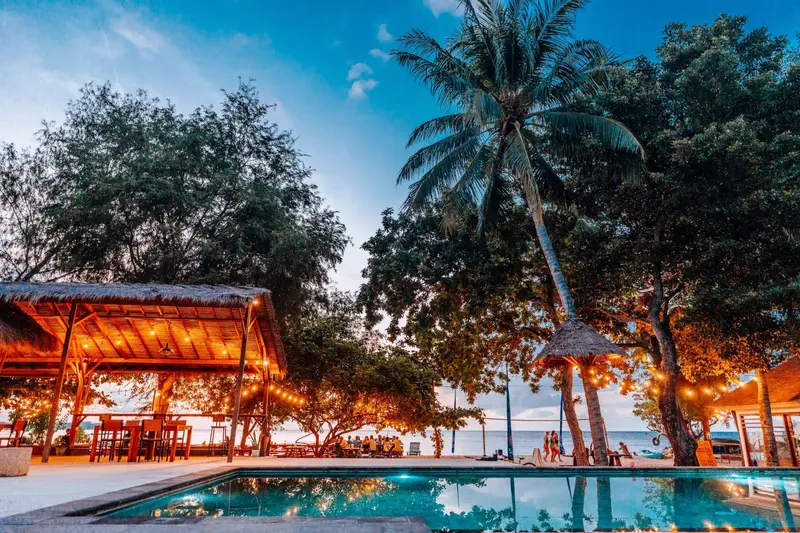
In each one, the dive centre is inside the hotel: step out of your room and go diving.
Dive centre in the hotel★★★
Google 4.7/5 (640 reviews)
The dive centre
Blue Marlin Dive Gili Air
PADI
Google 4.7/5 (672 reviews)
Dives: Shark Point, Halik, Turtle Heaven
Your last day stays dry: no diving in the 18-24 hours before a flight, the perfect window to see the destination from another angle.
 Culture
⏱ 2 h · ★ 5.0 (264 reviews)
from £30$40€35
see on Viator ↗
 City
City⏱ 10 h · ★ 4.9 (222 reviews)
from £62$82€74
see on Viator ↗
 Nature
⏱ 5 h · ★ 4.9 (52 reviews)
from £76$102€91
see on Viator ↗
 Nature
⏱ 1 h · ★ 4.9 (12 reviews)
from £31$41€37
see on Viator ↗
Ratings and reviews collected by Viator and Tripadvisor.
May to November is the useful diving window, bringing the driest conditions and generally steadier seas. May through October is the practical core period, although holiday crowds can increase. January and February fall within the more troublesome north-west monsoon, when wind and rough crossings may disrupt island transfers and daily diving.
Open Water divers can enjoy manageable shallow reefs such as Shallow Turbo and Sunset Reef, while a calm response to drift diving is helpful because currents vary. Advanced Open Water is useful for deeper sections and required for Simon’s Reef’s deep profile and stronger, less predictable currents. Match each site to your recent experience.
Turtles may be seen throughout the year, with Halik Reef also offering coral slopes, a wall and possible whitetip reef sharks. Reef fish, snapper, cuttlefish and clownfish fill the shallows. Seahorse Bay and Bio Rocks focus on seahorses, frogfish, pipefish, nudibranchs and juvenile frogfish around seagrass and metal structures.
Choose the island where you will do most of your diving, since inter-island boat rotations can reduce useful time. Plan morning departures, allow weather margin around sea crossings, and consider a four-to-seven-day shore-based stay for repeated boat trips, a macro outing and rest. Trawangan is livelier, while Air and Meno offer quieter rhythms.