
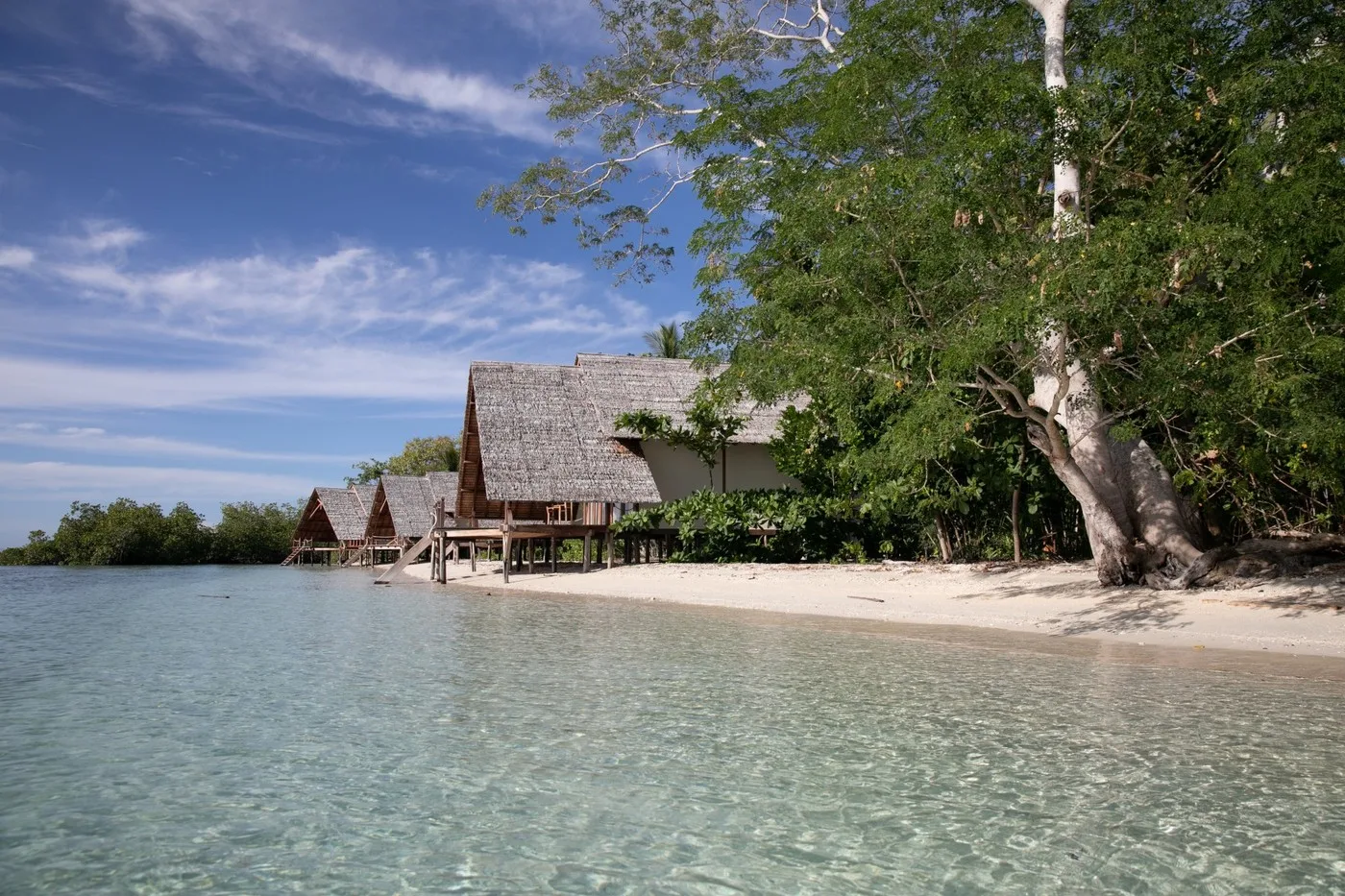

South Halmahera - Kusu Island Resort
Google 4.9/5 (32 reviews)
Indonesia · Asia
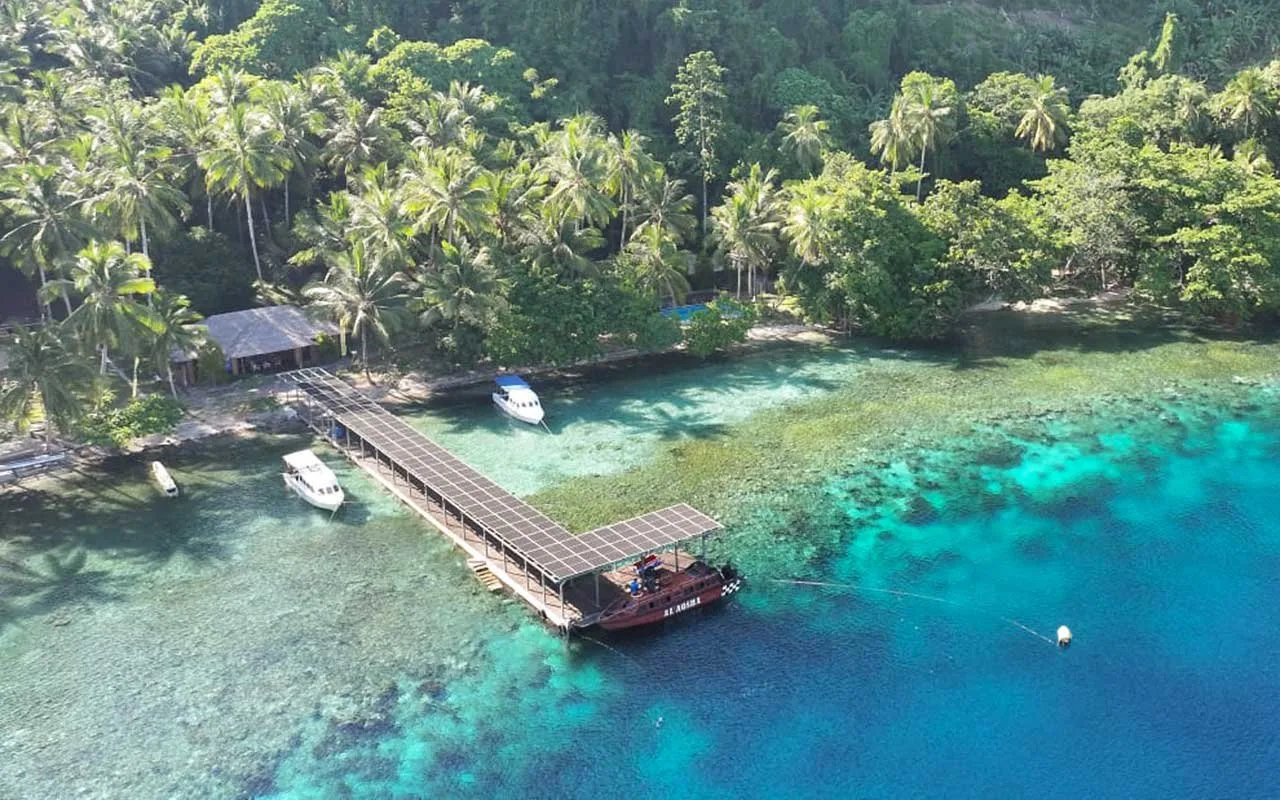
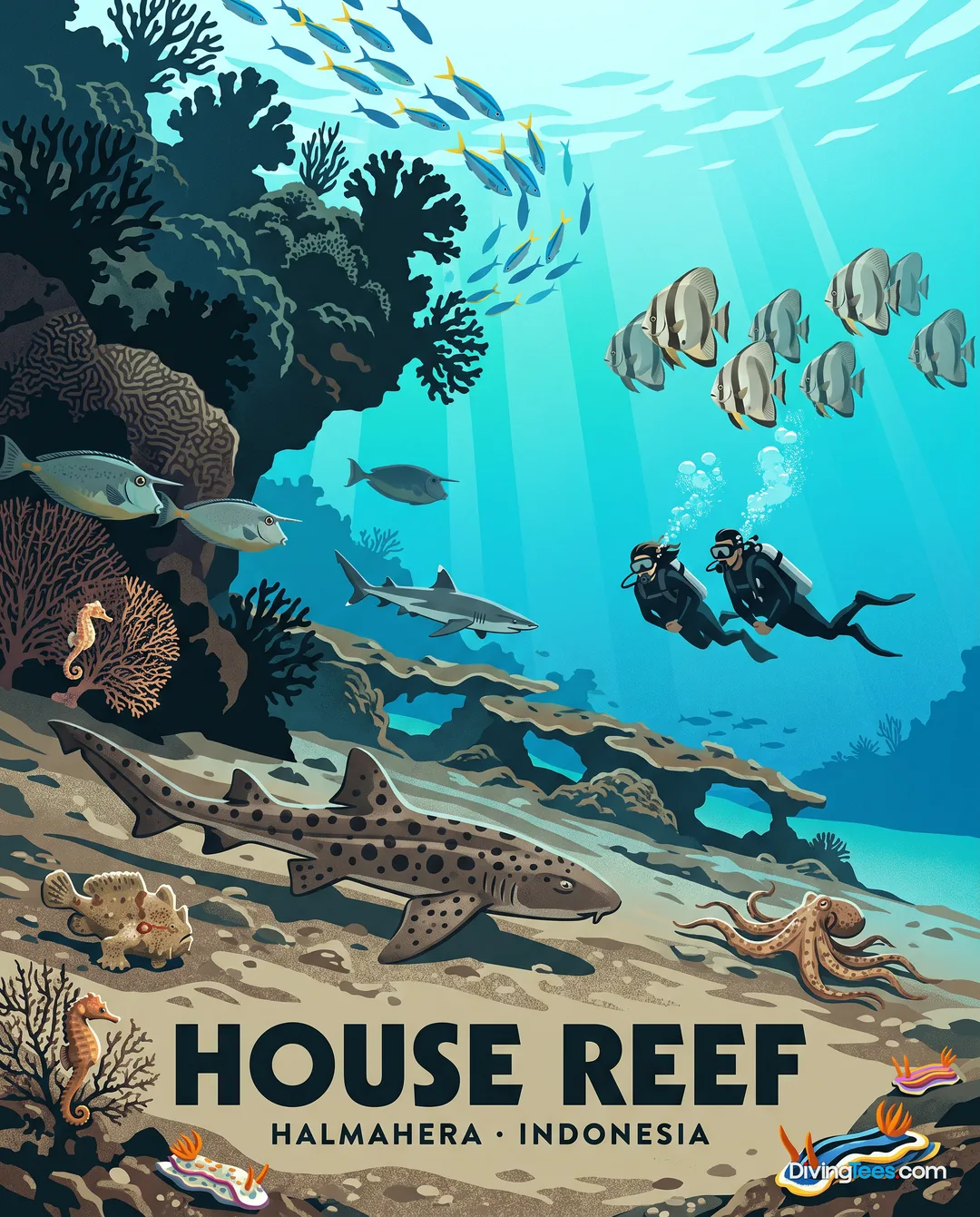
House Reef runs out from shore into a long reef landscape where nudibranchs, frogfish, reef sharks and the Halmahera walking shark may appear.
For subtitles in English: start the video firstthen click the gearat the top right of the video, select “Subtitles/CC”, then “Auto-translate” and choose “English”.
Halmahera is an eastern Indonesian archipelago for divers who want more than a single, neatly packaged resort area. Its underwater character changes between reefs, walls, slopes and macro sites, with House Reef providing a shore-based option where a long reef can be explored at an unhurried pace. The attraction is the combination of varied diving, limited tourist pressure and a sense of being well away from Indonesia’s established dive hubs. That comes with more involved transfers and less predictable infrastructure.
The diving is built around reefs, walls, sloping terrain and locally focused macro searches rather than one uniform style. House Reef is the clearest example of the gentler side of Halmahera: it runs for kilometres directly from shore, is suitable for all levels and usually avoids strong current, allowing divers to work slowly along the reef and look into its smaller details. Elsewhere, conditions vary with the local straits and headlands, so boat dives may involve changing current and a more active water entry or exit. Visibility does not have a dependable destination-wide pattern, and should not be treated as a fixed feature of the trip. Nitrox is useful where the day brings repeated dives, while a straightforward, self-sufficient configuration suits the longer boat movements and more limited local facilities.
Halmahera’s appeal lies in the range from small reef subjects to larger animals. House Reef is known for rare nudibranchs and frogfish, rewarding a slow pace, careful buoyancy and a torch used to inspect the reef rather than simply covering distance. Reef sharks add scale to the scene, while the Halmahera walking shark is the encounter that gives this area its particular identity. Sea turtles and nudibranchs are part of the recorded wildlife. The available site information supports year-round diving at House Reef, but does not establish a reliable seasonal calendar for individual species. April to June is therefore best understood as a period of calmer conditions, not a guaranteed wildlife window.
April to June is the most practical period for a Halmahera diving trip because the sea is measured as calmest then. That matters in an archipelago where reaching the diving may involve a domestic flight followed by road and boat connections, and where conditions can change around straits and headlands. House Reef remains usable throughout the year, but November to March generally brings more rain, which can complicate transfers and reduce the comfort of a tightly planned itinerary. A longer stay gives weather and boat movements more room to settle, rather than turning one delayed connection into the centre of the holiday.
Halmahera is not reserved for expert divers, and House Reef offers a relaxed introduction for beginners as well as experienced divers. The wider area suits people comfortable with boat diving, changing site conditions and a destination where local logistics are part of the experience. PADI, SSI and BSAC qualifications are all relevant; Nitrox is a useful additional certification for repeated diving. Divers should be able to manage themselves during transfers and remain adaptable when currents or sea conditions alter the day’s plan.
From London Heathrow, London Gatwick or Manchester, the journey normally involves a domestic Indonesian flight before the final approach to the chosen Halmahera sector. Depending on the starting point, the last stage may combine a road journey with a fast boat, ferry or speedboat crossing. The exact route must be matched to the bay, island or port where the diving begins; arriving in Halmahera does not place a diver automatically beside the correct departure point. Connections should therefore be planned as a chain, with sensible margins rather than tight same-day assumptions. Once locally based, accommodation is generally close to the diving operation, reachable on foot or by a short local transfer, although arrangements differ between sectors.
Plan the whole journey before committing to international flights. The vulnerable part is the final chain from domestic flight to road, port and boat, not simply the long-haul arrival. Leave generous space between connections and keep a buffer day where possible, since a missed link or rough crossing can remove a full day of diving. Ask exactly which Halmahera sector the accommodation serves, and whether the boat programme stays around one base or crosses between separate areas; the name of the island alone is not enough. Pack a simple, self-contained setup, because rental and emergency support are less extensive than in Indonesia’s major diving hubs. Do not build the holiday around a dense programme for non-divers: landscapes, nearby islands and easy coastal outings are realistic, but the land-based offer is limited. Keep the final day light before flying home rather than adding a demanding excursion.
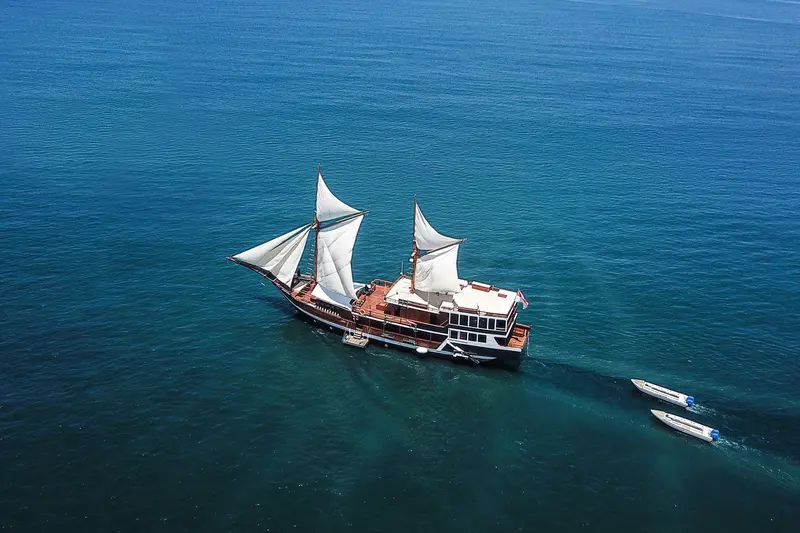
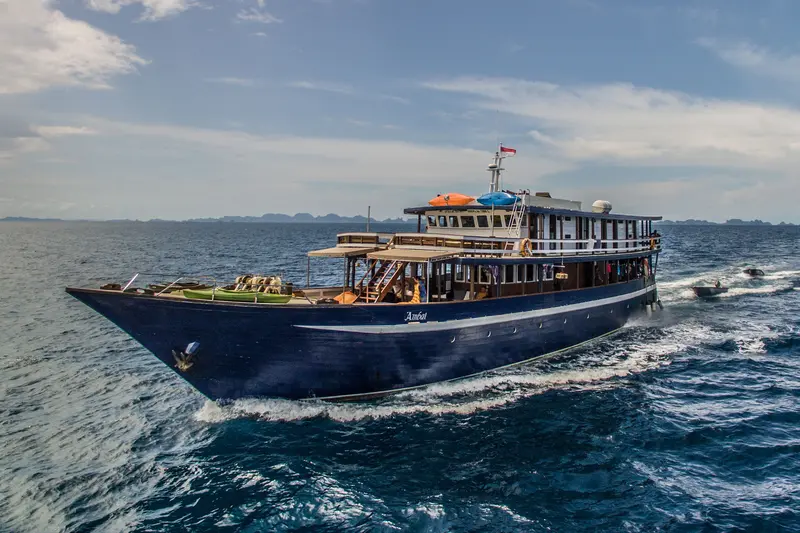
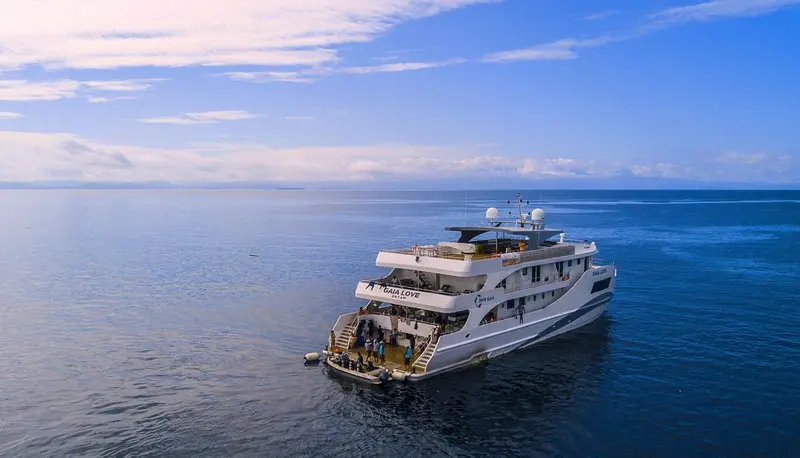
A seven- to ten-day stay makes more sense than a short visit, giving the transport network time to work and leaving room for weather-related changes. A fixed base suits divers concentrating on one bay or local sector; a liveaboard becomes more logical when the aim is to link separated areas. Days can combine boat dives with shore-based exploration at House Reef, while non-divers are best served by modest coastal trips, neighbouring islands and unhurried time around the accommodation rather than a full sightseeing programme.
Hello, I'm Marina, DivingDeal.com's AI assistant. I guide you through destinations, areas and countries.
Thinking about the whole trip and the flights? Talk it over with Edith →
Marina is an AI. Some links are affiliate links: DivingDeal may earn a commission, at no extra cost to you. Bookings are made with the partner.
8 liveaboards run trips to Halmahera.
April through June brings calmer sea conditions, which can make transfers and boat diving more comfortable. House Reef can be dived throughout the year, while November through March generally brings more rain that may complicate travel. April through June is not a guaranteed period for particular wildlife encounters.
You do not need to be an expert, because House Reef offers relaxed shore diving suitable for beginners and experienced divers. The wider area suits you if you are comfortable with boat dives, changing currents, active entries or exits, and adapting when weather or sea conditions alter the plan.
Halmahera combines macro subjects with broader reef scenery. At House Reef, you can search slowly for rare nudibranchs and frogfish, while reef sharks, sea turtles and tropical coral slopes add larger-scale interest. The Halmahera walking shark is a distinctive possible encounter, with walls, reefs, drop-offs and sloping terrain elsewhere.
Plan the journey as a chain of domestic flight, road and boat connections, with generous margins and a buffer day where possible. Confirm which Halmahera sector your accommodation serves, and whether diving stays near one base or links separate areas. A longer stay allows weather and boat movements more room to settle.