Indonesia · Asia
Diving Moluccas: walls, drift dives and island logistics
Coral walls at Depan Tupa and Namatu, 35-metre drifts at Tanjung Kilang, turtles, barracuda and passing sharks across Indonesia’s scattered Moluccan islands.
What makes this destination special
- Depan Tupa’s coral-encrusted wall and gentle bay conditions
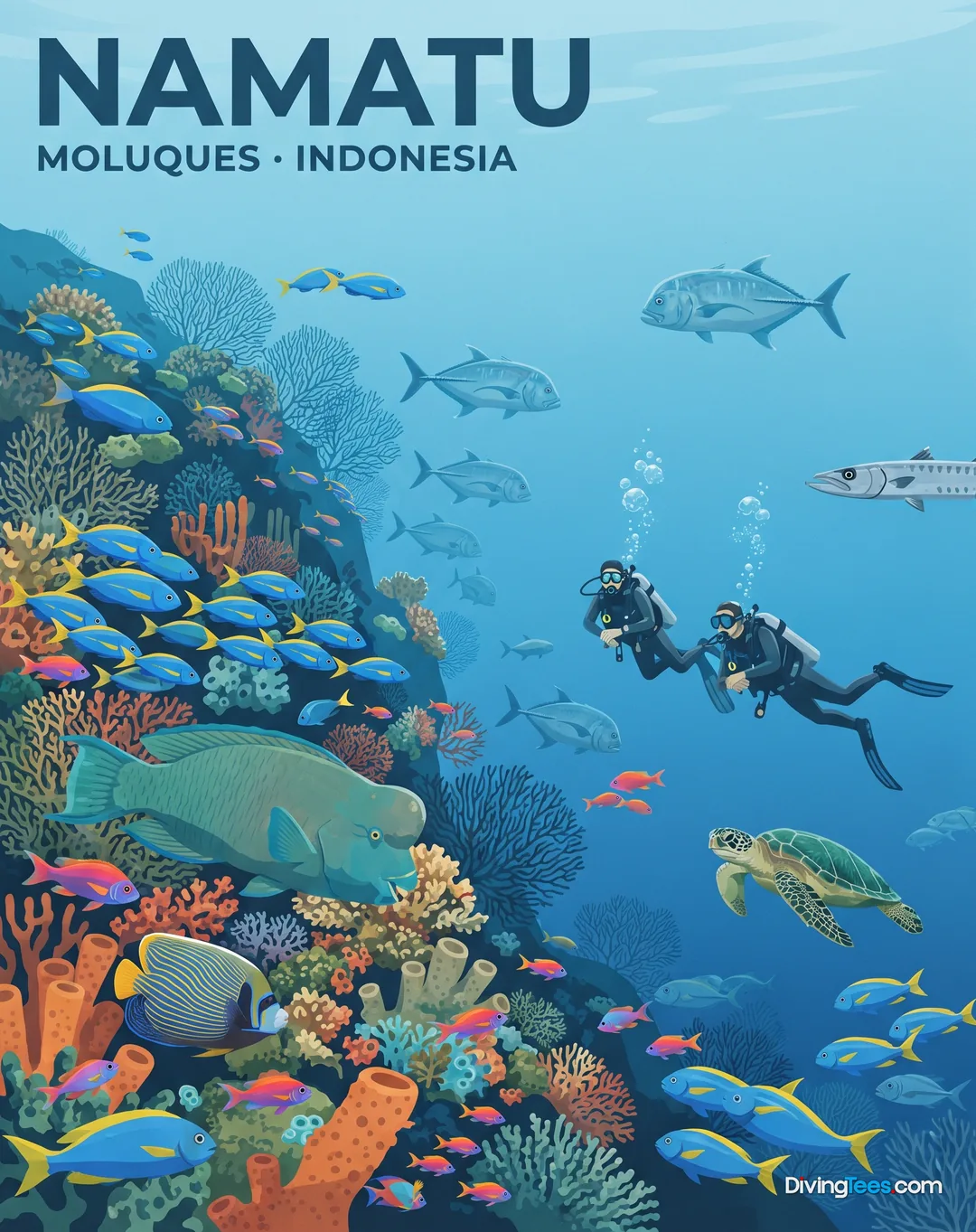
- Namatu’s fusiliers, barracuda and colourful drop-off
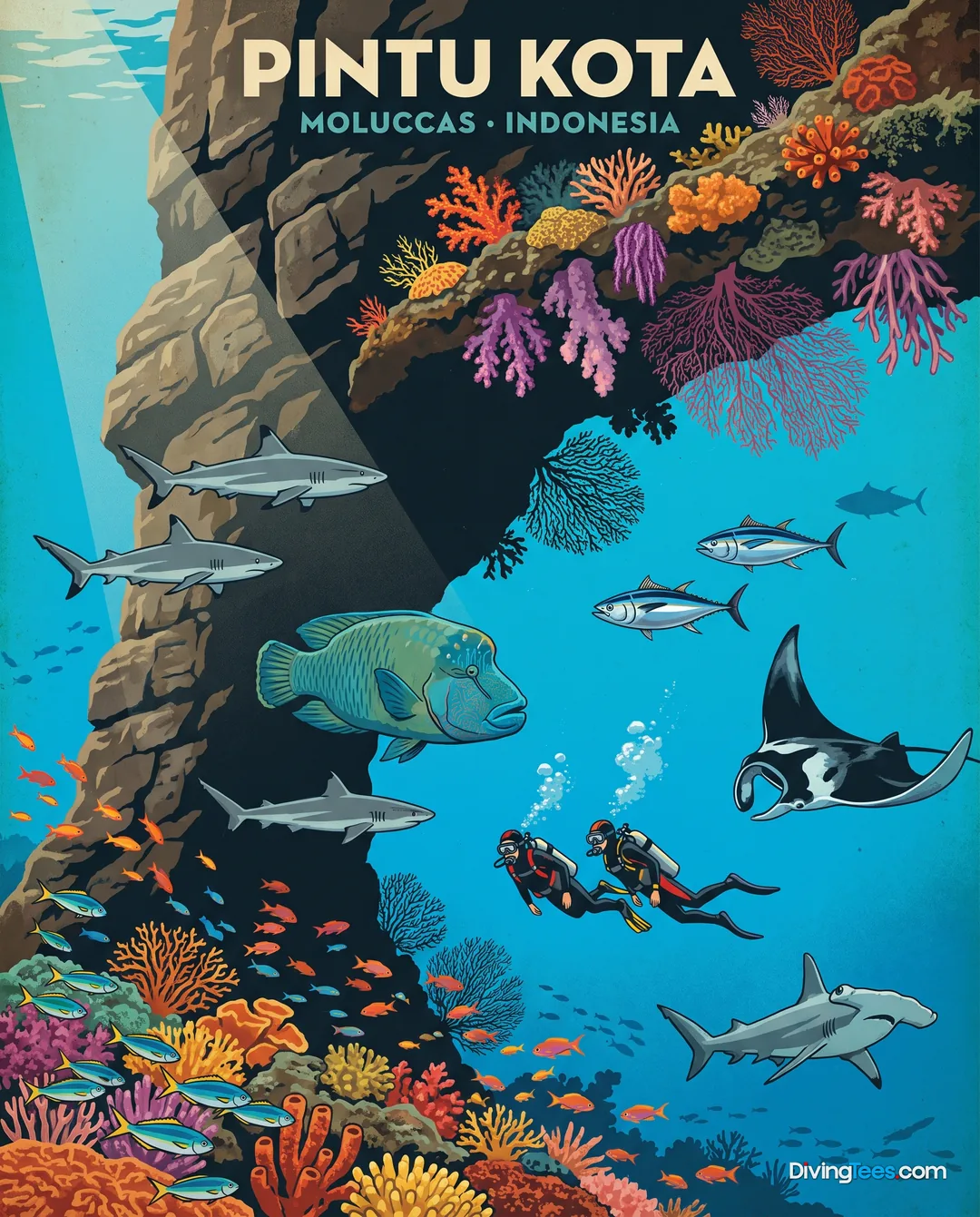
- Pintu Kota’s strong-current drift with tuna and sharks
- Tanjung Mahia’s encounters with mantas and hammerheads
- Tanjung Kilang’s 35-metre pelagic drift dive
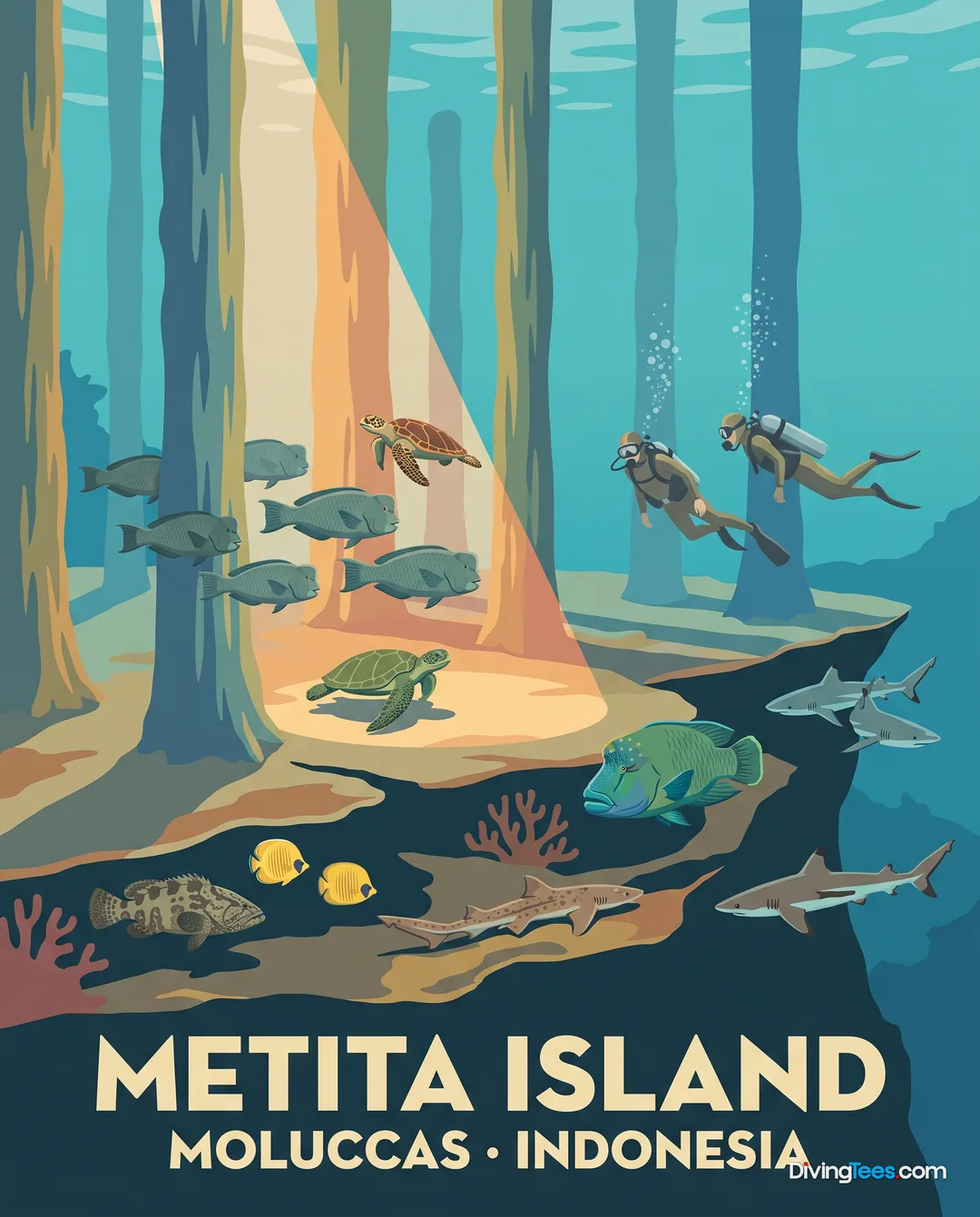
- Metita’s shallow plateau, sloping wall and turtles
- April to June, when the sea is at its calmest
For subtitles in English: start the video firstthen click the gearat the top right of the video, select “Subtitles/CC”, then “Auto-translate” and choose “English”.
Overview
The Moluccas are not one neatly packaged dive base, but an archipelago of very different islands and local sea areas. A stay might combine coral walls, shallow house-reef diving, sandy macro ground and current-swept headlands, depending on the island selected. Depan Tupa and Namatu show the reef side of the destination; Metita adds a more relaxed plateau and wall profile. The appeal is quiet, independent island travel rather than a standardised resort circuit.
Diving here
Underwater, the Moluccas move between sloping reefs, coral-covered walls and open-water drift dives. Depan Tupa follows a wall of hard corals, gorgonians and sponges, with little current inside the bay, while Namatu drops away among fusiliers and passing barracuda. The exposed headlands are a different proposition: Pintu Kota, Tanjung Mahia and Tanjung Hukurila are driven by strong currents and pelagic movement. Tanjung Kilang reaches 35 metres, with visibility typically around 15 metres, and calls for a controlled drift rather than a leisurely inspection of the reef. Conditions are variable across the archipelago, so a calm site and a demanding site may sit within the same broad itinerary. Nitrox is useful for repeated diving, but the main practical skill is managing buoyancy, depth and direction while the water is moving.
Three dives not to miss
The underwater wildlife
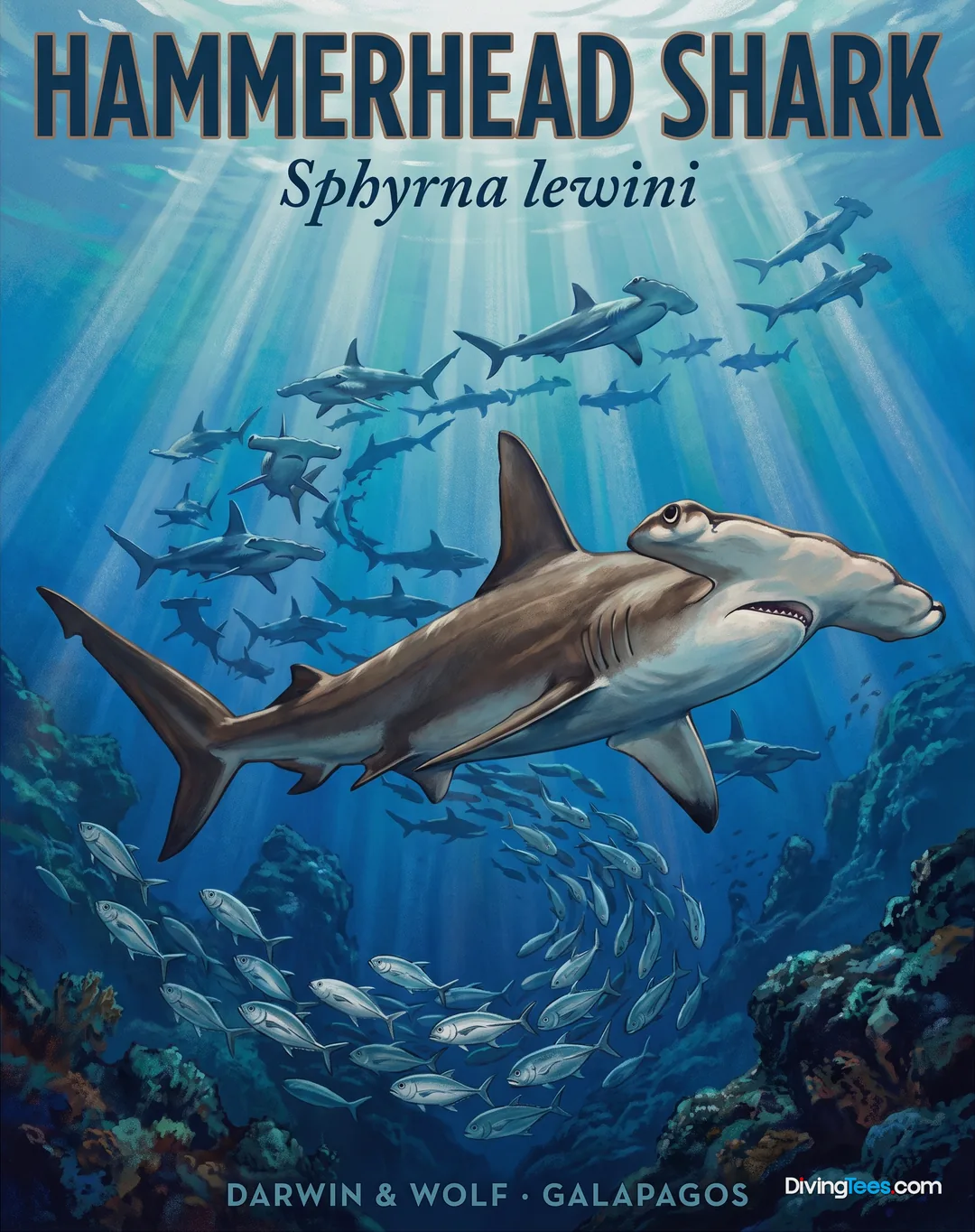
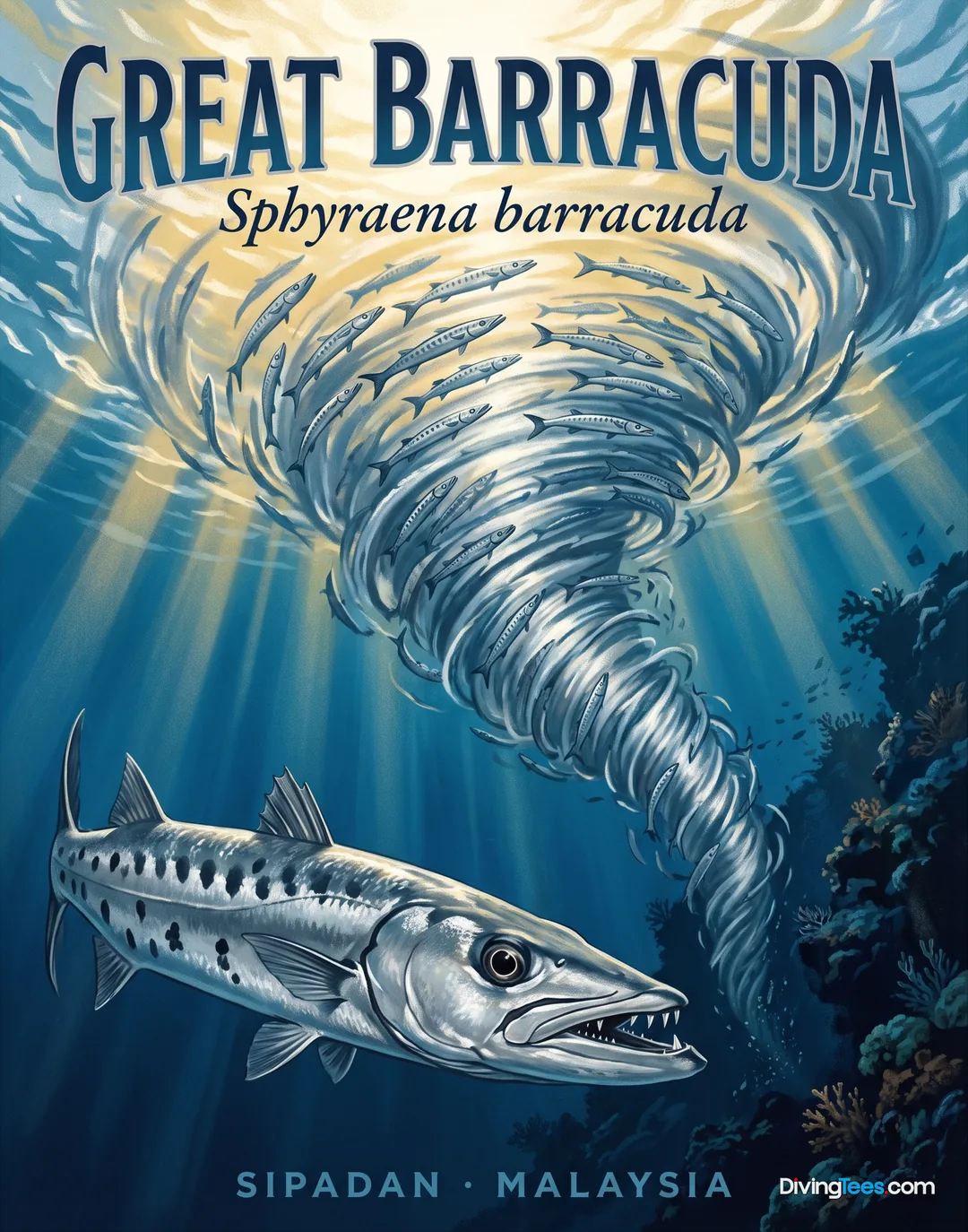
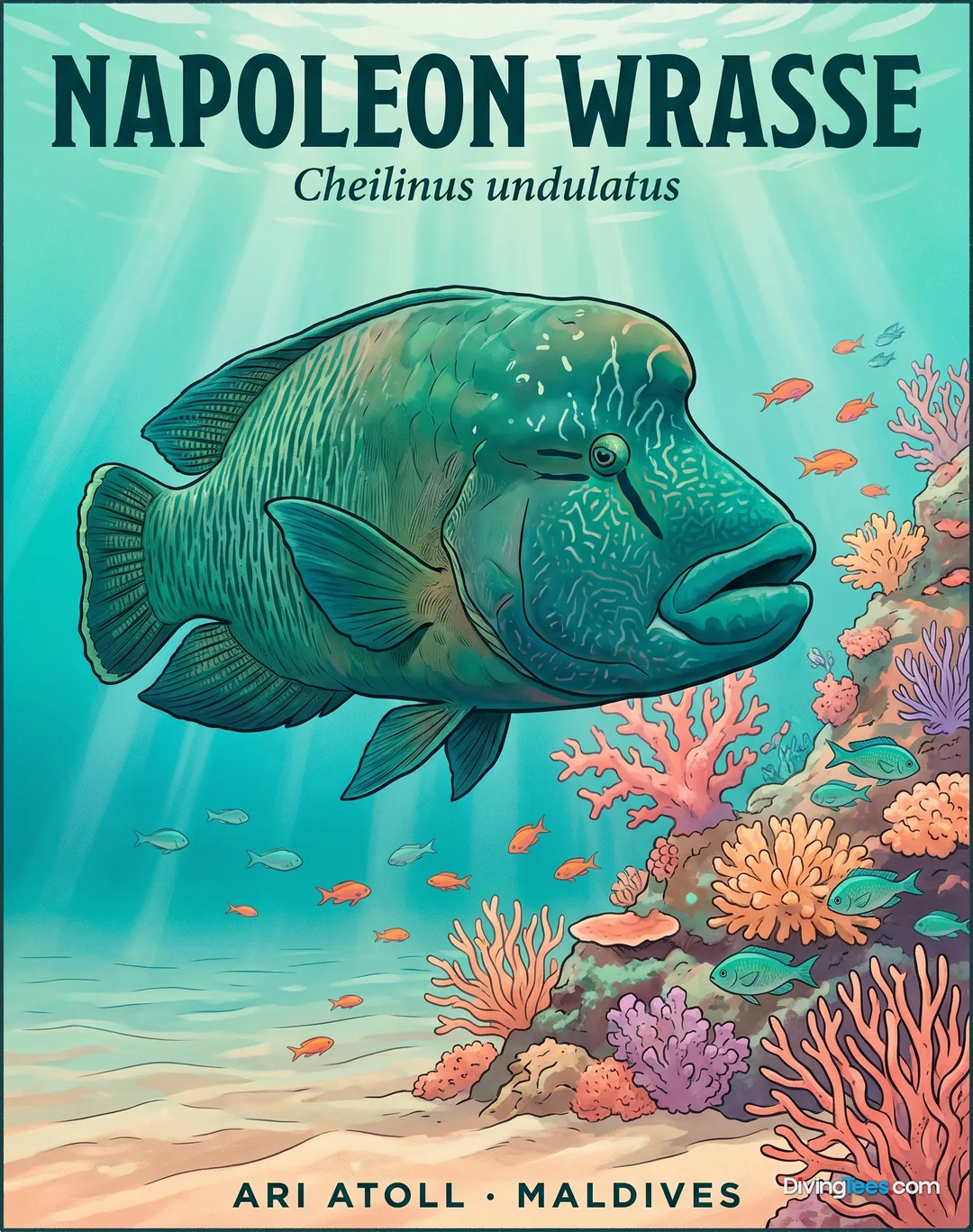
The fish life ranges from busy reef communities to larger visitors using the current. Metita’s shallow reef plateau and gently sloping wall can produce sea turtles and Napoleon wrasse, including on night dives. Depan Tupa brings anthias, angelfish, parrotfish, sweetlips and other reef fish across the coral face. At Namatu, fusiliers stream past the wall while barracuda cruise beyond it. Tuna, jacks and reef sharks are associated with the faster sites, and Pintu Kota is aimed at those prepared to drift in their company. Manta rays and hammerhead sharks are recorded among the pelagic encounters at Tanjung Mahia. GaloGalo is particularly tied to seasonal mobula ray gatherings, with the most likely period from February to May. That window overlaps only partly with the calmest general season, so choosing the island and the priority species matters.
Possible underwater encounters

When to go
The sea is measured at its calmest from April to June, making this the most straightforward window for a first visit or for an itinerary involving local boat links. Site conditions can still differ by island and exposure, but this period offers the clearest seasonal logic. Individual sites extend beyond it: Metita is generally favourable from March to November, while Depan Tupa, Pintu Kota, Tanjung Mahia and Tanjung Kilang are described as useful from early September into late May. GaloGalo is a separate case, with mobula encounters most associated with February to May. The choice is therefore between calmer overall travel and a specific pelagic objective.
Level required
The Moluccas can suit all levels when the itinerary stays with sheltered reefs and gentle profiles such as Metita. Strong-current sites are different. Pintu Kota, Tanjung Mahia and Tanjung Hukurila require confident buoyancy control and comfort in moving water; Tanjung Kilang is aimed at intermediate divers, with around 50 logged dives recommended. These sites are not the place to discover current management for the first time. PADI, SSI and BSAC divers should match the planned dives to recent experience rather than relying on certification alone. Nitrox is useful for repeated days.
On the ground
From London Heathrow, Gatwick or Manchester, reaching the Moluccas normally means combining an international journey with a domestic flight towards the relevant regional airport, followed by a secondary boat connection or local road transfer. There is no single arrival route for the archipelago: the final island determines the sequence, and sometimes the boat is the unavoidable link. Allow generous space between the international arrival, domestic flight and local crossing; a missed connection can cost a diving day. Once on the chosen island, the simplest bases often keep accommodation and the dive centre in the same village or on the same beach, with short walks or local vehicles covering the remaining transfer. Multi-island plans add another layer of boat and flight coordination, so the return journey should not be built around a tight connection.
Local tips
Treat the island name as essential information, not a minor detail. Conditions, site character and useful season change across the Moluccas, and a base with several local dive types is usually more practical than trying to stitch together a hurried island-hopping programme. Keep a proper margin between domestic flights and boat crossings, then reserve a full buffer day before the international return. That spare day absorbs the archipelago’s sea and timetable delays rather than sacrificing the final flight. Accommodation and diving on the same beach or in the same village also save more effort than a small reduction in boat time. Bring a complete personal kit if planning repeated dives: equipment provision is not uniformly standardised across such a fragmented destination. Finally, do not judge a site by the general label ‘Moluccas’. A sheltered wall such as Depan Tupa is a different undertaking from the strong-current drifts at Pintu Kota or Tanjung Kilang, where recent experience matters.
Planning your stay
A sensible stay lasts seven to ten days and uses one island as its anchor rather than treating the whole archipelago as a single base. Days can alternate between reef and wall dives, current-dependent sites and slower local outings, with surface intervals shaped by boat movements. Metita suits a gentler day or night dive, while the exposed sites need suitable sea conditions and a diver comfortable with drift profiles. Non-diving time fits naturally around village walks, coastal scenery and the occasional unavoidable transport day.
Hello, I'm Marina, DivingDeal.com's AI assistant. I guide you through destinations, areas and countries.
Thinking about the whole trip and the flights? Talk it over with Edith →
Marina is an AI. Some links are affiliate links: DivingDeal may earn a commission, at no extra cost to you. Bookings are made with the partner.
Map of hotels, dive sites and dive centres in Moluccas
Things to do in Moluccas beyond diving
Your last day stays dry: no diving in the 18-24 hours before a flight, the perfect window to see the destination from another angle.

Ratings and reviews collected by Viator and Tripadvisor.
Frequently asked questions about Moluccas
When should you visit the Moluccas for the best diving conditions?
Visit the Moluccas from April to June, when the sea is generally at its calmest and local boat connections are easier to manage. Other periods suit specific aims: Metita is generally favourable from March to November, several sites work from early September into late May, and GaloGalo’s mobula encounters are associated with February to May.
What experience level suits diving in the Moluccas?
The Moluccas can suit beginners when you choose sheltered reefs and gentle profiles such as Metita or Depan Tupa’s bay. Strong-current sites including Pintu Kota, Tanjung Mahia and Tanjung Hukurila require confident buoyancy control and comfort in moving water. Tanjung Kilang is intended for intermediate divers, with substantial logged experience recommended.
What can you see while diving in the Moluccas?
Diving in the Moluccas ranges from coral walls and reef communities to current-swept pelagic encounters. Expect turtles and Napoleon wrasse at Metita, colourful reef fish at Depan Tupa, and fusiliers with barracuda at Namatu. Depending on the site, you may also encounter tuna, jacks, sharks, mantas, hammerheads or mobula rays.
How should you plan a stay in the Moluccas?
Choose one island as your base and treat the Moluccas as an archipelago of separate local areas rather than one dive centre. Allow generous gaps between international, domestic and boat connections, plus a buffer before returning internationally. Staying near the dive centre simplifies transfers, while multi-island plans require more coordination and flexible timing.