Ambon - Ambon Dive Resort
Google 4.9/5 (36 reviews)
Indonesia · Asia
Sandy detrital bottoms, ornate ghost pipefish, rhinopias and reef walls shape Ambon’s unusual mix of sheltered macro diving and exposed coast.
For subtitles in English: start the video firstthen click the gearat the top right of the video, select “Subtitles/CC”, then “Auto-translate” and choose “English”.
Ambon begins on sandy, detrital bottoms inside a sheltered bay, where a slow fin over apparently empty ground can reveal an ornate ghost pipefish, a rhinopias or a nudibranch. This is a destination for divers who enjoy searching rather than sweeping across coral gardens. Stay on land and repeat the bay’s macro dives, then change character on the south and east coasts, where reefs, walls and drop-offs provide a useful counterpoint. It is also a practical gateway for liveaboard routes towards the Banda Sea.
Most diving in Ambon Bay is muck diving over sand, silt and scattered debris. The work is close and deliberate: settle above the soft bottom, move slowly, and let the guide’s sharp eyes turn apparently bare ground into a sequence of small discoveries. Visibility is commonly around 5 to 15 metres in the bay, reduced further by rain, run-off, swell or plankton. Currents are variable rather than a defining feature, although conditions can change on the more exposed outings. The south and east coasts add reefs, walls and deeper drop-offs, with visibility sometimes reaching 20 metres or more. These sites make a worthwhile change from the bay’s muted scenery, but they are more affected by wind and sea state. Expect boat diving and local road transfers, with the sheltered and exposed sectors best treated as separate parts of the programme.
Ambon rewards patience more than distance covered. On the bay’s sandy and detrital ground, ornate ghost pipefish and nudibranchs can occupy a very small patch of bottom, while rhinopias are an occasional prize for a careful search. The rare psychedelic frogfish is particularly associated with sightings around October, so it is a possibility rather than a reason to expect one on every dive. Tuna and barracuda appear occasionally, depending on the site and conditions, but Ambon’s character is firmly macro rather than pelagic. The best encounters often come when a diver accepts a long pause over one piece of rubble, rather than hurrying between landmarks. September to November is the period many macro divers favour, while nudibranchs and other small subjects can be found throughout the year.
September to November is the clearest choice for a first visit, combining generally workable seas with the period most associated with productive macro diving. March to May is another useful window, and conditions can also be good from October into April depending on the sector. July and August are the awkward months because the south-east monsoon can bring stronger winds, swell and poorer visibility. Some local dive centres close then, and exposed reef trips may be curtailed even when the bay remains usable. Build the season into the itinerary rather than assuming that Ambon’s long diving calendar means every coast operates normally year-round.
Some bay dives suit all levels, provided the diver is comfortable hovering close to a soft, easily disturbed bottom. The south and east coast reefs, deeper sites and walls demand more composure when current or sea state increases. An Advanced qualification, whether through PADI, SSI or BSAC equivalents, is useful for deeper and more exposed diving, while Nitrox makes sense during repeated macro days. Experience with slow searching, buoyancy control and a safety stop in changing conditions will make the destination considerably more enjoyable.
From London Heathrow, London Gatwick or Manchester, reaching Ambon normally involves international flights followed by at least one domestic connection through an Indonesian hub. Allow roughly 24 to 36 hours overall, and leave room for a missed connection because onward flights in the Moluccas are less frequent than in Indonesia’s main tourist regions. A ferry from another Moluccan island is possible, but it is not the usual route for an international arrival. Once in Ambon, dive areas are reached by road and boat. Staying near a centre usually means departures are arranged from the accommodation, while staying in Ambon town or elsewhere requires a road transfer or taxi to the centre and embarkation point.
Come expecting macro subjects and limited visibility, not clear-water coral scenery. In the bay, the visibility is part of the setting, so a camera setup that lets you work slowly without touching the loose substrate matters more than a wide-angle configuration. Separate bay days from south and east coast trips in the plan, because wind and swell affect them differently. Keep spare days for weather delays, especially around the south-east monsoon, and check which sectors and centres will actually operate in July and August. Do not place a regional liveaboard immediately after arrival: flights and boats between the Moluccan islands can be infrequent, leaving little protection against a delay. September to November suits a macro-focused trip, but allow room for groups of photographers to gather around recognised critter areas. The most productive dive may cover very little ground, so resist judging the day by distance travelled.
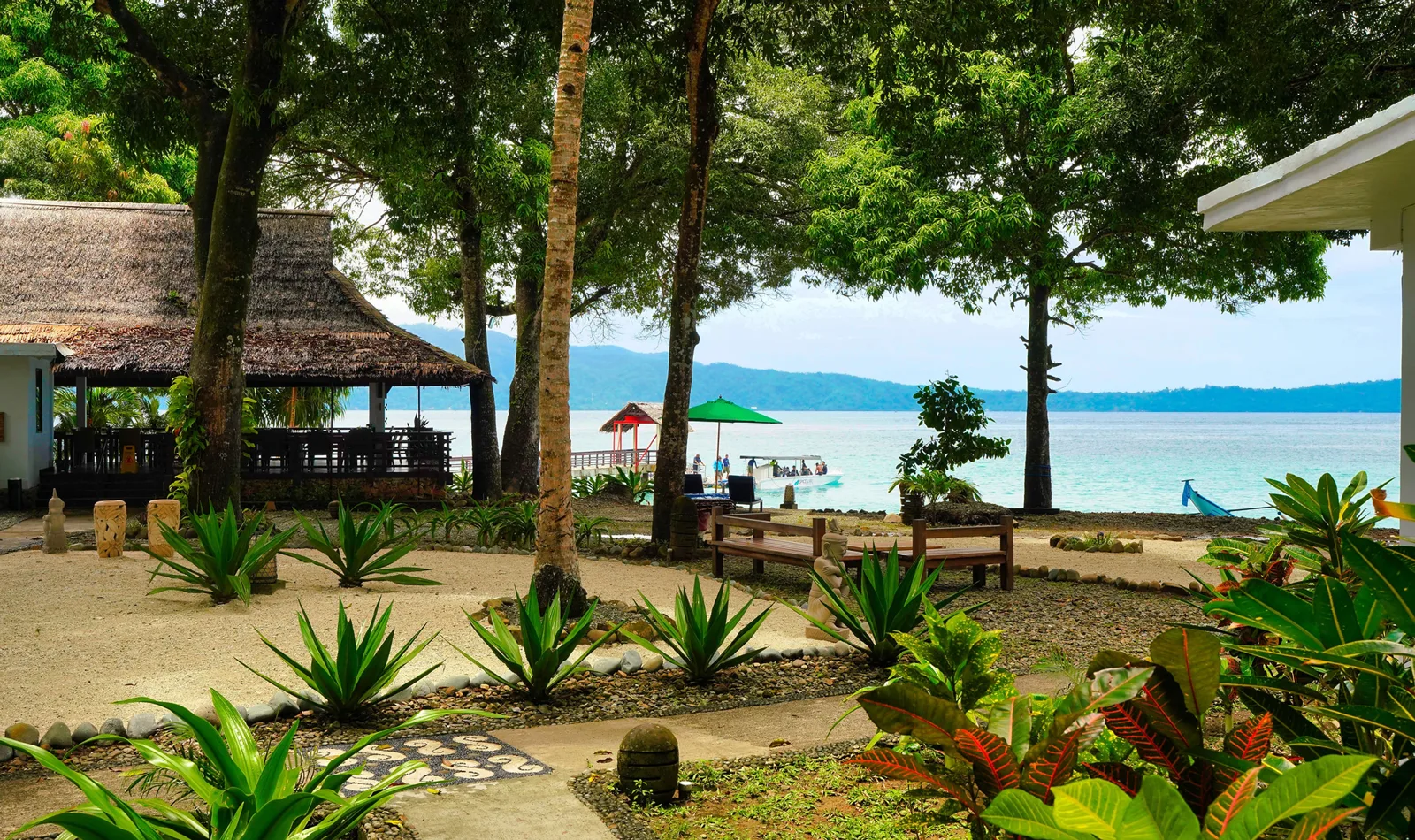
A stay on land works best, with repeated bay dives based near the local diving areas and selected boat days for the south and east coasts. Allow seven to ten days to combine those contrasting environments while retaining weather flexibility. From Ambon town or a more distant hotel, add road transfers to the daily schedule. Between dives, the city, coastal villages, beaches and cultural sights provide modest diversions, while Ambon can also serve as the start or finish of a Banda Sea liveaboard itinerary.
Hello, I'm Marina, DivingDeal.com's AI assistant. I guide you through destinations, areas and countries.
Thinking about the whole trip and the flights? Talk it over with Edith →
Marina is an AI. Some links are affiliate links: DivingDeal may earn a commission, at no extra cost to you. Bookings are made with the partner.
September to November is a useful choice for a first visit, combining workable seas with productive macro diving. March to May can also suit diving, while conditions may be good from October into April depending on the sector. July and August can bring stronger winds, swell, poorer visibility and reduced operations.
Some Ambon bay dives suit all levels if you are comfortable hovering close to a soft bottom without disturbing it. South and east coast reefs, deeper sites and walls require more composure when current or sea state increases. An Advanced qualification is useful there, while buoyancy control and slow searching improve the experience.
Ambon is known for macro diving over sandy, silty and detrital bottoms, where you may find ornate ghost pipefish, nudibranchs and rhinopias. Psychedelic frogfish are a possibility around October. South and east coast trips add reefs, walls and drop-offs, while tuna and barracuda appear occasionally depending on the site and conditions.
Plan a land-based stay near a local diving area for repeated bay dives, then add boat trips to the south and east coasts. Seven to ten days allows contrasting environments and weather flexibility. Reach sites by road and boat, keep spare days for delays, and avoid placing a Banda Sea liveaboard immediately after arrival.