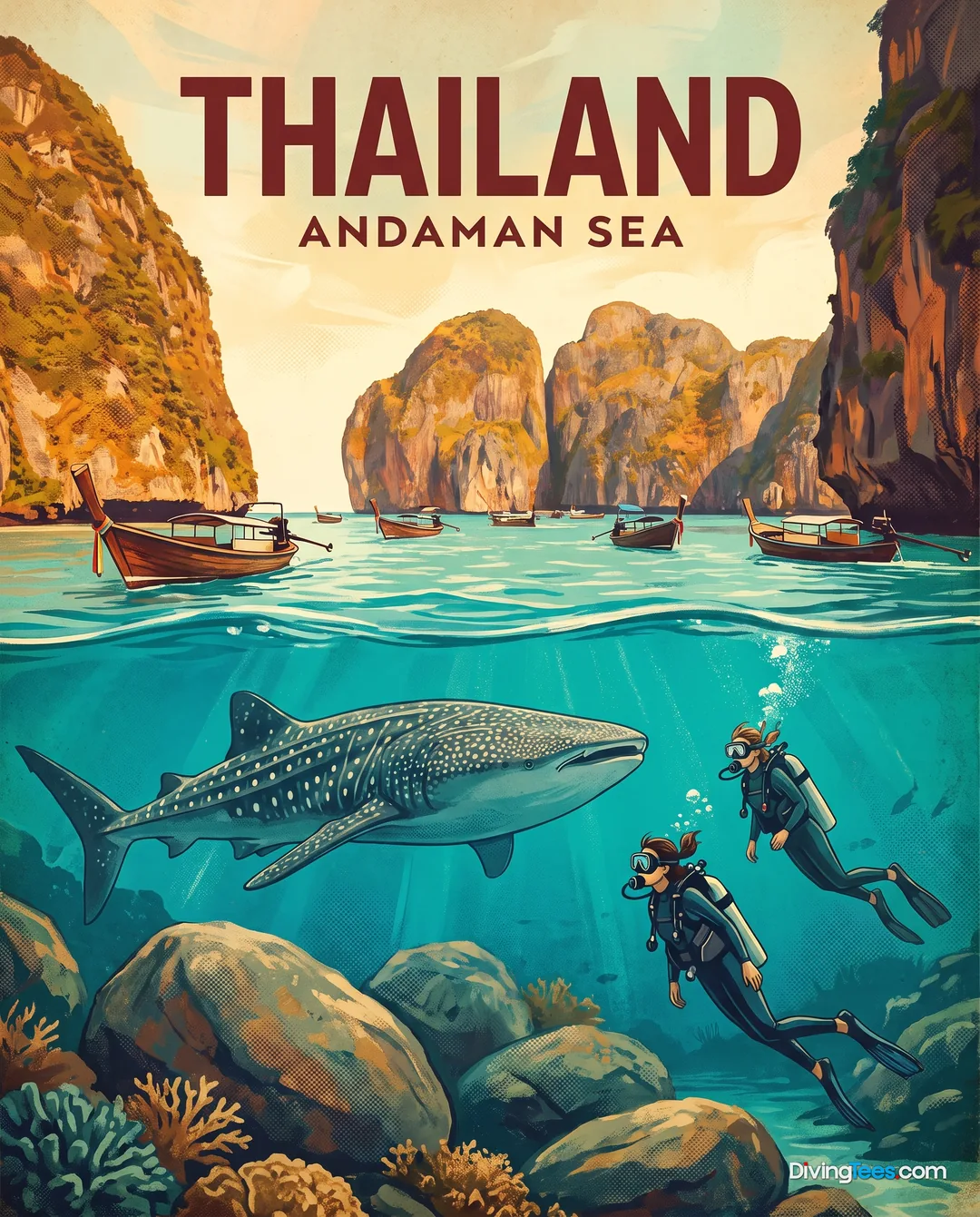
Liveaboards · Thailand
DiveRACE Class X — a purpose-built liveaboard where diving comes first
What makes this boat unique
- The 35-metre steel vessel carries up to 20 guests in 11 en-suite cabins.
- Its dive deck has individual gear stations, personal storage, warm-water showers and two custom tenders with 50HP outboards.
- Routes cover the Similan Islands, Koh Bon, Koh Tachai, Richelieu Rock, Phuket and the southern Andaman Sea.
- The boat offers up to 22 dives on the seven-day North to South and South to North itineraries.
- Solar energy, a coral-restoration programme and reduced single-use plastic use are part of DiveRACE’s operating approach.
The invitation
DiveRACE Class X is for divers who want the range of a serious liveaboard without giving up a proper place to sleep afterwards. The boat links Thailand’s granite pinnacles, limestone walls, wrecks and pelagic cleaning stations rather than spending a week on one small patch of reef. That matters when the aim is to see both the macro life at Richelieu Rock and the open-water action around Koh Bon or Racha Noi. The vessel was built around diving: gear has a fixed place, the tenders are made for repeated water entries, and the cabins have private bathrooms. Choose it for the route and the working deck first. The jacuzzi and air-conditioned saloon are what make the surface intervals easier.
Boarding
From the dock, Class X presents as a new custom-built steel motor yacht rather than a converted fishing boat. Teak decks, clean lines and broad outdoor areas give it a polished feel, but the important detail is how little of the boat seems to obstruct the day’s diving. The indoor saloon is air-conditioned, the dining area is separate from the open-air spaces, and the sun deck gives the boat a place to spread out between dives. The layout was developed around diver movement: equipment setup, storage, tender access and cabin service do not all compete for the same narrow passage. The boat can also take groups or a full charter, while a maximum of 20 guests keeps the operation smaller than many high-capacity liveaboards.
The atmosphere on board
The atmosphere is practical but warm. Guides keep dive groups together when currents turn difficult, while deckhands help divers in and out of the water and look after the equipment between entries. Housekeepers keep the cabins in order, and the food team handles the steady demand created by a full day of diving without making the dining room feel rushed. That division of work matters on a liveaboard: guests are not left carrying every piece of kit, finding every meal and solving every small problem themselves. Evenings are low-key rather than formal. People gather around food, footage and the day’s sightings, then drift between the saloon, bar and upper deck. By the middle of a trip, the crew’s value is visible in the small things already handled before anyone asks.
The sites you’ll dive
The route is the reason to choose Class X. The Similan Islands to Richelieu Rock itineraries run for five days and four nights or six days and five nights, with up to 14 or 18 dives; the seven-day, six-night North to South and South to North crossings reach up to 22 dives. In the Similans, granite boulders, swim-throughs and coral gardens reach a maximum of -40m. Koh Bon is a wall and manta cleaning station, while Richelieu Rock is a solitary limestone horseshoe descending to a maximum of -35m, crowded with soft corals, macro life and schooling fish. Phuket-area routes bring Koh Doc Mai’s limestone walls and caves to a maximum of -32m, Koh Waeo’s protected coral gardens to -12m and Koh Mueang? No: the route’s South Tip reaches a maximum of -70m and is exposed to converging currents. In the Gulf, Sail Rock is a granite pinnacle to -42m, Southwest Pinnacle reaches -40m, Sattakut Wreck rests to -30m, Twins to -25m and White Rock to -28m. Boonsung Wreck, at -18m, is an old tin dredger turned artificial reef; Koh Tao’s Samran Pinnacle and the shallow gardens of Koh Waeo add a different pace.
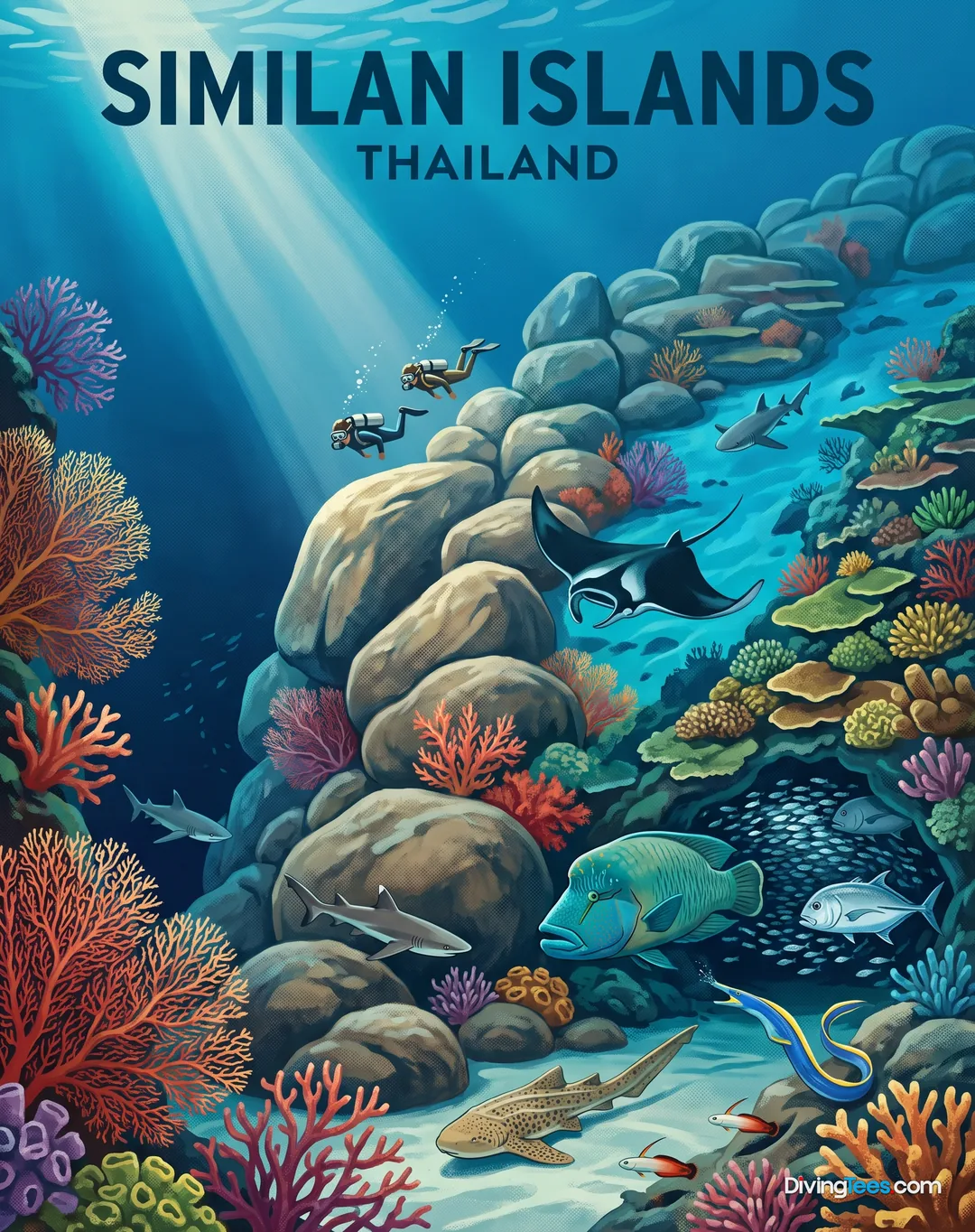
Similan Islands →
Max. depth · 40 m
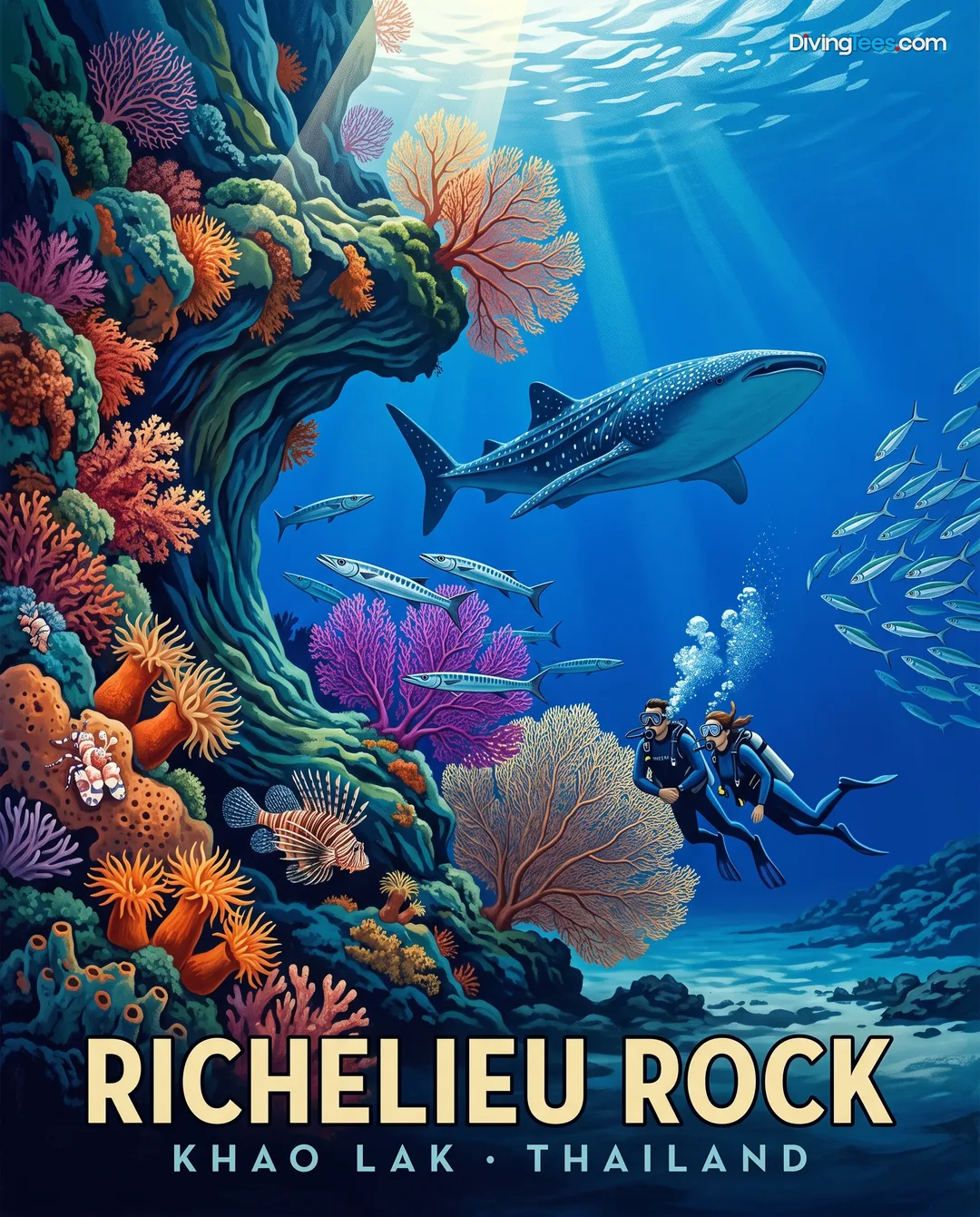
Richelieu Rock →
Max. depth · 35 m
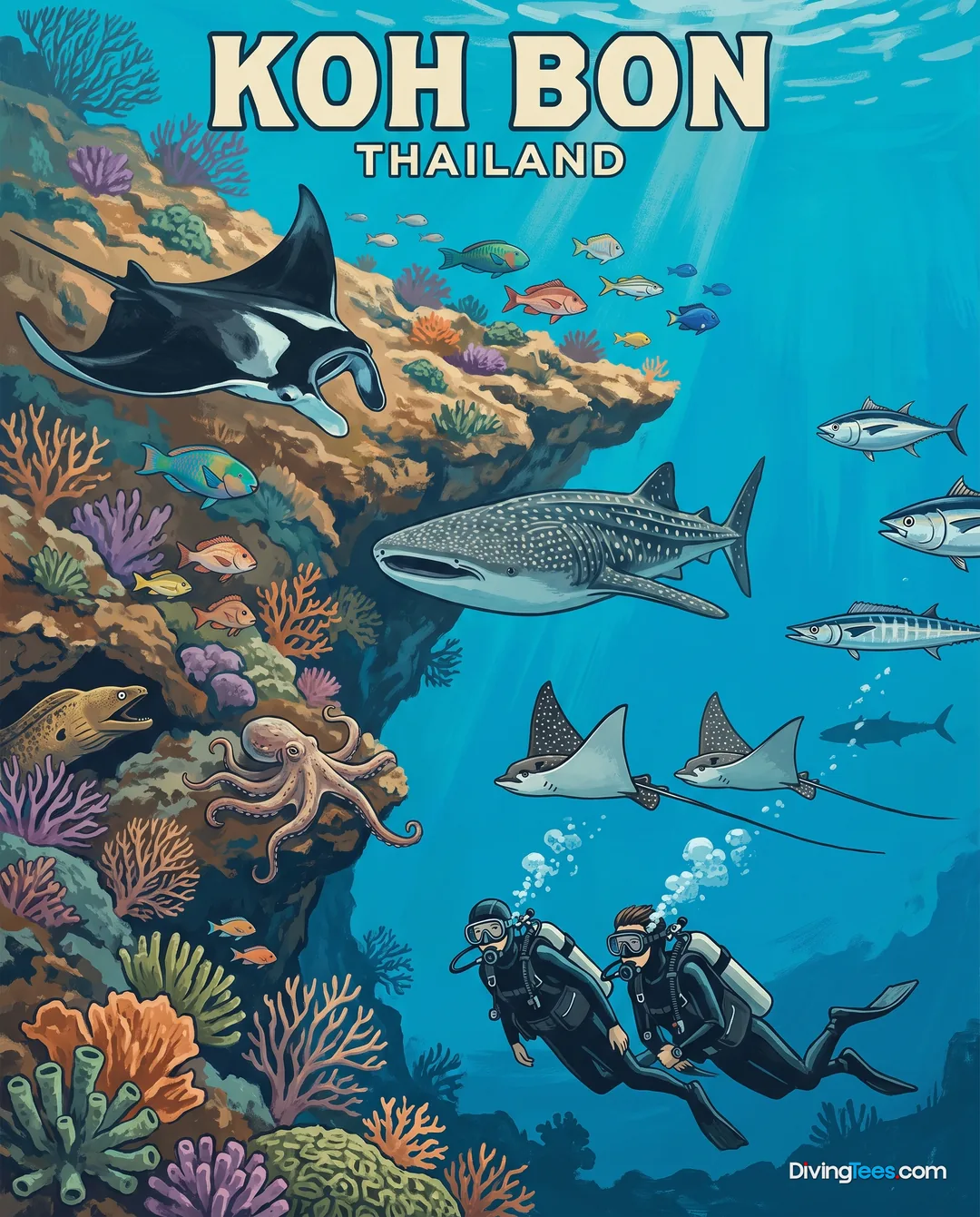
Koh Bon →
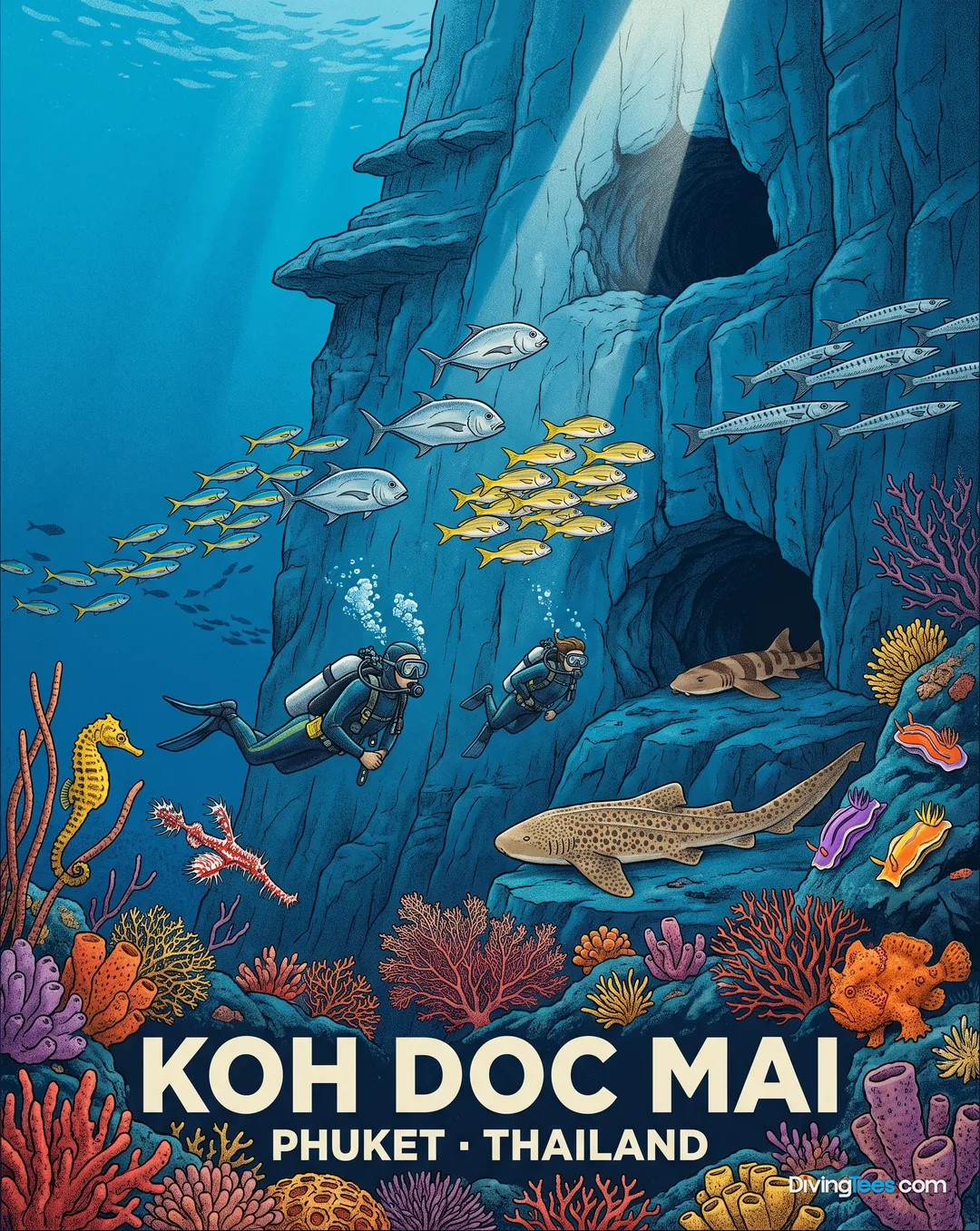
Koh Doc Mai →
Max. depth · 32 m
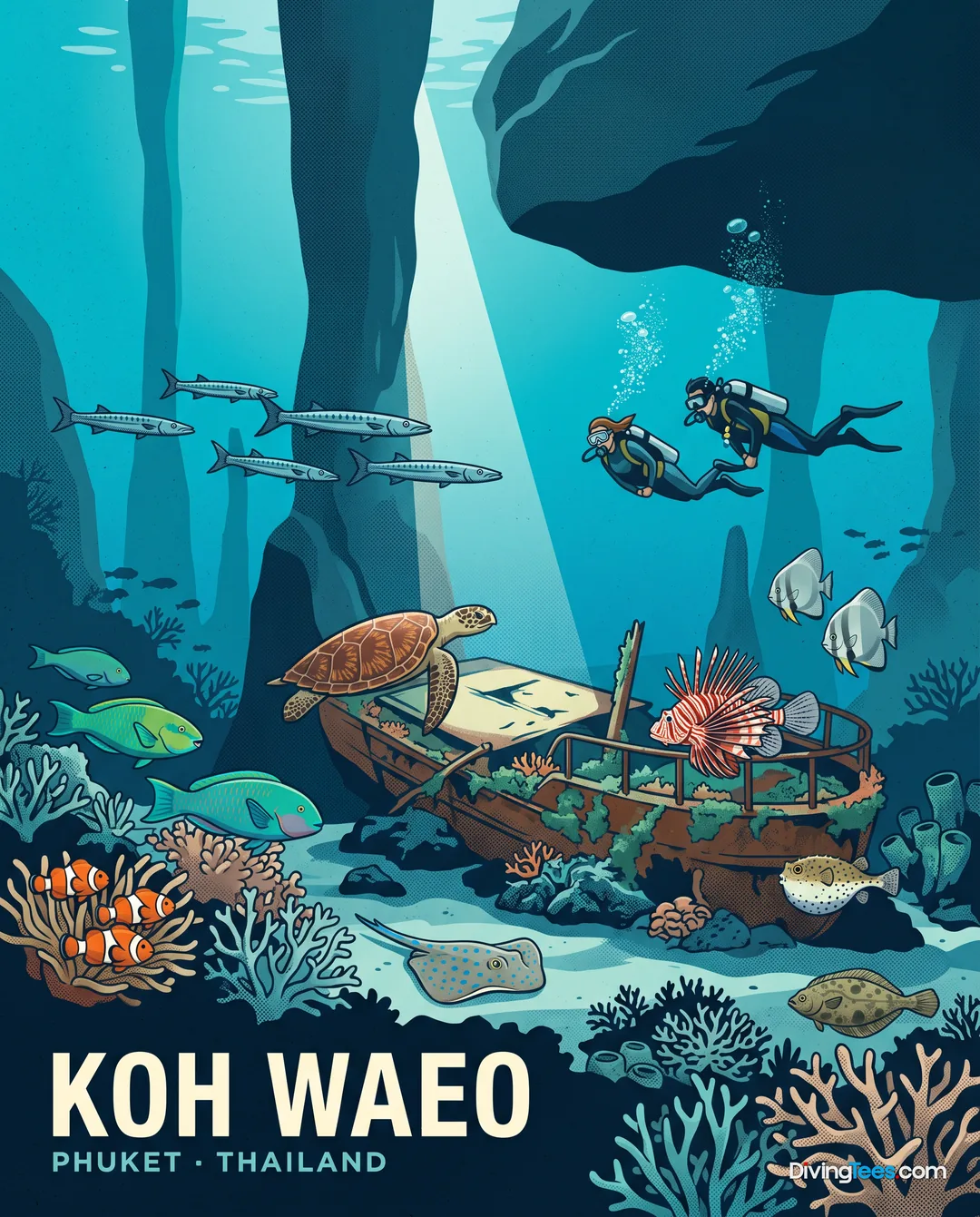
Koh Waeo →
Max. depth · 12 m
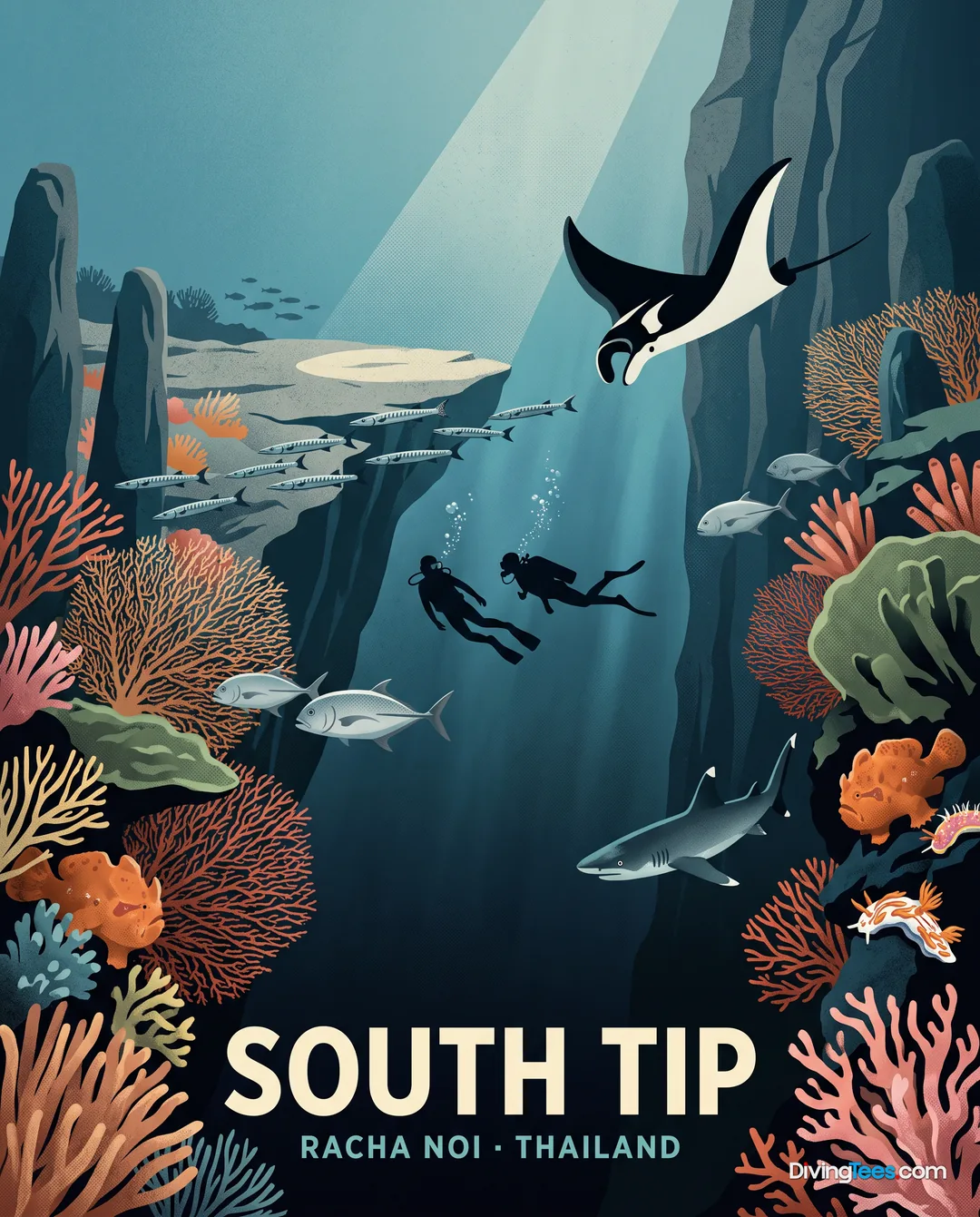
South Tip →
Max. depth · 70 m
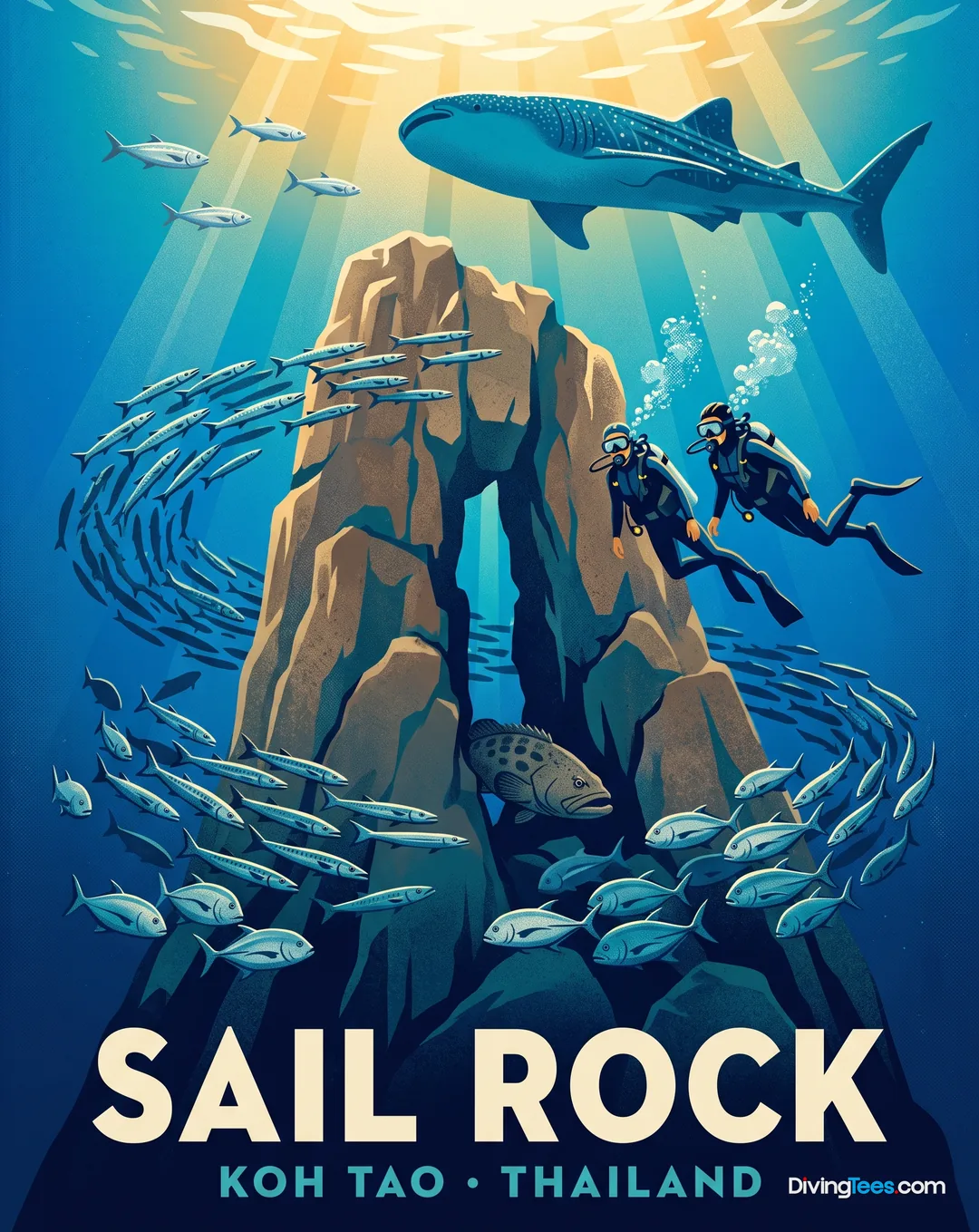
Sail Rock →
Max. depth · 42 m
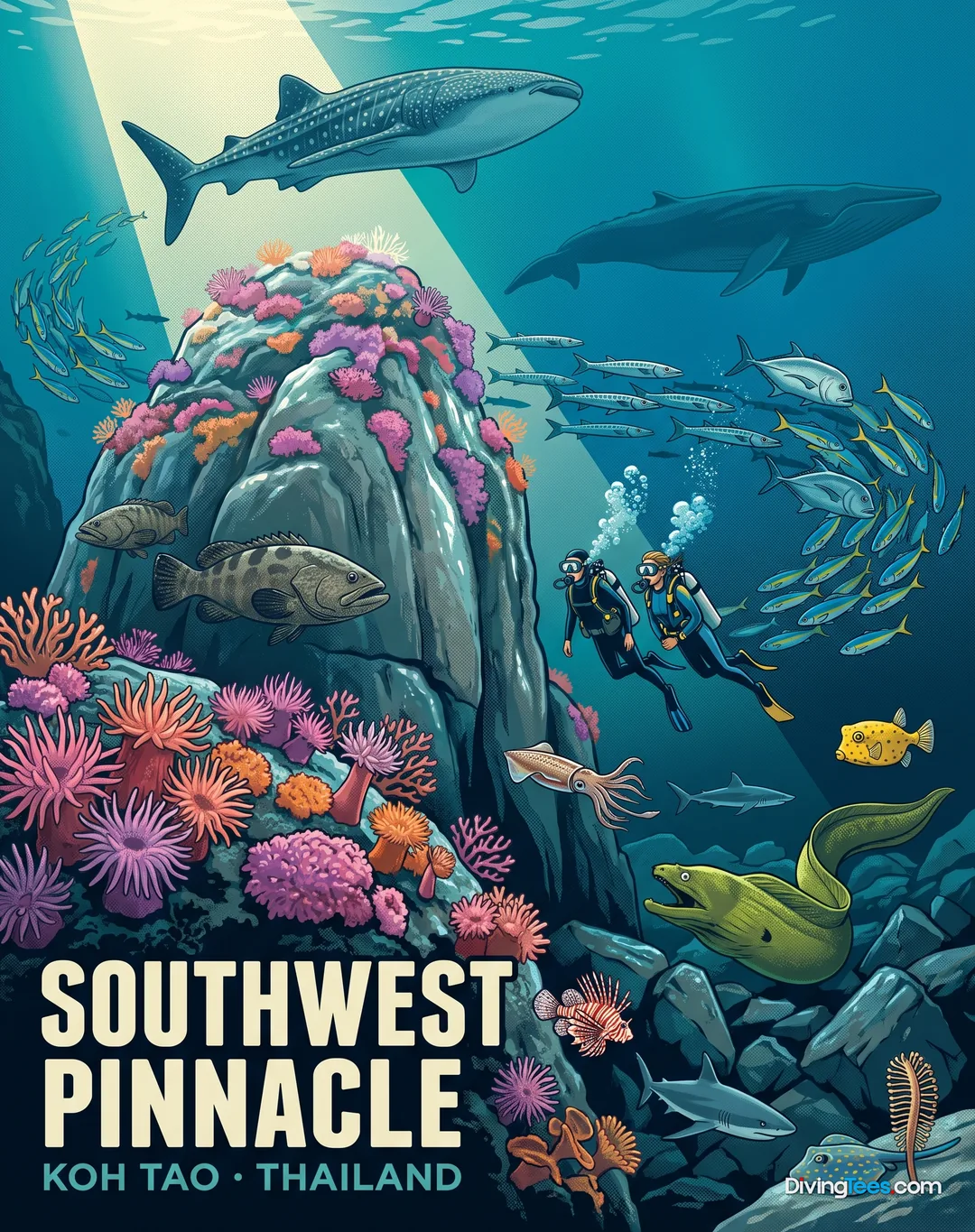
Southwest Pinnacle →
Max. depth · 40 m
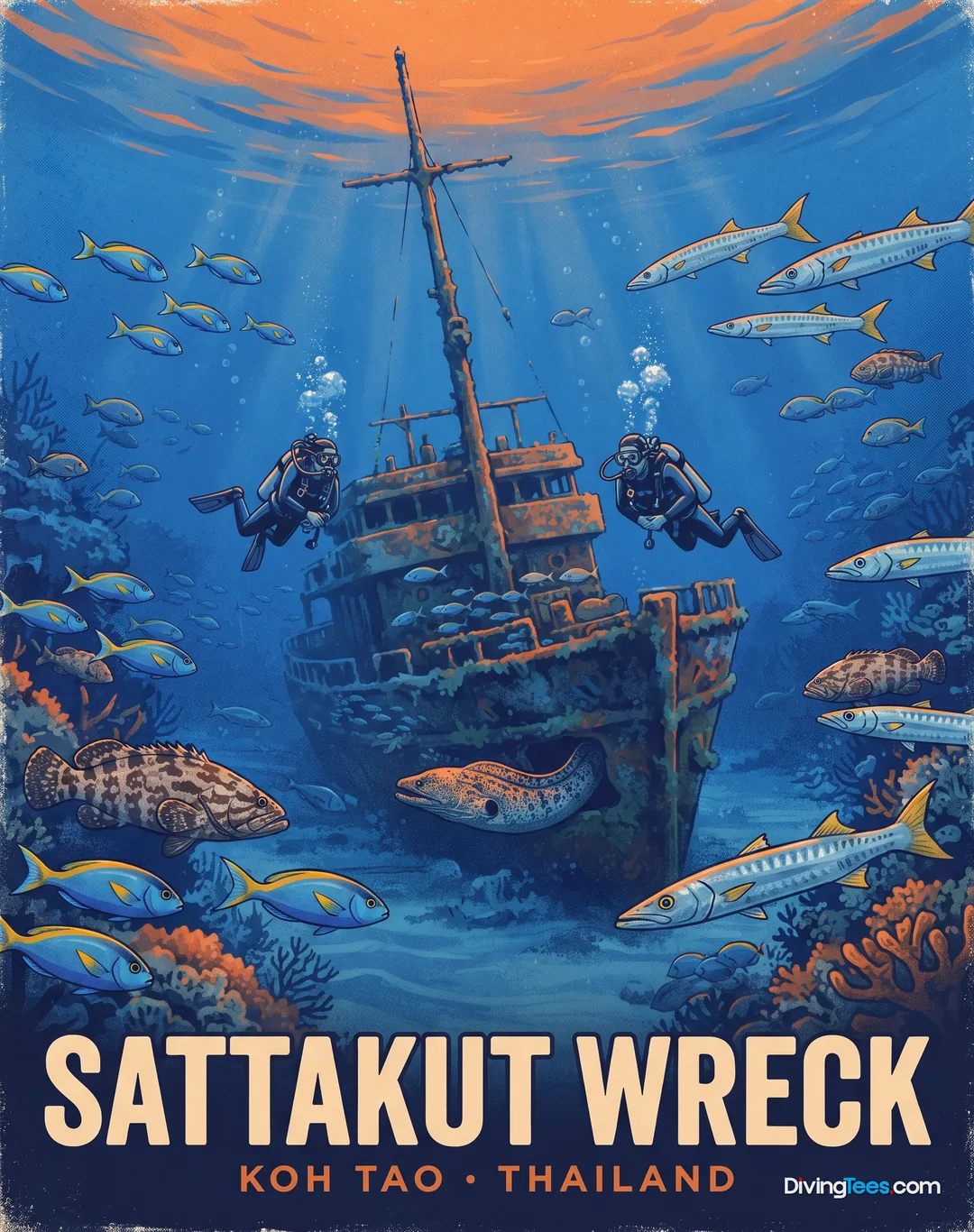
Sattakut Wreck →
Max. depth · 30 m
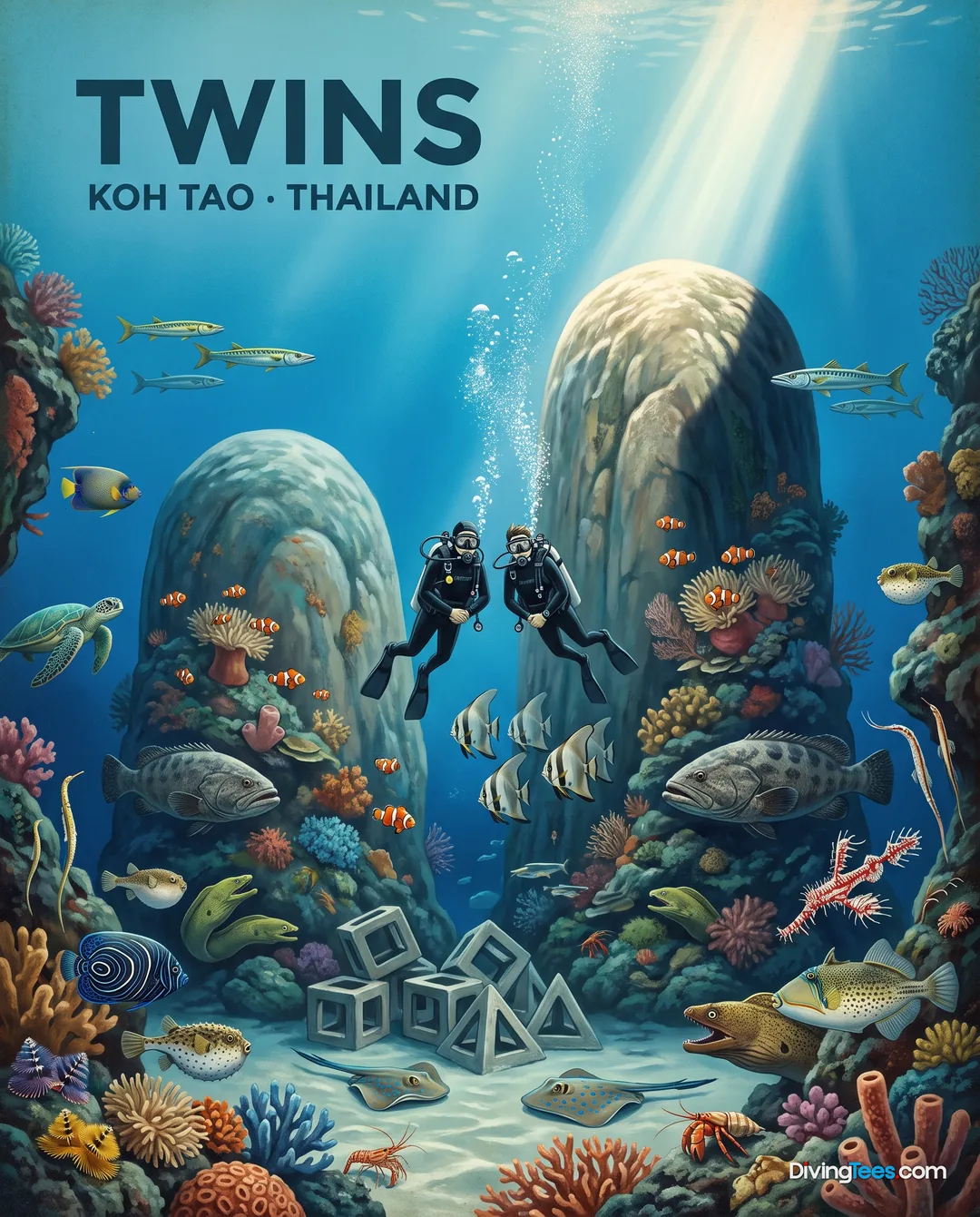
Twins →
Max. depth · 25 m
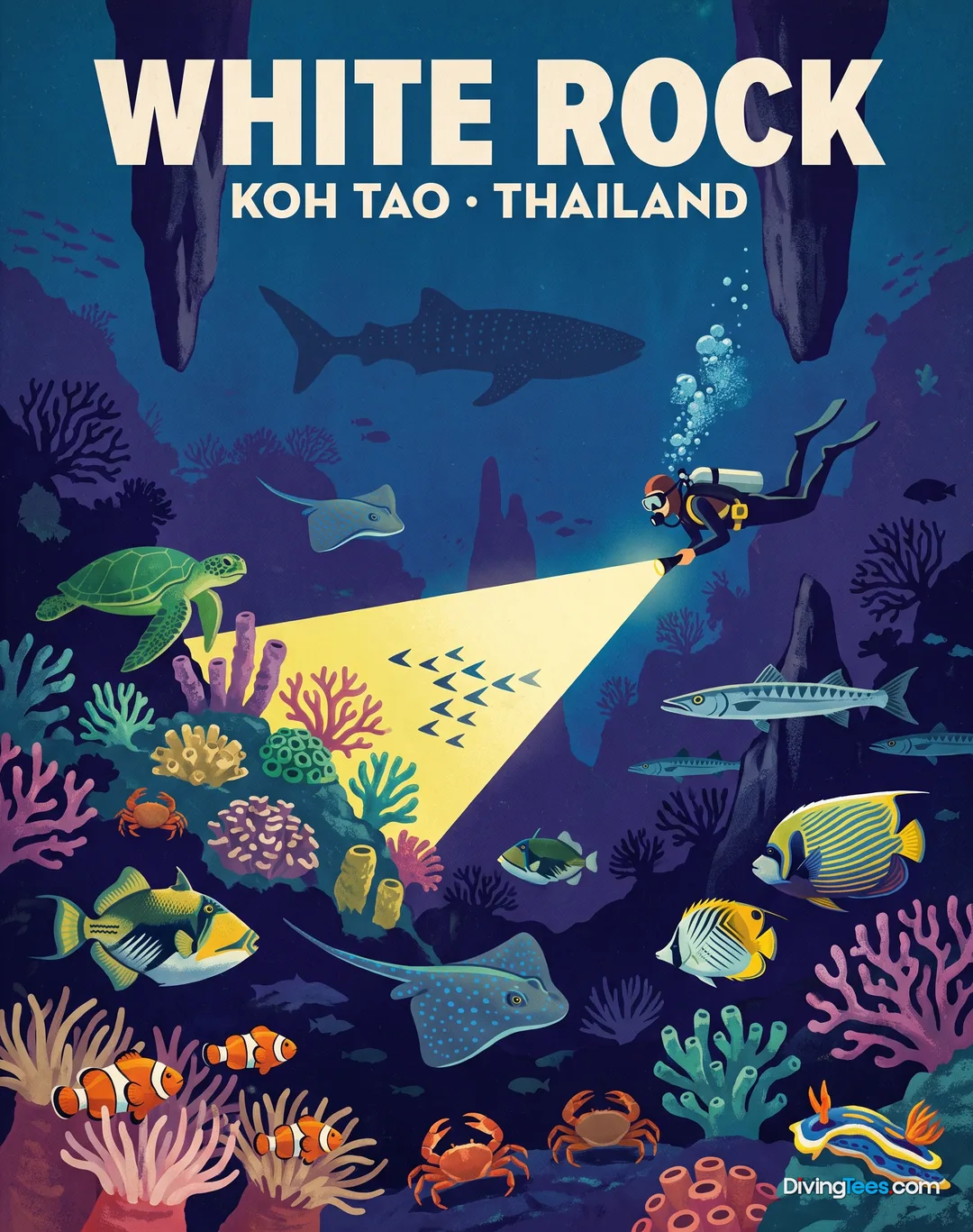
White Rock →
Max. depth · 28 m
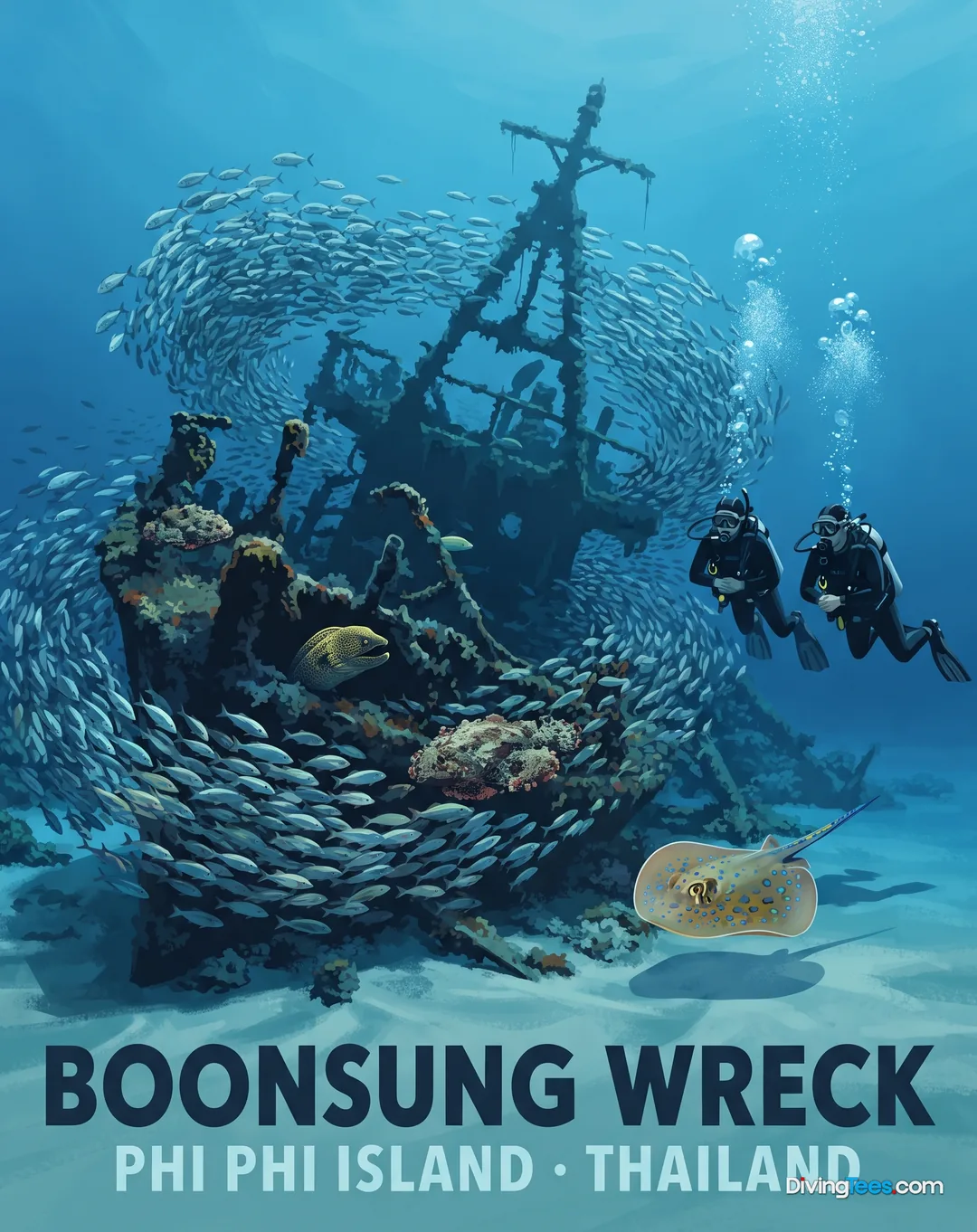
Boonsung Wreck →
Max. depth · 18 m
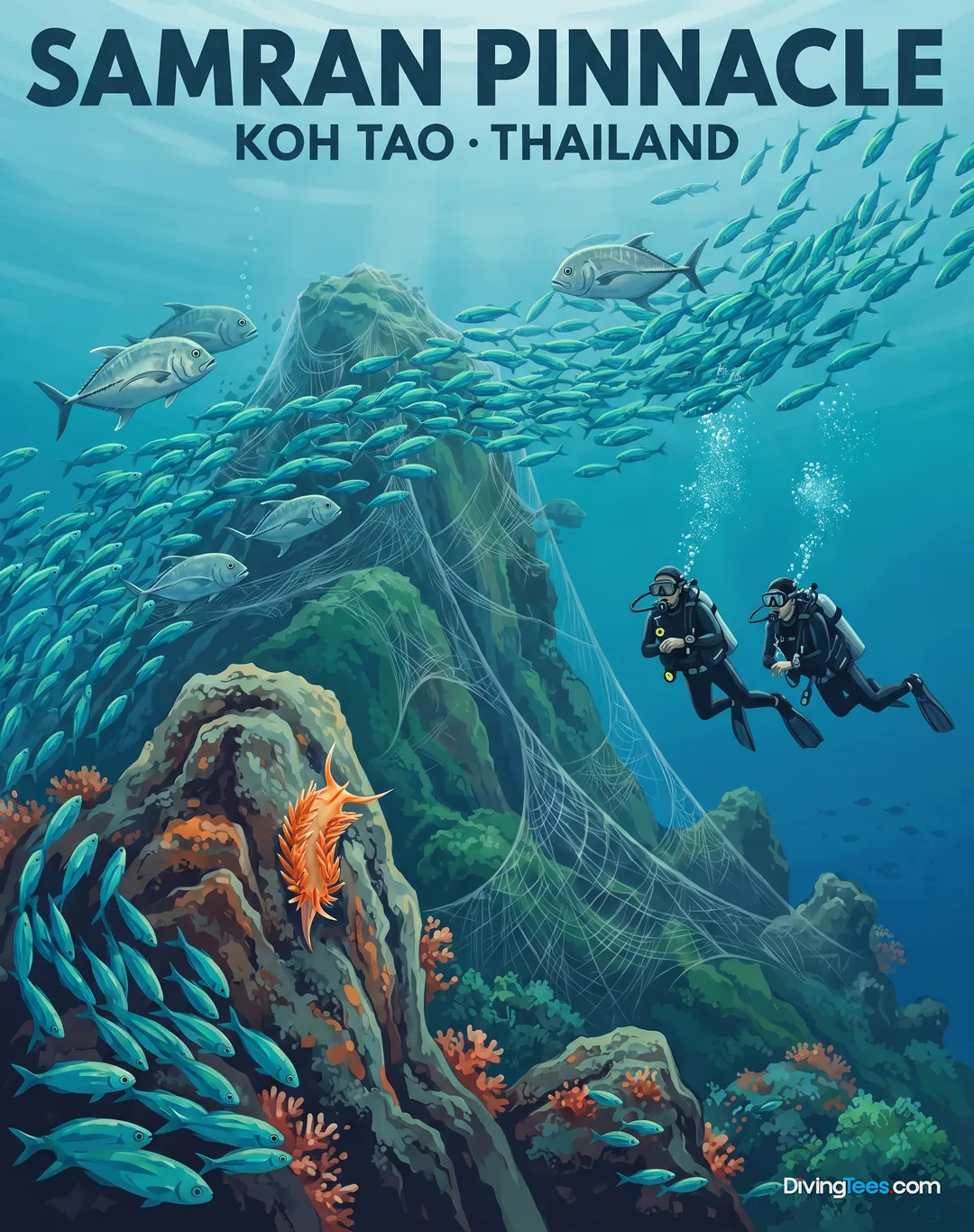
Samran Pinnacle →
What you’ll meet underwater
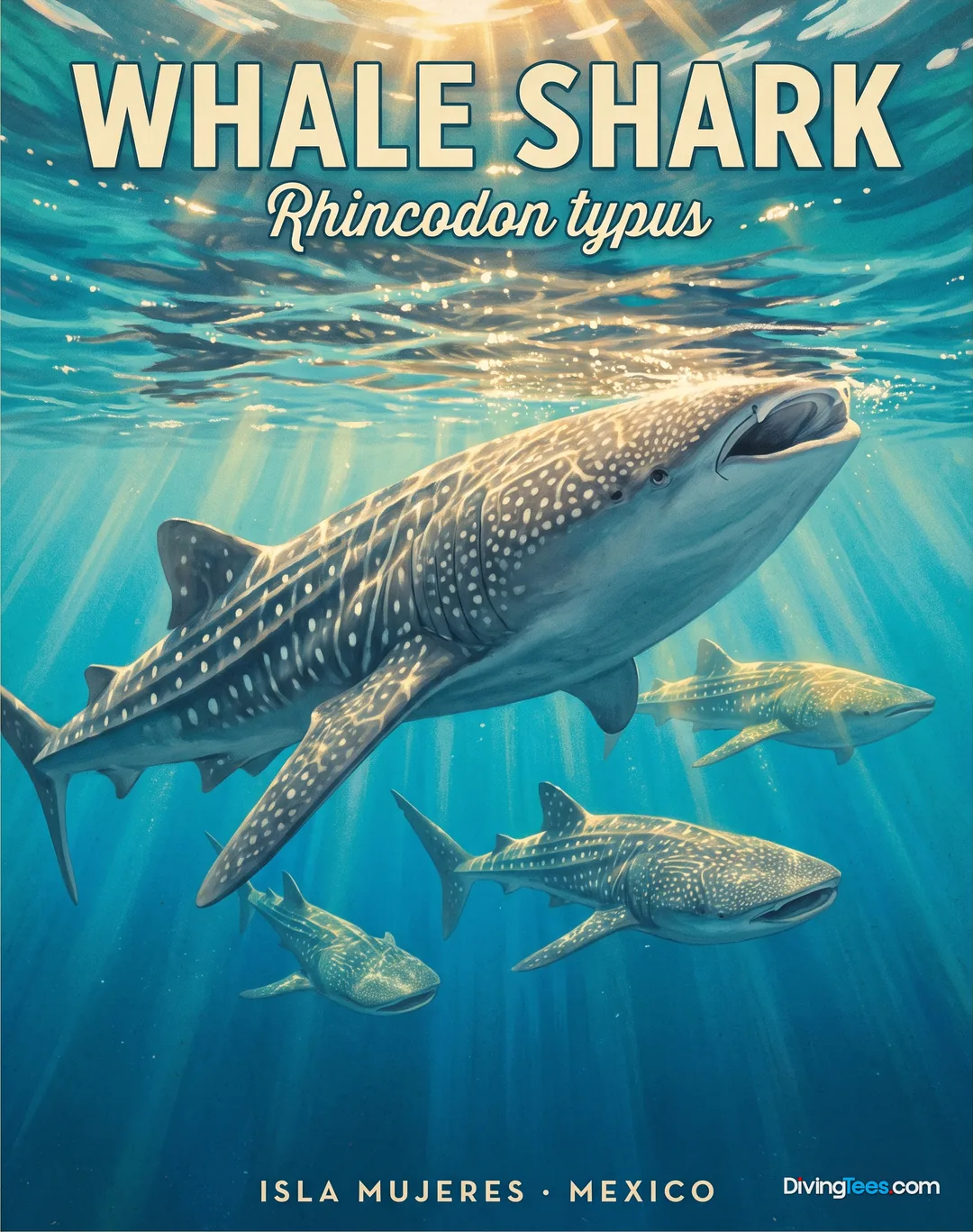
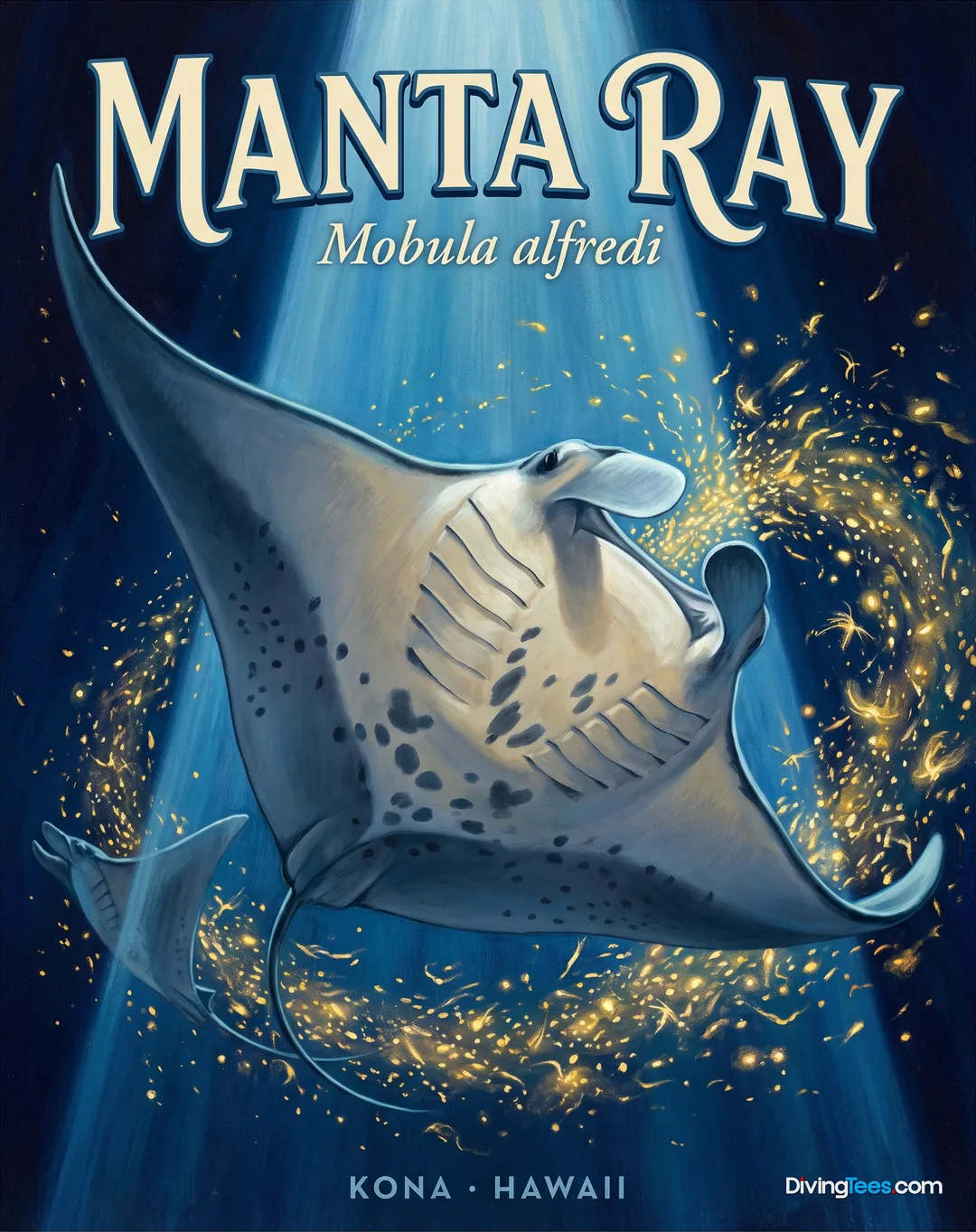
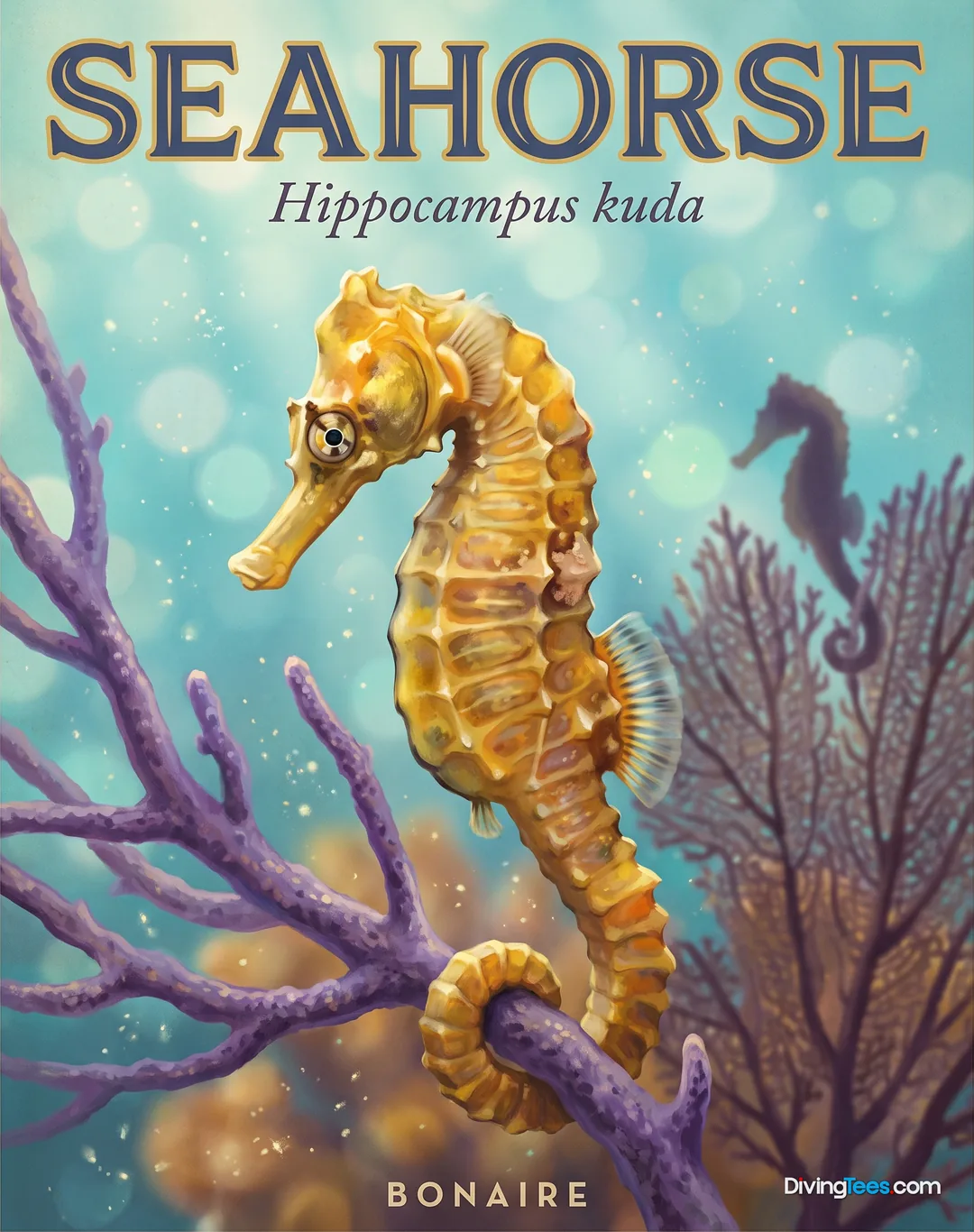
Barracuda, whale sharks, groupers, morays, nudibranchs, trevallies, fusiliers and snapper are the recurring cast of this route, with turtles, reef sharks, tuna and manta rays appearing across several sites. The reason to keep looking changes from dive to dive: currents at the pinnacles bring pelagic fish close, while walls and wrecks reward slower searching. Koh Bon is the place to wait at a cleaning station, where manta rays may come in for maintenance. Richelieu Rock concentrates the small things as well as the big ones, including seahorses and schooling fish. Some sightings are tied to one site. Racha Noi is the listed location for grey reef sharks and garden eels; Koh Doc Mai for bamboo sharks; Richelieu Rock for harlequin shrimp; Twins for large pen shells; Boonsung Wreck for boxfish; and Sail Rock for mackerel, striped damsels and Spanish mackerel. Those specific encounters are reasons to dive the site carefully, not promises of what every group will see.

Who puts you in the water
Dive groups are organised by experience, with a typical maximum of five divers per guide and an average closer to four. Guides speak English, French, Spanish and Thai, and briefings are matched to the group rather than delivered as one generic speech. The minimum requirement is Open Water certification or equivalent and at least five logged dives. Advanced certification is recommended for the deeper or more current-exposed sites. Class X also runs RAID Explorer30, Nitrox and Diver Propulsion Vehicle courses on board. Guided dives, passenger insurance and transfers on the departure and arrival dates are included; dive and travel insurance remains the diver’s responsibility. The captain and dive staff can change a dive when currents, weather or a diver’s experience make that the sensible decision. Full boat safety procedures are in place.
The dive deck and the gear
The dive deck is built for repeated diving, with a dedicated gear station for each diver, personal storage, rinse facilities and warm-water showers for the return. The standard cylinder is an 11-litre aluminium tank with weights and a weight belt included; 15-litre cylinders are available as a paid extra for divers who need more gas. DIN adaptors are carried. Compressors fill the tanks on board, and the nitrox system uses a Nitrox Stick membrane system; nitrox is available at extra cost. Rental equipment includes BCDs, regulators, masks, fins, wetsuits and dive computers, subject to availability. Two custom tenders, each fitted with a 50HP outboard and a heavy-duty ladder, handle diver deployment and collection. Divers step from the wide tender ladder into the water and return the same way, while the crew brings the tender to the surfacing point. Rebreather support is available, but the boat is not set up for technical diving.
Between dives
Between dives, Class X gives guests several different places to disappear for an hour. The air-conditioned indoor saloon suits a meal, a film or a review of the morning’s photographs, while the open-air saloon and sun deck keep the sea in view. Sun loungers and a rooftop bar make the surface interval easy to take outside, and the jacuzzi is there when the day’s current has done its work. Non-divers can snorkel, visit a beach, read, play board games or mahjong, use the library and watch films. Massage is available on board. When the boat is underway between sites, the best use of the gap may simply be shade, water and a dry towel before the next kit check.
A day on board
A diving day starts before dawn with the first briefing, a kit check and the first entry. Breakfast follows, then the boat moves or holds position while divers dry out, eat and prepare for the next descent. On the longer itineraries, four dives may fill the day, with a final sunset or night dive when the site and conditions allow. Lunch and dinner divide the working hours, while snacks appear in the gaps without forcing anyone to sit down at a fixed time. The crew resets tanks, tenders and stations while divers compare notes or sleep. On travel legs, the engines take over and the boat runs towards the next reef. The night ends after the last meal and final logbook conversations; by then, most divers are ready for the next early briefing.
What you eat aboard
Meals combine Western and local food, served in buffet style with plate service also available. Breakfast follows the first dive, later meals fit around the next entries, and snacks, coffee, tea, bread and jam remain available between them. The galley accommodates dietary restrictions when arranged in advance, including vegan and vegetarian meals, and cooks can prepare separate food for medical or religious requirements. Alcoholic drinks, spirits and soft drinks are available on board. After several dives, the value is not ceremony but timing: a hot plate appears when divers are back, fed and ready to dry out before the next briefing. The table becomes the place where the group compares sightings, checks cameras and decides whether the next dive calls for a wide-angle lens or a magnifying glass.
Nights at sea
The cabins are the quiet end of a busy diving day. Each has air conditioning, lockable storage, fresh linen, towels and a private bathroom, so there is no queue for a shared washroom after the last dive. The two premium upper-deck cabins are the most generous, with a fixed king-size bed and a bathroom with both shower and bathtub. Upper- and lower-deck cabins can be arranged with a double or twin beds, while two lower-deck single cabins give solo divers their own space. Mattresses are 10 inches thick, a useful detail when the alarm comes before the first briefing. The boat’s steel hull and twin generators support the hotel-like comfort, but this is still a working dive vessel: tender movement and compressor activity belong to the sound of the trip.
Double Bed Premium Cabin
Double/Twin Single Beds Cabin
Single Bed Cabin
What to know before boarding
Trips depart from Thap Lamu or Krachang Restaurant Pier near Khao Lak for the Similan and northern Andaman routes, and from Visit Panwa Pier in Phuket for southern routes. Transfers from the Phuket or Khao Lak area and the return transfer on the arrival date are included, with pickup details sent before departure. The exact pier depends on the itinerary. Arriving the night before is the sensible option, especially when a flight or hotel transfer is involved.
What the boat does for the ocean
Class X uses renewable solar energy as part of its onboard power system and is operated with a stated reduction in single-use plastics. DiveRACE also runs an active coral-restoration programme in Phuket, including underwater restoration structures where guests can learn about coral recovery. These are practical links between the boat, the dive operation and the reefs it visits.
- Year built
- 2025
- Length
- 35 m
- Beam
- 9 m
- Maximum number of passengers
- 20
- Number of cabins
- 11
- Tenders
- Custom tenders with 50 hp OBM
- Website
- diverace.com ↗
Hello, I'm Marina, DivingDeal.com's AI assistant. I answer in detail about hotels, dive centres and liveaboards.

Thinking about the whole trip and the flights? Talk it over with Edith →
Marina is an AI. Some links are affiliate links: DivingDeal may earn a commission, at no extra cost to you. Bookings are made with the partner.