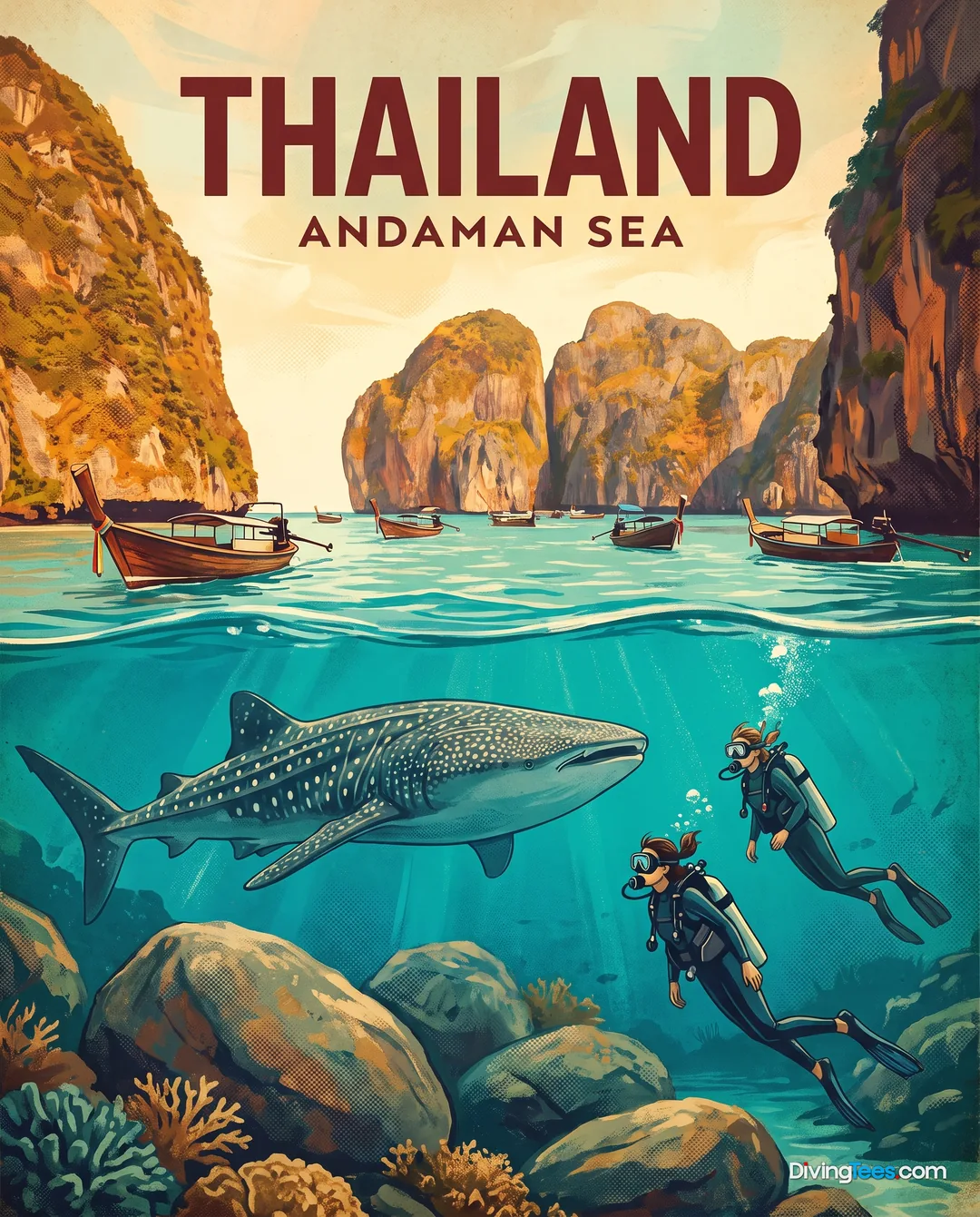
Liveaboards · Thailand
Poseidon Liveaboard — a newly remastered dive vessel for focused Racha diving
What makes this boat unique
- Poseidon Liveaboard runs 3+ dives per day around Racha Yai and Racha Noi, with longer routes available from 1 night to 4 days and 3 nights.
- The vessel was built in 1993 and fully renovated in 2026, with 13 air-conditioned cabins and private bathrooms.
- Free nitrox, a dedicated diving tender, a spacious dive platform, separate camera rinsing and onboard PADI training support the diving operation.
- The route combines sheltered coral gardens, granite walls, pinnacles, macro sites and the King Cruiser Wreck.
The invitation
Poseidon is for divers who want to stay close to the Racha islands rather than spend the day commuting to them. The focus is clear: Racha Yai for sheltered reefs, sandy bays and wrecks, Racha Noi for deeper walls, granite formations and the chance of pelagic encounters. A liveaboard route gives those sites more room than a day trip, with dives placed across the day and the option of sunrise or sunset dives. The boat also works for a diver who wants to add training without leaving the water; PADI courses are run onboard. The reason to choose it over a smaller day boat is the combination of a dedicated diving layout, overnight cabins and a route built around Phuket's most accessible offshore sites. It is not a traditional expedition to remote reefs. It is a recently rebuilt platform for making the most of Racha Yai and Racha Noi.
Boarding
Poseidon was built in 1993, then fully renovated in 2026. That matters here: the boat carries the practical history of a working vessel, but the areas divers use have been brought up to date rather than left to age around them. Boarding at Chalong leads into a vessel designed around diving, not a passenger boat with tanks added later. Equipment areas and the dive platform are arranged for repeated entries and returns, while the main deck keeps the cabins and living spaces close to the sea. A dedicated diving tender handles the short transfer from the boat to the site, and a separate speedboat is used for port transfers. With 13 cabins for a maximum of 50 passengers, the boat is substantial enough for a full group yet organised around one clear purpose: getting divers safely through several dives a day. The 2026 refit is the defining part of its character.
The atmosphere on board
The atmosphere is built around a local and international crew speaking English and Thai, with dive professionals, marine crew and onboard hospitality staff sharing the work. The crew's role is most visible in the transitions: cabins and common areas are cleaned daily, meals arrive in buffet service, equipment stays organised and the tender takes divers back to the boat after the dive. In the evening, the sunset dinner party gives the group a reason to stay together after the day has finished. The boat is large enough to carry a broad mix of divers, but the diving programme supplies the common language quickly: briefings, gear checks, surface intervals and the next site. Passenger feedback gives the crew, food, diving and overall value the same top score as the boat itself. That says something useful: the refit matters, but the people are what make the vessel work as a liveaboard.
The sites you’ll dive
The route is centred on Racha Yai and Racha Noi, departing from and returning to Chalong, Phuket. Racha Yai reaches -40m and offers sheltered sandy bays, sloping coral gardens and four wreck sites. Racha Noi reaches -80m, with walls, boulder fields, drift diving and pelagic possibilities; Banana Bay is the gentler side of that island, to -50m. Racha Noi Bay reaches -30m, where reef and sand meet under a current that can carry pelagics. Around Phuket, Koh Waeo is a protected coral-garden dive to -12m with a local tin-mine wreck, while Koh Doc Mai drops to -32m along limestone walls, caves and macro life. The wider route can include South Tip to -70m, a soft-coral reef shaped by converging currents, and King Cruiser Wreck to -35m, an 85-metre twin-hulled ferry turned artificial reef. Christmas Point reaches -40m, Deep Six -50m, Shark Fin Reef -40m, Breakfast Bend -35m and Koh Tachai Pinnacle -40m. Trips are offered from 1 night, with recorded departures on the 4-day, 3-night format.
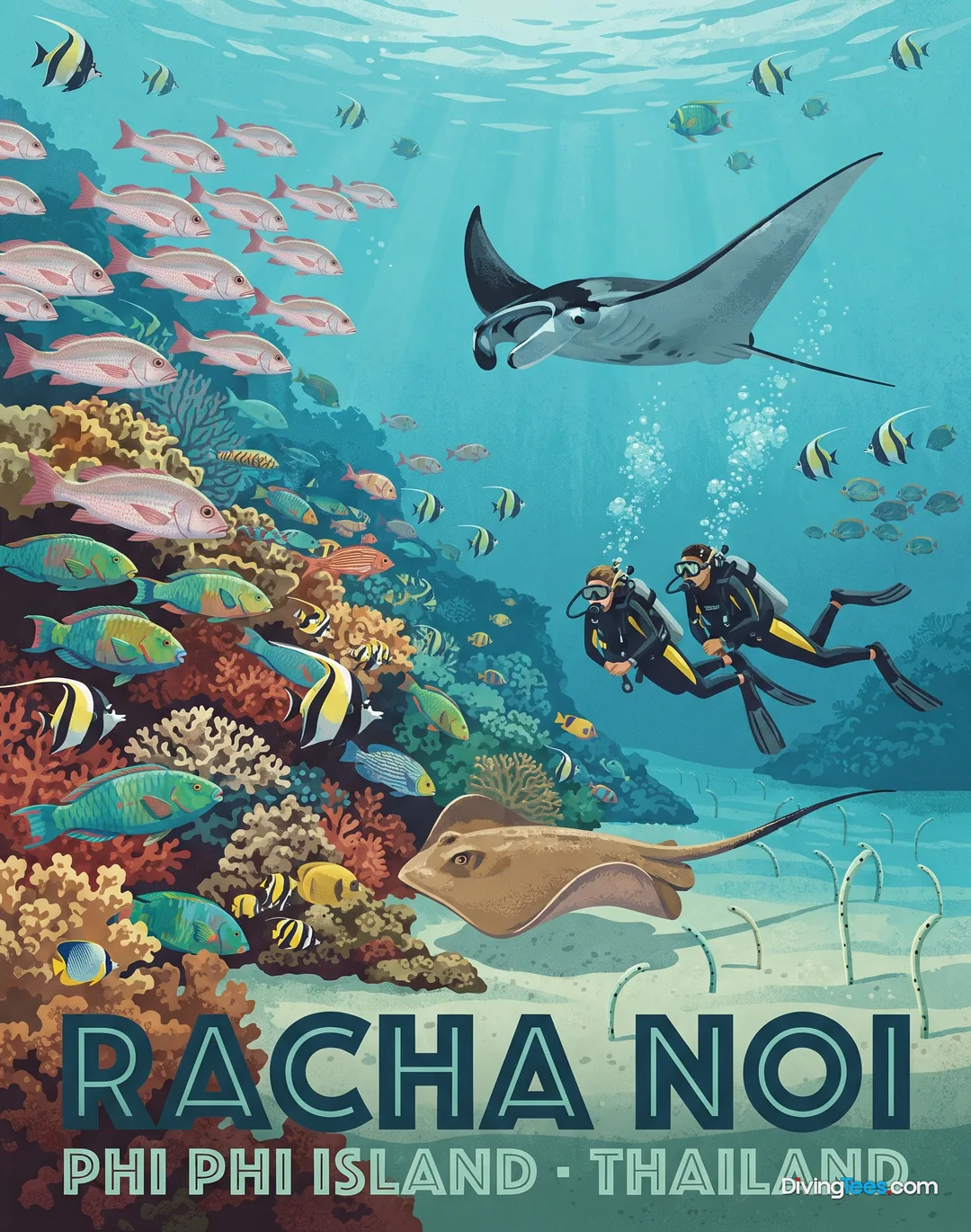
Racha Noi →
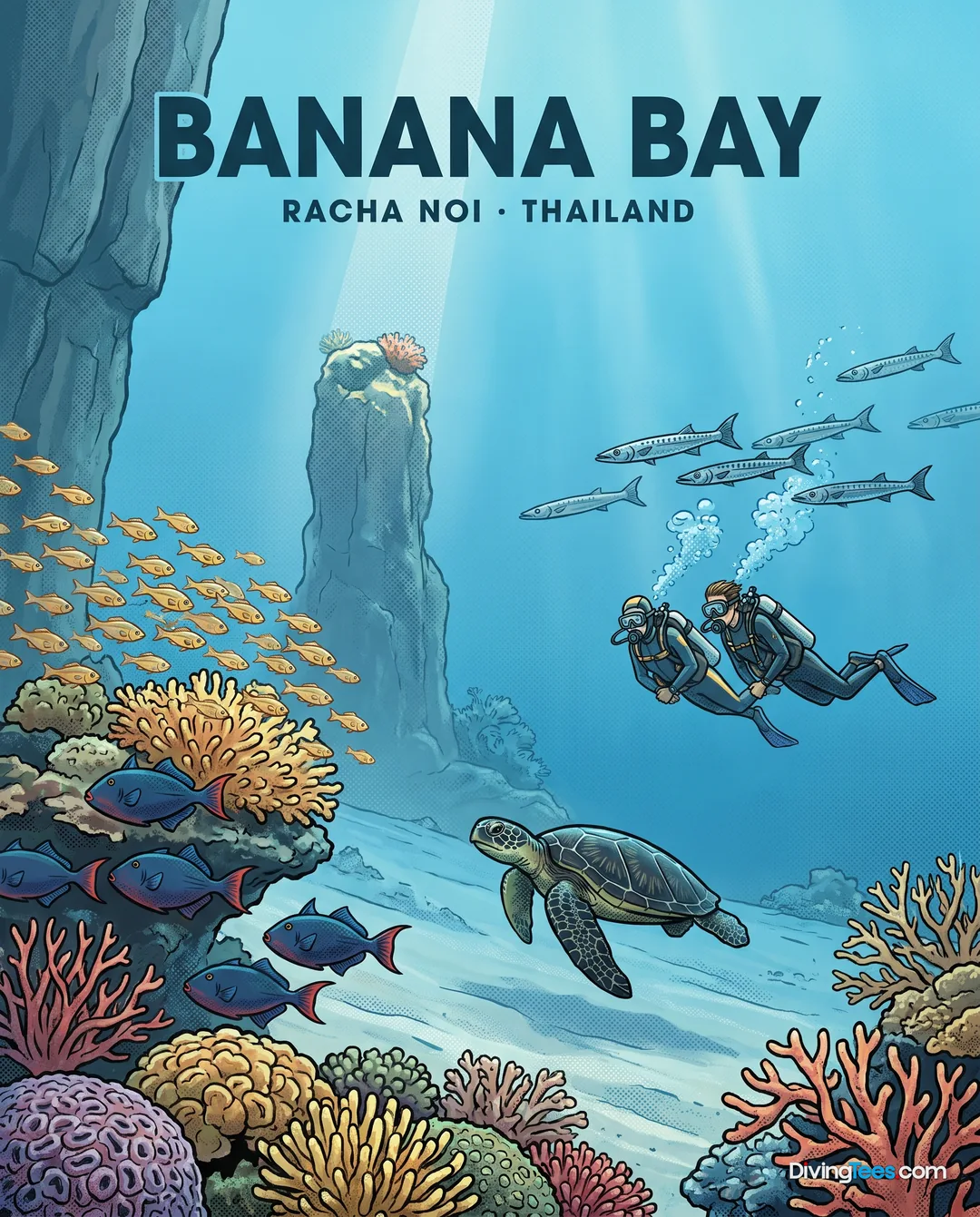
Banana Bay →
Max. depth · 50 m
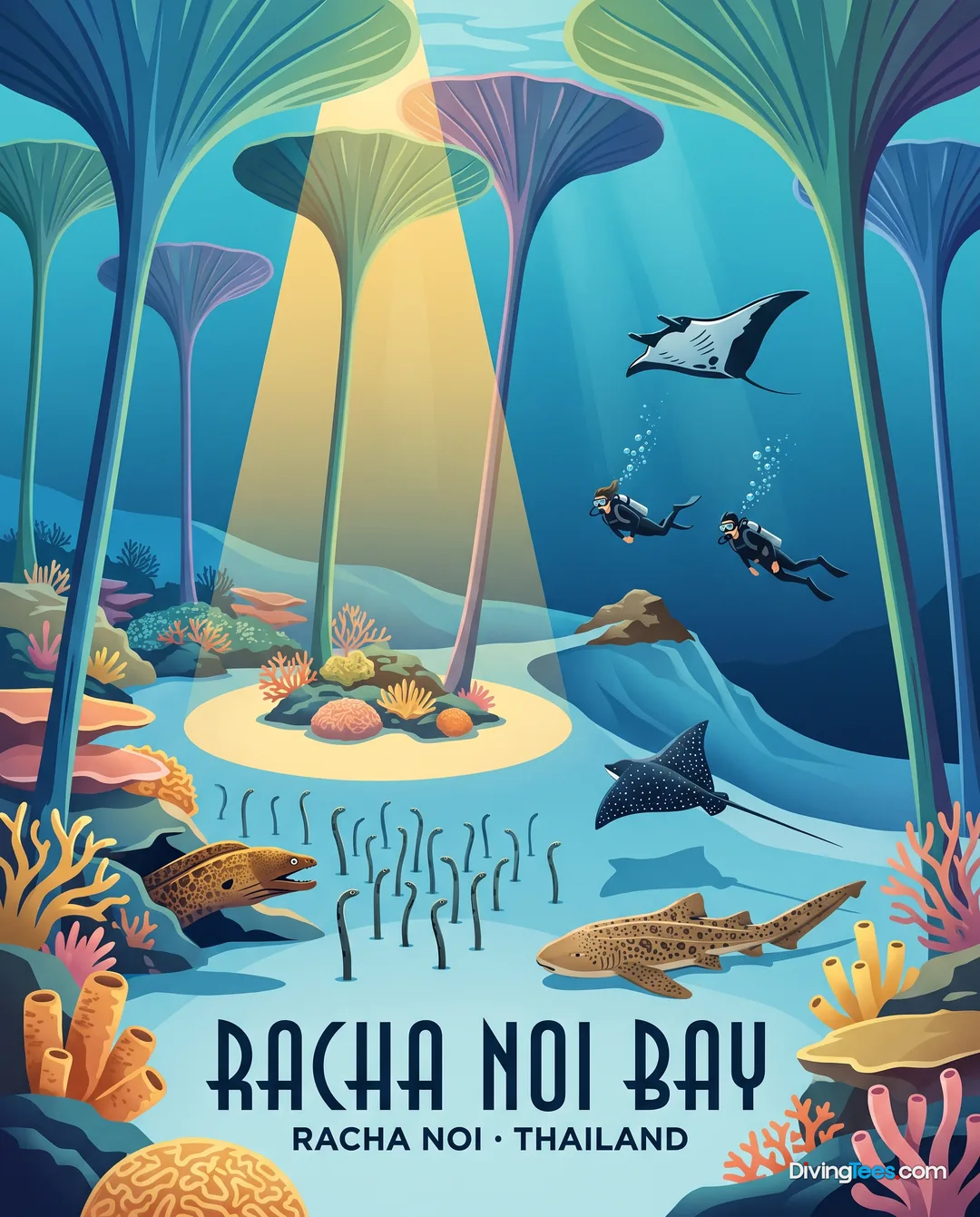
Racha Noi Bay →
Max. depth · 30 m
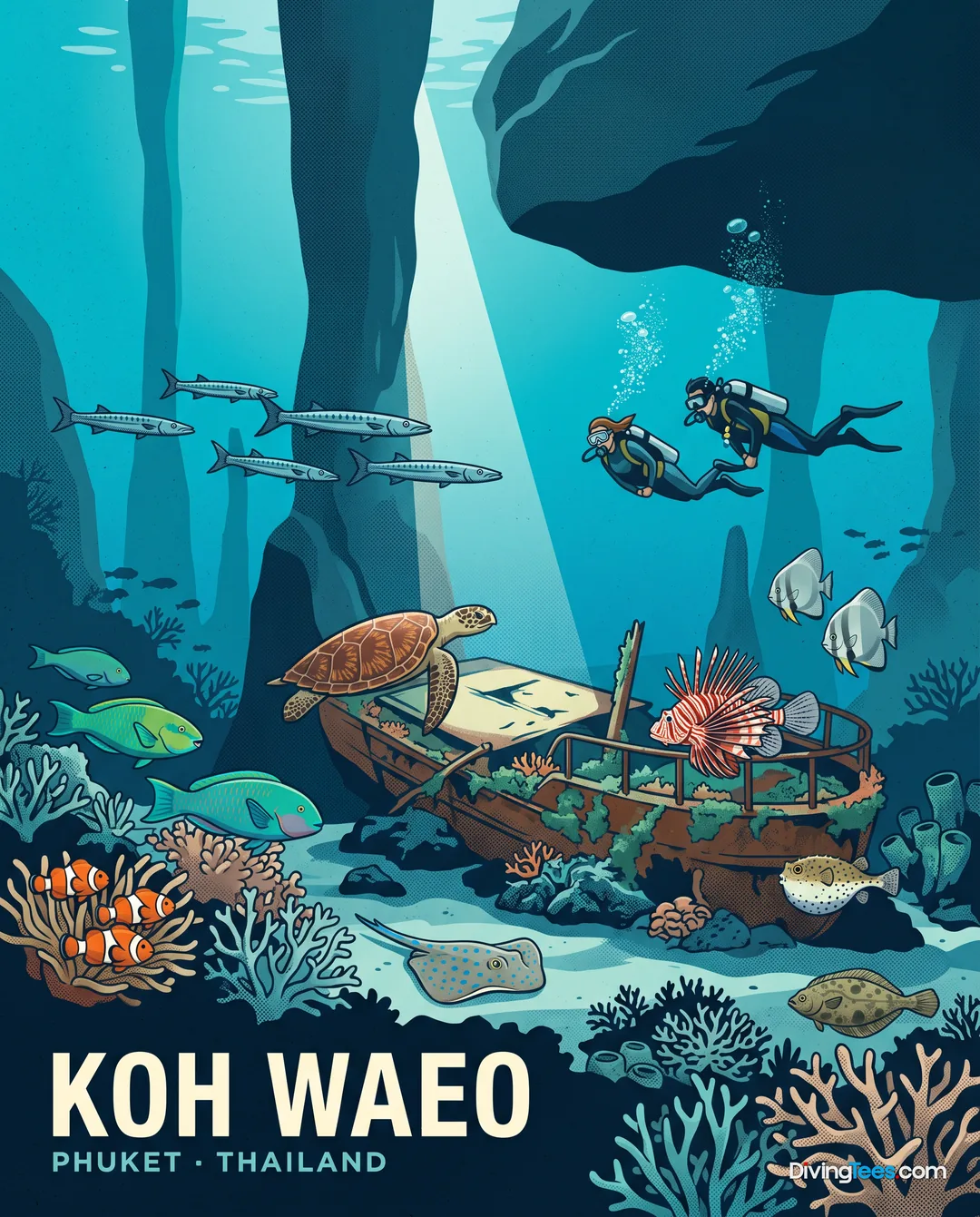
Koh Waeo →
Max. depth · 12 m
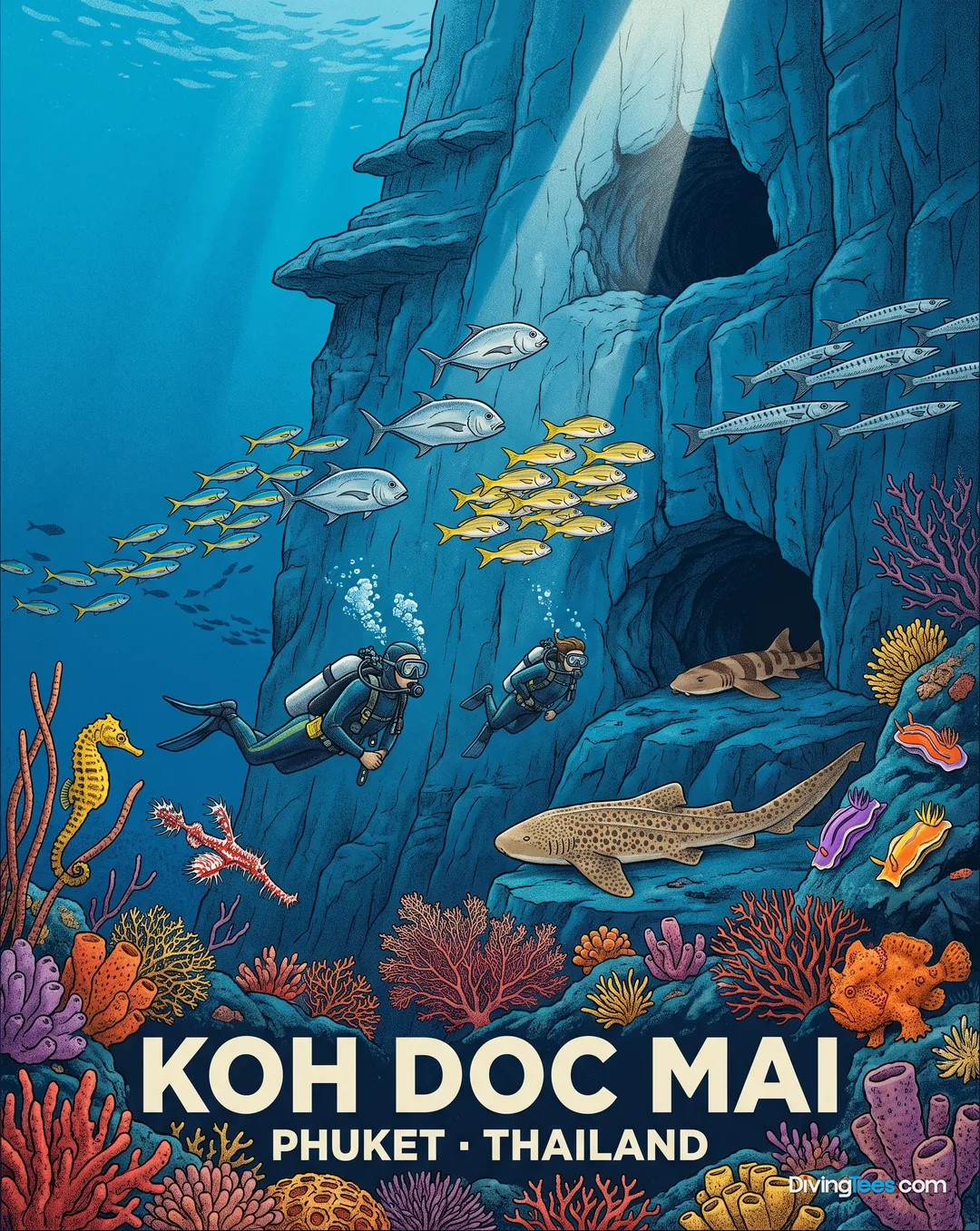
Koh Doc Mai →
Max. depth · 32 m
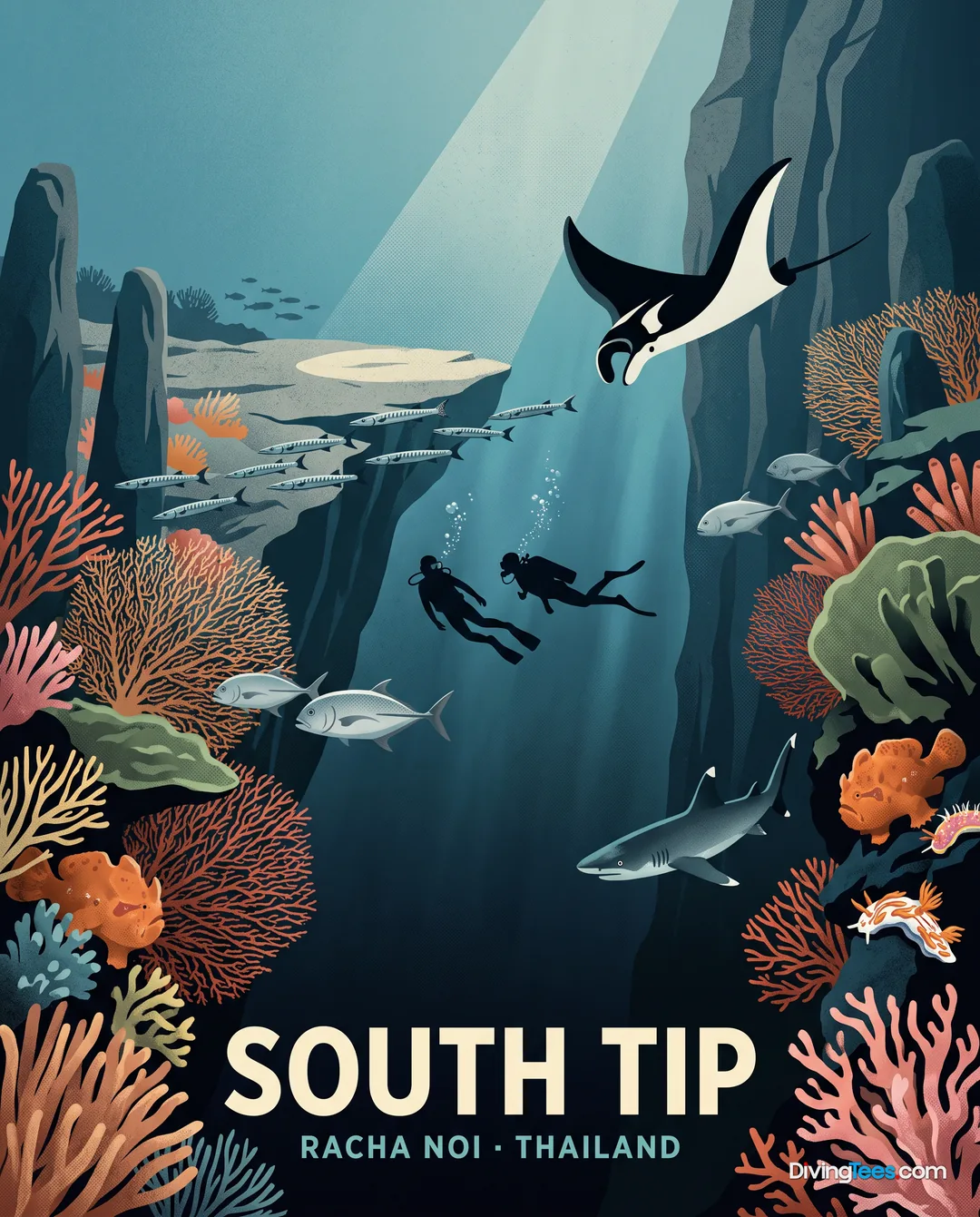
South Tip →
Max. depth · 70 m
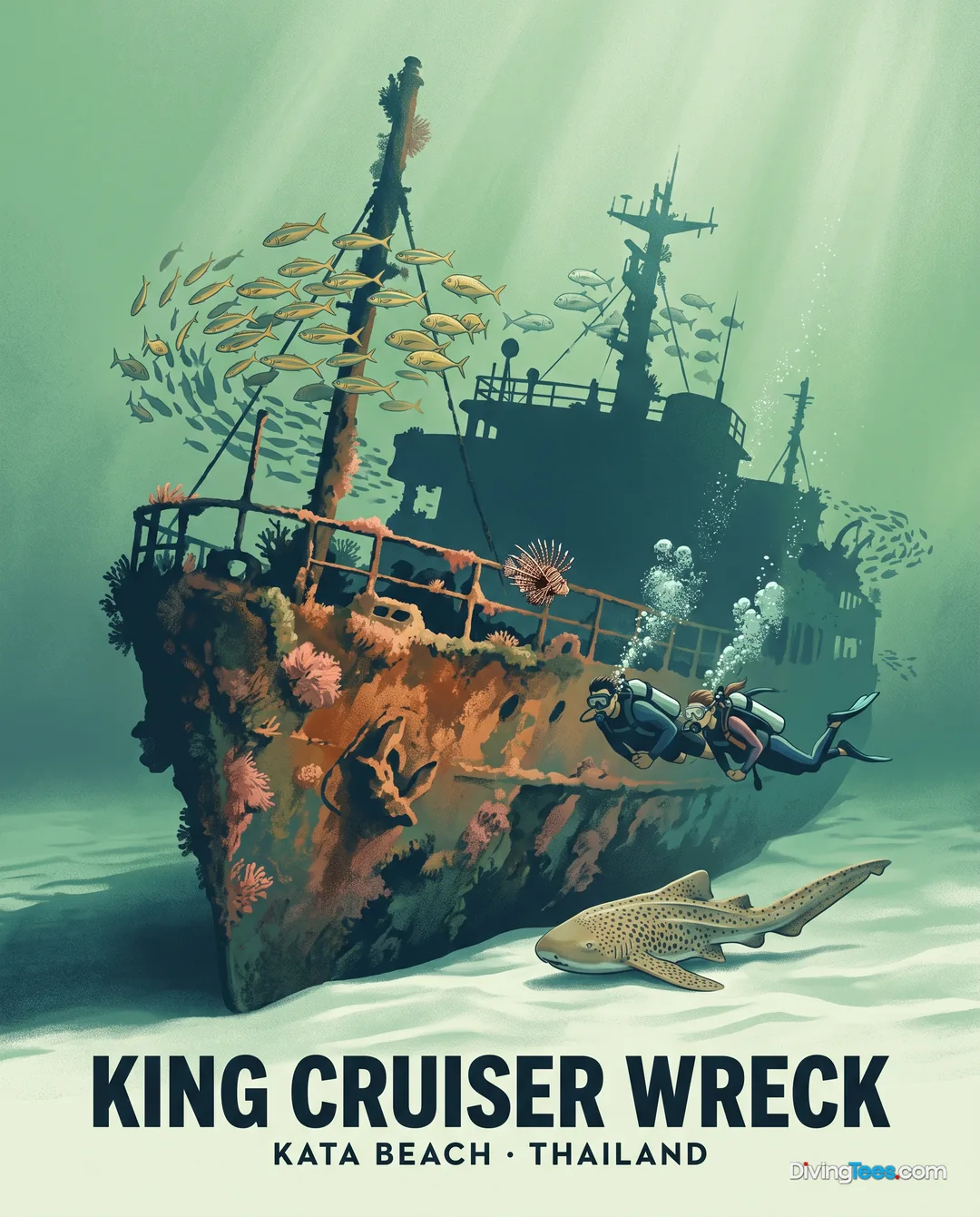
King Cruiser Wreck →
Max. depth · 35 m
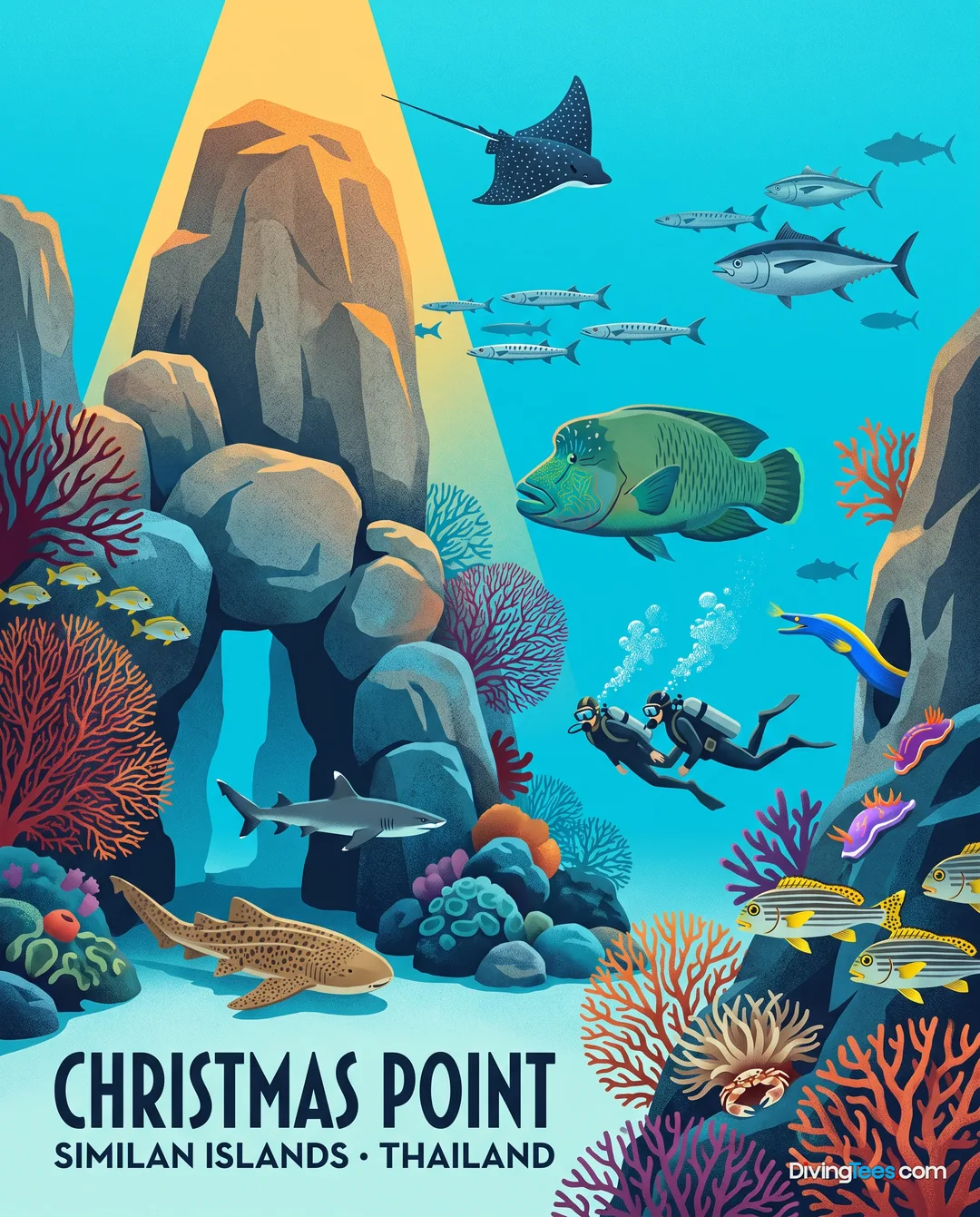
Christmas Point →
Max. depth · 40 m
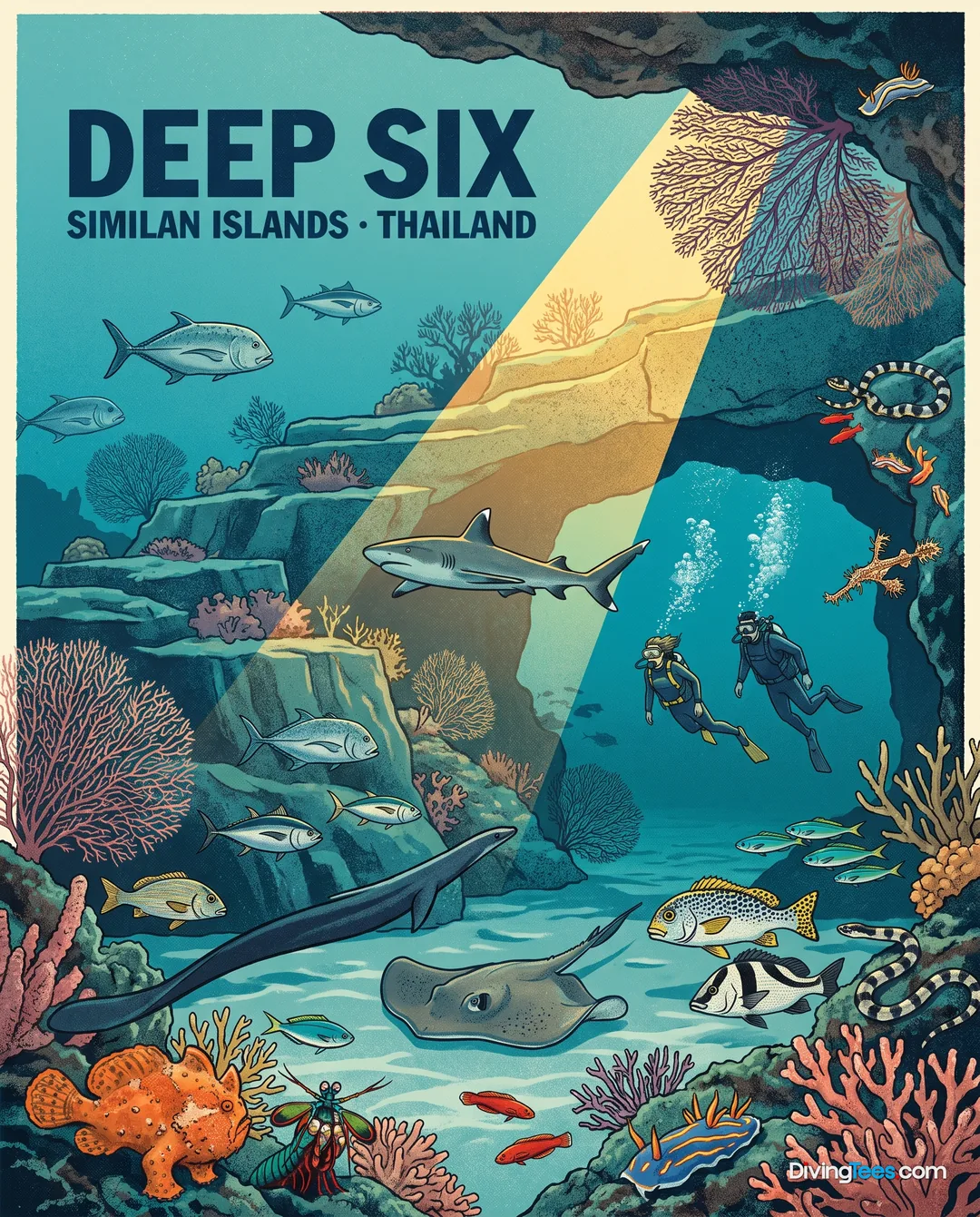
Deep Six →
Max. depth · 50 m
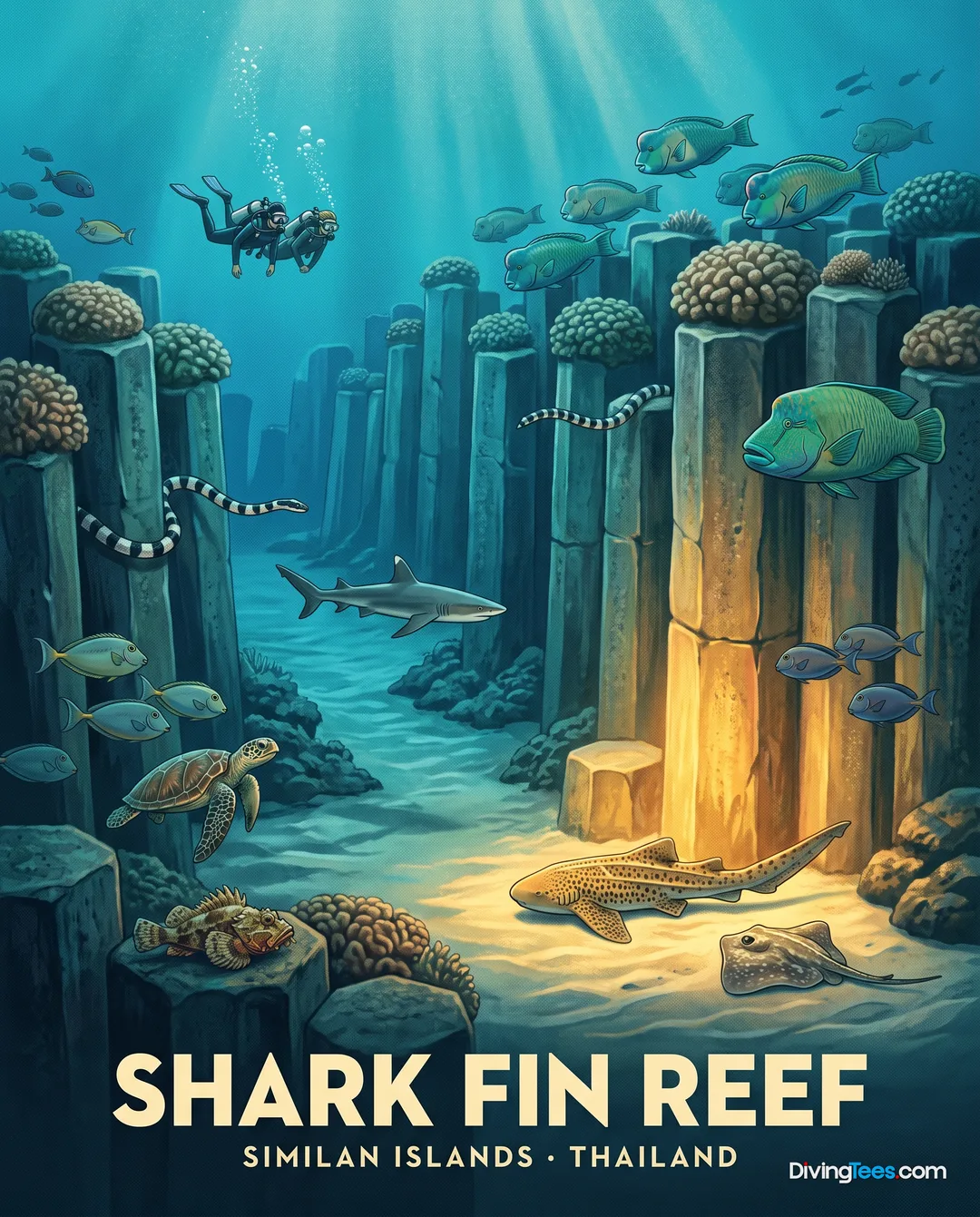
Shark Fin Reef →
Max. depth · 40 m
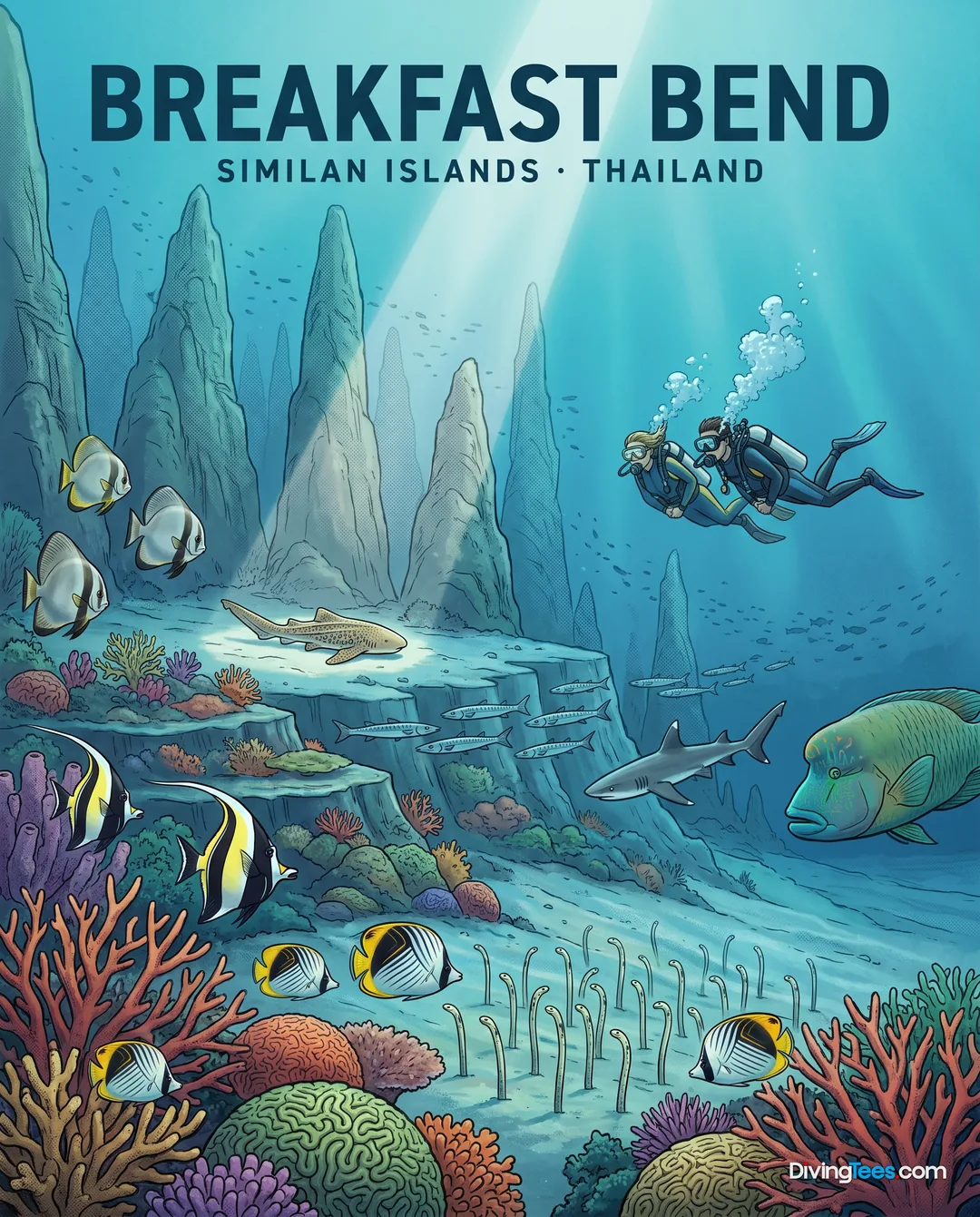
Breakfast Bend →
Max. depth · 35 m
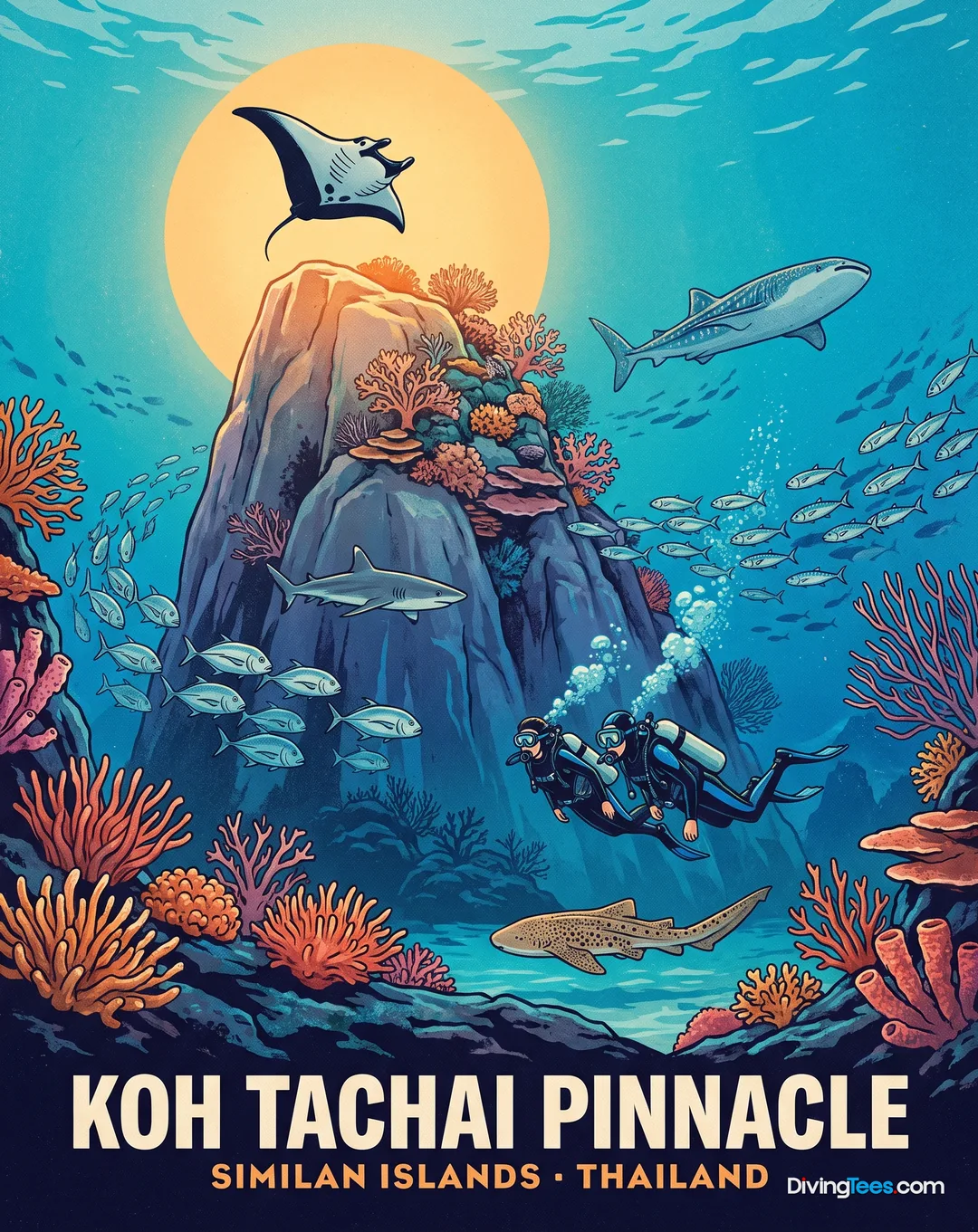
Koh Tachai Pinnacle →
Max. depth · 40 m
What you’ll meet underwater
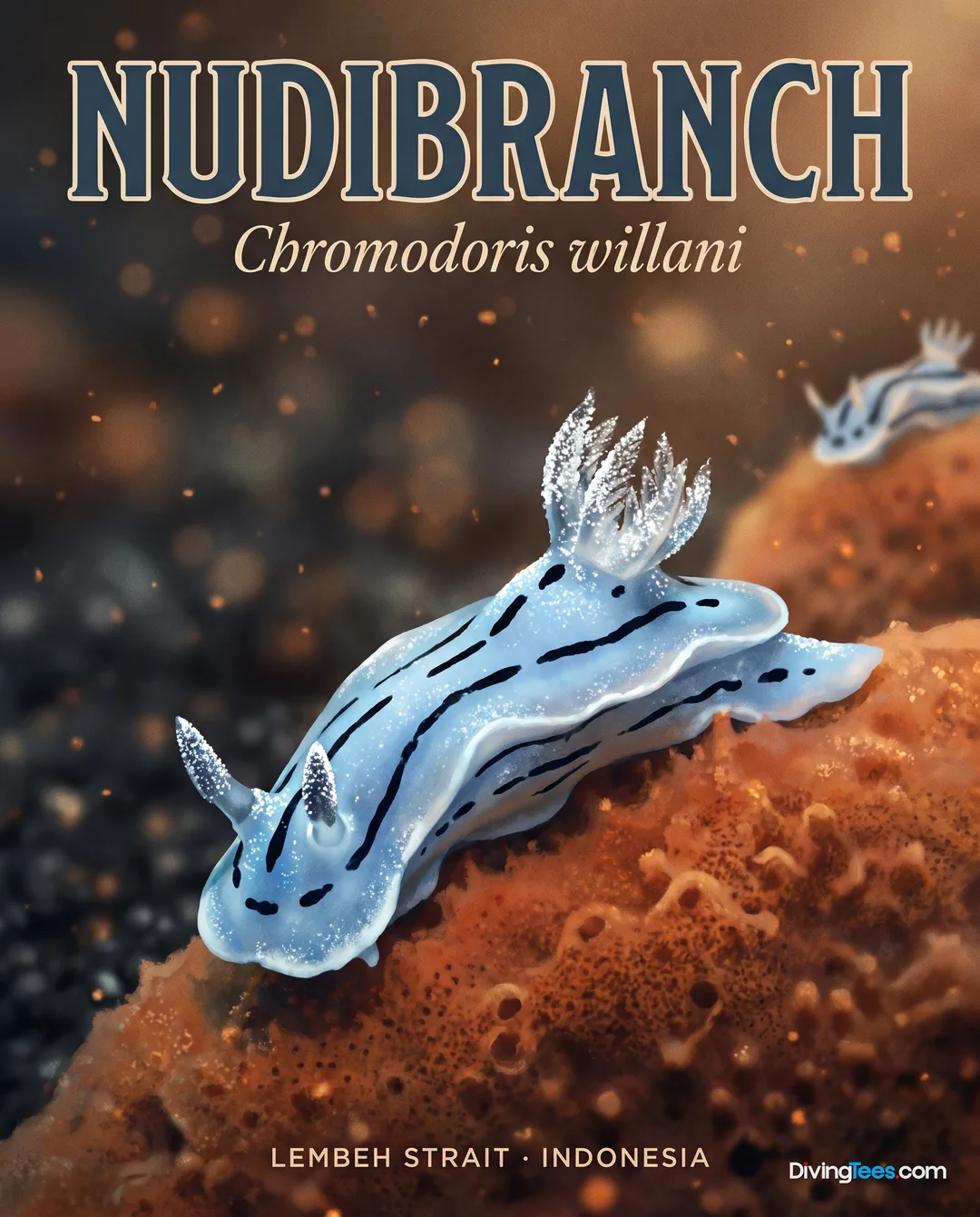
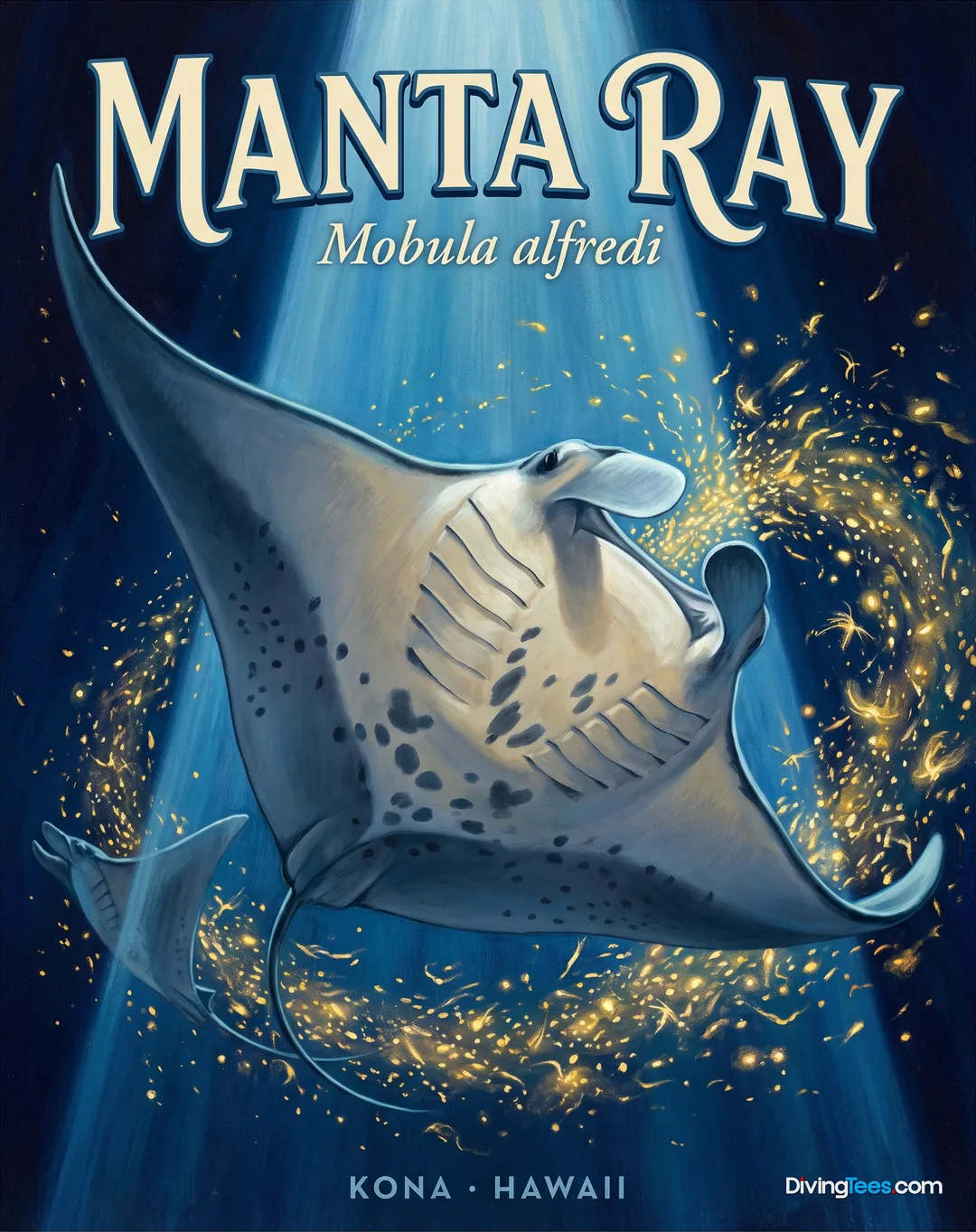
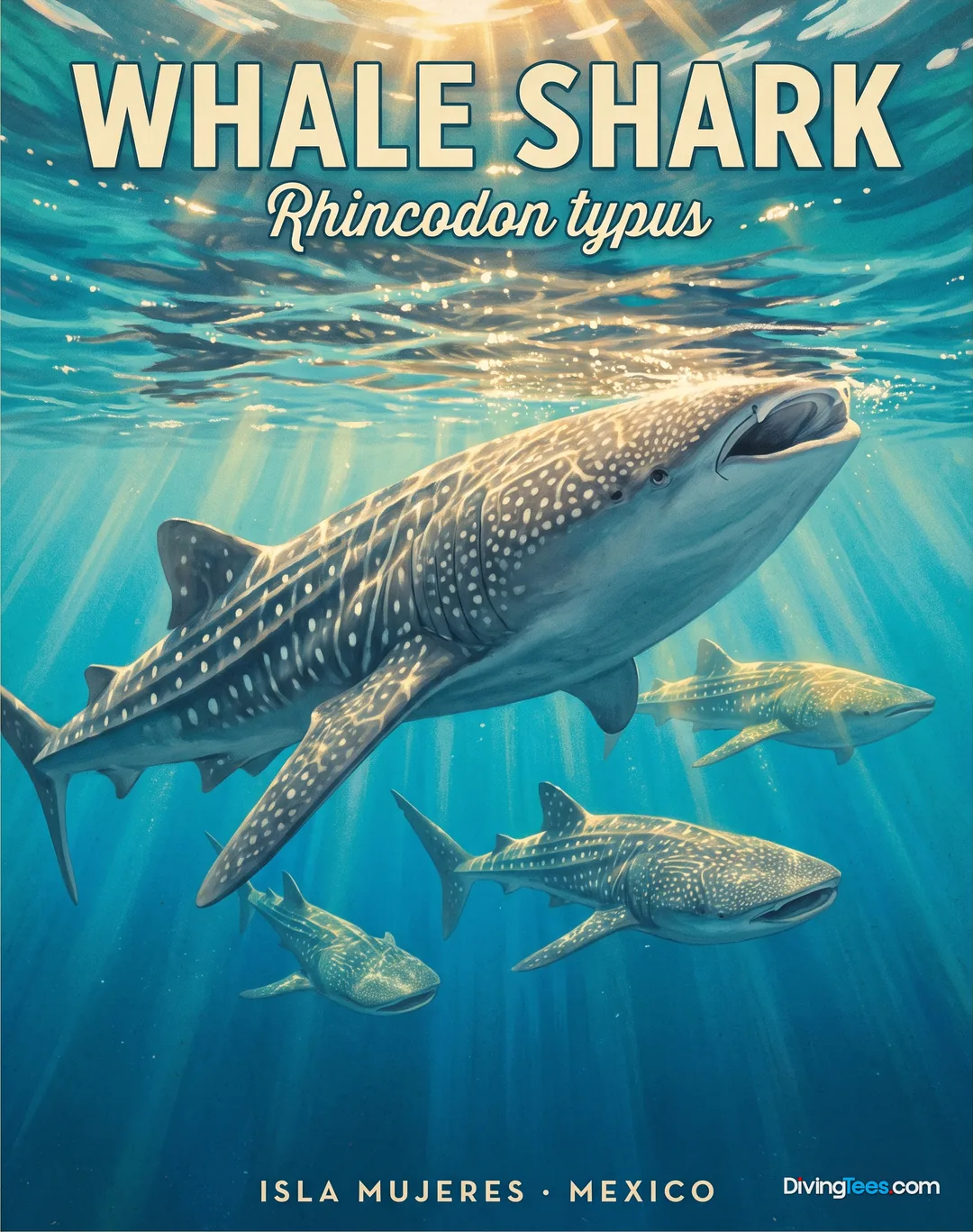
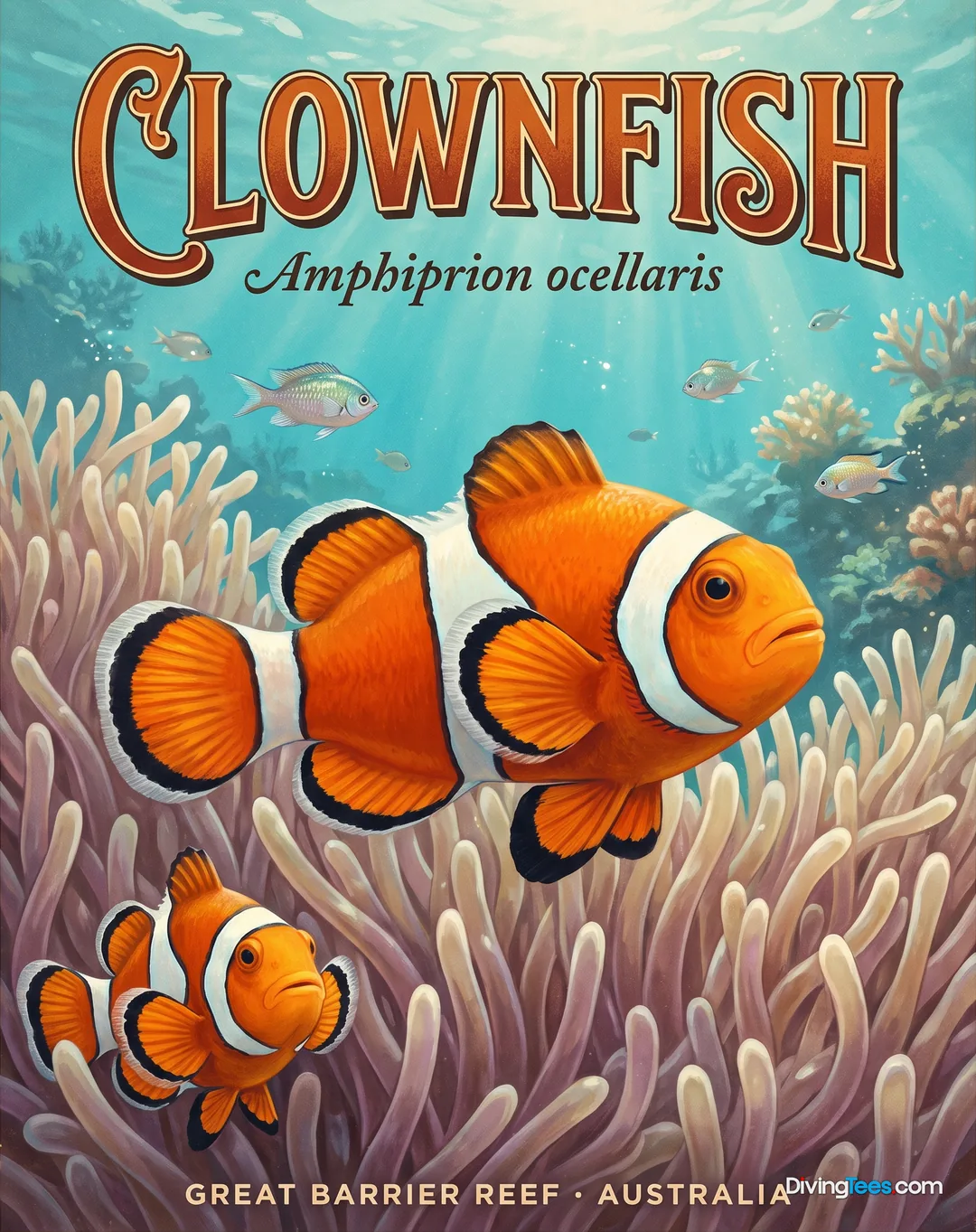
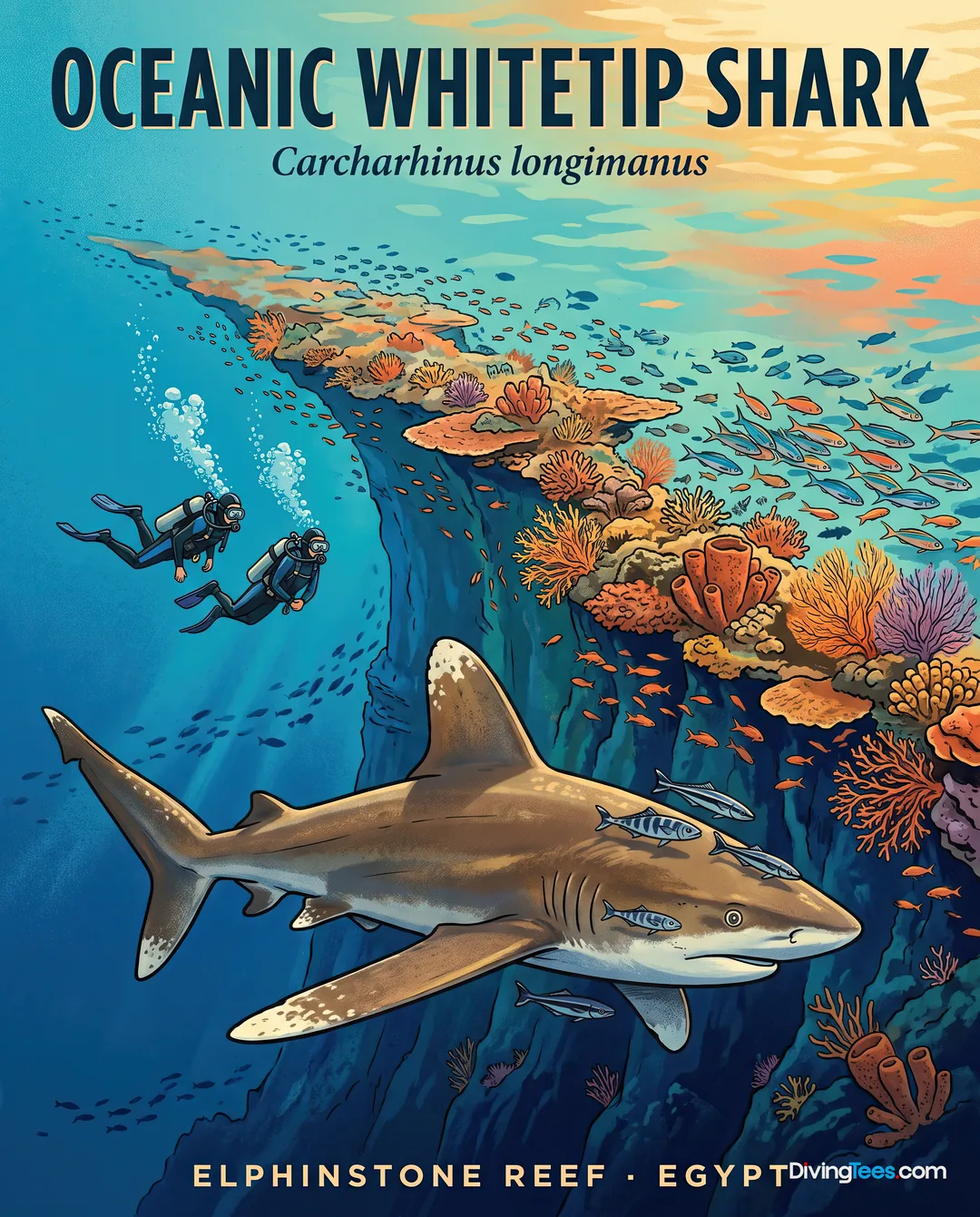
Barracuda, trevally, leopard sharks, sea turtles, white-tip reef sharks, giant morays, nudibranchs, ghost pipefish, octopus, manta rays, whale sharks, tuna and reef sharks form the recurring promise of this route, though sightings remain dependent on conditions. Currents around Racha Noi, South Tip and Koh Tachai Pinnacle can bring larger animals across walls, pinnacles and soft-coral gardens. Mantas may appear seasonally from November to April, but they are never a guarantee. The site-specific encounters are what give the itinerary its sharper edges: the King Cruiser Wreck is the place for anguils and crabs amid schooling fish; Deep Six has blennies; Breakfast Bend has gobies and coachfish; Koh Waeo has clownfish; Banana Bay has porcupinefish; South Tip has surgeonfish and unicornfish; and Koh Tachai Pinnacle is the only listed site for oceanic whitetip sharks, wrasse and boxfish. The large animals draw divers offshore. The small ones reward a slower look at the reef.
Who puts you in the water
English- and Thai-speaking dive professionals provide the briefings and guidance, and PADI Open Water and Advanced Open Water training can be completed onboard. Certified divers need a PADI Open Water Diver qualification or equivalent for the liveaboard diving programme, and the route is also used for divers completing PADI training dives. The dive plan is adjusted to site conditions and diver experience rather than forcing every group onto the same profile. That matters around Racha Noi, where the route includes deeper offshore sites as well as easier areas around Racha Yai. Oxygen, first-aid kits, lifejackets, fire alarms and extinguishers are carried onboard, with radar, sonar, GPS and marine radios supporting navigation and emergency response. No group ratio, logged-dive minimum, defibrillator or recall-system details are stated. Divers should therefore judge their own experience against the planned sites and ask about grouping when booking.
The dive deck and the gear
The dive operation includes tanks and weights, free nitrox, a dedicated diving tender and a proper dive platform. The onboard compressor supports the repeated filling cycle required by a programme of 3+ dives per day, while the tender carries divers to the site and collects them after surfacing. A separate rinse area is reserved for cameras, and the boat has a dedicated camera room, charging stations and an equipment area, so wet dive gear and camera work do not have to compete for the same space. Hot showers are available onboard, including outdoor showers for the return from the water. Rental equipment is an optional extra. Tank volume, tank material, valve configuration, SMB provision, filling system and the tender's passenger arrangement are not stated here, so divers who depend on a particular setup should check those points before departure. The operation's clear strengths are nitrox, space and the separation of diving, camera and transfer functions.
Between dives
Between dives, the boat gives divers several ways to come off the deck without disappearing from the sea. The air-conditioned salon is the place for shade, photos and a break from the heat; the terrace and observation deck keep the horizon open when the weather is kind. A dedicated camera room and separate camera rinse let photographers deal with equipment away from the general wash area. Kayaks, a stand-up paddleboard and snorkeling equipment provide alternatives to another hour on a bunk, while the massage service is there for those who prefer to stay still. The boat also has free Wi-Fi, though the route is better understood through the next briefing than through a screen. The quiet hours are practical: rinse gear, eat, check photographs, sleep, then return to the platform when the boat is ready.
A day on board
A liveaboard day begins before the first meal, with an optional sunrise dive at 07:00 on the longer routes, followed by breakfast at 08:00. The main programme builds around 3+ dives per day, with briefings before each entry and surface intervals filled by food, water, photographs and sleep. Lunch arrives at 12:00, and an optional sunset dive is scheduled for 18:00. At 19:00, the sunset dinner party replaces the usual rush back to shore with a shared evening meal. On the final day, breakfast follows the morning dive, cabins are checked out, and the boat continues its diving programme before the 17:00 speedboat transfer to port. The exact sites move with sea conditions and diver experience. What stays consistent is the useful liveaboard rhythm: wake, brief, dive, eat, rest, dive again, then surface into dinner rather than a hotel transfer.
What you eat aboard
Meals are served buffet-style throughout the multi-day trips, with breakfast, lunch and dinner onboard, fresh fruit, tea and coffee, and snacks during the day. The galley is presented as a hotel-grade kitchen with chef-led menus and Western cuisine, while the table includes a special dinner and a sunset dinner party on the liveaboard routes. That timing suits the diving rather than interrupting it: food appears after the morning work, returns at lunch, and anchors the evening after the final planned dive. Beer and wine are available, while alcoholic and non-alcoholic drinks outside the included tea, coffee and drinking water are optional. The important point is not formal dining for its own sake. After three or more dives, a proper meal, fresh fruit and something cold between briefings are part of the boat's working equipment.
Nights at sea
The cabins sit on the main deck and come in Front Suite, Suite and Deluxe categories. Each has individual air-conditioning, a private en-suite bathroom, a refrigerator, a hair dryer and a cabin safe; the beds and cabin dimensions vary by category. Standard windows and sea-view cabins keep the outside present without turning the room into an open-air space. These are private, climate-controlled rooms for the hours when a diver is too tired to want anything more complicated than a shower, dry clothes and a quiet bunk. The interior has been remodelled for the 2026 season, so the night is shaped more by clean, functional comfort than by the worn fittings found on older liveaboards. The boat also has an air-conditioned indoor lounge, a terrace and an observation deck. The cabins are the retreat; the sea remains the view.
Front Suite Cabin
Suite Cabin
Deluxe Cabin
What to know before boarding
Poseidon departs from and returns to Chalong Pier in Phuket. Hotel pickup and port transfers are included from Kamala, Patong, Karon, Kata, Nai Harn, Rawai and Chalong; the pickup time depends on the location, while airport transfer is an optional extra. Arriving in Phuket the night before is the sensible choice, leaving room for delays before the boat leaves Chalong.
Deck plan
- Year built
- 1993
- Year renovated
- 2026
- Length
- 40 m
- Beam
- 10 m
- Maximum number of passengers
- 50
- Number of cabins
- 13
- Number of bathrooms
- 3
- Engines
- 2680 hp × 2 (MTU Diesel)
- Cruising speed
- 9 - 11 knots
- Tenders
- Suzuki 60 hp
- Website
- poseidonliveaboard.com ↗
Hello, I'm Marina, DivingDeal.com's AI assistant. I answer in detail about hotels, dive centres and liveaboards.

Thinking about the whole trip and the flights? Talk it over with Edith →
Marina is an AI. Some links are affiliate links: DivingDeal may earn a commission, at no extra cost to you. Bookings are made with the partner.