
Big Blue Diving, Koh Tao
Google 5/5 (5,713 reviews)
2.9 km away as the crow flies
Koh Tao · Thailand · Asia
Max. depth · 28 mDescend onto the 45-metre hull of the HTMS Hanhak Sattru, a fast attack craft purpose-sunk in 2023, now hosting schooling jacks, groupers, and fusiliers.
For subtitles in English: start the video firstthen click the gearat the top right of the video, select “Subtitles/CC”, then “Auto-translate” and choose “English”.
The HTMS Hanhak Sattru, hull number 312, is one of Koh Tao's newer wreck sites, purpose-sunk in September 2023 near Mao Bay. This vessel is a fast attack craft, identical in class to the HTMS Suphairin, providing a similar exploration profile for divers familiar with that wreck. You approach a 45-metre long steel hull, sitting upright and slowly being colonized by marine life, an excellent example of how artificial reefs develop over time.
As you descend, the wreck becomes visible, resting on a sandy bottom. The upper deck starts at 12 metres, allowing for a gradual exploration of the superstructure. Below, the main deck lies around 24 metres, with the deepest parts of the wreck reaching 28 metres, a relatively shallow profile for a full wreck penetration. This depth range provides ample bottom time for divers to circumnavigate the vessel and observe its structural features.
Already, the HTMS Hanhak Sattru is proving to be a vibrant habitat. Large schools of snappers and fusiliers often aggregate around the deck and bridge, moving in unison as you approach. You'll regularly find groupers taking shelter within the superstructure, while trevallies, including both smooth-tailed and giant trevallies, patrol the perimeter of the wreck, hunting among the schooling fish.
Focus your attention on the exterior railings and decks, where nudibranchs and other small invertebrates are establishing themselves, adding intricate details to the developing ecosystem. Look into the shaded areas and crevices for moray eels, which have already begun to inhabit the wreck's many nooks. Batfish are also commonly spotted, often hovering in small groups around the more sheltered sections of the vessel.
This wreck offers a different experience compared to older, more heavily encrusted sites. Its relative newness means that the original structures of the fast attack craft are still clearly discernible, offering a unique opportunity to study the design of a military vessel in detail. The interaction between the clean lines of the ship and the nascent marine growth creates a dynamic and evolving underwater landscape.
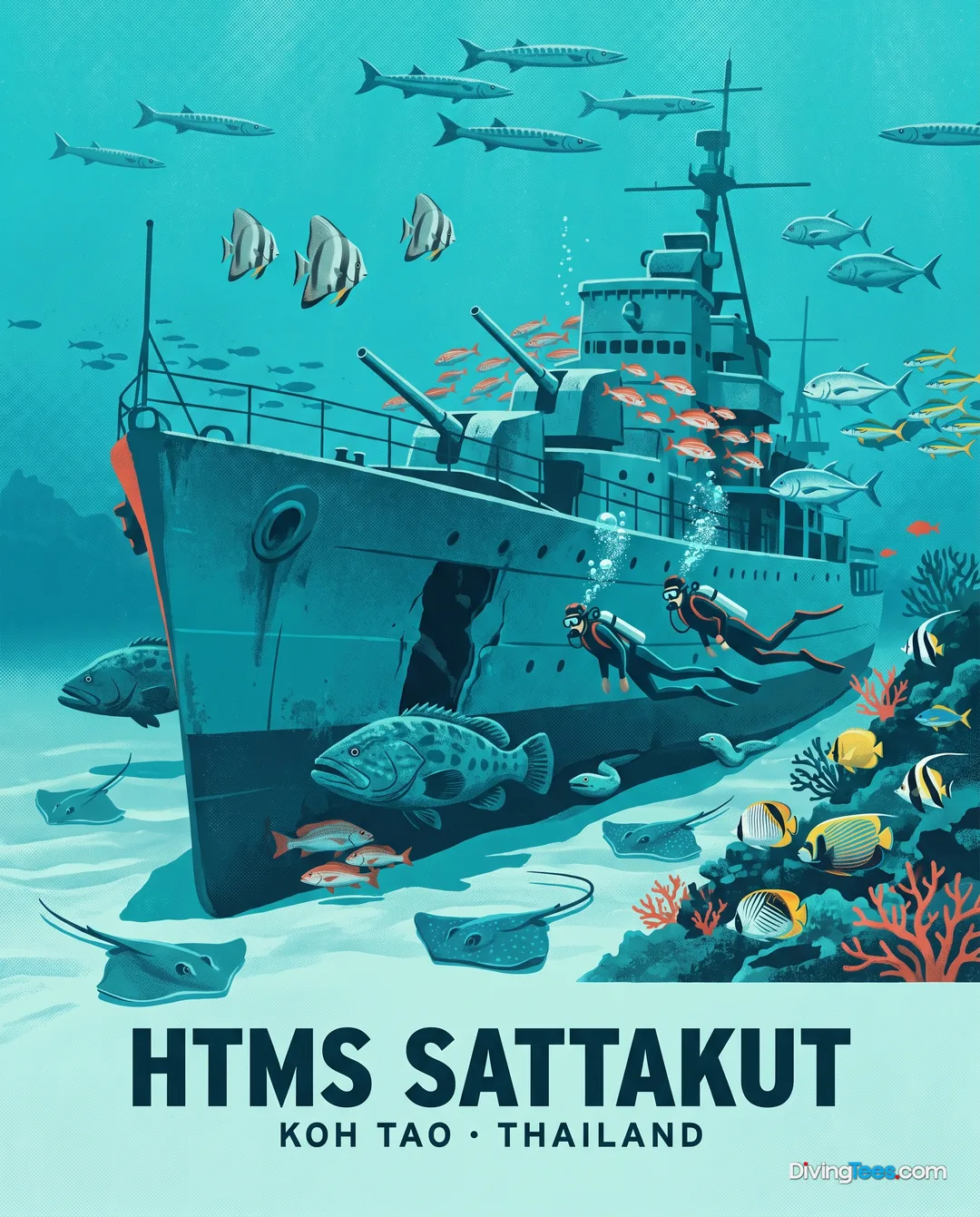
Exploring the HTMS Hanhak Sattru provides insight into the early stages of artificial reef formation. While not yet as adorned with soft corals and sponges as older wrecks, the rapid colonization by fish and invertebrates demonstrates the resilience of marine life. This site perfectly complements the other wrecks in the area, like the HTMS Suphairin, HTMS Sattakut, and MV Trident, enriching Koh Tao’s reputation as an emerging wreck diving destination.
The HTMS Hanhak Sattru offers dives between 12 metres and 28 metres. Given the potential depth and exposure, an Advanced Open Water certification is recommended. Visibility here typically ranges from 10 to 30 metres, providing clear views of the wreck and its marine life. The best conditions for diving this site are generally between March and September, coinciding with the drier season.
The best conditions for diving HTMS Hanhak Sattru are generally between March and September, during Koh Tao’s drier season. Visibility typically ranges from 10 to 30 metres, providing clear views of the recently scuttled wreck, its structure, and the marine life beginning to colonize this artificial reef.
An Advanced Open Water certification is recommended for HTMS Hanhak Sattru because the wreck reaches depths of 28 metres and offers exposure across its structure. The upper deck begins at 12 metres, while the main deck lies around 24 metres, allowing you to explore its upright profile at different depths.
HTMS Hanhak Sattru offers diving between 12 and 28 metres. The upper deck starts at 12 metres, the main deck lies around 24 metres, and the deepest parts reach 28 metres. The vessel rests upright on a sandy bottom, allowing you to circumnavigate the wreck and examine its structural features.
At HTMS Hanhak Sattru, you can see schools of snappers and fusiliers around the deck and bridge, with groupers sheltering in the superstructure. Trevallies patrol the perimeter, while nudibranchs, moray eels, and batfish occupy railings, crevices, and sheltered sections of this developing artificial reef.