
Big Blue Diving, Koh Tao
Google 5/5 (5,713 reviews)
3.6 km away as the crow flies
Koh Tao · Thailand · Asia
Max. depth · 32 mDescend into Green Rock's intricate system of underwater passages and boulders, a dynamic site where buoyancy control is key.
For subtitles in English: start the video firstthen click the gearat the top right of the video, select “Subtitles/CC”, then “Auto-translate” and choose “English”.
Green Rock, located off the northwest coast of Koh Nang Yuan, presents itself as a complex underwater landscape built from large granite boulders and rock formations. The primary feature of the site is its series of natural passages, arches, and small caves, inviting divers to navigate through these tight spaces. This topography creates a challenging yet rewarding dive profile, where attention to buoyancy and trim is rewarded with unique perspectives.
The dive typically begins with a descent onto the main rock formation, which starts around 5 meters below the surface. From there, the site slopes down to a sandy bottom at approximately 32 meters at its deepest point. Traversing these depths means moving between sunlit shallows and the dimmer, more enclosed environments of the swim-throughs. The north-western side extends further with a sequence of scattered rocks leading to the deeper sections.
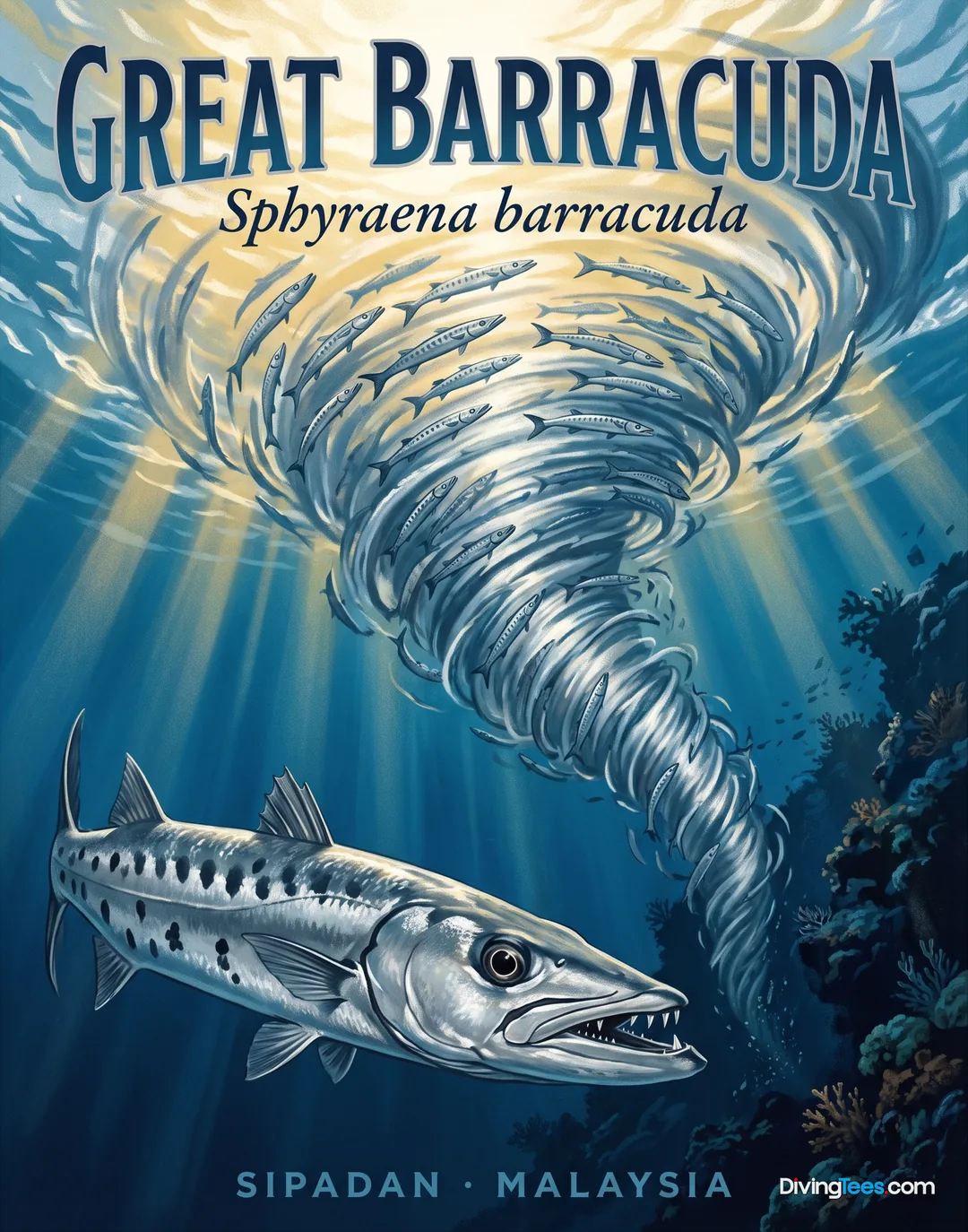
A significant draw to Green Rock is its resident marine life, particularly the barracudas and moray eels. Schools of yellow-tail barracudas (Sphyraena flavicauda) are often encountered aggregating in numbers, while various species of moray eels (Muraenidae) can be seen tucked into the crevices and under ledges. These larger residents move through the site's structure, offering dynamic encounters as you navigate the corridors.
The site also hosts an array of smaller organisms that thrive within the sheltered areas of the rocks and passages. Look for cleaner shrimps (Stenopus hispidus) and Durban dancing shrimps (Rhynchocinetes durbanensis) within the caves, often found at cleaning stations. An impressive variety of nudibranchs (Nudibranchia) also inhabit the rocks, showcasing vibrant colours and intricate patterns for those willing to look closely.
One cannot dive Green Rock without acknowledging the presence of triggerfish (Balistidae), particularly the Goliath or Titan triggerfish (Balistoides viridescens). These territorial fish are a known characteristic of the site. While generally calm, they can become defensive, especially during nesting season (typically April-May), making it prudent to maintain a respectful distance if you observe signs of aggression near a sandy patch.
The geological composition of Green Rock, with its numerous granite blocks, fosters a diverse invertebrate ecosystem. Giant soft coral fans root themselves on the rock faces, and brightly colored sponges (Porifera) add splashes of colour to the deeper sections. This combination of structural complexity and varied fauna makes each dive a distinct experience, as currents and ambient light shift throughout the day.
Moving through the site’s topography, you'll encounter sections with vibrant corals, particularly along the shallower edges closer to Koh Nang Yuan. Beyond the main rock system, the “Trigger Pit” on the northern side is a notable sandy area. Here, numerous triggerfish establish their nests, highlighting the importance of situational awareness, particularly during breeding periods when they are more protective.
Green Rock is best suited for intermediate and experienced divers due to potentially strong and variable currents. Certification at the Advanced Open Water Diver level is recommended. Depths range from a minimum of 5 meters down to 32 meters. Visibility generally sits between 10 and 20 meters. While currents can be strong, particularly on tide changes, the site offers a challenging and rewarding dive experience year-round, outside of the monsoon season in November.
You can dive Green Rock year-round outside the monsoon season in November. Conditions can change as currents shift throughout the day, and currents may become particularly strong during tide changes. Visibility generally ranges from 10 to 20 meters, helping you plan for changing light and flow across the rock formations.
Green Rock is best suited to intermediate and experienced divers because currents can be strong and variable. Advanced Open Water Diver certification is recommended. The site also offers a useful setting for refining buoyancy, trim, and navigation skills while moving through passages, arches, and small caves.
Green Rock starts at about 5 meters below the surface and slopes to a sandy bottom at approximately 32 meters. You should expect potentially strong, variable currents, particularly during tide changes. Currents and ambient light can shift throughout the day, creating changing conditions across the rock system.
At Green Rock, you can encounter schools of yellow-tail barracudas and moray eels tucked into crevices and beneath ledges. Sheltered areas contain nudibranchs, cleaner shrimps, and Durban dancing shrimps. You may also see Titan triggerfish, giant soft coral fans, colorful sponge formations, and vibrant corals along shallower edges.