Liveaboards · Thailand
Mandarin Queen 9: a modern, dive-first Andaman liveaboard
What makes this boat unique
- Mandarin Queen 9 was built in 2023 and renovated in 2024.
- The North Andaman route runs from Thap Lamu to Thap Lamu over 5 days and 4 nights, with 15 dives.
- Free nitrox is provided for the 15 scheduled dives.
- The boat has 13 en-suite cabins for up to 26 passengers, with sea-view cabins on the upper decks and windowless cabins below.
- A jacuzzi, gaming zone and separate camera room make the boat suitable for divers who want comfort between dives.
For subtitles in English: start the video firstthen click the gearat the top right of the video, select “Subtitles/CC”, then “Auto-translate” and choose “English”.
The invitation
Mandarin Queen 9 suits divers who want a new boat, a high dive count and a practical North Andaman route rather than a small, old-style liveaboard. The trip links the Similan Islands, Koh Bon, Koh Tachai, Surin Island and Richelieu Rock in one 5-day, 4-night circuit from Thap Lamu. Fifteen dives are planned, with nitrox included for those dives. That changes the value of the trip for anyone comfortable with repetitive diving. The boat also works for a mixed group: non-divers and snorkelers are welcome, while the jacuzzi, gaming zone, indoor lounges and camera room give surface intervals a clear purpose. Come aboard for the sites first. The comfort is what makes the repeated entries, exits and equipment changes easier to live with.
Boarding
From the dock, Mandarin Queen 9 presents as a large, purpose-built steel liveaboard rather than a converted fishing boat. The hull was launched in 2023 and the boat was renovated in 2024, so the impression is clean and current rather than worn or improvised. Inside, several decks divide the sleeping areas, saloon, dining spaces and sun deck without making the boat feel like one long corridor. The main and upper decks provide the social centre of the trip; the lower deck is where some cabins are located. A spacious dive platform sits at the stern, with two tenders ready for site access. The useful detail is the separation of spaces: wet equipment stays close to the water, cameras have their own work area, and the saloon gives divers somewhere air-conditioned to sit when the sun is too strong.
The atmosphere on board
The people are the strongest part of the experience. The crew speaks English, Thai and Chinese, and the operation is local and international rather than tied to one language or one kind of traveller. Crew feedback is notably stronger than the boat’s already solid hardware, while food and diving also receive very high marks. That points to a trip where small practical questions get answered quickly: where to leave wet gear, how to regroup after surfacing, when the next briefing starts, and what to do with a camera after a dive. Evenings can be lively, especially for groups looking for a party night, with the saloon’s audio-video setup and gaming zone available after dinner. The atmosphere is social without requiring everyone to dive at the same pace. A naturalist guide adds another layer for guests who want help reading the reef rather than only following a route.
The sites you’ll dive
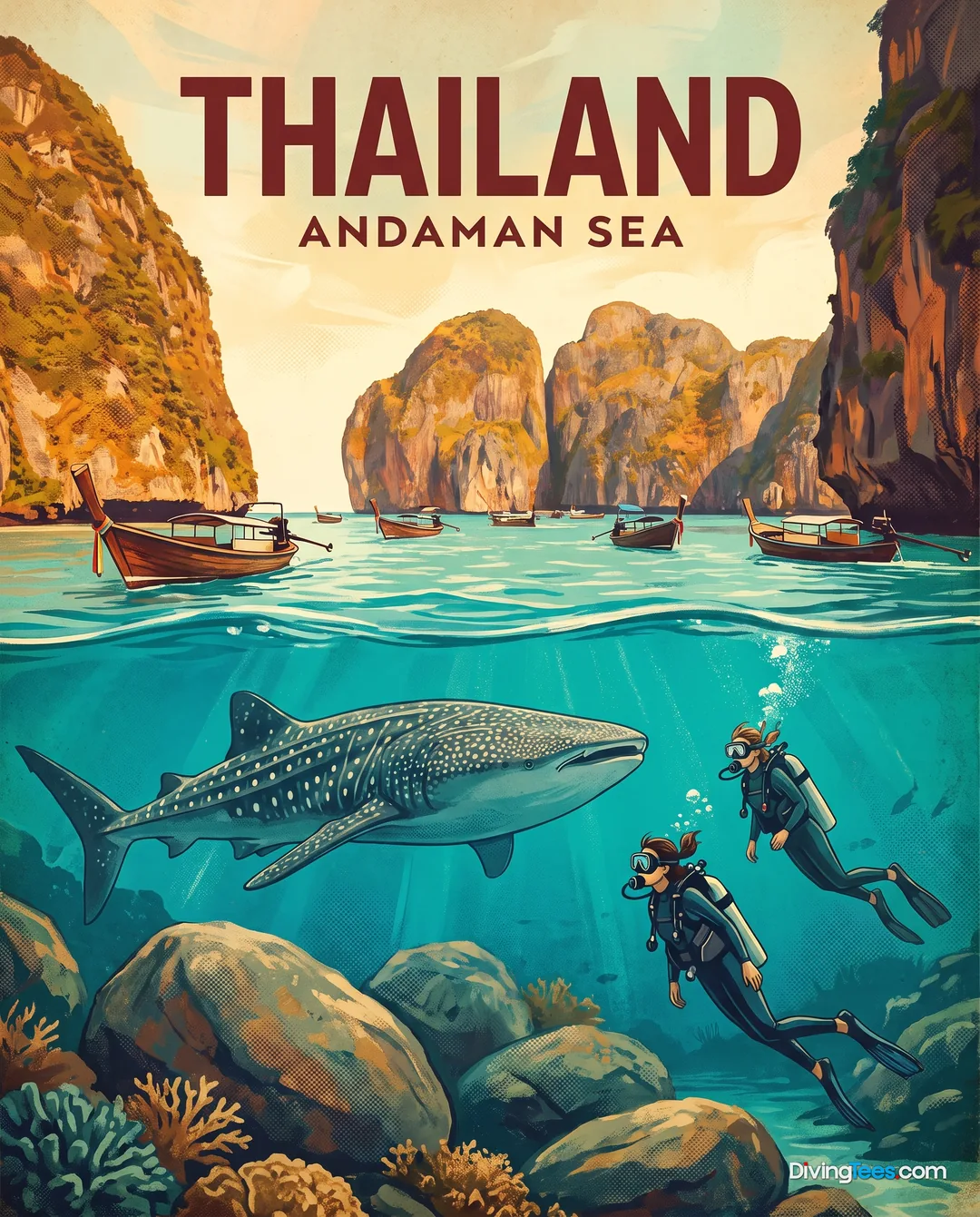
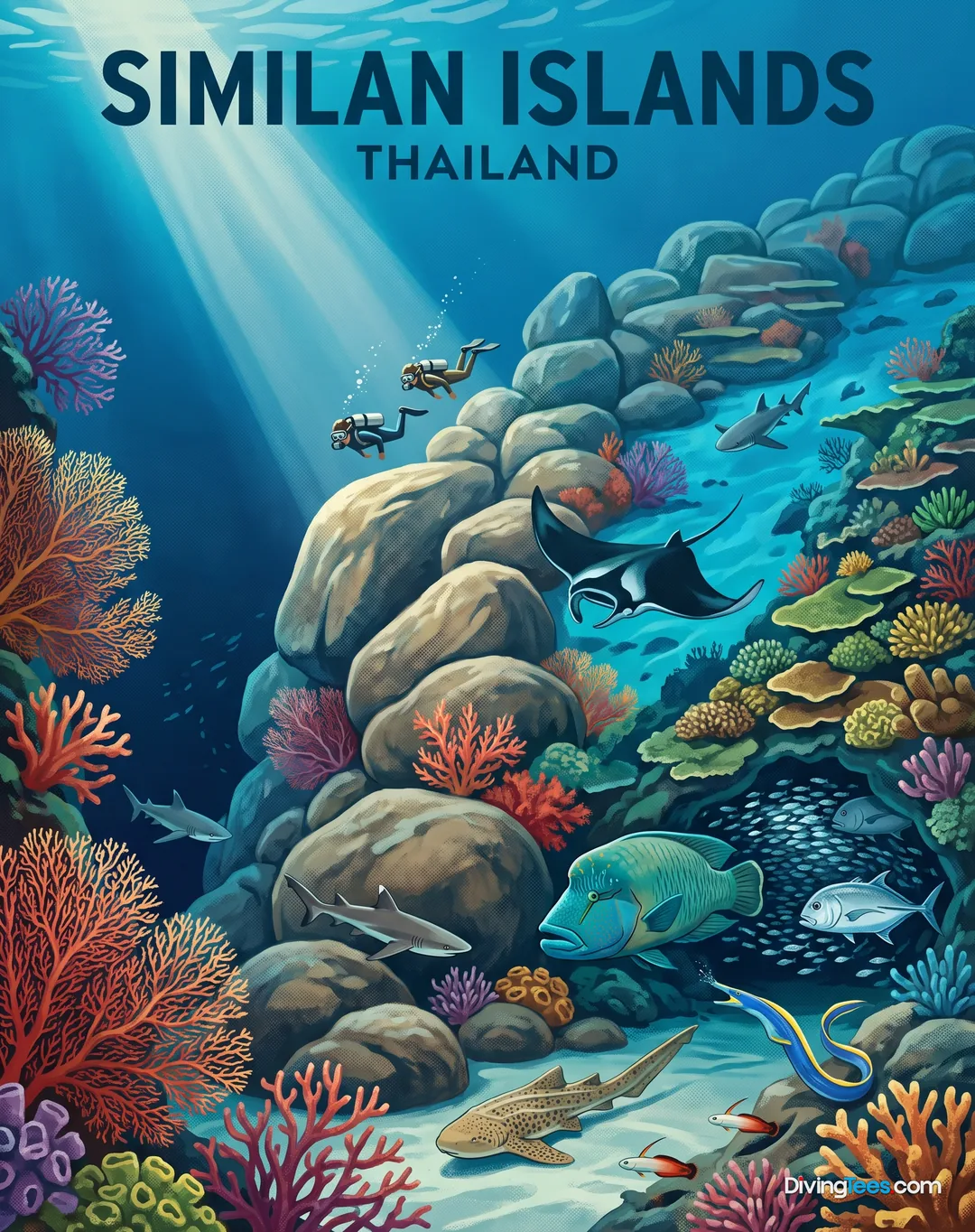
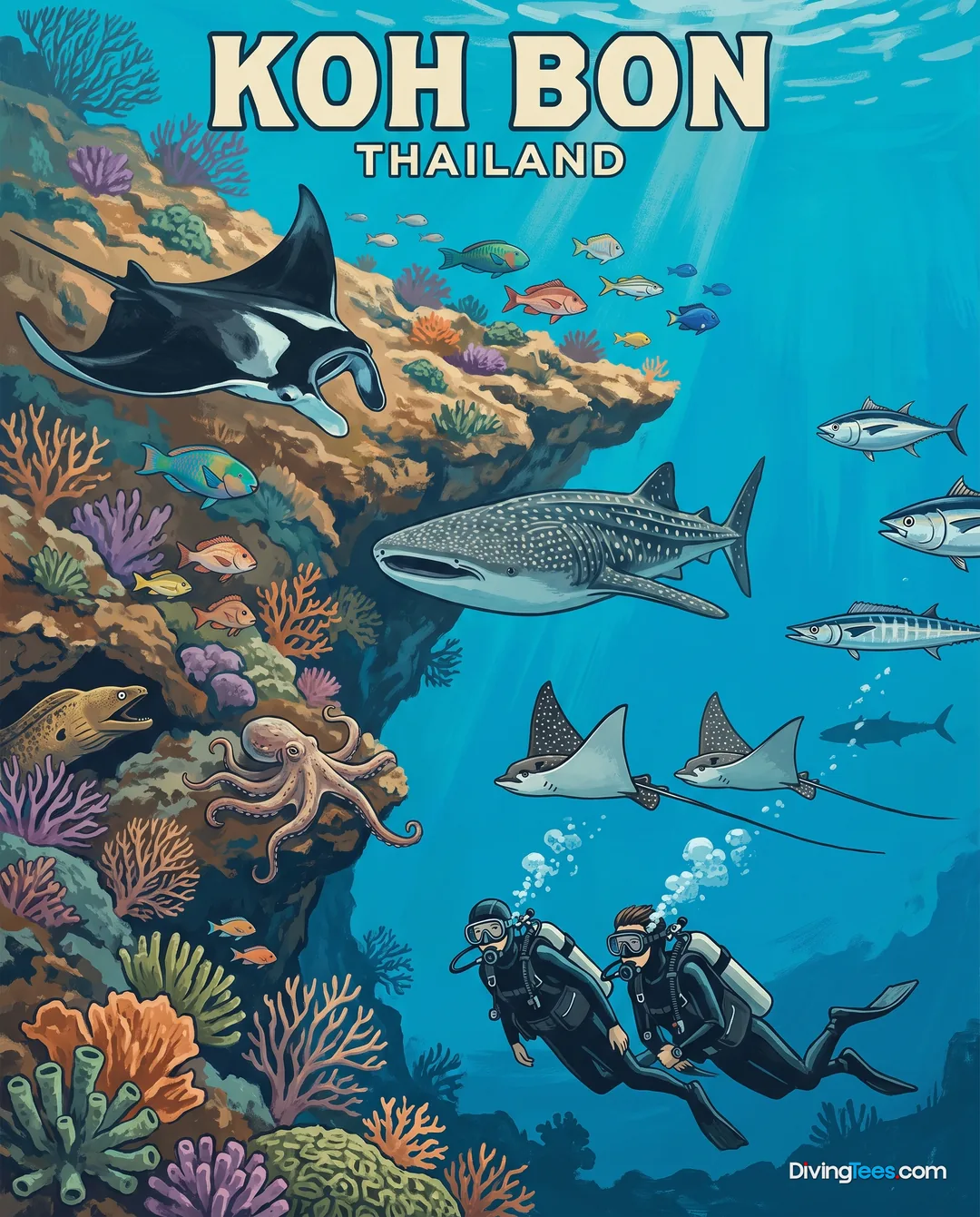
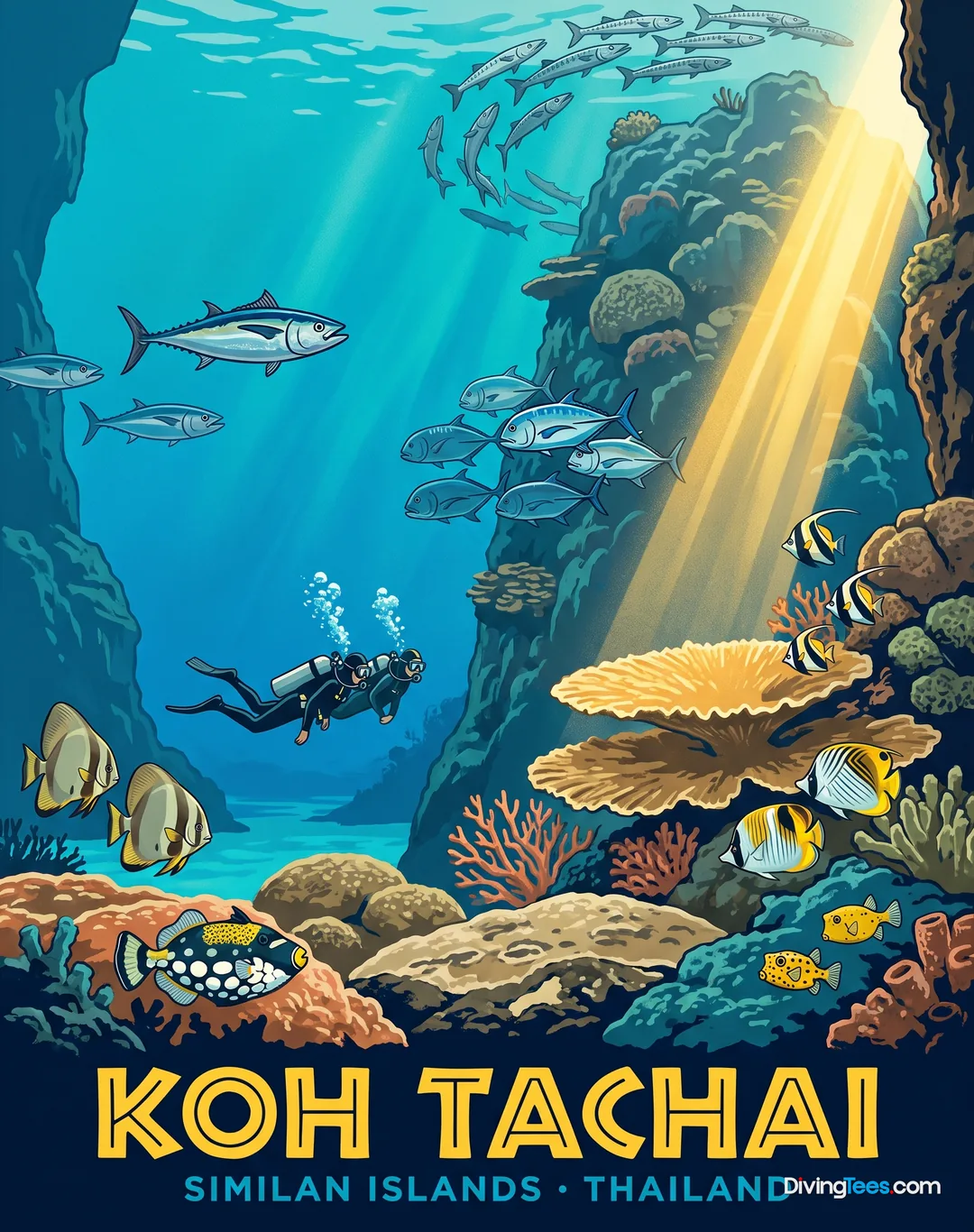
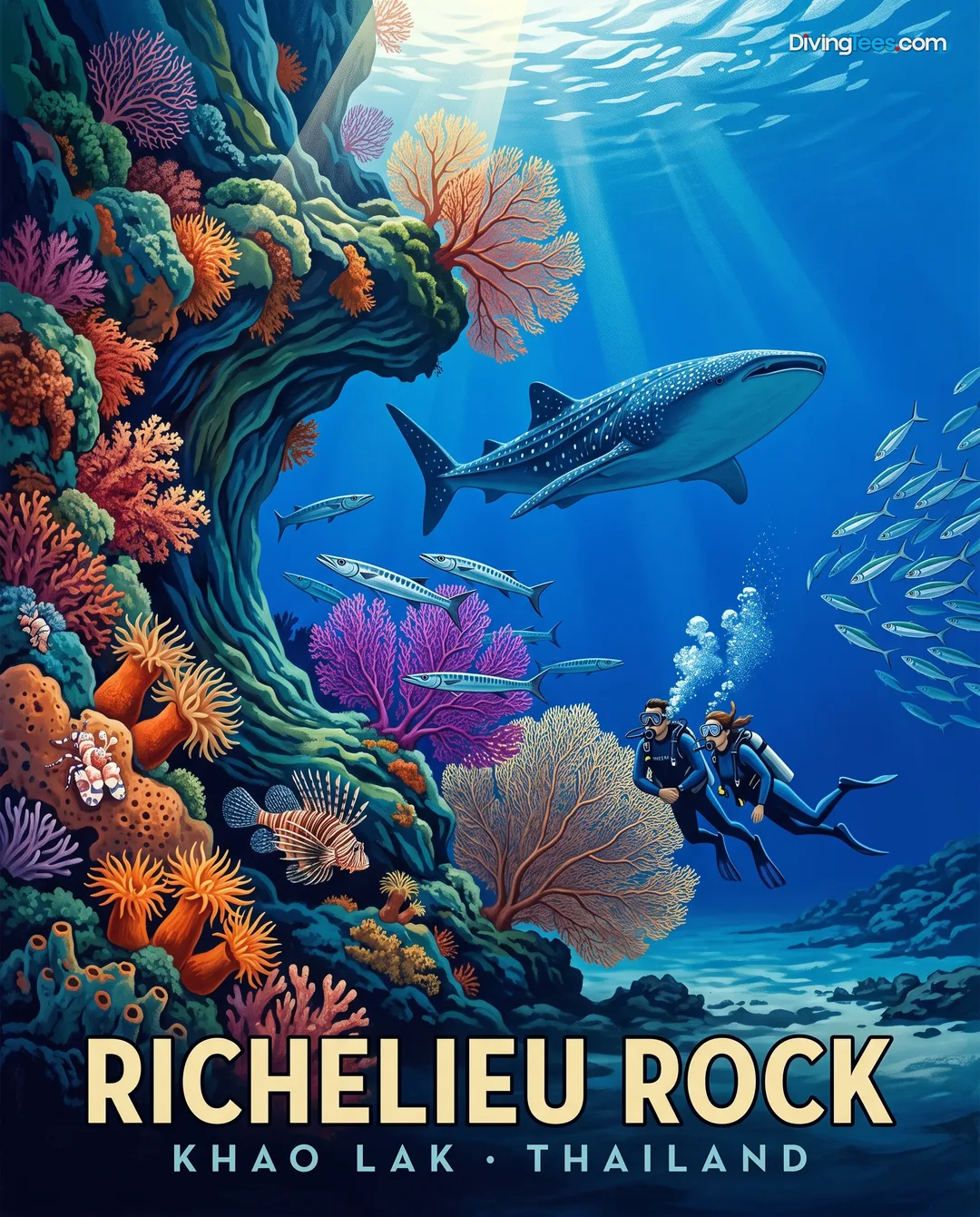
The North Andaman itinerary leaves from Thap Lamu and returns there after 5 days and 4 nights, with 15 dives planned. The route covers the Similan Islands, Koh Bon, Koh Tachai, Surin Island and Richelieu Rock. These names describe the reach of the trip, from island reefs to a remote pinnacle, but no verified site descriptions or depths are available for this itinerary. That is still the main reason to choose the route: five recognised North Andaman areas are combined without spending the trip moving between separate day-trip boats. The boat’s two tenders allow the dive team to work away from the main hull, then bring divers back to Mandarin Queen 9 between dives. Night dives are included, so the programme is not limited to daylight reef entries. Site order and exact dive selection depend on the cruise plan.
Itineraries, dates and prices
Prices per person. Each month shows its lowest price: click a month, or pick an itinerary.
Next departures · 22 departuresfrom £744$994€888
January 2027
May 2027
October 2027
See dates and prices
If you click these links and make a purchase on the partner site, DivingDeal may earn a commission, at no extra cost to you.
Dates and prices taken from liveaboard.com, updated 22 October 2026
Who puts you in the water
Briefings are handled by dive staff who know the sites and the procedure for regrouping with the tenders after surfacing. The crew speaks English, Thai and Chinese, and a naturalist guide is part of the operation. Nitrox is included for the scheduled dives, while the boat also supports training through the operator’s diving school, including Open Water, Advanced Open Water, Rescue, Deep Diver, Peak Performance Buoyancy and Enriched Air Nitrox courses. The level required for this liveaboard route, the number of logged dives requested and the size of each dive group are not given. Safety equipment includes oxygen, first-aid kits, life rafts, life jackets, fire alarms and extinguishers, radar, sonar, GPS, VHF/DSC/SSB radio, AIS and an emergency position-indicating beacon. The boat also carries mobile and satellite phones and has crew trained in first aid.
The dive deck and the gear
The dive platform is designed for repeated diving, with rinse tanks for equipment and a separate rinse area for cameras. Four showers on the platform let divers remove salt and sand before moving into the living areas. Two tenders carry divers to the sites and collect them after the dive, while entries and exits take place from the platform. The boat carries 50 aluminium tanks fitted with both yoke and DIN valves. Nitrox is produced through membrane systems and is free for the 15 scheduled dives; a nitrox certification course is an optional extra. Two compressors support the operation, one Bauer and one LW, alongside the nitrox unit. Sidemount diving is supported, and rental equipment is available.
Between dives
Between dives, the upper decks give the boat its breathing room. The sun deck has a jacuzzi and space for sunbathing, while the main and upper decks provide places to sit out of the weather. The air-conditioned saloon is the better refuge after a hot-water dive or a long tender ride. Divers with cameras can work in the separate camera room rather than leaving housings and chargers scattered around a cabin. The entertainment area includes a television, music, PlayStation 5 and Nintendo, which gives non-divers and tired divers something concrete to do. A bar and outdoor dining area keep meals from feeling confined to the saloon. The boat is not built around silence or minimalist living; it is built around choosing where to spend the surface interval.
A day on board
The day is built around diving rather than sightseeing. A briefing comes before each entry, the tenders take the groups away from the main hull, and divers return to the platform for a hot shower, food and the next surface interval. Across the 5-day, 4-night route, 15 dives are planned, including night dives. The buffet meals and all-day snacks sit between those water sessions, while the saloon, camera room, upper decks and jacuzzi fill the gaps. When the boat is underway, the movement belongs to the route between North Andaman areas; when it is stationary, the stern becomes the working centre of the day. There is no published hour-by-hour timetable to follow, so the exact start of the first dive and the spacing between dives remain open. The reliable shape is briefing, tender, dive, rinse, eat, rest, then repeat.
What you eat aboard
The galley serves four buffet-style meals a day, combining Thai and Western food. Vegetarian and vegan options are available on request, while fruit, bread, snacks, tea, coffee, milk and soft drinks cover the spaces between meals. That pattern fits a diving boat better than a single large dinner: divers can eat soon after surfacing without waiting for one fixed service, then take something small before the next entry. The table is generous without asking the crew to turn every meal into an event. Thai dishes give the route a local edge; Western choices make the buffet easier for a mixed group. With four dives in the programme, food is part of the operating system. It restores energy, keeps the surface intervals simple and lets the day return quickly to diving.
Nights at sea
The cabin choice matters more here than the décor. Upper-deck master and twin cabins have sea views, while the lower-deck master and twin cabins have no windows; all have private bathrooms, air conditioning, hot water, a television, storage, power sockets and towels. The windowless cabins are the sensible choice for a diver who treats the cabin as a dark place to sleep between dives. Upper-deck cabins suit anyone who wants daylight and a view when waking or resting. Hair dryers, soap and shampoo are provided, and cabins are cleaned daily. The boat carries 15 bathrooms for 26 passengers, including the private cabin bathrooms, which limits the queue after a dive. The character of the night is therefore practical and quiet: close the door, cool the room, rinse the salt away and sleep before the next briefing.
Master Upper Deck Cabin
Twin Upper Front Deck Cabin
Twin Upper Deck Cabin
Master Lower Deck Cabin
Twin Lower Deck Cabin
What to know before boarding
The cruise departs from and returns to Thap Lamu. Airport and hotel transfers are included. Arriving in the area the night before is sensible, because it leaves room for a delayed flight or road transfer before boarding.
Deck plan
- Year built
- 2023
- Year renovated
- 2024
- Length
- 37.5 m
- Beam
- 8.1 m
- Maximum number of passengers
- 26
- Number of cabins
- 13
- Number of bathrooms
- 15
- Engines
- 2 × Cummins 600 hp
- Cruising speed
- 8-11 knots
- Tenders
- 2
- Website
- phuketdivecenter.com ↗
Hello, I'm Marina, DivingDeal.com's AI assistant. I answer in detail about hotels, dive centres and liveaboards.
Thinking about the whole trip and the flights? Talk it over with Edith →
Marina is an AI. Some links are affiliate links: DivingDeal may earn a commission, at no extra cost to you. Bookings are made with the partner.