
Gran Canaria Divers
Google 4.9/5 (473 reviews)
5.7 km away as the crow flies
Gran Canaria · Canary Islands · Atlantic
Max. depth · 42 mDescend to the Blue Bird, a 30-metre passenger vessel resting on a sandy seabed at 45 metres, offering a deep wreck experience off Gran Canaria.
For subtitles in English: start the video firstthen click the gearat the top right of the video, select “Subtitles/CC”, then “Auto-translate” and choose “English”.
Dropping onto the Blue Bird immediately signals a deep dive. This isn't a shallow reef; the primary focus here is the descent into the deeper water column, where the light quickly diminishes. You'll navigate open water for a significant portion of the descent, with the wreck's silhouette gradually appearing below. This profile requires precise buoyancy control to glide effortlessly towards the deeper sections without unnecessary exertion, conserving gas for bottom time.
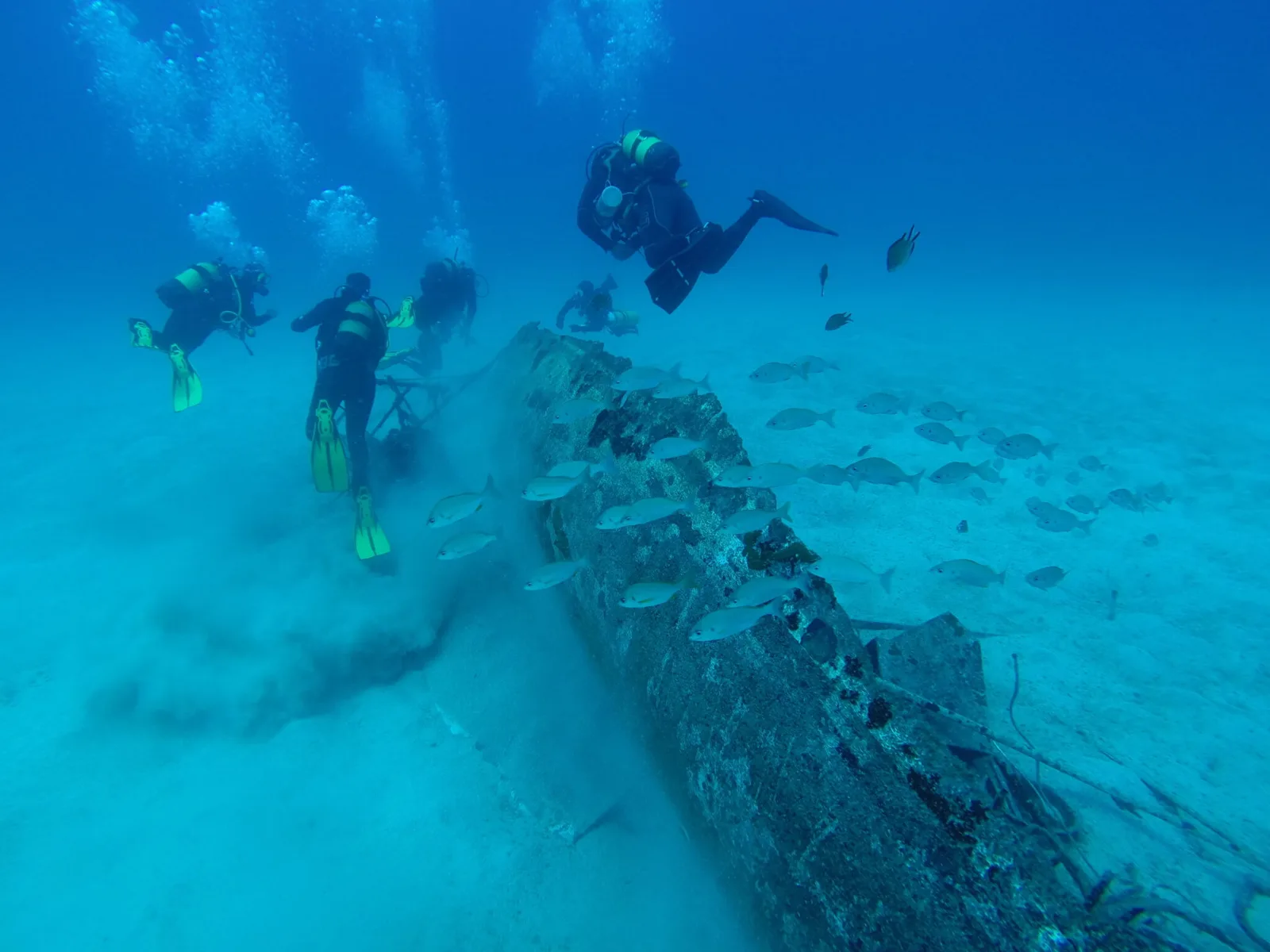
The Blue Bird is a passenger vessel, around 30 metres in length, deliberately sunk in 2002 to create an artificial reef. It lies on a sandy seabed, with its deepest point reaching 45 metres. The wreck itself forms a metal sculpture rising from the sand, creating ledges and cavities. While some sections offer limited penetration for appropriately trained divers, the main dive is an external tour, tracing the contours of the hull and superstructure.
The wreck's exposed position and depth mean conditions can vary. While visibility often ranges from 20 to 30 metres, currents can shift from manageable to strong, particularly with changes in weather and swell. Planning your dive here means checking conditions beforehand and being prepared for potential drift or cross-currents along the wreck. This variability adds to the challenge and requires constant awareness of your position relative to the structure.
As you explore the Blue Bird, you'll find it acts as an isolated habitat on the open sand, attracting a diverse range of marine life. Look for amberjack and tuna patrolling the open water around the wreck, often in schools. Closer to the structure, stingrays and angelsharks can be found resting on the sand or tucked into depressions. Barracuda are also common, often hovering in the current, while moray eels and dusky groupers inhabit the wreck's crevices.
The reduced light at 45 metres creates a distinct, subdued environment. This depth encourages a more introspective dive, where the focus shifts to the details of the wreck and the behaviour of its inhabitants. Damselfish and wrasse are often seen darting around the superstructure, adding colour to the metal framework. The interaction between the artificial structure and the surrounding marine life is a key aspect of the Blue Bird experience.
Diving the Blue Bird requires careful attention to your ascent profile. Given the depths involved and potential bottom times, a mindful approach to decompression is essential. This site rewards meticulous dive planning, including effective gas management and controlled, slow ascents with appropriate safety stops. It’s a dive that reinforces the importance of understanding nitrogen loading and managing your dive within your limits.
The Blue Bird is a deep dive, with depths ranging from 30 to 45 metres. It is suited for Advanced Open Water Divers (AOWD) who also hold a Deep Specialty certification, or equivalent experience with at least 50 logged dives. You must be comfortable with prolonged bottom times at depth and effective gas management. Visibility typically ranges from 20 to 30 metres. Currents can be variable, ranging from medium to strong, and can shift with weather and swell, requiring preparedness for drift or cross-currents.
You should be an Advanced Open Water Diver with a Deep Specialty certification, or have equivalent experience with at least 50 logged dives. You also need to feel comfortable with prolonged bottom times at depth, precise buoyancy control, effective gas management, and carefully controlled ascents with appropriate safety stops.
Blue Bird is a deep wreck dive ranging from 30 to 45 metres, with the wreck resting on a sandy seabed and its deepest point reaching 45 metres. You descend through open water, where light diminishes quickly, then explore the passenger vessel externally, with limited penetration available to appropriately trained divers.
At Blue Bird, currents can vary from medium to strong and may shift with weather and swell. You should check conditions beforehand and be prepared for drift or cross-currents around the exposed wreck. Constant awareness of your position relative to the structure is important while navigating this open-water site.
At Blue Bird, you can explore a passenger vessel wreck lying on sand, with ledges, cavities, and a metal superstructure. Amberjack and tuna patrol the surrounding water, while barracuda hover in the current. Stingrays, angelsharks, moray eels, dusky groupers, damselfish, and wrasse may be found around the wreck.