

Dive Community La Palma
Google 5/5 (548 reviews)
9.2 km away as the crow flies
La Palma · Canary Islands · Atlantic
Max. depth · 30 mExplore a complex volcanic landscape of basaltic arches and lava formations starting at just 8 metres.
For subtitles in English: start the video firstthen click the gearat the top right of the video, select “Subtitles/CC”, then “Auto-translate” and choose “English”.
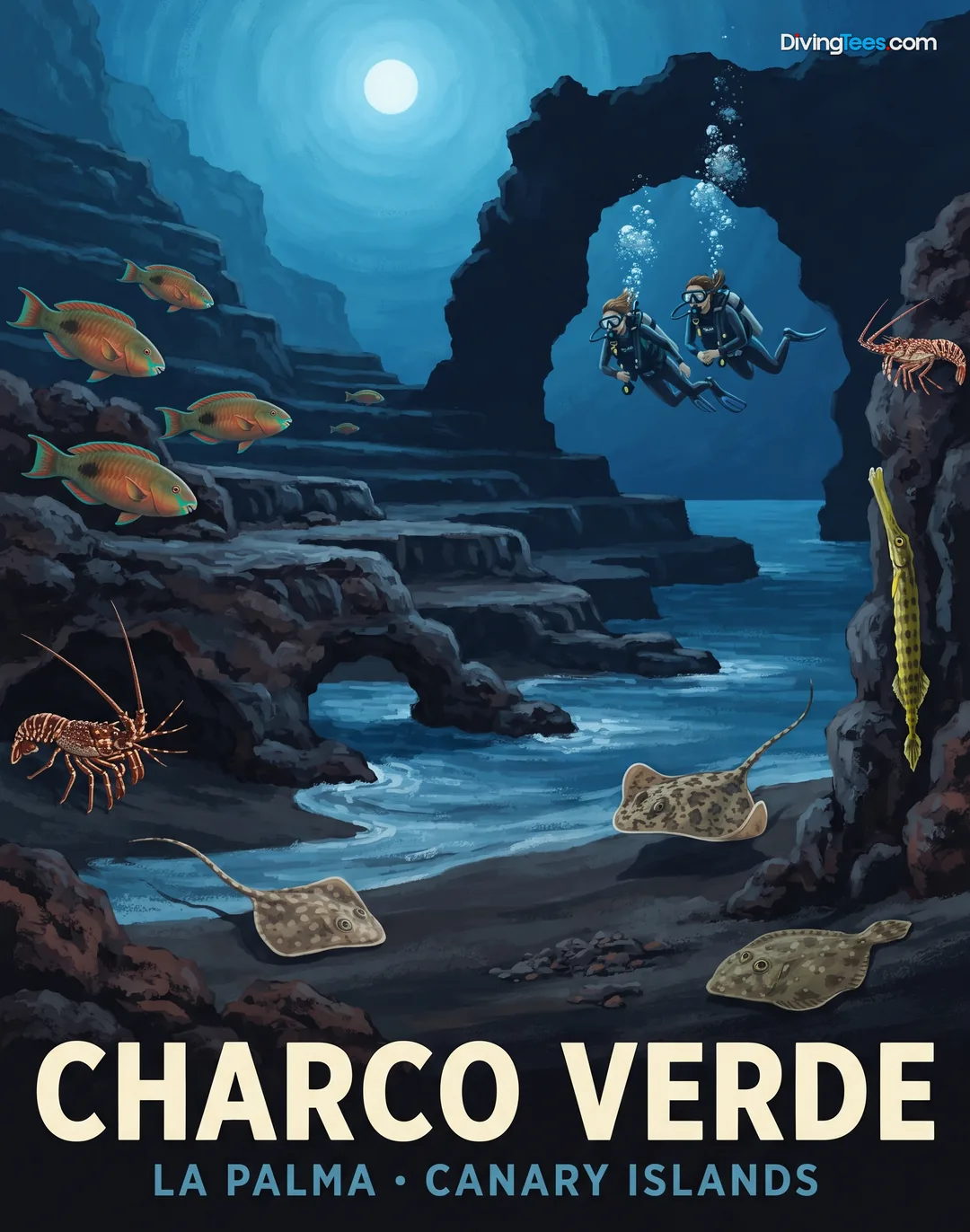
The Salemera site is defined by its rugged volcanic architecture, offering a completely different experience from the steep drop-offs found elsewhere in the Canary Islands. Instead of a single vertical wall, you descend into an expansive basaltic lava field that stretches across the seabed. The terrain is a complex arrangement of hard volcanic rock, sandy patches, and various structural formations. This topography creates a high-contrast environment where light and shadow play across the irregular surfaces of the reef.
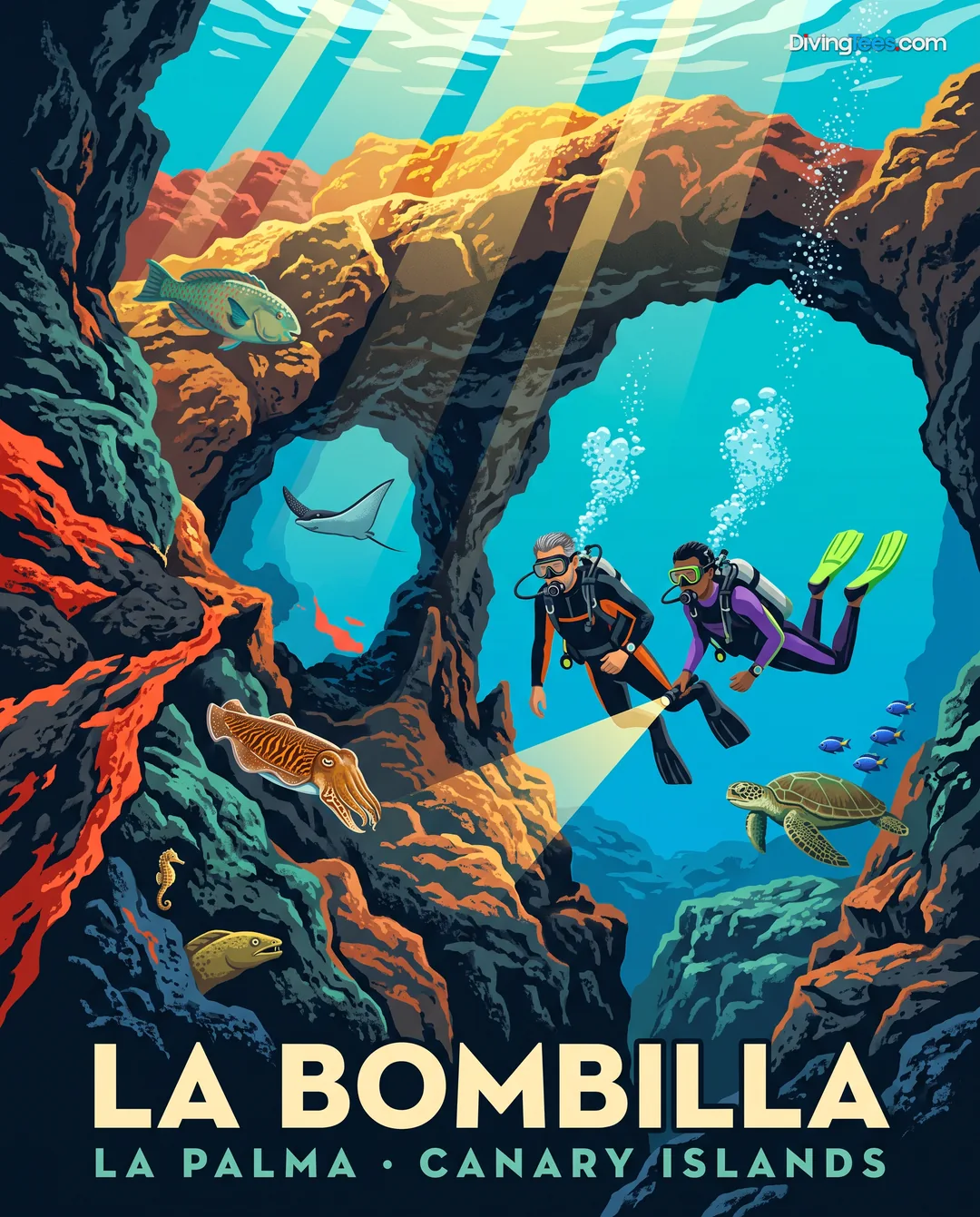
As you enter the water from the shore, the initial depth is quite manageable, with the reef structure beginning at approximately 8 metres. The shallow zone is particularly interesting because it contains several natural arches formed by the ancient lava flows. These arches provide excellent opportunities for buoyancy control practice and offer sheltered spots to observe the surrounding environment. Navigating through these formations requires attention to your depth and trim to avoid contact with the sharp basaltic edges.
Moving deeper, the site transitions into a more complex relief composed of various ledges, ridges, and overhangs. The seafloor descends gradually toward a maximum depth of 30 metres, providing a varied dive profile for those looking to explore different depth zones. You will encounter a series of steps and small plateaus where the lava has settled into distinct layers. These structural variations create numerous crevices and hiding spots that are central to the site's character.
The topography at Salemera is not uniform, which keeps the dive engaging as you move through the site. You will find yourself navigating around large volcanic blocks and through narrow passages created by the overlapping lava plates. The presence of sandy patches between the basaltic structures is important, as it provides a sense of scale and direction within the reef. These sandy areas often serve as the floor of the channels between the harder volcanic rises.
Light penetration is a significant factor at this site, especially in the shallower sections where the arches are located. Depending on the time of day, sunlight can filter through the openings of the arches, creating moving patterns on the dark basaltic floor. As you descend toward the 30-metre mark, the light becomes more diffused, and the emphasis shifts to the textures of the rock and the shadows within the overhangs. This transition in lighting helps define the different zones of the reef.
Because the site is a lava field rather than a deep wall, the experience is much more about exploration and navigation. You are not simply following a vertical line down, but rather moving through a three-dimensional landscape of ridges and depressions. This makes Salemera a site where staying oriented is essential, as the repetitive nature of some lava formations can make it easy to lose your sense of direction. Planning a route that follows specific landmarks, such as a particular large arch or a distinct ridge, is a sound approach.
The dive depth ranges from 8 to 30 metres. Visibility is typically between 25 and 30 metres. The best time to dive this site is during January and the period from April to May.
Salemera is best dived during January and from April to May. Visibility is typically between 25 and 30 metres, supporting clear views across the basaltic lava field, arches, ledges, overhangs, and sandy patches. Shore access is available via Playa La Salemera.
Salemera suits you if you are comfortable practising buoyancy control around natural arches and paying close attention while navigating volcanic formations. The site includes sharp basaltic edges, narrow passages, ledges, and overhangs. Staying oriented matters because the lava structures are repetitive and the route is not simply a vertical descent.
At Salemera, the reef begins at approximately 8 metres and the seafloor descends gradually to a maximum depth of 30 metres. This creates a varied profile through shallow arches, sandy channels, ridges, steps, small plateaus, ledges, and deeper overhangs within the basaltic lava field.
At Salemera, you will explore an expansive basaltic lava field with sandy patches, natural arches in shallow water, ledges, ridges, overhangs, crevices, narrow passages, and large volcanic blocks. Sunlight can filter through the arches, while deeper sections feature more diffused light, rock textures, and shadows.