

Dive Community La Palma
Google 5/5 (548 reviews)
17 km away as the crow flies
La Palma · Canary Islands · Atlantic
Max. depth · 27.4 mExplore a complex network of basaltic lava tubes and arches situated just off the coast of La Bombilla village.
For subtitles in English: start the video firstthen click the gearat the top right of the video, select “Subtitles/CC”, then “Auto-translate” and choose “English”.
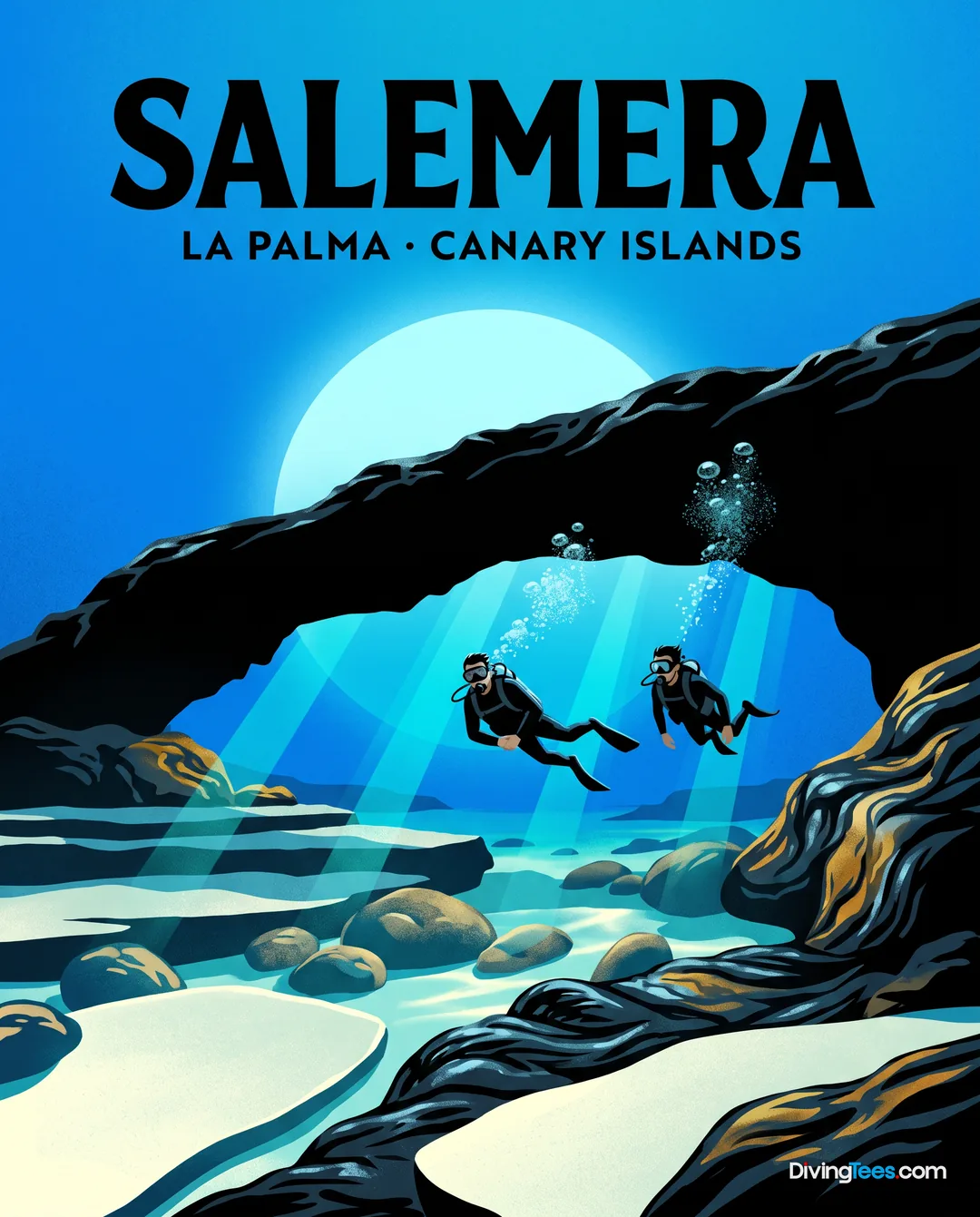
The topography of La Bombilla is defined by its volcanic origin, characterized by extensive basaltic lava flows that have shaped a complex underwater landscape. As you enter the water, you are immediately confronted with a highly branched relief of lava formations. This site is not a single continuous wall but rather a series of interconnected structures including arches, chimneys, and swim-throughs. The layout is naturally fragmented, creating a genuine labyrinth that requires careful navigation to avoid losing your sense of direction. This geological complexity makes every dive through the site feel distinct from the last.
The dive profile at La Bombilla offers two very different experiences depending on which section you choose to follow. The shallow plateau is dominated by a series of more than ten arches, mostly situated between 5 and 10 metres deep. These shallow structures provide plenty of light and are ideal for exploring the intricate shapes of the basalt. Moving away from this northern section, the terrain shifts significantly as the lava tongues descend. You can follow these formations down to much deeper areas, where the topography becomes more vertical and the environment changes.
Navigating the swim-throughs and tunnels is one of the primary reasons to visit this specific site. The lava formations create a network of passages that can vary in size, from wide openings to tighter, more technical gaps. You will find yourself moving through arches and under overhangs that reveal the raw texture of the volcanic rock. For those with more experience, these passages offer a more immersive way to interact with the seafloor. It is important to maintain good buoyancy control when navigating these sections to ensure you do not contact the delicate basalt surfaces.
The depth of the site reaches a maximum of 27.4 metres, marking the transition from the shallow reef structures to the deeper lava tongues. In these deeper zones, the light levels drop and the environment becomes more somber, focusing on the sheer scale of the volcanic descent. The transition from the bright, arch-filled shallows to these deeper walls happens relatively quickly. This allows you to experience multiple ecological zones within a single dive. Monitoring your air and your ascent profile is essential when moving between these depth layers.
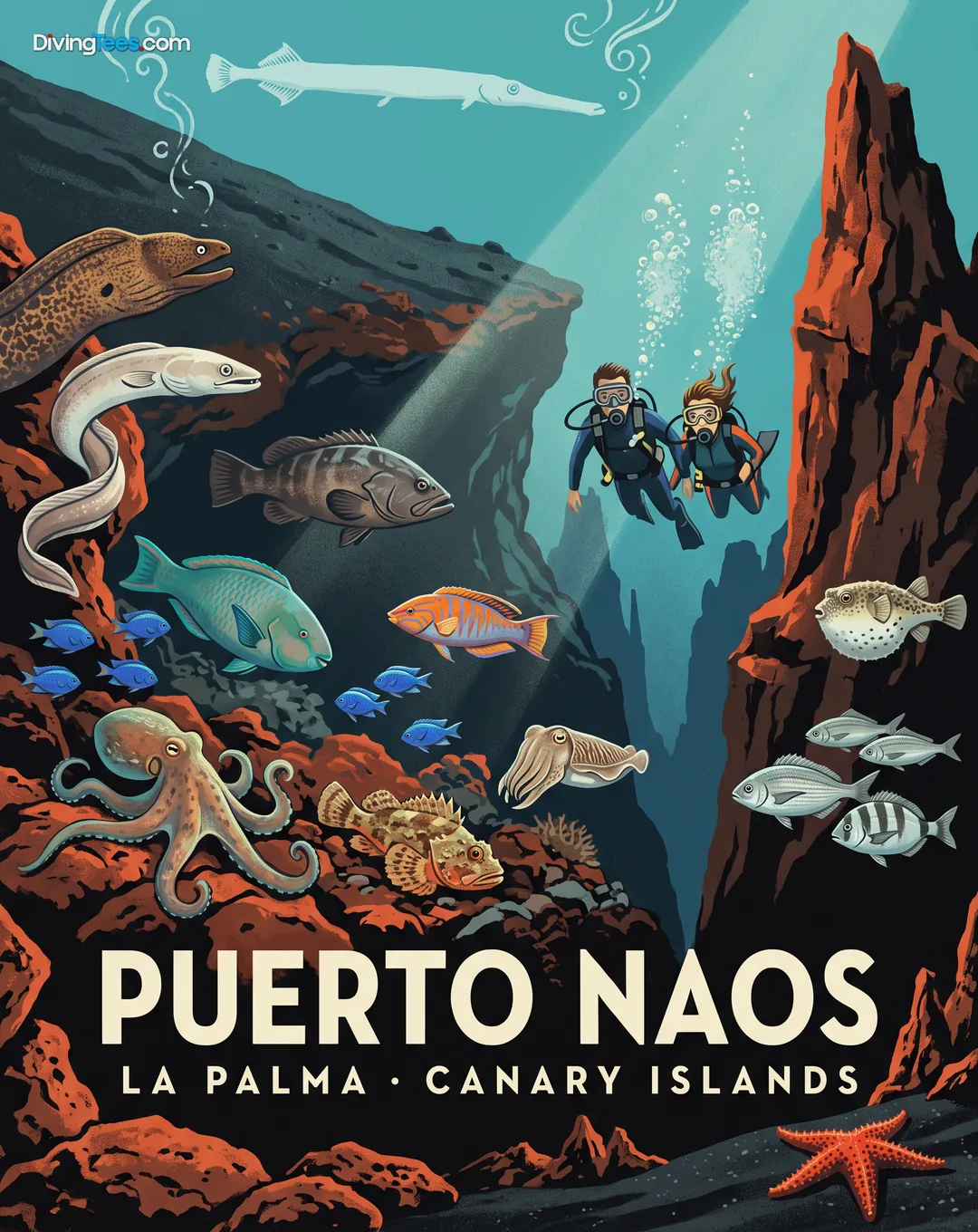
Marine life at La Bombilla is well-distributed throughout the different volcanic structures. You can often find the European cuttlefish (Sepia officinalis) blending into the darker crevices of the lava rocks. The various arches and overhangs provide ideal habitats for the European moray (Muraena helena) to hide. Smaller, more intricate details are found in the shallower zones, where Canary blennies and Canary damsels inhabit the cracks in the basalt. These resident species are part of the permanent fabric of the site's ecosystem.
As you move along the various lava tongues, you might encounter larger rays, such as the Atlantic stingray (Dasyatis sazza) or the common eagle ray (Manta birostris), gliding over the sandy patches between the rocks. The green turtle (Chelonia mydas) is also a regular visitor to these waters, often found navigating the currents near the larger rock formations. In the more sheltered areas, you should keep a close eye on the substrate for seahorses tucked away in the vegetation. The fauna here is closely tied to the complex shelter provided by the lava labyrinth.
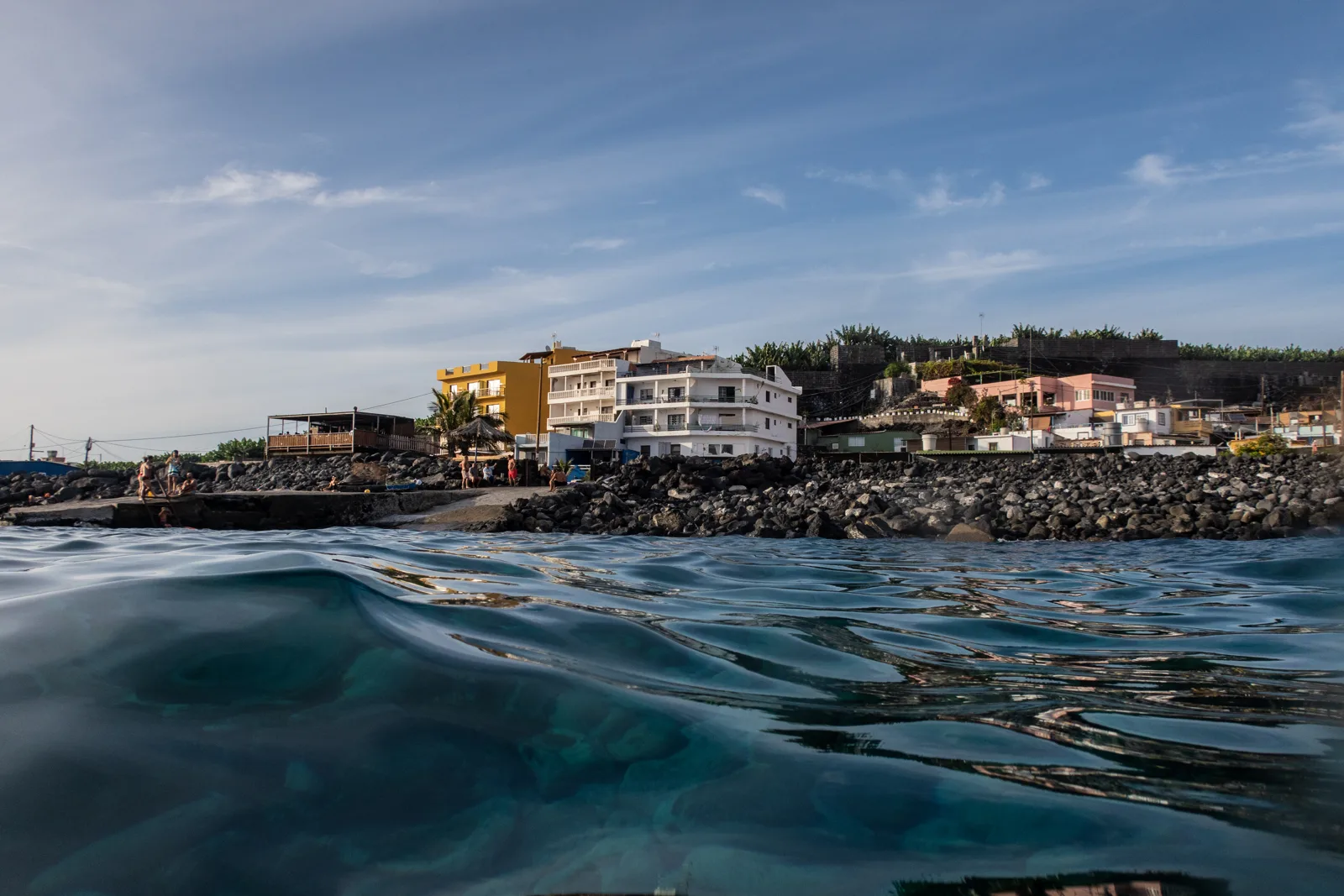
The accessibility of La Bombilla is a unique feature, as the site can be entered directly from the shore in the village. During the summer months, a pontoon is typically available to facilitate easy entry and exit from the water. However, during the winter season, the lack of a pontoon means you may need to navigate over rocks to reach the entry point. This makes the site's accessibility highly dependent on the time of year and the local sea conditions. Always check the local swell before planning your shore entry.
The overall experience at La Bombilla is defined by this sense of exploration within a rugged, volcanic environment. The combination of shallow, light-filled arches and deeper, more imposing lava walls provides a versatility that is rare for a shore-entry site. Whether you are focusing on the macro life in the shallow tunnels or following the descent of the lava tongues, the site demands your full attention to the surrounding topography. It is a place where the geological history of La Palma is written clearly in the underwater landscape.
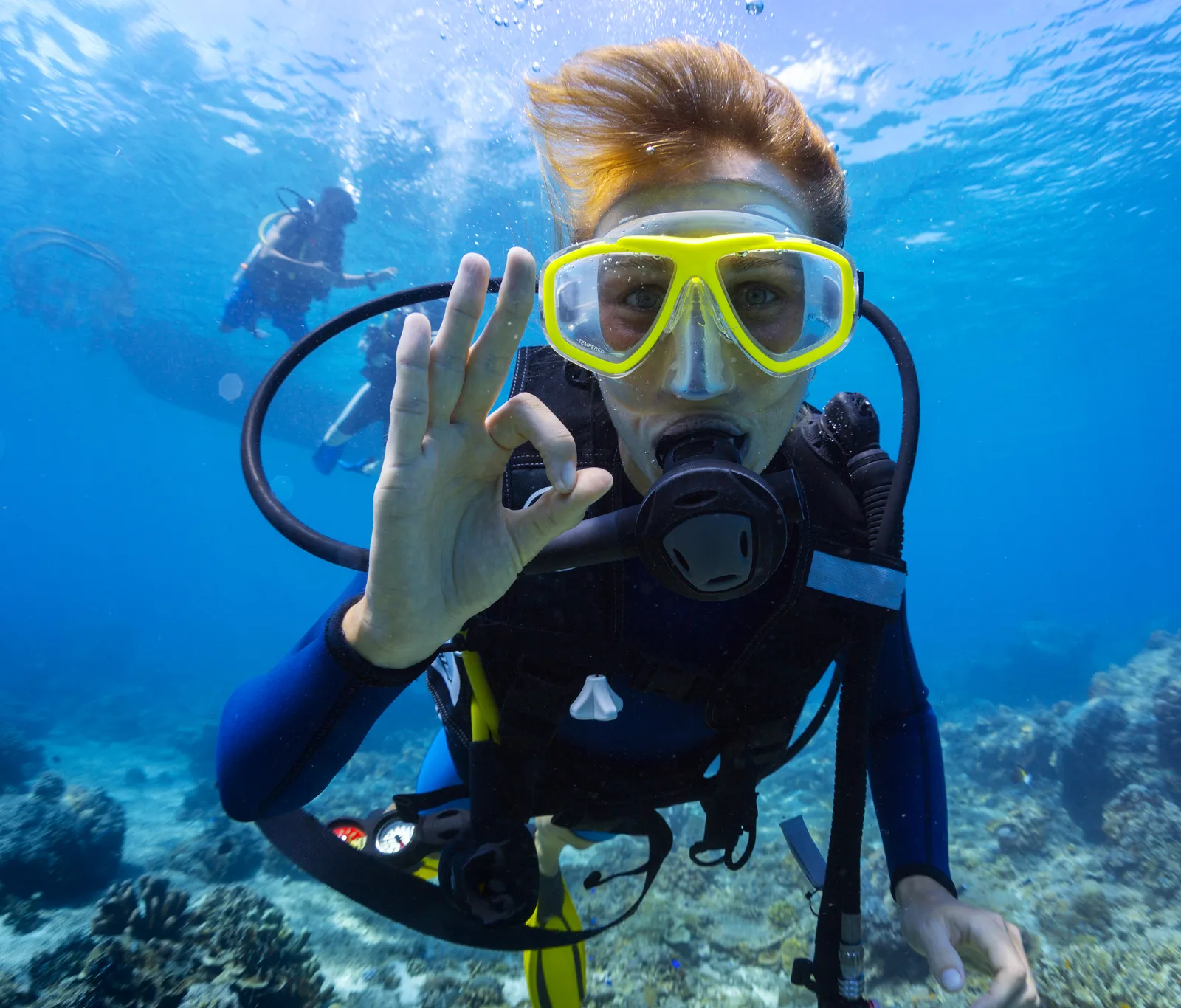
The site depth ranges from 5 to 27.4 metres. It is accessible from the Open Water Diver level, but experience is strongly recommended for navigating the deeper sections and the complex ceiling passages. While dives are often calm, the shore entry can be affected by swell and sea state, and access via the coast can be more difficult in winter when the pontoon is not in place.
La Bombilla is often calm, but your shore entry depends on swell and sea state. In summer, a pontoon is typically available to make entry and exit easier. In winter, access from the coast can be more difficult because the pontoon is not in place, so check local conditions before planning your dive.
La Bombilla is accessible from the Open Water Diver level, giving you access to its varied volcanic terrain. Experience is strongly recommended for the deeper sections and complex ceiling passages. You should also maintain good buoyancy control in the arches, tunnels and swim-throughs to avoid contacting the basalt surfaces while navigating this labyrinth.
At La Bombilla, you can explore shallow arches between five and ten metres, then follow lava tongues into deeper areas reaching twenty-seven point four metres. The transition from bright, arch-filled shallows to deeper, more vertical walls can happen quickly, so monitor your air and ascent profile as you move between depth layers.
At La Bombilla, expect basaltic lava tunnels, arches, chimneys, overhangs and swim-throughs, with European cuttlefish, European morays, Canary blennies and Canary damsels among the volcanic structures. Sandy patches may hold Atlantic stingrays or common eagle rays, while green turtles and seahorses in sheltered vegetation add further encounters.